Smallmouth Bass Fishing in Vermont
There's nothing quite like the heart-pounding strike of a smallmouth bass in the clear, cool waters of Vermont, but sometimes figuring out where they are and what they're biting can feel like a real puzzle. Many anglers struggle with adapting their techniques to Vermont's unique lake and river environments, often leaving them frustrated with empty livewells and unanswered bites. This comprehensive guide is here to unravel those mysteries, providing you with a veteran's insight into locating, luring, and landing more smallmouth bass across the Green Mountain State, turning those elusive encounters into memorable catches.
Why Vermont's Smallmouth Bass Fishery is So Special
Vermont might be renowned for its picturesque landscapes and incredible trout streams, but let me tell you, our smallmouth bass fishery is a truly underrated gem. It's not just about the fish; it's about the whole experience – the stunning scenery, the challenge, and the sheer joy of reeling in one of these bronze-backed fighters. If you've never targeted smallmouth here, you're missing out on some truly exhilarating fishing.
The Thrill of the Fight: Smallmouth Power and Aggression
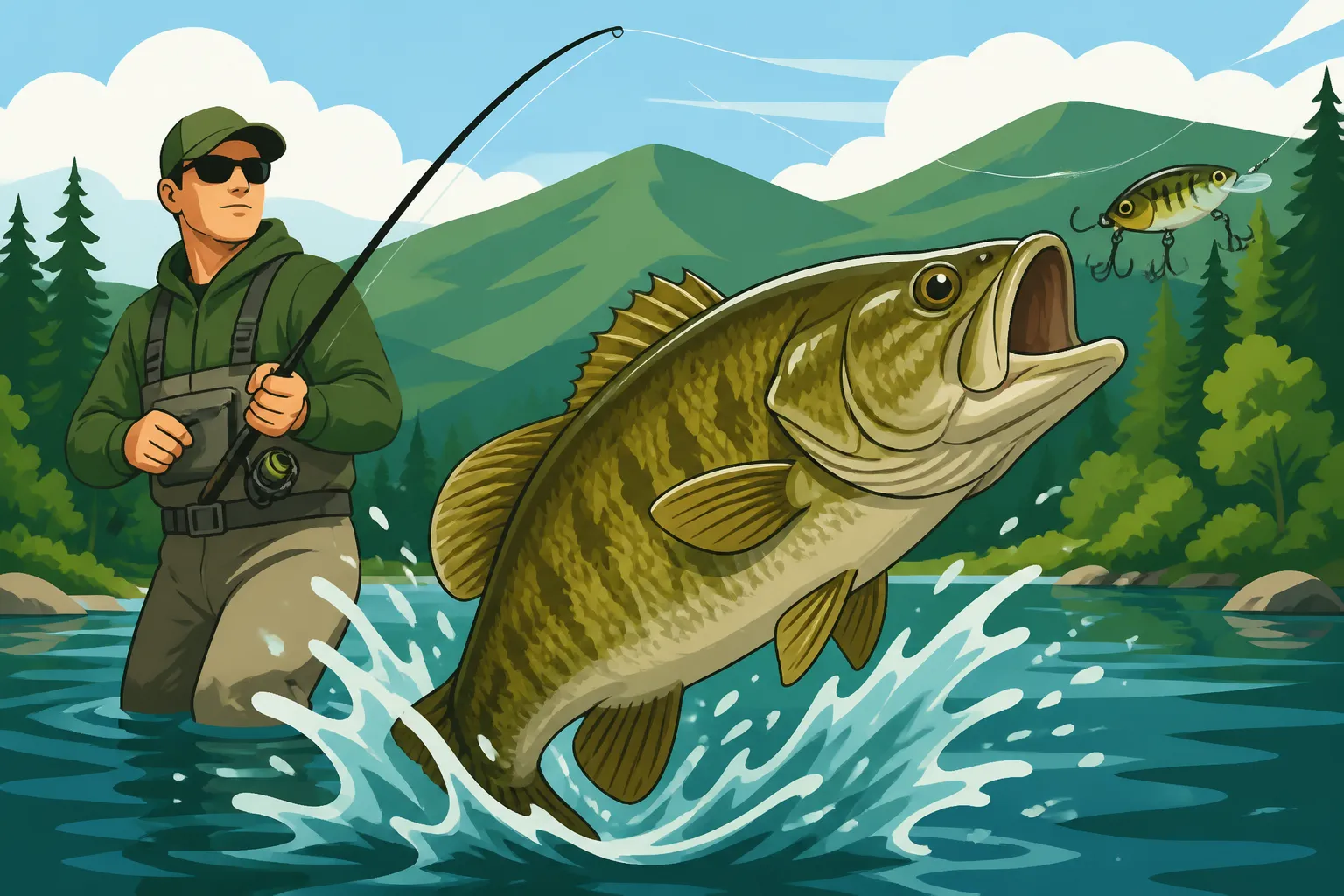
Ask any seasoned angler who's tangled with a smallmouth, and they'll likely tell you these fish punch far above their weight. Unlike their largemouth cousins, smallmouth are known for their acrobatic jumps, relentless runs, and incredible stamina. Hook into a three-pound smallie in a clear Vermont lake, and you'll swear you've got a five-pounder on the line. They fight dirty, using structure to their advantage, and often make multiple surging runs right to the boat. This aggressive nature is what keeps so many of us coming back for more.
The joy isn't just in the fight itself, but in the anticipation. You cast your lure near a rocky point, a submerged hump, or a current seam, and the strike often comes with a sudden, jarring thud that sends adrenaline coursing through you. It's a connection to the wild, a battle of wits and strength, that makes every successful hookset feel like a significant victory. For many, it's this raw, unbridled power that defines the smallmouth experience and why they consider it their favorite freshwater game fish.
Iconic Vermont Scenery: Fishing in Postcard Settings
One of the incredible bonuses of fishing for smallmouth in Vermont is the backdrop. Forget crowded, urban fisheries; here, you're often surrounded by rolling Green Mountains, pristine forests, and the tranquil beauty of our lakes and rivers. Imagine casting a topwater lure at dawn on Lake Champlain, the mist rising off the water, and the sun painting the Adirondacks in hues of orange and pink – it's an experience that transcends just fishing.
From the expansive blue waters of Lake Champlain to the more intimate settings of smaller lakes and winding rivers, Vermont offers a diverse array of stunning environments. You might find yourself pitching jigs to submerged boulders beneath towering pines, or drifting a river section with picturesque farmlands flanking the banks. The natural beauty is an integral part of the smallmouth fishing adventure in Vermont, providing not just a great catch, but a rejuvenating escape into nature. It truly allows you to disconnect from the hustle and bustle and simply be present in the moment.
Accessibility for All Skill Levels
Whether you're a seasoned tournament angler or just starting out with a spinning rod, Vermont's smallmouth fishery is incredibly welcoming. Many of our best smallmouth waters offer excellent public access, from well-maintained boat ramps to numerous shore fishing opportunities. You don't necessarily need a fancy bass boat to find success; a kayak, canoe, or even just a good pair of wading boots can get you into prime smallmouth territory.
For beginners, smallmouth can be very cooperative, especially during peak seasons, often hitting a variety of basic lures. More advanced anglers will appreciate the challenge of patterning these intelligent fish in diverse habitats, employing complex techniques like drop-shotting or subtle presentations. There are even guided trips available for those looking to learn the ropes or explore new waters. This blend of challenge and accessibility makes Vermont a fantastic destination for anyone looking to experience the thrill of smallmouth bass fishing.
Prime Smallmouth Bass Waters in the Green Mountain State
When you think of smallmouth bass in Vermont, one body of water immediately comes to mind, but the truth is, the state boasts a fantastic array of lakes and rivers that hold these incredible fish. Knowing where to start can be overwhelming, so let's break down some of the absolute best spots to target smallmouth here.
Lake Champlain: The Obvious Powerhouse
It's impossible to talk about smallmouth bass fishing in Vermont without putting Lake Champlain front and center. This massive lake, shared with New York, is an absolute mecca for smallmouth, regularly producing trophy-sized fish and hosting numerous major tournaments. The sheer size and diversity of its structure – from rocky reefs and points to expansive flats and islands – create an ideal habitat for smallmouth to thrive. If you're looking for consistent action and the chance at a true monster, Champlain is your destination. You might want to check out our Lake Champlain Fishing Guide for even more details on this incredible body of water.
Anglers often focus on the northern and central sections of the lake, particularly around the many islands, humps, and rocky shorelines. Places like the Inland Sea, Grand Isle, North Hero, and the rocky sections near Burlington offer prime habitat. Smallmouth here feed heavily on a rich forage base, including alewives, smelt, and crayfish, growing big and strong. The challenge, of course, is that Lake Champlain is vast, and breaking it down into manageable sections is key. Focus on areas with sudden depth changes, submerged rock piles, and points that extend into deeper water.
For those venturing out, consider starting your search around prominent structures. Think about areas where current might be constricted, or where baitfish congregate. The south end near the Champlain Bridge and down towards Fort Ticonderoga also offers fantastic smallmouth opportunities, especially with its unique blend of rock and weed structure. Whether you're fishing from a large boat, a modest tin boat, or even a kayak, Lake Champlain has a spot for you to chase these bronzebacks, though be mindful of the lake's sometimes unpredictable weather. You can find excellent kayak launches across the lake, making it a truly versatile smallmouth destination.
Lake Memphremagog: Northeastern Kingdom Gem
Moving north to the often-overlooked Northeastern Kingdom, Lake Memphremagog offers another incredible smallmouth bass fishery, albeit with a slightly different character than Champlain. This long, deep lake, shared with Quebec, is known for its clear, cold waters and steep rocky banks, providing classic smallmouth habitat. While it might not see the same tournament traffic as Champlain, the smallmouth here are abundant, aggressive, and often less pressured, making for fantastic fishing. It’s a wonderful option if you're looking for a quieter, more remote angling experience without sacrificing quality. Our Lake Memphremagog Fishing Guide goes into greater detail on this unique lake.
Targeting smallmouth on Memphremagog often involves focusing on rocky points, submerged humps, and steep drop-offs. The clear water here means finesse techniques can be particularly effective, but don't shy away from throwing larger moving baits when the fish are active. The smallmouth here are particularly fond of crayfish and various baitfish, so matching your lure to these forage sources is a smart move. The sheer beauty of the surrounding wilderness, with its mountainous backdrop, only adds to the allure of fishing this pristine lake.
Access points are available in Newport and along the Vermont side of the lake, offering convenient launching for boats of all sizes. Given its depth and clarity, a good fish finder is invaluable for locating submerged structure and schools of baitfish where smallmouth often lurk. Whether you’re casting from shore in specific access areas or cruising the depths in a boat, Lake Memphremagog promises a memorable smallmouth adventure for those willing to explore the northern reaches of the state.
Hidden Gems: Smaller Lakes and Ponds
Beyond the two giants, Vermont is dotted with countless smaller lakes and ponds that harbor excellent smallmouth bass populations. These waters often fly under the radar, providing fantastic opportunities for anglers seeking less crowded conditions and intimate fishing experiences. Lakes like Bomoseen, Dunmore, and Seymour are prime examples, offering healthy populations of smallmouth that readily strike a variety of lures. These smaller bodies of water can be particularly rewarding, as bass patterns can often be easier to decipher than on a massive lake. For more ideas, check out the Best Fishing Lakes in Vermont.
Fishing these smaller lakes often means focusing on the same types of structure as the larger ones – rocky points, transition zones from hard bottom to soft, and areas with submerged timber or docks. However, in these more confined spaces, smallmouth might be more susceptible to consistent pressure, so adapting your approach and varying your lure choices can be key. A quiet approach with a kayak or canoe can also give you access to secluded coves and shorelines that larger boats might struggle to reach, opening up new opportunities.
Don't overlook the challenge and excitement of exploring these lesser-known waters. Many of them offer beautiful scenery, abundant wildlife, and the chance to discover your own secret smallmouth hotspot. They're perfect for a day trip with the family, a quick evening outing after work, or for those who simply prefer a more tranquil angling experience. Always remember to check specific lake regulations, as some smaller waters may have unique rules regarding motor size or fishing seasons.
River Smallmouth: A Different Kind of Challenge
While Vermont's lakes get a lot of attention, our rivers and larger streams also offer phenomenal smallmouth bass fishing, providing a completely different angling experience. River smallmouth are typically leaner, meaner, and incredibly powerful, often using the current to their advantage during a fight. Rivers like the Connecticut, Winooski, Lamoille, and Otter Creek all hold excellent smallmouth populations, providing fantastic opportunities for wading, kayak, or small boat anglers. You'll find more details about these types of fisheries in Best Fishing Rivers in Vermont.
Targeting river smallmouth involves understanding current breaks, eddy lines, and rocky structure. These fish will hold in seams where fast water meets slow, behind boulders, or in deeper pools where they can ambush prey. Presentations need to be precise, often involving casting upstream and allowing your lure to drift naturally into strike zones. Topwater action can be absolutely explosive in rivers, especially during low light conditions or periods of insect hatches.
Fishing rivers requires a bit more agility and an understanding of river dynamics. Wading can be incredibly effective, allowing you to quietly access prime spots, but always prioritize safety in moving water. Kayaks and canoes are also excellent choices for covering more ground and reaching areas inaccessible from shore. Remember that river smallmouth often move around more actively than their lake-dwelling counterparts, so covering water and adapting to changing conditions is crucial for consistent success. If you're looking to hone your river fishing skills, checking out How to Fish a River for Smallmouth Bass would be a great next step.
Understanding Smallmouth Bass Behavior in Vermont
Cracking the code of smallmouth bass behavior is often the key to consistent success. These aren't just fish; they're intelligent predators whose habits are deeply influenced by the seasons, the available food, and the constantly changing aquatic environment. A little understanding goes a long way in putting more fish in your net.
Seasonal Movements: Where Bass Go When
Smallmouth bass are incredibly dynamic in their movements throughout the year, largely driven by water temperature and their spawning cycle. Understanding these migrations is crucial for knowing where to find them.
In spring, as the ice recedes and water temperatures begin to climb into the 40s and 50s Fahrenheit, smallmouth start moving from their deeper wintering holes towards shallower spawning grounds. Initially, they'll be found in staging areas – rocky points, submerged humps, and gradual slopes adjacent to deeper water, often feasting on smelt and other baitfish. As the water warms further (into the high 50s and low 60s), they'll move onto beds in shallower, protected areas, typically with a gravel or sand bottom. This pre-spawn and spawn period can be some of the most exciting fishing, as bass are aggressive and readily accessible. However, it’s important to practice catch and release during the spawning season to protect the future of the fishery, and to be aware of Vermont's specific catch-and-release bass season dates, which are designed to safeguard spawning fish.
Summer sees smallmouth disperse into their deeper, preferred thermal zones as water temperatures climb into the 70s. While some fish will remain shallow in low light conditions or around active baitfish, many will retreat to deeper humps, offshore reefs, and steep drop-offs where the water is cooler and oxygen levels are more stable. This is often when you'll find them schooling up. Finding that thermocline, or simply finding deep structure, becomes paramount. They’ll also hold tight to rocky shorelines and docks offering shade. Evening and early morning can be prime for topwater action as bass venture shallower to feed. This deep-water summer pattern can be tricky to locate, but once you find them, the action can be furious.
As fall approaches and water temperatures begin to drop again, smallmouth experience a "second spring" of sorts. They'll move back shallower to gorge on baitfish, preparing for the lean winter months. This can be a fantastic time for aggressive presentations, as the bass are actively feeding and often concentrated in schools. They'll frequent rocky flats, humps, and points, chasing schools of bait into shallower water before eventually retreating to their deep wintering holes once the water gets consistently cold (below 40 degrees Fahrenheit). Understanding these seasonal shifts, and checking a local thermometer for Best water temperature for smallmouth bass fishing, will significantly improve your chances.
Diet and Forage: Matching the Hatch (or the Baitfish)
Smallmouth bass are opportunistic predators with a diverse diet, and knowing what they're primarily feeding on in a given body of water can give you a significant advantage. In most Vermont lakes and rivers, their mainstays include crayfish, various baitfish (like alewives, smelt, shiners, and perch), and aquatic insects.
Crayfish are a huge part of a smallmouth's diet, especially in rocky lakes and rivers. If you're fishing an area with abundant rocks and gravel, chances are the smallmouth are keying in on these crustaceans. Lures that imitate crayfish, such as soft plastic tubes, jigs with bulky trailers, or crankbaits with a wide wobble and dark, natural colors, can be incredibly effective. Pay attention to the size and color of the crayfish in the area – if they're mostly dark brown or olive, choose lures that mimic that.
Baitfish are another primary food source, particularly in larger lakes like Champlain and Memphremagog. Smallmouth will actively chase schools of alewives, smelt, and other shiners. When bass are targeting baitfish, faster-moving lures like jerkbaits, swimbaits, spinnerbaits, and chrome-colored spoons can trigger aggressive strikes. Topwater lures can also imitate an injured baitfish struggling on the surface. Observing baitfish activity on your fish finder or seeing them jump on the surface can be a clear indicator of what the bass are feeding on.
Don't forget aquatic insects in certain situations, especially in rivers or during specific hatches. While not their primary diet, smallmouth will certainly slurp down a cicada or a large mayfly if the opportunity arises. This is more common in rivers and streams, where fly fishermen might find success with larger dry flies or nymph patterns. Ultimately, paying attention to your environment and even checking the stomach contents of a legally kept fish can provide valuable clues about what to "match."
Water Temperature and Environmental Factors
Water temperature is arguably the most critical factor influencing smallmouth bass behavior. These fish are ectothermic, meaning their body temperature is regulated by their environment, directly impacting their metabolism, activity levels, and preferred locations.
Smallmouth bass generally prefer water temperatures ranging from the mid-50s to the low 70s Fahrenheit. In the cooler ends of this spectrum (50s), they tend to be slower, preferring slower presentations and often deeper water. As temperatures rise into the 60s, they become much more active and aggressive, moving shallower and chasing faster-moving baits. Once water temperatures exceed the low 70s, they'll typically seek cooler, deeper water or areas with current and shade to stay comfortable. Understanding these thermal preferences is paramount for year-round success.
Beyond temperature, other environmental factors play a significant role. Light conditions heavily influence smallmouth. They often feed most actively during low light periods – dawn, dusk, and overcast days – when their excellent eyesight gives them an advantage. Bright, sunny days often push them deeper or into shaded cover. Wind can be your friend or foe; a moderate chop on the water can break up the surface, making bass feel more secure and less wary, and can also concentrate baitfish. However, strong winds can make boat control difficult and fishing unpleasant. Barometric pressure is another factor. Stable or rising pressure often correlates with active fish, while rapidly dropping pressure before a storm can make them finicky. Learning to read these environmental cues will help you anticipate where smallmouth might be and how they might react to your presentations.
Essential Gear for Vermont Smallmouth Anglers
Choosing the right gear can make a huge difference in your smallmouth bass fishing success. There's a lot of equipment out there, and it can feel overwhelming trying to figure out what's truly essential for Vermont's waters. Let's break down the core components you'll need to confidently tackle our bronzeback bounty.
Rods, Reels, and Line: Matching Your Setup
A versatile rod and reel setup is foundational for smallmouth fishing. You're looking for sensitivity to detect subtle bites, enough backbone to set the hook, and sufficient power to control a strong fighting fish.
For most smallmouth applications, a medium-light to medium power spinning rod in the 6'6" to 7'2" range is an excellent choice. This allows for casting a wide array of lure sizes, from small jigs to medium crankbaits, and provides the sensitivity needed for finesse presentations while still offering enough power. Graphite rods are preferred for their sensitivity. If you're going after bigger fish or fishing heavier cover, a medium-heavy power rod might be beneficial. If you're looking for specific recommendations, our guide on Best Spinning Rods for Smallmouth Bass is a great resource.
Pair your rod with a reliable spinning reel in the 2000-3000 series size. This size offers a good balance of line capacity, retrieve speed, and manageable weight. Look for a smooth drag system, which is crucial for handling the powerful runs of a smallmouth. Brands widely available, including those found on platforms like Amazon, offer a range of quality options at various price points.
When it comes to fishing line, many anglers opt for a braided main line (10-20 lb test) for its sensitivity and casting distance, coupled with a fluorocarbon leader (6-10 lb test) for its invisibility and abrasion resistance. The fluorocarbon leader is tied to the braid with a strong knot like an FG or Alberto knot. Alternatively, straight fluorocarbon line (8-12 lb test) or monofilament (8-10 lb test) can be used, with fluorocarbon offering better sensitivity and abrasion resistance, and mono providing good knot strength and shock absorption. The choice often comes down to personal preference and the specific technique you're employing.
Lures and Baits: The Smallmouth Arsenal
Smallmouth are aggressive, but they can also be finicky, so having a diverse selection of lures is key. Here's a rundown of essential smallmouth baits:
- Soft Plastics: These are arguably the most versatile and effective smallmouth lures.
- Tubes (3-4 inches): Mimicking crayfish or baitfish, tubes rigged on an internal jig head are deadly, especially when dragged or hopped along the bottom. Colors like green pumpkin, watermelon, and smoke are consistent producers.
- Grubs (3-5 inches): Single-tail or double-tail grubs on a jig head are excellent for imitating baitfish.
- Ned Rigs: A small, mushroom-shaped jig head paired with a short, buoyant worm is a finesse killer, especially in tough conditions or clear water.
- Drop-Shot Worms: Small, realistic worms or minnow imitations rigged on a drop-shot rig are fantastic for suspended fish or when bass are holding tight to structure.
- Swimbaits: Paddle-tail swimbaits (3-5 inches) can imitate baitfish very effectively when retrieved steadily or jigged.
- Jerkbaits (3-5 inches): These suspending lures are incredible for imitating injured baitfish. Work them with a twitch-twitch-pause retrieve for maximum effect. Silver, clear, and natural baitfish patterns are great.
- Crankbaits: Medium-diving crankbaits (diving 6-12 feet) are excellent for covering water and triggering reaction strikes, especially around rocky points and humps. Look for natural colors that imitate crayfish or baitfish. Our guide on Best Crankbaits for Vermont Smallmouth Bass offers more specific options.
- Topwater Lures: When smallmouth are active and feeding shallow, topwater baits like walking baits (Zara Spooks), poppers, and prop baits can provide explosive, heart-stopping strikes. Best used during low light or overcast conditions.
- Jigs (1/8 – 3/8 oz): Football jigs, hair jigs, or bucktail jigs can be deadly, especially when tipped with a soft plastic trailer. They imitate crayfish or baitfish on the bottom.
- Spinnerbaits: Single or tandem blade spinnerbaits can be great for covering water quickly, especially in stained water or around weeds.
- Live Bait: Don't underestimate the power of live bait, especially when fishing for finicky smallmouth. Minnows, shiners, and crayfish are often irresistible. Just be sure to check Vermont's regulations regarding the use of live bait, as some species or methods may be restricted. Many of these items are easily found on Amazon, allowing you to stock up before your trip. You can also explore Best Baits for Smallmouth Bass on Lake Champlain for more detailed bait discussions.
Boats, Kayaks, and Shore Access Gear
Your choice of vessel depends on the waters you plan to fish and your personal preference.
- Bass Boats/Deep-V Boats: For larger lakes like Champlain and Memphremagog, a bass boat or a deep-V multispecies boat offers speed, comfort, and the ability to handle rough water. They typically have livewells, ample storage, and robust electronics.
- Jon Boats/Aluminum Boats: These smaller, lighter boats are excellent for smaller lakes, ponds, and many rivers. They are easy to launch, maneuverable, and often more budget-friendly.
- Kayaks/Canoes: For accessing tight spots, quiet waters, or when shore access is limited, a fishing kayak or canoe is an outstanding choice. They offer a stealthy approach, get you into remote areas, and provide a fantastic workout. Many modern fishing kayaks are incredibly stable and equipped with features like rod holders and even pedal drives. For recommendations, see Best Kayak for Lake Champlain.
- Shore Fishing Gear: Don't have a boat? No problem! Many Vermont lakes and rivers offer excellent shore fishing opportunities, especially around public access areas, parks, and bridges. A good pair of polarized sunglasses (for spotting structure and fish), a comfortable tackle bag, and a landing net are essential.
- Electronics: A quality fish finder (with GPS and mapping) is invaluable, especially on larger lakes, for locating submerged structure, depth contours, and schools of baitfish where smallmouth often congregate. Side-imaging and down-imaging technology can greatly enhance your ability to scan vast areas.
Regardless of your chosen vessel, always remember your safety gear: life jackets (required by law), a whistle or horn, and a first-aid kit. Prepare for Vermont's variable weather by bringing rain gear and extra layers.
Mastering Smallmouth Bass Techniques in Vermont
Catching smallmouth bass in Vermont isn't just about having the right gear; it's about understanding how to present your lures effectively to trigger a strike. These fish can be incredibly intelligent and often require a nuanced approach.
Casting and Retrieving: Lure Presentations
The way you cast and retrieve your lure is paramount to fooling a smallmouth. It's about making your artificial offering look as natural and enticing as possible.
When casting, focus on accuracy. Smallmouth often relate tightly to structure – a single boulder, a patch of weeds, or a rock seam. A precise cast that lands your lure right in the strike zone, without spooking the fish, is far more effective than a long, wild cast. Practice pitching and flipping in tight quarters. Once your lure is in the water, the retrieve begins. Different lures demand different retrieves:
- Jigging: Whether it's a tube jig, Ned rig, or football jig, jigging involves letting your lure sink to the bottom, then imparting short hops or drags with your rod tip. The key is to keep tension on the line as it falls, as many strikes occur on the drop. Think of imitating a crayfish scuttling or a baitfish fluttering to the bottom. Don't be afraid of long pauses, especially in colder water.
- Jerking and Pausing: Jerkbaits are designed for this. A sharp, downward twitch of the rod tip makes the bait dart erratically, followed by a pause. The pause is critical, as bass often strike when the lure is suspended motionless. Experiment with the length of your pauses; sometimes a longer pause is what it takes.
- Steady Retrieve: Spinnerbaits, swimbaits, and some crankbaits are effective with a steady retrieve. Vary the speed until you find what the fish prefer. Sometimes a slow, deliberate retrieve is best; other times, a burning retrieve can trigger a reaction strike.
- Topwater Walking and Popping: Walking baits are worked by twitching the rod tip while reeling in slack, creating a "walk-the-dog" side-to-side action. Poppers are retrieved with short, sharp snaps of the rod tip to create a "plop" and splash. Again, pauses are crucial.
Always remember that smallmouth are visually oriented predators. A retrieve that mimics natural prey movement and provokes an aggressive reaction is what you're aiming for. Pay attention to how the lure feels in the water and how the fish react, adjusting your retrieve until you find the sweet spot.
Live Bait Tactics: When Natural is Best
While artificial lures offer challenge and versatility, there are times when live bait simply can't be beaten, especially for finicky smallmouth or when conditions are tough. In Vermont, common live baits include minnows, shiners, and crayfish. Always double-check Vermont Fishing Regulations Explained for rules on bait use, as some areas or species may have restrictions.
- Minnows and Shiners: These are incredibly effective for imitating small baitfish. You can fish them in a few ways:
- Under a float/bobber: Rig a minnow under a slip float, allowing it to suspend naturally over structure or at a specific depth. This is great for covering water slowly or fishing around docks.
- Carolina Rig: Rig a minnow on a hook behind a weight and swivel, allowing it to swim freely near the bottom. This is excellent for dragging across rocky flats or humps.
- Free-lining: In situations with light current or when bass are feeding near the surface, simply hook a minnow lightly and let it swim naturally with no weight or float.
- Crayfish: Rigging a live crayfish can be a smallmouth killer, especially in rocky areas. You can hook them through the tail or the carapace (top shell) and fish them like a jig, dragging or hopping them along the bottom. Their natural movement and scent are often irresistible to bass keying in on these crustaceans.
When using live bait, presentation is still key. Use light line, small hooks, and minimal weight to allow the bait to move as naturally as possible. Pay close attention to your line, as strikes can often be subtle. Live bait fishing is a more passive approach than lure fishing, but it can be incredibly effective when smallmouth are particular about what they eat.
Finesse vs. Power Fishing: Adapting Your Approach
Successful smallmouth fishing often boils down to knowing when to "power fish" and when to "finesse fish." There's no single best approach; it's all about adapting to the conditions and the mood of the fish.
Power Fishing involves covering a lot of water quickly with aggressive, often larger, lures to trigger reaction strikes from active fish. This is typically effective when bass are actively feeding, water temperatures are in their preferred range, and conditions (like moderate wind or overcast skies) are favorable.
- Lures for Power Fishing: Crankbaits, spinnerbaits, jerkbaits (with an aggressive retrieve), topwater lures, and larger swimbaits.
- Tactics: Fan casting wide areas, targeting obvious cover like rocky points, humps, and weed lines, and using fast retrieves. The goal is to elicit a strike from an aggressive fish before it has too much time to inspect the lure. If you're confident the fish are active and scattered, power fishing helps you find them.
Finesse Fishing involves slowing down, using smaller, more subtle lures, and often lighter line to entice less active or highly pressured fish. This approach is invaluable in clear water, when fish are sluggish due to cold fronts or high pressure, or when they are simply not aggressively feeding.
- Lures for Finesse Fishing: Ned rigs, drop shots (with small worms or minnow imitations), soft plastic tubes, small grubs, and hair jigs.
- Tactics: Meticulous presentations around specific pieces of structure, long pauses, subtle twitches, and targeting fish that might be suspended or holding tight to cover. The goal is to make the lure appear as a non-threatening, easy meal that a hesitant bass can't resist. This requires patience and attention to detail, but it can turn a slow day into a successful one.
Knowing when to switch between these two approaches is a hallmark of a skilled smallmouth angler. If you're not getting bites power fishing, slow down and try finesse. If finesse isn't producing, try to trigger a reaction strike with something faster and more aggressive. The fish will tell you what they want if you pay close enough attention.
Seasonal Strategies for Consistent Smallmouth Success
Vermont's distinct seasons offer different opportunities and challenges for smallmouth bass anglers. Understanding how bass behave and where they'll be during spring, summer, and fall can dramatically increase your catch rate.
Spring: Post-Spawn and Hungry Bass
Spring is a time of awakening for Vermont's smallmouth bass, and it offers some of the most exciting fishing of the year. After the long winter, these fish are hungry, aggressive, and often shallow, making them accessible to a wide range of anglers.
As the ice comes off the lakes, typically late March into April, smallmouth will begin to stage in pre-spawn areas. These are often rocky points, submerged humps, and gradual slopes adjacent to their deeper wintering holes. Water temperatures will be in the 40s to low 50s. At this time, they are primarily feeding on baitfish like smelt. Jerkbaits, suspending crankbaits, and swimbaits are incredibly effective, retrieved slowly with long pauses. Focus on areas that warm up first, like northern-facing banks or shallower coves protected from the wind. This is an excellent time to fish for the biggest bass of the season, as they are at their heaviest before the spawn.
Once water temperatures climb into the mid-50s to low 60s, smallmouth move onto their spawning beds. Vermont Bass Catch-and-Release Season, Explained covers the specific dates you need to know for this period. During this time, they are highly protective of their nests. While sight fishing for bedding bass can be tempting, it's widely encouraged to practice catch and release to protect the future of the fishery. After the spawn (late May into June, depending on water temperature), bass often move off the beds and become incredibly aggressive as they recover and feed heavily. This post-spawn period is a fantastic time for a variety of techniques, including topwater lures, spinnerbaits, and jigs, as the fish are often scattered and actively chasing prey. They will be near the spawning areas but might move to slightly deeper edges or nearby cover.
Summer: Deep Water and Topwater Action
Vermont summers offer a classic smallmouth dichotomy: early mornings and late evenings for explosive topwater action, and then a move to deeper water during the heat of the day. As water temperatures consistently hit the high 60s and 70s, smallmouth adjust their habits to stay comfortable and fed.
During the daytime, especially on bright, sunny days, smallmouth will often retreat to cooler, deeper water. Look for them on offshore humps, deep rocky reefs, sharp drop-offs, and along deep breaks where they can find structure and cooler temperatures. This is prime time for finesse techniques like drop-shotting, Ned rigs, and deep-water jigging with tubes or football jigs. Your fish finder becomes your best friend here, helping you locate schools of bass relating to deep structure and baitfish. Keep an eye on your electronics for bait balls, as smallmouth will often follow their food source. Trolling deep-diving crankbaits or spoons can also be effective for covering large offshore areas, especially in larger lakes like Lake Champlain. For anglers on Lake Champlain, consider using Best Lures for Walleye Trolling on Lake Champlain as some of these lures are also very effective for deep summer smallmouth.
However, don't overlook the shallow bite! In the low light of dawn, dusk, or on heavily overcast days, smallmouth will push into shallower water, often suspending over rocky flats or cruising shorelines to hunt. This is when topwater lures truly shine. Poppers, walking baits, and prop baits can draw incredible strikes as bass explode on the surface. Target rocky points, submerged logs, and patches of submerged weeds. Even during the day, fishing docks or shaded areas can produce some surprisingly good shallow-water action. Remember that the Best time of year to fish in Vermont for smallmouth often encompasses these peak summer months for both deep and shallow strategies.
Fall: The Pre-Winter Feeding Frenzy
Fall in Vermont is a magnificent time to be on the water, not just for the stunning foliage, but for the exceptional smallmouth bass fishing. As air and water temperatures begin to cool, smallmouth enter a crucial feeding phase, gorging themselves to build up fat reserves for the winter ahead.
Early fall, when water temperatures are still in the mid-60s, can feel like an extension of summer, with bass still willing to chase faster-moving baits. However, as the season progresses and temperatures drop into the 50s and even 40s, smallmouth activity tends to intensify. They often migrate from their deep summer haunts back towards shallower flats, rocky points, and humps that are adjacent to deeper water. They will actively chase schools of baitfish in these areas, making them prime targets for anglers.
This pre-winter feeding frenzy means that smallmouth are often aggressive and concentrated. Jerkbaits are particularly effective in fall, as their erratic action and suspending nature perfectly imitate injured baitfish that bass are targeting. Crankbaits, especially those that mimic crayfish or shiners, also shine. If the water is clear, finesse techniques like drop-shotting and Ned rigs can be deadly when bass are grouped up tight on structure. Pay close attention to current seams in rivers or pinch points in lakes where baitfish might be funneled. As temperatures continue to drop, bass will eventually retreat to their deep wintering holes, often suspending over deep basins or relating to offshore rock piles. The fall bite can be one of the most productive, offering the chance at some of the heaviest smallmouth of the year.
Conservation and Responsible Angling for Vermont Smallmouth
As anglers, we have a responsibility to protect the incredible fisheries we enjoy. This is especially true for smallmouth bass in Vermont, where sustainable practices ensure these feisty fighters will be here for generations to come. Practicing responsible angling isn't just a suggestion; it's a vital part of the outdoor ethics that define our community.
Catch and Release Best Practices
While Vermont does allow for the harvest of smallmouth bass within certain regulations, practicing catch and release, especially for larger breeding-size fish, is highly encouraged to maintain healthy populations. If you choose to release your catch, doing it properly can significantly increase the fish's chances of survival.
Here are some key catch and release best practices:
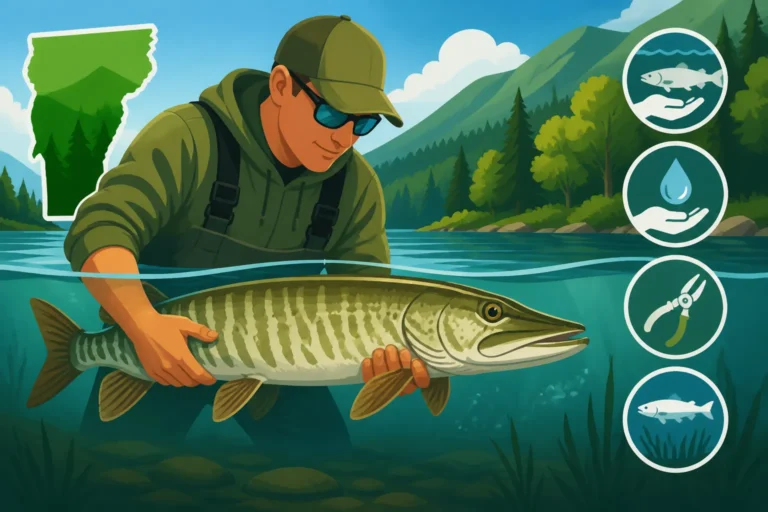
- Minimize Handling: The less you handle a fish, the better. Try to keep the fish in the water as much as possible. If you must lift it for a quick photo, do so gently, supporting its body horizontally with two hands – one under the belly and one near the tail. Avoid holding fish vertically by the jaw if they are heavy, as this can cause internal damage.
- Use Barbless Hooks: Crushing the barb on your hooks (with pliers) or using hooks that are already barbless makes removal much easier and reduces tearing of the fish's mouth.
- Use the Right Tools: A pair of long-nosed pliers or a de-hooking tool is essential for quickly and safely removing hooks, especially if they are deeply set. Keep them readily accessible.
- Avoid Excessive Photo Time: While a hero shot is tempting, prolonged exposure to air can be stressful and damaging to a fish. Get your picture quickly and get the fish back in the water.
- Revive the Fish: Once released, if the fish appears lethargic, hold it gently upright in the water, facing into the current (if in a river) or moving it slowly back and forth (if in still water) to force water over its gills. Release it only when it can swim away under its own power.
- Consider Water Temperature: In extremely warm water (above 75°F), the stress of being caught can be fatal even if released properly. Consider targeting different species or fishing during cooler parts of the day when water temperatures are high.
By following these simple guidelines, you become an active participant in sustaining Vermont's fantastic smallmouth bass fishery.
Understanding Vermont's Regulations
Vermont's fishing regulations are designed to protect fish populations and ensure fair chase. It's every angler's responsibility to know and abide by these rules before heading out on the water. Regulations can vary by species, water body, and season, so never assume.
Key aspects of smallmouth bass regulations to be aware of include:
- License Requirements: Absolutely essential. Anyone aged 15 and over needs a valid Vermont fishing license. You can find comprehensive information in our Vermont Fishing License Guide for 2026 and Where and How to Buy a Vermont Fishing License.
- Open Seasons: Smallmouth bass have specific open seasons in Vermont. While there is often a year-round catch-and-release season, the harvest season usually begins later in the spring or early summer to protect spawning fish. Always check the current Vermont Fish & Wildlife Department regulations for precise dates. Vermont Bass Catch-and-Release Season, Explained provides more insight.
- Daily Bag Limits: This specifies the maximum number of smallmouth bass you can keep in a single day. These limits are in place to prevent overfishing and maintain healthy populations. Check Vermont Bass Daily Bag Limit for current figures.
- Minimum Length Limits: Often, there's a minimum length requirement, meaning you must release any fish shorter than a specified size. Sometimes there are also slot limits, which protect fish within a certain size range. This ensures that younger fish have a chance to grow and reproduce. See Vermont Bass Minimum Length Limits for detailed information.
- Special Regulations: Certain waters may have specific regulations that differ from statewide rules. These might include catch-and-release only sections, specific bait restrictions, or different bag/length limits. Always check for "Special Regulation Waters in Vermont" if you're fishing a new or unfamiliar area.
- Live Bait Rules: As mentioned before, there are often rules about what types of live bait can be used, and in what waters, to prevent the spread of invasive species.
Ignorance of the law is not an excuse. Carrying a physical copy or having easy digital access to the current Vermont Fishing Guide is highly recommended. You can usually find these guides at license vendors, bait shops, or on the Vermont Fish & Wildlife Department's website. Being a responsible angler means being an informed angler.
Protecting Vermont's Waters
Our smallmouth bass thrive in healthy, clean aquatic environments. Protecting these waters goes beyond just fish regulations; it involves responsible actions every time we visit a lake or river.
- Prevent the Spread of Invasive Species: This is critical. Always clean, drain, and dry your boat, kayak, and fishing gear (waders, boots, nets) thoroughly before moving from one water body to another. Invasive species like zebra mussels or Eurasian watermilfoil can devastate ecosystems and impact fisheries. Inspect your gear for any plant fragments or hitchhiking organisms.
- Proper Waste Disposal: "Pack it in, pack it out!" Never leave trash, fishing line, or any other debris on the shore or in the water. Monofilament line can be particularly dangerous to wildlife. Carry a small trash bag with you and dispose of everything properly.
- Minimize Disturbances: Be mindful of your impact on the shoreline and aquatic vegetation. Avoid disturbing nesting birds or sensitive habitats. If you're wading, try to minimize stirring up sediment.
- Report Poaching or Violations: If you witness illegal fishing activity or environmental damage, report it to the Vermont Fish & Wildlife Department. Protecting our resources is a community effort.
- Support Conservation Efforts: Consider donating to or volunteering with local conservation groups that work to protect Vermont's waterways and fisheries.
By embracing these conservation principles, we ensure that the joy of smallmouth bass fishing in Vermont remains a cherished experience for everyone, today and for generations to come.
| Smallmouth Bass Fishing Strategy Snapshot | Spring (Post-Spawn) | Summer (Mid-Day) | Fall (Pre-Winter) |
|---|---|---|---|
| Water Temperature | 50s-60s°F | 70s+°F | 40s-50s°F |
| Typical Location | Shallow spawning areas, adjacent points, humps | Deep offshore humps, reefs, sharp drop-offs | Shallow flats, rocky points, deep breaks |
| Key Forage | Smelt, shiners, crayfish | Alewives, perch, crayfish | Alewives, shiners, crayfish |
| Recommended Lures/Baits | Jerkbaits, suspending crankbaits, tubes, swimbaits | Drop-shot, Ned rig, deep jigs, deep crankbaits, spoons | Jerkbaits, crankbaits, tubes, jigs, swimbaits |
| Best Retrieve Style | Slow, erratic, with pauses | Slow, subtle, bottom-oriented | Aggressive, erratic, varying speeds |
| Time of Day | All day | Early/late (shallow), mid-day (deep) | All day |
Disclaimer
This article is for general informational purposes only and does not constitute professional advice. Laws, prices and regulations vary by location and change over time. Consult a qualified professional for guidance on your specific situation.