Best Lures for Walleye Trolling on Lake Champlain
Fishing for walleye on Lake Champlain can be an incredibly rewarding experience, but let's be honest, it can also feel like you're trying to find a needle in a haystack if you don't have the right approach. Walleye are notoriously finicky, and figuring out what lures they'll strike on a given day, especially when you're trolling, is a puzzle many anglers struggle with. This comprehensive guide is here to unravel that mystery, providing you with detailed insights into the best lures for walleye trolling on Lake Champlain, helping you consistently put these delicious fish in your boat.
Understanding Lake Champlain Walleye Habits for Lure Selection
Before we even talk about specific lures, it's crucial to understand the walleye themselves. They're not just random swimming targets; they follow patterns, react to conditions, and have very specific preferences. Lake Champlain is a vast, complex body of water, and what works in one section or at one time of year might be completely useless somewhere else. Knowing their habits is the foundation for choosing the right presentation.
Seasonal Movements and Forage Preferences
Walleye are highly migratory, especially in a system as large as Lake Champlain. Their movements are largely dictated by water temperature and the availability of their primary food sources.
In the spring, right after ice-out and leading up to spawning, walleye are often found in shallower areas, especially around river mouths and rocky points. They're hungry and actively looking for baitfish that are also moving into warmer, shallower waters. During this time, smaller forage like smelt and shiners are key. Understanding their behavior during this period is essential for successful early-season trips, which you can read more about in our guide on Walleye Spawning Season in Vermont. As the water warms, they'll often hold near structure adjacent to their spawning grounds before dispersing.
As summer progresses and the lake stratifies, walleye tend to move deeper, seeking cooler, oxygen-rich waters. This is when they often suspend over deep flats or relate to humps and drop-offs. Their diet will expand to include larger baitfish, like alewives, perch, and even juvenile salmonids. Matching the hatch, or rather, matching the prevalent baitfish in terms of size, profile, and color, becomes paramount. Think about how to effectively target these deeper fish; our article on How deep walleye go in summer on Lake Champlain offers valuable insights.
Fall sees walleye migrating back towards shallower waters as the lake cools. They're in full feeding mode, gorging themselves to build up fat reserves for winter. This can be a fantastic time for trophy fish, as walleye are often concentrated and aggressive. They’ll chase down larger baits, reflecting the larger forage available. Knowing the Best Techniques for Fall Walleye can make a huge difference in your success.
Even in winter, during ice fishing season, their patterns hold. They might be slower, but still relate to structure and food. While trolling isn't a factor here, understanding their winter patterns reinforces their reliance on forage and structure.
Water Depth and Structure Preferences
Lake Champlain is a labyrinth of depths and structures, from shallow bays and rocky shorelines to vast, deep basins and submerged islands. Walleye utilize all of it, depending on the season and time of day.
During the day, especially in clear water, walleye will often hug bottom or relate tightly to structure such as rocky reefs, humps, and steep drop-offs. These features offer ambush points and shade. Trolling precisely along these contours is often the key. Using your electronics to identify these transition zones is critical. Our guide on How to read structure for walleye on Lake Champlain provides excellent advice on this.
As evening approaches and into the night, walleye frequently push shallower, moving onto sand flats, shoals, and even weed lines to feed. This is particularly true during the summer months when they'll cruise these areas under the cover of darkness. This shift in behavior means your lure selection and trolling depth will need to change drastically from midday presentations. For more on this, check out our piece on Night Fishing for Walleye on Lake Champlain.
Low Light Conditions and Walleye Vision
Walleye are often referred to as "low light predators." Their large eyes are specially adapted to gather light, giving them a distinct advantage over many baitfish in dim conditions. This means dawn, dusk, and overcast days are prime times for walleye fishing. In clear water, they might also be active deeper down, where light penetration is naturally reduced.
This unique vision capability influences lure color and action. In low light or deeper water, UV reflective colors and those that contrast sharply with the water column can be highly effective. Lures with rattles or strong vibrations also become important, as walleye can detect these through their lateral line system even if visibility is poor. Don't underestimate the power of subtle flash and vibration when the sun isn't high in the sky.
Crankbaits: The Walleye Trolling Workhorses
When it comes to trolling for walleye on Lake Champlain, crankbaits are undeniably the reigning champions. Their ability to dive to specific depths, mimic various baitfish, and create enticing action makes them indispensable in any walleye angler's tackle box. But not all crankbaits are created equal, and knowing which one to tie on can be the difference between a memorable day and a frustrating one.
Diving Lip Crankbaits
These are your bread and butter for walleye trolling. They come in an astonishing array of shapes, sizes, and diving depths, each designed for a specific scenario.
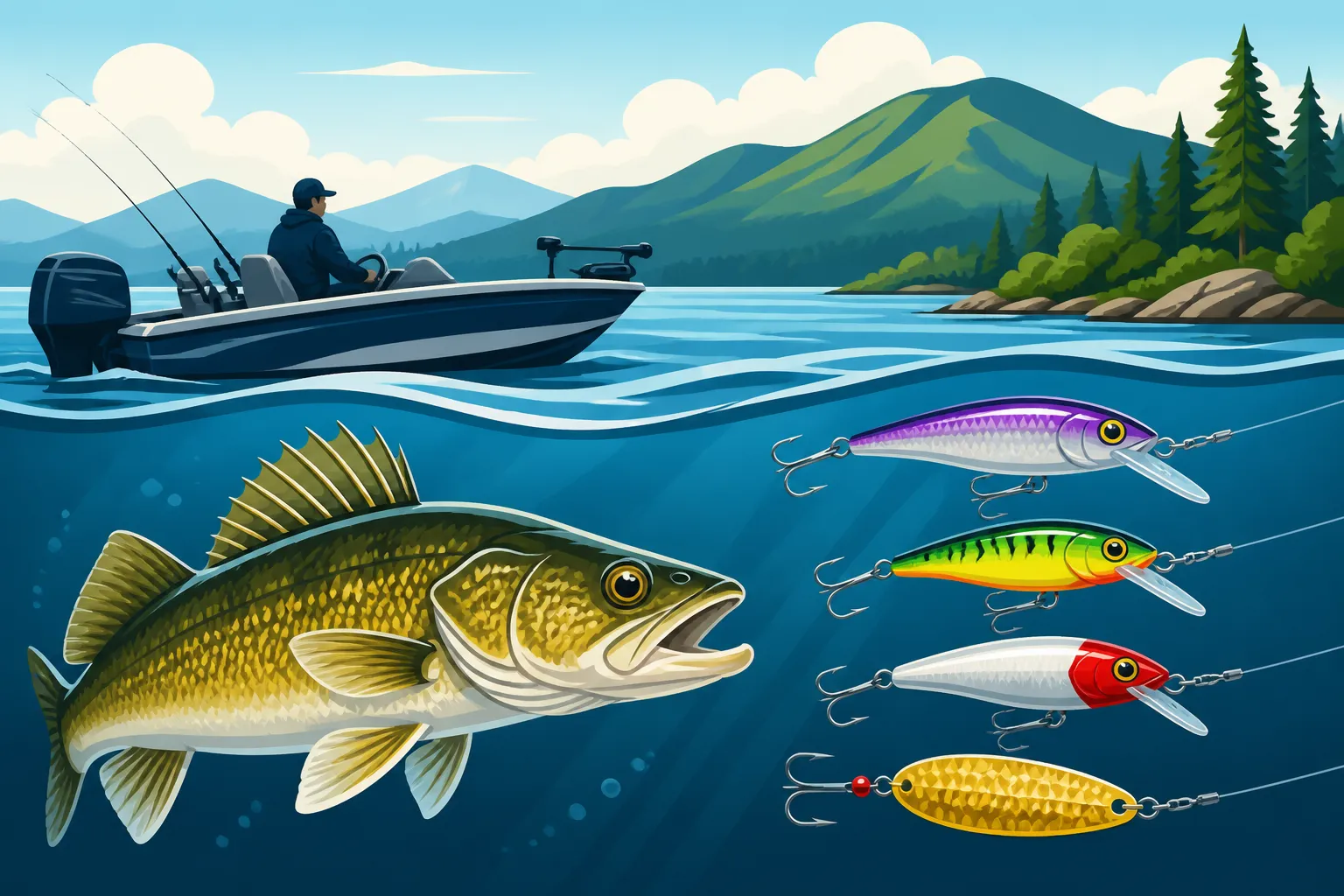
Deep Divers: These lures feature a large, often aggressive lip that allows them to reach significant depths, often 15 feet or more on their own, and even deeper with aids like lead core line or downriggers. Brands like Rapala Deep Tail Dancers, Berkley Flicker Shad Pro, and Reef Runner Deep Divers are incredibly popular for covering deep water. When you're marking fish suspended over deep basins or relating to the bottom of offshore humps, a deep diver is your first choice. They're excellent for mimicking larger baitfish that walleye target in deeper, cooler water during the summer and fall. Their wide wobbling action and often loud rattles can call in fish from a distance. If you're looking for where to buy these, many anglers find a great selection on Amazon, often with various color patterns available.
Medium Divers: These are versatile lures, typically diving to the 8-15 foot range on their own. They're perfect for targeting walleye on transitions, such as the edges of weed lines, shallower points, or mid-depth flats. Examples include the classic Rapala Shad Rap or Cotton Cordell Wally Diver. They often have a tighter wiggle than their deep-diving counterparts, which can be more appealing to walleye in certain conditions, especially when they're feeding on smaller baitfish or when the water is clearer. These are crucial for navigating depths that might be too shallow for deep divers but too deep for shallow runners, hitting that "just right" zone.
Shallow Runners: Don't overlook shallow running crankbaits, even for trolling. Lures like the Rapala Original Floater or smaller Berkley Flicker Shads without aggressive lips are fantastic for targeting walleye in very shallow water (less than 8 feet) during low-light conditions, especially in spring and fall. These can be run far behind the boat on long leads, or even cast and retrieved if you find fish actively feeding in skinny water. Their subtle action can be incredibly effective when walleye are spooky in clear, shallow conditions. They're also great when you're targeting walleye that have pushed onto shallow flats at dusk.
Lipless Crankbaits and Rattle Baits
While not traditionally a "trolling" lure in the same vein as their lipped cousins, lipless crankbaits and rattle baits do have a place in a walleye angler's arsenal, especially for specific applications that might involve short-line trolling or covering vast shallow areas.
Lipless Crankbaits: Lures such as the Bill Lewis Rat-L-Trap or the Rapala Rippin' Rap are known for their loud rattles and tight, vibrating action. While primarily casting lures, they can be trolled effectively at faster speeds over shallow weed flats or rocky areas, especially when walleye are aggressively feeding on baitfish. They sink quickly, so controlling your depth with trolling speed and line length is critical to avoid snagging. Their strong vibration can be a real trigger for aggressive walleye, particularly in stained water or during periods of high activity.
Rattle Baits: Often integrated into lipped crankbaits, the rattle component itself is a key feature. Many walleye specific crankbaits, both deep and shallow, incorporate internal rattles to create sound and vibration. This added auditory cue can be invaluable in low visibility conditions or when trying to draw fish from a wider area. When shopping for crankbaits, especially online on platforms like Amazon, pay attention to descriptions that mention internal rattles – they can make a difference. Some anglers even prefer lures with multiple rattle chambers for varied sound profiles.
Color Selection and Patterns
Choosing the right color can often feel like a guessing game, but there are some reliable principles to follow when trolling for walleye on Lake Champlain.
Natural Patterns: These mimic the local forage. Think silver, perch patterns, smelt, shiner, or goby colors. These are usually your best bet in clear water and sunny conditions when walleye have a good view of the lure. They are also excellent when walleye are keying in on a specific baitfish. A good rule of thumb is "match the hatch" – if you know what baitfish are prevalent in the area you're fishing, try to imitate them as closely as possible.
Bright and Contrasting Colors: Firetiger, chartreuse, hot pink, and other vibrant colors excel in stained or murky water, low light conditions (dawn, dusk, overcast), or at greater depths where natural light is limited. These colors offer high visibility, making it easier for walleye to spot them. Sometimes, walleye are just aggressive, and a bright, "loud" color will trigger a reaction strike, even if it doesn't perfectly imitate a natural baitfish.
UV Enhanced Lures: Many modern lures incorporate UV reflective finishes. This is a game-changer, as UV light penetrates deeper into the water column and is visible to walleye. In low light or deep water, a UV-enhanced lure can appear much brighter and more noticeable than a non-UV counterpart. When browsing for lures, especially new models, keep an eye out for these features.
Dark Colors: Surprisingly, dark colors like black, dark blue, or purple can be incredibly effective in certain situations, particularly on very bright, sunny days in clear water. When viewed from below against a bright sky, a dark lure creates a strong silhouette, making it easier for walleye to see without appearing unnatural. They also contrast well in muddy water.
Ultimately, having a variety of colors is key. Start with natural patterns, but don't hesitate to experiment with brighter or darker options, especially if the bite is slow. Keep an eye on local fishing reports and talk to other anglers to see what's been working recently on Lake Champlain.
Blade Baits and Spoons: Flash and Vibration for Aggressive Walleye
While crankbaits get a lot of glory in walleye trolling, blade baits and spoons are formidable alternatives, particularly when walleye are feeling aggressive or when you need a different profile and action to trigger a bite. They excel at imitating injured baitfish with their erratic movements and intense flash.
Trolling Spoons for Open Water Walleye
Spoons, traditionally used for salmon and trout, are increasingly popular for walleye trolling, especially in large, open water bodies like Lake Champlain. They offer a unique flash and flutter that can be irresistible to actively feeding walleye.
Types and Characteristics: Walleye spoons are generally smaller and lighter than those used for much larger salmon, typically ranging from 2 to 4 inches in length. Shapes vary, but popular choices include classic trolling spoons like the Doctor Spoon, Little Cleo, or the popular Michigan Stinger variations. These spoons have a distinct wobbling or fluttering action when trolled, mimicking a struggling baitfish. The key is their ability to reflect light intensely, creating a beacon for walleye.
When and Where to Use Them: Spoons shine brightest when walleye are suspended in the water column over deep flats or open water, actively chasing schools of baitfish. They are particularly effective in summer and fall when walleye are keyed into larger forage like smelt or alewives. They can be trolled at various depths using planer boards, snap weights, lead core line, or even downriggers, allowing you to present them precisely at the depth where fish are holding. The speed of your troll greatly affects a spoon's action; generally, a slightly faster troll (1.8-2.5 mph) will get the best flutter.
Color and Size Selection: Just like with crankbaits, matching the forage is crucial. Silver, gold, white, and blue/silver combinations are excellent for imitating baitfish. Adding a splash of chartreuse or orange can enhance visibility, especially in stained water or on overcast days. Some spoons feature intricate tape patterns that create a dazzling, multi-color flash. A selection of various sizes is also important to match the current baitfish size. Remember, sometimes the flashier, the better, particularly on sunny days where the light can really make the spoon "pop."
Blade Baits for Vertical Jigging and Trolling
Blade baits offer a different kind of vibration and flash compared to spoons, and while often associated with vertical jigging, they can be surprisingly effective when trolled in specific scenarios.
What are Blade Baits? Blade baits are thin, metal lures with a lead belly, designed to vibrate intensely on the retrieve or lift. Brands like the Silver Buddy, Heddon Sonar, or the Johnson ThinFisher are well-known examples. Their unique design creates a tight, high-frequency vibration that walleye can detect from a distance, even in murky water.
When to Troll with Blade Baits: Trolling with blade baits is less common than with spoons or crankbaits, but it can be deadly when walleye are tightly schooled on structure or when you want to "search" an area vertically. Instead of a long, horizontal troll, anglers might use blade baits with a very short lead (often just a few feet) behind a downrigger ball or a heavy bottom bouncer. This allows the blade bait to be fished almost vertically, just above the bottom, mimicking a darting baitfish trying to escape. This technique is particularly effective over rocky humps, deep points, or vertical drop-offs where walleye are holding tight to cover. The vibration helps them locate the lure even in tight spaces.
Color and Size Considerations: Blade baits come in a range of sizes, from small (1/4 oz) to larger (1 oz+). For trolling, you'll typically use the heavier ones to maintain depth. Common colors include chrome, gold, black, and firetiger. The strong vibration is the primary attractant, so contrast and flash are more important than hyper-realistic patterns.
When experimenting with either spoons or blade baits, it's a good idea to have a range of colors and sizes on hand. Often, a slight change in presentation, whether it's the lure itself, its color, or your trolling speed, can be the key to unlocking the bite.
Soft Plastics and Worm Harnesses: Subtle Presentations for Finicky Fish
Sometimes, walleye on Lake Champlain aren't aggressively chasing down fast-moving crankbaits or flashing spoons. When conditions are tough, or the fish are simply finicky, a more subtle, lifelike presentation is often what it takes. This is where worm harnesses, live bait rigs, and certain soft plastics truly shine. They offer a natural look, feel, and scent that can entice even the most reluctant walleye.
Worm Harnesses and Crawler Rigs
Worm harnesses, often called "crawler harnesses" or "spinner rigs," are classic walleye presentations, especially when trolling. They combine flash, vibration, and the irresistible appeal of live bait.
Components and How They Work: A typical worm harness consists of a lead weight (often a bottom bouncer or a small bell sinker), followed by a leader (usually fluorocarbon) with one or more hooks, usually snelled, and a spinner blade. The key is threading a live nightcrawler onto the hooks, allowing it to trail behind the spinner. As you troll, the spinner blade rotates, creating flash and vibration, while the wiggling nightcrawler provides natural scent and movement.
When and Where to Deploy Them: Worm harnesses are incredibly versatile. They are particularly effective when walleye are spread out over flats, along contour lines, or when they are lethargic due to a cold front or clear, bright conditions. They excel in moderate depths, from 10 to 30 feet, especially over soft bottom or along weed edges where walleye might be foraging for invertebrates. The slower trolling speeds (0.8-1.5 mph) required for harnesses allow walleye more time to inspect and commit to the bait. This makes them a go-to choice when you're struggling to get bites on faster presentations.
Key Components and Customization:
- Bottom Bouncers: These L-shaped weights keep your bait just off the bottom without constantly snagging. They come in various weights (1/2 oz to 3 oz typically) to match your depth and trolling speed.
- Leader Material: Fluorocarbon is preferred for its invisibility underwater. Length can vary from 3 to 6 feet.
- Hooks: Two or three snelled hooks are common, allowing you to present the entire nightcrawler naturally.
- Spinner Blades: This is where you can really customize. Colorado blades (round, wide wobble) create maximum vibration at slow speeds, ideal for murky water. Indiana blades (oval) offer a compromise. Willowleaf blades (long, slender) provide flash and less drag, suitable for faster trolling or clear water. Again, a wide selection of these components can often be found on Amazon, allowing you to build custom rigs.
- Beads: Colorful beads between the blade and hooks add attraction and protect your knot.
Don't forget that live bait itself is crucial. Keeping your nightcrawlers fresh and lively will significantly increase your success with worm harnesses.
Swimbaits and Paddle Tails
While traditionally casting lures, soft plastic swimbaits and paddle tails can be very effective when trolled, offering a realistic baitfish profile with subtle, natural action.
Realistic Imitations: Soft plastic swimbaits, often rigged on a jig head, are designed to mimic baitfish with incredible realism. They come in various sizes, colors, and tail designs, with paddle tails being particularly popular for the vibration they create. Brands like Keitech Swing Impact or Z-Man MinnowZ offer a fantastic range of options.
Trolling Techniques: For trolling, swimbaits are typically rigged on a jig head (1/4 oz to 3/4 oz, depending on depth) and can be fished in several ways.
- Behind Planer Boards: This allows you to spread out multiple lines and cover a wider area, keeping the baits away from the boat's disturbance.
- With Snap Weights or Lead Core: These methods allow you to present the swimbait at specific depths without the bulk of a heavy jig head, maintaining its natural swimming action.
- Short-Lining: For targeting fish directly under the boat, or when sounding out specific depth contours, a swimbait can be trolled with a shorter line, often just enough to get it down to the desired depth.
When to Use Soft Plastic Swimbaits: These are excellent when walleye are feeding on specific sizes of baitfish, and you want to offer a realistic, soft-bodied meal. They work well in clear water where walleye can inspect the lure, and their subtle action can be more appealing than a hard crankbait when fish are less aggressive. They are particularly good for mimicking smelt or perch, which are common forage in Lake Champlain. The natural texture of soft plastics also means fish tend to hold onto them longer, giving you a better chance to set the hook. Experiment with different jig head weights to get the desired dive and action at your preferred trolling speed.
By having a mix of worm harnesses for slow, subtle presentations and soft plastic swimbaits for realistic baitfish imitations, you'll be well-equipped to tackle those days when walleye are picky on Lake Champlain.
Trolling Depths and Speed: Maximizing Your Lure's Effectiveness
Choosing the right lure is only half the battle; getting that lure to the correct depth and presenting it at the optimal speed is equally, if not more, critical when trolling for walleye on Lake Champlain. Walleye are often very depth-sensitive, and a lure just a few feet too high or too low can be completely ignored.
Matching Lure Dive to Walleye Depth
This is where your electronics become your best friend. A good fish finder can show you not only the depth of the bottom but also where the walleye and their forage are holding in the water column.
Understanding Lure Dive Charts: Most crankbaits come with a dive chart provided by the manufacturer. These charts typically show the approximate diving depth of the lure with a specific line type (e.g., monofilament) and length of line out. However, these are just starting points. Factors like line diameter, trolling speed, and current can all affect the actual running depth. It’s always good to test your lures to see how they run at different speeds and line lengths.
Tools for Depth Control:
- Lead Core Line: This specialized line has a lead core covered in Dacron, allowing it to sink. Each color segment (typically 10 yards) represents an approximate depth gain. By letting out a certain number of colors, you can control your lure's depth without additional weights. It's fantastic for covering specific depth zones over large areas. Our guide on Best trolling depth for walleye on Lake Champlain delves deeper into this.
- Snap Weights: These are clip-on weights that you attach to your main line a certain distance in front of your lure. They allow you to add weight to any lure, increasing its diving depth without needing specialized line. They're highly versatile for adjusting depth on the fly.
- Downriggers: For extreme precision in deep water, downriggers are unmatched. They use a heavy cannonball weight to carry your main line (with the lure attached) down to a precise depth, releasing the line when a fish strikes. This method is often preferred for targeting deep suspended walleye or when Lake Champlain lake trout are also in play. For more on the specific gear, check out our piece on Best Downriggers for Walleye Trolling.
- Planer Boards: While not directly affecting depth, planer boards help you spread out your lines horizontally, allowing you to cover a wider swath of water and present lures in undisturbed water away from the boat. They are often used in conjunction with lead core, snap weights, or diving crankbaits to achieve both width and depth.
The "Bottom-Kissing" Technique: Often, walleye will hug the bottom, especially when relating to structure. Many successful walleye anglers aim to have their crankbait "tick" the bottom occasionally, stirring up a puff of silt. This can trigger reaction strikes from walleye hiding near the bottom. This requires careful depth management and constant adjustment to the lakebed contours using your boat's throttle and steering.
Adjusting Trolling Speed for Optimal Lure Action
Trolling speed is not a static number; it's a dynamic variable that should be constantly adjusted based on conditions and fish behavior.
The Sweet Spot: For most walleye crankbaits and worm harnesses, a trolling speed between 1.2 mph and 2.5 mph is a good starting point. Within this range, each lure has its optimal action. Too slow, and some crankbaits won't wobble correctly; too fast, and they might blow out or simply appear unnatural.
Seasonal Variations:
- Cold Water (Spring/Fall): Walleye metabolisms are slower in colder water, so they often prefer a slower, more deliberate presentation. Speeds on the lower end of the range (1.0-1.8 mph) are often more effective. This is particularly true for worm harnesses, which are designed for slower presentations.
- Warm Water (Summer): In warmer water, walleye can be more active and willing to chase. Faster trolling speeds (1.8-2.5 mph, sometimes even higher for aggressive fish) can trigger reaction strikes. This is when aggressive crankbaits and spoons really come into their own.
Fish Mood and Reaction: Pay close attention to how the fish are reacting. If you're marking fish but not getting bites, try varying your speed. Often, a subtle speed change – a brief acceleration or deceleration (sometimes called "S-turns" with the boat) – can be the trigger. This change in speed makes your lure appear to dart or stumble, mimicking an injured baitfish, which can be irresistible to a walleye.
Reading Your Rod Tip: Your rod tip is your window into what your lure is doing. It should have a consistent, rhythmic wobble indicating the lure is working correctly. If the tip goes slack, you've either picked up weeds, hooked a fish, or your lure has fouled. If the wobble becomes erratic, check your speed or lure.
Remember, successful walleye trolling is about finding the precise combination of depth, speed, and lure action that appeals to the fish on any given day. Don't be afraid to experiment, and always pay attention to the subtle clues your boat and tackle are giving you.
Essential Gear and Setup for Lake Champlain Walleye Trolling
Successful walleye trolling on Lake Champlain isn't just about the lures; it's about having the right gear that works together seamlessly. From your rod and reel to your onboard electronics, each piece plays a vital role in presenting your lures effectively and landing those hard-fighting walleye.
Rods, Reels, and Line Choices
Having a dedicated trolling setup can drastically improve your efficiency and success.
Rods:
- Length: For trolling, rods typically range from 7 to 9 feet. Longer rods help spread out lines, absorb shock from waves, and provide a better fighting arc.
- Action: A moderate to moderate-fast action is generally preferred. This allows the rod tip to load up smoothly when a fish strikes, preventing hooks from tearing out, and provides enough backbone to fight larger fish. A softer tip also helps to visibly telegraph the action of your lure.
- Power: Medium to medium-heavy power is suitable for handling the resistance of diving crankbaits and fighting walleye, which can average 3-5 pounds on Champlain, but occasionally push into double digits. Brands like St. Croix, Ugly Stik, and Daiwa all offer excellent trolling rod options, many of which are readily available on Amazon.
- Rod Holders: You'll need sturdy rod holders mounted to your boat to hold multiple rods securely while trolling. Look for adjustable holders that can handle the forces of a big fish strike or a snaked lure.
Reels:
- Line Counters: Line counter reels are almost mandatory for effective walleye trolling. They allow you to precisely measure how much line you have out, which is critical for replicating successful depth patterns. This consistency is key when you find a productive depth.
- Gear Ratio: A moderate gear ratio (around 4.2:1 to 5.2:1) is good, providing plenty of cranking power to retrieve diving lures and fight fish.
- Capacity: A reel with ample line capacity is important, especially when running lead core line or long lengths of monofilament. Look for models like the Daiwa Accudepth Plus or the Okuma Cold Water series.
Line:
- Monofilament: A good all-around choice for many trolling applications. It offers stretch, which acts as a shock absorber, and is relatively affordable. 10-15 lb test is common. However, its larger diameter can reduce dive depth.
- Fluorocarbon: Excellent for leaders due to its invisibility underwater and abrasion resistance. Some anglers use it as a main line for specific applications, but its low stretch and higher cost can be drawbacks for long trolling passes.
- Braided Line: Offers incredible strength and no stretch, making it excellent for feeling subtle bites and setting hooks. However, its lack of stretch requires a rod with a more forgiving action, and it often requires a fluorocarbon leader for stealth. Also, it floats, so it will reduce the natural dive of your lures. Our guide on Best Fluorocarbon Line for Clear Lake Water offers more specific advice.
- Lead Core Line: As mentioned earlier, this is essential for precisely reaching deeper depths without heavy weights near your lure. Its color-coded sections make depth management straightforward.
Electronics and Boat Control
Modern electronics and good boat control are your secret weapons for unlocking Lake Champlain's walleye secrets.
Fish Finders/Sonar:
- Chirp Sonar: Provides incredibly clear, detailed images of fish, baitfish, and bottom structure. Look for units from Lowrance, Humminbird, or Garmin.
- Side Imaging/Down Imaging: These technologies offer photographic-like views of what's to the sides and directly beneath your boat, helping you identify submerged humps, rock piles, drop-offs, and even individual fish away from your main sonar cone. This is vital for finding structure that holds walleye. Our guide on Best Fish Finders for Vermont Lakes has some great recommendations.
- GPS/Chartplotter: Essential for navigation, marking waypoints (where you caught fish, found structure), and following precise contour lines. Lake Champlain has excellent digital maps available for most units, showing detailed depths and bottom features.
Trolling Motor:
- Bow-Mounted Electric Trolling Motors: Equipped with GPS-enabled features like "spot lock" or "anchor mode," these are revolutionary for walleye trolling. They can hold your boat precisely on a contour, track a specific route, or maintain a consistent speed, freeing you up to focus on your lines and lures. Brands like Minn Kota and MotorGuide dominate this space.
- Kicker Motors: Small outboard motors (often 9.9 HP or less) provide reliable, quiet power for long trolling runs, especially in rougher conditions or when covering large distances on Lake Champlain. They are more fuel-efficient than your main outboard for trolling speeds.
Boat Control Strategies:
- S-Turns: Regularly incorporating subtle S-turns into your trolling path can be a huge bite trigger. As the boat turns, the inside lures slow down and drop, while the outside lures speed up and rise. This erratic action mimics a baitfish trying to escape.
- Varying Speed: Don't be afraid to subtly adjust your trolling speed. Sometimes a small surge or slowdown is all it takes to provoke a strike.
- Staying on Contours: Using your GPS to follow specific depth contours is often more productive than just trolling in a straight line. Walleye frequently relate to these depth changes.
By investing in and understanding how to use quality rods, reels, line, and electronics, you'll be well on your way to mastering walleye trolling on Lake Champlain. It's an investment that truly pays off in more fish in the net and more enjoyable days on the water.
Trolling Lure Selection Guide for Lake Champlain Walleye
Here's a quick reference table to help you choose the right lure for the conditions you're facing on Lake Champlain.
| Lure Type | Key Characteristics | Ideal Conditions & Depths | Trolling Speed (Approx.) | Notes |
|---|---|---|---|---|
| Deep Diving Crankbaits | Large lip, wide wobble, rattles (often) | Deep water (15'+), suspended fish, structure | 1.8 – 2.5 mph | Excellent for summer & fall, often require lead core/downriggers. |
| Medium Diving Crankbaits | Medium lip, tighter wobble, various profiles | Mid-depths (8-15'), weed edges, points | 1.5 – 2.2 mph | Versatile, good for spring & early summer, use snap weights for depth. |
| Shallow Running Crankbaits | Small/no lip, subtle wobble, light | Shallow water (<8'), low light, wary fish | 1.2 – 1.8 mph | Good for spring, fall, and night fishing in skinny water. |
| Worm Harnesses/Crawler Rigs | Spinner blade, beads, live nightcrawler | Flats, contours, lethargic fish (10-30') | 0.8 – 1.5 mph | Slow, natural presentation, great for tough bites, use bottom bouncers. |
| Trolling Spoons | Metal, fluttering action, high flash | Open water, suspended baitfish (any depth) | 1.8 – 2.5 mph | Effective for aggressive walleye, often used with planer boards. |
| Soft Plastic Swimbaits | Realistic profile, paddle tail, jig head rigged | Clear water, matching specific forage | 1.2 – 2.0 mph | Subtle, natural action, good for finicky fish, can be fished at various depths. |
| Blade Baits | Thin metal, high vibration, lead belly | Vertical jigging preferred, short line trolling on structure | 1.5 – 2.2 mph | Less common for pure trolling, but useful for covering deep, tight structure vertically. |
Remember, this table is a starting point. Experimentation and paying attention to what the fish are telling you on any given day are the ultimate keys to success.
Disclaimer
The information provided in this guide is for general informational purposes only and is based on typical fishing practices and regulations. Fishing conditions, fish behavior, and specific regulations in Vermont, especially on a large and dynamic body of water like Lake Champlain, can change frequently. Always consult the most current Vermont Fish & Wildlife Department regulations before heading out on the water. Ensure you have all necessary licenses and comply with all local, state, and federal laws regarding fishing and boating. Fishing inherently carries risks, and safety precautions should always be observed.