Best Fish Finders for Vermont Lakes
For anyone who’s spent hours on a Vermont lake, squinting at the water, casting blindly, and wondering why the fish just aren't biting, you know the frustration. The beautiful, deep, and often mysterious waters of the Green Mountain State can hold incredible fishing opportunities, but finding those elusive fish—or even the structure they call home—can feel like searching for a needle in a haystack. This comprehensive guide is here to demystify the world of fish finders, helping you understand how these incredible pieces of technology can transform your Vermont fishing experience from guesswork to precision, making every outing more productive and enjoyable.
Why a Fish Finder is a Game Changer for Vermont Anglers
Fishing in Vermont is an experience unlike any other. We have everything from the vast, deep expanses of Lake Champlain Fishing Guide to the pristine, cold waters of Lake Willoughby Fishing Guide and countless smaller ponds and winding rivers. Each body of water presents its own unique challenges, and relying solely on traditional methods can often leave you wondering what lies beneath the surface. That’s where a good fish finder comes in, turning the invisible into the visible and empowering you to make smarter decisions on the water.
Beyond Guesswork: The Science of Sonar in Vermont's Diverse Waters
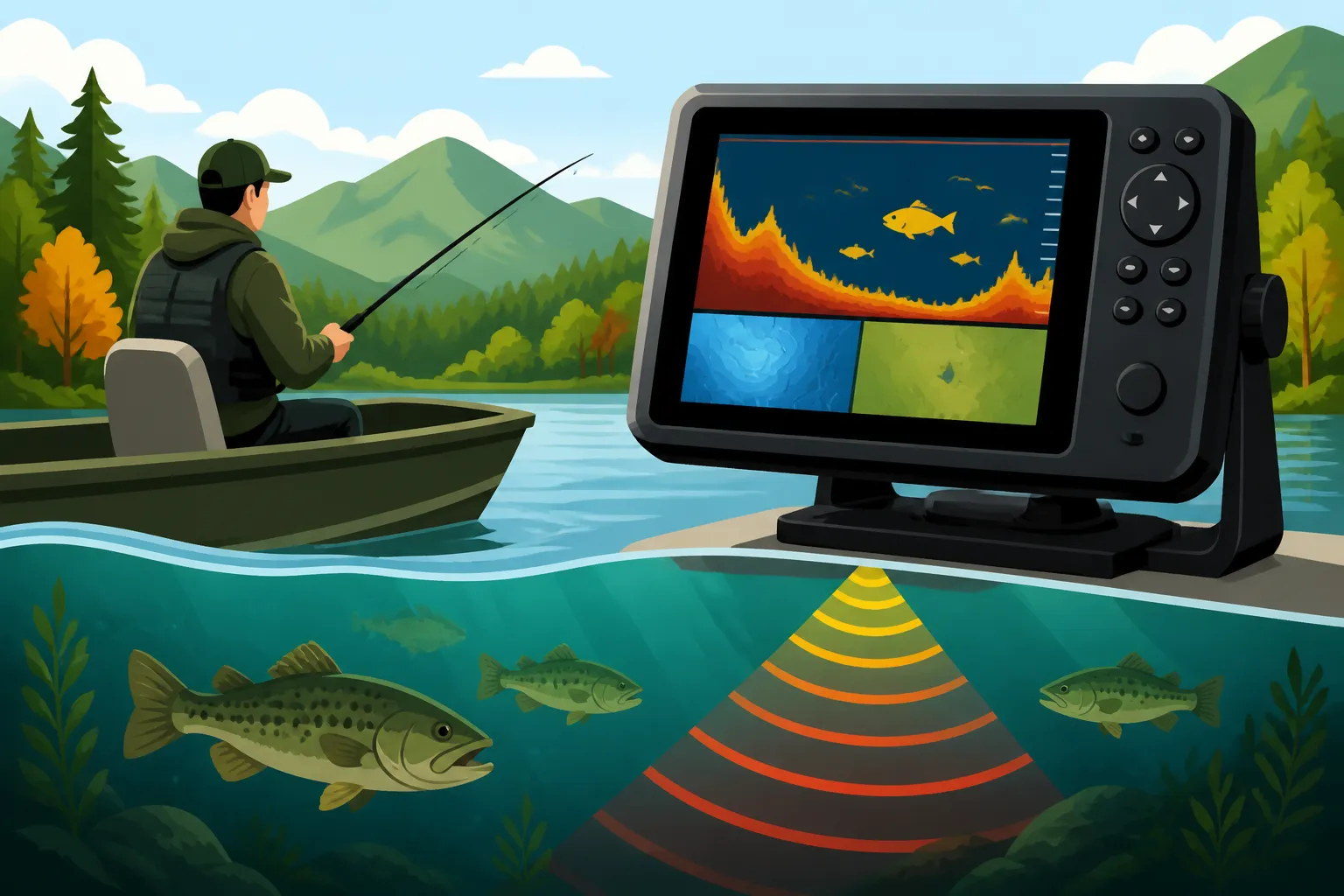
At its core, a fish finder uses sonar technology, which stands for SOund NAvigation and Ranging. Think of it like a bat echolocating in the dark. Your fish finder sends out sound waves, typically from a transducer mounted on your boat's transom, hull, or even your trolling motor. These sound waves travel through the water until they hit an object—be it the bottom, a submerged log, a school of baitfish, or your target species like a hefty walleye. When these sound waves encounter something, they bounce back to the transducer, which then converts the returning echoes into electrical signals.
The fish finder's internal processor takes these signals and, based on the time it took for the sound to return and the strength of the echo, paints a picture on your screen. Faster returns indicate shallower objects, while stronger returns suggest larger or denser objects. This constant pinging and receiving of sound waves creates a continuous, real-time scroll of what’s directly beneath and, with advanced technologies, even to the sides of your boat. For Vermont anglers, this means you’re no longer just guessing where the drop-offs are, or if that dark spot on the map is a weed bed or a pile of rocks. You’re seeing it.
Unlocking Structure and Depths: Finding Vermont's Hidden Hotspots
Vermont's lakes and rivers are full of incredible, yet often unseen, structure. We’re talking about rock piles, steep drop-offs, submerged timber, weed lines, old roadbeds, and sudden changes in depth. These features are absolute magnets for fish, offering them cover, ambush points, and access to different water temperatures and food sources. Without a fish finder, finding these hotspots is often a matter of luck, local knowledge passed down through generations, or spending countless hours crisscrossing the water with little success.
A quality fish finder equipped with features like Down Imaging or Side Imaging can literally draw a photographic-like picture of the bottom. You can identify not just the presence of structure, but its exact shape, composition, and relationship to the surrounding contours. Imagine seeing a sunken Christmas tree at 20 feet, bristling with crappie, or a massive boulder field on Lake Champlain Fishing Guide holding a school of smallmouth bass. This ability to visualize the underwater landscape is invaluable, allowing you to accurately position your boat, cast to specific targets, and understand why certain areas are more productive than others. It takes the mystery out of the depths and gives you a strategic advantage.
Pinpointing Fish: From Lake Champlain Walleye to Mountain Brookies
Of course, the ultimate goal of a fish finder is right in its name: finding fish. While traditional sonar might show you "arches" that represent fish, modern units take this to a whole new level. High-frequency CHIRP sonar, for example, can separate individual fish even when they're tightly schooled, distinguishing a big walleye from a cluster of baitfish. This level of detail is critical when you're targeting specific species or trying to assess the size of a school.
For those pursuing How to Catch Walleye on Lake Champlain, a fish finder can reveal schools of baitfish, like smelt, that walleye often follow, as well as the walleye themselves hugging the bottom or suspended in the water column. In colder, deep lakes like Willoughby, a fish finder helps locate concentrations of Landlocked Salmon Fishing in Vermont and Lake Trout Fishing in Vermont suspended at specific depths or near temperature breaks. Even for shallower targets, like How to Catch Largemouth Bass in Vermont lurking in weed beds or around docks, Down Imaging can reveal their presence without spooking them. Knowing exactly where the fish are before you even cast saves time, reduces frustration, and drastically increases your chances of a successful hook-up, turning frustrating outings into memorable catches.
Deconstructing the Technology: What Makes a Great Fish Finder Tick
When you start looking at fish finders, the sheer number of features and technical jargon can feel overwhelming. Don’t worry, you’re not alone! It’s easy to get lost in the specifications. But understanding a few core components will help you cut through the noise and pick a unit that truly suits your style of fishing in Vermont.
The Heart of the System: Transducers and Their Role in Clarity
The transducer is arguably the most critical component of any fish finder; it's the "eye" that sees beneath the water. Without a good transducer, even the most expensive head unit won't give you clear readings. It’s responsible for both sending out the sonar waves and receiving their echoes. The type of transducer and how it's mounted significantly impacts performance.
Most transducers are either transom-mounted (bolted to the back of your boat), thru-hull (drilled through the bottom of your boat), or in-hull (glued inside the hull, suitable for solid fiberglass boats). For kayaks, you often see portable suction-cup mounts or units that sit in a scupper hole. Trolling motor transducers are also common, providing a clean signal away from engine interference. The beam angle of your transducer is also important: a wider cone covers more area but might lose detail in deep water, while a narrower cone provides incredible detail directly below but covers less ground. Many modern transducers offer multiple beam angles or frequencies to give you the best of both worlds. For example, a single transducer might offer traditional 2D sonar, Down Imaging, and Side Imaging, each using different frequencies and beam shapes to build a comprehensive picture. For the varied depths of Vermont, having a versatile transducer is key.
Display Matters: Size, Resolution, and Screen Types for Vermont Conditions
Once your transducer sends and receives the signals, the display unit is where that information comes to life. A bigger, clearer screen makes a huge difference, especially when you’re trying to decipher subtle details or keep an eye on your map.
- Screen Size: This is measured diagonally, just like a TV. While a smaller 5-inch screen might be fine for a kayak or a compact boat fishing Vermont's smaller ponds, trying to split that screen into multiple views (map, 2D sonar, Down Imaging) can make everything feel cramped. For larger boats or those who want multiple views simultaneously, 7-inch, 9-inch, or even 12-inch displays offer a much more comfortable viewing experience. When you're fishing a vast lake like Champlain, where you're often covering a lot of water and need to see a lot of information at once, a larger screen truly shines.
- Resolution: This refers to the number of pixels on the screen (e.g., 800×480 or 1024×768). Higher resolution means more detail and a sharper image, allowing you to distinguish individual fish, see finer details of structure, and read small text on charts without straining your eyes. Imagine trying to see a tiny arch representing a perch on a low-resolution screen versus a crisp, defined image on a high-resolution display—the difference can be night and day.
- Screen Type: Most modern fish finders feature color LCD or LED displays. The brightness and anti-glare properties are crucial, especially when fishing under the bright Vermont sun or trying to peer into murky water. Some units offer touchscreens, which are intuitive but can be tricky with wet hands or gloves. Button-operated units are reliable and tactile, which many anglers prefer in adverse conditions. Consider how you fish and what will be most comfortable and functional for you.
Power and Frequencies: Going Deep or Seeing Wide in Vermont Lakes
The power output (measured in RMS watts) and the operating frequencies (measured in kHz or MHz) are critical specifications that determine how well your fish finder can penetrate water and what kind of detail it can provide.
- Power Output (RMS Watts): Generally, higher wattage means greater depth penetration and better performance in choppy or turbid water. If you’re regularly fishing the deep sections of Lake Champlain or Lake Willoughby, a fish finder with higher RMS power will maintain a clearer signal at depth. Units with lower power might struggle to give clear returns past 100-150 feet, while high-end units can provide excellent detail at several hundred feet. This is particularly important for Lake Trout Fishing in Vermont which often requires targeting fish in deep, cold water.
- Frequencies: This is where things get really interesting:
- Low Frequencies (e.g., 50 kHz, 83 kHz): These waves penetrate deeper into the water column and are excellent for deep-water fishing and identifying large, overarching structures. They don't offer super fine detail but are great for finding the bottom in several hundred feet of water.
- High Frequencies (e.g., 200 kHz, 455 kHz, 800 kHz, 1.2 MHz): These provide much finer detail and better target separation, ideal for shallower water and distinguishing individual fish from bait balls. However, they don't penetrate as deep.
- CHIRP (Compressed High-Intensity Radiated Pulse): This isn't a single frequency but rather a range of frequencies (e.IRP, Medium CHIRP, High CHIRP) sent out in a sweep. CHIRP sonar offers vastly improved target separation and definition, providing crystal-clear images of fish, structure, and bait. It's like comparing a black and white photograph to a high-definition color video. For anglers chasing everything from subtle walleye bites to tightly schooled perch, CHIRP technology is a game-changer.
- Side Imaging/Down Imaging Frequencies: These specialized sonars use very high frequencies (typically 455 kHz or 800 kHz, sometimes even 1.2 MHz) with very thin, wide beams to create their photo-like images. Higher frequencies generally provide more detail but have a shorter range for side imaging.
Understanding these aspects helps you tailor your choice to the specific demands of Vermont's waters, ensuring your investment pays off in clearer readings and more fish.
Essential Features for Navigating and Fishing Vermont Waters
Beyond the basic sonar functions, modern fish finders come packed with an array of features that can greatly enhance your time on the water, especially in a diverse fishing environment like Vermont. These aren't just bells and whistles; they're tools that help you understand, navigate, and exploit your fishing grounds more effectively.
GPS Chartplotting: Your Digital Guidebook for Lake Champlain and Beyond
One of the most valuable additions to any fish finder is integrated GPS chartplotting. This feature turns your fish finder into a powerful navigation tool, much like the GPS in your car, but designed for marine environments.
- Navigation and Mapping: GPS allows your unit to display your boat's position on a detailed electronic map (chart). Many units come pre-loaded with base maps, and you can often purchase more detailed charts for specific lakes, like those for Lake Champlain Fishing Guide, which show contours, navigation aids, and even submerged features. This is invaluable for safe navigation, especially in fog or low light, and for avoiding hazardous shoals or rocks.
- Waypoints and Tracks: This is where GPS becomes a true fishing asset. You can mark "waypoints" at specific locations: where you caught a big fish, found a productive weed line, or noticed some intriguing structure. Over time, you'll build a personal map of hotspots. You can also record your "tracks," showing the exact path your boat has taken, which is great for re-tracing a successful troll or marking out a search pattern. Imagine finding a killer rock pile for Smallmouth Bass Fishing in Vermont, marking it, and being able to return to that exact spot time and time again. This ability to pinpoint and return to productive areas is a massive advantage.
- Speed and Course: GPS also provides accurate boat speed over ground and your course, which is essential for precise trolling presentations or maintaining a consistent drift. For Vermont anglers covering large bodies of water, having this navigational power directly integrated into your fish finder means one less device to manage and a clearer picture of your fishing grounds.
Advanced Sonar Views: Side Imaging and Down Imaging for Unmatched Detail
While traditional 2D sonar gives you a vertical view directly under your boat, advanced technologies like Down Imaging and Side Imaging offer revolutionary perspectives of the underwater world.
- Down Imaging (or DownVu/DownScan): This technology sends a very thin, high-frequency beam directly beneath your boat, creating a picture-like view of what’s directly below. Unlike the arches of 2D sonar, Down Imaging renders structure and fish with remarkable photographic clarity. You’ll see individual tree branches, the distinct shape of rock piles, and even fish separated from the bottom with incredible detail. It's excellent for identifying specific pieces of cover where fish might be hiding and distinguishing between a submerged log and a school of bait.
- Side Imaging (or SideVu/SideScan): This is perhaps the most revolutionary sonar technology for many anglers. Side Imaging sends thin, high-frequency beams out to the sides of your boat, often covering up to several hundred feet on each side. It literally paints a panoramic image of the bottom to your left and right. This allows you to "scan" vast areas quickly, identifying structure, weed lines, and schools of fish without driving directly over them. Imagine cruising along the shoreline of Lake Memphremagog Fishing Guide and seeing a rock reef extending hundreds of feet to your left, complete with fish holding on its edge, all without ever leaving the main channel. This capability is invaluable for searching for new spots, understanding the overall layout of an area, and locating those subtle anomalies that hold fish but might be missed by traditional sonar. For anglers chasing wide-ranging species or exploring new waters, Side Imaging is an absolute game-changer.
User-Friendly Interface: Less Fumbling, More Fishing
Let’s be honest, no one wants to spend precious fishing time fumbling through complicated menus. A fish finder is a tool meant to help you fish, not hinder you with a steep learning curve. The user interface plays a huge role in how effectively you can use your unit on the water.
- Intuitive Menus and Controls: Look for units with logical menu structures that allow you to quickly access common functions like zoom, sensitivity, or changing sonar views. Some units feature dedicated buttons for specific functions, while others rely more on touchscreens. Consider which style you prefer and how easy it will be to operate with wet hands, in cold weather, or while wearing gloves.
- Customizable Displays: The ability to customize your screen layout—for instance, having your map on one side and 2D sonar on the other, or integrating your engine data—can make a big difference. Many units allow you to save favorite screen layouts, so you can switch between a "trolling" view and a "structure-scanning" view with just a couple of taps.
- Pre-set Modes and Auto-Settings: For beginners, features like "auto-mode" or pre-set fishing modes (e.g., "freshwater," "deep water") can simplify initial setup, allowing the unit to automatically adjust sensitivity and other settings for optimal performance. While experienced users will eventually want to tweak settings manually, these auto-features are a great way to get started without feeling overwhelmed.
The easier your fish finder is to operate, the more time you'll spend fishing effectively and less time wrestling with technology. This is especially true when you're dealing with the unpredictable conditions of Vermont weather!
Matching Your Fish Finder to Your Vermont Fishing Style
Vermont offers a diverse array of fishing experiences, from vast, deep lakes to intimate mountain streams, and each requires a slightly different approach—and sometimes, a different kind of fish finder. Choosing the right unit means understanding your primary fishing grounds and target species.
Deep Water Trolling: Lake Champlain and Large Lakes' Walleye and Lake Trout
If your passion lies in pursuing species like Walleye Fishing on Lake Champlain or Lake Trout Fishing in Vermont on the state's larger, deeper lakes, your fish finder needs to be a workhorse. These fish often suspend in the water column or relate to deep structure, making powerful sonar and precise navigation absolutely critical.
- Depth Penetration is Key: Look for units with high RMS power output and low-frequency CHIRP capabilities (50/83 kHz range). These will give you clear returns down to hundreds of feet, allowing you to track your downrigger balls, identify thermoclines, and spot individual fish or bait schools far below. You want to see your lure in relation to the fish, which requires serious depth capability.
- GPS Chartplotting with Detailed Maps: On expansive lakes like Champlain, Memphremagog, or even deeper sections of Willoughby, navigation can be complex. A robust GPS chartplotter with pre-loaded high-definition mapping, like Navionics or Lakemaster (often available as add-ons through retailers like Bass Pro Shops or online platforms like Amazon), is essential. This allows you to mark productive trolling passes, navigate safely through channels, and return to exact depths and contours where you found fish.
- Advanced Sonar Views: Side Imaging can be incredibly useful for quickly identifying submerged humps, deep rock piles, or old river channels that might hold walleye or lake trout. Down Imaging helps confirm the type of structure and distinguish fish from clutter at depth. When you're trolling, being able to scan a wide area to either side without driving over it saves immense time and fuel.
Bass Fishing: Targeting Structure and Cover in Vermont's Best Bass Lakes
For those who chase Largemouth Bass Fishing in Vermont in shallower, weedier ponds or Smallmouth Bass Fishing in Vermont around rocky points and humps, your fish finder needs to excel at detailed shallow-water imaging and pinpointing cover.
- High-Resolution Down Imaging: Bass are often ambush predators, relating tightly to structure like fallen trees, docks, rock piles, or dense weed beds. High-frequency Down Imaging (455/800 kHz) will give you a photographic-like view, allowing you to discern individual branches of a sunken tree or the precise edge of a weed line where a bass might be waiting. This precision helps you make accurate casts.
- Side Imaging for Scanning: When exploring a new lake or searching for active bass, Side Imaging is invaluable. You can quickly scan vast flats, shorelines, or open water areas to locate submerged timber, brush piles, or rocky transitions that hold bass. Instead of driving aimlessly, you can pinpoint these targets from a distance, then move in to fish them effectively. This is particularly useful for finding those subtle offshore humps or rock piles that smallmouth love.
- Detailed Chartplotting and Waypoints: Bass patterns often rely on specific contours or pieces of cover. Being able to mark exact stumps, rock clusters, or productive weed lines with GPS waypoints ensures you can return to these high-percentage spots later in the day or on future trips. For instance, if you find a specific contour line where smallmouth are schooling, you can mark it and easily stay on that productive depth. You might also link to Best Bass Fishing Lakes in Vermont here for context.
Ice Fishing: Portable Flashers and Sonar for Hardwater Anglers
Vermont's hardwater season is hugely popular, and ice fishing demands a specific type of fish finder—often a portable flasher-style unit or a portable sonar package. Ice Fishing in Vermont is a unique game, and so is the gear.
- Flasher-Style Units: These are the traditional kings of ice fishing. They provide a real-time, circular display that shows your jig, any fish approaching it, and the bottom directly beneath your hole with incredible speed and clarity. The instantaneous feedback is crucial for detecting subtle bites and reacting quickly. Brands like Vexilar, Marcum, and Humminbird (with their Ice Helix units) are popular choices among serious ice anglers.
- Portable Sonar Units: Many modern open-water fish finders can be converted into portable ice fishing units with a special transducer and battery/case combo. These offer the familiar 2D sonar display, often with a "flasher" mode or split-screen option. They might also offer mapping, which is fantastic for navigating sprawling ice fishing grounds and marking productive holes. The key here is portability: a compact design, long-lasting battery, and a sturdy carrying case are essential for trekking across the ice.
- Target Separation and Zoom: Whether flasher or sonar, excellent target separation is vital to distinguish your tiny ice jig from a hovering perch or a walleye hugging the bottom. Zoom functions help you magnify a specific section of the water column, giving you an even clearer view of the action around your bait.
You can find many of these specialized units and accessories at outdoor retailers like Bass Pro Shops.
Kayak and Smaller Boat Fishing: Compact Solutions for Vermont's Ponds and Rivers
For anglers using kayaks, canoes, or small aluminum boats on Vermont's myriad ponds and rivers, space, portability, and power efficiency are paramount. You need a unit that won't overwhelm your craft but still delivers strong performance.
- Compact Design: Look for smaller, more compact units (5-inch or 7-inch screens are common) that don't take up too much precious deck space. Mountability is also key; ram mounts or track mounts are popular for easy installation and removal on kayaks.
- Power-Efficient: Battery life is a major concern when you’re relying on a small 12V battery or even AA/AAA batteries for portable units. Choose models known for their efficiency, or consider pairing your unit with a high-capacity lithium battery for extended trips.
- Versatile Transducer Options: Many kayak anglers use in-hull transducers, scupper-hole transducers, or even portable suction cup mounts on their kayaks. For small river boats, a compact transom mount is often ideal.
- GPS and Basic Chartplotting: Even on smaller bodies of water, marking hotspots, navigating to specific coves, or remembering a productive stretch of river can be incredibly helpful. Basic GPS functionality can turn a small pond into a familiar fishing ground. If you're using a Best Kayaks for Vermont Fishing, a compact, feature-rich fish finder can greatly enhance your ability to find fish without cluttering your cockpit.
Top Fish Finder Technologies and Brands Vermont Anglers Trust
The world of fish finders is constantly evolving, with new technologies and features emerging regularly. However, some core innovations have truly revolutionized how we fish, and a few brands consistently lead the pack in reliability, performance, and angler satisfaction.
CHIRP Sonar: The Standard for Modern Clarity and Target Separation
We've touched on CHIRP sonar, but it's worth highlighting again because it is that important. Traditional sonar uses a single, fixed frequency pulse. Think of it like a single flashlight beam. CHIRP (Compressed High-Intensity Radiated Pulse) sonar, on the other hand, sweeps through a wide range of frequencies with each pulse—like a concert of varying sound waves.
- Unrivaled Detail: This broadband signal processing allows the fish finder to interpret a much wider range of information from the returning echoes. The result is significantly clearer, higher-resolution images on your screen. You'll see individual fish much more distinctly, even when they're close to the bottom or tightly packed in a school. This is called "target separation," and CHIRP excels at it. Instead of a blurry blob, you might see distinct arches or even fish icons clearly separated.
- Better Depth Penetration: Because CHIRP sends out more energy over a wider frequency band, it can penetrate deeper while maintaining detail. This means better performance in deep water or in situations with high noise or interference.
- Reduced Noise: The advanced signal processing of CHIRP also helps filter out unwanted noise and clutter, giving you a cleaner, more accurate picture of what's truly under your boat.
Most mid-range to high-end fish finders today incorporate CHIRP technology in some form, often offering High CHIRP for shallow-water detail, Medium CHIRP for general purpose, and Low CHIRP for deep-water penetration. If you're serious about getting the best possible view of Vermont's underwater world, CHIRP sonar is a must-have feature.
Leading Brands and Their Strengths
While many companies make fish finders, three brands consistently stand out as industry leaders, each with its own strengths that might appeal to different Vermont anglers. You can often find a wide selection of their products, from entry-level to professional grade, through major retailers like Bass Pro Shops or online platforms such as Amazon.
- Humminbird:
- Strength: Renowned for their incredible Side Imaging and Down Imaging technologies, often considered some of the best in the business. Their Mega Imaging provides extremely high-frequency views (up to 1.2 MHz) for unparalleled clarity and detail in shallow to medium depths.
- Who it's for: Anglers who rely heavily on scanning large areas for structure and fish, especially bass and walleye anglers working flats, humps, and ledges. Their LakeMaster mapping is also highly regarded for its detail, including contour lines and highlightable depth ranges. Their Ice Helix series is also a top choice for Ice Fishing in Vermont.
- Lowrance:
- Strength: Pioneers in traditional sonar and known for user-friendly interfaces and robust GPS chartplotting. Their ActiveTarget Live Sonar offers real-time views of fish and your lure, which is a game-changer for many. Their FishReveal technology overlays CHIRP sonar fish arches onto DownScan Imaging for clearer target identification.
- Who it's for: Anglers who appreciate intuitive operation, powerful 2D sonar, and excellent GPS mapping (especially with their C-MAP charts). Their units are popular across a wide range of fishing styles, from offshore saltwater to inland freshwater. They're also a solid choice for anglers looking for advanced live sonar capabilities.
- Garmin:
- Strength: Known for exceptional GPS accuracy, powerful Panoptix LiveScope and LiveScope Plus (real-time, forward-facing and down-facing sonar), and vibrant, easy-to-read displays. Garmin's mapping, particularly their ClearVü and SideVü, offers great detail.
- Who it's for: Tech-savvy anglers who prioritize cutting-edge live sonar technology for actively watching fish react to their lures. Their units integrate seamlessly with other Garmin marine electronics, making them a strong choice for those building a complete electronics suite for their Best Boats for Vermont Lakes and Rivers. They also offer excellent entry-level and mid-range options with great value.
Each brand offers a range of models at different price points, so it's worth exploring their specific features to find the best fit for your budget and fishing priorities. Here's a quick comparison of general features you'll find across these brands:
| Feature Category | Humminbird (Example: HELIX/APEX) | Lowrance (Example: HOOK/Elite/HDS) | Garmin (Example: STRIKER/ECHOMAP/GPSMAP) | Best For Vermont Angler Who… |
|---|---|---|---|---|
| Sonar Clarity | Excellent (Mega Side/Down Imaging) | Excellent (ActiveImaging, FishReveal) | Excellent (ClearVü, SideVü) | Prioritizes photo-like images of structure/fish. |
| Live Sonar | Mega Live | ActiveTarget Live Sonar | Panoptix LiveScope / LiveScope Plus | Wants to see fish and lure in real-time. |
| GPS/Mapping | LakeMaster (highly detailed contours) | C-MAP (robust charting) | Garmin Navionics+ (strong accuracy) | Needs precise navigation and detailed lake maps. |
| User Interface | Intuitive (button/touch combo) | User-friendly (especially HOOK/Elite) | Very intuitive (especially touchscreens) | Values ease of use and quick settings adjustments. |
| Price Range | Mid-range to High-end | Entry-level to High-end | Entry-level to High-end | Has a specific budget or feature requirement. |
| Specialty | Side Imaging, Ice Fishing (Ice Helix) | Live Sonar, FishReveal, ease of use | Live Sonar, GPS accuracy, integration | Focuses on specific techniques or boat setups. |
Installation and Setup: Getting Your Unit Ready for Vermont Adventures
Getting the right fish finder is only half the battle; proper installation and setup are crucial to unlocking its full potential. A poorly installed transducer or a faulty power connection can lead to frustratingly unclear readings, undermining your investment. Don't rush this step!
Mounting Your Transducer: Optimizing Performance on Your Boat
The transducer is the "ear and mouth" of your fish finder, and its placement directly affects the quality of the sonar signal. Interference, turbulence, or an incorrect angle can severely degrade performance.
- Transom Mount: This is the most common and easiest installation for many recreational boats and jon boats. The transducer is mounted on the transom (the back of the boat) below the waterline. The key is to position it in clean, undisturbed water, away from props, strakes, and other obstructions that can create turbulence or "dirty" water, which will scramble your sonar signal. A slight downward angle towards the back is often recommended to help maintain contact with the water at speed. Ensure the transducer isn't too deep, causing excessive spray, or too shallow, causing it to lose contact when you pick up speed.
- Thru-Hull Mount: For more serious anglers or boats with deeper hulls, a thru-hull transducer provides the cleanest signal. It’s installed by drilling a hole through the bottom of the boat, ensuring the transducer's face is flush with the hull, directly in the water. This provides excellent performance at high speeds and in rough conditions but requires a permanent modification to your boat and can be a more complex installation, often best handled by a professional.
- In-Hull Mount: Similar to thru-hull but without drilling, an in-hull transducer is epoxied or silicone-sealed to the inside of a solid fiberglass hull. The sonar signal shoots right through the fiberglass. While convenient, it does experience some signal loss due to the hull material and doesn't work with cored hulls or aluminum boats.
- Trolling Motor Mount: For anglers who use an electric trolling motor extensively, mounting the transducer directly to the trolling motor shaft or head is an excellent option. This places the transducer in clean water, away from engine noise, and allows it to point in the direction the trolling motor is facing (useful for some live sonar applications). This is a popular setup for Best Tackle for Vermont Smallmouth Bass anglers who spend a lot of time on electric.
- Kayaks and Portables: Kayak anglers often use creative solutions, from scupper hole mounts that allow the transducer to sit flush in a drain hole, to mounting arms that extend it over the side, or even simply gluing it to the inside of the hull. For portable units, a suction cup mount or a clamp-on bracket is typical.
Regardless of the type, always follow the manufacturer's instructions closely, and test your installation thoroughly at different speeds and water conditions to ensure you’re getting the best possible signal.
Powering Your Unit: Battery Life and Connections
A fish finder is useless without a reliable power source. Most units operate on a 12-volt DC system, typically drawing power from a marine battery.
- Battery Selection: For boats with existing electrical systems, ensure your battery is in good health and can handle the additional draw of the fish finder along with other electronics. For kayaks or smaller boats without a dedicated electrical system, a dedicated 12V deep-cycle marine battery (often 7Ah to 12Ah for smaller units, or larger for extended use) is needed. Lithium batteries are becoming increasingly popular for their lighter weight and longer run times. You can often pick up these batteries and chargers from places like Amazon or local hardware stores.
- Wiring Best Practices:
- Direct to Battery: For optimal performance and minimal interference, run dedicated power wires directly from your fish finder to your main battery (or a dedicated electronics battery), rather than tapping into existing circuits.
- Proper Gauging: Use appropriately gauged wire for the length of the run to prevent voltage drop, which can cause performance issues or even damage to your unit. Consult your fish finder's manual for recommended wire gauge.
- Inline Fuse: Always install an inline fuse (of the correct amperage, as specified by the manufacturer) on the positive power wire, as close to the battery as possible. This protects your fish finder from power surges or short circuits.
- Clean Connections: Ensure all connections are clean, tight, and corrosion-free. Use marine-grade connectors and heat shrink tubing to protect them from moisture, especially in the damp Vermont environment.
Proper power wiring eliminates many common fish finder troubleshooting headaches and ensures consistent, reliable performance throughout your fishing day.
Software Updates and Mapping: Keeping Your Tech Sharp
Just like your smartphone or computer, your fish finder runs on software, and that software periodically receives updates. Neglecting these updates means you might be missing out on performance enhancements, new features, or bug fixes.
- Firmware Updates: Manufacturers regularly release firmware updates to improve sonar processing, GPS accuracy, user interface responsiveness, and to address any known glitches. These updates are typically downloaded from the manufacturer's website (e.g., Garmin, Humminbird, Lowrance support pages) to an SD card, which you then insert into your fish finder to perform the update. It’s a simple process that can often yield noticeable improvements.
- Mapping Updates: Electronic charts also get updated with new depths, navigation aids, and other critical information. While many units come with base maps, purchasing detailed premium charts (like Navionics+, LakeMaster, or C-MAP) and keeping them updated is crucial for accurate navigation and finding productive structure, particularly on dynamic bodies of water like Lake Champlain. Many mapping services offer subscription models that provide annual updates.
- Community Mapping: Some brands, like Lowrance with their Genesis Live or Humminbird with AutoChart Live, allow you to create your own custom high-definition maps in real-time as you drive over water. This is an incredible feature for mapping uncharted areas or improving the detail of existing maps, giving you hyper-local insights into depth contours and bottom hardness that no commercial map can provide. These custom maps can then often be uploaded and shared (or kept private), building a community knowledge base of invaluable fishing information. Always check for updates before a major fishing trip to ensure your unit is running at its best.
Mastering Your Fish Finder: Tips for Reading the Water Like a Pro
Having a high-tech fish finder is great, but it’s just a fancy paperweight if you don't know how to interpret what it’s showing you. Learning to "read" your screen effectively is a skill that develops with practice, and it’s what truly separates the casual user from the angler who consistently finds fish.
Deciphering Sonar Readings: What Those Arches Really Mean
The most basic function of a fish finder is traditional 2D sonar, which often displays fish as "arches." But there's more to it than just seeing an arch.
- Fish Arches: A classic arch indicates a fish that has moved through the sonar cone. A strong, wide, well-defined arch usually means a larger fish. A narrower or partial arch might be a smaller fish or one that only grazed the edge of the cone. Pay attention to where the arch appears in the water column—are they on the bottom, suspended in open water, or near structure?
- Baitfish Schools: These often appear as dense clouds or blobs of clutter on your screen. If you see these, you're in a good area! Predatory fish are rarely far from their food source. Understanding What walleye eat on Lake Champlain or what smallmouth bass eat in Vermont will help you recognize these crucial patterns.
- Bottom Composition: The thickness and intensity of the bottom return tell you a lot. A thick, hard, bright line usually indicates a hard bottom (rock, gravel, hard clay), while a thinner, softer, less intense line suggests a softer bottom (mud, silt). This is key for identifying different fish habitats; for example, walleye often prefer hard bottoms, while carp might be found on soft, muddy bottoms.
- Thermoclines: These are distinct temperature layers in the water column that appear as horizontal lines on your sonar screen. Fish, especially species like Lake Trout Fishing in Vermont and Landlocked Salmon Fishing in Vermont, often stack up right above or below a thermocline, as it marks a zone of optimal temperature and oxygen levels. Identifying these critical depth zones is paramount for deep-water success.
Utilizing Waypoints and Tracks: Building Your Personal Hotspot Map
Your GPS-enabled fish finder isn't just for navigation; it's a powerful data logger that allows you to build a comprehensive history of your fishing success.
- Marking Productive Spots: Every time you catch a fish, locate good structure, or find a promising bait ball, hit that "waypoint" button! Give it a descriptive name (e.g., "Walleye Hump 1," "Bass Weed Edge," "Trout Drop-off"). Over time, you'll accumulate a valuable library of hotspots.
- Tracking Your Success: Use the track function to record your trolling passes, drift lines, or search patterns. If you have a particularly productive day, save that track! You can then return to those exact lines on future trips, replicating your success. This is particularly useful for methods like Trolling Techniques for Vermont Lake Trout or Best Techniques for Fall Walleye on Lake Champlain.
- Avoiding Obstacles: Mark submerged hazards like shallow rock piles or stumps that you want to avoid. This isn't just about finding fish, but also about safe boating. Many Garmin or Lowrance units allow for highly detailed waypoint management, making it easy to categorize and review your saved spots.
By consistently marking waypoints and tracks, you transform random fishing efforts into a strategic, data-driven approach, maximizing your time on Vermont's waters.
Combining Technologies for a Complete Picture
The true power of modern fish finders comes from integrating multiple sonar technologies and GPS data into a holistic view. Don’t just rely on one screen view; learn to interpret them together.
- Split-Screen Views: Most modern units allow you to split your screen into multiple panels. A common setup might include a GPS chart on one side, 2D sonar in the middle, and Down Imaging or Side Imaging on the other. This allows you to simultaneously see your position on the map, monitor fish directly below, and scan for structure to the sides.
- Cross-Referencing: If your Side Imaging shows a promising rock pile 50 feet to your left, you can then navigate directly to it using your GPS, and once over it, confirm the details with your Down Imaging and 2D sonar. If your 2D sonar shows baitfish at 30 feet, you can use your chart to see if that depth corresponds to a specific contour line or structure.
- Interpreting Live Sonar: If you have a unit with live sonar (like Garmin LiveScope or Humminbird Mega Live), combine it with your traditional sonar and mapping. Use Side Imaging to find general areas, then deploy LiveScope to precisely cast to individual fish you see on the screen in real-time. This level of interaction with the underwater world is a true game-changer for many types of fishing.
Learning to combine these views provides a much richer and more accurate understanding of the underwater environment, giving you an unparalleled advantage when fishing any of Vermont's diverse bodies of water.
Care and Maintenance for Long-Lasting Performance
Your fish finder is an investment, often a significant one. Just like any other piece of fishing gear, proper care and maintenance will ensure it performs reliably for years to come, enduring the varied conditions of Vermont's seasons. Neglect can lead to costly repairs or premature replacement.
Post-Fishing Routines: Cleaning and Storage for Vermont's Seasons
After a long day on the water, it's easy to just pack up and head home. But taking a few extra minutes for proper cleaning and storage can make a big difference in your unit's longevity.
- Freshwater Rinse: If you've been fishing in Lake Champlain (which is freshwater, but still good to rinse), or if your unit has been exposed to mud, dirt, or even just general grime, a gentle rinse with freshwater is a good idea. Use a soft, damp cloth to wipe down the screen and unit body. Avoid harsh chemicals or abrasive materials, as these can damage the screen or housing.
- Screen Protection: The display screen is the most vulnerable part of your unit. Consider investing in a screen protector film, especially if you have a touchscreen. Many units also come with a protective cover. Always use this cover when trailering your boat, storing the unit, or when it's not in use to prevent scratches, dust, and UV damage.
- Cable Inspection: Periodically check all cables and connections for kinks, fraying, or corrosion. Damaged cables are a common source of performance issues. Ensure all transducer and power cable connections are secure and dry.
- Drying and Storage: Before storing your fish finder, ensure it's completely dry. Moisture can lead to corrosion of internal components. If you remove your unit from the boat (which is often recommended for security and to protect it from extreme temperatures), store it in a clean, dry, climate-controlled environment, away from direct sunlight and extreme heat or cold. This is especially important during the harsh Vermont winters if you're not using it for Ice Fishing in Vermont. Remove batteries from portable units during long-term storage.
Troubleshooting Common Issues: Keeping Your Fish Finder Running Smoothly
Even with the best care, you might encounter occasional issues. Knowing how to troubleshoot some common problems can save you a trip to the repair shop or prevent a ruined fishing day.
- No Power:
- Check the Fuse: This is the most common culprit. The inline fuse on your positive power wire might have blown. Carry spares!
- Battery Connection: Ensure the power cable is securely plugged into the unit and the battery terminals are clean and tight.
- Battery Charge: Is your battery fully charged? A low battery can cause intermittent power or dim displays.
- No Sonar Reading / Intermittent Reading:
- Transducer Connection: Is the transducer cable securely plugged into the back of your fish finder?
- Transducer Placement: Has your transducer shifted? Is it hitting something? Is there excessive turbulence around it (often called "dirty water") from the prop or hull design? Sometimes just tilting the engine up slightly can clear up the signal.
- Air Bubbles: If you've just launched, air bubbles might be clinging to the transducer face. Briefly wipe it off or drive slowly to clear them.
- Interference: Other electronics (trolling motor, bilge pump, engine ignition) can cause interference. Try turning off other electronics one by one to isolate the source. Some units have "noise rejection" settings you can adjust.
- Inaccurate Depth / Bottom Reading:
- Transducer Angle: Is the transducer perfectly level with the water? If it's tilted too far up or down, it won't give an accurate reading.
- Bottom Type: Very soft, muddy bottoms can sometimes be difficult for sonar to get a strong return from, leading to inaccurate depth readings or a fuzzy bottom line. Adjusting sensitivity can sometimes help.
- GPS Not Acquiring Satellite Signal:
- Clear View of Sky: Ensure your GPS antenna (either internal or external) has an unobstructed view of the sky. Tall buildings, dense trees, or even certain boat covers can block the signal.
- Time to Acquire: On initial power-up, it can take a few minutes for the GPS to acquire satellites, especially if you've moved the unit a significant distance since its last use.
When in doubt, always consult your fish finder's owner's manual. It's a wealth of information for troubleshooting and optimizing your specific unit. Taking a proactive approach to care and knowing how to handle common issues will keep your fish finder a reliable companion on all your Vermont fishing adventures.
Disclaimer
This article is for general informational purposes only and does not constitute professional advice. Laws, prices and regulations vary by location and change over time. Consult a qualified professional for guidance on your specific situation.