Best rod holder setup for a pontoon boat
It can be incredibly frustrating when you're out on a beautiful Vermont lake, the sun is shining, the fish are biting, and you're constantly fumbling with your fishing rods, trying to keep them out of the way, organized, and ready for action. Whether you're a serious angler or just enjoying a relaxing day on the water with family, a disorganized boat can quickly turn a peaceful outing into a headache. This guide will help you understand the best rod holder setups specifically for pontoon boats, transforming your vessel into a highly efficient and comfortable fishing platform, perfect for chasing everything from Lake Champlain walleye to a feisty bass in one of Vermont's smaller ponds.
Why Pontoon Boats and Rod Holders are a Match Made in Vermont Fishing Heaven
Pontoon boats have really grown in popularity among anglers in Vermont, and for good reason! They offer unparalleled stability, tons of deck space, and the comfort that makes a long day on the water enjoyable for everyone. But with all that space comes the challenge of organizing your gear, especially those precious fishing rods.
The Unique Appeal of Pontoons for Anglers
Think about it: a pontoon boat is like a floating dock. You've got a wide, stable platform that doesn't rock and roll like a V-hull when someone moves around. This stability is a huge plus, particularly if you're bringing kids or less experienced anglers along. There's room to stretch out, set up coolers, and even have a barbecue on board. For us Vermonters, who often enjoy multi-species fishing, this versatility is key. One minute you might be jigging for panfish off the side, the next you're trolling for lake trout, and later, casting for smallmouth bass. Each of these activities often calls for a different rod setup, and without proper storage, that expansive deck quickly becomes a tangled mess of lines and tripping hazards.
Moreover, the open layout of a pontoon means you have a 360-degree fishing experience. You're not confined to a bow or stern casting deck. This allows multiple anglers to fish comfortably at the same time, without bumping elbows or getting lines crossed. It's truly a social fishing platform, which makes it ideal for family trips or group outings on larger bodies of water like Lake Champlain. Imagine a calm evening, drifting on a scenic Vermont lake, everyone with their lines in the water, their rods securely held, and not a single snagged rod in sight. That's the dream, right?
Common Frustrations Without a Proper Rod Holder Setup
We've all been there. You're fishing, maybe a nice walleye bites, and you need to quickly set down your other rod to focus on the catch. Where does it go? Leaning precariously against the railing? Tucked under a seat, only to have someone accidentally step on it? Or worse, sliding across the deck and potentially overboard? It's a genuine pain point, especially when you're trying to manage multiple lines or different fishing techniques, such as when you're trolling and need to keep several rods deployed at specific angles and depths.
The biggest frustrations usually revolve around safety, damage, and inefficiency. Rods lying haphazardly on the deck are a major tripping hazard, especially with children on board or when the boat hits a wake. There's also the constant worry of an expensive rod and reel combo getting snapped, scratched, or even lost overboard. And let's not forget the wasted time. Every moment you spend untangling lines or searching for a specific rod is a moment you're not fishing. A well-designed rod holder setup eliminates these headaches, allowing you to maximize your time on the water and truly enjoy the fishing experience. It's about making your pontoon a dedicated fishing machine, not just a party barge.
Types of Rod Holders for Pontoon Boats: Finding Your Perfect Match
Choosing the right rod holders for your pontoon boat can feel a bit overwhelming given the sheer variety available. The "best" option really depends on your fishing style, your budget, and how permanent you want your setup to be. Let's break down the most popular types, keeping in mind the diverse fishing opportunities here in Vermont.
Flush Mount and Clamp-On Rod Holders
Flush mount rod holders are the sleekest option, designed to be permanently installed into a flat surface, like the deck or gunwale of your pontoon. They offer a very clean look because the base sits flush, reducing snags and maintaining open deck space. Installation, however, requires drilling into your boat, which can be a daunting thought for some. Once installed, they are incredibly sturdy and can handle heavy-duty fishing, like trolling for big Lake Champlain Lake Trout Fishing. They are ideal for dedicated fishing pontoons where you know exactly where you want your rods positioned for optimal casting or trolling arcs.
On the flip side, clamp-on rod holders offer fantastic flexibility without the commitment of drilling. These holders attach directly to your pontoon's railings or vertical supports using a sturdy clamping mechanism. They're often adjustable, allowing you to change the angle and direction of your rod with ease. This is a huge advantage if you fish different species or techniques that require varied rod positions. For instance, if you're jigging for perch one day and then casting for bass the next, you can quickly reposition your holders. Many clamp-on models are robust enough for most freshwater applications, and they are generally very easy to install and remove, making them perfect for those who want to use their pontoon for both fishing and recreational cruising. You can often find a great selection of these on sites like Amazon, offering a wide range of price points and designs.
Track Systems and Rail Mounts
Track systems are quickly becoming a favorite among serious pontoon anglers due to their incredible versatility and modular design. These systems involve installing a long track, typically made of aluminum, along the gunwale or railing of your pontoon. Once the track is in place, you can attach various accessories, including rod holders, cup holders, and even electronics mounts, by simply sliding them into the track and tightening them down. This means you can customize your setup on the fly, moving rod holders to different positions depending on how many people are fishing, what technique you're using, or even just adapting to the wind and current. They are a little more involved to install initially than clamp-on holders, but the long-term flexibility they provide is unmatched. They are particularly effective for techniques that require a precise rod spread, such as when employing multiple lines for Best Trolling Gear for Lake Champlain Walleye.
Rail mounts are a simpler version, often integrated into the existing railings of your pontoon. Some pontoons come pre-equipped with square or round rails that can accept specific rail-mounted rod holders. These are generally very easy to install, often just bolting directly to the rail, and provide a solid attachment point. The main difference from a track system is that rail mounts typically offer less flexibility in terms of repositioning or adding multiple accessories along a single rail length. However, for sheer simplicity and a clean factory-like appearance, they are an excellent choice if your pontoon's rails are compatible. Many manufacturers offer dedicated rail-mount accessories, ensuring a perfect fit and robust performance.
Specialty Holders for Trolling and Vertical Storage
For those who take their trolling seriously in Vermont's larger lakes like Champlain or Willoughby, specialty trolling rod holders are a game-changer. These holders are designed to withstand the immense pressure of trolling heavy lures or baits, especially when targeting larger fish like lake trout or salmon. They often feature extra strong construction, sometimes with built-in adjustments for precise angle and depth control. Some even have a "strike" position that lets the rod tip give just enough to indicate a bite without pulling the rod out of the holder, then quickly lock back into a fighting position. These are crucial for maintaining proper lure presentation and ensuring you don't lose a valuable rod to a strong strike.
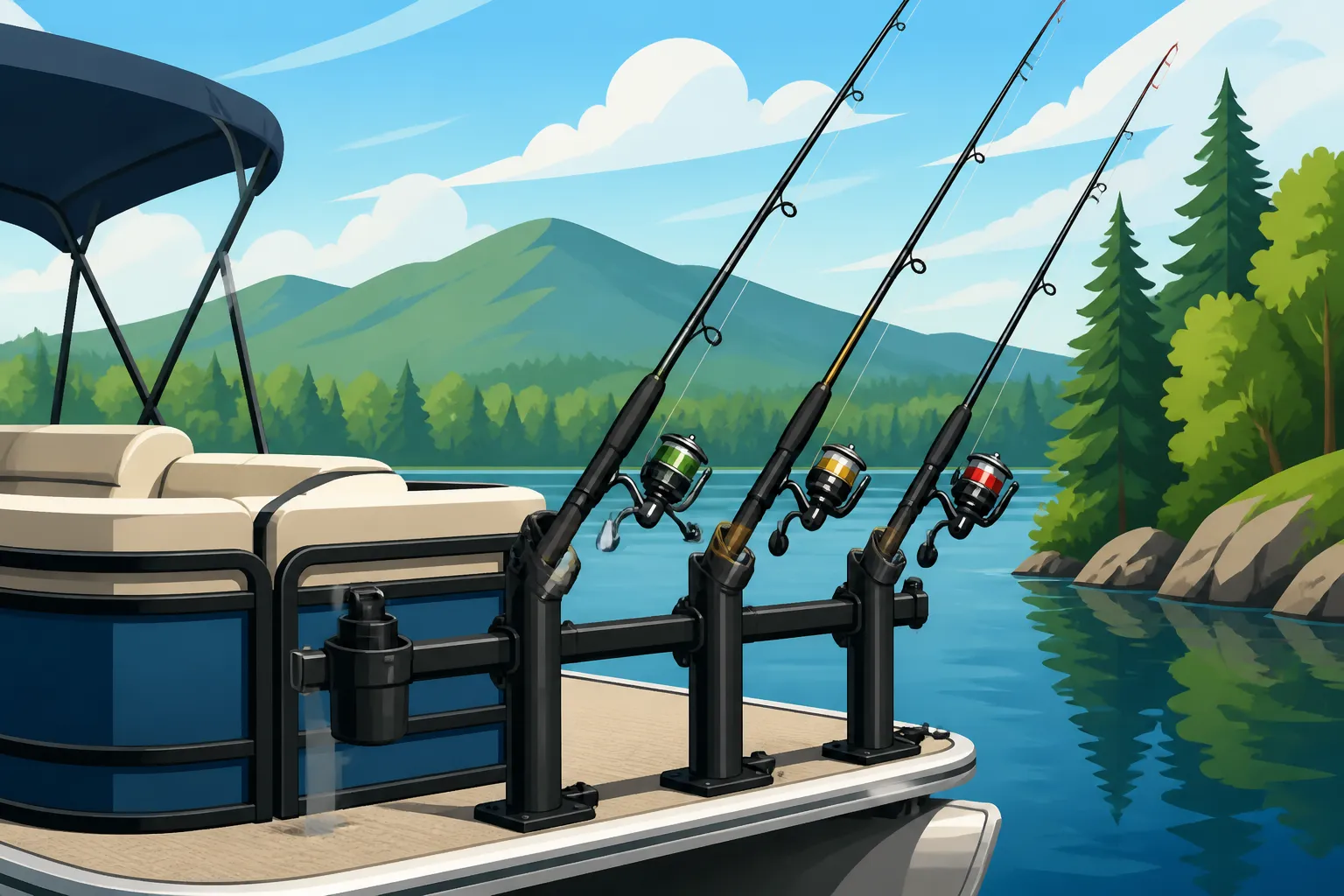
Vertical storage rod holders are less about active fishing and more about organization and protecting your gear when not in use or during transit. These holders, often racks or "rocket launchers," keep your rods upright and out of the way, preventing tangles and potential damage. They are fantastic for storing backup rods, rods for different techniques, or simply for keeping your deck clear while cruising to your next spot. Many pontoon owners install these on the back of the boat, on a fence panel, or even under the seats. They are a simple yet effective way to manage your arsenal of rods, keeping them safe and ready for deployment. Consider how many rods you typically bring on your Best Fishing Lakes in Vermont trips, and choose a vertical storage solution that can accommodate your usual load.
Here's a quick comparison of common rod holder types:
| Feature | Flush Mount | Clamp-On | Track System | Vertical Storage (Rack) | Specialty Trolling |
|---|---|---|---|---|---|
| Installation | Permanent, requires drilling | Easy, no drilling, clamps to rail | Requires drilling for track, accessories slide in | Varies (screws, bolts) | Permanent or heavy-duty clamp |
| Flexibility | Low (fixed position) | High (easily repositioned) | Very High (slide & add accessories) | Low (fixed storage) | Moderate (angle adjustment) |
| Strength | Very High | Moderate to High | High | Moderate | Very High (designed for stress) |
| Deck Impact | Low (flush) | Moderate (clamps protrude) | Low (track mostly flush) | Low (vertical, out of the way) | Moderate |
| Best For | Dedicated trolling, clean look | Versatile casual fishing, multi-purpose boat | Serious anglers, changing techniques, multiple accessories | Rod organization, transport, backup rods | Heavy trolling, large fish, precise presentation |
Designing Your Optimal Pontoon Rod Holder Layout for Vermont Waters
Once you've got a handle on the different types of rod holders, the next step is planning how they'll actually fit on your pontoon. This is where your personal fishing style and the kind of fishing you typically do in Vermont really come into play.
Considering Your Fishing Style and Target Species
Vermont's waters offer incredible diversity, from the vastness of Lake Champlain with its walleye and smallmouth bass to smaller, intimate ponds teeming with panfish or stocked trout. Your rod holder setup should reflect this. If you're primarily a still-fisher, dropping a line for yellow perch or bullhead in a quiet cove, you might only need a couple of simple clamp-on holders around your seating area. These allow you to set your rod down while you enjoy a snack or chat, keeping the line visible and ready for a bite.
However, if you're an avid troller, particularly for species like lake trout or landlocked salmon in deeper lakes like Willoughby, you'll need a more robust and spread-out system. Trolling often involves deploying multiple rods at various angles and distances from the boat to cover a wider swath of water. This is where track systems truly shine, allowing you to space out specialized trolling holders along the gunwale. You might use two straight out the back, and then one or two on each side, angled outwards at 45 degrees, mimicking a spread that would typically be used on a dedicated fishing boat. Think about the unique challenges of Trolling Techniques for Vermont Lake Trout and how holders can simplify the process.
For bass anglers who prefer casting, rod holders serve a different purpose – mostly for storage and quick access. You'll want easily accessible vertical holders to store multiple casting rods, allowing you to quickly switch between different lures and presentations. A common setup might include a few vertical rod holders near your casting deck or captain's chair, keeping those extra rods within arm's reach but safely stowed until needed. Considering How to Catch Largemouth Bass in Vermont often means having a few different rod setups ready.
Placement Strategies for Maximum Efficiency
The beauty of a pontoon is its open deck, but that also means you need a thoughtful layout to avoid clutter. Start by visualizing your main fishing zones. If you fish from the front, you'll want holders up there. If you fish mostly from the stern, that's your priority.
- Trolling Spreads: For trolling, aim for a wide spread. Placing holders near the stern corners at outward angles, and then adding more along the sides (especially with a track system) can create an effective multi-line presentation. This helps prevent lines from tangling and allows each lure to work independently. Consider your boat's beam and how many rods you can safely and effectively deploy without them interfering with each other or with other boat activities.
- Still Fishing/Bait Fishing: For stationary fishing, place holders near comfortable seating positions. Clamp-on holders are perfect here, as they can be adjusted for height and angle to provide optimal viewing of the rod tip. Two to four holders around a main seating area is usually plenty.
- Casting/Jigging: Vertical storage is key here. Place rod racks or individual vertical holders strategically so you can grab a rod, make a cast, and then quickly store it away when you need to use another technique or reel in a fish. The fence panels of a pontoon are excellent locations for these, keeping them out of the main walking path.
- Safety First: Always prioritize clear walkways. Rod holders, especially those that extend out, should not impede movement around the boat. If you have a busy pontoon with lots of foot traffic, consider holders that can be easily removed or folded down when not in active use.
Remember, a good layout means you're never scrambling for a rod, and every rod has its designated, safe spot, whether it's actively fishing or merely in transit.
Essential Accessories and Maintenance Tips
Beyond the holders themselves, a few accessories can really round out your pontoon fishing setup. A small cutting board that clamps to your rail is invaluable for bait prep or cleaning panfish. Cup holders that integrate into your rod holder system or track are also super handy. And don't forget a sturdy, quick-access net – especially if you're after Vermont Landlocked Salmon Regulations or larger bass.
Maintenance is straightforward but crucial for longevity. After every outing, especially in the variable conditions of Vermont, give your rod holders a quick rinse with fresh water to remove any lake grime or fish slime. Periodically check all fasteners and clamps to ensure they are tight. For metal components, a light spray of marine-grade lubricant can prevent corrosion, especially if you spend a lot of time on Lake Champlain, which can have slightly different water chemistry than smaller inland ponds. If you have track systems, keep the tracks clean so accessories slide smoothly. Taking a few minutes after each trip will ensure your rod holders are ready for your next adventure.
DIY vs. Off-the-Shelf: Building Your Pontoon Rod Holder System
When it comes to outfitting your pontoon with rod holders, you generally have two paths: a do-it-yourself custom build or purchasing ready-made solutions. Both have their merits, and the right choice often depends on your skill level, budget, and desired level of customization.
Pros and Cons of Custom Builds
A DIY approach offers the ultimate in customization. If you have a specific vision for how you want your pontoon to function, or if you're dealing with an older boat that has unique dimensions or features, building your own rod holder setup can be incredibly rewarding. You can tailor everything to your exact needs, from the angle of the holders to the materials used. Many anglers enjoy the process of designing and fabricating their own solutions, often using PVC pipe, marine-grade lumber, or aluminum tubing. This can sometimes be a more cost-effective option, especially if you have scrap materials or access to tools. Plus, there's a certain pride in catching a fish with a rod held in a holder you built yourself!
However, custom builds come with their own set of challenges. They require time, tools, and a certain level of DIY expertise. If you're not comfortable drilling into your boat or working with various materials, the process can be frustrating. Poorly constructed or installed DIY holders could lead to damage to your rods, your boat, or even become a safety hazard. There's also the learning curve to consider; getting the right angles, ensuring structural integrity, and achieving a professional finish can be tricky. For instance, creating a custom rack for fishing kayaks might seem simple, but ensuring it's stable and doesn't interfere with paddling or other gear requires careful planning.
Popular Ready-Made Solutions
For most pontoon owners, ready-made rod holders offer a convenient, reliable, and often aesthetically pleasing solution. The market is absolutely flooded with options, from basic clamp-on holders to sophisticated track systems. Major retailers like Bass Pro Shops and online giants like Amazon offer a vast selection, catering to every budget and fishing style.
- Brand Variety: You'll find well-known brands that specialize in marine accessories, offering high-quality, durable products designed specifically for the marine environment. These often come with warranties and clear installation instructions, providing peace of mind.
- Ease of Installation: Many ready-made solutions are designed for quick and easy installation, often requiring minimal tools. Clamp-on holders, for instance, can be installed in minutes without any drilling. Track systems, while requiring initial drilling, provide a modular system that's easy to adjust afterward.
- Proven Design: These products have been tested and refined by manufacturers, meaning they're typically engineered to hold up to the rigors of fishing. This reduces the risk of failure compared to a potentially untested DIY design.
- Aesthetics: Ready-made holders often come in designs and finishes that complement the look of your pontoon, giving it a polished, professional appearance.
When choosing ready-made, consider the material (stainless steel, anodized aluminum, or high-grade marine plastic are common), the adjustability, and the mounting method. Think about how many rods you typically fish with and how many you want to store. If you're fishing on a larger body of water like Lake Champlain Fishing Guide, you might need more robust holders than if you're casually fishing a small pond.
Brand Spotlight: Finding Holders at Bass Pro Shops and Amazon
When you're ready to buy, two places often stand out for Vermont anglers:
Bass Pro Shops: Walking into a Bass Pro Shops is an experience in itself, and their marine and fishing sections are usually extensive. You can get hands-on with different rod holder models, compare materials, and often speak to knowledgeable staff who can offer advice specific to your pontoon setup and local fishing conditions. They tend to carry a wide range of reputable brands known for quality and durability, from flush mounts to heavy-duty trolling setups. This is often my go-to when I want to see and feel the product before committing.
Amazon: For sheer variety and convenience, Amazon is tough to beat. You'll find an incredible selection of rod holders from countless brands, often at competitive price points. It's a great place to research different types, read customer reviews, and compare features from the comfort of your home. You can find everything from inexpensive clamp-on holders to elaborate track systems and specialty trolling rod holders. Just remember to read reviews carefully to ensure the product meets your quality and durability expectations for the demanding Vermont fishing environment. It's especially useful for finding specific, hard-to-find components or getting a general idea of what's available before heading to a physical store.
Ultimately, whether you go custom or off-the-shelf, the goal is the same: to create a fishing platform that enhances your enjoyment on the water, keeps your gear safe, and lets you focus on what truly matters – catching fish and making memories. A well-organized pontoon with the right rod holder setup can truly elevate your Vermont fishing experience.
Disclaimer
This article is for general informational purposes only and does not constitute professional advice. Laws, prices and regulations vary by location and change over time. Consult a qualified professional for guidance on your specific situation.