Trolling Techniques for Vermont Lake Trout
Trolling for lake trout in Vermont's deep, pristine waters can feel like trying to find a needle in a haystack, especially when you're staring at an endless expanse of water and wondering if your lure is even in the right zip code. It's a common frustration, trying to decipher where these elusive giants might be holding, what they’re feeding on, and how to get your presentation right in front of them without spooking them. This comprehensive guide is designed to cut through that mystery, breaking down the proven trolling techniques that will help you consistently connect with Vermont's magnificent lake trout.
Understanding Vermont Lake Trout Behavior for Trolling Success
Before you even think about dropping a line, it's crucial to understand the fish you're targeting. Lake trout in Vermont are fascinating creatures, driven by instinct, water temperature, and their primary food sources. Without this foundational knowledge, you're essentially trolling blind, hoping for a lucky strike rather than employing a strategic approach.
Seasonal Movements and Depths
Lake trout are notorious for their preference for cold water. This means their behavior, and therefore their location, changes significantly throughout the year. As the seasons shift, so too will the depths at which you'll find them.
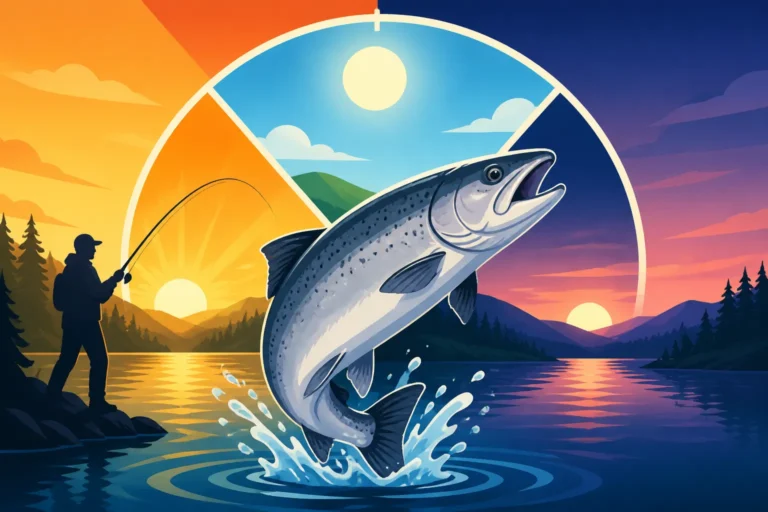
In the spring, right after ice-out, the entire water column is often cool, allowing lake trout to be found relatively shallow, sometimes even near the surface in depths as little as 10-20 feet, especially in larger bodies of water like Lake Champlain or Lake Willoughby. This early season can be fantastic for trolling because the fish are often aggressive, having just emerged from a period of less activity under the ice. As summer progresses and surface waters warm, these fish retreat to deeper, cooler sanctuaries, often following the thermocline – that distinct layer where warm surface water meets cold deep water. You might find them suspended over incredibly deep basins, sometimes 60, 80, or even 100+ feet down, making it a challenge to consistently put your offering in their strike zone. Fall sees them rise again as the lake begins to cool and "turn over," mixing the water column and bringing cooler temperatures to shallower areas. This is often when they stage for spawning, making them accessible in different areas. To truly master this, understanding the Vermont Fishing Seasons by Month can provide crucial context.
Forage Base and Feeding Habits
Lake trout are apex predators in their ecosystems, and their feeding habits are heavily influenced by the availability of forage fish. In Vermont, rainbow smelt and various other baitfish species are the primary sustenance for lakers. Knowing what they’re eating, and where that food source congregates, is like having a secret map to where the trout will be.
When you're out on the water, pay close attention to baitfish schools on your sonar. If you see dense clouds of bait, especially in deeper water or along structural elements, you can bet that hungry lake trout won't be far behind. Your trolling presentation should aim to imitate these natural food sources. Think about the size, shape, and color of smelt; a thin, metallic spoon or a long, slender stickbait can be incredibly effective when matched to the prevalent forage. Learning about Rainbow Smelt as Forage Fish in Vermont Lakes can give you an edge, as these small fish are a key component of a laker's diet.
Impact of Weather and Water Conditions
Lake trout, like most fish, can be influenced by weather patterns and water conditions. While they are deep-dwelling creatures and less affected by surface changes than, say, a topwater bass, significant shifts can still impact their behavior and willingness to bite.
Barometric pressure, for instance, can play a role. A stable or slowly falling barometer often signals good fishing, as fish tend to be more active. Conversely, a rapidly falling or very low pressure system, often associated with approaching storms, can sometimes make them lethargic and less inclined to chase a trolled offering. Water clarity is another factor; in very clear water, lake trout might be spookier and prefer more subtle presentations or deeper depths. After heavy rains, runoff can cloud shallower waters, potentially pushing baitfish (and therefore lakers) to clearer, deeper areas. Keep an eye on the forecast and monitor your electronics for changes in fish behavior to adapt your strategy.
Essential Gear for Trolling Vermont Lake Trout
Trolling for lake trout effectively requires a specific setup. You can't just throw out a spinning rod with monofilament and expect consistent success in the deep waters of Lake Champlain or Lake Willoughby. The right gear makes all the difference, allowing you to reach the desired depths, detect subtle bites, and handle powerful fish.
Rods, Reels, and Line Selection
For lake trout trolling, you'll want specialized rods and reels that can handle the heavy drag of deep-diving lures or the resistance of downriggers and lead core lines. Rods typically range from 7 to 9 feet, with a medium-heavy action and a forgiving tip that absorbs shock and helps detect subtle strikes. A fast action might rip the hooks out of a laker's mouth, so a more moderate bend is often preferred.
Reels are where things get serious. Line counter reels are almost a non-negotiable for trolling. These allow you to precisely measure how much line you're deploying, which is absolutely critical for repeating successful depth presentations. You'll want a reel with a robust drag system and plenty of line capacity. For line, braid is popular for its lack of stretch and thin diameter, allowing you to run lighter test strengths for less water resistance, but many anglers still prefer a quality monofilament for its shock-absorbing qualities. If you opt for braid, always use a fluorocarbon leader for invisibility and abrasion resistance – 15-20 lb test is a good starting point. You can find excellent options on Amazon for both line counter reels and high-quality braided lines to get you started.
Downriggers, Lead Core, and Planer Boards
Getting your lure down to 60, 80, or even 100 feet consistently is the biggest challenge in deepwater lake trout trolling. This is where specialized depth control methods come into play.
-
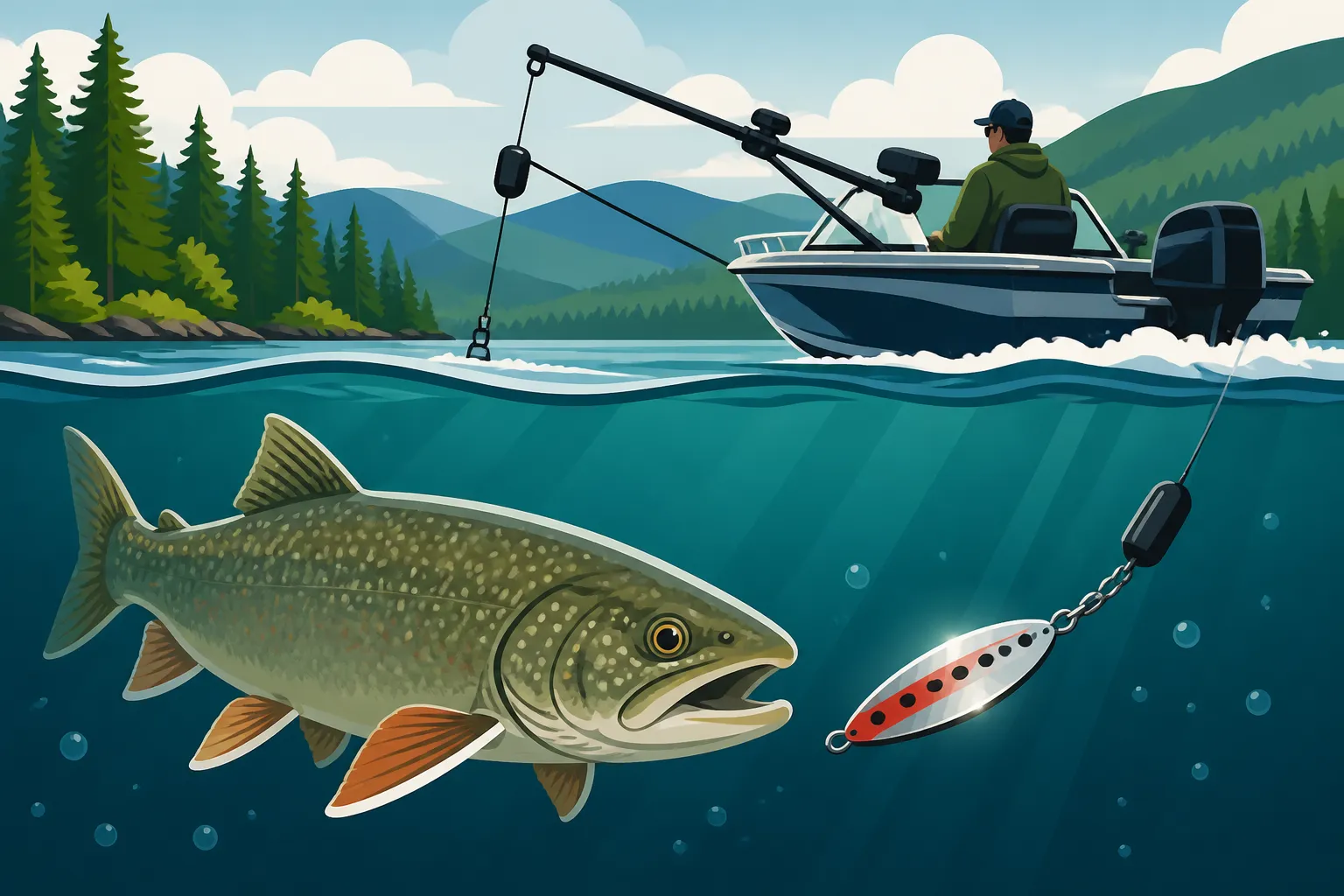
Downriggers: These are the most precise tools for depth control. A downrigger uses a heavy cannonball weight (often 8-12 lbs) and a steel cable to carry your fishing line (which is clipped to the downrigger release) down to a specific depth. When a fish strikes, the line pops free from the release, and you fight the fish directly on your rod. They allow you to use lighter, more natural-swimming lures, as the weight is provided by the cannonball. For serious lake trout anglers targeting specific depths on Lake Champlain Lake Trout Fishing trips, a good set of downriggers is an invaluable investment.
-
Lead Core Line: This is a multi-colored fishing line with a lead core, designed to sink. Each color segment (typically 10 yards) represents a certain depth, allowing you to estimate how deep your lure is by how many colors you've let out. It's less precise than a downrigger but much simpler and more portable. Many anglers use lead core successfully, especially in situations where downriggers might be overkill or impractical, like smaller lakes or when targeting slightly shallower fish.
-
Snap Weights and Dipsy Divers: These are alternative methods. Snap weights attach directly to your fishing line, typically at a set distance from your lure, to pull it down. Dipsy Divers are disc-shaped devices that dive and pull your lure away from the boat, covering more water while also achieving depth. They’re excellent for spreading out your lines and can be particularly effective on larger bodies of water. For a more detailed comparison of trolling setups, you might want to look into Best Trolling Gear for Lake Champlain Walleye, as many principles apply to lake trout as well.
Electronics: Fish Finders and GPS
Modern electronics are truly game-changers for lake trout trolling. They don't just show you fish; they help you understand the underwater world.
A quality fish finder (sonar) is essential. It will show you the bottom contour, structure (like ledges, humps, and points), baitfish schools, and, most importantly, individual fish arches that could be your target lake trout. Look for units with high-resolution screens and multiple frequencies (e.g., CHIRP sonar) for the best clarity. Side imaging and down imaging can further enhance your understanding of the underwater landscape, allowing you to spot fish off to the sides of your boat or identify subtle changes in bottom composition.
GPS (Global Positioning System) integration is equally vital. It allows you to mark waypoints of productive areas, track your trolling passes, and navigate precisely. If you find a school of bait or mark a few fish at a specific depth and location, you can save that waypoint and make repeated passes over it, dramatically increasing your chances. Mapping features are also incredibly useful for identifying underwater structure before you even get there. A good starting point for exploring options is our guide on Best Fish Finders for Vermont Lakes.
Mastering Trolling Depths and Speeds
Once you have your gear ready, the real art of lake trout trolling comes down to presenting your lure at the correct depth and speed. This is where most anglers either succeed or get endlessly frustrated. Lake trout often have a very specific preferred temperature range and are highly sensitive to how their potential prey is moving.
Targeting the Thermocline
As mentioned earlier, during warmer months, the thermocline becomes the most critical zone for lake trout. This is the thermal boundary where warmer surface water transitions to colder deep water, and it's often where baitfish, rich in oxygen and plankton, congregate. Lake trout will position themselves in, just above, or just below this layer, ambushing passing prey.
To effectively target the thermocline, you first need to locate it. Your fish finder will often show a distinct, hazy layer on the screen representing the thermocline. Pay attention to water temperature gauges on your electronics or use a dedicated temperature probe. Once you identify the depth of this layer (e.g., 50-60 feet), you can then use your downriggers or lead core to put your lures precisely within that zone. Experiment by running some lures slightly above and some slightly below the main thermocline, as fish might be cruising different parts of it. Precision is key; being just a few feet off can mean the difference between an empty hook and a screaming reel.
Speed Control for Optimal Presentation
The speed at which you troll your lures has a profound impact on their action and how enticing they appear to a lake trout. There isn't a single "magic speed"; it varies based on the lure type, water temperature, and the mood of the fish.
Generally, a slow to moderate speed, typically between 1.5 to 2.5 miles per hour (mph), is a good starting point for lake trout. Slower speeds (1-1.5 mph) are often effective in colder water or when fish are lethargic, giving lures a more subtle, natural wobble. Faster speeds (2-3+ mph) can trigger aggressive strikes, especially with active fish, making spoons and stickbaits dart and flash more erratically. Watch your rod tips closely; they should have a consistent, rhythmic throb indicating the lure is working correctly. If a rod tip stops moving, it could mean you've picked up weeds, or worse, your lure has fouled. Use your boat's throttle and, if equipped, a kicker motor or electric trolling motor to fine-tune your speed. Many boaters use a GPS speed reading for accuracy, as current can affect your speed over ground versus speed through water.
Depth Control Devices: A Comparison
Choosing the right depth control device can be daunting with so many options available. Each has its strengths and weaknesses, and often, a combination of methods is used to cover various depths and spread out lines. Let's compare the most common ones.
| Depth Control Method | Pros | Cons | Ideal Use Case |
|---|---|---|---|
| Downriggers | Most precise depth control, lighter lures | Expensive, bulky, requires skill to operate | Deep, open water, targeting specific depths, clear water |
| Lead Core Line | Simple, relatively inexpensive, no boat mods | Less precise depth, heavy line, requires long leads | Mid-range depths, smaller boats, covering varied depths |
| Snap Weights | Easy to adjust, versatile, portable | Can add resistance to line, less precise depth | Varying depths quickly, supplementing other methods |
| Dipsy Divers | Spreads lines, achieves depth, no downrigger | Can tangle, requires specific rod/reel setup | Covering wide areas, targeting scattered fish |
| Deep Diving Crankbaits | Self-diving, no extra gear needed | Depth limited by lure design, more resistance | Shallower depths (up to 30-40 ft), specific fish |
While downriggers offer unparalleled precision, a simple lead core setup can be incredibly effective, especially for newer anglers or those without large boats. Experimentation with different methods on the same outing can help you quickly identify what the fish are responding to on a given day. For instance, you might run downriggers deep for lakers on How deep to troll for lake trout on Lake Champlain while running a lead core line higher for suspended fish or even passing walleye.
Effective Lure and Bait Choices for Lake Trout Trolling
The lure or bait you present is the final piece of the puzzle. Even with perfect depth and speed, if your offering doesn't look like something a lake trout wants to eat, you won't get bites. Matching the hatch, or at least presenting something visually appealing and active, is critical.
Spoons and Stickbaits
Spoons and stickbaits are arguably the most popular and effective lures for trolling lake trout in Vermont.
-
Spoons: These thin, metallic lures flutter and flash, mimicking injured baitfish. They come in a vast array of colors, sizes, and shapes. For lake trout, longer, narrower spoons often excel, imitating smelt or alewives. Popular spoon brands like Luhr-Jensen, Doctor Spoon, and Michigan Stinger make excellent trolling spoons. Colors can vary greatly, but silver, blue, green, chartreuse, and combinations thereof are often productive. Experiment with different sizes; larger spoons (4-6 inches) can attract bigger fish, while smaller ones might appeal to less aggressive lakers or match smaller baitfish. The action of a spoon can be very sensitive to trolling speed, so play with your speed until you find that perfect flutter.
-
Stickbaits (Minnow Imitations): These slender, hard-bodied lures are designed to imitate natural baitfish with a tight wobbling action. They're particularly effective for suspended lake trout. Rapala (specifically the Original Floater or Deep Tail Dancer series) and Bomber Long A are classic choices that have caught countless lake trout. Again, natural colors (silver, blue, black) that mimic smelt are usually a safe bet, but bright colors can also trigger strikes in stained water or on overcast days. Some stickbaits are designed to dive to specific depths on their own, making them useful for targeting fish without additional weight, especially in shallower spring conditions. Many anglers have success finding these versatile lures on Amazon.
Flasher/Dodger Combinations
When you need to attract fish from a distance or add extra flash and vibration, a flasher or dodger ahead of your lure can be incredibly effective. These devices don't have hooks themselves; they're designed to create an irresistible commotion in the water.
-
Flashers: These are typically S-shaped or paddle-shaped pieces of plastic or metal that spin or rotate, creating a lot of flash and vibration. They mimic a school of baitfish or a struggling fish, drawing attention to your trailing lure. Your actual lure (often a small spoon, fly, or soft plastic) is then tied on a leader (usually 2-6 feet long) behind the flasher. Popular flashers include the Pro-Troll, F-11 Flashers, and various paddle flashers.
-
Dodgers: Similar to flashers but with a more rocking, side-to-side action. They impart a more erratic motion to the trailing lure, making it dance enticingly. Dodgers like the Luhr-Jensen Dodger are excellent for adding a wounded baitfish look to your presentation.
Both flashers and dodgers come in different sizes and colors, and matching their action to your trolling speed is crucial. These setups are especially popular on big water bodies like Lake Champlain where you're trying to cover a lot of ground and call fish in from afar. The vibration from a flasher or dodger can be felt by fish even when visibility is low or in deeper water, making them an indispensable part of many anglers' arsenals.
Natural Bait Rigs: Smelt and Alewives
While artificial lures are highly effective, sometimes there's no substitute for the real thing. Trolling natural bait, particularly dead smelt or alewives, can be incredibly productive for lake trout, especially for those larger, more wary fish.
Rigging dead bait requires a bit more finesse than simply tying on a spoon. You'll often use a "meat rig" or a "swim bait rig" that allows the baitfish to spin or wobble naturally in the water, mimicking a wounded or disoriented forage fish. These rigs typically consist of a leader with one or more hooks designed to hold the bait in a lifelike swimming position. Some popular setups involve a single hook through the nose and another through the flank, or special bait holders that cradle the fish.
The key to success with natural bait is fresh bait and a perfect presentation. Any unnatural spin or tangle will deter fish. These rigs are almost always run behind a flasher or dodger to add attraction and ensure the bait gets the right action. The scent trail created by natural bait can also draw in reluctant lake trout, offering an advantage over purely artificial offerings, especially when fishing is tough. While Trolling Techniques for Vermont Lake Trout generally leans into artificials, knowing how to present natural bait adds another powerful tool to your arsenal.
Reading the Water and Adapting Your Trolling Strategy
Trolling for lake trout isn't just about setting your lines and driving in circles. It's a dynamic process that requires constant observation, analysis, and adjustment. The best anglers are those who can "read" the water and adapt their approach as conditions change throughout the day.
Interpreting Sonar and Topographic Maps
Your fish finder isn't just a pretty screen; it's your window into the underwater world. Learning to interpret what it's telling you is paramount.
- Bottom Contour: Look for changes in depth, drop-offs, humps, ridges, and submerged points. Lake trout often relate to these structural elements, using them as ambush points or travel corridors. Don't just troll in straight lines over flat bottom; target areas where the bottom changes drastically.
- Baitfish Schools: Dense clouds of baitfish on your screen are like a siren call to lake trout. If you find them, you're likely to find predators nearby. Adjust your trolling depth to run your lures just above, through, or below these schools.
- Fish Arches: Learn to distinguish between baitfish, smaller fish, and the tell-tale "arches" that indicate larger individual fish. If you see consistent arches at a particular depth, focus your efforts there.
- Thermocline: As discussed, identify and target this temperature transition layer, especially in summer.
Combine your sonar readings with detailed topographic maps (often built into your GPS unit or available on apps like Navionics or C-MAP). These maps show you underwater features that you might not otherwise see on sonar, helping you plan your trolling runs to maximize time over productive structure. Pay special attention to "Lake Champlain Lake Trout Fishing" maps, as these vast bodies of water have incredibly complex bottom structures.
Dealing with Changing Conditions
Vermont weather can be fickle, and lake conditions can change rapidly. A successful angler is one who can adapt.
- Wind and Waves: Wind can create current and chop, affecting your boat speed and lure action. Troll with or against the wind to maintain consistent speed. In rougher water, you might need to adjust your lure choices or trolling pattern to maintain proper presentation.
- Sunlight and Cloud Cover: On bright, sunny days, lake trout often go deeper or prefer more subtle, natural lure colors. On overcast days or during low light periods (dawn/dusk), they might rise higher in the water column and be more aggressive, sometimes responding well to brighter, more flashy lures.
- Water Clarity: In very clear water, longer leaders and more natural bait/lure presentations are often best to avoid spooking fish. In stained or cloudy water, brighter colors and more vibration (from flashers/dodgers) can help fish locate your offering.
- Fishing Pressure: If an area is getting a lot of pressure from other boats, fish can become warier. Consider moving to less pressured spots or trying different, more subtle techniques.
The key is constant experimentation. If what you're doing isn't working, don't be afraid to change lures, depths, speeds, or even your location. Sometimes a small adjustment is all it takes to turn a slow day into a successful one.
Adjusting for Lake-Specific Challenges
Vermont boasts a variety of lakes where you can target lake trout, each with its own unique characteristics and challenges. What works perfectly on one lake might need tweaking for another.
- Lake Champlain: This massive body of water presents immense opportunities but also challenges due to its sheer size and depth. Lake Champlain Lake Trout Fishing can be fantastic, but it requires covering vast distances. Trolling patterns often involve long straight runs, targeting deep basins, submerged humps, or the edges of major drop-offs. The presence of numerous baitfish species means a wide range of lure colors and sizes can be effective.
- Lake Willoughby: Known for its stunning clarity and incredible depth, Lake Willoughby Fishing Guide offers a different kind of lake trout experience. The extremely clear water means fish can be very visual and spooky. Long fluorocarbon leaders are essential, and often, more subtle presentations or natural bait are preferred. While incredibly deep, fish might suspend over the abyss rather than always hugging the bottom. This lake also holds landlocked salmon, so your trolling efforts might accidentally connect you with a beautiful salmon, a common occurrence addressed in How to Catch Landlocked Salmon in Vermont.
- Smaller Deep Lakes (e.g., Lake Dunmore, Seymour Lake): While not as famous for lake trout as Champlain or Willoughby, some smaller deep lakes in Vermont can also hold populations. These lakes might require more targeted trolling around specific structural features or focusing on specific times of year when fish are shallower. The scale of your trolling spread might also need to be reduced for these more confined waters.
Understanding the specific characteristics of the lake you're fishing will help you fine-tune your approach, from the type of boat you bring (see Best Boats for Vermont Lakes and Rivers) to the specific lures you tie on. Paying attention to local fishing reports and chatting with other anglers at the boat launch can also provide invaluable, up-to-date insights.
Disclaimer
Fishing regulations and best practices can change. Always consult the latest Vermont Fish & Wildlife Department regulations before heading out on the water. This guide provides general information and recommendations, but it is your responsibility to adhere to all current laws and safety guidelines.