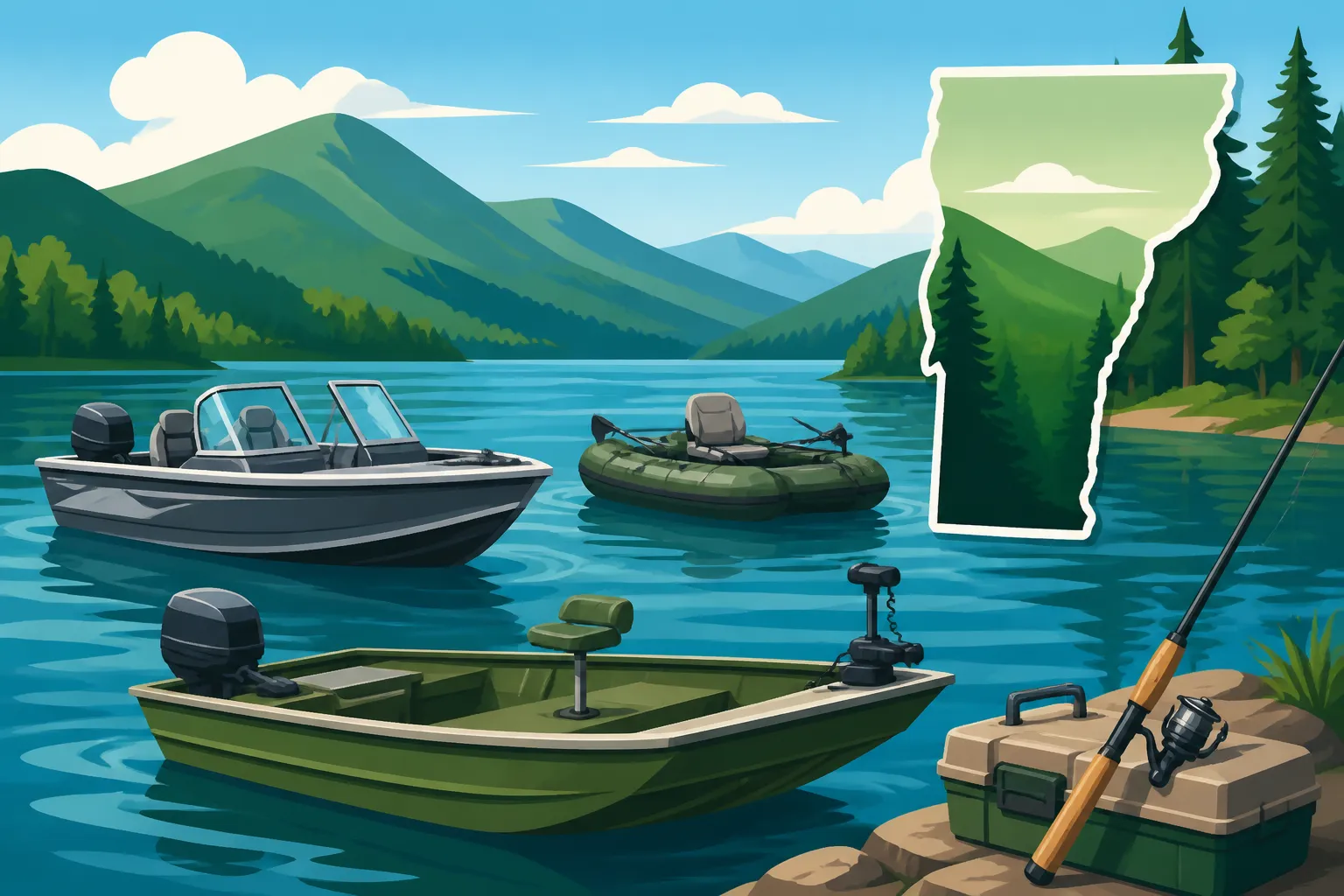
Best Boats for Vermont Lakes and Rivers
Choosing the right boat for fishing in Vermont can feel like navigating a maze, especially with our state's incredible diversity of waters – from the vast, deep expanse of Lake Champlain to the skinny, rocky flows of a Green Mountain trout stream, and all the placid ponds in between. It's a huge decision, often involving a significant investment, and the last thing you want is to end up with a vessel that's perfect for one type of fishing but completely useless for another. This comprehensive guide is here to cut through the confusion, helping you understand the best boat options tailored to the unique challenges and opportunities of Vermont's lakes and rivers, ensuring your next fishing adventure is smooth sailing.
Understanding Vermont's Diverse Fishing Waters
Vermont offers an incredibly varied angling landscape, and what works perfectly on one body of water might be completely impractical on another. It's crucial to first understand the characteristics of where you plan to spend most of your time on the water, as this will heavily influence your boat choice. Thinking about whether you're chasing trophy walleye on a massive lake or quietly stalking brook trout in a remote pond makes all the difference.
The Mighty Great Lakes: Lake Champlain and Lake Memphremagog
When we talk about "big water" in Vermont, Lake Champlain and Lake Memphremagog immediately come to mind. These are serious bodies of water, more akin to inland seas than typical lakes. Lake Champlain, in particular, can whip up quickly, turning calm conditions into white-capped rollers in a matter of minutes, even on what seems like a pleasant summer day. Anglers targeting species like lake trout, salmon, or even larger smallmouth bass and walleye here often need boats capable of handling significant chop.
This isn't the place for a flimsy craft. You need a boat with a deep-V hull, ample freeboard, and enough power to get you back to shore safely if the weather turns. We're talking about boats that instill confidence when you're miles from the launch and the wind picks up. The kind of boat that can run down significant waves without pounding you to death or taking water over the bow. The sheer size of these lakes means long runs are common, so comfort and stability are paramount. Safety equipment, too, becomes even more critical on these expansive waters, something every angler should remember when considering Vermont Boating Laws for Anglers.
Rivers, Flowages, and Medium-Sized Lakes
Moving away from the giants, Vermont boasts an incredible network of medium-sized lakes like Lake Bomoseen, Lake Dunmore, and Waterbury Reservoir, along with significant rivers like the Connecticut, Winooski, Lamoille, and Otter Creek. These waters present a different set of challenges and opportunities. Many of these lakes, while smaller than Champlain, can still get choppy on windy days, especially if they have a long fetch (the distance wind can travel unimpeded). They also often feature varied bottom structures, from sandy flats to rocky points and submerged timber.
Rivers, especially the smaller and medium-sized ones, introduce current, rapids (even mild ones), and often shallower depths. Access points can be primitive, requiring a boat that's easy to launch and retrieve without a major ramp. These environments are often perfect for species like smallmouth bass, northern pike, and a variety of panfish. The ideal boat here needs to be agile, able to navigate tighter spots, and robust enough to handle occasional bumps with rocks or logs. You might not need the extreme seaworthiness of a big-lake boat, but durability and maneuverability become key.
Ponds, Puddle Jumping, and Backcountry Retreats
Then there are the countless smaller ponds, quiet coves, and backcountry waters that dot the Vermont landscape. These are the places for solitude, for chasing wild brook trout, or simply enjoying a peaceful day with panfish. Access is often limited – sometimes requiring portages, long walks, or launch spots where even a small trailer might struggle. In these intimate settings, silence is often golden, and a minimalist approach to boating shines.
For these spots, the goal is often stealth and ease of transport. You don't want to bring something that requires a full crew to get in the water. These are the domains of personal watercraft, where the angler becomes part of the environment, not just passing through it. They represent a different kind of challenge, but also a unique reward, offering a chance to connect with nature on a much deeper level than a bustling motorboat can.
Factors to Consider When Choosing a Fishing Boat
Picking a fishing boat isn't just about what looks cool or what your buddy has. It's a deeply personal decision that balances your fishing habits, budget, and practical considerations. Skipping these vital steps can lead to buyer's remorse faster than a missed strike.
Budget and Long-Term Costs
Let's be real, price is almost always the first thing on our minds. But it's not just the sticker price of the boat itself. You need to factor in a whole host of related expenses that can quickly add up. Think about the cost of a trailer – often a necessity for anything larger than a canoe or small kayak. Then there's the motor, fuel, oil, and regular maintenance. Even seemingly minor things like required safety gear, anchors, and dock lines can cost a pretty penny.
Beyond the initial purchase, there are ongoing costs: insurance, registration fees (which vary for different types of boats; check out Vermont Boat Registration Requirements), winterization, and storage if you don't have space at home. And don't forget the inevitable upgrades and repairs over time. A cheaper boat upfront might require more work or more expensive parts down the line. It's a good idea to build a comprehensive spreadsheet, outlining not just the boat's cost, but every single associated expense you can think of for the first three to five years. This realistic look at the numbers can help you avoid unpleasant surprises and ensure your investment remains enjoyable, not a financial burden.
Transport, Launching, and Storage
This is where many aspiring boat owners hit a snag. A big, beautiful fishing boat is fantastic on the water, but how are you going to get it there? Do you have a vehicle capable of towing it safely and legally? Vermont's roads, particularly those leading to more remote fishing access points, aren't always ideal for large trailers. Some launches are steep, gravelly, or simply not designed for anything larger than a smaller jon boat.
Consider the effort involved in launching and retrieving your boat. Will you always have help, or will you frequently be going solo? A 20-foot fiberglass deep-V is a different beast to launch alone than a 14-foot aluminum utility boat. And once the fishing trip is over, where will it live? Do you have space in your driveway, a garage, or will you need to pay for off-site storage? This is especially true for winter, as Vermont winters demand proper boat storage and care. If you're hoping to explore those wilder, harder-to-reach ponds, portability is key. This often means something you can car-top, drag a short distance, or even inflate.
Your Primary Fishing Style
This is perhaps the most critical factor. What kind of fishing do you really do most often? Are you a dedicated fly angler stalking wary trout in clear streams? A kayak or drift boat will be far more suitable than a bass boat. Do you love to troll for lake trout or landlocked salmon on deep, open water? Then a larger boat with solid electronics and rod holders is probably on your wish list.
If you're into casting for bass and pike in weed beds and around structure, you'll want a stable platform that allows for stand-up casting, plenty of storage for tackle, and perhaps a good bow-mounted trolling motor. Maybe you prefer still-fishing for panfish with the grandkids from a quiet cove? A stable pontoon or even a large canoe could be perfect. There's no single "best" boat for all fishing, so be honest with yourself about your angling priorities. Think about the techniques you employ, the species you target, and the number of people typically joining you. Your boat should enhance these experiences, not hinder them.
Kayak and Canoe Options for Vermont Anglers
For many Vermont anglers, especially those seeking solitude, quiet waters, or access to hard-to-reach spots, kayaks and canoes are often the unsung heroes. They're versatile, relatively affordable, and allow for an intimate connection with the water that larger, noisier boats can't always provide.
The Versatility of Fishing Kayaks
Fishing kayaks have come a long, long way from the basic recreational models. Modern fishing kayaks are purpose-built machines, designed with stability, storage, and angler comfort in mind. You'll find models that are incredibly stable, allowing you to stand and cast, which is a huge advantage when sight fishing for bass in a shallow cove or casting a fly on a calmer section of river. They often feature built-in rod holders, tackle storage compartments, and even mounting plates for fish finders and GPS units. Some even come with pedal drives, freeing up your hands for casting and fighting fish – a game changer for many.
The real beauty of a kayak for Vermont fishing lies in its access. You can launch them almost anywhere, from a designated boat ramp to a muddy bank or even by carrying it a short distance to a remote pond. They're fantastic for exploring those hidden coves on Lake Champlain that bigger boats can't reach, or navigating the quieter stretches of rivers like the Lamoille or Winooski. Plus, they're relatively low-cost to own and operate, with no fuel or complex maintenance. Of course, you'll still need safety gear, including a proper life jacket for kayak fishing, but the ongoing expenses are minimal. Brands like Perception, Old Town, and Hobie offer a wide range of dedicated fishing kayaks, and you can often find great accessories and deals on models that suit your needs through online retailers like Amazon or at larger outdoor stores such as Bass Pro Shops. If you're considering a fishing kayak for Lake Champlain, there are specific models and features that make a big difference, so look into Best Kayak for Lake Champlain.
Traditional Canoes: A Quiet Classic
The canoe holds a special place in the hearts of many Vermont outdoors enthusiasts, and for good reason. For centuries, it has been the ultimate craft for silent travel on our waterways. Canoes offer unparalleled carrying capacity for their size, making them ideal for multi-day trips or for bringing along a friend, a cooler, and plenty of gear. They're incredibly stable when paddled correctly, and their open design makes it easy to move around, re-tie lines, or grab tackle.
While perhaps not as optimized for dedicated "fishing features" as modern kayaks, a canoe can be an exceptional fishing platform. They excel on smaller to medium-sized lakes, ponds, and slow-moving rivers. Think about a quiet morning paddling across a calm pond, casting for pickerel or largemouth bass – a canoe is perfectly suited for that. They're also surprisingly robust and can handle shallow, rocky areas if you're careful. Many anglers even outfit their canoes with small electric trolling motors for easier propulsion, making them even more versatile. Just remember to check if Are Kayaks Required to Be Registered in Vermont? and if the same rules apply to canoes, especially if you add a motor. The serene experience of fishing from a canoe is hard to beat, offering a true sense of connection to Vermont's natural beauty.
Stand-Up Paddleboards (SUPs) for the Adventurous Angler
Okay, this might sound a little unconventional to some, but stand-up paddleboards, especially those designed for fishing, are gaining serious traction in Vermont. Think about it: a SUP offers an elevated vantage point, giving you an incredible view into the water, which is fantastic for sight fishing bass, carp, or even trout in clear conditions. You can stand, kneel, or sit, offering different casting angles and comfort levels throughout the day.
Modern fishing SUPs are wider and more stable than recreational models, often featuring tie-downs for coolers, rod holders, and even small tackle boxes. Inflatable SUPs are particularly popular for Vermont anglers because they can be rolled up, stowed in a backpack, and hiked into remote ponds or launched from virtually any shore. They're perfect for those glassy calm mornings on smaller lakes and ponds or slow-moving rivers. While they might not be ideal for choppy conditions or strong currents, for stealth and portability, an SUP offers a unique and incredibly rewarding fishing experience. It's truly minimalist fishing at its best, blending core strength and balance with the pure joy of angling.
| Boat Type | Ideal Vermont Waters | Key Advantages | Considerations |
|---|---|---|---|
| Fishing Kayak | Ponds, Rivers, Lake Coves | Portable, stealthy, excellent access, low cost | Limited space, less stable than larger boats |
| Canoe | Ponds, Slow Rivers, Medium Lakes | High capacity, stable, versatile, quiet | Can be unwieldy solo, not for rough water |
| SUP (Fishing) | Calm Ponds, Shallow Coves | Elevated view for sight fishing, portable (inflatable) | Requires balance, not for choppy or fast water |
| Jon Boat (small) | Shallow Rivers, Ponds, Smaller Lakes | Durable, stable, easy to trailer/launch, affordable | Limited comfort, can be wet in chop |
| Aluminum Deep-V | Lake Champlain, Memphremagog, larger lakes | Handles chop well, stable, versatile | Heavier, requires good tow vehicle, more complex |
| Bass Boat | Larger Lakes (Champlain), Medium Lakes | Fast, great casting platform, ample storage | Expensive, requires deep launch, not river-friendly |
| Pontoon Boat | Calm Lakes, Family Fishing | Very stable, comfortable, high capacity | Slow, not for rough water, less maneuverable |
| Drift Boat | Moving Rivers (Battenkill) | Optimal control in current, stealthy, comfortable | Specialized, requires two people, not for still water |
| Inflatable Boat | Remote Ponds, Car-top River Access | Extremely portable, durable, shallow draft | Slower, less stable, can be punctured |
Smaller Motorized Boats: Jon Boats and Aluminum Skiffs
When you need more power and capacity than a paddle craft, but don't want the hassle or expense of a large fiberglass boat, smaller motorized options like jon boats and aluminum skiffs step in as fantastic workhorses for Vermont anglers. These boats bridge the gap, offering more range and speed while often remaining manageable for a single angler or small crew.
The Reliable Jon Boat: A River Rat's Dream
Ah, the humble jon boat! This flat-bottomed, often square-nosed aluminum boat is a true staple for many Vermont river anglers, and for good reason. Its shallow draft means it can navigate incredibly skinny water, allowing you to access sections of rivers that deeper V-hull boats simply can't touch. Whether you're trying to reach that secluded smallmouth bass eddy on the Otter Creek or chase northern pike in the marshy backwaters of the Missisquoi River, a jon boat's ability to float in just a few inches of water is a huge advantage.
Jon boats are also incredibly durable. Made from welded or riveted aluminum, they can take a beating from bumping against rocks, logs, or sandy banks without major damage – something that would leave a fiberglass boat crying for gel coat repair. They're generally easy to trailer and launch, often requiring nothing more than a simple dirt ramp. While they might not be the most comfortable ride in choppy water (the flat bottom tends to pound), they are stable fishing platforms, especially when you're standing to cast. They're also highly customizable; many anglers add elevated casting decks, swivel seats, and trolling motors to create a personalized fishing machine. You can find a wide range of sizes, from small 10-footers that can be car-topped to larger 16-foot models that can handle a decent-sized outboard motor. They're a practical, no-frills choice for utilitarian fishing across many of Vermont's waters, especially those skinny river stretches where a dedicated smallmouth angler spends their time.
Aluminum V-Hull Skiffs and Utility Boats
Stepping up a bit from the strictly flat-bottomed jon boat, you find aluminum V-hull skiffs and utility boats. These boats offer a compromise between the shallow draft of a jon boat and the improved ride of a deeper-V hull. While still made of robust aluminum, their V-shaped bow helps cut through chop much more effectively than a flat bottom, making them a more comfortable and drier ride on medium-sized lakes or when crossing larger bays on Lake Champlain.
These types of boats are incredibly versatile for Vermont. They're excellent for chasing walleye and bass on Lake Champlain's shallower bays, exploring the broader sections of the Connecticut River, or fishing any of Vermont's numerous mid-sized lakes like Lake Bomoseen or Lake Dunmore. They still maintain much of the durability and ease of maintenance of their jon boat cousins but offer more confidence when the wind picks up. Many models come with bench seating, making them practical for family outings or bringing along a few buddies. They can typically handle larger outboard motors than small jon boats, providing more speed and range. For an angler who wants a single boat that can handle both the slightly rougher conditions of a larger lake and still explore some of the more accessible rivers, an aluminum V-hull utility boat is a strong contender. They offer a good balance of performance, durability, and manageable size for varied Vermont fishing scenarios.
Larger Motorized Boats: Bass Boats, Deep-V, and Pontoons
For anglers who prioritize speed, comfort, specialized fishing features, or the ability to handle big water, larger motorized boats are the way to go. These vessels represent a more significant investment and require more consideration for trailering, launching, and storage, but they unlock possibilities that smaller boats simply can't match, especially when fishing Vermont's largest lakes.
Dedicated Bass Boats: Precision Tools for Shallow Water
The classic bass boat is a purpose-built fishing machine designed for speed and tournament-level angling, primarily targeting bass and other shallow-water predators. These boats are typically low-profile, wide, and incredibly stable, providing huge, flat casting decks both front and rear. This stability is a massive advantage when you're standing up and firing casts all day long, especially when sight fishing on a lake like Champlain. They're often equipped with powerful bow-mounted trolling motors, allowing for precise boat positioning around structure and cover, and multiple rod lockers to keep a whole arsenal of rods at the ready.
While incredibly fast and efficient on calm to moderately choppy waters, their low freeboard means they can be wet and uncomfortable in rough conditions, particularly on a large, windy Lake Champlain. They shine on waters like the Missisquoi Bay or the shallower southern sections of Lake Champlain where you can run long distances at high speeds to your spot and then switch to stealth mode with the trolling motor. For the serious bass or pike angler who demands specialized features and speed, a bass boat is an unparalleled tool. Just be mindful of their limitations in big waves and their need for deep, well-maintained boat ramps. They are often significant investments, and you'll want to protect that investment with careful trailering and storage.
Aluminum and Fiberglass Deep-V Boats: The Big Water Warriors
If your primary goal is to tackle the vastness and unpredictable nature of Lake Champlain or Lake Memphremagog, then a deep-V fishing boat, either aluminum or fiberglass, is likely your best bet. These boats are characterized by their pronounced V-shaped hull, which is designed to cut through waves and provide a much smoother, drier ride in rough conditions compared to flatter-bottomed boats. They have higher gunwales (sides) and more freeboard, meaning less water comes over the bow when punching through swells.
Fiberglass deep-V boats tend to be heavier and offer an even softer ride in chop, often with more luxurious finishes and integrated features. Aluminum deep-V boats, sometimes called multi-species boats, are lighter, more durable against bumps, and often more affordable. Both types are well-suited for trolling for lake trout or landlocked salmon, with plenty of room for multiple rod holders and sophisticated electronics like downriggers and large fish finders. They also make excellent platforms for targeting walleye on Lake Champlain, where trolling and drifting are common techniques. When considering a boat for these large waters, stability, seaworthiness, and overall capacity are paramount. These are the boats that give you confidence when you're miles from shore and the wind shifts, and they are perfect for enjoying Lake Champlain Fishing Guide.
Pontoon Boats: The Social Fishing Platform
Pontoon boats might not be the first thing that comes to mind for hardcore fishing, but they have carved out a significant niche, especially for family-oriented anglers or those who prioritize comfort and space. These flat-decked boats, supported by two or three aluminum pontoons, offer incredible stability and vast amounts of deck space. This means plenty of room for multiple anglers, coolers, chairs, and all the gear you could want, without feeling cramped.
For calm to moderately calm waters on Vermont's larger lakes, pontoons are fantastic. They're ideal for leisurely cruising, anchoring in a quiet cove for some panfish, or still-fishing for bass. Their stability also makes them a safe option for fishing with children or elderly family members. While not built for speed or rough water, many modern pontoons are now available with dedicated fishing layouts, featuring livewells, rod holders, and even elevated fishing seats. They're perfect for a social day on the water, combining relaxation with the joy of fishing. Just be aware that their size and slow speed mean they're not suitable for fast rivers or truly choppy big-lake conditions, and they require a sizable launch ramp and dedicated dock space. However, for a comfortable, spacious, and stable fishing platform on lakes like Bomoseen or Dunmore, a pontoon boat can be an excellent choice.
Specialty Boats: Drift Boats and Inflatables
Beyond the more common fishing vessels, there are a few specialty boats that cater to very specific angling needs and conditions in Vermont. These boats are often chosen by anglers who have a particular style of fishing or type of water they frequent, offering unique advantages that other boats can't.
Drift Boats: Mastering River Currents
If your idea of heaven is meticulously working a productive stretch of river, gently floating downstream and presenting flies or lures to wary trout and smallmouth bass, then a drift boat might be calling your name. Originating in the Pacific Northwest for steelhead fishing, drift boats have found a devoted following among river anglers across the country, including in Vermont. These boats are characterized by their flat bottom, flared sides, and rocker (the upward curve of the hull from bow to stern), allowing them to pivot and turn with incredible agility in current.
A skilled oarsman can hold a drift boat almost stationary in moving water, allowing the angler to cast repeatedly into prime pockets, runs, and eddies. They are typically rowed downstream, guided by the current, offering a silent and stealthy approach that's ideal for fly fishing or delicate presentations. While they require two people (one to row, one to fish) and are absolutely terrible on flat water or against current, they are unparalleled for controlled drifts on rivers like the Battenkill or the White River. Their open design often includes comfortable seating for anglers, rod holders, and ample storage. For the passionate river angler, especially fly fishermen, the drift boat is a specialized tool that enhances the experience on our beautiful moving waters, truly letting you control your drift through the Battenkill River trophy trout section.
Inflatable Boats: Portable and Puncture-Resistant
Don't let the word "inflatable" fool you – we're not talking about pool toys here. Modern inflatable fishing boats, often made from incredibly robust PVC or Hypalon fabric, are serious contenders for certain types of Vermont fishing. Their primary advantage is portability: they can be deflated, rolled up, and stored in a bag or trunk, then quickly inflated at the launch site. This makes them ideal for anglers who want to explore remote, hard-to-access ponds or river stretches where a traditional boat and trailer simply aren't feasible.
These boats are surprisingly stable once inflated and can handle small outboards or electric trolling motors. Their soft sides make them very forgiving when bumping into docks or rocks, and their shallow draft allows them to navigate extremely skinny water. Some models even feature inflatable keel designs or rigid floorboards for improved tracking and performance. While they won't win any speed races and can be a bit more affected by wind than a rigid hull, for sheer transportability and durability in challenging environments, they are hard to beat. They're perfect for those "puddle-jumping" adventures to tiny, overlooked ponds or for packing into a canoe as a tender for multi-day trips. Anglers looking for maximum flexibility and minimal storage needs will find a lot to love in a quality inflatable fishing boat.
Trailering, Launching, and Storing Your Vermont Fishing Boat
Owning a fishing boat in Vermont extends far beyond the time you spend on the water. The logistics of getting your boat to the lake or river, putting it in the water, and then safely storing it afterwards are critical considerations that can significantly impact your enjoyment and overall cost of boat ownership.
Choosing the Right Trailer and Tow Vehicle
Unless you're exclusively using a car-top kayak or canoe, you'll need a trailer for your motorized boat. The type of trailer is just as important as the boat itself. It needs to be appropriately sized and rated for the weight of your boat, motor, and all your gear. Overloading a trailer is not only dangerous but also illegal. Beyond capacity, consider the construction: galvanized steel is excellent for saltwater, but still robust for freshwater, while aluminum trailers are lighter. Make sure the trailer has working lights, good tires (including a spare!), and reliable brakes, especially for heavier boats.
Your tow vehicle is the other half of this equation. Does your truck or SUV have the towing capacity for your chosen boat and trailer? Don't just look at the maximum rating; consider the Gross Combined Weight Rating (GCWR) and tongue weight. A heavy boat on a small SUV is a recipe for disaster, especially on Vermont's hilly roads. Think about the hitch receiver class, the wiring harness for trailer lights, and whether your vehicle has an integrated trailer brake controller. It's not just about getting to the launch; it's about getting there and back safely, confidently, and without putting undue stress on your vehicle or yourself. You might want to brush up on specific regulations for vehicles and trailers in Vermont, as it's part of knowing Vermont Boating Laws for Anglers.
Navigating Vermont's Boat Launches
Vermont offers a range of public and private boat launches, each with its own quirks. Some are pristine, paved ramps designed for large boats, complete with ample parking. Others are gravelly, steep, or even primitive dirt paths meant for smaller craft. Before heading out, especially to a new spot, do your homework. Look up photos, read reviews, or even scout the launch in person if possible. Is there enough room to maneuver your boat and trailer? Is the ramp deep enough for your boat's draft? Are there strong currents near the ramp?
Launching and retrieving can be a source of stress, especially for new boaters. Practice makes perfect. Learn how to back your trailer, how to use launch lines, and how to operate your boat on and off the trailer smoothly. Always be mindful of other boaters at busy ramps; efficiency and courtesy go a long way. Having the right anchor system for river fishing can also be crucial at some ramps where current is a factor. And, of course, ensure all your Vermont required boat safety equipment checklist items are on board and accessible before you push off. A smooth launch means a great start to your fishing day, while a chaotic one can ruin it before you even wet a line.
Winterizing and Storing Your Boat in the Green Mountain State
Vermont winters are beautiful, but they are brutal on boats. Proper winterization and storage are absolutely essential to protect your investment from freezing temperatures, snow, and ice. For motorized boats, this typically involves draining water from the engine, fuel systems, and livewells, adding fuel stabilizers, changing oil, and ensuring all mechanical components are protected. Engines, especially outboards, need special attention to prevent internal corrosion and freezing damage.
Storage options vary:
- Outdoor Storage: If storing outside, ensure your boat is covered with a high-quality, snug-fitting cover that allows for proper ventilation to prevent mildew. Remove all electronics, batteries, and anything that could freeze or attract pests. Elevate the tongue of the trailer slightly to allow water to drain.
- Indoor Storage: A heated or unheated garage or dedicated storage facility offers the best protection. This shields your boat from the elements entirely and often deters pests. Many marinas and boat dealers offer professional winterization and storage services, which can be a worthwhile investment if you're not comfortable doing it yourself.
Regardless of your method, neglecting winterization can lead to costly repairs and a prematurely aged boat. It's a non-negotiable part of boat ownership in Vermont, ensuring your vessel is ready for Vermont trout season opening day for 2026 come spring.
Key Safety Considerations for Vermont Boating
Safety on the water is paramount, especially when fishing in Vermont's diverse and sometimes challenging environments. Even the most seasoned angler can encounter unexpected situations, so being prepared and understanding the rules of the water isn't just a good idea – it's crucial.
Essential Safety Equipment and Practices
Every boat, regardless of size, must carry certain safety equipment as mandated by Vermont boating laws. This isn't just about avoiding a ticket; it's about protecting yourself, your passengers, and others on the water. The most critical item, of course, is a properly fitting life jacket for everyone on board. It's not enough to just have them; they should be worn, especially by children or non-swimmers, and readily accessible for everyone else. Knowing the Life Jacket Requirements for Vermont Boaters is your first step.
Beyond life jackets, you'll need visual distress signals (flares or a flag for day/night), a sound-producing device (whistle or horn), a fire extinguisher for motorized boats, and navigation lights for operating after sunset or in restricted visibility. A first-aid kit, a bailing device (bucket or pump), and an anchor with sufficient line are also highly recommended. Moreover, always tell someone your float plan – where you're going, when you expect to return, and who is with you. Carry a fully charged cell phone (in a waterproof bag!) or a VHF marine radio for emergencies, especially on large lakes where cell service can be spotty. Regular safety checks of your boat and gear before each outing can prevent many potential problems.
Navigating Currents, Weather, and Obstacles
Vermont's rivers, with their varying currents, and its large lakes, with their rapidly changing weather, demand respect.
- River Currents: When boating on rivers, always be aware of the current's strength and direction. Learn to read the water for eddies, rapids, and obstacles like submerged logs or rocks. If you're using a motorized boat, understand how current affects steering and docking. For paddle crafts, master your strokes for control and bracing. Never operate a boat beyond your skill level in challenging river conditions.
- Weather: Vermont weather can be notoriously fickle. A sunny morning can turn into a squall with thunder and lightning in a blink. Always check the forecast before you go, and keep an eye on the sky and water conditions while you're out. If dark clouds roll in, the wind picks up significantly, or you hear distant thunder, err on the side of caution and head for shore. Large bodies of water like Lake Champlain can develop dangerous waves very quickly.
- Obstacles: Be vigilant for navigational hazards. On lakes, this includes rocks, shoals, submerged stumps, and other boats. On rivers, logs, sweepers (trees hanging low over the water), and shallow spots are common. A good fish finder can double as a depth finder and help you avoid underwater hazards. Always travel at a safe speed, especially in unfamiliar waters or areas of limited visibility.
Boating Under the Influence (BUI) and Safe Operation
Operating any vessel while under the influence of alcohol or drugs is illegal and incredibly dangerous. Vermont, like all states, has strict laws against Boating Under the Influence (BUI), and the penalties are severe, mirroring those for driving a car while impaired. BUI impairs your judgment, slows your reaction time, and significantly increases the risk of accidents. It's simply not worth the risk.
Furthermore, responsible boat operation extends to basic etiquette and common sense. Maintain a safe speed, especially in crowded areas, no-wake zones, or near swimmers and other vulnerable water users. Give plenty of space to other boats, particularly smaller paddle craft. Understand right-of-way rules to avoid collisions. Be mindful of your wake; excessive wakes can swamp smaller boats, erode shorelines, and disturb wildlife. Always practice good stewardship of our natural resources: properly dispose of trash, prevent the spread of invasive species by cleaning your boat between waterways, and respect private property. By following these guidelines, you contribute to a safe, enjoyable, and sustainable boating and fishing environment for everyone in Vermont.
Conclusion: Matching Your Dreams to Vermont's Waters
Choosing the best boat for your Vermont fishing adventures is a journey in itself, one that requires honest self-assessment, careful research, and a healthy dose of practicality. There's no single "perfect" boat, but there's definitely a perfect boat for you and your unique way of enjoying Vermont's incredible waters. Whether you dream of quietly paddling a kayak into a remote trout pond, navigating the mighty waves of Lake Champlain in a deep-V, or zipping across a bass-filled lake in a specialized bass boat, the right vessel is out there.
Take your time, consider all the angles – from budget and storage to your preferred fishing style and the types of waters you'll frequent. Don't be afraid to try out different boat types if you have the opportunity, perhaps renting a pontoon for a family day or joining a friend on their bass boat. The goal is to find a boat that not only gets you to the fish but enhances your entire experience, making every cast and every moment on the water truly memorable. Happy boating, and tighter lines out there!
Disclaimer
This article is for general informational purposes only and does not constitute professional advice. Laws, prices and regulations vary by location and change over time. Consult a qualified professional for guidance on your specific situation.