Best drop shot weight for lake current
One of the trickiest things when you're trying to fish those deep, clear Vermont lakes, especially for finicky smallmouth bass, is dealing with current. You've got your drop shot rigged up, you know those bass are down there relating to some sweet structure, but then the wind kicks up, or a seiche starts moving water, or even just boat traffic creates a subtle tug, and suddenly your perfectly presented bait is getting dragged all over the place. It's frustrating when you can't feel your weight hitting bottom or your bait drifting unnaturally. This guide will walk you through exactly how to choose the best drop shot weight to effectively combat lake currents and keep your bait in the strike zone, ensuring you're always feeling the bite, not just the flow.
Understanding Lake Currents and Their Impact on Your Drop Shot Rig
It's a common misconception that strong currents are only found in rivers. While river currents are often more consistent and powerful, Vermont's large lakes, like the vast expanse of Lake Champlain or even smaller but deeper bodies like Lake Bomoseen, can develop surprisingly significant currents. These currents aren't always visible on the surface, but they can dramatically affect how your drop shot rig behaves underwater, making it tough to present your bait effectively.
What Causes Currents in Lakes?
Lake currents are often a combination of several factors, and understanding them helps you anticipate their impact. The most obvious culprit is wind. A sustained breeze pushing across a large lake can create a "wind-driven current" that extends surprisingly deep. Imagine a strong north wind blowing down Lake Champlain for hours; that water is going to start moving, even far below the surface. Another phenomenon is a seiche, which is essentially a standing wave that oscillates back and forth within a confined body of water, causing the water level to slosh from one end to the other and generating currents in the process. While not as common as wind-driven currents, seiches can sometimes create unpredictable movements. Even boat traffic, especially large pleasure craft or commercial vessels, can displace enough water to create temporary currents in their wake or near busy channels. All these subtle forces can conspire to pull your light drop shot rig out of position, making that delicate presentation almost impossible.
Why Current Matters for Drop Shot Fishing
The beauty of drop shot fishing lies in its ability to present a soft plastic bait tantalizingly off the bottom, keeping it in a fish's face for extended periods with minimal movement. It's a finesse technique designed for precision. When current enters the equation, this precision goes out the window. A weight that's too light will simply get dragged along the bottom, making it impossible to distinguish between the weight bumping a rock and a fish actually biting. Your line will bow out, creating slack and reducing sensitivity. The bait itself will swing wildly, often moving too fast or unnaturally, failing to entice those wary bass. You lose that crucial connection to your bait, and with it, your confidence in what's happening underwater. It's like trying to thread a needle in a windstorm – you need stability to be effective.
Selecting the Right Drop Shot Weight: Factors to Consider
Choosing the "best" drop shot weight isn't a one-size-fits-all answer, especially when currents are involved. It's a dynamic decision based on several key factors. The goal is always to use the lightest weight possible that still allows you to maintain consistent bottom contact and feel the subtle movements of your bait and any interested fish. Going too heavy might keep you on the bottom, but it can also dampen sensitivity and make your presentation feel clunky to a hesitant bass.
Depth and Current Strength
The two biggest determinants of your drop shot weight choice are the depth you're fishing and the strength of the current you're battling. If you're fishing in relatively shallow water (say, 10-20 feet) with a mild current, a lighter weight, perhaps a 1/8 oz or 3/16 oz, might be perfectly adequate. This allows for a more natural fall and feel. However, once you start venturing into deeper water, like 30-50 feet in a spot on Lake Champlain, or if that mild current picks up to a noticeable tug on your line, you'll need to step up your weight significantly.
Think of it this way: water resistance increases with both depth and speed of movement. A 1/4 oz weight that works fine in 20 feet of calm water might feel like a feather in 40 feet of moderate current. You might need to jump to 3/8 oz, 1/2 oz, or even heavier, like 3/4 oz, just to get your rig down to the bottom and keep it there. You'll know if your weight is too light if your line is bowing excessively, you can't feel the bottom consistently, or your bait is swinging too far from the desired spot. It's a constant calibration as conditions change throughout the day.
Line Diameter and Type
Your fishing line also plays a significant role in how much weight you'll need. Thinner lines cut through the water with less resistance, allowing you to use lighter weights. This is why many finesse anglers opt for braided main lines with a fluorocarbon leader when drop shotting. The thin diameter of braided line minimizes the "bowing" effect caused by current, keeping you more directly connected to your weight and bait. Fluorocarbon, being denser than monofilament, also sinks faster and has less stretch, further aiding in sensitivity and reducing drag.
If you're using a heavier monofilament line, which has more buoyancy and a larger diameter, it will catch more current. This means you'll almost always need to go up one or two weight sizes compared to if you were using a thin braid-to-fluoro setup, just to achieve the same level of bottom contact and control. Consider your line choice carefully when rigging up; it's an often-overlooked factor in drop shot success. For more on line choices, check out our guide on Best Fluorocarbon Line for Clear Lake Water.
Rod and Reel Setup
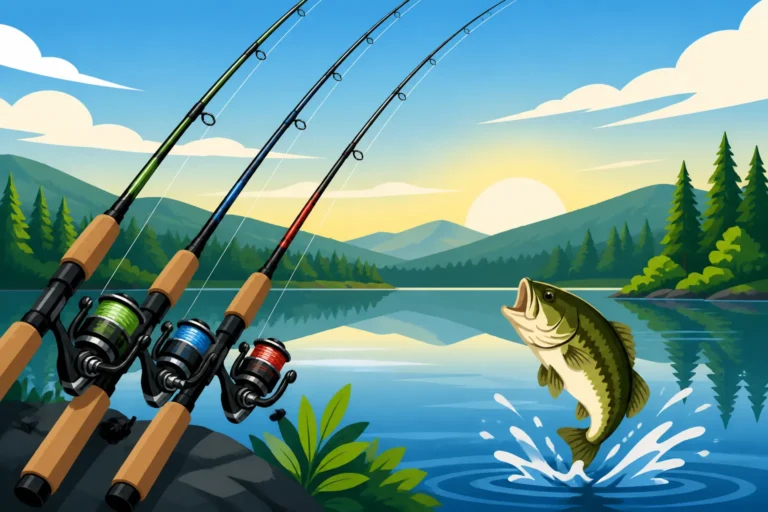
The rod and reel you're using can influence how well you manage current with a drop shot rig. A rod with a sensitive tip but enough backbone (often a medium-light or medium power, fast action spinning rod) is ideal. The sensitive tip allows you to feel the subtle taps of fish or the gentle bump of your weight on the bottom, even with a lighter weight. The backbone helps you set the hook and fight fish in deeper water. If your rod is too stiff, it can be hard to detect those light bites. If it's too soft, you won't have the power to maintain control or set a hook properly in current.
Similarly, a good quality spinning reel with a smooth drag and precise line lay is crucial. It ensures you can make accurate casts and manage your line efficiently. While the reel doesn't directly dictate the weight you need, a poorly performing reel can exacerbate issues caused by current, making it harder to feel what's going on and tiring you out faster as you constantly adjust. Many anglers find that a reliable 2500 or 3000 size spinning reel provides the perfect balance for Vermont's lake fishing. If you're looking for gear, places like Bass Pro Shops and Amazon carry a wide array of suitable rods and reels.
Types of Drop Shot Weights for Current
When you head to the tackle shop, you'll notice a few different shapes and materials for drop shot weights. Each has its advantages and disadvantages, especially when current is a factor. Knowing the differences can help you fine-tune your setup for optimal performance.
Pencil Weights (Cylindrical)
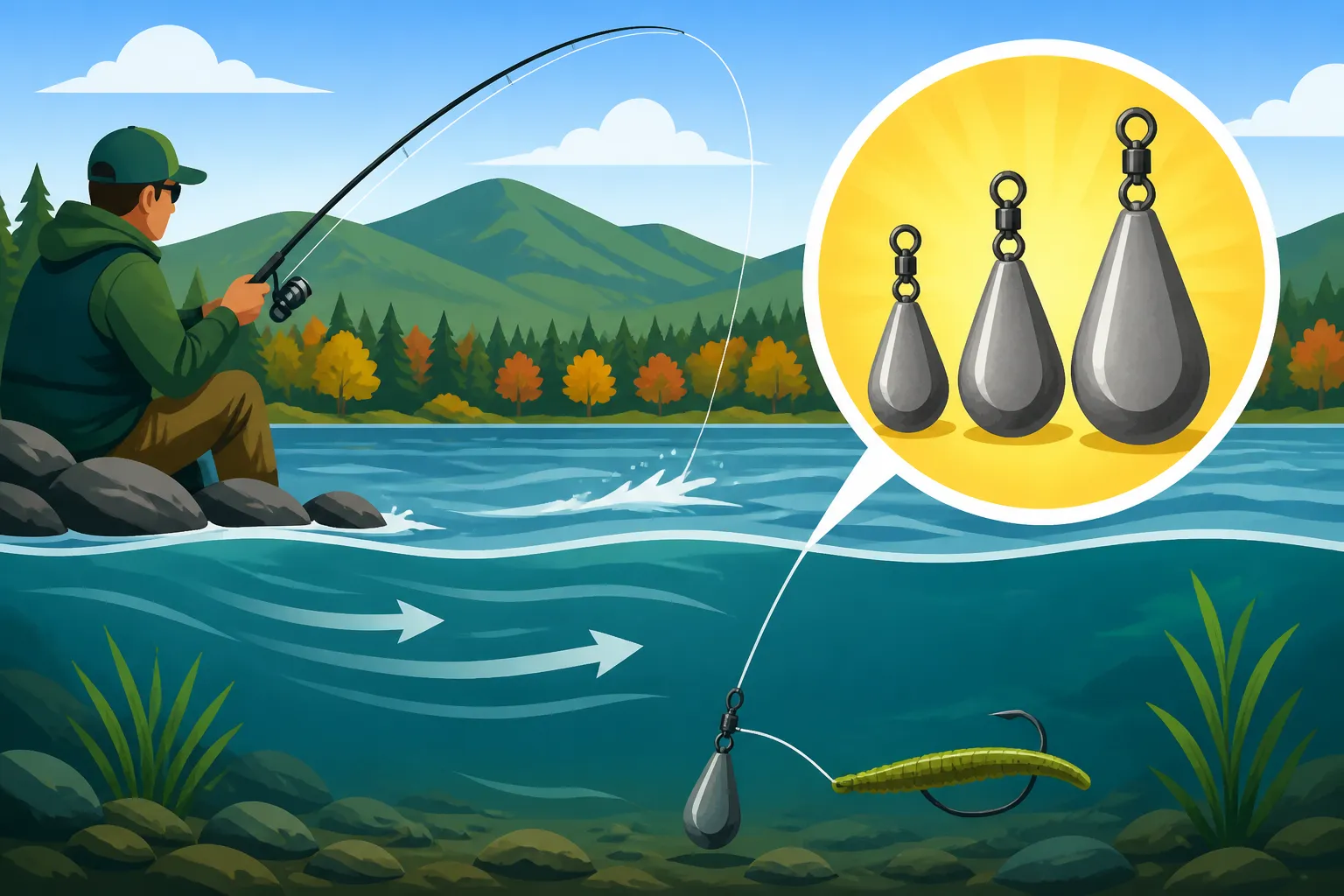
Pencil weights, also known as cylindrical or stick weights, are a popular choice for drop shotting. Their slender profile makes them excel at slipping through weeds, rocks, and other submerged cover without snagging. This is a huge advantage in Vermont's diverse lakes, where the bottom can range from soft mud to rocky ledges and thick weed beds. In terms of current, their streamlined shape offers less resistance than a round weight, meaning they tend to drift less and maintain bottom contact more efficiently for their given weight.
However, their thin profile can also be a drawback in extremely strong currents or very deep water. Because they have less surface area to "grip" the bottom, they might roll or get dragged more easily than a weight with a flatter side if the current is pushing hard enough. They're excellent for moderate current and navigating tricky cover, providing a good balance of feel and snag resistance.
Round and Tear-Drop Weights
Round and tear-drop shaped weights are another common option. Tear-drop weights are essentially a hybrid, often having a slightly flattened side or a more tapered profile than a perfectly round weight. These shapes generally offer more surface area to "dig in" or settle on the bottom, which can be beneficial in stronger currents where you need maximum anchoring power. They tend to resist rolling more than pencil weights, making them a good choice when you really need to keep your bait in a precise location.
The downside is that their broader profile can make them more prone to snagging in rocky terrain or thick weed beds. If you're fishing an area with a clean, hard bottom, or sparse cover, a tear-drop or round weight can be an excellent choice for battling current. They provide a solid "thump" on the bottom, giving you good feedback.
Tungsten vs. Lead Weights
The material of your drop shot weight also matters significantly.
- Lead Weights: These are the traditional, more affordable option. They do the job, but lead is less dense than tungsten. This means a lead weight of a certain ounce will be physically larger than a tungsten weight of the same ounce. The larger profile can mean more water resistance and potentially more drag in current, requiring you to go up in weight size sooner.
- Tungsten Weights: Tungsten is much denser than lead. This allows tungsten weights to be significantly smaller for the same weight measurement. A 1/2 oz tungsten weight is much more compact than a 1/2 oz lead weight. This smaller profile means less water resistance, allowing it to sink faster and cut through current more efficiently. The increased density also transmits bottom composition and subtle bites much more effectively up your line, enhancing sensitivity. For these reasons, many serious drop shot anglers, especially those targeting deep-water bass in current-prone lakes like Lake Champlain, will invest in tungsten weights despite their higher cost. The difference in feel and performance can be truly game-changing. You can find a good selection of both lead and tungsten weights at most major tackle retailers or online through Amazon.
Practical Tips for Drop Shotting in Lake Current
Even with the right weight, fishing a drop shot in current requires a few extra considerations to ensure you're getting the most out out of your presentation. It's about combining the right gear with smart technique.
Starting Light and Adjusting Up
A good rule of thumb for drop shot fishing in general is to start with the lightest weight you can get away with. This maximizes sensitivity and gives your bait the most natural action. However, when current is a factor, you need to be prepared to quickly adjust. Start with a weight that you think might work, cast it out, and pay close attention to how your line behaves. If you see a significant bow in your line, if you can't feel your weight hitting bottom consistently, or if your bait is drifting away too quickly, it's time to bump up to the next size. Don't be afraid to go up in 1/8 oz or 1/4 oz increments until you find that sweet spot where you maintain positive bottom contact and feel.
Sometimes, even an extra 1/8 oz can make all the difference between a frustrating, uncontrolled drift and a perfectly presented bait. Keep a variety of weights in your tackle box – from 1/8 oz up to 1/2 oz or even 3/4 oz, especially if you're exploring different depths or conditions on a large lake. Consider having your weights organized for quick changes, perhaps in a compact tackle box dedicated to your Best Tackle for Vermont Smallmouth Bass.
Using Your Electronics to Identify Current
Modern fish finders aren't just for locating fish and structure; they can also give you clues about current. While they don't directly measure current speed, observing how your boat drifts over a specific depth contour or structure, especially when using your trolling motor to hold position, can tell you a lot. If your boat is struggling to stay put or being pushed consistently in one direction, you know there's current. Some advanced units, particularly those with side-imaging or forward-facing sonar, might even show subtle line angle changes if your weight is being dragged, or how your bait is swaying in the current.
Pay attention to your GPS track – if you're trying to hold a precise spot and you're constantly being pulled off course, that's a sure sign of current. Understanding your electronics can give you an edge in determining the best strategy for your drop shot, whether it's adjusting weight, boat position, or even casting angle. For more on this, check out Best Fish Finders for Vermont Lakes.
Casting Up-Current and Dragging Down
When you're faced with a noticeable current, one of the most effective drop shot techniques is to cast your rig slightly up-current from your target area. Allow the current to naturally carry your weight and bait down to the desired zone. As it drifts, slowly reel in just enough slack to maintain a tight line and feel. This "controlled drift" or "drag" technique presents your bait in a very natural way, as if it's being washed along by the current, which can be highly enticing to bass.
Once your weight settles, you can lightly shake or twitch your rod tip to impart action to the bait, letting it dance enticingly above the bottom. The key is to let the current do some of the work, but still maintain enough control with your rod and weight to feel what's happening. If you're on a boat, you might even consider using your trolling motor to slowly "back-troll" or hold against the current, allowing you to present your bait even more precisely. This strategy often works wonders on deep rocky points on Lake Champlain, where smallmouth bass often stack up against current. This is a great approach for How to Fish a River for Smallmouth Bass too, even though we're talking lakes here!
Drop Shot Weight Chart for Lake Current Scenarios
To give you a quick reference, here's a general guideline for choosing drop shot weights in varying lake current and depth conditions. Remember, these are starting points, and you'll always need to adjust based on the specific conditions you encounter.
| Depth Range | Light Current (e.g., light breeze) | Moderate Current (e.g., strong breeze, mild seiche) | Strong Current (e.g., heavy wind, noticeable drag) |
|---|---|---|---|
| 0-15 feet | 1/8 oz – 3/16 oz | 1/4 oz – 3/8 oz | 3/8 oz – 1/2 oz |
| 15-30 feet | 3/16 oz – 1/4 oz | 3/8 oz – 1/2 oz | 1/2 oz – 5/8 oz |
| 30-45 feet | 1/4 oz – 3/8 oz | 1/2 oz – 5/8 oz | 5/8 oz – 3/4 oz |
| 45+ feet | 3/8 oz – 1/2 oz | 5/8 oz – 3/4 oz | 3/4 oz – 1 oz+ |
Important Considerations for the Chart:
- Line: This chart assumes you're using a relatively thin, low-stretch line (like braided main with a fluorocarbon leader). If you're using heavier mono, you may need to go up one size.
- Weight Material: Tungsten weights will generally perform like a lead weight one size heavier (e.g., a 1/4 oz tungsten might perform similarly to a 3/8 oz lead due to its smaller profile and density).
- Bottom Type: If fishing a snaggy bottom, opt for pencil weights to reduce hang-ups. If the bottom is clean and you need maximum anchoring, tear-drop or round weights can be good.
- Feel is Key: Always prioritize the "feel" over the chart. If you can't feel the bottom or your bait's action, go heavier. If you're losing sensitivity due to excessive weight, try a lighter one.
Common Mistakes to Avoid When Drop Shotting in Current
Even experienced anglers can make mistakes when trying to present a finesse bait in moving water. Being aware of these common pitfalls can help you avoid frustration and put more fish in your boat.
Using Too Light a Weight for the Conditions
This is perhaps the most frequent mistake. Many anglers are so accustomed to fishing lighter drop shot weights in calm conditions that they don't adjust sufficiently when current picks up. The result is a lost connection to the bottom, a bowing line, and a bait that's drifting far from the intended target zone. You might think you're being subtle, but in reality, you're losing control.
If you're constantly snagging on the bottom because your weight is bouncing erratically, or if you simply can't tell if you're hitting structure or if a fish is gently mouthing your bait, your weight is too light. Don't be afraid to size up. A heavier weight that allows you to maintain control and feel is always better than a lighter weight that leads to a guessing game. It's better to slightly overpower the current than to be completely at its mercy.
Not Paying Attention to Line Angle and Slack
When current is present, your line can quickly create a large bow, especially if you're fishing far from the boat. This slack line is the enemy of sensitivity. You might think you're maintaining contact, but that bow in your line absorbs subtle bites and makes it impossible to feel what your weight is doing on the bottom. Always try to keep as straight a line from your rod tip to your weight as possible. This often means adjusting your boat's position, making shorter casts, or continuously reeling in just enough slack to stay tight without moving your bait too much.
A good sign of too much slack is if your rod tip isn't reacting to the bottom contact of your weight or if you only feel a fish after it's already moved a significant distance with your bait. Remember, that instant connection is what makes drop shot so effective. Take a look at Best Kayak Fishing Techniques for Vermont Lakes for tips on how to position yourself in a kayak to manage line angle more effectively.
Forgetting to Account for Bait Action
The whole point of drop shot is the subtle, enticing action of your soft plastic bait. When current is flowing, it will naturally impart action to your bait. If you're still aggressively shaking your rod tip as you would in calm water, you might be overworking the bait, making it look unnatural and potentially spooking fish.
Instead, try a more subdued approach. Let the current do some of the work, and use minimal rod tip movements – maybe just a slight tremor or a gentle lift and fall – to enhance the bait's natural drift. Sometimes, simply holding your rod still and letting the current give your bait a lifelike shimmy is all it takes. Observe how the current influences your line and adjust your retrieve and jigging style accordingly. You might find that a more passive approach, allowing the bait to gently sway, is exactly what those Vermont smallmouth are looking for.
Choosing the right drop shot weight for lake current in Vermont is all about understanding the dynamics of the water, knowing your gear, and being willing to adapt. By considering depth, current strength, line type, and weight shape, and by practicing smart boat positioning and line management, you'll be able to keep your bait in the strike zone and feel those subtle bites, even when the lake is trying to pull your presentation away.
Disclaimer
This article is for general informational purposes only and does not constitute professional advice. Laws, prices and regulations vary by location and change over time. Consult a qualified professional for guidance on your specific situation.