Best Rain Gear for Vermont Anglers
There's nothing quite like a sudden Vermont downpour to turn a promising fishing trip into a soggy, miserable ordeal. One minute you're enjoying the serene beauty of a Green Mountain stream or the vastness of Lake Champlain, the next you're soaked to the bone, shivering, and packing up prematurely. This guide is dedicated to helping you beat the elements by choosing the best rain gear, ensuring you stay dry, comfortable, and focused on the fish, no matter what Vermont's notoriously fickle weather throws your way.
Why Your Everyday Rain Jacket Just Won't Cut It in Vermont
Many anglers make the mistake of thinking any old rain jacket will do for a fishing trip. They grab a lightweight shell meant for casual walks or city commutes and quickly discover its limitations when facing a sustained Vermont deluge. Our state's weather isn't just "rainy" sometimes; it's often a complex mix of temperature drops, wind, and persistent precipitation that demands specialized protection.
The Unpredictable Vermont Weather Rollercoaster
Vermont's weather is famous for its unpredictability. You might start your day under brilliant sunshine, only to have dark clouds roll in over the mountains an hour later, bringing with them a torrential downpour and a significant drop in temperature. This isn't just an inconvenience; it can be genuinely dangerous, especially if you're out on the water in a boat or far from shelter while wading a remote section of the Battenkill River Trout Fishing. These sudden shifts demand gear that can perform reliably under rapidly changing conditions, not just a light sprinkle. Think about those chilly spring days when a warm front quickly turns cold as the rain starts, or a summer afternoon thunderstorm that brings surprisingly strong winds.
The Difference Between "Water-Resistant" and "Waterproof"
This is a critical distinction that many people overlook. A jacket might be labeled "water-resistant," meaning it can shed light rain for a short period. The fabric is often tightly woven or has a very basic coating. However, under continuous rain, especially combined with wind, water will eventually saturate the fabric and seep through. "Waterproof" gear, on the other hand, is designed to completely prevent water penetration, often using advanced membranes like GORE-TEX (or similar proprietary technologies from various brands) and critically, sealed seams. If the seams aren't sealed, water will find its way in, rendering the "waterproof" fabric useless. For the dedicated Vermont angler, "water-resistant" is simply not good enough. You need genuine waterproof protection, especially if you plan to be out during typical Vermont Fishing Seasons by Month or if you're navigating choppy waters where spray is a constant factor.
Staying Dry Means Staying Safe and Comfortable
Beyond just comfort, staying dry is paramount for safety. Getting thoroughly wet in cold temperatures can quickly lead to hypothermia, even in above-freezing conditions. Your body loses heat much faster when wet. Imagine being on Lake Champlain in April, reeling in a beautiful lake trout, only for a cold rain to start. If your rain gear fails, your core temperature can drop rapidly, impairing your judgment and physical coordination. This isn't just about shivering; it's about minimizing risk. Proper rain gear helps you maintain a stable body temperature, allowing you to focus on the fishing, enjoy the scenery, and react safely to any situation. Even in warmer months, prolonged wetness can cause chafing, discomfort, and just generally dampen your spirits, making you call it a day long before you intended.
Essential Features of Top-Tier Rain Gear for Anglers
When you're looking to invest in quality rain gear for Vermont fishing, you need to go beyond the basics. There are specific features and technologies that elevate angling-specific gear above generic raincoats. These are the elements that ensure you remain dry and comfortable, no matter how long the rain lasts or how intensely you're moving.
The Waterproofing Powerhouse: Materials and Coatings
The heart of any good rain gear lies in its ability to repel water. This usually comes down to the fabric's membrane and its Durable Water Repellent (DWR) coating. Advanced waterproof-breathable membranes are engineered with microscopic pores that are too small for liquid water droplets to pass through, but large enough for water vapor (sweat) to escape. This is a game-changer compared to old-school rubberized rain gear that kept rain out but trapped all your sweat in, leaving you damp from the inside.
Look for hydrostatic head ratings, though these aren't always prominently displayed for consumer gear. A higher rating indicates greater resistance to water pressure. More importantly, ensure the gear features fully taped seams. Without taped seams, water will inevitably leak through the needle holes where the fabric pieces are stitched together. Modern rain gear also relies on a DWR coating on the fabric's exterior, causing water to bead up and roll off. This prevents the fabric from "wetting out," which can reduce breathability and make the garment feel heavier. While the DWR coating eventually wears off, it can often be reapplied (more on that later!). Many reputable brands offer their own proprietary waterproof-breathable technologies, which often perform similarly to industry standards. You'll find a wide selection of these technical garments at retailers like Bass Pro Shops.
Breathability: The Unsung Hero of Comfort
What's almost as bad as getting soaked by rain? Getting soaked by your own sweat. When you're casting, reeling, hiking to a remote stream, or even just fighting a big fish, your body generates heat and moisture. If your rain gear isn't breathable, that moisture gets trapped inside, leaving you feeling clammy and wet. This defeats the purpose of staying dry and can actually accelerate heat loss in cooler conditions.
Breathability is measured by a Moisture Vapor Transmission Rate (MVTR), indicating how much water vapor can pass through a square meter of fabric in 24 hours. A higher MVTR means more breathable gear. Look for jackets and pants designed with breathability in mind, often featuring vents (like pit zips) that can be opened for extra airflow without compromising waterproofness in less intense rain. Good breathability is especially crucial for active anglers, those who do a lot of wading in Vermont Trout Season and Stocking Rules streams or paddle extensively on one of the Best Kayaks for Vermont Fishing models. Without it, you'll feel like you're wearing a plastic bag, which is far from comfortable on a long day of fishing.
Durability and Construction for the Rigors of Fishing
Fishing isn't always a gentle sport. You might be scrambling over rocky banks, brushing against thorny bushes, or repeatedly sitting on rough boat surfaces. Your rain gear needs to be able to withstand this abuse without tearing or developing leaks. Look for robust fabrics, often with Ripstop weaves, which prevent small tears from becoming large rips. Reinforced areas, particularly on the elbows, shoulders, knees, and seat, are a huge plus. These high-wear zones are where anglers often experience the first failures in less durable gear.
Heavy-duty, corrosion-resistant zippers (often YKK AquaGuard or similar water-resistant designs) are also vital. Flimsy zippers can fail, allowing water in or making it impossible to seal your jacket properly. Adjustable cuffs with hook-and-loop closures or neoprene seals are excellent for preventing water from running down your arms when casting or reaching into the water. A robust, adjustable hood that moves with your head and allows for peripheral vision is also essential, especially when driving a boat or needing to hear subtle sounds from your surroundings.
Diving Into Different Types of Angler-Specific Rain Gear
Understanding the specific types of rain gear available can help you tailor your selection to your unique fishing style and the conditions you expect to encounter in Vermont. It's not a one-size-fits-all situation; different scenarios call for different levels of protection and mobility.
Rain Jackets: Your Upper Body Fortress
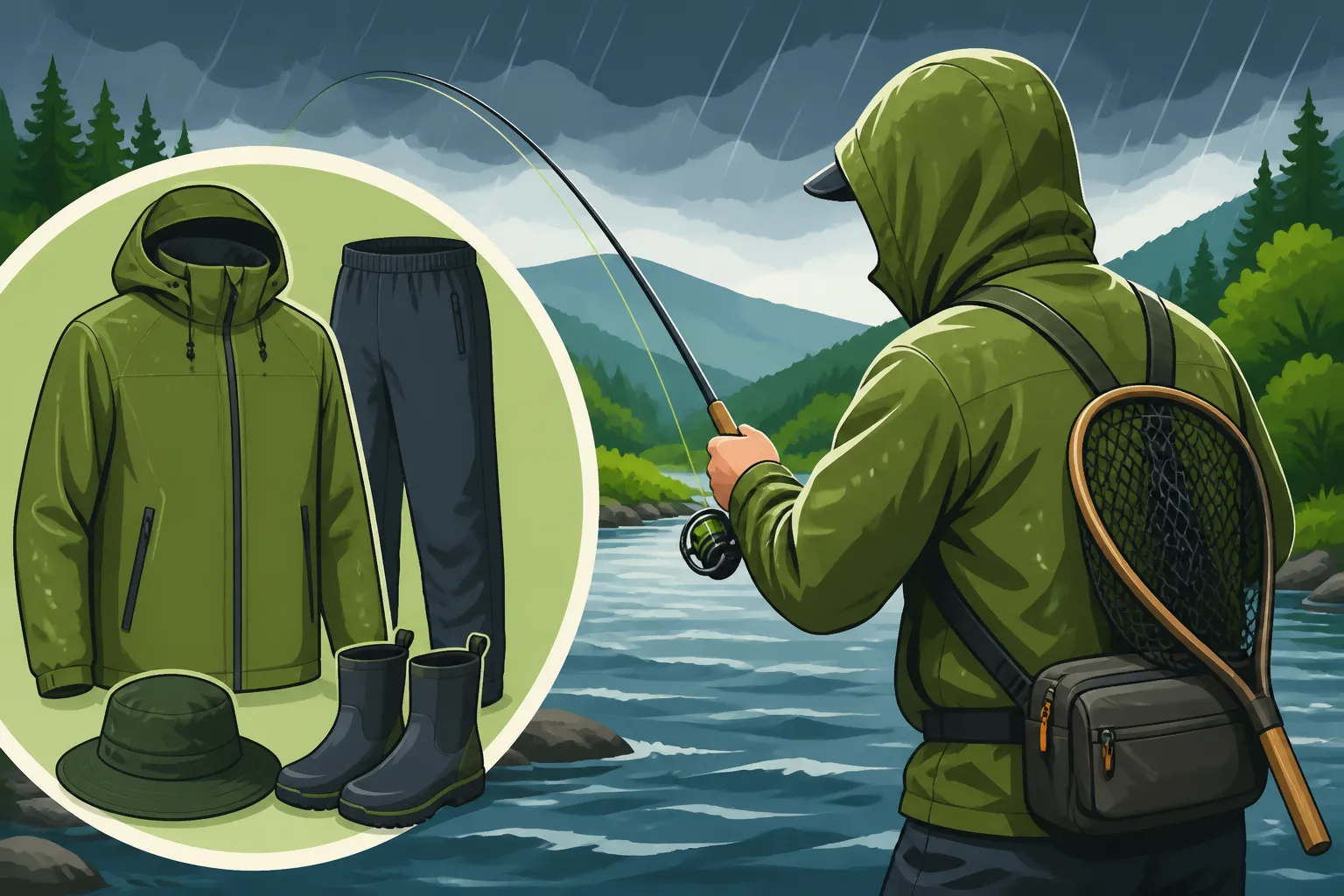
A dedicated fishing rain jacket is far more than just a shell. It's often the most critical piece of your rain ensemble. Look for features specifically designed for anglers. A longer cut in the back can prevent water from running down your lower back when casting or bending over. A fully adjustable hood is paramount; it should cinch down securely to protect your face from driving rain and wind but still allow for unobstructed peripheral vision. Many fishing jackets include internal or external adjustments that let you customize the fit.
Pockets are another key consideration. They should be strategically placed, easily accessible even with a life jacket on, and critically, waterproof. Zippered chest pockets with storm flaps or water-resistant zippers are ideal for storing essentials like your phone, wallet, or fishing license without fear of them getting soaked. Cuffs should be adjustable, preferably with an inner cuff or gasket system, to prevent water from running down your arms when you raise them to cast or net a fish. Some jackets even feature D-rings for attaching tools or fly patches. The best fishing rain jackets are designed to integrate seamlessly with other fishing apparel, making sure you stay protected and functional.
Rain Pants: Keeping Your Lower Half Dry
While a good rain jacket is crucial, ignoring your lower half is a recipe for discomfort. Rain pants come in two main styles: traditional pants or bibs.
- Rain Pants: These are typically lighter and easier to put on and take off, often featuring full-length leg zippers that allow you to pull them over boots without removing them. Look for articulated knees for freedom of movement and reinforced seat and knee areas, especially if you spend time sitting in a boat or kneeling on wet ground. Adjustable waistbands are also a plus for a comfortable fit.
- Rain Bibs: Bibs offer superior protection by extending higher up the torso, providing an extra layer of warmth and preventing water from seeping in where your jacket and pants meet. They're particularly popular for boating anglers on large waters like Lake Champlain, where spray is common, or for Ice Fishing in Vermont where you're often kneeling or sitting on cold, wet surfaces. Bibs often feature large, waterproof pockets on the chest and thighs, adjustable suspenders, and full-length leg zippers for easy on/off. They can feel a bit more restrictive for highly mobile activities like wade fishing but offer unparalleled protection in severe weather.
Both pants and bibs should be made from the same waterproof-breathable materials as your jacket to ensure consistent protection. Investing in a matching set often provides the best integration and performance.
The Full Rain Suit: Head-to-Toe Protection
For the most extreme conditions, or for those spending extended periods on the water, a full rain suit (matching jacket and bibs/pants) is the ultimate defense. This combination ensures there are no gaps for water to exploit, offering continuous protection from head to toe. This is especially vital for anglers pursuing species like walleye on Lake Champlain Walleye Fishing where conditions can be rough, or for longer trips where you can't just run back to shore at the first sign of rain.
When selecting a full suit, consider how the pieces work together. Does the jacket overlap the bibs sufficiently? Are the zippers compatible? Does the hood integrate well with a hat? Many manufacturers design their rain suits as a cohesive system, ensuring maximum coverage and comfort. While you can mix and match brands, choosing a suit from a single manufacturer often provides the best fit and performance synergy. For serious anglers who brave all kinds of Vermont weather, a well-chosen rain suit is an indispensable investment, allowing them to extend their time on the water comfortably and safely. You can find excellent options for complete rain suits from various brands on Amazon, allowing for easy comparison of features and customer reviews.
Layering Strategies: Maximize Your Rain Gear's Performance
Your rain gear is your outer shell, but it's not meant to be worn directly over a t-shirt in freezing temperatures. The key to staying truly comfortable and dry in Vermont's variable climate lies in understanding and implementing proper layering. Each layer has a specific job, working in concert to manage moisture and provide insulation.
The Base Layer: Managing Moisture from Within
The base layer is the foundation of your entire clothing system, and arguably one of the most important, yet often overlooked, components. Its primary job is to wick moisture (sweat) away from your skin and transfer it to the outer layers, where it can evaporate. If your base layer gets saturated with sweat, you'll feel cold and clammy, even if your outer rain gear is performing perfectly.
Never, ever wear cotton as a base layer for fishing in potentially wet or cold conditions. Cotton absorbs moisture and holds it against your skin, and once wet, it loses all insulating properties. This is a fast track to discomfort and potential hypothermia. Instead, opt for synthetic materials like polyester or merino wool.
- Synthetics (e.g., Patagonia Capilene, Columbia Omni-Wick) are excellent at wicking, dry quickly, and are generally durable and affordable. They come in various weights for different temperatures.
- Merino wool is another fantastic option. It's naturally antimicrobial (resists odor), soft, excels at wicking, and perhaps most importantly, retains some insulating properties even when wet. It's often a bit more expensive but offers superior comfort and performance over extended periods. Choose the weight of your base layer based on the expected activity level and ambient temperature. For instance, a lightweight base layer for active summer days or a mid-weight for cooler spring and fall outings.
The Mid-Layer: Crucial Insulation for Cold Rain
The mid-layer's role is simple: to provide insulation and trap warmth. This is the layer that will keep you toasty when the temperature drops, especially during those chilly Spring Trout Fishing Techniques for Vermont Streams mornings or unexpected cold snaps in the fall. Like your base layer, it's crucial to avoid cotton here.
Good mid-layer options include:
- Fleece: Polyester fleece is a popular choice because it's lightweight, warm, relatively quick-drying, and insulates well even when damp. It's also breathable, allowing some moisture to pass through. Fleece jackets or vests come in various thicknesses (100-weight, 200-weight, 300-weight), allowing you to customize your warmth level.
- Synthetic Insulated Jackets/Vests: These often use synthetic fibers (like PrimaLoft or various proprietary fill technologies) that mimic the warmth of down but perform much better when wet. They pack down well and offer excellent warmth-to-weight ratios.
- Wool Sweaters: While traditional wool can be heavy, modern technical wool garments (especially merino blends) can make excellent mid-layers, providing warmth and natural breathability.
The thickness of your mid-layer should correspond to the temperature and your activity level. You might wear a lighter fleece for active wading in fall, but a heavier fleece or synthetic puffy jacket for a day of Vermont Ice Fishing Season Dates or a cold, windy boat ride. The beauty of layering is that you can easily add or remove layers to adapt to changing conditions throughout the day.
The Outer Shell: Your Rain Gear as the Last Defense
Finally, your rain gear acts as the outer shell, the ultimate barrier against wind and rain. Its job is to protect your inner layers from external moisture while allowing the moisture wicked away by your base and mid-layers to escape. This is where the waterproof-breathable properties we discussed earlier become paramount.
When your base layer wicks sweat, and your mid-layer provides insulation, your rain shell creates a protective microclimate around your body. The breathable membrane allows the water vapor from your sweat to escape, preventing internal condensation, while the waterproof exterior stops rain and wind. Without effective base and mid-layers, even the best rain jacket will struggle. If your base layer is soaking wet, the moisture can't escape through the membrane effectively, leading to that clammy feeling. Think of your rain gear as the final piece of a carefully constructed system. It needs to be sized appropriately to fit comfortably over your base and mid-layers without being too bulky or restricting movement. A good layering system, topped with reliable rain gear, means you'll be ready for anything Vermont's unpredictable fishing weather throws at you.
Specific Vermont Considerations for Choosing Your Gear
Vermont's diverse geography and distinct seasons mean that "rain gear" isn't a one-size-fits-all solution. What works perfectly for a summer shower on a pond near Burlington might be woefully inadequate for a blustery spring day on Lake Memphremagog or a chilly fall morning in the Northeast Kingdom. Tailoring your rain gear selection to the specific conditions you'll face is crucial for comfort and safety.
Cold Rain and Wind: Northeast Kingdom Challenges
If you plan to fish in colder regions of Vermont, like the remote stretches of the Northeast Kingdom, or during the shoulder seasons of spring and fall, your rain gear needs to be built to handle more than just water. Cold rain, especially when driven by wind, can quickly suck the warmth right out of you.
For these conditions, look for rain gear that offers:
- Enhanced Durability: Colder weather often means more rugged terrain or more challenging boating conditions. A tougher outer fabric will stand up better to abrasion.
- Insulation Compatibility: Your rain shell should be roomy enough to accommodate thicker mid-layers, such as a substantial fleece jacket or even a lightweight puffy jacket. You don't want your outer shell to compress your insulating layers, which reduces their effectiveness.
- Superior Wind Protection: While all waterproof gear is inherently windproof, some fabrics and designs offer better protection against brutal gusts. Look for high collars, snug-fitting hoods, and cinchable waistbands to seal out drafts. Fishing for Vermont Landlocked Salmon Regulations in the spring, for instance, often means facing cold, blustery winds on large lakes. The right gear makes all the difference.
Summer Thunderstorms and Humid Conditions
Vermont summers, while beautiful, can be notoriously humid and prone to sudden, intense thunderstorms. During these times, staying dry is important, but preventing overheating and managing internal moisture (sweat) becomes an even greater challenge.
For warmer, more humid conditions, consider:
- Lightweight and Highly Breathable Gear: You still need full waterproof protection, but prioritize garments with a high MVTR (breathability rating). Ultra-light rain jackets that pack down small are excellent for throwing in your pack when the forecast is uncertain but the day starts warm.
- Ventilation Features: Pit zips (zippers under the arms), adjustable cuffs, and hem drawcords allow you to dump excess heat and humidity without fully exposing yourself to the rain. These are invaluable when paddling a kayak on a steamy summer day on the Lake Dunmore Fishing Guide and a pop-up shower hits.
- Minimal Insulation: Your base layer might be just a thin wicking t-shirt, and you might forgo a mid-layer entirely, relying solely on the rain jacket for protection. The goal is to keep external water out while allowing maximum airflow and sweat evaporation.
Wading vs. Boating: Different Demands
Your mode of fishing also dictates the type of rain gear that will serve you best.
For Wading Anglers:
If you spend most of your time wading in rivers like the White River Fishing Guide or smaller mountain streams, your rain gear needs to prioritize mobility and durability against snags.
- Freedom of Movement: Look for jackets with articulated sleeves and a fit that allows for unrestricted casting.
- Pocket Placement: Pockets should be accessible and waterproof, ideally designed to work with waders (e.g., higher chest pockets).
- Integrated Cuffs: Cuffs that prevent water from running down your arms when submerged are critical.
- Bibs vs. Pants: Traditional rain pants might offer more mobility than bibs, though bibs provide better coverage if you're frequently kneeling in wet conditions or dealing with deeper water.
For Boating Anglers:
Anglers spending their day on a boat, whether a small jon boat on a pond or a larger craft on Lake Champlain, face different challenges: constant spray, higher wind speeds, and less opportunity to quickly seek shelter.
- Full Coverage: This is where rain bibs truly shine, providing crucial overlap with your jacket to prevent water entry from spray or sitting on wet seats.
- Reinforced Seating: A reinforced seat area on your bibs or pants will prevent wear and tear from friction against boat seats.
- Safety Integration: Ensure your rain gear integrates well with your life jacket. Pockets should remain accessible, and the jacket shouldn't bunch uncomfortably under the vest. Life Jacket Requirements for Vermont Boaters are non-negotiable, and your rain gear needs to work with them, not against them.
- High Collar and Adjustable Hood: Crucial for protecting against wind-driven rain and spray at speed.
Here's a quick comparison of general rain gear types and their ideal use cases:
| Rain Gear Type | Key Features | Best For |
|---|---|---|
| Lightweight Jacket | Packable, highly breathable, minimal features | Summer pop-up showers, active hiking, backup gear for uncertain forecasts |
| Dedicated Rain Jacket | Durable, articulated, multiple waterproof pockets, adjustable hood/cuffs | All-around river and lake fishing, moderate to heavy rain, active use |
| Rain Pants (Over-Pants) | Full-length zippers, articulated knees, reinforced seat/knees | Quick deployment over regular pants, less extreme conditions, general wading |
| Rain Bibs | High chest coverage, suspenders, reinforced seat/knees, large pockets | Boating, extreme weather, cold conditions, ice fishing, maximum protection |
| Full Rain Suit | Jacket + Bibs combo, seamless protection, often integrated features | Severe weather, long days on open water, cold wind and rain, professional use |
Maintaining Your Rain Gear for Longevity and Performance
Investing in quality rain gear is a significant step, but its performance and longevity largely depend on how well you care for it. Neglecting your rain gear can quickly lead to reduced effectiveness, making those expensive waterproof-breathable membranes feel less "breathable" and eventually, less "waterproof." Proper maintenance is key to ensuring your gear continues to protect you season after season.
Proper Cleaning and Storage
It might seem counterintuitive to wash waterproof gear, but dirt, sweat, sunscreen, bug spray, and fish slime can all clog the microscopic pores of waterproof-breathable membranes. This "clogging" severely diminishes breathability and can even allow water to wick through the fabric from the inside, giving you the impression that your gear is leaking.
Here's how to clean your rain gear:
- Check the Label: Always start by reading the care instructions provided by the manufacturer.
- Pre-Treat: If there are stubborn stains (like mud or blood), gently pre-treat them with a mild soap or a specialized technical fabric cleaner.
- Use a Specialized Cleaner: Avoid conventional detergents, fabric softeners, and bleach. Detergents can leave residues that clog membranes and strip DWR. Instead, use technical wash products designed for waterproof fabrics (e.g., Nikwax Tech Wash or Granger's Performance Wash). These are widely available at outdoor retailers and online marketplaces like Amazon.
- Gentle Cycle: Wash in a front-loading washing machine (top-loaders with agitators can be too harsh) on a warm, gentle cycle with an extra rinse to ensure all cleaner is removed.
- Drying: Air dry your gear, or tumble dry on a low, gentle setting. Heat can often help reactivate the DWR (Durable Water Repellent) coating.
For storage: Ensure your rain gear is completely dry before storing it. Hanging it in a cool, dry, well-ventilated area is best. Avoid compressing it for long periods, as this can damage the membrane. Do not store it in direct sunlight or extreme heat.
Re-activating and Re-applying DWR
The Durable Water Repellent (DWR) coating on the exterior of your rain gear is what makes water bead up and roll off. Over time, and with wear and washing, this coating will degrade. When water no longer beads up but instead "wets out" the fabric, it's time to reactivate or reapply your DWR. Even if the membrane is still waterproof, a wetted-out outer fabric feels heavier, colder, and significantly reduces breathability.
Re-activating DWR: Often, a gentle tumble dry on low heat (check garment instructions!) or ironing on a low, steam-free setting can reactivate the existing DWR. The heat helps the DWR molecules stand up again, restoring their water-repelling properties.
Re-applying DWR: If reactivation doesn't work, you'll need to reapply a DWR treatment. These come in two main forms:
- Wash-in Treatments: Added to your washing machine during a cycle (after a thorough cleaning with a technical wash). These are easy to use but can coat internal wicking layers as well, which is less ideal.
- Spray-on Treatments: Applied directly to the clean, wet outer fabric. These allow for more precise application and are generally preferred for optimal performance, as they only treat the exterior.
Follow the specific instructions on the DWR product you choose. Brands like Nikwax and Granger's are popular and effective. Regularly maintaining your DWR will significantly extend the life and performance of your rain gear, ensuring you stay dry and comfortable even in the nastiest Vermont weather.
Spotting and Repairing Minor Damage
Even the most durable rain gear can suffer minor damage from the sharp hooks, thorny bushes, or rough surfaces encountered during fishing. Small tears or punctures can turn a waterproof garment into a leaky sponge.
How to spot a leak:
- Water Test: Fill a bathtub and submerge the suspected area, looking for air bubbles.
- Spray Test: Turn the garment inside out and spray the area with water from a hose, looking for wetness on the inside.
- Visual Inspection: Examine high-wear areas (shoulders, elbows, knees, cuffs, pockets) for small rips, abrasions, or seam separation.
Repairing Minor Damage:
- Small Punctures/Tears: For small holes or minor tears, specialized repair patches are readily available. These are usually peel-and-stick, self-adhesive patches made from waterproof fabric (often nylon or similar to tent repair patches). Clean the area thoroughly, cut the patch to size (with rounded corners to prevent peeling), and apply firmly. Flexible repair adhesives like Gear Aid Aquasure can also create a strong, waterproof seal.
- Seam Leaks: If a seam is leaking, the seam tape might have come loose or worn out. You can often re-seal these areas with a liquid seam sealer specifically designed for waterproof fabrics. Apply a thin, even bead to the inside of the seam, let it dry completely, and test it before your next outing.
Having a small repair kit with patches and seam sealer in your Best Tackle Box Setup for Vermont Anglers or backpack can be a trip-saver, allowing you to make quick field repairs and continue fishing rather than ending your day prematurely. With a little care and attention, your quality rain gear will be a trusted companion for many memorable fishing adventures in Vermont.
Disclaimer
This article is for general informational purposes only and does not constitute professional advice. Laws, prices and regulations vary by location and change over time. Consult a qualified professional for guidance on your specific situation.