Best Time of Day to Catch Landlocked Salmon
There’s nothing quite as frustrating as heading out onto a beautiful Vermont lake, full of hope, only to spend hours fruitlessly chasing after landlocked salmon. These incredible fish can be incredibly elusive, making you question every choice you’ve made, especially about when you decided to hit the water. But what if there was a secret window, a prime time of day when these silver bullet beauties are more likely to bite? This comprehensive guide is here to shed light on exactly that, helping you maximize your chances of success no matter the season.
Understanding Landlocked Salmon Behavior and Circadian Rhythms
Landlocked salmon are highly attuned to their environment, and their activity levels, particularly feeding, are intrinsically linked to factors like light, temperature, and the movement of their prey. Thinking about salmon behavior isn't just about what they eat, but also when they eat and why they choose those times. It’s a delicate dance between their biological needs and the external conditions of their lake home.
How Light and Temperature Influence Feeding
Light penetration in the water column plays a huge role in a salmon’s day. As sight predators, landlocked salmon have excellent vision, but too much direct sunlight can actually work against them, making them more visible to prey and potentially causing discomfort. Think about how you feel squinting in bright sunshine—fish feel something similar. This is why you'll often find them retreating to deeper, shadier, or cooler waters during the brightest parts of the day.
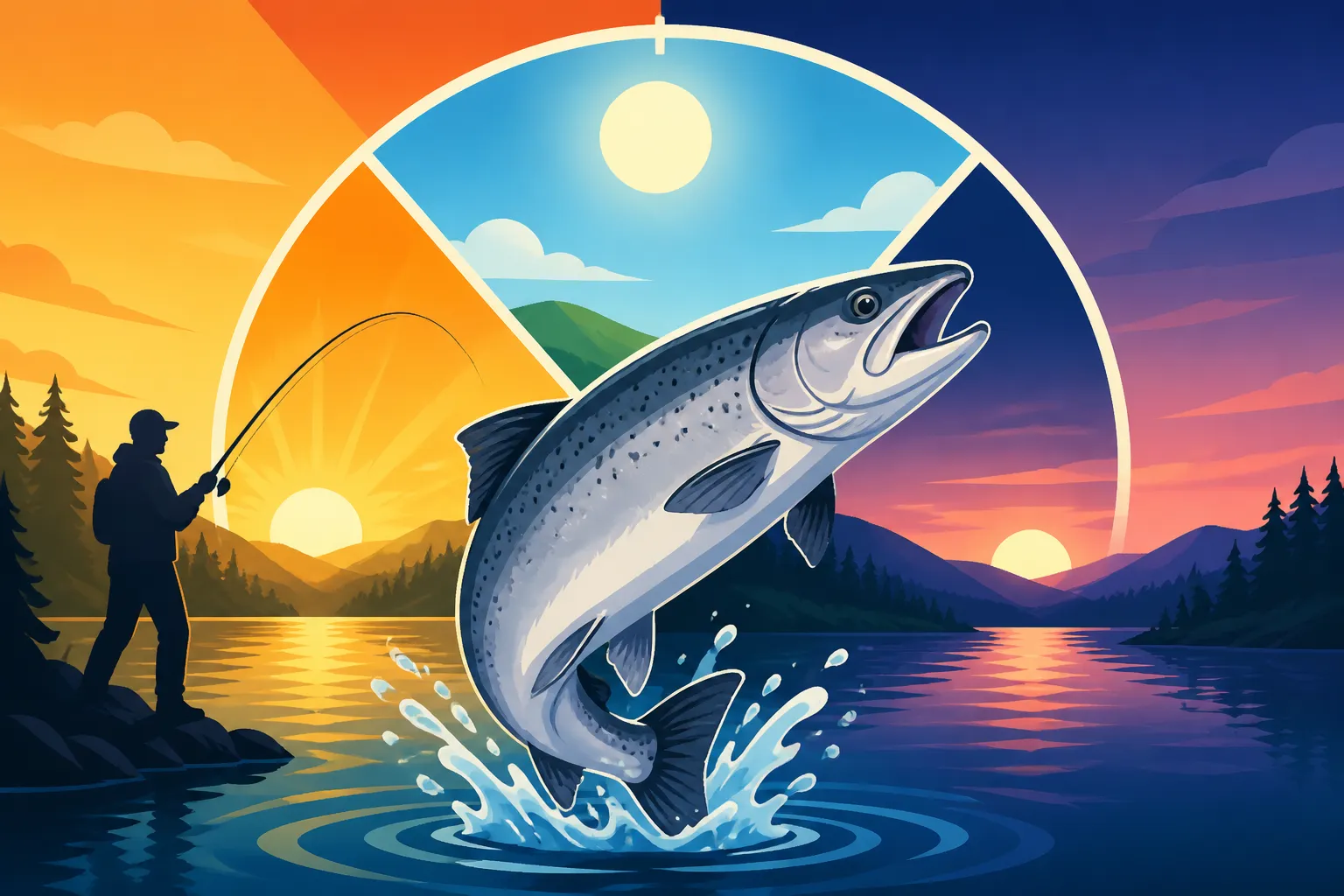
On the flip side, lower light conditions, like those found at dawn, dusk, or under heavy cloud cover, give salmon a distinct predatory advantage. They can see their prey, often schools of rainbow smelt, without being as easily detected themselves. This increased stealth allows them to hunt more effectively, leading to heightened activity during these times. Temperature is another critical factor. Landlocked salmon prefer cooler water, typically between 45 and 60 degrees Fahrenheit. Their metabolism speeds up or slows down with water temperature. When the water is too warm, they become lethargic and less inclined to feed aggressively. This is why understanding the thermal layers of a lake is as important as watching the clock. For instance, on a sunny summer day on Lake Willoughby, you might find salmon much deeper than you would at sunrise on Seymour Lake in the spring.
The Role of Forage Fish Movement
You simply can't talk about catching landlocked salmon without talking about rainbow smelt. These small, silvery fish are the primary forage for salmon in most Vermont lakes, and where the smelt go, the salmon often follow. Smelt themselves have distinct daily movement patterns. They tend to move into shallower waters or higher in the water column during low light periods, such as dawn and dusk, to feed on zooplankton.
As the sun rises and light penetrates deeper, smelt will often descend into deeper, darker, and cooler waters, congregating in large schools. This daily migration of their food source directly dictates where and when salmon will be most actively hunting. Imagine a vast underwater buffet moving from one floor to another in a building; the patrons (salmon) will naturally move with it. If you have a good fish finder, observing these baitfish schools is key to locating active salmon. You might mark huge schools of baitfish on your sonar, often clustered near the thermocline, and just below or around them, you'll see those tell-tale arches of bigger predators. Keeping an eye on your electronics is often more valuable than just guessing where the fish are. Many anglers find great success in identifying these bait schools, and the right fish finder, which you can often find with detailed reviews on Amazon, can make all the difference.
Springtime Strategies: Post-Ice Out to Early Summer
Spring in Vermont is a time of transition, not just for the landscape, but for the landlocked salmon fishery as well. As the ice recedes, the entire lake ecosystem awakens, offering some of the most exciting, yet also challenging, salmon fishing opportunities of the year. The best time of day in spring can shift dramatically from March to June.
Early Morning and Late Evening for Shallow Cruisers
Right after the ice goes out, the entire water column is relatively cold and oxygenated, meaning salmon aren't confined to deep thermal refuges yet. They are often found cruising the upper layers of the water, sometimes surprisingly close to shore, actively feeding after a long winter under the ice. This period, typically from late March through April, offers fantastic opportunities during low light conditions. Dawn, from first light until an hour or two after sunrise, and dusk, from an hour or two before sunset until dark, are prime times.
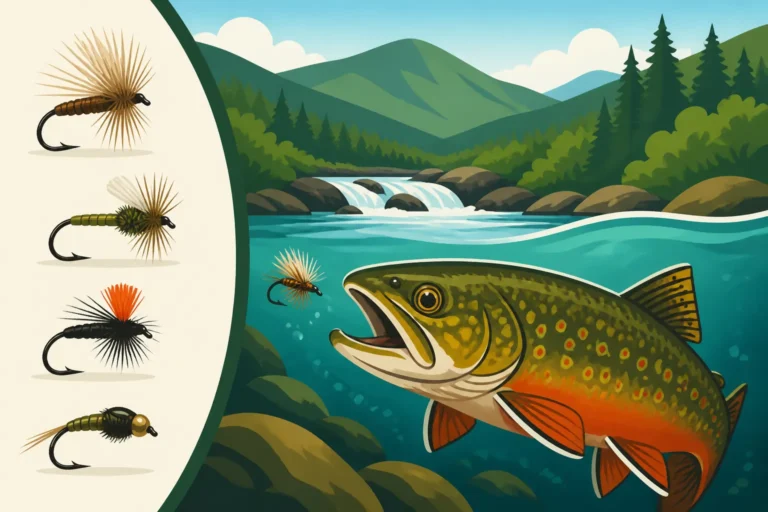
During these low light windows, the salmon feel less vulnerable and will venture into shallower areas where baitfish might be congregating. This is a fantastic time for anglers trolling streamer flies, small stickbaits, or spoons near the surface. Imagine the calm waters of Lake Dunmore at sunrise, with a light mist rising off the surface, and you’re slowly trolling a smelt-imitating lure just a few feet below the surface. That classic, hard hit that bends your rod over is often the reward for being out there at that precise moment. If you're looking for gear for this type of fishing, searching for "light trolling setups" or "smelt imitation lures" on Amazon can yield some great options.
Mid-Day Deep Water Tactics as Waters Warm
As spring progresses into May and early June, and the sun gains strength, surface water temperatures begin to rise. This forces landlocked salmon to adjust their depth. They’ll start to seek out the cooler, more stable temperatures found deeper in the lake. While early mornings and late evenings still hold promise, particularly on cloudy days, the mid-day bite will often shift significantly deeper.
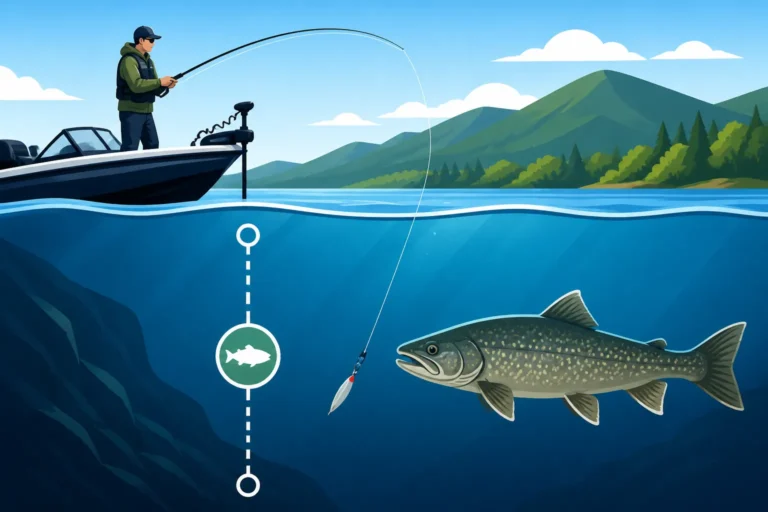
This is when the use of downriggers or lead core lines becomes increasingly important. Anglers will need to start targeting depths between 15 and 40 feet, sometimes even deeper depending on the lake and specific conditions. Your best bet is to constantly monitor your fish finder for baitfish schools and any thermocline development. A real-life scenario might involve spending your morning trolling the top 10 feet of water on Lake Willoughby, then, as the sun gets high and you notice surface temps climbing, deploying your downriggers to target fish suspended over the deeper basins at 25 feet. This tactical adjustment based on the sun's position and warming water can turn a slow mid-day into a successful one. If you want to learn more about how different factors impact the fishery, our detailed guide on How to Catch Landlocked Salmon in Vermont offers even more insights.
Impact of Weather Fronts
Spring weather in Vermont can be notoriously unpredictable, and landlocked salmon are certainly impacted by these rapid changes. Passing cold fronts, especially those accompanied by clear skies and high-pressure systems, can put salmon off their feed. The fish become lethargic and less willing to chase lures.
However, the pre-front conditions can be absolutely fantastic. Ahead of a major weather system, often characterized by dropping barometric pressure, increasing cloud cover, and sometimes light rain or drizzle, salmon can become incredibly active. This is often an extended feeding window where they're trying to pack on calories before the weather turns. A classic example might be a cloudy, drizzly morning on Lake Memphremagog in late April, just before a big cold front is expected to move through. The low light and unstable conditions can trigger a furious bite that lasts well into what would typically be a slower mid-morning. It's almost as if they know bad weather is coming and are stocking up! For a broader understanding of fishing timing, consider exploring our guide on the Best Time of Year to Fish in Vermont.
Summer Fishing: Chasing Them Down Deep
Summer in Vermont is beautiful, but it's also when landlocked salmon fishing becomes arguably the most technical. The warmer surface temperatures push these cold-water fish deep, making precise depth control and locating the thermal refuge paramount. The "best time of day" in summer isn't just about light, but about finding where the fish are comfortable.
Dawn and Dusk Window in the Depths
Even in the dog days of summer, the low light periods of dawn and dusk still offer the most consistent bites. However, unlike spring, the salmon will almost exclusively be found deep. The surface waters can be too warm and less oxygenated, so even as the light dims, they remain in their cool, oxygen-rich sanctuaries, often near the thermocline. It's not about them coming shallow; it's about them becoming more active where they already are.
Anglers need to be on the water well before first light, with their downriggers set to the appropriate depths. Trolling spoons, dodgers, and flies, or large stickbaits at speeds between 2.0 and 3.0 mph is a common tactic. Imagine starting your troll on Lake Champlain at 4 AM, the sun just beginning to paint the eastern sky, and your boat's sonar showing arches at 50-70 feet. That early morning bite, often before the recreational boat traffic starts, can be incredibly rewarding. Patience and persistence are key, as these fish aren't always easy to convince.
Locating the Thermocline and Cooler Water
During the summer, the single most important tool in your arsenal for landlocked salmon fishing is a reliable fish finder capable of accurately displaying water temperature and identifying the thermocline. The thermocline is that distinct layer where warm surface water meets cooler, deeper water, and it’s where you’ll typically find the highest concentration of oxygen and baitfish, and thus, salmon.
Salmon will "stack" along this thermal break, sometimes just above it, sometimes right in it. You might find a tight band of baitfish at 45 feet, and then salmon marks scattered around it at 40-55 feet. Your mission is to present your lures precisely at that depth. Anglers often spend considerable time mapping out these thermal layers and locating submerged structure, humps, and points where baitfish might congregate. For those looking to upgrade their electronics, there are many excellent options for Best Fish Finders for Vermont Lakes available, and you can usually read detailed reviews and compare models on Amazon. This precise depth control is a crucial aspect of successful summer landlocked salmon fishing.
Mid-Day Patience and Persistence
While the dawn and dusk bites are often stronger, mid-day summer salmon fishing isn't impossible, but it demands even greater patience and meticulous technique. Salmon will still be deep, often retreating to the absolute coolest, darkest parts of the lake, like deep structure, rock piles, or humps that offer a bit more shade and ambush points.
Success during mid-day usually comes from slow, methodical trolling right on the bottom or precisely through known deep baitfish schools. Sometimes, a subtle change in boat speed, a zig-zag pattern, or dropping a lure right over a deep drop-off can trigger a reluctant strike. It’s not a time for blind casting; it's a time for precision. Think about carefully working a subtle break line on Seymour Lake, slowly pulling a spoon along the bottom contour while watching your sonar for any signs of fish. You might not get many bites, but the one you do get often feels earned and incredibly satisfying. To boost your chances of finding these productive areas, consider reviewing a Lake Willoughby Fishing Guide or a Lake Memphremagog Fishing Guide for specific tips on deep-water spots.
Autumn Gold: Pre-Spawn Aggression and Shallow Feeds
As the heat of summer fades and the crisp air of autumn settles over Vermont, a magical time for landlocked salmon fishing begins. The cooling waters trigger a pre-spawn feeding frenzy, and the salmon, once again, become more accessible and aggressive. This is often considered by many to be the most enjoyable time to target these fish.
The Return to the Shallows at Dawn and Dusk
With lake temperatures dropping into their preferred range across a wider swath of the water column, landlocked salmon become incredibly active and bold. They'll readily move into shallower areas, particularly during the low light periods of dawn and dusk. This is a time when you might find them chasing baitfish right to the surface, sometimes even breaching the water in pursuit.
These are prime conditions for casting spoons, stickbaits, or even fly fishing with streamer patterns from shore or a boat, especially in shallower bays or near prominent points. Imagine the vibrant foliage reflecting on the water of Lake Dunmore during an October evening, and you're casting a jointed Rapala or a flashy spoon towards a weed line. The strikes are often explosive and unmistakable, a clear indication of their renewed aggression. If you prefer trolling, flat-line trolling closer to the surface with similar lures is highly effective. This return to shallower water makes fall fishing less gear-intensive and more accessible for many anglers. Our guide on Trolling Techniques for Vermont Lake Trout can offer some crossover advice on effective trolling strategies.
Mid-Day Opportunities in Cooling Waters
Unlike the challenges of summer, mid-day in the fall can be just as productive as dawn and dusk, sometimes even more so, especially on overcast days. As the entire water column cools down and holds sufficient oxygen, salmon are not as confined to deep thermal refuges. They're actively patrolling the lake, following schools of baitfish wherever they may lead.
This means that throughout the middle of the day, you can expect to find active fish at various depths, depending on the availability of forage. It’s a great time to experiment with different trolling depths, from the surface down to 30-40 feet, to locate where the salmon are concentrated. Don't be afraid to try different lures and presentations, as their feeding preferences can change daily. A perfect mid-day scenario might involve slow-trolling spoons and stickbaits at varying depths across the open water of Lake Bomoseen, patiently covering ground until you intersect a school of actively feeding salmon. The sheer joy of seeing your rod double over in the middle of a beautiful fall day is hard to beat.
Pre-Spawn Staging Near Tributaries
As autumn progresses into late October and November, landlocked salmon begin their final preparations for spawning. While they don't actually spawn in the lake, they stage in significant numbers near the mouths of their natal tributaries, waiting for the right conditions to run upstream. This staging behavior creates predictable concentrations of fish, offering fantastic, albeit short-lived, opportunities.
The best time of day during this period is less about specific light conditions and more about the presence of fish. However, early mornings and late evenings are still excellent, as these are often when the fish are most actively moving and testing the waters before their upstream journey. Anglers will often target these areas by trolling or casting near the river mouths, using larger, more aggressive lures that mimic the large smelt or even other small fish they might be feeding on. For instance, targeting the mouths of streams flowing into Lake Willoughby in late October, just before they begin their spawning run, can be incredibly productive for trophy-sized salmon. This brief window is highly anticipated by dedicated salmon anglers.
Winter Ice Fishing: A Different Angle
When the lakes freeze over in Vermont, the angling doesn't stop; it simply shifts to a different dimension. Ice fishing for landlocked salmon offers a unique challenge and reward, and just like open water, the time of day can make a significant difference in success. While some species become sluggish under the ice, salmon can remain quite active.
First Light and Last Light Ice Fishing
Even under a thick blanket of ice and snow, the principles of low light affecting salmon activity remain true. First light, from before sunrise until an hour or two after, and last light, starting a couple of hours before sunset, are typically the most productive periods for ice fishing landlocked salmon. During these windows, salmon are more likely to cruise actively, searching for food.
This is a prime time for setting up tip-ups with live bait, like small smelt or shiners, suspended at various depths. The subtle movement of a live baitfish is often irresistible to a cruising salmon during these low light hours. Imagine the serene quiet of a Lake Fairlee morning, the only sounds the crunch of snow underfoot and the occasional chirp of a chickadee, when suddenly, the flag on your tip-up snaps up – indicating a salmon has taken the bait! This burst of adrenaline makes the cold worthwhile.
Mid-Day Jigging for Active Fish
While tip-ups excel during low light, mid-day ice fishing for landlocked salmon often requires a more active approach, particularly jigging. If you can locate schools of baitfish using your portable sonar, jigging spoons, flashy swimbaits, or even soft plastics can entice a bite. Salmon might not be as aggressively cruising, but they can still be triggered by an active presentation.
The key here is to stay mobile and aggressive. Drill a series of holes, fish each one for 10-15 minutes, and if you don't mark fish or get a bite, move on. A real-life scenario might involve relentlessly jigging a ½ oz Swedish Pimple or a small tube jig through a hole on Lake Bomoseen, meticulously working different depths until you connect with an active salmon that's willing to chase. The constant action of jigging, combined with the real-time feedback from your fish finder, can make mid-day ice fishing a surprisingly dynamic experience.
Factors Beyond Time of Day
While the time of day is a huge piece of the puzzle, it's never the only one. Landlocked salmon are creatures of complexity, and several other environmental factors can significantly impact their feeding behavior and, consequently, your chances of success. Ignoring these elements would be like trying to solve a crossword puzzle with half the clues missing.
Cloud Cover and Overcast Conditions
For landlocked salmon, which are visual predators sensitive to bright light, cloud cover can be a game-changer. An overcast sky effectively extends the "prime" low light feeding window throughout the day. With diffused light penetrating the water, salmon feel more comfortable venturing into shallower depths and remaining active for longer periods.
Consider a hot summer day on Lake St. Catherine: if it's bright and sunny, the salmon will likely be deep and sluggish during mid-day. However, if that same day is heavily overcast, mimicking perpetual dawn or dusk, you might find the fish much higher in the water column and more willing to chase. This makes a heavily clouded day, even mid-week, an excellent opportunity to catch salmon when they might otherwise be difficult to find. Don't underestimate the power of a good cloud bank!
Water Clarity and Wind
Water clarity directly impacts how salmon hunt and how wary they are. In very clear water, common in many pristine Vermont lakes, salmon can be incredibly spooky. They can easily see approaching boats or even the silhouette of an angler on shore, leading them to retreat or simply shut down. In these conditions, low light periods become even more crucial, offering the fish the cover they need to hunt effectively.
Wind, on the other hand, can be your best friend. A choppy surface breaks up light penetration, reducing the salmon's wariness and making them less visible to their prey. The wind can also create currents and subtle temperature breaks that concentrate baitfish, drawing in the salmon. A windy day on Lake Champlain, for example, often gets the smallmouth bass fired up, and it can have a similar effect on salmon. The agitated water provides cover and can make salmon more aggressive. It can also push baitfish, creating feeding opportunities. When the wind picks up, don't pack it in; it might be just what you need!
Fishing Pressure and Boat Traffic
Unfortunately, even the best time of day can be ruined by excessive fishing pressure and boat traffic. Landlocked salmon are sensitive to disturbances. Loud boat motors, dropping anchors, or constant trolling patterns from multiple boats can quickly push fish deeper, further offshore, or simply make them less willing to bite.
This is a significant reason why the early morning bite, particularly on weekends or during peak season, is so critical. Getting out on the water before the crowds arrive allows you to fish undisturbed waters where salmon are more likely to be active and less pressured. Imagine the difference between an early weekday morning on Lake Willoughby, where you might be one of only a few boats, versus a busy Saturday afternoon when pleasure boats, jet skis, and numerous fishing vessels are all vying for space. The quiet hours often produce the best results because the fish are simply more comfortable.
To help visualize these shifting patterns, here's a quick summary of the best times of day by season:
| Season | Best Time of Day | Key Tactics & Conditions |
|---|---|---|
| Spring | Dawn/Dusk (Early Spring) Mid-Day (Late Spring) |
Early: Shallow trolling, surface presentations. Late: Begin deep trolling (15-40 ft), look for warming surface temps. |
| Summer | Dawn/Dusk (Deep Water) Mid-Day (Patience Required) |
Deep trolling (40-70+ ft) with downriggers. Locate thermocline and baitfish. Overcast days extend activity. |
| Autumn | Dawn/Dusk (Shallow to Mid) Mid-Day (Consistent) |
Aggressive trolling/casting, shallower depths (10-30 ft). Fish staging near tributaries. Cooling water brings fish up. |
| Winter | First Light/Last Light (Ice Fishing) | Tip-ups with live bait. Mid-day: Active jigging near bait schools. |
Ultimately, knowing the best time of day to catch landlocked salmon in Vermont is about understanding their natural instincts and adapting your approach. While dawn and dusk often hold the greatest promise, especially for aggressive feeding, success can be found throughout the day by paying close attention to the season, water temperature, weather conditions, and the presence of their primary food source. Being prepared with the right gear, and perhaps a few choice lures you picked up on Amazon, and a flexible mindset will always put you in the best position to land one of these magnificent fish.
Disclaimer
Fishing regulations, seasons, and licensing requirements can change. Always consult the official Vermont Fish & Wildlife Department website or their printed guides for the most current and accurate information before heading out on the water. This guide is for informational purposes only and does not replace official regulatory documents.