Best flies for Green Mountain brook trout
If you've ever stood beside a pristine, cold stream winding through Vermont's Green Mountains, marveling at the vibrant emerald pools and shadowed pockets, you know there's a certain magic to it. But that magic often comes with a challenge: coaxing those elusive, jewel-toned brook trout to bite. They're often pickier than their river-dwelling cousins, and choosing the right fly can feel like a guessing game. This guide is here to simplify that, helping you understand the best flies to present to these native beauties, ensuring your time on the water is both productive and deeply rewarding.
Understanding Green Mountain Brook Trout and Their Unique Habitat
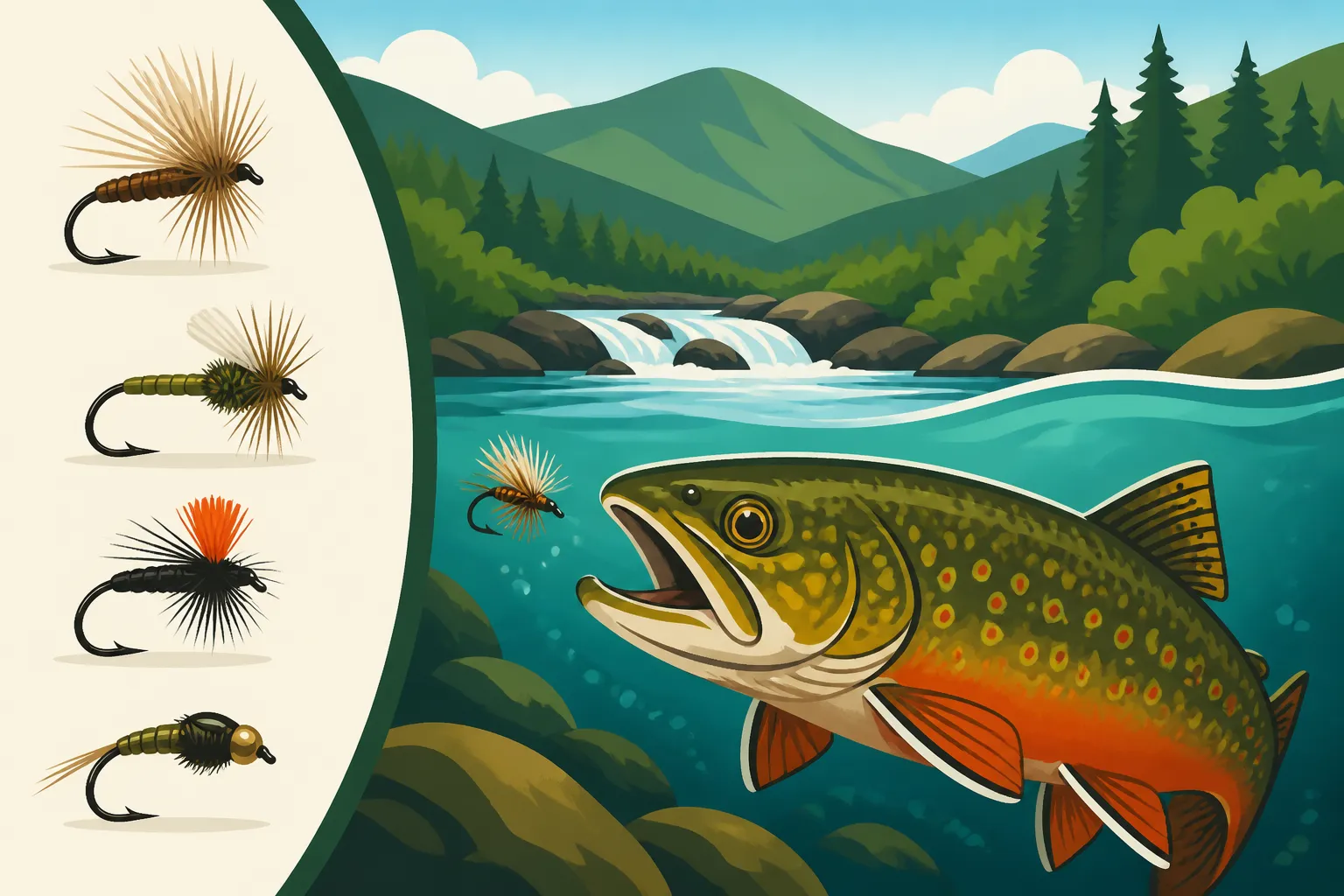
Brook trout, Salvelinus fontinalis, are truly special, being Vermont's only native trout species. They thrive in the purest, coldest, and most oxygenated waters, often found high up in the Green Mountain streams and remote ponds. These aren't your typical wide-river brown trout; brookies are often smaller, fiercely territorial, and incredibly wary. Their habitats are characterized by dense canopy cover, rocky bottoms, abundant insect life, and frequent pocket water.
The unique conditions of their mountain homes significantly influence their feeding behavior and, consequently, the flies you should choose. These streams typically have lower nutrient levels than larger rivers, leading to fewer but often more concentrated insect hatches. The trout are opportunistic but also incredibly sensitive to disturbance and presentation. Understanding this delicate balance is crucial for success.
The Role of Water Temperature and Clarity
Green Mountain brook trout depend heavily on cold water. As temperatures rise, their activity levels can decrease, and they become more stressed. Ideal feeding temperatures are generally between 50-60°F (10-15°C). This preference means they are often most active in the early mornings, late evenings, or on cooler, overcast days, especially during the warmer summer months. During spring, when snowmelt keeps waters frigid, they might be slower, hugging the bottom, requiring a different approach.
The clarity of these mountain streams is another critical factor. Most brook trout waters are crystal clear, meaning fish have an excellent view of anything above or in the water column. This demands precise presentations and flies that accurately imitate natural food sources. Heavy leaders, sloppy casts, or oversized flies will often send these wary fish darting for cover. You'll want to prioritize stealth and accuracy over distance in these intimate settings.
Common Forage for Brook Trout
Brook trout are generalists within their specific ecosystem, meaning they'll eat a variety of insects and small invertebrates. Their diet largely consists of aquatic insects in their various life stages (nymphs, emergers, adults), terrestrial insects that fall into the water (ants, beetles, grasshoppers), and occasionally small baitfish, leeches, or even salamanders in larger ponds.
Understanding these food sources helps you narrow down your fly box. In the spring and early summer, caddisflies and various mayfly species like Hendricksons, March Browns, and Sulphurs are common. As summer progresses, terrestrials become a significant food source. In fall, as water temperatures drop, larger nymphs and streamers can be very effective as brookies bulk up for winter. A well-rounded fly selection will include patterns that mimic these key food items. For an even deeper dive into what these fish prefer, exploring resources like the Vermont Fish and Wildlife's detailed Trout Species Identification Guide for Vermont can be incredibly beneficial.
Essential Dry Flies for Green Mountain Brookies
Dry fly fishing for brook trout in the Green Mountains is often the most exhilarating way to catch them. There’s nothing quite like watching a vibrant brook trout rise confidently to a well-presented dry fly. The key is to choose patterns that match the local hatches or represent common terrestrials.
These smaller, colder streams often don't have the massive hatches of larger rivers, but when a hatch does occur, the brookies can become very focused on that particular insect. Even when no specific hatch is happening, a good attractor dry fly can often tempt these opportunistic feeders.
Classic Mayfly and Caddisfly Imitations
When mayflies and caddisflies are on the water, having a few reliable patterns in various sizes is paramount. The trick is often size and subtle imitation rather than perfect realism.
- Parachute Adams: This is arguably the most versatile dry fly in any angler's box, and it's particularly effective for brook trout. Its gray body and white parachute post imitate a wide range of mayflies, and the parachute allows it to sit low in the water, mimicking an emerger or spent adult. Sizes 14-18 are usually ideal for Green Mountain streams. It's a fantastic searching pattern when you're not sure what they're eating, and you can pick up a pack of these on Amazon to keep your fly box stocked.
- Elk Hair Caddis: Another absolute staple. Caddisflies are abundant in most Vermont trout streams. The Elk Hair Caddis, with its buoyant hair wing and simple body, imitates an adult caddis very well. Fish it dead drift or with a subtle twitch to simulate a struggling insect. Sizes 14-18 are workhorses, but don't shy away from a size 12 in faster water or during a strong caddis hatch.
- Light Cahill: A lighter, cream-colored mayfly imitation that excels when pale morning duns or similar lighter-colored mayflies are active. Its upright wing profile and light body make it stand out subtly on the water. Again, sizes 14-18 are the sweet spot.
- Blue-Winged Olive (BWOs): These tiny mayflies hatch throughout the year, especially on overcast days, even in colder weather. A Parachute BWO in sizes 18-22 can be deadly when brook trout are keying on these small insects. Their low profile makes them a tough but rewarding target. If you’re looking for specific patterns, a quick search for "Dry Fly Fishing Vermont Mountain Streams" might offer insights into local favorites for these smaller hatches.
Terrestrial Patterns for Summer Success
As the summer sun warms the Green Mountains, and insect hatches become sparser, terrestrials become a crucial food source for brook trout. Ants, beetles, and grasshoppers accidentally falling into the water represent a significant protein boost for these fish.
- Ants (Cinnamon, Black): Don't underestimate the power of an ant pattern, especially on those hot, sunny days when little else is happening. Ants are almost always present along stream banks, and brook trout seem to have a particular fondness for them. A simple foam ant or a traditional hackled ant in black or cinnamon, sizes 16-20, can be surprisingly effective. Fish them close to the banks, under overhanging vegetation, where natural ants would likely fall.
- Beetles (Foam, Hard-Bodied): Various beetles also end up in the water, and brookies are quick to gobble them up. Foam beetles, often tied in black or dark brown, create a realistic silhouette and land softly. They also float exceptionally well, which is a bonus in choppy water. Sizes 14-18 are good starting points.
- Grasshoppers/Hoppers (Dave's Hopper, Chernobyl Ant): While Green Mountain streams might be too small for massive grasshopper imitations, smaller hopper patterns can work wonders, especially near grassy banks or meadows. Dave's Hopper or a small Chernobyl Ant (size 10-14) can be a great choice, fished as a single dry or as the lead fly in a dry-dropper rig. The larger profile and "plop" on the water can trigger aggressive strikes from bigger brook trout. When stocking up on various sizes and colors, Amazon offers a convenient way to purchase these patterns, especially if your local fly shop has limited stock.
Subsurface Strategies: Nymphs and Streamers for Brook Trout
While the visual thrill of a dry fly take is unmatched, often the most consistent way to catch Green Mountain brook trout is with subsurface flies. Nymphs, representing immature aquatic insects, and streamers, mimicking baitfish or leeches, can be incredibly productive, especially when fish aren't looking up or when water levels are high.
These patterns often get down into the feeding zone where brook trout spend most of their time. Learning to read the water and understand where brookies hold is key to nymphing and streamer fishing success. They'll often be found in the slower seams next to faster currents, behind boulders, in plunge pools, or under cutbanks.
Productive Nymph Patterns
Nymphs are the bread and butter of many brook trout anglers, especially in colder water or when trout are less active on the surface. They represent the vast majority of a trout's diet.
- Pheasant Tail Nymph: A classic for a reason, the Pheasant Tail is a highly versatile and realistic imitation of various mayfly nymphs. Its slim profile and subtle movement in the water make it irresistible to many fish. Sizes 16-20 are most effective for Green Mountain brookies. Consider both beaded and unweighted versions – beaded for getting down quickly in deeper pockets, unweighted for softer currents or when you want a slower, more natural drift.
- Hare's Ear Nymph: Another universal pattern, the Hare's Ear imitates a broader range of mayfly and caddisfly nymphs. Its buggy, spiky appearance provides excellent texture and movement. Both natural and weighted (with a bead head) versions in sizes 14-18 are essential. This fly is especially good in slightly stained water where its buggy profile is more visible.
- Caddis Larva (Green Rock Worm, Peeking Caddis): Caddis larvae are incredibly common in rocky stream beds. Patterns like the Green Rock Worm or a Peeking Caddis (which shows the larval head emerging from its case) can be deadly. Fish them dead drift along the bottom. Sizes 14-18 are typically effective. Sometimes, a soft hackle caddis emerger can also be incredibly productive when caddisflies are transitioning from nymph to adult. If you're specifically targeting these subsurface feeders, you might also find value in "Best Nymph Rig for High Mountain Streams" for setup advice.
- Prince Nymph: With its distinct white biot wings and peacock herl body, the Prince Nymph is a fantastic attractor pattern. It doesn't specifically imitate one insect but has a "buggy" appearance that brook trout find appealing. It's often effective in faster, broken water where its flash and profile can draw attention. Sizes 12-16 are good options.
- Walt's Worm / Squirmy Wormy: While sometimes controversial among purists, these simple, suggestive patterns can be incredibly effective, especially in high water or when fish are less selective. The Walt's Worm, a simple grub-like pattern, and the Squirmy Wormy, which mimics a small annelid worm, often elicit aggressive strikes. They excel when water is a bit off-color after rain, or when brookies are seeking a hearty meal. Sizes 10-14.
Effective Streamer Patterns
Streamers are your best bet for targeting larger, more aggressive brook trout, or when conditions are high and murky. They imitate baitfish, leeches, or larger aquatic insects, triggering a predatory response.
- Woolly Bugger (Olive, Black, Brown): This is the undisputed king of streamers for a reason. Its pulsating marabou tail and hackled body give it incredible movement in the water, mimicking a wide variety of prey. Olive is often a go-to color, but black can be deadly in dark water or during low light, and brown can imitate sculpins or leeches. Sizes 8-12 are usually appropriate for Green Mountain streams; anything larger might be too much for the average brook trout. Fish it with short strips, swings, or dead drift, varying your retrieve until you find what works.
- Muddler Minnow: A classic bucktail streamer that effectively imitates sculpins, small baitfish, and even large terrestrial insects. Its deer hair head creates a distinct profile and pushes water, making it visible and enticing. Sizes 8-12. The Muddler can be fished deep, stripped, or even skated across the surface to imitate a fleeing critter.
- Zonker (Rabbit Strip): Zonkers, tied with rabbit fur strips, offer fantastic natural movement in the water. Colors like natural rabbit, olive, or black can imitate various small fish or leeches. They are particularly effective when stripped erratically through pools or along deeper banks. Sizes 8-12. For more detailed insights on streamer fishing, you might want to look into "Best Streamer Patterns for Vermont Brown Trout," as many of those principles and patterns cross over effectively for brook trout.
Mastering Fly Selection: Matching the Hatch and Beyond
Choosing the "best" fly isn't just about having the right patterns; it's about knowing when and how to use them. Green Mountain brook trout fishing is often about adapting to conditions, observing your surroundings, and sometimes, simply having confidence in your presentation.
It's easy to get overwhelmed by the sheer number of fly patterns available. Instead, focus on a core set of versatile flies, and then learn to observe what's happening around you on the water.
Reading the Water and Observing Hatches
Before you even make a cast, take a few minutes to observe the stream. Are there any insects hatching? Look for adult insects flying around, shucks on rocks, or emerging insects in the film. Are fish rising to the surface? If so, try to get a visual on what they're eating – size, color, and behavior of the naturals. This "matching the hatch" approach is often the most successful for selective dry fly fishing.
If no surface activity is evident, assume the fish are feeding subsurface. Look for prime holding water: deep pools, current seams, eddies behind rocks, or undercut banks. These are the places where brook trout find cover and ambush food. Knowing how to read these subtle cues can make all the difference, and a resource like "How to fish a run and pool trout stream" can provide valuable insights.
| Fly Category | Common Patterns | Recommended Sizes | Typical Conditions / Forage |
|---|---|---|---|
| Dry Flies | Parachute Adams | #14-18 | General Mayfly, searching |
| Elk Hair Caddis | #14-18 | Caddisfly hatches | |
| Light Cahill | #14-18 | Pale Mayfly hatches | |
| Foam Ant | #16-20 | Summer terrestrials | |
| Dave's Hopper | #10-14 | Summer terrestrials, banks | |
| Nymphs | Pheasant Tail | #16-20 | Mayfly nymphs, clear water |
| Hare's Ear | #14-18 | General Mayfly/Caddis nymphs | |
| Green Rock Worm | #14-18 | Caddis larvae, rocky bottoms | |
| Prince Nymph | #12-16 | Attractor, faster water | |
| Walt's Worm | #10-14 | High water, off-color | |
| Streamers | Woolly Bugger | #8-12 | Baitfish, leeches, all-round |
| Muddler Minnow | #8-12 | Sculpins, baitfish | |
| Zonker | #8-12 | Baitfish, strong movement |
Presentation is Everything
Even with the perfect fly, a poor presentation will often spook Green Mountain brook trout. Remember, these fish live in clear water and are incredibly wary.
- Soft Landings: Your fly should land gently, mimicking a natural insect falling onto the water. "Splatting" your fly will send fish scattering. Practice your casting to achieve soft, accurate presentations, especially with dry flies.
- Dead Drifts: For nymphs and dry flies, a natural, drag-free drift is almost always essential. Any unnatural drag will make your fly look suspicious. Mend your line as needed to avoid conflicting currents that pull on your fly.
- Cover and Stealth: Approach the stream cautiously, staying low and out of the fish's line of sight. Wear muted colors. Brook trout often hold very close to the banks, so avoid stomping or casting a shadow over the water.
- Varying Retrieves: When fishing streamers, don't be afraid to experiment with your retrieve speed and cadence. Sometimes a fast, erratic strip works; other times, a slow, jigging motion is more effective. The goal is to make your streamer look alive and vulnerable.
Gear Considerations for Mountain Stream Fishing
Having the right gear complements your fly selection and enhances your experience. For most Green Mountain brook trout fishing, lighter tackle is preferred. A 2-weight to 4-weight fly rod, between 6 and 8 feet in length, is ideal. This lighter setup protects fine tippets and makes casting in tight quarters easier. You might want to explore articles like "Best Fly Rods for Vermont Trout Streams" for more specific recommendations.
Your tippet material should be light, typically 5x or 6x fluorocarbon for nymphs and dries, to reduce visibility and allow for natural drifts. Having a good pair of polarized sunglasses is also crucial for spotting fish and reading water. A small, lightweight fly box with a selection of these essential patterns, like those you can easily order from Amazon, will keep you organized and ready for action. And always carry a pair of forceps for quick, gentle hook removal, prioritizing the health of these precious native fish.
Disclaimer
Fishing regulations, stocking schedules, and local conditions can change. Always consult the most current Vermont Fish and Wildlife Department regulations before heading out on your fishing trip. This guide is for informational purposes only and does not supersede official regulations.