Trout Species Identification Guide for Vermont
There's nothing quite like the thrill of a fish on the line in one of Vermont's pristine waters. But once you've landed that beauty, the excitement can sometimes turn into a slight puzzle: "What exactly have I caught?" With several species of trout and trout-like fish swimming in our lakes and streams, it's easy to get them mixed up. This guide is here to help you confidently identify the various trout species you might encounter across the Green Mountain State, ensuring you understand not just what you've hooked, but also the rules that apply to your catch.
Why Identification Matters Beyond Just Catching Fish
Landing a fish is certainly a memorable moment, but knowing exactly which species you've caught goes far beyond bragging rights or just a quick photo. In Vermont, understanding your catch is crucial for a number of reasons, impacting everything from legal compliance to the overall enjoyment and appreciation of our incredible natural resources. It’s about being a responsible angler and truly connecting with the ecosystem you're visiting.
Regulatory Implications and Conservation Efforts
Let's face it, fishing regulations can sometimes feel like a labyrinth, and one of the biggest reasons they exist is to protect specific fish populations. Different trout species in Vermont often have unique regulations concerning bag limits, possession limits, and even minimum length requirements. For example, the rules for a wild brook trout caught in a small mountain stream might be entirely different from those for a stocked rainbow trout in a popular lake. Misidentifying a fish could inadvertently lead to a violation, which nobody wants. Beyond personal legalities, accurate identification plays a vital role in broader conservation efforts. Fishery biologists rely on data, often collected from angler reports and creel surveys, to understand population health. When anglers can correctly identify species, that data becomes far more valuable, helping the Vermont Fish and Wildlife Department make informed decisions about stocking, habitat restoration, and future regulations. It’s a direct way you contribute to the sustainability of the sport we all love. For detailed information, you can always check out the official Vermont Bag and Possession Limits by Species.
Enhancing Your Angling Experience
Think about it: knowing your fish makes you a more skilled and knowledgeable angler. If you can identify a brook trout versus a brown trout on sight, you start to understand their preferred habitats, their typical diets, and even their behavior patterns. This deeper understanding can directly improve your success rate. For instance, if you're targeting brook trout, you'll know to focus on smaller, colder headwater streams. If you're after brown trout, you might spend more time near undercut banks or around submerged structure in larger rivers. It also allows you to appreciate the subtle beauty and unique characteristics of each species. The vibrant colors of a native brook trout, the subtle spotting of a brown, or the iridescent stripe of a rainbow all become more distinct and special once you know what you're looking at. It enriches the entire outdoor experience, turning a simple catch into a moment of natural discovery. Having a good, waterproof fish identification guide handy, perhaps one you ordered from Amazon, can be a real game-changer out on the water.
Vermont's Native Gem: The Brook Trout
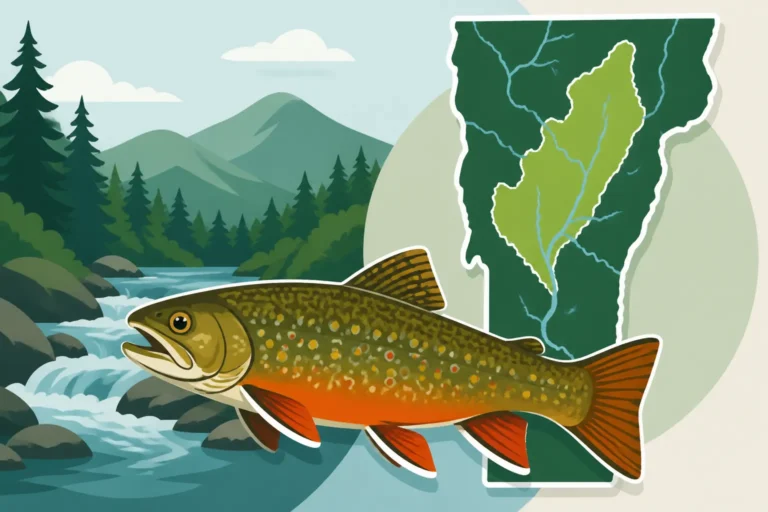
When we talk about trout in Vermont, the brook trout holds a special place in our hearts. It's not just a fish; it's a symbol of clean, cold water and wild places. This species is native to Vermont, meaning it's been here long before any other trout were introduced, thriving in the untouched beauty of our colder streams and ponds. Catching a wild brook trout, especially one with those vibrant colors, is often considered the pinnacle for many Vermont anglers. Its presence tells us a lot about the health of the ecosystem. Many anglers seek out Native trout species found in Vermont specifically for the challenge and reward of encountering this beautiful fish.
Key Physical Characteristics and Markings
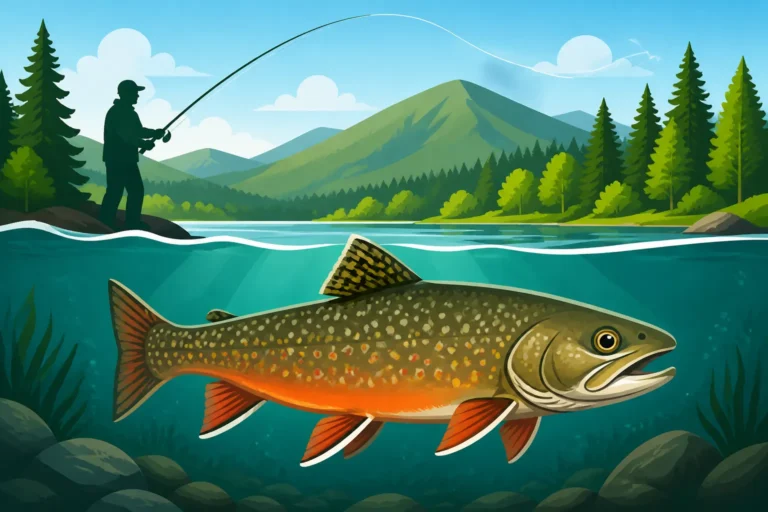
The brook trout ( Salvelinus fontinalis) is arguably the most beautiful of Vermont's trout species, especially a wild, stream-dwelling specimen. They typically have a dark, often olive-green to black, marbled pattern on their backs and sides, extending into their dorsal fin. This "worm-like" or vermiculated pattern is one of their most distinctive features. Their sides are usually dotted with small, vibrant red spots, often encircled by light blue halos, which are sometimes called "areolae." The belly can range from white to a deep orange or red, particularly pronounced in males during spawning season. The lower fins – pelvic, pectoral, and anal – are tipped with a striking white leading edge, backed by a black stripe, and then often reddish or orange coloration. This white-black-color fin pattern is a key identifier. Their tail fin is typically square or slightly forked, and usually not heavily spotted.
Don't be surprised if the intensity of these colors varies dramatically. A brook trout from a dark, tannin-stained beaver pond might be much darker and more muted, while one from a crystal-clear mountain stream could be shockingly brilliant. Size-wise, brook trout in Vermont streams are often smaller, frequently in the 6-10 inch range, though in larger, colder ponds and lakes, they can grow considerably larger, sometimes reaching trophy sizes. They are truly a spectacle, a living jewel in the water.
Typical Habitats and Behaviors
Brook trout are true cold-water specialists. You'll find them primarily in the highest, coldest, and cleanest headwater streams, mountain brooks, and spring-fed ponds. They thrive in water temperatures below 68°F (20°C) and often seek out temperatures closer to 50-60°F (10-15°C). Their preferred habitats are characterized by a gravel or rubble bottom, plenty of overhead cover from vegetation or undercut banks, and numerous pools, riffles, and runs that provide oxygenated water and ambush points. Look for them holding in deeper pools, behind boulders, or under logs, always ready to dart out for an insect or a small baitfish.
In ponds and lakes, they'll often be found near springs or at cooler depths, especially during the warmer summer months. They are opportunistic feeders, primarily eating aquatic insects (larvae, nymphs, and adult forms), small crustaceans, and even small fish or frogs if the opportunity arises. Their wild, wary nature in smaller streams makes them a challenging and rewarding catch for fly anglers who appreciate stealth and presentation. If you're venturing into these pristine areas, remember that careful wading and quiet approaches are key to success.
Distinguishing from Other Trout Species
Distinguishing a brook trout from a rainbow or brown trout is usually quite straightforward once you know what to look for, mainly because of those unique worm-like markings and the fin coloration. Rainbow trout have a distinct, often iridescent pink or red stripe along their lateral line and a profusion of small black spots over their entire body, including their tail fin, which is typically lightly forked. They lack the worm-like markings and the white-black fin edges of the brook trout. Brown trout, on the other hand, have larger, more scattered dark spots (often ringed with lighter halos) and typically some red or orange spots, but they lack the distinct vermiculations on their back and dorsal fin. Their tail is usually square, like a brook trout's, but it will be spotted, not plain, and they won't have the tri-colored fin edges. If you're still uncertain, a quick check for the white leading edge on the lower fins is often the definitive sign of a brook trout. We have an entire article dedicated to How to tell a brook trout from a rainbow trout if you want to dive even deeper.
The Elusive Brown Trout: Vermont's European Import
While the brook trout is Vermont's native royalty, the brown trout (Salmo trutta) is another magnificent species that has made itself very much at home in our waters. Originally introduced from Europe in the late 19th century, brown trout have adapted incredibly well to many of Vermont's rivers and lakes, particularly those that might be a little warmer or slower-moving than what brook trout prefer. They are known for their resilience, their wary nature, and their potential to grow to impressive sizes, offering a different kind of challenge for anglers.
Distinctive Features and Coloration
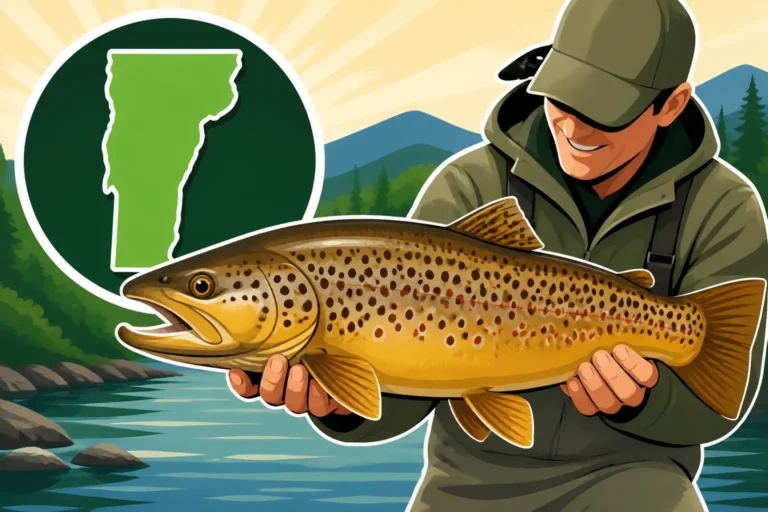
Brown trout have a generally more robust body shape compared to the sleeker rainbow or brook trout. Their coloration can vary widely depending on their habitat and diet, ranging from olive-brown to golden-brown on their backs, fading to silvery or yellowish sides, and a cream-colored belly. The most defining features are their spots: they have distinct dark spots on their back, sides, and gill covers, often surrounded by a light "halo." Interspersed with these dark spots are typically several reddish or orange spots, sometimes also haloed. These red spots are particularly helpful for identification and are usually absent on rainbow trout and rare on brook trout (which have red spots with blue halos).
Their caudal (tail) fin is usually square or only slightly forked, much like a brook trout's, but unlike the brook trout, it will be spotted, not plain, and it lacks the white-black leading edges of the lower fins. The dorsal fin is also spotted. Larger brown trout can sometimes develop a kype (a hooked jaw), especially in males during spawning season, which is a clear indicator of their species. These fish blend in remarkably well with rocky or woody stream bottoms, making them a challenge to spot even in clear water.
Preferred Environments and Diet
Brown trout are incredibly adaptable, making them successful in a wider range of Vermont's waters than the more finicky brook trout. You'll find them in medium to large rivers, larger streams, and many of Vermont's lakes and reservoirs. They tolerate slightly warmer water temperatures than brook trout, thriving even when summer temperatures nudge into the low 70s°F (around 21-22°C), provided there are cooler refuges. They prefer habitats with plenty of cover: undercut banks, submerged logs, boulders, and deep pools. They are masters of hiding and ambushing prey.
As they grow, brown trout develop a more piscivorous (fish-eating) diet. While smaller browns will feast on aquatic and terrestrial insects, larger specimens are renowned for preying on baitfish like minnows, sculpins, and even smaller trout. This makes them a prime target for anglers using streamers, spoons, and minnow-imitating lures. Their nocturnal feeding habits, especially for larger fish, add another layer of intrigue, with many trophy browns caught during low light conditions or after dark. Understanding Brown Trout Habits in Vermont Streams can give you a significant edge when targeting these wily fish.
Comparing to Brook and Rainbow Trout
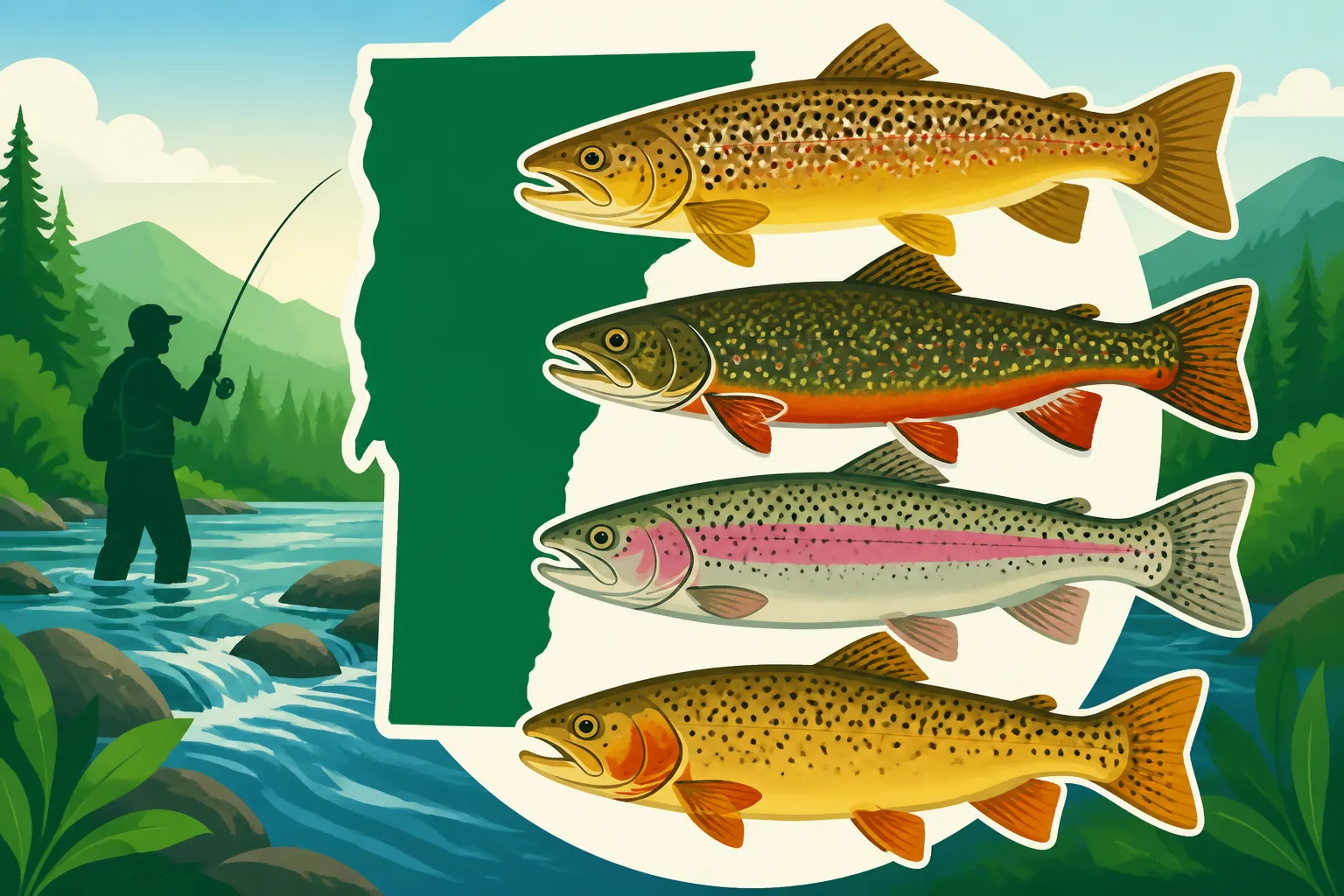
Comparing brown trout to their brook and rainbow cousins involves looking for a few key differences. As mentioned, the brook trout has its distinctive vermiculations (worm-like markings) on its back and dorsal fin, along with the white-black-red fin edges. Brown trout lack these vermiculations and the contrasting fin edges, instead displaying more scattered, distinct dark and red spots. Rainbow trout, conversely, are easily identified by their prominent, often iridescent pink or red lateral stripe, and a dense pattern of small black spots that cover their entire body and extend onto their heavily spotted, often forked tail.
A good way to remember it is: Brookies have worms, Browns have distinct spots (some red!), and Rainbows have a stripe and lots of little spots. While all three are beautiful, their unique markings make identification fairly reliable once you know what to focus on. Sometimes, particularly with stocked fish that haven't had time to develop their full colors, the distinction can be subtle, but a careful examination of the spotting pattern and fin edges usually gives it away. Learning How to tell a brown trout from a rainbow trout is a great skill for any Vermont angler.
The Vibrant Rainbow Trout: A Sporting Favorite
The rainbow trout (Oncorhynchus mykiss) is another incredibly popular game fish in Vermont, valued for its fighting spirit and its willingness to take a variety of baits and lures. Like the brown trout, rainbows are not native to Vermont, having been introduced from the Pacific Northwest. However, they've adapted wonderfully to many of our waters, particularly in larger rivers and lakes where they are regularly stocked, providing fantastic angling opportunities for everyone from beginners to seasoned veterans.
Signature Stripe and Spotting Patterns
The most striking and iconic feature of the rainbow trout is its iridescent, often pink or red, lateral stripe running horizontally along its side, from its gill plate back to its tail. This stripe can be very pronounced and vibrant, especially in larger, healthier fish, or more subdued in different environments or at certain times of the year. Beyond the stripe, rainbow trout are covered in a profusion of small, dark spots. These spots are typically uniform in size and density, covering their backs, sides, dorsal fin, and most notably, their tail fin. The tail is usually moderately forked, and the spotting on it is a critical identifier that sets it apart from the less-spotted tails of brook trout and the larger, more scattered spots of brown trout.
Their overall body color ranges from silvery-grey to olive-green on the back, fading to silvery sides and a white belly. In spawning males, the red stripe can become incredibly vivid, and the entire fish may take on a darker, richer hue. The mouth of a rainbow trout is also generally smaller than that of a brown trout, and their fins lack the distinct white-black margins seen on brook trout.
Where to Find Them and What They Eat
Rainbow trout thrive in a wide variety of cold-to-cool water environments across Vermont. You'll primarily encounter them in larger rivers and streams, especially those with good current and gravel bottoms, as well as in many of Vermont's lakes and ponds. They are very popular targets in waters that receive regular stockings by the Vermont Fish and Wildlife Department. These stocked fish are often eager to bite and provide excellent opportunities for anglers looking for consistent action. Look for them in riffles, runs, and the heads of pools where currents bring food to them. In lakes, they'll often cruise open waters, feeding on insects or small baitfish.
Their diet is quite diverse. Younger rainbows and stream-dwelling fish feed heavily on aquatic insects (nymphs, larvae, and adults like caddisflies and mayflies) and terrestrial insects that fall into the water. As they grow, especially in lakes, they will also consume small fish, crustaceans, and leeches. This varied diet means they can be caught using a wide array of methods, from fly fishing with dry flies or nymphs to spin fishing with worms, PowerBait, small spinners, or spoons. The Rainbow Trout Stocking in Vermont program ensures that many waters are regularly replenished, making them a reliable target.
Differentiating from Browns and Brooks
Distinguishing rainbow trout from brown and brook trout comes down to a few clear markers. The most obvious is that signature pink or red lateral stripe on the rainbow. Neither brook trout nor brown trout possess this distinct stripe. Secondly, the spotting on a rainbow trout is generally smaller, more numerous, and distributed more uniformly across the entire body, including the tail fin. Brook trout have their unique worm-like pattern and the white-black fin edges. Brown trout have larger, more scattered dark and red spots, but not the dense, uniform spotting of a rainbow, nor its iridescent stripe.
The tail fin is another quick check: rainbow tails are heavily spotted and moderately forked, while brook trout tails are usually unspotted and square, and brown trout tails are spotted but typically squarer than a rainbow's. Once you've seen all three side-by-side, the differences become quite apparent, and you'll be able to tell them apart with ease. It's a skill that pays off, especially when Trout Fishing in Vermont regulations for each species might differ.
Lake Trout and Landlocked Salmon: The Big Water Challengers
Beyond the classic "trout" trio, Vermont is also home to two other magnificent game fish that are often grouped with trout due to their appearance and cold-water preferences: the lake trout and the landlocked salmon. These are truly fish of grand scale, found in our largest and deepest lakes, and they present a thrilling challenge for anglers equipped to tackle them. While they share similarities, especially their sleek, torpedo-like bodies, there are distinct differences that every serious angler should know.
Lake Trout: Deepwater Dwellers
The lake trout (Salvelinus namaycush) is the largest char species in North America and a formidable predator in Vermont's deep, cold lakes like Lake Champlain and Lake Willoughby. Genetically, they are actually chars, like brook trout, rather than true trout, but they are commonly referred to as lake trout. They are built for power and endurance. Their coloration typically ranges from dark grey to olive-green on the back, fading to lighter grey or off-white on the belly. Their bodies are covered in irregular, light-colored spots that often extend onto their dorsal, caudal, and even pectoral fins, which is a key visual identifier. Unlike brook trout, these spots are light on a darker background, not dark on light.
Lake trout have a deeply forked tail, much more pronounced than any of the other trout species. This strong, V-shaped tail is an adaptation for their life in open, deep water. They also have a large mouth, indicating their predatory nature. These fish can grow to impressive sizes in Vermont, often reaching over 20 pounds, making them a true trophy catch. They are a species that takes years to mature and grow large, making their conservation particularly important. Anglers targeting these giants often employ specialized Lake Trout Fishing in Vermont techniques.
Landlocked Salmon: A Sleek Predator
Landlocked salmon (Salmo salar) are essentially Atlantic salmon that have adapted to live their entire lives in freshwater lakes, never making the journey to the ocean. They are prized for their acrobatic fights and beautiful silver-sided appearance. In Vermont, they are found in a few large, deep, cold lakes, most notably Lake Champlain and Lake Willoughby. They have a sleek, torpedo-shaped body, perfectly designed for chasing down baitfish in open water. Their coloration is typically silvery on the sides, with a darker blue-green or olive-green back, and a white belly.
Younger landlocked salmon will have scattered dark spots, often X-shaped, on their upper sides and back, and sometimes a few red spots. As they mature, especially in open lake environments, these spots can become less prominent or even fade, making them appear almost entirely silver. Their tail is distinctly forked, similar to a lake trout's, but usually not as deeply V-shaped. They have a relatively small mouth compared to a lake trout. Landlocked salmon are highly sought after by anglers who enjoy trolling with specific lures that imitate the smelt they feed on. Finding a reliable source for high-quality trolling gear, perhaps through an online retailer like Amazon, can make a real difference in success. If you're keen on chasing these fighters, be sure to read up on Landlocked Salmon Fishing in Vermont.
Key Differences between Lake Trout and Landlocked Salmon
While both are large, sleek, deepwater fish, distinguishing between a lake trout and a landlocked salmon is straightforward with a close look. The most reliable differentiator is the tail fin: lake trout have a deeply forked, V-shaped tail, while landlocked salmon have a moderately forked tail, which is less V-shaped. Secondly, look at the spotting: lake trout have light-colored, irregular spots all over their bodies and fins, including their tail. Landlocked salmon, especially mature ones, are typically silvery with fewer, darker, often X-shaped spots, primarily on their upper half, and their tail is usually less spotted or even unspotted as they get older.
Another clue is the mouth: lake trout have a larger mouth, extending well past the eye, fitting for a top predator. Landlocked salmon have a smaller mouth, typically ending at or just under the eye. Finally, the overall body shape: while both are streamlined, lake trout often appear more stout and powerful, whereas landlocked salmon are typically more slender and aerodynamic.
Here’s a quick comparison table:
| Feature | Brook Trout | Brown Trout | Rainbow Trout | Lake Trout | Landlocked Salmon |
|---|---|---|---|---|---|
| Native to VT? | Yes | No (Introduced) | No (Introduced) | Yes | Yes (Freshwater Form) |
| Back Pattern | Dark, worm-like (vermiculated) | Olive-brown, scattered dark spots | Olive/silvery, small black spots | Dark grey/olive, light irregular spots | Blue-green/olive, few dark X-spots |
| Side Spots | Red with blue halos | Dark & red/orange, often haloed | Small, numerous black spots | Light, irregular spots | Few, dark X-spots (can fade) |
| Lateral Stripe | None | None | Distinct iridescent pink/red | None | None (silvery sides) |
| Tail Fin | Square/slightly forked, unspotted | Square/slightly forked, spotted | Moderately forked, heavily spotted | Deeply forked, spotted | Moderately forked, few/no spots |
| Lower Fins | White leading edge, black line, then color | No distinct white edges | No distinct white edges | Light spots, no white edges | No distinct white edges |
| Mouth Size | Moderate | Large, extends past eye | Moderate, to just under eye | Large, extends past eye | Moderate, to just under eye |
| Habitat | Cold, clear headwater streams, ponds | Larger streams, rivers, lakes | Rivers, streams, lakes (stocked) | Deep, cold lakes | Large, deep, cold lakes |
Beyond the Big Three: Other Trout-Like Fish and Hybrids
While the brook, brown, and rainbow trout are the most commonly encountered "trout" in Vermont, and lake trout and landlocked salmon are their big-water cousins, there are a few other species and unique situations that can sometimes cause confusion. Knowing about these can further sharpen your identification skills and add to your overall angling knowledge.
Splake and Tiger Trout: Hybrid Wonders
Vermont's fisheries sometimes include interesting hybrids that combine characteristics of two different species. The splake is a hybrid cross between a brook trout and a lake trout. As you might imagine, it shares features of both parents. Splake typically have a slightly forked tail, though less deeply forked than a pure lake trout, and they often display some of the worm-like markings of the brook trout on their back, though usually less pronounced. Their spots are typically light, similar to a lake trout, but they might also have a few red spots without blue halos. They are known for growing faster than brook trout and tolerating a wider range of temperatures than lake trout. They are often stocked in certain Vermont lakes and ponds to provide a unique fishing opportunity. You can learn more about Splake Stocking in Vermont if you're interested in where to find them.
The tiger trout is another fascinating, though less common, hybrid, resulting from a cross between a brown trout and a brook trout. They are immediately recognizable by their distinctive, mazelike, dark worm-like patterns on a lighter background, often covering most of their body. These patterns are truly unique and resemble the stripes of a tiger, hence the name. They typically have an orange or yellowish belly and lack the prominent red spots of a brown trout or the blue-haloed spots of a brook trout. Tiger trout are sterile, so they don't reproduce naturally, and are typically stocked in specific waters as a novelty and for their aggressive fighting qualities. Knowing What a tiger trout is and whether they are in Vermont can prepare you for this rare, but exciting catch.
Rainbow Smelt: An Important Forage Fish
While not a trout, the rainbow smelt (Osmerus mordax) is a crucial forage fish in many of Vermont's larger lakes, and sometimes, especially during spring spawning runs, anglers might encounter them in large numbers or even mistake them for very small trout. Smelt are long, slender, silvery fish, typically 6-9 inches long, with a distinct cucumber-like odor. They have an adipose fin (a small fleshy fin between the dorsal and tail fins), just like trout and salmon, which can add to the confusion. However, smelt lack the spots, stripes, or vermiculations of any trout species. Their mouth is relatively large with prominent teeth.
Rainbow smelt are incredibly important as a food source for larger predatory fish like lake trout, landlocked salmon, and even large brown trout on Lake Champlain. During their spring spawning runs up tributaries, they become an available target for anglers with a valid smelt dipping license. While they aren't trout, understanding their role in the ecosystem is key to comprehending the dynamics of our cold-water fisheries. Rainbow Smelt as Forage Fish in Vermont Lakes covers their significance in more detail.
Practical Tips for On-the-Water Identification
Even with all this knowledge, identifying a fish quickly and accurately in the moment can be challenging, especially if you're excited or trying to minimize handling time. Here are a few practical tips to help you in the field:
- Observe Immediately: As soon as you land the fish, take a moment to look at its overall color, spotting pattern, and fin shapes before anything else. Colors can fade quickly once the fish is out of water.
- Focus on Key Areas: Pay close attention to the back (vermiculations?), sides (stripe? red spots? dark spots?), and especially the tail fin (forked? spotted? unspotted?). The lower fins' leading edges are also critical for brook trout.
- Handle Carefully: If you need a closer look, minimize handling. Use wet hands or a wet net to support the fish, keeping it in or over the water as much as possible. A clear-bottomed net can be a real asset here, allowing you to examine the fish without removing it from the water entirely.
- Reference a Field Guide: Keep a small, waterproof field guide in your tackle box or fishing vest. There are many excellent options available, including those found on Amazon, that provide clear photos and descriptions.
- Take a Photo (Respectfully): If you're planning to release the fish, a quick, clear photo (preferably with the fish still in the net or briefly out of water) can help you identify it later, or even ask for help from experienced anglers online. Just ensure the fish is returned to the water quickly and safely.
- Understand Your Water: Knowing what species are typically found in the body of water you're fishing can also narrow down the possibilities. If you're in a high mountain brook, it's highly likely to be a brook trout. If you're in a large, deep lake, lake trout and landlocked salmon are more probable.
By combining these identification skills with responsible angling practices, you'll not only enhance your enjoyment of Vermont's fishing opportunities but also contribute to the health and longevity of these precious fish populations for generations to come.
Disclaimer
This article is for general informational purposes only and does not constitute professional advice. Laws, prices and regulations vary by location and change over time. Consult a qualified professional for guidance on your specific situation.