Panfish Species Identification Guide for Vermont
There's a special kind of joy that comes with panfishing in Vermont. Whether you're a seasoned angler introducing a youngster to the sport or just looking for a relaxing day on the water with some consistent action, panfish are often the answer. But with several species swimming in our lakes and ponds, it can sometimes be a little confusing to tell exactly what you've reeled in. This guide is here to help you confidently identify the common panfish species you'll encounter across the Green Mountain State, ensuring you know your bluegill from your pumpkinseed and your perch from your crappie.
Understanding Vermont's Panfish Appeal
Panfish aren't just for kids; they're a cornerstone of Vermont's freshwater fishing scene. These smaller, abundant species offer consistent bites, fight surprisingly hard on light tackle, and are absolutely delicious on the dinner table. Their presence in virtually every water body makes them accessible to everyone, from bank anglers to those with boats.
The Panfish Promise: Easy Catches and Family Fun
Imagine a warm summer afternoon, kids laughing, and rods bent in anticipation. That's the panfish promise. They're often found in large schools, making it easy to get multiple hook-ups once you locate them. This accessibility fosters a love for fishing in new anglers, building confidence with every successful catch. It’s not just about the numbers, though; the vibrant colors of a pumpkinseed or the distinct stripes of a yellow perch can be a beautiful sight, offering a simple connection to nature. These fish are relatively forgiving when it comes to bait and tackle, making them perfect for low-stress outings.
Why Identification Matters for Anglers
While panfish are generally abundant, understanding which species you've caught goes beyond simple curiosity. For starters, different species often prefer slightly different habitats or baits, so knowing what's biting can help you refine your approach. For example, some panfish prefer deeper, clearer water, while others might hug weedy shorelines. Accurate identification also helps you comply with regulations, as while panfish limits are typically generous, there can sometimes be subtle differences or special regulations in certain waters. Furthermore, it helps us appreciate the diversity of Vermont's aquatic ecosystems. Knowing the fish allows you to learn about their behaviors, their role in the food chain, and how to better protect their populations for future generations of anglers.
The Perch Family: Yellow Perch
The yellow perch is arguably one of Vermont's most recognizable and widely distributed panfish. They're a favorite target for ice anglers and open-water enthusiasts alike, known for their striking appearance and flaky white meat.
Distinctive Features of Yellow Perch
When you pull a yellow perch from the water, it's pretty hard to mistake it for anything else once you know what to look for. Their bodies are typically yellowish to golden-bronze, transitioning to a lighter, often white, belly. The most defining characteristic is the series of distinct, dark vertical bars—usually six to eight of them—that run down their sides. These bars often taper towards the belly. They have two dorsal fins; the first is spiny and triangular, the second is soft-rayed and more rounded. Their fins, especially the pectoral, pelvic, and anal fins, often have a vibrant orange or reddish hue, which becomes more pronounced during spawning season. Yellow perch also have a somewhat elongated, oval body shape, not as round or deep-bodied as many sunfish. Their mouths are relatively small, which is why small hooks and baits are so effective. You'll find a lot of great information on these fish in Yellow Perch in Vermont Lakes.
Common Habitats and Fishing Tips for Yellow Perch
Yellow perch are incredibly adaptable and can be found in a wide variety of Vermont waters, from large lakes like Lake Champlain to smaller ponds and slow-moving rivers. They tend to prefer clear to moderately turbid water and are often associated with submerged vegetation, drop-offs, and structural elements like old docks or fallen trees. They school heavily, especially during colder months, which is why they are a prime target for Jigging for Perch Through the Ice.
For open water, look for them around weed lines in 5-20 feet of water. During spring and fall, they might be shallower, moving deeper in the heat of summer. Light spinning tackle with 4-6 pound test line is perfect. Small jigs (like teardrops or horizontal jigs), tiny spoons, or even just a simple worm or piece of cut bait fished under a bobber can be incredibly effective. When the bite is on, you can catch them one after another. Remember that their mouths are small, so tiny hooks are key to success. You can often find a good selection of specialized panfish jigs and lures on platforms like Amazon that are perfect for yellow perch.
The Sunfish Family: Bluegill and Pumpkinseed
When most people think of panfish, they're probably picturing a bluegill or a pumpkinseed. These members of the sunfish family are abundant, feisty, and perhaps the most commonly encountered panfish by recreational anglers in Vermont. They love sunny, shallow waters, making them perfect targets for shore fishing.
Bluegill: The Broad-Sided Battler
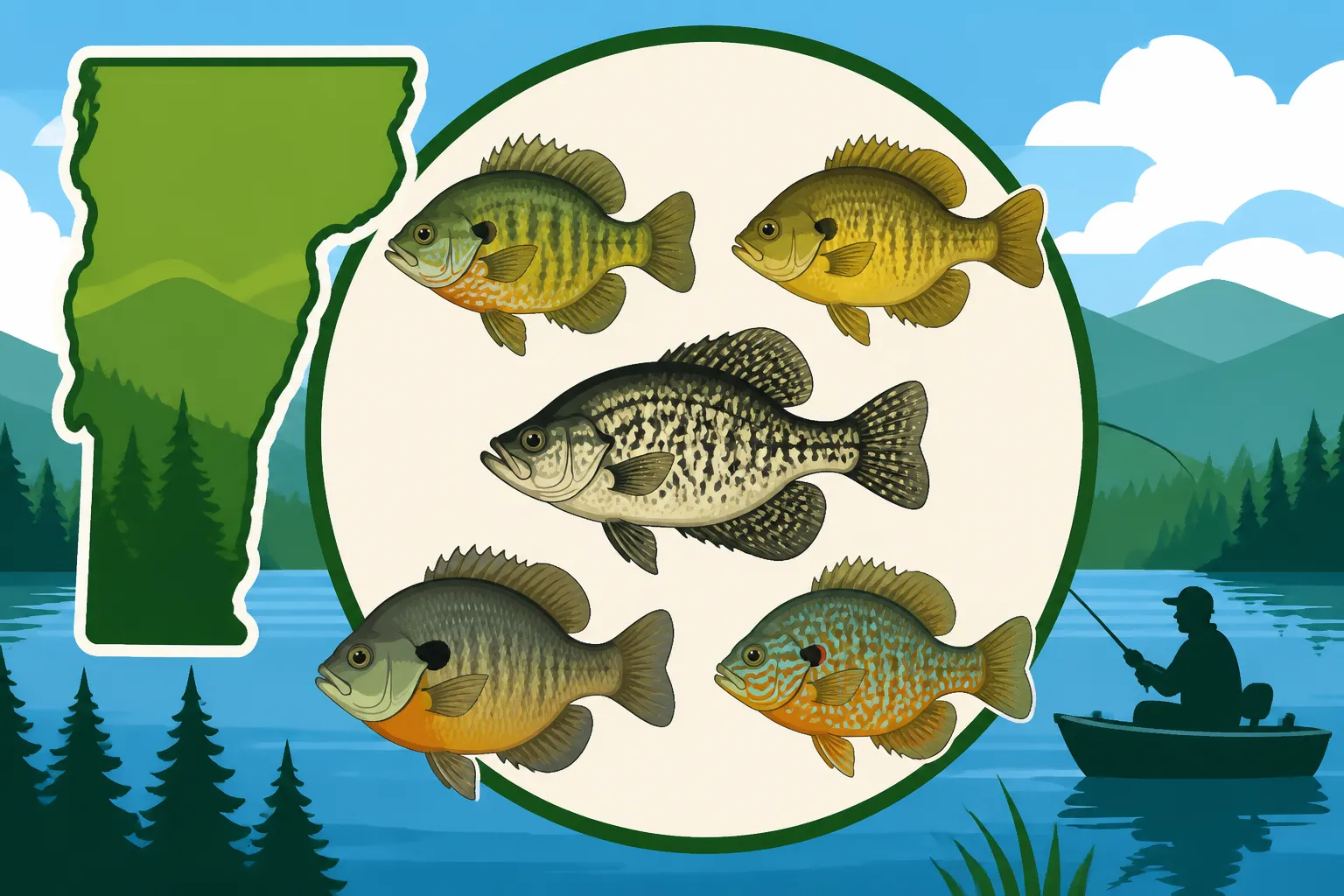
The bluegill is a classic panfish, beloved for its strong fight on light tackle and its willingness to bite. They have a very distinct, deep, and compressed body shape, almost circular when viewed from the side. Their coloration can vary quite a bit depending on the water they live in, but typically they have an olive-green back that fades to yellow or orange on the belly, with faint vertical bars on their sides. The key identifier is the dark blue or black "ear flap"—the opercular flap—which lacks any colorful trim. Another prominent feature is a dark spot at the base of the dorsal fin, though this can sometimes be subtle. Their mouths are small, perfectly suited for picking small insects and larvae. Check out Bluegill Habits in Vermont Ponds for more on these feisty fish.
Bluegill are true sunfish, thriving in warm, slow-moving waters with plenty of aquatic vegetation. They're often found in ponds, coves of larger lakes, and slow sections of rivers, usually in depths from a few feet to about 15 feet. They love hiding among lily pads, submerged logs, and weed beds. Fishing for bluegill is simple and rewarding. A small hook (size 8-12), a tiny piece of worm, corn, or a small insect fished under a bobber is often all it takes. They're aggressive eaters, and if you find one, you've likely found a whole school.
Pumpkinseed: Vermont's Colorful Jewel
If the bluegill is the workhorse of the panfish world, the pumpkinseed is the jewel. These fish are absolutely stunning, especially males during spawning season. Like the bluegill, they have a deep, compressed, somewhat rounded body. What sets the pumpkinseed apart is its incredible coloration and distinctive markings. Their bodies are typically olive-brown to golden with intricate wavy, iridescent blue-green markings on their sides and cheek. They have a characteristic bright red-orange spot on the posterior edge of their black "ear flap" (opercular flap), often outlined with a pale margin. This red-orange spot is the absolute dead giveaway. Their fins are often mottled and colorful.
Pumpkinseeds share similar habitats with bluegill, preferring shallow, warm, vegetated waters in ponds, lakes, and slow rivers. They're often found around docks, fallen trees, and rocky areas mixed with weeds. They are just as eager to bite as bluegill and can be caught using the same methods: small baits, small hooks, and light tackle. They're fantastic fish for teaching kids to fish due to their striking colors and enthusiastic bites.
Spotting the Differences: Bluegill vs. Pumpkinseed
While both are sunfish and share many characteristics, a few key features make identification straightforward.
| Feature | Bluegill | Pumpkinseed |
|---|---|---|
| Body Shape | Deep, compressed, somewhat round | Deep, compressed, somewhat round |
| Ear Flap (Opercle) | Solid black/dark blue, no colorful trim | Black with a distinctive bright red-orange spot, often pale-edged |
| Body Coloration | Olive-green back, yellow/orange belly, faint vertical bars | Olive-brown/golden, iridescent blue-green wavy lines/spots on sides |
| Dorsal Fin Spot | Often a dark spot at the base of the soft dorsal fin | Generally no distinct dark spot on dorsal fin |
| Mouth Size | Small | Small |
The most reliable difference is the ear flap coloration. If it has that vivid red-orange dot, it's a pumpkinseed. If it's solid black or dark blue, it's a bluegill. Both are fantastic panfish and a joy to catch! You'll find tips on how to target both in Best Techniques for Panfish in Vermont.
Crappie Cousins: Black and White Crappie
Crappie are another beloved group of panfish, known for their large size among panfish and their reputation as excellent table fare. In Vermont, you're most likely to encounter black crappie, though it's worth knowing about their white crappie cousins.
Black Crappie: The Deep-Bodied Delicacy
Black crappie are truly a prize among panfish. They have a very deep, flattened, and somewhat rounded body, much like a dinner plate. Their coloration is silvery-gray to olive, covered in irregular black spots and speckles, giving them a "peppered" appearance. This speckled pattern is one of their main identifiers. They have a large mouth that extends past the middle of their eye, which is notably bigger than a bluegill or pumpkinseed's mouth. A key distinguishing feature for black crappie is the number of dorsal spines: they typically have 7 or 8 dorsal spines, which will feel sharp to the touch.
Black crappie prefer clear, cool waters with abundant cover, such as submerged timber, brush piles, docks, and weed lines. They often suspend in the water column rather than hugging the bottom. They are commonly found in larger lakes and reservoirs throughout Vermont. Anglers targeting crappie often use small jigs (especially tube jigs or hair jigs), minnows, or small spinners. Because they tend to suspend, a fish finder can be incredibly helpful for locating schools of crappie in deeper water. Look for specific insights in Black Crappie in Vermont Waters.
Are White Crappie Found in Vermont?
While black crappie are prevalent in Vermont, white crappie are less common and not as widely distributed. It's rare to catch a white crappie in many parts of the state. If you were to encounter one, the primary differences from a black crappie would be its more elongated body shape (not quite as "dinner plate" round), and its black markings would tend to form distinct vertical bands or bars rather than irregular speckles. Critically, white crappie typically have 5 or 6 dorsal spines, fewer than the black crappie's 7 or 8. While not a primary target for most Vermont panfish anglers, it's good to be aware that they exist, however rarely, in some waters.
Chain Pickerel: The Toothy Panfish Predator
While not strictly a "panfish" in the same family as perch or sunfish (they belong to the pike family), chain pickerel are incredibly common in the same waters and are frequently caught by anglers targeting panfish. They're often a surprise catch and a memorable one due to their aggressive strikes and sharp teeth!
Identifying Vermont's Chain Pickerel
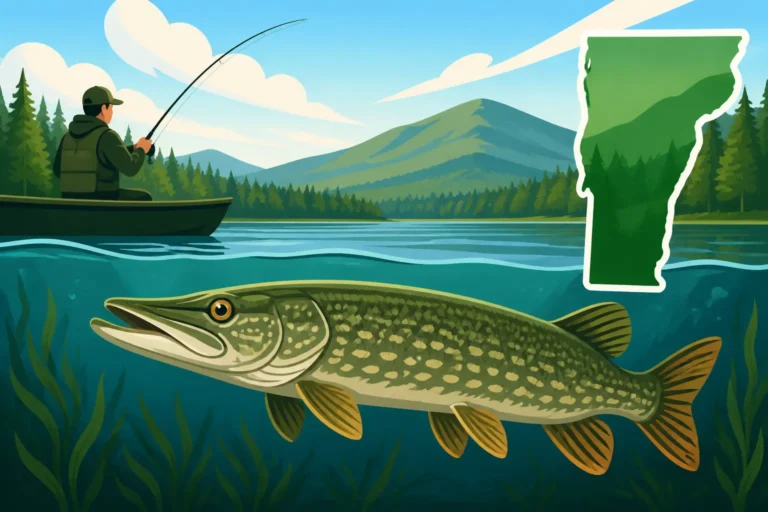
The chain pickerel is easily identifiable by its long, slender, torpedo-shaped body, which is perfectly adapted for ambushing prey. Their coloration is typically greenish to yellowish-brown on the back, fading to a lighter belly. The most defining characteristic is the distinctive chain-like or reticulated pattern of dark markings on their sides, which gives them their name. Another key feature is a fully scaled cheek and operculum (gill cover), which differentiates them from larger pike species that may have only partially scaled opercula. They possess a long, duckbill-shaped snout filled with numerous sharp, needle-like teeth, making them formidable predators. When you catch one, be extremely careful handling it, as those teeth are no joke! For more details, explore Chain Pickerel Habits in Vermont Ponds.
Pickerel's Role in the Panfish Ecosystem
Chain pickerel are apex predators in many of Vermont's weedy ponds and shallow lake coves. They play a vital role in keeping panfish populations in check, often preying on smaller or weaker individuals, which can help maintain the overall health and balance of the panfish community. For anglers, they add an exciting element of surprise. You might be targeting bluegill with a tiny worm, and suddenly, a feisty pickerel strikes, giving you an unexpected battle!
When fishing for panfish in areas known to hold pickerel, it's not a bad idea to consider a small steel leader or a heavier fluorocarbon leader if you're experiencing frequent bite-offs. While not the primary target for panfish enthusiasts, knowing how to identify them and understanding their role adds another layer to your Vermont fishing knowledge. You can often find a good selection of panfish tackle and some basic wire leaders on Amazon, which can be useful when pickerel are in the mix.
Other Notable Panfish and Look-Alikes
Vermont's waters host a rich diversity of fish, and sometimes you'll encounter species that might initially look like a panfish but have their own unique traits. Recognizing these can prevent confusion and deepen your understanding of the local aquatic life.
Rock Bass: The Robust Stream Dweller
The rock bass is another species sometimes confused with the more common sunfish, but they have distinct features. They're part of the sunfish family, but they look quite different from bluegill or pumpkinseeds. Rock bass have a much more robust, stout body compared to the compressed bodies of other sunfish. Their coloration is typically olive-brown to bronze, with mottled dark spots that can sometimes form faint bars. A key identifier is their large, red-rimmed eye, which gives them an almost perpetually surprised look. Their mouth is also larger than that of a bluegill or pumpkinseed, often extending back to the middle of their eye. They typically have 10-12 hard dorsal spines.
True to their name, rock bass prefer rocky habitats in clear, cool waters. You'll often find them in streams and rivers, as well as rocky shorelines of lakes. They love hiding around boulders, submerged logs, and undercut banks. They're aggressive eaters and will strike at small spinners, jigs, or natural baits like worms and crayfish. While not as widespread as yellow perch or bluegill in every Vermont water body, they're a common and fun catch in the right environments.
Fallfish: The Often-Mistaken Minnow
This might seem a bit off-topic for a panfish guide, but fallfish are frequently caught by anglers targeting panfish, especially in streams and rivers, and they can sometimes be mistaken for an unusual panfish due to their size. However, fallfish are actually the largest native minnow in North America, not a member of the sunfish or perch family.
Fallfish have a slender, somewhat cylindrical body, silvery in color with large scales. They lack the deep, compressed body shape of sunfish or the vertical bars of a perch. Their mouth is terminal (at the very front of the snout) and lacks the prominent teeth of a pickerel. They also have a single dorsal fin, unlike the two distinct dorsal fins of a perch. Fallfish are common in many Vermont rivers and streams and can grow quite large for a minnow, often reaching over a foot in length. They're aggressive and will readily take small spinners, flies, or worms. While not typically sought after for eating, they provide excellent sport on light tackle and are a great indicator of a healthy river ecosystem. Knowing the difference ensures you're correctly identifying what's at the end of your line, especially if you're trying to determine if you've found a new panfish spot.
Remember, the joy of fishing in Vermont isn't just about what you catch, but also about the knowledge you gain and the appreciation for our natural resources. Happy fishing!
Disclaimer
This article is for general informational purposes only and does not constitute professional advice. Laws, prices and regulations vary by location and change over time. Consult a qualified professional for guidance on your specific situation.