What sea lamprey control means for Lake Champlain
When you're out on the vast, beautiful waters of Lake Champlain, casting for walleye or trolling for lakers, the last thing you want to see is a fish with a nasty, tell-tale circular scar. That tell-tale mark is often left by a sea lamprey, a parasitic intruder that has historically wreaked havoc on our beloved fishery. This guide is here to shed light on what exactly sea lamprey control programs mean for you, the angler, and for the future of fishing in Lake Champlain.
Understanding the Sea Lamprey Problem in Lake Champlain
It’s a tough reality to face, but Lake Champlain, like many other large bodies of water in the region, has an unwelcome guest: the sea lamprey. These creatures aren't native to the lake, and their presence has had a profound impact on the delicate balance of the ecosystem and the health of our prized sport fish. To truly appreciate the control efforts, we first need to understand the problem they address.
What Exactly is a Sea Lamprey and Why Are They a Problem?
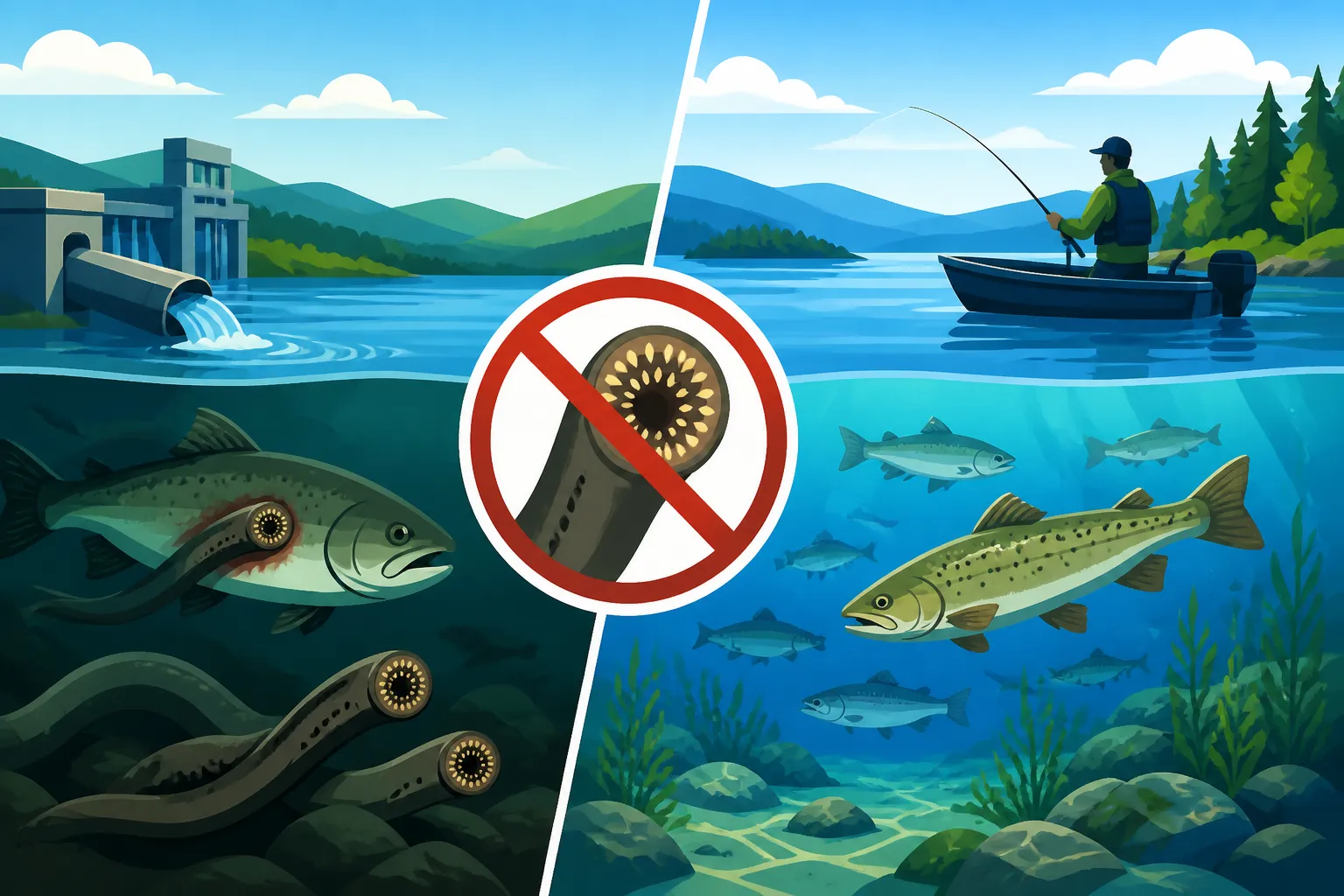
Imagine a creature that looks almost alien, with a long, eel-like body, no paired fins, and most notably, a round, suction-cup mouth lined with rows of sharp, rasping teeth. That, my friends, is a sea lamprey. They are jawless fish, a primitive species, and in their adult parasitic phase, they attach themselves to other fish. Once latched on, they use their abrasive tongue to rasp through the host fish's scales and skin, feeding on its blood and other bodily fluids. It's truly a gruesome sight, both for the host fish and for any angler who catches one of these victims.
The problem isn't just the "ick" factor; it's the severe damage they inflict. A single lamprey can attack multiple fish throughout its parasitic life stage. While some fish may survive an attack, they often suffer from significant blood loss, reduced growth rates, and are left vulnerable to secondary infections. These weakened fish become easy prey for other predators or simply succumb to their injuries. This parasitic lifestyle is what makes them such a devastating force in an ecosystem where they don't naturally belong.
Historical Impact on Lake Champlain's Fishery
Before significant control efforts began, the sea lamprey's unchecked proliferation led to a truly dire situation for Lake Champlain's fish populations. Species that are vital to the lake's ecological health and its recreational fishery, particularly cold-water fish like lake trout and Atlantic salmon, bore the brunt of these attacks. The lamprey caused severe mortality, and fish that did survive often carried multiple visible wounds, a clear sign of the immense pressure they were under. This parasitic onslaught contributed to a drastic decline in the numbers of these iconic species, pushing them to the brink.
Imagine fishing in Lake Champlain decades ago and consistently pulling in fish scarred by lamprey, or worse, finding very few fish at all. This wasn't just an anecdotal observation; it was a scientifically documented crisis. Anglers and biologists alike grew increasingly concerned about the long-term viability of the fishery. Stocking programs, which aim to supplement fish populations, often felt like a losing battle, as many of the stocked fish quickly fell victim to lamprey. It became abundantly clear that without direct intervention, the health and vibrancy of the Lake Champlain Fishing Guide would be severely compromised, leading to a much less rewarding experience for everyone involved.
The Core of Sea Lamprey Control Efforts
Faced with such a significant threat, a comprehensive strategy was developed to combat the sea lamprey problem in Lake Champlain. This isn't a simple fix; it's a long-term commitment that involves careful planning, scientific research, and targeted interventions. The goal isn't necessarily to eradicate sea lamprey entirely, which would be an almost impossible task, but rather to control their populations to a level where our native and stocked fish can thrive.
Lampricides: The Primary Tool in the Fight
When we talk about sea lamprey control, the first thing many people think of is "lampricides." These are specialized chemical compounds, primarily TFM (3-trifluoromethyl-4-nitrophenol) and, sometimes, Bayluscide (niclosamide), that are selectively toxic to sea lamprey larvae. These lampricides aren't just dumped into the lake; they are carefully applied by trained professionals, often from the U.S. Fish and Wildlife Service and the Vermont Fish & Wildlife Department, in the specific tributaries and streams where lamprey larvae spend their early life stages. The timing and dosage are precisely calculated to target the larval lamprey while minimizing impact on other fish species and aquatic life.
The science behind lampricides is fascinating. Lamprey larvae, known as ammocoetes, live burrowed in the sediment of streams for several years before transforming into their parasitic adult stage. These larvae are particularly vulnerable to lampricides at much lower concentrations than most other fish. This selective toxicity is key to the success of the program. However, the application process is rigorous, involving extensive pre-treatment surveys to identify lamprey hotbeds and post-treatment monitoring to assess effectiveness and ensure environmental safety. It's a testament to careful ecological management, aiming to strike a delicate balance between eliminating a destructive invasive species and protecting the broader aquatic community.
Other Control Methods and Integrated Pest Management
While lampricides are a cornerstone of the control program, they are not the only arrow in the quiver. A truly effective sea lamprey control strategy employs an "Integrated Pest Management" approach, which means utilizing a combination of methods to achieve the best results. One such method involves building physical barriers in streams that lamprey use to spawn. These barriers can prevent adult lamprey from migrating upstream to lay their eggs, effectively cutting off their reproductive cycle in certain areas. Imagine a small dam or a structure that fish like trout can jump, but lamprey, lacking strong swimming abilities to overcome obstacles, cannot.
Another important technique is trapping adult lamprey. Traps are strategically placed in streams during their spawning runs, capturing adult lamprey before they can reproduce. These trapped lamprey are often removed from the system, or sometimes used for research. In some cases, a highly advanced method called sterilization is employed, where male lamprey are captured, sterilized, and then released back into the environment. These sterile males still compete for spawning opportunities with fertile males, but their mating efforts produce no offspring, thereby helping to reduce the overall lamprey population. This multi-pronged attack ensures that the control program addresses the lamprey at various life stages and through different vulnerabilities, making the entire effort more robust and sustainable.
The Angler's Perspective: What Control Means for Fishing
For us anglers, the ultimate measure of success for any fisheries management program is what it means for our time on the water. When it comes to sea lamprey control, the impact is tangible and, frankly, incredibly positive. These efforts are not just about protecting fish; they are about enhancing the entire fishing experience on Lake Champlain.
Healthier Fish Populations and Improved Fishing
The most direct and rewarding outcome of successful sea lamprey control is the dramatic improvement in fish health and population numbers. With fewer parasitic lamprey attaching to them, species like lake trout and landlocked salmon experience significantly lower mortality rates. This means more fish survive to maturity, grow larger, and reproduce more successfully. Think about it: a fish that isn't constantly battling a parasite has more energy to feed, grow, and fight. This translates directly into a healthier, more robust fishery, making species like those targeted in Lake Champlain Lake Trout Fishing and Lake Champlain Walleye Fishing much more plentiful and vibrant.
You'll notice it when you're out fishing. You'll encounter fewer fish with fresh, gaping lamprey wounds, and the healed scars will be less common. The fish you catch will often look healthier, be stronger fighters, and generally be in better condition. This also greatly improves the effectiveness of stocking programs; when hatchery-raised fish are released into Lake Champlain, they have a much better chance of survival and contributing to the fishery, rather than becoming easy targets for lamprey. Ultimately, the control program means a more productive and enjoyable fishing environment for everyone who casts a line in these waters.
The Ongoing Commitment and Long-Term Outlook
It's crucial to understand that sea lamprey control isn't a one-and-done deal. It's an ongoing commitment, a continuous management effort that requires vigilance and resources year after year. Sea lamprey are persistent, and if control efforts were to cease, their populations would likely rebound, undoing years of hard work and once again jeopardizing the fishery. The agencies involved, like the Vermont Fish & Wildlife Department, are constantly monitoring lamprey populations, assessing the health of fish species, and conducting research to refine their methods. This adaptive management approach ensures that the program remains effective as conditions change.
For anglers, this ongoing commitment means we can generally expect a sustained, healthy fishery. It also means that funding for these programs, often supported by fishing license sales and federal grants, remains vital. Our contributions through purchasing licenses directly support these crucial efforts. It’s also important for us to stay informed about Vermont Fishing Regulations Explained, as these can sometimes reflect the health and management needs of the fish populations. The long-term outlook for Lake Champlain's fishery, thanks to these tireless control efforts, is significantly brighter than it would be without them, promising generations of good fishing ahead.
How Anglers Can Help (and What to Expect)
As anglers, we're not just passive beneficiaries of these control programs; we can actually be active participants in monitoring and supporting the health of Lake Champlain. Our observations from the water are invaluable, and our actions can contribute to the ongoing success of lamprey management. It's all about being informed and responsible stewards of this incredible resource.
Identifying and Reporting Lamprey and Wounds
One of the most direct ways anglers can help is by becoming extra eyes and ears on the water. If you happen to catch a fish with a lamprey wound, take a moment to observe it. Fresh wounds are typically raw, red, and sometimes still bleeding, indicating a recent attack. Older, healed wounds will appear as white or grey circular scars. These observations provide valuable data to fisheries biologists about lamprey activity and population levels. The Vermont Fish & Wildlife Department often provides ways to report these sightings, which helps them target their control efforts more effectively.
Even rarer, you might actually catch a live sea lamprey. They often attach to fish or even structure underwater. If you do encounter one, it's crucial not to release it back into the water. Instead, dispose of it properly on land. Every lamprey removed from the system is one less parasite that can harm our fish. Familiarizing yourself with what a lamprey looks like and the different stages of their wounds is a simple yet impactful way to contribute. Resources and identification guides, which you might find on Amazon, can be excellent tools to educate yourself further on distinguishing fish species and their health indicators.
Supporting Conservation Efforts
Beyond direct reporting, our general engagement in conservation plays a huge role. Every time you purchase a fishing license, a portion of that fee goes directly towards fisheries management, research, and conservation efforts – including sea lamprey control. So, in a very real sense, simply buying your Vermont Fishing License Guide for 2026 is a direct contribution to the health of Lake Champlain. Supporting organizations dedicated to Lake Champlain's health and watershed protection is another way to help. These groups often engage in stream cleanups, habitat restoration, and public education, all of which indirectly benefit the overall health of the lake and its ability to withstand pressures from invasive species.
Being a responsible angler also means practicing catch and release thoughtfully, especially for sensitive species or those that have already sustained injuries. Handling fish carefully, minimizing their time out of water, and using appropriate gear helps ensure that released fish have the best chance of survival. Staying informed, following regulations, and appreciating the incredible work that goes into managing Lake Champlain's fishery are all part of being a true steward of Vermont's natural heritage. Understanding Why Lake Champlain has a sea lamprey control program helps foster that appreciation and commitment.
| Impact Area | Before Sea Lamprey Control (Historical) | After Sea Lamprey Control (Current State) |
|---|---|---|
| Fish Health | High incidence of severe lamprey wounds, poor condition | Reduced wound rates, healthier, more robust fish |
| Fish Populations | Significant decline in lake trout, salmon, walleye | Stable or increasing populations of key sport fish |
| Fish Size | Stunted growth due to parasitic drain | Fish reaching larger average and trophy sizes |
| Angler Success | Frustratingly low catch rates, wounded fish common | Improved catch rates, higher quality fish |
| Stocking Program | High mortality of stocked fish to lamprey | Higher survival rates for stocked fish, better returns |
| Ecosystem Balance | Imbalance, top predators heavily impacted | Greater ecological stability, thriving food web |
Disclaimer
This article is for general informational purposes only and does not constitute professional advice. Laws, prices and regulations vary by location and change over time. Consult a qualified professional for guidance on your specific situation.