Vermont Fishing Regulations Explained
Stepping out onto a quiet Vermont lake or river, rod in hand, is one of life's true simple pleasures. But before you cast that first line, you're faced with a thick booklet of rules that can feel more like a legal text than a guide to recreation. It's frustrating trying to decipher what's allowed and what's not, especially when you just want to enjoy the water. This comprehensive guide is here to untangle the complexities of Vermont's fishing regulations, ensuring you can fish confidently, legally, and responsibly, without the headache.
Why Vermont Fishing Regulations Exist and Why They're So Confusing
It’s easy to feel overwhelmed when you first pick up the Vermont Fish & Wildlife Department’s annual fishing guide. The pages are dense, the charts are detailed, and the exceptions seem to have exceptions. Many anglers, even seasoned locals, admit to feeling a bit lost in the labyrinth of rules. You might wonder why it has to be so complicated, especially when you just want to spend a peaceful afternoon on the water. The truth is, these regulations, as cumbersome as they sometimes feel, are the backbone of responsible fisheries management, designed to protect Vermont's diverse aquatic ecosystems for generations to come.
The Purpose Behind the Rules
At its core, fishing regulation is about balance. Vermont has a precious natural resource in its lakes, rivers, and streams, teeming with everything from native brook trout to formidable lake Champlain walleye and even the elusive Lake Memphremagog muskellunge. Without careful management, overfishing could deplete populations, disrupt delicate food webs, and ultimately destroy the very sport we love. The rules dictate things like how many fish you can keep (bag limits), what size they must be (minimum length limits), and when you can fish for them (seasonal dates). These measures are critical for allowing fish to reproduce, grow, and maintain healthy numbers.
Beyond conservation, regulations also serve a safety purpose. Rules about boating, life jackets, and even ice thickness for ice fishing are all designed to keep anglers safe on and around the water. Furthermore, they help manage public access, prevent the spread of aquatic invasive species, and ensure fair chase principles. For instance, specific rules might prohibit certain types of bait that could introduce non-native organisms or disease into a pristine waterway. It's a holistic approach to maintaining ecological health and recreational opportunity.
Common Frustrations with Regulation Guides
Let's be honest, the official regulation guides aren't always the easiest read. You might find yourself flipping back and forth between sections, trying to connect a general rule with a species-specific limit, and then cross-referencing that with a particular body of water's special regulations. It's not uncommon to read a paragraph three times and still not be entirely sure if you've got it right. This isn't usually due to poor writing, but rather the sheer volume and interconnectedness of the rules. Vermont's waters are incredibly varied, from high-mountain streams that hold wild brook trout to the vast, multi-jurisdictional expanse of Lake Champlain. What applies to one often doesn't apply to another, and these distinctions must be clearly outlined.
Another point of frustration often arises when new regulations are introduced or old ones are updated. Keeping track of these changes year after year can feel like a chore. It’s critical, however, to always consult the most current guide, as fines for violations can be significant, ranging from monetary penalties to the suspension of your fishing privileges. This guide aims to simplify that process, highlighting the most crucial aspects and providing context so you can approach the official documents with greater understanding.
Understanding Your Vermont Fishing License
Before you even think about baits, lures, or your target species, the absolute first thing any angler needs to understand in Vermont is the fishing license requirement. It's the foundational permit that grants you legal access to fish in the state's public waters. Misunderstanding these rules can lead to uncomfortable encounters with game wardens and unnecessary penalties. Getting your license is often straightforward, but knowing who needs one, and if you qualify for any special considerations, is key.
Who Needs a License and Who is Exempt
Generally speaking, if you are 15 years of age or older and intend to fish in Vermont's public waters, you need a valid Vermont fishing license. This applies to both residents and non-residents. The license period typically runs from January 1st to December 31st each year, so even if you bought one in the fall, it will expire at the end of the calendar year. Always check the current year's dates when purchasing.
There are, however, some notable exemptions. Children under the age of 15 are generally not required to possess a fishing license. This is a fantastic initiative to encourage youth participation in the sport, making it easier for families to get out on the water without an extra expense for the younger ones. You can find more details in our guide on Vermont Fishing License Age Requirements. Additionally, certain special events, like Vermont Free Fishing Weekend Dates, allow anyone, resident or non-resident, to fish without a license for a specific period. These weekends are a great opportunity to introduce new people to fishing or just enjoy a stress-free day on the water. Be sure to check the exact dates each year, as they can vary.
Resident vs. Non-Resident Requirements
The distinction between a "resident" and a "non-resident" is crucial because it directly impacts the cost of your fishing license. Vermont residents typically pay a significantly lower fee for their annual licenses compared to non-residents. The state has clear criteria to define residency, usually involving continuous physical presence in the state for a specified period (often six months or more) and a Vermont driver's license or state identification. If you're a recent transplant or have a second home in Vermont, it's vital to confirm your residency status before purchasing to avoid any issues. For those wondering, our article on Resident vs Nonresident Fishing License Costs in Vermont breaks down these differences in detail.
Non-residents have several options, including annual licenses, but also shorter-term permits like the Vermont 1-Day Nonresident Fishing License Cost or Vermont 3-Day and 7-Day Nonresident Fishing Permits. These are perfect for visitors planning a short fishing trip or those just passing through who want to wet a line. These shorter-term options offer flexibility and can be a more economical choice than a full annual license if your time in Vermont is limited.
Special License Types and Discounts
Vermont also offers various special license types and discounts to recognize certain groups or encourage specific activities. For instance, Vermont Senior Fishing License Discount options are available for older anglers, usually starting at a certain age threshold. Veterans, particularly disabled veterans, may also qualify for reduced-cost or free licenses under the Vermont fishing license for disabled veterans program, which is a wonderful way to honor their service. There are also specific options like a Vermont Combination Hunting and Fishing License Options if you enjoy both activities, which can sometimes be more convenient or cost-effective than buying two separate licenses.
Furthermore, some educational programs or mentored fishing events, like Vermont's Labor Day Mentored Fishing Weekend, may allow participants to fish without a license under certain conditions. These programs are fantastic for learning new skills and understanding conservation efforts, all while legally enjoying the sport. Always inquire about the specific rules for such events if you plan to participate. You can often purchase these licenses online through the Vermont Fish & Wildlife website or from various authorized vendors throughout the state.
General Statewide Fishing Regulations
Beyond the license itself, Vermont imposes a set of overarching rules that apply to most waters unless specifically stated otherwise. These general regulations cover the fundamental ways you're allowed to fish, the types of gear you can use, and even what you can put on your hook. Understanding these broad strokes will prevent many common errors and help you navigate the more specific rules later on.
Fishing Methods and Gear Restrictions
Vermont law specifies legal angling methods to ensure fair chase and protect fish populations from undue pressure. Typically, you are limited to using two lines at a time while fishing in open water, and five lines when ice fishing. Each line can only have one hook, or up to two flies. This is a pretty standard rule across many states, designed to prevent anglers from essentially "netting" fish with multiple baited lines. These restrictions are in place to ensure that fishing remains a sport requiring skill and patience, rather than a mass harvesting operation.
Certain gear is also restricted. For instance, snagging fish (intentionally hooking them anywhere other than the mouth) is generally prohibited. Similarly, spearing fish is not allowed for most species, though there might be specific exceptions for rough fish like carp during certain seasons in designated waters. Using nets, traps, or explosives to take fish is strictly illegal, as these methods are incredibly destructive and unsustainable. Always confirm the current regulations before trying any unconventional fishing methods. Most standard rod-and-reel setups, whether spinning, baitcasting, or fly fishing, are perfectly acceptable, as long as you adhere to the hook and line limits.
Bait Regulations and Prohibited Species
What you put on your hook can be just as regulated as the number of hooks you use. Bait regulations are primarily designed to prevent the introduction of aquatic invasive species or diseases into Vermont's waterways. The use of live baitfish can be particularly scrutinized. In some waters, especially those designated as "Trophy Trout Program Waters" or certain pristine trout streams, the use of live bait (like minnows or worms) might be prohibited entirely, allowing only artificial lures and flies. This is often done to protect vulnerable wild trout populations or to prevent the spread of diseases. It's crucial to check the specific regulations for the water you plan to fish.
It's also illegal to use certain species as bait, even if they are legal to catch. For example, any fish listed as endangered or threatened cannot be used as bait. Furthermore, transporting live baitfish from one body of water to another can be illegal without proper permits, due to the risk of spreading invasive species like zebra mussels or Eurasian watermilfoil. Always source your bait responsibly, and if in doubt, stick to artificial lures, which are generally permissible everywhere. If you purchase live bait, it's best practice to use it only in the water it was purchased for, or dispose of it properly on land, never by dumping it into the water.
Ice Fishing Specifics
Vermont's long, cold winters make ice fishing a beloved pastime, but it comes with its own set of rules, largely centered around safety and equipment. As mentioned, during the ice fishing season, you're generally allowed to use up to five lines, which can be a mix of tip-ups and jigging rods. This increased limit reflects the unique nature of ice fishing, where anglers often spread out their lines to cover more area. Our guide on Vermont Ice Fishing Season Dates can give you the full scoop on when you can safely start drilling holes.
One important regulation is the requirement for ice shanties or shelters. While small, portable shelters usually don't need to be registered, larger, more permanent structures might. More importantly, all ice shanties must be removed from the ice by a specific date, usually in late March, to prevent them from becoming hazards to navigation and littering the lakes as the ice melts. Ignoring this rule can lead to significant fines and even charges for littering. Always check the annual guide for the exact removal dates, and remember that ice safety is paramount; understanding How thick ice needs to be for Vermont anglers to walk on it is far more important than any regulation. For supplies, from augers to tip-ups, many anglers turn to retailers like Amazon for convenient delivery, especially for those harder-to-find specialized ice fishing gear items.
Species-Specific Bag and Possession Limits
One of the most vital aspects of Vermont's fishing regulations revolves around species-specific limits. These rules dictate how many fish of a particular species you can keep in a single day (the daily bag limit) and how many you can have in your possession at any given time, including those at your camp or home (the possession limit). These limits are painstakingly set by biologists to ensure sustainable populations for each species, taking into account their reproductive rates, habitat, and overall health.
Trout, Salmon, and Lake Trout Limits
Vermont is a renowned destination for cold-water species, particularly trout and salmon. The regulations for these species can be some of the most intricate, varying significantly by species, size, and even the specific body of water. For example, the Vermont daily trout limit often specifies a total number of trout you can keep, but this might be further broken down by species (brook, brown, rainbow). There are often minimum length limits as well, designed to protect younger fish and allow them to reach reproductive age. For instance, a stream might have a general trout limit of 12 inches for wild brook trout, while stocked rainbows might have no minimum length.
Landlocked salmon and lake trout, which grow to larger sizes and have different life cycles, also have distinct limits. On a vast waterbody like Lake Champlain, where you can find robust populations of both, the Vermont Lake Champlain lake trout regulations will specify a daily bag and possession limit, often with a higher minimum length to protect these slower-growing trophy fish. Lake Willoughby, another premier landlocked salmon fishery, will have its own specific rules, often related to the Vermont Landlocked Salmon Regulations, that focus on conservation. It's not uncommon for these species to have very low daily limits, sometimes just one or two fish, reflecting their status as prized game fish and their slower growth rates.
Bass Largemouth and Smallmouth Limits
Bass fishing in Vermont, particularly on Lake Champlain, is legendary. Both largemouth and smallmouth bass are abundant, but their regulations are designed to protect them, especially during their spawning periods. Typically, the Vermont Bass Catch-and-Release Season, Explained, is a critical period where anglers can fish for bass but must immediately release them. This protects the fish when they are most vulnerable and aggressive, ensuring future generations. After this period, the Vermont bass season opening date for 2026 kicks off the harvest season.
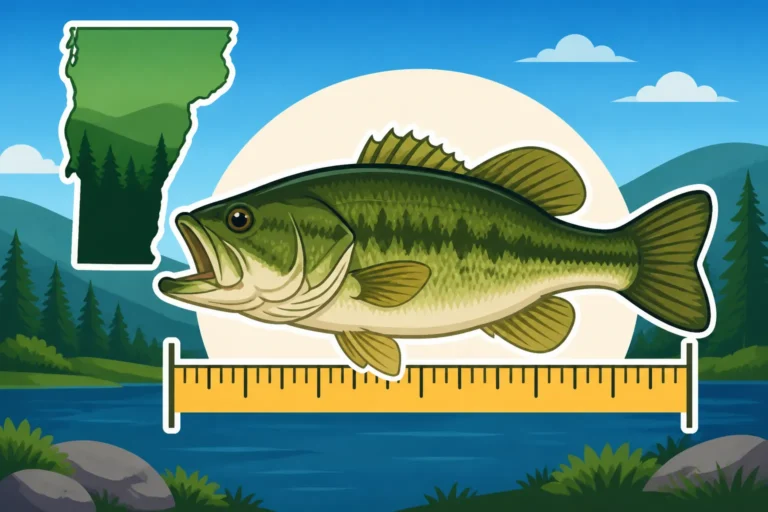
Once the harvest season begins, there will be a Vermont bass daily bag limit (often around five fish) and a Vermont largemouth bass minimum length limit and Vermont smallmouth bass minimum length limit (usually around 12-15 inches). These length limits are crucial for managing the size structure of the bass population, allowing smaller fish to grow while still providing opportunities for anglers to take home a meal. Understanding the specific differences between largemouth and smallmouth identification can also be important for adhering to potential species-specific size limits, though they often share similar regulations in Vermont.
Walleye, Pike, and Panfish Regulations
Vermont's other popular game fish, such as walleye, northern pike, and a variety of panfish, also fall under specific regulations. Walleye, a highly sought-after species, particularly on Lake Champlain, will have a Vermont walleye limit on Lake Champlain, which might include both a daily bag limit and a slot limit. A slot limit means fish within a certain size range must be released, protecting the prime breeding-size fish. This is a common and effective management tool for species like walleye.
Northern pike and chain pickerel are often found in the same waters and might have similar regulations. The Vermont northern pike limit and Vermont chain pickerel limit typically allow for a more generous harvest compared to trout or salmon, reflecting their abundant populations and different ecological roles. However, minimum length limits may still apply, especially for pike, to protect larger, trophy-sized individuals. Panfish like yellow perch, bluegill, and black crappie usually have the most liberal limits, such as the Vermont yellow perch limit or Vermont black crappie limit, often allowing for a large number of fish per day, as they reproduce quickly and are excellent table fare. These species are perfect for family outings and introducing new anglers to the sport.
| Species | Daily Bag Limit (General) | Minimum Length (General) | Key Seasonal Note |
|---|---|---|---|
| Brook, Brown, Rainbow Trout | 12 fish total | Varies by water (often 6-12 inches) | Check special regulations for streams |
| Landlocked Salmon | 2 fish | 15 inches | Early season catch & release often applies |
| Lake Trout | 2 fish | 18 inches | Deep water in summer, check specific lakes |
| Largemouth Bass | 5 fish | 12 inches | Catch & Release season applies in spring |
| Smallmouth Bass | 5 fish | 12 inches | Catch & Release season applies in spring |
| Walleye | 5 fish | 15 inches (may include slot limit) | Prime on Lake Champlain, check slot limit |
| Northern Pike | 5 fish | 18 inches | More liberal limits, common in many lakes |
| Yellow Perch | 50 fish | None | Abundant, great for ice fishing |
| Black Crappie | 25 fish | None | Good for panfishing, check local spots |
Note: This table is for general informational purposes only. Always consult the most current Vermont Fish & Wildlife Department regulations for precise and up-to-date information for your specific fishing location and target species.
Seasonal Dates and Water-Specific Rules
Fishing in Vermont isn't just about what you catch; it's also about when and where you catch it. The Green Mountain State experiences four distinct seasons, and these natural cycles heavily influence fish behavior and, consequently, the regulations designed to protect them during vulnerable times like spawning. Knowing the specific season dates and understanding the nuances of water-specific rules are paramount for a successful and legal fishing trip.
General Season Openers and Closures
Most game fish in Vermont have specific opening and closing dates for their harvest seasons. Trout season, for example, traditionally begins on a specific date in April, often marked by the Vermont Trout Opening Day Traditions, which sees eager anglers flocking to rivers and streams. This date is usually the signal that the waters are open for retention of trout. However, there are often separate seasons for different types of water; for instance, lakes and ponds might have slightly different trout season dates than rivers and streams.
Similarly, other species like bass have their own calendars. The Vermont bass season opening date for 2026 will signify the start of the harvest season, often following a period of mandatory catch and release to protect spawning fish. It's crucial to consult the official Vermont Fishing Season Dates and Closures guide each year, as these dates can sometimes shift slightly or have region-specific variations. Ignoring these dates means you could be fishing out of season, which carries penalties. Even though you might find a fantastic fishing spot, if it's not the right time of year for your target species, you might be limited to catch and release, or worse, not allowed to fish for them at all.
Special Regulation Waters
Some of Vermont's most pristine or sensitive fisheries are designated as "Special Regulation Waters," and these areas come with rules that supersede the general statewide regulations. These waters are often managed to protect unique wild fish populations, promote specific angling experiences, or facilitate conservation efforts. A common designation is "fly fishing only," where only artificial flies (no lures, no bait) are permitted. The Battenkill River, famous for its wild brown trout, has sections that are Vermont Catch and Release Fly Fishing Only Waters, requiring careful adherence to these rules.
Other special regulations might include extended length limits, reduced bag limits, or even year-round catch-and-release only policies. For example, certain trophy trout waters might have regulations aimed at growing exceptionally large fish, perhaps with a higher minimum length and a lower daily limit. It's vital to check if your chosen fishing spot falls under any of these special regulations. The Vermont Fish & Wildlife Department's official guide typically lists all Special Regulation Waters in detail, often with maps or specific descriptions, and you can also use resources like the Vermont Fish Stocking Search Tool, Explained to find information about specific waters. You'll want to review these details carefully before heading out, as the rules can change what gear you bring and what you can legally do with your catch.
Reciprocity on Boundary Waters Lake Champlain, Connecticut River
Vermont shares significant waterways with neighboring states and even Canada, leading to unique "reciprocity" agreements that can simplify or complicate regulations depending on your understanding. The most notable examples are Lake Champlain, shared with New York, and the Connecticut River, forming a border with New Hampshire.
For Lake Champlain, there's a reciprocal agreement that generally allows you to fish the entire lake with a valid fishing license from either Vermont or New York. This is incredibly convenient for anglers who want to explore the vast expanse of the lake without needing two separate licenses. However, it's crucial to understand that while your license is valid, you must still abide by the regulations (bag limits, length limits, season dates) of the state whose waters you are currently fishing in. So, if you're fishing on the New York side of the lake, you follow New York's rules, even with a Vermont license. Our detailed guide on Vermont Fishing License Reciprocity on Lake Champlain with New York clarifies these nuances. Similarly, the Connecticut River has a reciprocal agreement with New Hampshire, meaning a valid license from either state generally allows you to fish its main stem, but again, be mindful of which state's specific regulations apply based on your location. These agreements are fantastic for expanding your fishing opportunities, but they require a bit of homework to ensure you're always compliant.
Boating Laws and Safety for Anglers
For many anglers, fishing involves a boat, whether it's a small rowboat, a canoe, a kayak, or a powerful bass boat. While the focus might be on the fish, understanding Vermont's boating laws is just as crucial as knowing fishing limits. These regulations are in place for everyone's safety on the water and to protect the environment. Ignoring them can lead to significant fines, accidents, or even legal trouble.
Boat Registration and Equipment Requirements
Any motorized vessel, and most non-motorized vessels over a certain length, operating on Vermont waters must be registered with the Department of Motor Vehicles. This includes everything from fishing boats with electric trolling motors to larger craft. Our guide on Vermont Boat Registration Requirements goes into detail about what needs to be registered and the process involved. You'll need to display your registration numbers prominently on the bow of your boat. Kayaks and canoes often have exemptions if they are non-motorized and below a certain length, but it’s always best to check the current rules, especially since exceptions can change.
Beyond registration, all boats must carry certain safety equipment. This usually includes a life jacket for every person on board, throwable flotation devices for boats over 16 feet, a sound-producing device (like a whistle or horn), navigation lights for night operation, and a fire extinguisher for motorized vessels. Not having the required equipment can result in a fine during a safety check by marine patrols or game wardens. For many anglers, gathering this safety gear is a one-time purchase, and online retailers like Amazon make it easy to find everything from durable life jackets to emergency whistles.
Life Jacket Rules by Age and Boat Type
Life jackets are perhaps the most critical piece of safety equipment on any boat, and Vermont has specific regulations regarding their use, especially for children. All vessels must have a readily accessible, properly fitting U.S. Coast Guard-approved life jacket for every person on board. However, the rules become stricter for younger passengers. In Vermont, children under 12 years of age must wear a U.S. Coast Guard-approved life jacket at all times while on any vessel, whether underway or at anchor. This rule applies to all types of boats, including canoes, kayaks, and even larger fishing vessels. You can read more about this in Vermont life jacket rules for children under 12.
There are also specific rules about wearing life jackets during certain times of the year, particularly during colder water periods. Even adults are strongly encouraged to wear life jackets when the water temperature is below 50 degrees Fahrenheit, as cold water immersion can quickly incapacitate even strong swimmers. While not always legally mandated for adults in warm weather, wearing a life jacket is a smart choice for any angler, especially those fishing alone or in remote areas.
Boating Under the Influence BUI Laws
Just like driving a car, operating a boat or personal watercraft (PWC) under the influence of alcohol or drugs is illegal and extremely dangerous. Vermont has strict Boating Under the Influence (BUI) laws, with penalties that can be severe, including substantial fines, jail time, and the suspension of both boating and driving privileges. The legal blood alcohol content (BAC) limit for operating a vessel is generally the same as for operating a motor vehicle (0.08%).
A BUI conviction can have long-lasting consequences, impacting your ability to enjoy fishing and boating for years. It's not worth the risk. Always designate a sober operator if alcohol is consumed, or better yet, save the celebratory drinks for when you're safely back on shore. Responsible boating means prioritizing safety for yourself, your passengers, and everyone else on the water. Vermont's waterways are beautiful, but they demand respect and responsible behavior from all who use them.
Enforcement, Penalties, and Responsible Angling
Understanding the regulations is one thing, but knowing the consequences of non-compliance and embracing an ethic of responsible angling is equally important. Game wardens and marine patrols are out on the water not to ruin your day, but to ensure that everyone is following the rules, protecting the resource, and staying safe. A little knowledge and a lot of common sense go a long way in ensuring your fishing trips remain enjoyable and trouble-free.
What Happens if You Break the Rules
Violating Vermont's fishing or boating regulations can lead to a range of penalties, depending on the severity of the offense. Minor infractions, such as not having your fishing license immediately accessible (even if you bought one), might result in a warning or a small fine. More serious offenses, however, like fishing without a license in Vermont: penalties, exceeding bag limits, keeping undersized fish, or fishing out of season, can lead to much heftier fines, which can easily run into hundreds of dollars. In some cases, repeated or severe violations can even result in the suspension of your fishing and/or boating privileges for a period, or even the confiscation of your gear.
For instance, fishing for a protected species or using illegal methods can lead to criminal charges. Boating under the influence (BUI) is treated very seriously and carries penalties similar to drunk driving. It's a stark reminder that these aren't just suggestions; they are laws with real teeth. The goal of enforcement isn't just punishment, but deterrence, making sure that the long-term health of Vermont's fisheries isn't jeopardized by irresponsible actions. Ignorance of the law is generally not considered an excuse, which is why taking the time to understand the rules is so important.
Reporting Violations and Ethical Practices
Responsible angling extends beyond simply following the rules yourself; it also involves being a steward of the environment and a good neighbor on the water. If you witness a fishing or boating violation, such as someone openly exceeding limits, polluting, or engaging in unsafe boating practices, you have a responsibility to report it. The Vermont Fish & Wildlife Department has a hotline and online forms for reporting suspected violations. Providing as much detail as possible (location, time, description of individuals or boats, specific infraction) can greatly assist wardens in their investigations.
Beyond legal compliance, ethical angling practices are about respect: respect for the fish, the environment, and fellow anglers. This includes proper catch-and-release techniques to maximize survival rates for fish you don't intend to keep, minimizing disturbance to wildlife and other anglers, packing out all your trash (and maybe a little extra that others left behind), and sharing access respectfully. Leaving a pristine stream or lake cleaner than you found it is the hallmark of a true conservation-minded angler.
Conservation Through Adherence
Ultimately, every regulation, every season closure, every bag limit, is a tool for conservation. When anglers collectively adhere to these rules, they contribute directly to the health and sustainability of Vermont's aquatic resources. It means that there will be healthy populations of trout in the Best Trout Streams in Vermont, abundant bass in Lake Champlain Smallmouth Bass Fishing, and robust walleye for future generations to enjoy. The Vermont Fish & Wildlife Department relies on license fees to fund stocking programs, habitat restoration, scientific research, and enforcement efforts – all vital components of maintaining a thriving fishery.
By taking the time to learn the rules, purchasing the appropriate Vermont Fishing License Guide for 2026, and practicing ethical angling, you become an active participant in conservation. It’s not just about catching fish; it’s about preserving the privilege to fish in a state as beautiful and wild as Vermont. Your actions, large or small, contribute to the legacy of angling in the Green Mountains.
Staying Up-to-Date with Vermont's Regulations
The world of fishing regulations isn't static. Rules can and do change from year to year, sometimes subtly, sometimes significantly. Fish populations fluctuate, environmental factors evolve, and new management strategies are implemented. To ensure you're always on the right side of the law and maximizing your fishing opportunities, it's crucial to know how to access the most current and accurate information.
Navigating the Official Vermont Fish & Wildlife Website
The absolute best and most up-to-date source for Vermont fishing regulations is the official website of the Vermont Fish & Wildlife Department. Their site is a treasure trove of information, offering detailed digital versions of the annual fishing guide, maps of special regulation waters, fish stocking schedules, and press releases about any significant changes.
When you visit their site, look for the "Fishing Regulations" or "Licenses & Permits" sections. You can usually download the current year's digest as a PDF, which you can save to your phone or tablet for easy access on the water. Many anglers even print out relevant pages and laminate them to keep them dry and handy. The website also provides access to the Vermont Trout Season and Stocking Rules, which is invaluable for planning your trips. While online, you might also find answers to specific questions about topics like Vermont fishing license age 15 requirement or even Vermont Trophy Trout Program Waters. Make it a habit to check the site at the beginning of each fishing season and periodically throughout the year, especially if you plan to explore new waters or target different species.
Physical Guides and Local Resources
While the digital world offers instant updates, many anglers still prefer a physical copy of the Vermont Fishing Regulations Guide. These printed booklets are typically available free of charge wherever fishing licenses are sold, including many bait and tackle shops, sporting goods stores, and town clerks' offices across Vermont. Having a physical copy can be incredibly useful, especially in areas with spotty cell service, which is common in many of Vermont's more remote fishing locations.
Local bait and tackle shops are another fantastic resource. The owners and staff are often avid anglers themselves, deeply familiar with local waters and regulations. They can provide insights into recent rule changes, clarify specific regulations for nearby lakes or rivers, and even offer advice on current fishing conditions and hotspots. Don't be shy about asking questions; these local experts are usually more than happy to help. Additionally, other reputable fishing blogs and outdoor magazines focusing on Vermont fishing can offer simplified explanations and timely updates, but always cross-reference with the official sources to be absolutely sure. Staying informed means you can focus on the joy of fishing, rather than worrying about compliance.
Disclaimer
The information provided in this guide is for general informational purposes only and is intended to help readers understand the complexities of Vermont's fishing regulations. While every effort has been made to ensure accuracy and provide current information, regulations can and do change. This guide does not replace the official Vermont Fish & Wildlife Department regulations. It is the responsibility of every angler to consult the most current official Vermont Fishing Guide and any applicable local or special regulations before engaging in any fishing activities. Failure to do so may result in fines or penalties. Always prioritize safety and ethical angling practices.