Vermont Fish Stocking Search Tool, Explained
It's incredibly frustrating, isn't it? You spend all that time researching new spots, planning your gear, and getting excited for a day on the water, only to realize you have no idea if the fish you're targeting are even there. For Vermont anglers, especially those keen on trout, understanding where and when fish are stocked can feel like a secret handshake. This comprehensive guide is designed to demystify the Vermont Fish Stocking Search Tool, showing you exactly how to use it to plan more successful and less frustrating fishing trips.
Why the Vermont Fish Stocking Search Tool is Your Angling Ally
Let's be real, nobody wants to waste a perfectly good Saturday driving to a promising-looking pond or stream, only to discover it hasn't seen a stocked trout in weeks. It's a common dilemma, especially for those of us who rely on the state's generous stocking program to supplement wild populations. The Vermont Fish Stocking Search Tool isn't just a fancy database; it's a vital resource that can literally make or break your fishing day. It pulls back the curtain on where the Vermont Fish & Wildlife Department has recently released fish, from plump rainbow trout ready to hit your streamer to brown trout that might just give you a fight you won't forget.
Understanding the Purpose of Stocking in Vermont
Before we dive into the nuts and bolts of the search tool, it's helpful to understand why Vermont stocks fish in the first place. It’s not just about creating easy targets for anglers, though that's certainly a perk! The primary goals are usually to enhance recreational fishing opportunities, especially in waters that can’t support robust natural reproduction due to habitat limitations or fishing pressure. Stocking also helps introduce non-native species (like rainbow trout or sometimes brown trout) into suitable waters, expanding the variety of fishing experiences available.
Think about it: some of Vermont's smaller ponds and urban access points might get fished heavily, or their water temperatures simply don't allow for year-round trout survival and reproduction. This is where stocking truly shines, providing consistent opportunities for families, beginners, and seasoned anglers alike. It ensures there's always a good chance of reeling in something fun, even if you're not trekking deep into the backcountry for wild brook trout. You can find more details about these practices in our guide on Vermont Trout Season and Stocking Rules.
The Frustration of Fishing Blind and How the Tool Helps
There's a unique kind of angler's despair that comes from fishing "blind." You cast, you retrieve, you try every lure in your tackle box, but deep down, you're wondering if you're just casting into an empty bathtub. Without information, every cast feels like a shot in the dark. This is precisely the frustration the Vermont Fish Stocking Search Tool alleviates. It empowers you with current, reliable data straight from the source.
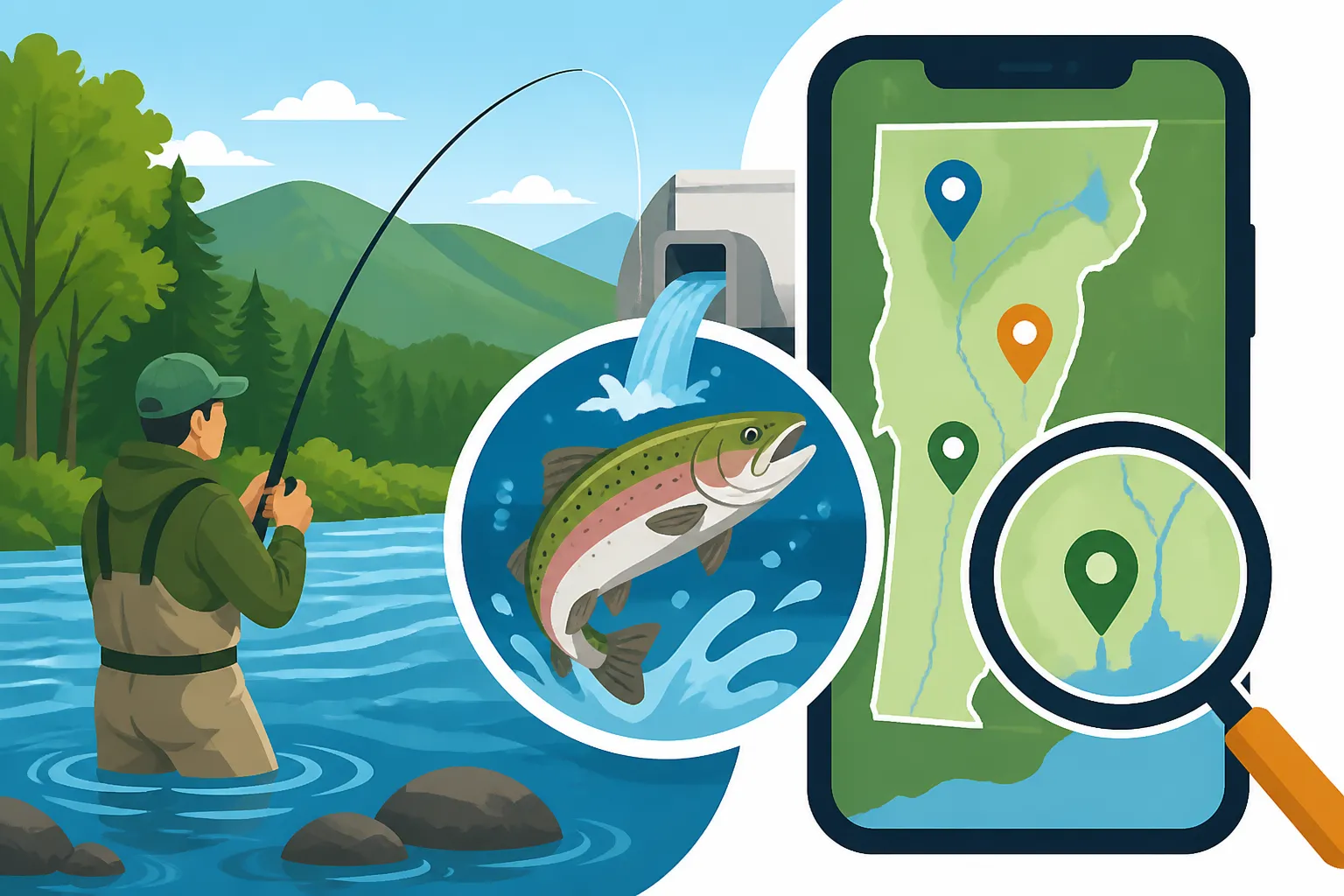
Imagine knowing that Lake Raponda just received a fresh batch of rainbows yesterday, or that the Black River by Springfield got a boost of feisty browns. This isn't just about catching more fish; it's about fishing with confidence, knowing your efforts are directed to waters that have been recently replenished. It turns a hopeful guess into an informed strategy, saving you gas money, time, and, most importantly, preserving your angling enthusiasm. It means less time wondering and more time casting where the fish actually are.
Navigating the Vermont Fish and Wildlife Website for Stocking Info
The Vermont Fish & Wildlife Department website is a treasure trove of information, but like any large government site, it can sometimes feel a bit like a maze. Knowing where to click and what to look for is half the battle. Our goal here is to guide you straight to the stocking search tool without any detours.
Finding the Stocking Search Tool's Home Page
First things first, you'll want to head to the official Vermont Fish & Wildlife Department website. Once there, you're looking for sections related to "Fishing" or "Fish Management." Often, there's a dedicated tab or dropdown menu that will lead you to a page about fish stocking. Many state wildlife agencies organize this information under "Fisheries" or "Recreational Fishing."
Historically, they might have simply published a static list, but with modern technology, most states, including Vermont, have moved to dynamic, searchable databases. This live-updated information is invaluable because stocking schedules can change due to weather conditions, water levels, or even fish availability from hatcheries. It’s always best to get your information directly from the source, so bookmarking this section of their website is a smart move for any dedicated angler.
Understanding the Information Available on the Page
Before you even use the search function, take a moment to scan the main stocking page. It often contains important context and updates. You might find:
- General stocking season dates: While specific dates are in the tool, this overview tells you when stocking generally occurs (e.g., "spring trout stocking begins in April").
- Species information: A quick rundown of which species are stocked and why (e.g., brook, brown, rainbow trout for put-and-take fisheries, sometimes landlocked salmon in certain lakes).
- Hatchery information: Sometimes they’ll mention which hatcheries are producing the fish, like the Salisbury or Roxbury hatcheries. This is more for general interest but shows the scale of the operation.
- Important advisories: Any current conditions that might affect stocking or fishing, such as low water levels in certain rivers or temporary access closures.
This preliminary information can help you frame your search within the tool itself. For instance, if you know spring trout stocking is in full swing, you can focus your search parameters on recent dates and relevant species. This foundational knowledge complements the granular data the search tool will provide.
How to Use the Fish Stocking Search Tool Step-by-Step
Alright, let's get down to brass tacks. You've navigated to the right section of the Vermont Fish & Wildlife website. Now, how do you actually use this thing to find fish? It's typically a very user-friendly interface, designed to be accessible to everyone from seasoned veterans to those just learning What age can you fish without a license in Vermont.
Step 1: Choosing Your Search Parameters
When you arrive at the search tool, you'll usually be presented with several dropdown menus or input fields. Don't feel overwhelmed; these are designed to help you narrow down the vast amount of data. Here are the most common parameters you'll encounter:
- Waterbody Name: This is often a free-text field or a dropdown list. If you have a specific lake, pond, or river in mind (like Lake Dunmore, Lake Bomoseen, or the Lamoille River), type it in or select it. Start with just a few letters for broader results if you're unsure of the exact spelling.
- County: If you're planning a trip to a general area, like Addison County or Windsor County, selecting a county can show you all stocked waters within that region. This is great for exploring new spots!
- Species: The most common choices here will be Brook Trout, Brown Trout, and Rainbow Trout. Sometimes you might see Landlocked Salmon or even certain warm water species if they are part of a specific enhancement program.
- Date Range: This is crucial. You can usually select a "from" and "to" date. For the most up-to-date information, I recommend looking at the last 7 to 14 days. If you're planning for next month, you might broaden your search to see historical stocking patterns for that time of year, though remember, past performance is no guarantee of future stocking!
It's tempting to fill out every field, but sometimes less is more. If you're just looking for any stocked water nearby, start with your county and a recent date range. If you're dead set on rainbow trout, specify the species, but leave the waterbody name blank to see all options.
Step 2: Executing Your Search and Reviewing Results
Once you've selected your desired parameters, there's usually a "Search" or "Submit" button to click. The tool will then process your request and display the results, typically in a table format.
The results table is where all the good stuff lives. Here's what you can expect to see:
| Column Header | What it Means | Why it Matters |
|---|---|---|
| Waterbody | The specific lake, pond, or river that was stocked. | This is your destination! Pay attention to the full name to avoid confusion with similarly named waters. |
| Town | The municipality nearest to the stocked water. | Helps you pinpoint the exact location and plan your travel. |
| County | The county in which the waterbody is located. | Useful for understanding the regional distribution and for broader trip planning. |
| Species | The type of fish that were stocked (e.g., Rainbow Trout, Brown Trout). | Confirms you're targeting the right fish for your preferred technique or taste. |
| Number Stocked | The quantity of fish released. | Gives you an idea of the density of fish in that water. Larger numbers often mean better immediate fishing prospects. |
| Date Stocked | The exact date the fish were released. | Crucial for timing your trip. Fresher stockings usually mean more active fish and less fishing pressure from previous anglers. |
| Size/Comments | Additional details, like average size of the fish (e.g., "8-10 inches") or specific stocking points. | Helps you choose appropriate tackle (a smaller fish might need lighter line) and find access points. |
This table provides a clear, concise overview, allowing you to quickly identify promising locations. You can then use this information to decide where you want to focus your efforts. For example, if you see a large number of fish stocked yesterday in a lake just an hour away, that's likely your best bet!
Step 3: Troubleshooting Common Search Tool Issues
Even with the best tools, sometimes things don't go as planned. If you're not getting the results you expect, here are a few things to check:
- Check your spelling: A simple typo in a waterbody name can return no results. Try shorter entries or just the first few letters.
- Broaden your date range: Maybe you're looking too narrowly. Expand your "from" date to several weeks or even a month back to see if any stockings have occurred.
- Verify species selection: Ensure you haven't accidentally selected a species that isn't typically stocked in that waterbody or season.
- Clear all filters: If you've been playing around with the search, sometimes a forgotten filter can prevent results. Look for a "Clear Filters" or "Reset Search" button.
- Check for temporary outages: Rarely, the website or database might be undergoing maintenance. If you're consistently getting no results for broad searches, try again later.
If you're still having trouble, consider checking other resources. The Vermont Fish & Wildlife Department often posts general stocking updates on their social media channels or through press releases. You might also find local bait shops have insights, as they often hear directly from anglers or even the stocking trucks themselves.
Interpreting the Stocking Data and Planning Your Trip
Finding the data is just the first step. The real art comes in interpreting what those numbers and dates mean for your actual fishing trip. This is where you leverage the tool to become a more strategic angler.
Deciphering "When" and "How Many"
The date and number of fish stocked are perhaps the most critical pieces of information.
- Recent Stockings (Last 1-3 Days): These are prime opportunities. Fish just released are often disoriented and actively feeding, making them easier targets. They haven't been pressured by other anglers yet, and their natural instincts to evade predators might not be fully engaged. This is your "hot tip" moment!
- Moderately Recent Stockings (Last 4-14 Days): Still good. The fish have had a little time to disperse and get used to their new surroundings. They might be a bit pickier, but they are certainly still around and active. Fishing pressure might be higher in easily accessible spots, so consider exploring a bit further.
- Older Stockings (Over 2 Weeks Ago): The fishing might be tougher, especially for trout in smaller, heavily fished waters. Many of the "easy" fish will have been caught, and the remaining ones will be warier. This doesn't mean it's impossible, but you'll need more skill, patience, and perhaps different tactics. For larger lakes, fish can disperse widely, making them harder to locate.
The "Number Stocked" column gives you an idea of the density. A stocking of 500 fish in a small pond is a much different proposition than 500 fish in a vast lake like Lake Champlain. Generally, higher numbers mean better immediate prospects, but always consider the size of the waterbody in context. If you're interested in specific Vermont Trout Limit and Possession Rules, be sure to review those before you go.
Matching Stocking Information to Your Fishing Goals
Your fishing goals should dictate how you use the stocking data.
- For Family Fun / Beginner Anglers: Look for recent, high-volume stockings in easily accessible ponds or smaller lakes. These provide the best chance for consistent action and keep spirits high, especially for kids. Many Vermont State Parks have excellent access for this purpose.
- For "Meat Hunters" (Catching for Dinner): Focus on fresh stockings of rainbow or brown trout. These fish are typically hatchery-reared and often transition well to the table. Ensure you are familiar with Vermont Bag and Possession Limits by Species.
- For Skill Development / Challenging Fishing: Even older stockings can be useful. The remaining fish are often more challenging to catch, providing a good test of your technique, lure selection, and stealth. You might target these in larger rivers or lakes where fish have more room to roam and become "wilder."
- For Scouting New Waters: Use the tool to identify waters you didn't even know were stocked. This can open up entirely new areas for you to explore, combining the thrill of discovery with the promise of fish. You can find more ideas in our guide on List of Vermont stocked trout waters.
Remember, a successful trip isn't just about catching fish; it's about enjoying the experience. The stocking tool helps you align your expectations with reality and set yourself up for the kind of day you want to have on the water.
Beyond the Search Tool: Understanding Vermont's Stocking Program
While the search tool tells you where and when fish are stocked, having a broader understanding of Vermont's stocking program can make you an even more informed and successful angler. It's not just random fish dumping; it's a carefully managed ecological and recreational effort.
Different Types of Stocked Fish and Their Behavior
Vermont stocks several species, primarily trout, each with slightly different behaviors once released:
- Rainbow Trout: These are often the most common and easiest to catch post-stocking. They tend to be aggressive and less wary initially, often taking a variety of baits and lures. They adapt well to diverse water conditions, making them a staple in many ponds and rivers.
- Brown Trout: Browns can be a bit more elusive and wary than rainbows, especially larger ones. They are known for being excellent fighters and can be found in both rivers and lakes. They tend to seek cover quickly and might require a more subtle approach after a few days in the water.
- Brook Trout: Vermont's native trout are often stocked in smaller streams and ponds, especially in higher elevations. While hatchery brook trout can be quite aggressive, wild brook trout are often smaller and more sensitive to environmental changes. They're a beautiful fish to catch, known for their vibrant colors.
- Landlocked Salmon: These are primarily stocked in large, cold-water lakes like Lake Willoughby or Lake Champlain, where they grow to impressive sizes. They are a true trophy fish, usually requiring specialized trolling techniques. Stocking plays a crucial role in maintaining these populations for sport fishing. Check out our guide on How to Catch Landlocked Salmon in Vermont for more specifics.
Understanding these inherent differences can help you choose the right tackle and technique, whether you're using a simple worm and bobber or a specialized fly pattern.
The Role of Vermont's Fish Hatcheries
Vermont's fish hatcheries are the unsung heroes of the stocking program. Facilities like the Salisbury Fish Culture Station and the Roxbury Fish Culture Station are responsible for raising hundreds of thousands of fish each year. These state-of-the-art facilities ensure that healthy, robust fish are available for release into public waters.
The process involves collecting eggs, raising fry to fingerlings, and then growing them to "catchable size" before they are transported to their various destinations. This entire operation requires significant resources, scientific expertise, and dedicated staff. The quality of the stocked fish directly impacts the success of the stocking program, and Vermont takes pride in providing healthy fish for its anglers. So, next time you reel in a beautiful stocked trout, take a moment to appreciate the journey it took from hatchery to your hook!
Tips for Maximizing Your Success After a Stocking
Knowing where and when fish are stocked is fantastic, but it's just the beginning. To truly capitalize on these opportunities, you need a smart approach. Here are some veteran tips to help you make the most of a fresh stocking.
Gear and Bait for Freshly Stocked Waters
When fish are first stocked, they're often eager to bite. They're fresh out of the hatchery, used to pellet food, and a bit disoriented. This means you don't always need complex setups.
- Simple Baits: Worms (like nightcrawlers or mealworms), corn, PowerBait (especially in bright colors like chartreuse or orange), and even small pieces of cheese are incredibly effective. These mimic the easy food sources they are accustomed to or are simply attractive due to scent and color. You can find more specific advice in our article on Best bait for opening day trout in Vermont.
- Small Lures: Spinners (like Panther Martins, Mepps, or Rooster Tails) in sizes #0 to #2 are deadly. Their flash and vibration attract curious fish. Small spoons (like Kastmasters or Phoebe spoons) also work wonders. Again, bright, flashy colors often get the most attention. Many of these effective lures can be found on Amazon, making it easy to stock up before your trip.
- Light Tackle: A light to ultralight spinning rod and reel combo spooled with 4-6 lb test monofilament or fluorocarbon line is perfect. It allows for delicate presentations and maximizes the fight, even with smaller stocked trout.
- Fly Fishing: For fly anglers, small nymphs (like Hare's Ears or Prince Nymphs), small wet flies, and even some streamer patterns (like Wooly Buggers) can be incredibly effective. Sometimes, simply stripping a small bugger can elicit aggressive strikes.
Effective Techniques for Recently Stocked Trout
Beyond the gear, how you present it makes all the difference.
- Still Fishing: For ponds and slower sections of rivers, a simple still-fishing setup with a worm or PowerBait under a bobber is often all you need. Cast it out, let it sit, and wait for the bobber to dip. This works especially well near the stocking truck's access point, as fish often mill around there initially.
- Slow Retrieve: If you're using spinners or spoons, a slow, steady retrieve is usually best. Don't be afraid to add a twitch or two to impart more action. Fish these parallel to the shore, around structure, or along current seams in rivers.
- Fan Casting: When you arrive at a new spot, fan cast – make casts in a wide arc around you – to cover as much water as possible. Stocked fish might be anywhere, and covering water increases your chances of finding them.
- Targeting Deep Pockets and Structure: Even stocked fish will seek out deeper water, submerged logs, rocks, or overhanging banks for cover and security. Don't just cast into open water; actively target these potential hiding spots. These trout are still vulnerable, but they aren't completely devoid of instinct.
- Move Around: If a spot isn't producing after 15-20 minutes, don't be afraid to move down the bank or upstream/downstream a bit. Sometimes a slight change in location can make all the difference. Patience is a virtue, but persistence in moving is also key.
Remember to bring a landing net – often stocked trout hit hard, and a net makes it easier to land them safely, especially if you plan to release some. A good quality net is an indispensable tool, and you can find many great options on Amazon.
Navigating Crowds and Ethics in Stocked Waters
One reality of fishing recently stocked waters is that you often won't be alone. Stocking information is public, and many anglers use it.
- Respect Other Anglers: Give fellow anglers plenty of space. Don't cast over their lines or crowd their spot. A friendly nod or greeting goes a long way. We're all out there to enjoy the peace of Vermont, so let's keep it peaceful.
- Mind the Regulations: Always double-check the current Vermont Fishing Regulations Explained for the specific water you are fishing. There might be special regulations, such as tackle restrictions, catch-and-release only sections, or specific daily limits for certain species or sizes. Ignorance is not an excuse for violating the rules.
- Practice Catch and Release Responsibly: If you're not planning to keep your catch, handle fish minimally and gently. Wet your hands before touching them, support their body, and release them quickly. Even hatchery fish deserve respect.
- Leave No Trace: Pack out everything you pack in, including discarded fishing line, bait containers, and food wrappers. Let's keep Vermont's beautiful fishing spots pristine for everyone.
By following these tips, you're not only increasing your chances of success but also contributing to a positive and ethical fishing environment for all Vermont anglers. The goal is to enjoy the bounty of the stocking program while respecting the resource and your fellow outdoor enthusiasts.
Disclaimer
Please note that fishing regulations, stocking schedules, and website interfaces can change. Always consult the official Vermont Fish & Wildlife Department website and their current regulations guide for the most up-to-date and accurate information before planning your fishing trip. This guide is for informational purposes only.