Vermont Trout Limit and Possession Rules
Trying to keep up with Vermont's trout fishing regulations can often feel like trying to land a slippery rainbow with a bare hook – frustrating, confusing, and sometimes, downright impossible if you don't know the rules. You want to enjoy a peaceful day on the water, not worry about inadvertently breaking the law. This comprehensive guide is here to clear the waters, breaking down everything you need to know about Vermont's daily trout limits, possession rules, and those tricky special regulation waters, ensuring you can fish confidently and legally.
Understanding Vermont's Daily Trout Limits
One of the first things any angler needs to wrap their head around when fishing for trout in Vermont is the concept of a "daily limit." This isn't just a suggestion; it's a hard and fast rule about how many fish of a certain species you can legally keep within a 24-hour period. It’s designed to ensure sustainable fishing for everyone, today and for generations to come.
Imagine you're out on the White River, and the trout are biting. You're having a fantastic day, but you need to be mindful of your creel. The daily limit applies to the fish you've caught, killed, and reduced to your possession. Once you hit that number, even if the fish are still jumping, it’s time to switch to catch-and-release or call it a day for that species. It’s a crucial aspect of responsible angling that protects Vermont’s precious cold-water fisheries.
Why Daily Limits Exist
The Vermont Fish & Wildlife Department doesn't just pull these numbers out of thin air. Daily limits are a cornerstone of fishery management, specifically tailored to each body of water and species to ensure healthy populations. For trout, which can be particularly sensitive to environmental changes and angling pressure, these limits help prevent overfishing and maintain a balance between wild populations and stocked fish.
Think about it from a conservation perspective: if everyone kept as many trout as they could catch every single day, our rivers and streams would quickly be depleted. Daily limits spread the harvest among more anglers and allow a greater number of fish to reach maturity and spawn, contributing to the next generation. It’s all about sustainability, making sure that future fishing trips are just as fruitful as the ones we enjoy today.
General Statewide Daily Limits for Trout Species
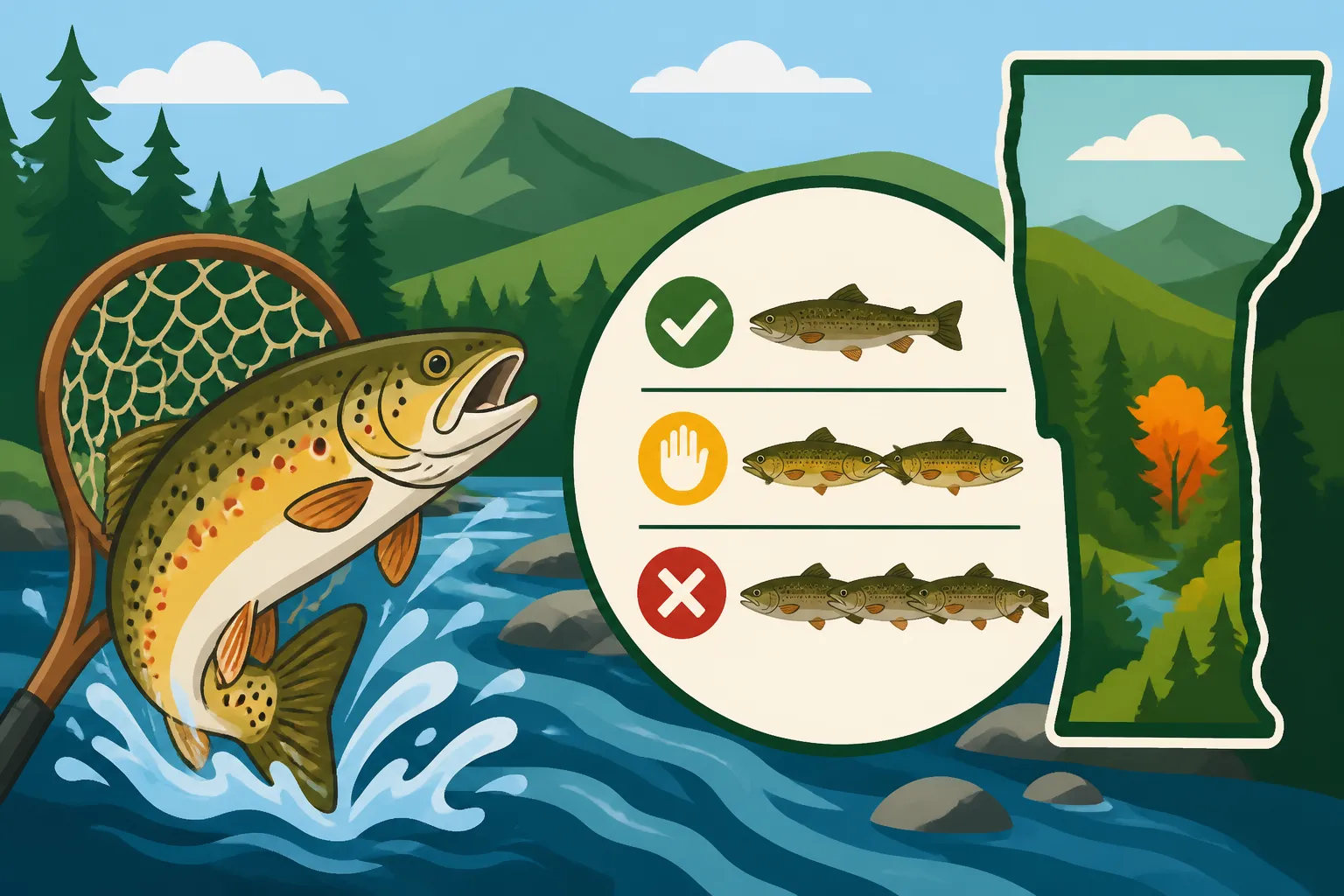
In most general regulation waters across Vermont, you'll find a consistent set of daily limits for the three main trout species: Brook, Brown, and Rainbow. For many anglers, these are the bread and butter of trout fishing. Generally, the daily limit is six trout, whether they are brook, brown, or rainbow trout, or a combination of the three. This aggregate limit means you can't, for example, keep six brook trout and six brown trout; your total kept trout for the day must not exceed six.
These general rules apply to countless streams, rivers, and ponds throughout the state, from the smaller feeder creeks to larger tributaries. It's the standard you should always assume unless you've confirmed otherwise. For instance, if you're exploring new waters around Groton State Forest, you would typically adhere to this six-trout aggregate limit. Remember, these are the minimum guidelines – special regulation waters can, and often do, have stricter rules.
Differentiating Species for Accurate Counting
This is where things can get a little tricky for newer anglers, or even seasoned ones in varying light conditions. To properly adhere to daily limits, you absolutely need to be able to tell the difference between a brook trout, a brown trout, and a rainbow trout. Misidentification can lead to inadvertently exceeding limits for a specific species if there were separate limits (though in Vermont for trout, it's often an aggregate limit), or simply keeping a fish that doesn't meet size requirements for a particular species.
Brook trout are native to Vermont, often sporting worm-like markings (vermiculations) on their backs, red spots with blue halos along their sides, and distinctive white leading edges on their lower fins. Brown trout, introduced from Europe, typically have dark spots with light halos (sometimes red spots with light halos) and a more golden-brown coloration. Rainbow trout, originally from the Pacific Northwest, are known for a distinctive pink or red stripe along their sides, especially prominent when they're fresh from the water, and numerous small black spots. If you're unsure, it's always best to practice catch-and-release to avoid any potential issues. A good, laminated identification guide is a fantastic tool to have in your tackle box, readily available from retailers like Amazon.
Navigating Possession Limits in Vermont
While the daily limit governs what you can keep per day, the possession limit broadens that scope to what you can legally have in your control at any given time, regardless of when it was caught. This distinction is incredibly important, especially for those planning multi-day fishing trips or transporting their catch home from a weekend getaway. It’s not just about what you caught today, but what’s in your cooler, your freezer, or even the fish drying on a line in your camp.
Many anglers find this rule confusing because it can seem redundant, but it serves a vital purpose in enforcement and conservation. The possession limit ensures that anglers aren't stockpiling fish over several days beyond what is deemed sustainable. It’s a way to monitor the overall impact of fishing pressure, not just on a day-to-day basis, but across the duration of an angler's activity.
What is a Possession Limit?
A possession limit refers to the maximum number of fish of a particular species or group of species that you are allowed to have in your personal possession, including those kept at your home, camp, or while in transit. Unlike the daily limit, which resets every 24 hours, the possession limit is a cumulative total. This means if you caught your daily limit of trout on Monday and stored them, and then went fishing again on Tuesday, those Monday fish still count towards your overall possession limit.
For example, if the possession limit for trout is twice the daily limit (which is a common scenario in many regulations), and the daily limit is six, then your total possession limit would be twelve. This total includes any fish you've already harvested and are storing, even if they're cleaned and filleted. It’s a rule designed to prevent anglers from essentially "stockpiling" fish by repeatedly catching the daily limit without reducing their overall kept count.
Statewide Possession Limit Rules for Trout
For trout in Vermont, the statewide possession limit is typically twice the daily limit. So, if the daily limit for trout (brook, brown, or rainbow in aggregate) is six, then the possession limit is twelve. This means that at any point, you should not have more than twelve trout in your possession. This includes fish in your cooler, in your car, back at your cabin, or even in your freezer at home if you're still actively fishing or planning to fish again within the same trip or context.
This rule emphasizes responsible harvesting and aims to ensure that no single angler is taking an excessive number of fish from the resource over a short period. It’s a common standard found in many states' fishing regulations and requires anglers to be mindful not only of what they're catching each day but also of their accumulated harvest. Always refer to the official Vermont Fishing Regulations Explained for the most current numbers, as they can sometimes change.
Avoiding Accidental Over-Possession
The easiest way to fall into an over-possession trap is during multi-day trips, especially if you're not meticulous about tracking your catch. You might catch six trout on Friday, put them in the cooler, and then catch another six on Saturday. If the possession limit is twelve, you're fine. But if you catch another six on Sunday without having consumed or given away any of the previous days' catch, you'd then be over the limit.
A good practice is to always keep a running tally, especially when camping or staying in an area for an extended fishing venture. If you've reached your possession limit, it's a clear signal that it's time to either consume some of your catch, give some away (legally, of course, and always check gifting rules), or simply switch to purely catch-and-release fishing for the remainder of your trip. Tools like a waterproof fishing log or even a simple whiteboard at your camp can be incredibly helpful. Using a digital scale, which you can easily find on Amazon, can also help ensure you're keeping within any weight-based limits, though trout limits are primarily length and number-based.
Special Regulation Waters and Their Impact on Trout Limits
While there are general statewide rules for trout limits, Vermont is also home to a variety of "special regulation waters." These are specific lakes, ponds, or stretches of rivers and streams where the standard rules don't apply. Instead, unique regulations are put in place, often to protect sensitive fish populations, promote trophy fishing opportunities, or manage specific types of fishing experiences, like fly-fishing only. Failing to check these specific rules can lead to serious legal issues, even if you're following the general statewide limits.
Anglers often get frustrated when they discover these exceptions, especially after driving to a prime fishing spot only to find the rules are completely different. This is why the advice is consistently, "Check the digest!" before every trip. These special regulations are crucial for maintaining the diversity and quality of Vermont's fisheries, from the Battenkill River to small, high-elevation ponds.
Identifying Special Regulation Waters
Identifying special regulation waters requires diligent homework. The most reliable source is the official Vermont Fish & Wildlife Department’s annual fishing regulations guide. This guide explicitly lists all bodies of water that deviate from the general statewide rules, often detailing specific sections of rivers or particular lakes. These publications are usually available online on the state's Fish & Wildlife website, or in print at most license vendors and sporting goods stores. Always make it a habit to check this before heading out to an unfamiliar spot, or even a familiar one, as regulations can change from year to year.
You’ll typically find these waters broken down by county or by major watershed, making it easier to locate the specific rules for your intended fishing destination. For example, if you're heading to the famed Battenkill River, you'll find it clearly listed with unique rules regarding catch-and-release, tackle restrictions, and specific open seasons. This attention to detail in the regulations is what truly differentiates a prepared angler from one who risks a fine.
Examples of Unique Trout Limits in Special Waters
Special regulation waters often feature significantly different limits, sometimes dramatically so. You might encounter areas designated as "catch-and-release only" for all trout species, meaning you must immediately return any trout you catch to the water, unharmed. Other waters might have reduced daily limits, perhaps only two trout instead of the general six, or even a single trophy-sized trout. Vermont Catch and Release Fly Fishing Only Waters is a great example of such stringent rules.
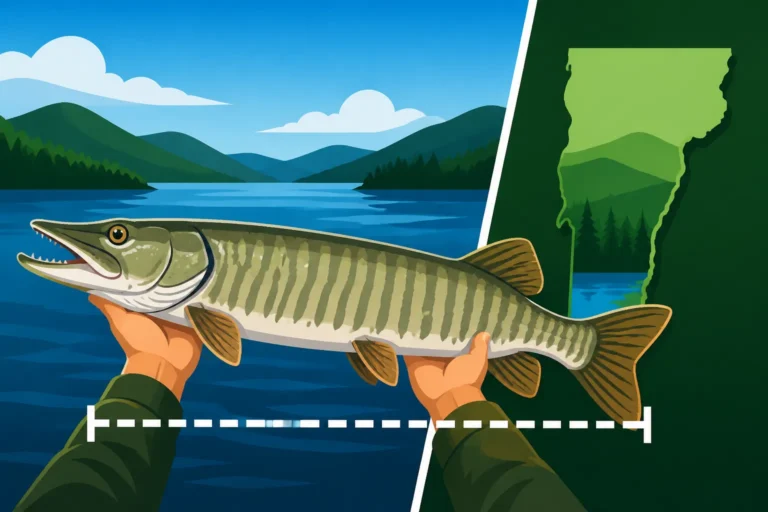
Length restrictions also vary wildly. Some waters might have a minimum length of 14 or 16 inches, protecting juvenile fish and allowing them to grow larger. Conversely, slot limits might be in place, where you can only keep fish between certain sizes, releasing anything smaller or larger to promote a balanced population structure. The Black River, for instance, might have sections with special trout management regulations that differ from its broader stretches. These variations highlight the importance of consulting the Reading the Vermont Fishing Regulations Guide before casting your line.
Importance of Checking the Vermont Fishing Regulations Guide
We cannot stress this enough: always, always check the current Vermont Fishing Regulations Guide before you go fishing. The rules for Vermont Trout Season and Stocking Rules, specific waters, and even individual species can change. What was legal last year might not be this year, and what applies to one section of a river might not apply to another just a few miles upstream or downstream.
Having a digital copy on your phone or a printout in your tackle box is a smart move. When in doubt, err on the side of caution. No warden wants to write a ticket, but they will if you're not compliant. It's your responsibility as an angler to know and follow the rules. This diligent research isn’t just about avoiding penalties; it’s about being a responsible steward of Vermont's natural resources and ensuring that these beautiful trout fisheries remain vibrant for years to come.
Beyond Basic Limits: Size Restrictions and Slot Limits
Beyond just the number of fish you can keep, Vermont's trout regulations often include rules about the size of the fish. These size restrictions are critical management tools used to achieve specific conservation goals, whether it’s protecting juvenile fish, allowing fish to reach spawning maturity, or cultivating truly trophy-sized specimens. Ignoring these length limits, even if you're within your daily bag limit, can still result in a violation.
It's not uncommon to catch a fish that perfectly fits your daily limit count, only to realize it's too short, or perhaps too long, if a slot limit is in effect. This is why a reliable measuring device is just as important as your fishing license. Being prepared means having the right tools and knowing how to use them to ensure you’re always within the bounds of the law.
How Slot Limits Work for Trout
Slot limits are a more nuanced form of size restriction designed to protect certain size classes of fish, often the most productive spawners or those designated for trophy status. Instead of a simple minimum length, a slot limit means you can only keep fish that fall within a specified length range. For example, a regulation might state you can only keep trout between 12 and 16 inches. Any fish shorter than 12 inches or longer than 16 inches must be immediately released.
This management strategy serves a couple of key purposes. By protecting smaller fish, it allows them to grow to a more desirable size, contributing to a healthy population. By protecting larger, often older, fish, it ensures a strong breeding stock and maintains the presence of "trophy" fish in the system, enhancing the angling experience. While not as common for all trout waters, slot limits can be found in Vermont Trophy Trout Program Waters or specifically managed sections of rivers to cultivate bigger fish.
Minimum and Maximum Lengths for Trout
The most common size restriction is a minimum length limit. For instance, many waters might require a trout to be at least 6 or 8 inches long to be legally harvested. This ensures that young trout have a chance to grow and contribute to the population before being removed. It's a fundamental part of managing a sustainable fishery, allowing fish to reach reproductive maturity at least once.
Conversely, some special regulations might implement a maximum length limit, often in conjunction with a minimum length to create a slot limit. For example, if you’re fishing a specific section of the Lamoille River, you might find that while you can keep trout between 8 and 14 inches, anything over 14 inches must be released. The key is always to measure your catch accurately and immediately upon landing it, especially if you intend to keep it. A quick search on Amazon will show you many compact, waterproof measuring tapes perfect for your tackle box.
Releasing Undersized or Oversized Trout Safely
When you catch a trout that doesn't meet the legal size requirements (or falls outside a slot limit), safe and immediate release is paramount for its survival. Handling fish carefully can significantly improve their chances of making it back into the water healthy enough to thrive. Wet your hands before touching the fish to protect its slime coat, which is a vital defense against infection. Avoid squeezing the fish, especially around its belly or gills.
Use appropriate tools for hook removal, such as needle-nose pliers or a hemostat, to minimize handling time. If the fish is deeply hooked, especially in the gills, it's often best to simply cut the line as close to the hook as possible. This is where using barbless hooks, or at least crushing the barbs on your hooks, becomes incredibly beneficial, as it allows for much quicker and less damaging release. A proper landing net with rubberized mesh, also readily available on Amazon, can also help protect the fish's delicate fins and scales during the landing and release process.
Species Identification: Key to Compliance and Conservation
As we touched on earlier, knowing your trout is not just a point of pride; it's a legal necessity. Vermont has distinct regulations for different species, and while many trout waters have an aggregate limit, there are still scenarios, particularly in special regulation areas, where specific species might have their own unique limits, seasons, or size restrictions. Being able to correctly identify brook, brown, and rainbow trout on the fly is a skill every responsible angler needs to cultivate.
Misidentification can lead to keeping a fish that is legally protected, either by size or by being outside an allowed harvest window for its species. This isn't just a minor infraction; it undermines conservation efforts and can result in significant penalties. Taking the time to learn the subtle (and sometimes not-so-subtle) differences between these beautiful fish is an investment in both your fishing success and the health of the fishery.
Identifying Brook Trout: Vermont's Native Gem
The brook trout (Salvelinus fontinalis) is Vermont's only native trout species and is often considered a prize catch for its beauty and the pristine waters it inhabits. You'll recognize them by their distinctive worm-like markings (vermiculations) on their backs and dorsal fin, a dark green to brownish overall color, and light spots on their sides. Crucially, they often have vibrant red spots with blue halos along their flanks. Their lower fins (pectoral, pelvic, and anal) have a striking white leading edge, backed by black and then often orange or red coloration.
Brook trout thrive in cold, clean, well-oxygenated water, often found in smaller mountain streams and remote ponds. They're typically smaller than brown or rainbow trout in most waters, though wild, native brookies can surprise you. Preserving their populations is a high priority, which is why special regulations in Vermont wild trout waters regulations often specifically target their protection.
Identifying Brown Trout: The Hardy Survivor
Brown trout (Salmo trutta), introduced from Europe, are known for their hardiness and ability to tolerate warmer water temperatures than brook trout, making them common in larger rivers and lakes. Their coloration is typically a golden-brown to silvery-brown, and they are characterized by dark spots, often with pale halos, scattered over their body, dorsal fin, and gill covers. Many brown trout also exhibit red or orange spots, sometimes with light halos, along their sides.
Unlike brook trout, brown trout usually lack the distinct vermiculations on their back. Their tail fin is often only slightly forked or nearly square. They can grow to impressive sizes, making them a favorite target for anglers seeking a larger fish. They are frequently stocked alongside rainbows and brookies, and you'll find them in many of the state's popular fishing spots like the Winooski River.
Identifying Rainbow Trout: The Flashy Fighter
Rainbow trout (Oncorhynchus mykiss), originally from the Pacific coast of North America, are easily identifiable by their namesake: a prominent pink or red stripe running horizontally along their sides, often most vibrant when freshly caught. Their bodies are typically silver-gray to greenish-blue, covered in numerous small black spots on their back, sides, and caudal (tail) fin.
Rainbows have a more streamlined, torpedo-like body shape compared to the stockier brook trout or the robust brown trout. Their tail fin is usually moderately forked and heavily spotted. They are well-known for their acrobatic fights when hooked, often leaping from the water. Rainbow trout are extensively stocked in Vermont, contributing significantly to the angling opportunities in many lakes and streams, including List of Vermont stocked trout waters.
Consequences of Non-Compliance: What Anglers Need to Know
No one wants to face a game warden with a violation, but it's a reality if you fail to adhere to Vermont's fishing regulations. Understanding the potential consequences of exceeding trout limits, fishing in closed waters, or violating size restrictions is not about instilling fear, but about emphasizing the importance of responsible angling. These rules are in place for a reason, and the penalties reflect the state’s commitment to protecting its natural resources.
It’s easy to get caught up in the excitement of a good fishing day, but a moment of carelessness can turn your relaxing outing into a costly legal headache. Being knowledgeable about the rules, and adhering to them, is the best defense against unforeseen troubles on the water.
Understanding the Penalties for Violations
Fishing without a license or exceeding daily and possession limits for trout can lead to significant penalties in Vermont. These aren't just minor slaps on the wrist. Violations can range from monetary fines that can quickly add up, to the confiscation of your catch and even your fishing gear. In more severe or repeat cases, you could face the suspension or revocation of your fishing license, meaning you wouldn’t be able to legally fish in Vermont for a period of time.
Think about the financial impact: a fine for one fish over the limit, or one undersized fish, can easily cost you hundreds of dollars, far outweighing the value of the fish itself. Beyond the immediate penalties, a violation on your record could also impact your ability to get licenses in other states. The state takes its fish and wildlife laws seriously, and anglers are expected to do the same. This is covered more deeply in Fishing Without a License in Vermont: Penalties, which outlines the serious repercussions.
Avoiding Accidental Infractions
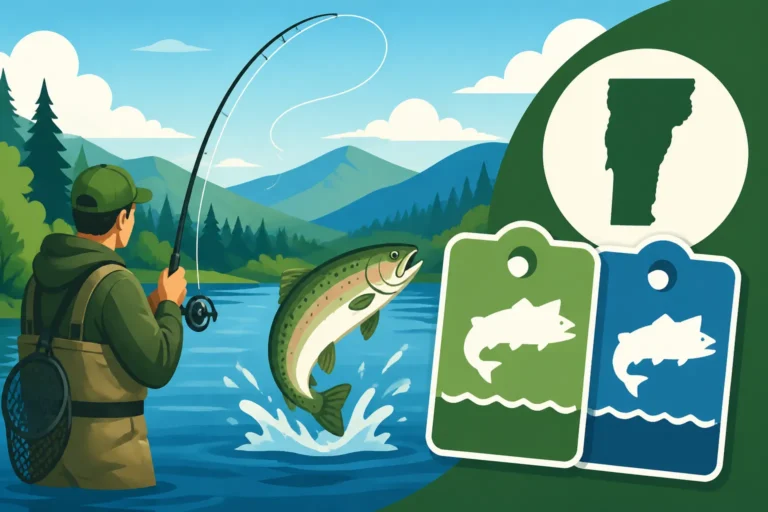
The vast majority of anglers don't intentionally break the law; most violations are a result of ignorance or carelessness. The best way to avoid accidental infractions is through diligence and preparation. First, always purchase a valid Vermont Fishing License Guide for 2026 and keep it with you, along with a copy of the current year's regulations guide. Take the time to actually read it, paying close attention to the specific waters you plan to fish.
Counting your catch carefully and measuring every fish you intend to keep are simple yet crucial steps. If you’re fishing with others, ensure everyone understands and adheres to the limits. When in doubt about a rule or a fish's identification, assume the most conservative approach, or simply release the fish. It’s better to be safe than sorry, and the peace of mind knowing you’re fishing legally is priceless.
The Role of Vermont Wardens
Vermont Fish & Wildlife Wardens are not just there to catch lawbreakers; they are primarily conservation officers dedicated to protecting the state's natural resources and educating the public. They patrol lakes, rivers, and streams to ensure compliance with fishing and hunting laws, but they also serve as invaluable resources for anglers. Don't hesitate to ask a warden for clarification on a regulation if you encounter them on the water – they're usually happy to help you understand the rules.
Their presence is a vital part of maintaining healthy fisheries. By enforcing limits and other regulations, wardens ensure that Vermont's trout populations remain strong, that habitats are protected, and that everyone has an equal opportunity to enjoy the bounty of the state's waters. Respecting their role and cooperating with them is part of being a responsible and ethical angler in Vermont.
Vermont Trout Limits and Possession Rules Summary Table
To help keep things clear, here’s a quick reference for the general statewide trout limits in Vermont. Remember, always check the current year's Vermont Fishing Regulations Guide for specific waters and any potential updates!
| Species Category | Daily Limit (Aggregate) | Possession Limit (Aggregate) | Minimum Length (General) | Notes |
|---|---|---|---|---|
| Brook Trout | 6 | 12 | Often 6 inches | Vermont's native trout; check special regulations for wild trout streams. |
| Brown Trout | 6 | 12 | Often 6 inches | Hardy, introduced species; common in many rivers and lakes. |
| Rainbow Trout | 6 | 12 | Often 6 inches | Popular stocked species; known for strong fight. |
| Total Trout (All Species Combined) | 6 | 12 | Varies by water | Total kept trout (Brook, Brown, Rainbow) must not exceed these aggregate limits in general regulations. |
Note: This table represents general statewide regulations. Special regulation waters may have significantly different limits, minimum lengths, or specific slot limits. Always consult the official Vermont Fish & Wildlife Department regulations guide for your specific fishing location.
Disclaimer
The information provided in this guide is for general informational purposes only and is not a substitute for the official Vermont Fishing Regulations Guide. Regulations can change annually. It is the responsibility of every angler to consult and understand the most current Vermont Fish & Wildlife Department fishing regulations before engaging in any fishing activity.