Jigging for Perch Through the Ice
There's nothing quite like the crisp air and serene silence of a Vermont winter day out on the ice, but there's also nothing quite as frustrating as sitting over a hole for hours with no bites. Many anglers dream of pulling up a bucketful of delicious yellow perch, but getting them to commit, especially through a thick sheet of ice, can feel like a secret code only a few lucky folks know. This guide is here to demystify the art of jigging for perch through the ice, offering practical advice and seasoned tips to turn those slow days into memorable hauls on Vermont's frozen waters.
Understanding Yellow Perch Behavior Under the Ice
Yellow perch are fascinating fish, and understanding their habits beneath the frozen surface is the first step to consistent success. They're schooling fish, which is great news because if you find one, you've often found many. However, their activity levels change dramatically throughout the ice fishing season and even throughout the day.
Seasonal Movement Patterns of Perch
Perch aren't static; they move, and their preferred locations shift as the ice season progresses. Knowing these patterns can save you a lot of drilling and fruitless waiting.
During early ice (usually November and early December, depending on the year), perch often stick to shallower flats, weed lines, and areas with residual green vegetation. The water is still relatively warm, and they're feeding actively before the full grip of winter sets in. Think 8 to 15 feet of water. They're opportunistic and quite aggressive during this period. As the ice thickens and water temperatures drop further, they might move to deeper breaks, humps, and points, but they'll still relate to structure.
By mid-winter (January and February), when the ice is at its thickest and the air is bitter cold, perch tend to migrate to deeper basin areas, often suspending over or near the bottom in 20 to 40 feet of water. They become less active, conserving energy, and their feeding windows can be short and subtle. This is when sensitive gear and precise jigging techniques really pay off. On larger bodies of water like Lake Champlain, they might be found in sprawling deep flats. Smaller lakes such as Lake Bomoseen or Lake Dunmore might see them concentrating near deeper points or submerged islands. You can often find them near schools of baitfish, which might show up as denser marks on your fish finder.
As late ice approaches (March), there's a resurgence of activity. Increased daylight penetration and warming water (even if slight) bring them back into shallower areas, especially those with inflowing water or emergent green weeds. They're preparing for their spring spawn, becoming more aggressive and feeding heavily. Depths of 10 to 25 feet near transitions are prime locations. For specific timing, checking the official Vermont Ice Fishing Season Dates can help align your efforts with prime conditions.
Perch Feeding Habits and Preferences
Perch are primarily visual predators, but they also use their lateral line to detect vibrations. Their diet consists of insect larvae, small crustaceans, baitfish like smelt and shiners, and even the eggs of other fish.
In terms of their feeding habits, perch can be incredibly finicky or surprisingly aggressive. During peak feeding times – often dawn and dusk, or during midday lulls when they might school up tight – they'll hit jigs with conviction. However, in colder, mid-winter conditions, bites can be incredibly light, feeling like nothing more than extra weight on your line. This is where observing your line for the slightest twitch or slack becomes paramount. They're also prone to "short-striking," nipping at the tail of a bait. This often necessitates a smaller presentation or adding a small piece of live bait.
Their preference for live bait, especially spikes, wax worms, or a small minnow head, cannot be overstated, especially when they're less active. These natural scents and movements can entice even the most lethargic perch. However, artificial baits can be incredibly effective, especially when tipped with a small piece of bait. The combination of flash, vibration, and a hint of natural scent is often irresistible.
Essential Gear for Jigging Perch in Vermont
Having the right tools for the job can make all the difference between a frustrating day and a successful one. For perch jigging in Vermont, sensitivity and versatility are key.
Rods, Reels, and Line for Perch Jigging
Forget your heavy-duty bass rod; for perch, we're talking about finesse and feel.
An ultralight ice fishing rod is your best friend. Look for rods between 24 and 30 inches long with a very sensitive tip, often fiberglass or a composite, that can detect the subtlest takes. The rod blank should have enough backbone to handle a good-sized perch, but the tip needs to be incredibly forgiving. Brands like St. Croix, Fenwick, or Clam make excellent options. You can find a wide selection of these sensitive rods on Amazon, often bundled with reels.
Pair your ultralight rod with a small spinning reel in the 500 to 1000 series size. It needs to have a smooth drag system, as even perch can make a surprising run, especially larger ones. A good quality reel will also prevent line twist, which is a common nuisance in ice fishing.
For line, opt for a high-visibility monofilament or fluorocarbon in the 2 to 4-pound test range. Monofilament offers a bit more stretch, which can act as a shock absorber for light bites, and is generally easier to handle in cold conditions. Fluorocarbon is nearly invisible underwater and has less stretch, providing excellent sensitivity. Some anglers prefer a braided main line with a fluorocarbon leader for maximum sensitivity and invisibility. Make sure your line is fresh; old line can develop memory and dramatically reduce your feel.
The Best Jigs and Baits for Vermont Perch
This is where the artistry comes in! The right jig and bait combination can be the key to unlocking a school of reluctant perch. When considering the Best jig weight for perch through the ice, you generally want to go light, but heavy enough to get down to depth efficiently and maintain contact.
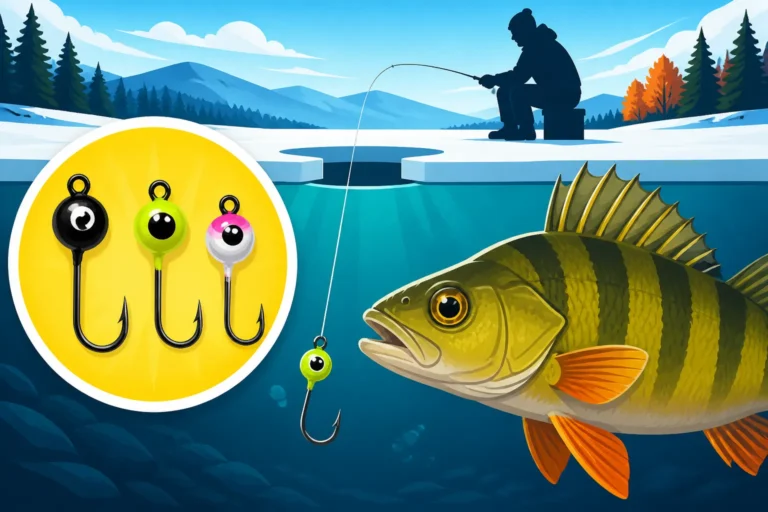
- Small Metal Jigs: These are staples for a reason. Spoon jigs like the Northland Forage Minnow, Swedish Pimple, or Acme Kastmaster are excellent. They flutter and flash on the drop, mimicking injured baitfish. Colors can range from natural silver and gold to bright chartreuse, orange, or even glow-in-the-dark. Experimentation is key; one day they want silver, the next they demand pink!
- Tungsten Jigs: Tungsten is denser than lead, meaning you get a smaller profile jig for the same weight, or a heavier jig for a tiny profile. This is crucial for finicky perch. Micro tungsten jigs, often in tear-drop or horizontal orientations, are incredibly effective. They come in a rainbow of colors and are perfect for tipping with live bait.
- Plastic Baits: Small plastic "maggots," "worms," or "grubs" can be deadly when threaded onto a jig head. Brands like VMC, Clam, and Berkley all offer fantastic options. These can be fished alone, but truly shine when tipped with a piece of live bait.
- Live Bait: No matter how many fancy jigs you have, live bait often seals the deal. Spikes (maggots) and wax worms are absolute classics. A single spike on a tiny tungsten jig is often all it takes. A small minnow head from a shiner or smelt hooked through the lips can also be irresistible, especially for larger perch. The scent trail and subtle movement are powerful attractants. Remember to check Vermont's regulations regarding baitfish use and transport. For more on maximizing your chances, explore Best bait for chain pickerel in weed beds as some of these principles can cross over.
Electronics and Augers for Efficiency
While you can ice fish without them, electronics and a good auger dramatically increase your success rate and enjoyment.
A flasher or fish finder is arguably the most important piece of modern ice fishing gear. Units like the Vexilar FL-8 or Marcum LX-7 allow you to see your jig, the depth, and any fish that approach it in real-time. This immediate feedback helps you understand how fish are reacting to your presentation and allows you to adjust your jigging cadence accordingly. You can see fish come in, ignore your bait, or commit, which is invaluable. Many anglers, myself included, have found great deals on reliable models on Amazon.
An ice auger is essential for punching holes. A good auger, whether a hand auger, a propane-powered Jiffy, or a battery-powered ION, makes quick work of thick Vermont ice. For perch, you don't necessarily need huge holes; a 6 or 8-inch auger is usually sufficient. A power auger really shines when you're trying to quickly punch multiple holes to locate schools of fish. It allows you to be mobile, which is a key strategy for perch. For more in-depth advice, check out the Best ice auger for panfish holes guide.
Mastering Jigging Techniques for Ice Perch
Once you have the right gear, it's time to learn how to present your offering in a way that perch can't resist. Jigging is an art form, and subtle variations can make a world of difference.
The Art of the Jigging Motion
There's no single "correct" jigging motion, but there are fundamental principles. The goal is to entice, not to scare.
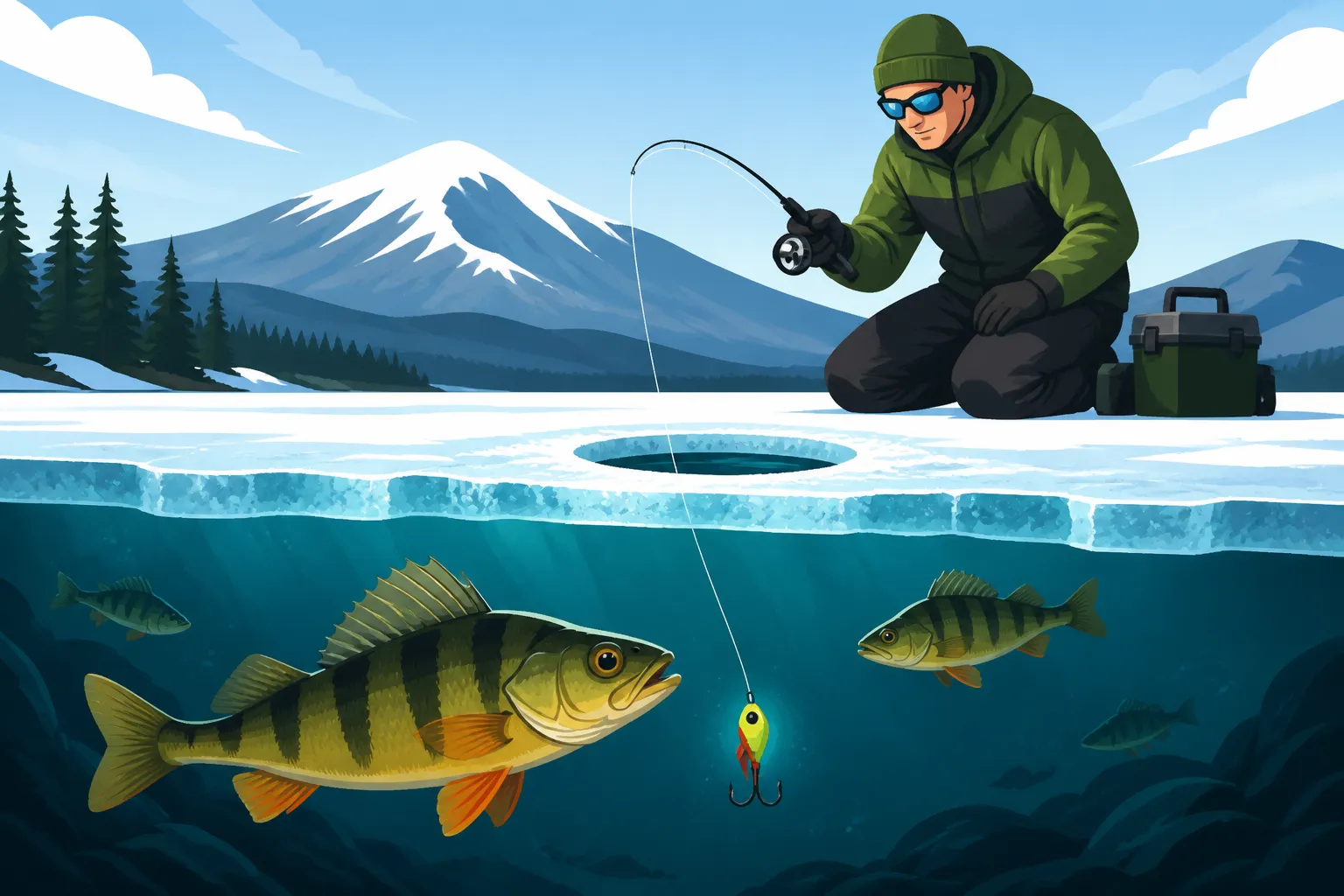
Start by dropping your jig down to the bottom. Perch often hug the bottom, but they might also suspend a few feet up, especially if they're chasing bait. Once on the bottom, reel up a half-turn or so to get your jig just off the lakebed. Now, let the dance begin:
- The Lift-Drop: This is the most common technique. Lift your rod tip 6-12 inches, then slowly lower it back down. This creates a fluttering action with spoon jigs or a subtle rise and fall with tungsten jigs. Experiment with the speed of the lift and the pause at the top and bottom.
- The Shake: With your rod tip almost stationary, use tiny, rapid wrist movements to impart a subtle quiver to your jig. This is particularly effective with small tungsten jigs tipped with bait, mimicking a struggling insect.
- The Pause: Perhaps the most critical element. After a series of lifts or shakes, pause. Hold the jig perfectly still for 5-10 seconds. Many times, perch will strike during this pause, especially when they've been following the bait and are making a decision. Pay close attention to your line during this time for any signs of a bite.
- Dead Sticking: Sometimes, the most effective technique is to do nothing at all. Set up a second rod in a nearby hole with a plain baited hook suspended just off the bottom (check local regulations on how many rods you can use). Often, the most lethargic perch will pick up a completely still bait. This can be combined with active jigging on your primary rod.
Vary your presentation. If perch aren't biting, try a faster lift, then a longer pause. Try a subtle shake, then a dead-still hold. Watch your flasher to see how fish respond to different motions. If they come in fast but won't commit, slow it down. If they're barely interested, try to get more aggressive to trigger a reaction strike.
Reading Your Electronics and Detecting Bites
Your fish finder isn't just for locating fish; it's a window into their world and how they're reacting to your lure.
On a flasher, your jig will show up as a distinct mark (often green or yellow, depending on depth and signal strength). Fish will appear as a red, orange, or green band.
- Approaching Fish: If you see a fish mark rising towards your jig, get ready! Adjust your jigging. Sometimes, lifting the jig slowly will draw them up, mimicking escaping prey. Other times, a dead stop is what they need.
- Ignoring Fish: If fish swim right past your jig, they're not interested in that particular presentation. Change your jigging cadence, try a different color, or even a different style of jig.
- Subtle Bites: Perch bites, especially in cold water, can be incredibly light. You might not feel a distinct "thump." Instead, watch your rod tip for the slightest twitch, or your line where it enters the water for any sudden slack or tightening. If you're using a flasher, sometimes a fish will "nose" your bait, and your jig's signal will briefly intensify or change color, even if you don't feel a thing. Often, the bobber will simply stop moving or slowly sink. Trust your instincts – if something feels different, set the hook!
It’s crucial to understand how to read your Best time to fish for perch in winter to make the most of those limited feeding windows.
Locating Perch Hotspots on Vermont's Frozen Lakes
Finding the fish is half the battle, and when it comes to perch under the ice, mobility is your biggest asset. Don't be afraid to drill a lot of holes!
Scouting Prime Perch Habitats
Perch are found in almost every major lake and pond in Vermont, but some locations consistently produce larger numbers and bigger fish. Knowing where to start is key.
- Lake Champlain: This massive lake is a perch factory. Focus on shallower bays like Malletts Bay or Missisquoi Bay in early and late ice, or the deeper main lake basin areas near structure during mid-winter. Look for areas with historical weed beds that might still offer some cover or food sources. Deeper channels or humps in the main lake are also excellent bets. For example, the deeper sections off Colchester Point can hold schools of jumbo perch.
- Lake Memphremagog: This large international lake also holds excellent perch populations. The shallower southern end often produces well in early and late ice.
- Lake Bomoseen & Lake Dunmore: These smaller, popular lakes are great for perch. Look for transition areas where depths change, or near known weed beds that are now dormant but still hold food. Public access points are plentiful, making these easier to explore for novice anglers.
- Harriman Reservoir: A deep, cold-water reservoir that can hold surprising numbers of perch, especially in its shallower arms.
- Smaller Ponds: Don't overlook the myriad of smaller ponds across Vermont. Many are stocked and have healthy populations of panfish, including perch. These can be easier to pattern as they don't have the vastness of the larger lakes.
Look for areas marked on navigational charts as having submerged humps, points extending into deeper water, or old creek channels. While the weeds might be dead, the structure they grew on still concentrates baitfish and, in turn, perch. Learning How to locate perch in Vermont lakes is fundamental to consistent success.
Using Structure and Baitfish to Your Advantage
Perch, like most fish, are drawn to structure and food. Your job is to find that combination.
- Submerged Structure: Think beyond just "bottom." Look for subtle contours, humps, rocks, or even old sunken timber. Perch will use these features for cover and ambush points. If you have electronic mapping, identify potential hotspots before you even step on the ice.
- Transitions: Areas where a flat transitions to a drop-off, or where a hard bottom meets a soft bottom, are always worth exploring. These "edges" are prime feeding zones.
- Baitfish Presence: If you find schools of baitfish on your fish finder, perch are likely nearby, or at least have a reason to be. Perch are voracious eaters of small shiners and smelt. Sometimes, just sitting near a school of bait and waiting for the perch to move in is the best strategy.
- Follow the Crowds (Sometimes): While solo discovery can be rewarding, don't be afraid to observe where other successful anglers are concentrating. Often, they've done the legwork to find the perch. However, be courteous and give them ample space. Always keep an eye out for potential Vermont Ice Fishing Season Dates and rules regarding proximity to other anglers.
A good strategy is to start shallow and work your way deeper, drilling a series of holes along a contour or a break line. If you hit a school, remember the depth and the type of structure, and try to replicate that pattern in other holes.
Troubleshooting Common Perch Jigging Challenges
Even with the best gear and knowledge, ice fishing for perch can present its fair share of challenges. Don't get discouraged; instead, learn to adapt!
Dealing with Finicky Perch
There are days when perch just don't want to bite, no matter what you throw at them. This is when adaptability becomes crucial.
- Go Smaller and Slower: If larger jigs aren't working, downsize dramatically. A tiny tungsten jig (1/32 or 1/64 oz) with a single spike can often get a bite when nothing else will. Slow down your jigging motion to an almost imperceptible quiver, or even try "dead sticking" a small bait just above the fish. Remember, cold fish are often lethargic fish.
- Change Colors and Shapes: Perch can be incredibly color-sensitive. If they're ignoring your typical glow-red, try chartreuse, silver, gold, or even natural presentations. Sometimes, a jig that mimics a minnow is better than one that looks like an insect, and vice-versa. Have a range of options in your tackle box. Don't forget that Best jig color for winter perch can vary by day and water clarity.
- Add Scent: If you're not already, tip your artificial jigs with live bait (spikes, wax worms, minnow heads). The natural scent can be a powerful attractor for hesitant perch. Commercially available scents can also be applied to jigs.
- Change Depth: Even if you're seeing fish on the bottom, try lifting your jig up a foot or two, or even suspending it mid-column if your fish finder shows suspended bait. Perch often feed up. Conversely, sometimes they're right on the bottom, and you need to literally bump your jig into the mud to stir up curiosity.
- Move! This is perhaps the most important tip. If you've tried everything in a hole for 15-20 minutes and seen no interest, pack up and drill new holes. Perch are schooling fish, and if they're not there or not biting, there's no sense in wasting time. Stay mobile until you find active fish.
Managing Environmental Factors
Vermont winters can be harsh, and conditions can impact both the fish and your fishing experience.
- Cold Fronts: Just like open water fishing, cold fronts can shut down the bite. Fish become lethargic and less willing to chase. This is when the smaller jigs, subtle movements, and live bait truly shine. Be patient, and don't expect fast action. Focus on prime feeding times like first light.
- Snow Cover: Heavy snow on the ice can make it difficult to move around, but it also reduces light penetration into the water, which can sometimes make fish more comfortable in shallower areas. However, it also means darker conditions, so glow jigs might become more effective.
- Wind: High winds can make jigging difficult, especially with sensitive ultralight rods, and they'll chill you to the bone. Consider using an ice shanty for comfort and to reduce line blow. Shanty models reviewed in Best ice shanty for Vermont lakes can provide valuable shelter.
- Ice Thickness: Always, always prioritize safety. Check ice thickness regularly. Never go on ice that is less than 4 inches thick for foot travel. Rivers and areas with currents can have highly variable ice thickness. Local knowledge is invaluable, and resources like How thick ice needs to be for Vermont anglers to walk on it are essential reading.
A methodical approach and willingness to experiment are your best assets when facing challenging conditions.
Safety First: Ice Fishing Considerations for Perch Anglers
Ice fishing is a fantastic way to enjoy Vermont's winter, but safety should always be your top priority. No fish is worth risking your life.
Essential Ice Safety Protocols
Before you even step on the ice, make a plan and communicate it.
- Check Ice Thickness: This cannot be stressed enough. General guidelines suggest a minimum of 4 inches of clear, solid ice for foot travel, 5-7 inches for ATVs/snowmobiles, and 8-12 inches for small cars. These are minimums; always err on the side of caution. New ice is stronger than old ice. Ice formed over moving water, near inlets/outlets, or around docks and pilings can be much thinner. Use an ice chisel or spud bar to test ahead of you as you walk.
- Fish with a Buddy: Never ice fish alone. If an accident occurs, having a partner can be a lifesaver.
- Tell Someone Your Plans: Let a friend or family member know where you're going, when you expect to return, and what vehicle you're driving.
- Dress in Layers: Vermont winters are notoriously cold. Wear layers of synthetic or wool clothing that can be adjusted. A waterproof and windproof outer shell is crucial. Always bring extra dry clothes in a sealed bag.
- Carry Safety Gear:
- Ice Picks: These are paramount. Worn around your neck, they allow you to pull yourself out if you fall through.
- Rope: A length of sturdy rope (at least 50 feet) can be thrown to someone who has fallen in.
- Whistle: For signaling for help.
- Floatation Device: A PFD or survival suit is a smart investment, especially on larger lakes or when venturing further from shore.
- First-Aid Kit: For minor injuries.
- Avoid Risky Areas: Stay away from pressure ridges, areas with open water, dark patches of ice (which indicate thinner ice), and areas known for currents.
- Respect the Elements: Weather can change rapidly in Vermont. Be aware of forecasts for dropping temperatures, heavy snow, or high winds.
Proper Equipment Maintenance and Use
Beyond personal safety gear, proper maintenance of your fishing equipment also plays a role in safety and enjoyment.
- Auger Safety: Always use the blade guard on your auger when not actively drilling. Power augers should have safety features like a kill switch. Be mindful of others around you when operating an auger.
- Heaters and Shanties: If using a portable heater in an ice shanty, ensure proper ventilation to prevent carbon monoxide buildup. Never use open flames unsupervised. For information on specific types of shelters, you can refer to Best ice shanty for Vermont lakes.
- Electronics Care: Keep your fish finder battery charged and protected from extreme cold. Many anglers turn to Amazon for reliable battery options and cases. Protect transducers from impact.
- Dispose of Waste Properly: Pack out everything you pack in, including fishing line, bait containers, and any trash. Leaving litter on the ice is not only disrespectful but also harmful to the environment.
By adhering to these safety guidelines, you can ensure that your pursuit of yellow perch through Vermont's ice is not only successful but also safe and enjoyable. The reward of a freshly caught perch, lightly fried, after a day on the ice, is truly one of Vermont's winter treasures.
| Jig Type | Ideal Conditions | Recommended Bait Tip | Target Depth (General) | Notes |
|---|---|---|---|---|
| Spoon Jigs | Aggressive bite, clearer water | Small minnow head, wax worm | 10-30 feet | Fluttering action, good flash. Great for drawing fish from a distance. |
| Tungsten Jigs | Finicky bite, deep water, subtle strikes | Spike, wax worm, tiny plastic grub | 15-40+ feet | Smaller profile for weight, excellent sensitivity. Ideal for precision. |
| Micro Jigs | Very finicky, light bites | Single spike, miniscule plastic | Any depth | Extremely small, requires ultralight gear. Best when perch are barely eating. |
| Vibrating Jigs | Active schools, slightly stained water | None needed, or small plastic | 10-25 feet | Creates vibrations to attract fish. Can trigger reaction strikes. |
Disclaimer
Please note that fishing regulations, ice conditions, and fish behavior can change. Always consult the official Vermont Fish and Wildlife Department website for the most current regulations and safety advisories before heading out on the ice. Stay safe and have fun!