How thick ice needs to be for Vermont anglers to walk on it
The crisp air and frozen landscapes of a Vermont winter are a magnet for anglers, promising the unique thrill of ice fishing. But beneath that alluring sheet of ice lies a critical question: how thick is it, and is it truly safe? The worry of breaking through is very real, and it’s a valid concern that keeps many from enjoying the season. This guide will provide clear, practical information on ice thickness and safety guidelines, helping you confidently determine when and where it's safe to pursue those winter catches in the Green Mountain State.
The Basic Rules for Safe Ice Thickness in Vermont
When it comes to ice fishing, there’s no room for guesswork. The first and most crucial step before you even consider stepping onto a frozen body of water in Vermont is to understand the minimum safe ice thickness for your intended activity. It’s a guideline that literally stands between a successful day on the hard water and a potentially life-threatening situation.
Understanding the "Rules of Thumb" for Ice
For decades, ice anglers and outdoor enthusiasts have relied on general rules of thumb for ice thickness. These aren't just arbitrary numbers; they're derived from countless observations and incidents over the years. However, it's vital to remember that these are for clear, solid, newly formed ice under consistently cold conditions. Any deviation from that ideal can drastically reduce the ice's load-bearing capacity.
Let's break down the widely accepted minimums:
- 2 inches or less: Absolutely NEVER safe for walking. At this thickness, ice is incredibly fragile and can easily crack or shatter under even minimal weight. This is the "stay off" zone, plain and simple.
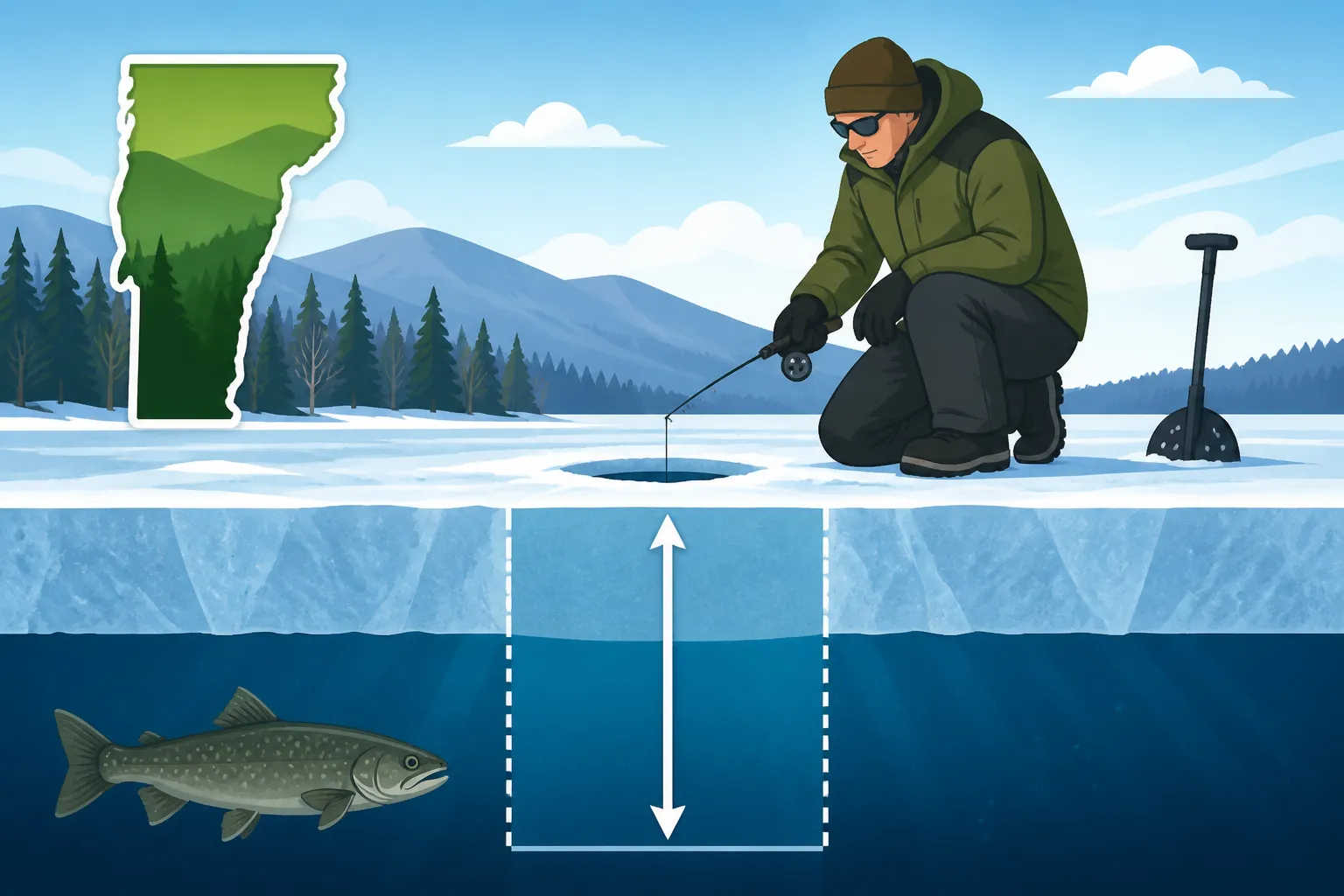
- 4 inches: This is the bare minimum for ice fishing or walking single file. Even at 4 inches, caution is paramount. You should move slowly, check the ice constantly, and keep a safe distance from others. If you’re just starting your ice fishing journey, aiming for a bit more than this, perhaps 5-6 inches, can offer a greater margin of comfort. For those looking to enjoy the experience, learning more about Ice Fishing in Vermont can provide additional context on how to get started safely.
- 5-7 inches: Generally safe for snowmobiles or ATVs. This thickness provides enough structural integrity for the added weight and speed of these vehicles, but again, always check the ice as you go and be wary of changing conditions. Remember, vehicle weight distribution is different from human weight distribution, and speed can also affect ice integrity.
- 8-12 inches: Considered safe for small cars or light trucks. This is where many anglers feel more comfortable bringing a vehicle onto the ice, especially for accessing far-flung spots or bringing a portable ice shanty. However, it's still crucial to proceed slowly, avoid congested areas, and understand that specific local conditions might warrant more caution.
- 12-15 inches: Typically suitable for medium trucks or larger vehicles. If you’re hauling a substantial Best Ice Shanty for Vermont Lakes or a lot of gear, this thickness offers a robust foundation. Even at this level, responsible driving is key, and it's best to stick to marked trails or known safe routes if they exist.
Always err on the side of caution. If you have any doubt, don't go. The fish aren't worth the risk.
Official Vermont Fish & Wildlife Recommendations
The Vermont Fish & Wildlife Department (VFWD) is your most trusted source for local ice safety guidance, and their recommendations generally align with national best practices. They emphatically state that a minimum of 4 inches of clear, solid ice is required for safe foot travel and ice fishing.
While 4 inches is the technical minimum, VFWD consistently emphasizes that these are guidelines, not guarantees. The department regularly reminds anglers that ice conditions can vary wildly, even on the same body of water, due to a multitude of factors. They often advise anglers to always check ice thickness themselves, rather than relying on reports or the presence of others on the ice. After all, your personal safety is in your own hands.
It's also worth noting that the VFWD works hard to ensure safe access to waters during the season, but they cannot monitor every patch of ice. For details on seasonal openings, always check the Vermont Ice Fishing Season Dates to ensure you're fishing legally and during prime safe periods. Respecting these official recommendations is a fundamental part of responsible and enjoyable ice fishing in Vermont.
Factors Influencing Ice Strength Beyond Raw Thickness
Thinking that a simple measurement is the be-all and end-all of ice safety is a common, and potentially fatal, mistake. While thickness is certainly a primary factor, it's far from the only one. The truth is, a solid 6 inches of clear, blue ice might be safer than 8 inches of weak, slushy white ice. Understanding these nuances is critical for truly assessing safety.
The Critical Role of Ice Type and Color
Not all ice is created equal. The strength of ice is heavily dependent on how it formed, which is often reflected in its appearance.
- Clear, Blue Ice: This is the gold standard for ice safety. Clear ice, often appearing bluish, forms when temperatures drop consistently below freezing, freezing water slowly and uniformly. This process creates a dense, strong crystalline structure with minimal air bubbles. When you hear the safety guidelines of 4 inches for walking or 8-12 inches for a car, they are almost exclusively referring to the strength of this type of ice. It's the strongest kind of ice, offering the most reliable weight-bearing capacity per inch.
- White or Opaque Ice (Snow Ice): This type of ice forms when heavy snow falls on thin ice, causing the ice to sag and water to seep up through cracks, saturating the snow. This slush then freezes, creating a milky or opaque white layer. Snow ice is significantly weaker than clear ice, sometimes only half as strong, or even less, because it incorporates a lot of air bubbles and lacks the dense, interlocking crystal structure of clear ice. It's like comparing a dense hardwood plank to a sheet of particleboard. If your auger brings up white ice, you need substantially more thickness to be safe – at least 1.5 to 2 times the recommended clear ice thickness.
- Gray or Black Ice: This is a huge red flag and indicates extreme danger. Gray or black ice means that water is seeping into the ice, or that the ice is actively thawing from beneath. It has lost its structural integrity and is often rotten. The dark color is usually a result of transparency, allowing you to see the dark water beneath, or it could be a sign of very poor quality ice. Never step on gray or black ice. It can give way instantly.
- Honeycomb Ice: Most commonly found during the spring thaw, honeycomb ice forms when warmer temperatures cause the ice crystals to separate and become vertically oriented, resembling a honeycomb. This type of ice is notoriously weak and unpredictable, even if it appears thick. It loses its lateral strength, meaning it can break apart easily under pressure or sudden shifts. While you might be able to punch through it with a spud bar, it won't support much weight. This is why late-season ice fishing requires extreme vigilance.
Environmental Conditions and Their Impact
Beyond the type of ice, external factors play a huge role in determining its reliability. A seemingly safe patch of ice can become dangerous surprisingly quickly due to environmental changes.
- Temperature Fluctuations: The weather leading up to and during your ice fishing trip is paramount. A prolonged cold snap, where temperatures remain well below freezing, helps solid ice form and thicken. Conversely, even a few days of above-freezing temperatures, especially coupled with sunny skies, can rapidly degrade ice quality, even if the air temperature drops back down overnight. These freeze-thaw cycles can create thermal cracks and weaken the bond between ice crystals, making the ice brittle and less reliable.
- Snow Cover: While a beautiful blanket of fresh snow might seem harmless, it's a significant factor in ice safety. Snow acts as an insulator, slowing down the freezing process and preventing the ice from thickening. A heavy snowfall early in the season can lead to thinner ice beneath, or worse, create slush layers that freeze into weak, opaque ice. Furthermore, snow can mask dangerous thin spots, open holes, pressure ridges, and even active currents that might be eroding the ice below. It’s a double-edged sword: beautiful, but potentially dangerous.
- Currents and Springs: Rivers, stream inlets and outlets, and underground springs are notorious for creating dangerously thin ice, even when the rest of the lake or pond seems perfectly solid. Moving water prevents ice from forming uniformly and can erode it from below. You'll often find these treacherous areas near Winooski River Fishing Spots or Lamoille River Fishing Guide access points where rivers feed into larger lakes. Always be incredibly cautious around any flowing water, including bridge abutments, narrow channels, and areas where currents are known to exist, such as certain parts of Lake Champlain.
- Wind and Waves: Persistent strong winds, especially over large, open bodies of water like Lake Champlain Fishing Guide, can prevent uniform ice formation. Before a solid freeze, wind-driven waves can churn the water, making it harder for a stable ice sheet to develop. Even on existing ice, strong winds can push ice sheets together, creating dangerous pressure ridges, or, if the ice is thin, break it up entirely.
Always consider these factors in conjunction with your ice thickness measurements. A true ice safety assessment is a holistic one.
Essential Gear and Techniques for Measuring Ice
You wouldn't drive a car without a speedometer, and you shouldn't step onto the ice without a way to measure its thickness. Relying solely on visual cues or the assumption that "if others are out there, it must be safe" is a gamble you can't afford to take. Proper gear and methodical techniques are non-negotiable for safe ice fishing.
Must-Have Tools for Ice Measurement
Before you even think about heading out onto the ice in Vermont, make sure you've got the right tools in your kit. These items are your first line of defense.
- Ice Auger or Spud Bar: These are your primary instruments for testing ice thickness.
- Spud Bar: A spud bar is a heavy, chisel-ended steel rod, often 5 to 6 feet long. It's an excellent tool for testing the ice as you go. You strike the ice ahead of you with the spud bar. If the ice is solid, it will chip or bounce back. If it goes through easily with a couple of strikes, you've found dangerously thin ice. Many traditional anglers swear by a spud bar for its ability to detect weakness without committing to drilling a full hole. You can often find durable spud bars on platforms like Amazon.
- Ice Auger: Whether you choose a manual hand auger, a propane-powered auger, or a battery-powered model, an auger creates a clean hole that allows for precise measurement. While you'll need one for fishing anyway (perhaps for Jigging for Perch Through the Ice), it's essential for initial ice checks. A good Best Ice Auger for Vermont Lakes or a Best Ice Auger for Panfish Holes will make quick work of cutting through the ice for both measurement and fishing.
- Tape Measure: Once you've drilled a hole, a simple retractable tape measure is indispensable for getting an accurate thickness reading. Insert the tape measure into the hole, hook the end on the bottom of the ice, and read the thickness at the top. This is the only way to get a reliable number.
- Safety Gear: While not directly for measuring ice, these items are critical should your measurements reveal a problem or if an unforeseen hazard arises.
- Ice Picks: These are two sharp, spiked handles connected by a cord, worn around your neck. If you fall through, you can use the picks to get a grip on the ice and pull yourself out. They are simple, inexpensive, and an absolute must-have.
- Rope and Throwable Floatation Device: A length of sturdy rope (at least 50 feet) and a throwable personal flotation device (PFD) are crucial for rescuing someone who has fallen through. Keep them readily accessible. A simple boat cushion can suffice as a throwable device in a pinch.
- Personal Flotation Device (PFD): Wearing a PFD or a float suit while ice fishing is always a smart idea, especially during early or late season. It provides buoyancy and thermal protection if you do go in. For a comprehensive list of what to pack, consult a guide on Best Ice Fishing Gear for Vermont.
Step-by-Step Guide to Safely Checking Ice Thickness
Knowing what tools you need is only half the battle; knowing how to use them effectively and safely is just as important. Follow these steps every time you venture out onto the ice:
- Start at the Shoreline: Never just stride out onto the ice. Begin testing the ice thickness right where it meets the shore. This is often the first place ice forms, but it can also be weakened by shallow water or fluctuating water levels.
- Test as You Go (The Spud Bar Method): If using a spud bar, strike the ice forcefully ahead of you two or three times. If it doesn't break through after a few solid hits, it's likely safe for that particular step. If it breaks easily, retreat.
- Drill Initial Holes: If you're relying on an auger, drill a hole every 10-15 feet as you venture out from shore. Measure the ice thickness at each hole. Continue doing this until you're confident in the ice depth over a larger area. Remember, ice can vary dramatically even over short distances.
- Check Multiple Spots: Don't rely on just one hole's measurement. Ice conditions are rarely uniform. Drill holes in different areas you plan to fish, especially if you move to a new section of the lake or if there's a visible change in ice color or texture.
- Utilize the Buddy System: Always ice fish with a partner or group. Never go out alone. When you're with others, spread out your weight to avoid putting too much stress on one section of ice. If one person goes through, the others can assist in a rescue.
- Read the Ice: Pay attention to the sound and feel of the ice. Solid ice often makes a booming or cracking sound that indicates it's expanding and strengthening. A dull, slushy sound can indicate weakness. Be aware of any unusual vibrations or settling.
- Mark Your Path: Especially in areas with variable ice, consider marking a safe path with flags or visual cues, particularly if visibility is poor or you plan to return in low light.
By diligently following these steps and always putting safety first, you significantly reduce the risks associated with ice fishing. It allows you to focus on the pleasure of the sport, like finding the Best Fishing Lakes in Vermont or using the Best Techniques for Ice Fishing Lake Trout.
Navigating Common Hazards and Staying Prepared
Even with all the knowledge about ice thickness and testing, the frozen environment presents inherent risks. Being aware of common hazards and knowing what to do in an emergency can make all the difference. Preparedness isn't just about having the right gear; it's about having the right mindset and a clear plan.
Avoiding Specific High-Risk Areas
Some areas on a frozen lake are inherently more dangerous, regardless of the general ice thickness, due to underlying conditions. These are spots you should actively avoid or approach with extreme caution.
- Inlets and Outlets: Anywhere a stream or river flows into or out of a lake, the current will be stronger, thinning the ice from below. These areas are perpetually unstable and should be considered off-limits. You'll often find these treacherous spots at the mouth of smaller rivers emptying into larger bodies of water like Lake Memphremagog Fishing Guide.
- Pressure Ridges: These are raised lines or humps in the ice, sometimes resembling miniature mountain ranges. They form when large sheets of ice expand and push against each other, creating cracks, heaves, and open water. Pressure ridges are highly unstable and can open and close with changes in temperature or barometric pressure. Never attempt to cross a pressure ridge; detour around it, giving it a wide berth.
- Open Water Patches: While obvious, open water patches can sometimes be hidden by snow or fog, especially after a fresh snowfall. Always keep an eye out for darker areas or steam rising from the ice, which could indicate open water. These spots signify extremely thin or non-existent ice.
- Areas Around Structures: Docks, bridge pilings, rocks, logs, and submerged trees absorb more solar radiation and heat, causing the ice around them to melt and become weaker. Always maintain a safe distance from any structures that penetrate the ice. This also applies to bubblers or aerators used to keep docks ice-free, which create dangerous open water.
- Shallow Water Near Shore: While shallow water might seem safer, ice can be surprisingly thin near the shoreline, especially where there's fluctuating water levels or vegetation decomposing under the ice, generating heat. Always test thoroughly near the edge before venturing further.
What to Do if Someone Falls Through the Ice
Despite all precautions, accidents can happen. Knowing how to react if you or someone else falls through the ice is crucial. Panic is the biggest enemy; a calm, methodical response can save a life.
- REACH, THROW, GO: This simple mantra provides a clear hierarchy of rescue attempts:
- REACH: If the person is close enough, and you can safely do so from solid ice, extend a branch, pole, or even your ice auger for them to grab. Lie flat on the ice to distribute your weight.
- THROW: If you can't reach, throw a rope, a spare PFD, or anything that floats and they can grab onto. Have them hold on while you slowly and carefully pull them to safety. Keep your weight distributed by lying down.
- GO: Never go onto the ice to try and physically pull someone out unless you are a trained rescuer with appropriate safety equipment. Too many double drowning incidents occur when well-meaning individuals become victims themselves.
- Self-Rescue (If You Fall Through):
- Don't Panic: This is the hardest part but the most critical. Your immediate reaction is vital.
- Turn Back: Face the direction you came from, as that is likely the strongest ice.
- Break Ice Ahead: Use your arms and elbows to break the ice edge until you reach solid ice.
- Kick Your Feet: Propel yourself forward, using your legs like a swimmer, to help get your chest onto the unbroken ice.
- Use Ice Picks: If you have them (and you should!), jab them into the ice and pull yourself forward.
- Roll Away: Once you get your torso onto the ice, don't stand up immediately. Roll away from the hole, distributing your weight, until you are on undeniably safe, solid ice.
- Get Warm: Immediately seek shelter, remove wet clothing, and get into dry, warm clothes. Hypothermia is a serious risk.
- Emergency Contact: In any ice emergency, immediately call 911 or your local emergency services. Provide clear, precise details of your location and the situation. Every second counts.
Being prepared for the worst allows you to enjoy the best of Vermont's winter fishing. Whether you're targeting perch with Best Panfish Jig Colors for Winter or aiming for bigger game in Best Fishing Lakes in Vermont, safety must always be your top priority.
Vermont Ice Thickness Guidelines
| Activity | Minimum Clear, Solid Ice Thickness | Notes |
|---|
Final Thoughts
The Vermont landscape offers some truly spectacular fishing opportunities, and ice fishing is a unique chance to experience it. However, safety must always be your top priority. Always check the ice thoroughly, never assume that a patch of ice is safe because someone else is on it, and always be prepared for the unexpected. With proper knowledge and gear, you can enjoy all that Vermont's frozen waters have to offer.
Disclaimer
The information provided in this guide is for general informational purposes only and should not be considered a substitute for personal judgment and caution. Ice conditions are highly variable and can change rapidly. Always exercise extreme care and assess local conditions before venturing onto any frozen body of water. The author and publisher are not responsible for any incidents or accidents that may occur.