Best panfish jig colors for winter
The ice fishing season in Vermont is a magical, albeit sometimes frustrating, time of year. You’ve drilled your hole, set up your shanty, and the anticipation is high, but sometimes those panfish just refuse to cooperate. One of the biggest head-scratchers for many anglers is figuring out the best panfish jig colors for winter when the fish are finicky. This guide will dive deep into understanding why certain colors perform better than others under the hardwater, helping you fill your bucket with crappie, perch, and bluegill.
The Subtle Art of Color: Why It Matters to Winter Panfish
It might seem like a simple choice, but the color of your jig plays a crucial role in coaxing those winter panfish to bite. Under a blanket of ice and often snow, the underwater world is a very different place than during the open-water months. Light penetration changes dramatically, and fish vision, while excellent, adapts to these low-light conditions.
Understanding Panfish Vision in Low Light
Panfish, like yellow perch, black crappie, and bluegill, possess excellent eyesight, adapted to detect even subtle movements and contrasts in their environment. However, when you're fishing beneath several inches of ice, and potentially a layer of snow on top, the amount of light reaching the depths is significantly reduced. This means that colors that pop in bright sunlight might appear dull or even invisible in the dim, green-blue world under the ice. Fish are looking for contrast, flashes, and profiles that mimic their natural forage. They're often relying more on their lateral line to detect vibrations, but when they do see something, color can be the final trigger. This is why sometimes a subtle, natural hue works best, and other times, a vibrant, glowing option is the ticket to getting a strike.
Mimicking Natural Forage and Triggering Instincts
Most panfish spend their winter foraging on tiny aquatic invertebrates, insect larvae, zooplankton, or even small baitfish. Your jig color can either try to perfectly imitate these natural food sources or act as an aggressive attractor. For instance, a jig colored like a drab brown insect larva might look perfectly natural in a clear Vermont lake, whereas a bright pink or chartreuse jig might be seen as an easy, irresistible meal that stands out in the muted underwater landscape. The goal is to present something that either blends in convincingly or stands out provocatively, depending on the mood of the fish and the prevailing conditions. Sometimes, it’s about appealing to their hunger, other times it's about triggering an instinctual, almost aggressive, reaction to an unfamiliar but appealing flash of color.
Top Jig Colors for Vermont's Hardwater Season
When it comes to the best panfish jig colors for winter, there isn't one magic bullet. Instead, it's about having a diverse palette and knowing when to deploy each hue. Based on countless hours on the ice, certain colors consistently rise to the top for tempting those winter panfish across Vermont's lakes, from Lake Champlain to smaller ponds like Lake Bomoseen.
The Power of Glow and Fluorescence
Few colors command attention under the ice like those that glow or are intensely fluorescent. These are your heavy hitters in low-light situations, deep water, or when the water itself is stained.
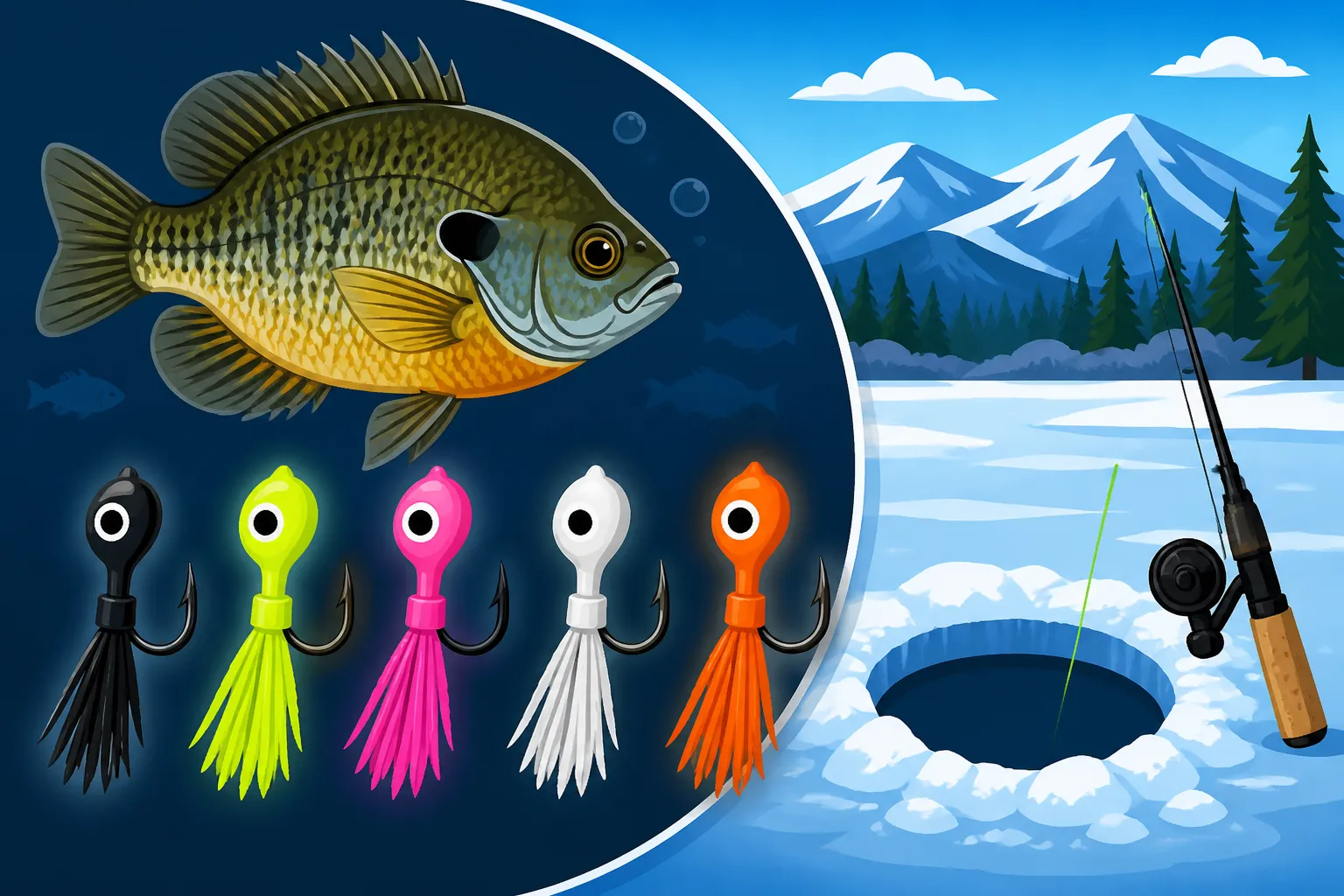
- Glow-in-the-Dark: Absolutely essential for early morning, late evening, or overcast days. A glow jig, especially in white, chartreuse, or even a soft blue, can be seen from a greater distance by panfish. It's like a beacon in the gloom. Remember to "charge" these jigs with a bright flashlight or camera flash before dropping them down. I've seen days where a freshly charged glow jig outfishes everything else in my tackle box by a huge margin. On those deep basins of Lake Willoughby or Seymour Lake, where light struggles to penetrate, a powerful glow can be the only thing that gets noticed. You can find excellent glow jigs on Amazon, often in multi-packs with various sizes.
- Chartreuse: This vibrant yellow-green is a classic for a reason. It emits a strong wavelength that penetrates water well and remains highly visible even in cloudy or stained conditions. It's a fantastic "search" color when you're trying to locate schools of perch or crappie.
- Hot Pink/Orange: These eye-popping colors can be incredibly effective, especially for aggressive crappie or perch. They offer a strong contrast and can trigger reaction strikes even when fish aren't actively feeding. I often turn to these when the bite slows, and I need to shock the fish into striking.
Subtle Hues for Finicky Bites
Sometimes, the flashy stuff is just too much, especially when the water is crystal clear or the fish are particularly lethargic. This is when you want to lean on more natural, subtle jig colors.
- White: A highly versatile color that can mimic small baitfish, aquatic insects, or even zooplankton. In clear water, a pure white jig often looks incredibly natural and can be deadly for crappie and perch. It also shows up well in low light, offering a soft contrast rather than an aggressive glow. Many anglers consider it a universal "safe" color to start with.
- Black: Believe it or not, black can be an incredibly effective color, especially in very clear water or bright conditions. It creates a stark, high-contrast silhouette against the lighter background of the ice or sky, making it easily visible to fish from below. It's great for mimicking insect larvae or leeches.
- Brown/Green/Olive: These earthy tones are perfect for imitating a wide range of aquatic insects and larvae that make up a significant portion of a panfish's diet. When fishing over dark bottoms, or in areas with abundant weed growth, these colors blend in naturally, yet still offer enough distinction to entice a bite. They're often my go-to when the fish are "spooky" or when I'm fishing shallow, clear ice where fish have more light to scrutinize my offering. For some of the more pressured waters, a subtle olive jig can sometimes fool the most cautious perch.
Bright and Bold for Aggressive Strikes
While not always the first choice, certain bright and bold colors can ignite a feeding frenzy when the conditions are right or the fish are in an aggressive mood.
- Blue/Purple: These colors can be surprisingly effective, particularly for crappie. They stand out in many water conditions and can sometimes mimic specific insect patterns or baitfish that have a bluish tint.
- Red: Often associated with injured prey or blood, red can trigger an aggressive feeding response. It's a color that fish often react to strongly, especially when jigging actively. Sometimes, a jig with a touch of red in its pattern can make all the difference, providing that subtle "pop" that gets noticed.
Dialing In Your Color Choice: Environmental Factors
Picking the best panfish jig colors for winter isn't just about having a favorite; it's about adapting to the ever-changing conditions under the ice. What works beautifully on a sunny day might be completely ignored when a thick blanket of snow covers the lake.
Water Clarity and Depth
These two factors are arguably the most critical in dictating your color choice.
- Clear Water: In many pristine Vermont lakes, especially in early ice or spring, the water can be exceptionally clear. In these situations, fish have plenty of light to inspect your lure, and natural, subtle colors like white, black, brown, or olive often outperform brighter options. If you're fishing shallow areas of a clear lake, like the edges of Lake Dunmore, too bright a color can actually spook the fish. Think about matching the hatch – what natural forage is present?
- Stained or Murky Water: When the water has a natural tint, or if there's significant sediment, visibility is reduced. Here, you need colors that offer strong contrast and can be seen from a distance. Chartreuse, hot pink, bright orange, and glow jigs truly shine. These vibrant hues create a "hot spot" that fish can home in on through the murk. If you're targeting crappie in some of the more fertile ponds, or perch in parts of Lake Champlain that might have a bit of a stain, these bold choices are your best bet.
- Depth: As you go deeper, less light penetrates the water column. Reds disappear first, followed by oranges and yellows. Blues and greens penetrate the furthest. This is why chartreuse, white, and especially glow jigs are so effective in deeper water. They either reflect the available light (white, chartreuse) or generate their own (glow), making them visible when other colors simply fade into the darkness. When you're Jigging for Perch Through the Ice in 25+ feet of water, a jig that glows can be a game-changer.
Light Conditions Under the Ice
The amount of light reaching the water beneath the ice varies dramatically.
- Sunny Days with Clear Ice: Surprisingly, bright sun on clear ice can sometimes make fish shy away from overly bright jigs, especially in shallow water. They might prefer more subdued, natural colors that don't cast a harsh reflection or shadow. However, the flash of a metallic jig in these conditions can also be a powerful attractor.
- Overcast Days or Snow-Covered Ice: This is prime time for your glow and fluorescent colors. The diffused, dim light calls for jigs that truly stand out. Chartreuse, hot pink, and strong glow whites will often get the most attention. These are the days when you'll want to charge your jigs frequently. Thick snow cover drastically reduces light, making visibility extremely low, so anything that can generate its own light or offer high contrast will be advantageous.
- Dawn and Dusk: Just like open water, these low-light periods are often feeding windows for panfish. Glow jigs, white, and chartreuse are excellent choices as fish move into shallower areas to feed. Remember that early mornings are often cold, so having the Best Ice Fishing Gear for Vermont is crucial.
Target Species and Forage Base
Different panfish species in Vermont sometimes have slightly different preferences, influenced by their typical diet.
- Yellow Perch: Perch are often aggressive feeders, and while they respond well to natural colors, they can also be drawn in by bright chartreuse, orange, or even gold. They often key in on small minnows and aquatic insects. If you're trying to figure out How to locate perch in Vermont lakes, understanding their diet is key.
- Black Crappie: Crappie are renowned for their preference for minnows and are often more sight-oriented. White, silver, black, and glow jigs are typically highly effective. They also seem to have a soft spot for pinks and blues.
- Bluegill: Bluegill primarily feed on insect larvae and zooplankton. Therefore, smaller jigs in natural colors like brown, green, and black are often excellent. However, they can also be attracted to small, subtle glow jigs or even a tiny red bead on a jig.
| Condition | Recommended Jig Colors | Why They Work |
|---|---|---|
| Clear Water (Shallow) | White, Black, Brown, Olive, Grey, Natural patterns | Mimic natural forage, less likely to spook cautious fish. |
| Clear Water (Deep) | White, Chartreuse (glow), Blue (glow), Silver, Gold | Penetrate deeper, offer contrast, subtle flash or luminescence. |
| Stained/Murky Water | Chartreuse, Hot Pink, Orange, Strong Glow (white/green) | High visibility, strong contrast, stand out in low light. |
| Overcast/Snow Cover | Glow-in-the-dark (all colors), Chartreuse, White | Emit light or strong contrast in severely limited light. |
| Bright Sun/Clear Ice | White, Black, Natural patterns, Silver, Gold | Natural presentation, creates silhouette or subtle flash without being harsh. |
| Aggressive Bite | Hot Pink, Chartreuse, Orange, Red accents | Trigger reaction strikes, highly visible to active fish. |
| Finicky/Slow Bite | Black, Brown, Olive, White, Subtle glow | Natural imitation, less intimidating profile for wary fish. |
It's More Than Just Color: Size, Action, and Presentation
While knowing the best panfish jig colors for winter is a huge part of the puzzle, it's rarely the only piece. Anglers often overlook how a jig's size, its action in the water, and your overall presentation contribute to its effectiveness. A perfect color with the wrong action can be a dud, just as a poor color with perfect action might still get some bites.
The Importance of Jig Size and Profile
Panfish, especially in winter, are often looking for an easy meal that doesn't require a lot of energy to catch. This means that size can be just as critical as color.
- Micro Jigs (1/32 to 1/100 oz): These tiny jigs are often gold for finicky crappie and bluegill. They perfectly imitate the small insect larvae and zooplankton that make up a large portion of their winter diet. When the bite is tough, dropping down to an almost impossibly small jig, even with a tiny wax worm, can be the ticket. Paired with an Best ultralight rod for panfish, these tiny offerings can be deadly.
- Small Jigs (1/16 to 1/8 oz): These are your workhorses, great for perch and larger crappie. They offer enough weight to get down quickly and be seen, but are still small enough to be considered a palatable meal. Many of the most popular ice jigs, like tiny tungsten models you can find on Amazon, fall into this size range.
- Jig Profile: Beyond just weight, the actual shape of the jig matters. Some jigs are designed to be horizontal in the water, mimicking a minnow, while others hang vertically, resembling an insect nymph. Experimenting with different profiles can unlock a bite. A "fly" profile, for instance, might be more appealing to bluegill, while a "tear drop" or "rat finkie" style might be better for perch.
Mastering the Jigging Action
Even the best-colored jig won't produce if it's not presented correctly. Fish are often lethargic in cold water, so a subtle, enticing action is usually more effective than aggressive jerks.
- Subtle Twitches: Tiny, almost imperceptible quivers of the rod tip are often all it takes. Think of a dying insect or a struggling piece of zooplankton. Panfish are often hesitant to chase aggressively, so a lure that barely moves can be more appealing. This delicate motion is crucial when you're focusing on Jigging for Perch Through the Ice.
- Lift-and-Pause: A classic ice fishing technique involves a slow lift, followed by a long pause. Most bites often occur on the pause, as the jig slowly settles. The lift gets their attention, and the pause gives them time to inspect and commit.
- Dead Sticking: Sometimes, no action is the best action. If you're fishing multiple lines (where legal), try leaving one jig completely still. The slight movement from water currents or a nearby struggling minnow can be enough to entice a bite from a truly hesitant fish.
Pairing with Live Bait: The Ultimate Synergy
While artificial jigs are effective on their own, pairing them with a small piece of live bait can create an irresistible offering. The natural scent, taste, and subtle movement of real bait can seal the deal, especially when fish are finicky.
- Wax Worms: The king of panfish baits in winter. A single wax worm on the hook of your jig, regardless of color, adds scent and protein. It's often the difference between a look and a bite. The small white grub contrasts well with almost any jig color.
- Spikes/Maggots: Similar to wax worms, these small grubs provide a tempting treat. Their subtle wiggling action can trigger strikes.
- Minnow Heads: For larger perch and crappie, a small minnow head threaded onto a jig can be incredibly effective. The scent and flash are hard to beat. Just be sure to check regulations on bait use in Vermont, as some waters have restrictions.
Combining a great jig color with the right size, subtle action, and a piece of live bait often results in a full bucket. Don't be afraid to experiment, and pay close attention to what the fish are telling you on any given day on the ice. Sometimes, the slightest tweak in color or presentation is all it takes to unlock a hot bite.
Disclaimer
This article is for general informational purposes only and does not constitute professional advice. Laws, prices and regulations vary by location and change over time. Consult a qualified professional for guidance on your specific situation.