Best hair jig technique for winter smallmouth
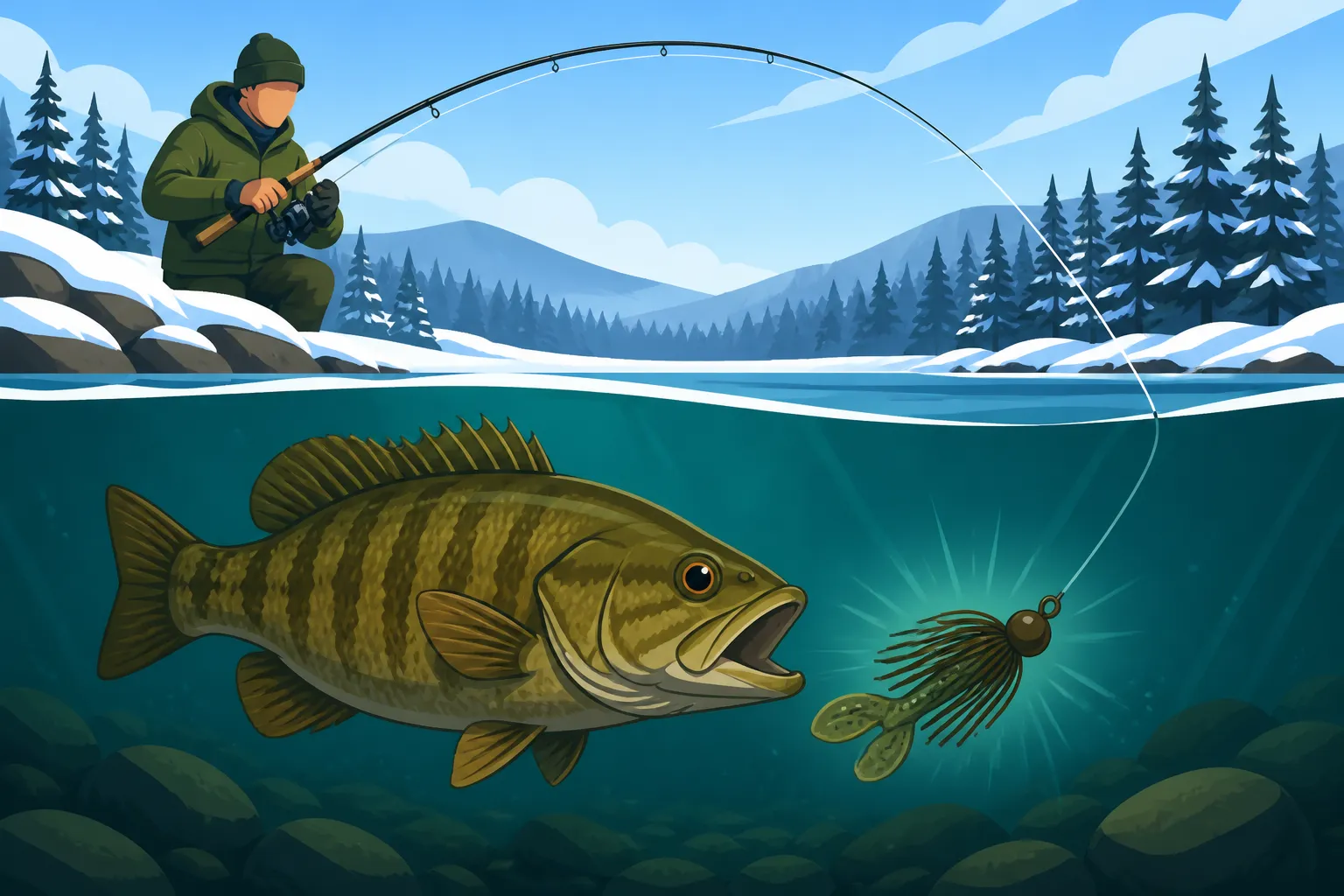
Fishing for smallmouth bass in the heart of a Vermont winter might sound like a challenging, even daunting, prospect. Many anglers hang up their rods once the cold truly sets in, thinking bass are simply unreachable or unwilling to bite. But with the right approach – specifically, mastering the hair jig technique – you can unlock incredible opportunities and experience some of the most rewarding smallmouth fishing of the year. This guide will walk you through everything you need to know to successfully target these hard-fighting fish when the water is frigid and bites are subtle.
The Winter Smallmouth Puzzle: Understanding Their Behavior
Before you can even think about tying on a hair jig, you need to get inside the head of a winter smallmouth. They're not the aggressive, chasing predators you encounter in summer. Instead, they become creatures of habit, conserving energy, and holding tight to specific structures. Understanding these fundamental shifts in behavior is the cornerstone of any successful winter smallmouth strategy in Vermont's icy waters.
Deep, Stable Haunts
When air temperatures plummet and water cools to near-freezing, smallmouth bass gravitate towards the deepest, most stable parts of a lake or large river system. They're seeking refuge from fluctuating temperatures and harsh weather, often congregating in large schools. Think about classic deep-water structures like abrupt drop-offs, underwater humps, main lake points that extend far into deep water, and channel edges. These areas provide consistent temperatures, which is critical for their survival and comfort. For example, on a vast lake like Lake Champlain, smallmouth might pull off main lake points into adjacent deep basins, often suspending slightly above the bottom or relating directly to specific rock piles or boulder fields. The key is finding that sweet spot where they can comfortably hold and ambush whatever meager food sources present themselves. These fish aren't roaming; they're hunkered down. Smallmouth Bass Habits on Lake Champlain offers more insights into their seasonal movements.
Slowed Metabolism and Subtle Bites
A cold-blooded fish like a smallmouth bass has its metabolism slow down significantly in winter. This means they digest food much more slowly and require far less energy. They aren't going to chase a fast-moving crankbait or aggressively strike a spinnerbait. Their feeding windows are shorter, and their strikes are incredibly subtle, often feeling like nothing more than a slight "tick," a spongy weight, or even just slack line. It requires extreme focus and sensitivity to detect these nearly imperceptible bites. If you wait for a rod-wrenching strike, you'll miss most of the action. This slowed metabolism also dictates your presentation: everything needs to be subtle, slow, and right in their strike zone. They won't move far to eat.
Selecting the Perfect Hair Jig for Icy Waters
The hair jig is a fantastic choice for winter smallmouth precisely because it offers a subtle, lifelike presentation without being overly aggressive. However, not just any hair jig will do. Matching the conditions and the fish's mood requires thoughtful selection of weight, profile, and color.
Weight and Profile Matters
When the water is cold, smallmouth bass are lethargic, meaning they're not going to chase anything fast. Your hair jig needs to sink slowly and present naturally. For most Vermont winter smallmouth applications, you'll want to focus on lighter weights – typically 1/8 ounce to 1/4 ounce. In extremely deep water or strong currents, you might need to bump up to 3/8 ounce, but the goal is always the slowest fall rate that still allows you to maintain bottom contact.
The profile of the jig is also critical. Marabou jigs, with their soft, undulating feathers, offer incredible action with minimal movement, mimicking small baitfish or invertebrates. Bucktail jigs, while also effective, tend to have a slightly stiffer, more compact profile. Both have their place. Consider the forage in the lake you're fishing; if there are lots of small minnows, a more slender profile might be ideal. If perch or other broader-bodied baitfish are common, a slightly fuller profile could work. Many anglers like to trim a hair jig slightly to reduce its profile further, making it less intimidating to a sluggish smallmouth. You can often find a wide variety of hair jigs, from brands like Northland or Kalin's, available on Amazon, making it easy to experiment with different weights and profiles.
Color Choices for Clear, Cold Water
Vermont's winter waters are often crystal clear, especially after the turnover. This means smallmouth can be incredibly wary and visually oriented. Subtle, natural colors are almost always the best bet.
Here's a breakdown of effective color choices:
- Natural Baitfish: Grays, whites, silvers, and light browns are excellent choices to imitate common forage like shiners, smelt, or juvenile perch. A combination of white and gray, or chartreuse and white, can be particularly effective.
- Crawfish Imitations: Browns, greens, and black/blue combinations can mimic dormant crawfish hiding on the bottom. Even in winter, a large smallmouth might be tempted by a slow-moving crawfish imitation.
- Subtle Accents: Sometimes a touch of chartreuse, orange, or light blue can trigger a strike, especially in slightly stained water or on overcast days. Don't go overboard; just a hint can make a difference.
- Black/Blue: This combination is a classic for a reason. It creates a strong silhouette in the water and can be highly visible in deeper, darker conditions.
The key is to start with natural colors and adjust based on the fish's response. If you're not getting bites, try a subtle variation before making a drastic change.
Here’s a quick guide to common hair jig colors for Vermont winter smallmouth:
| Jig Color Combination | Primary Imitation | Best Water Conditions | Notes |
|---|---|---|---|
| White/Gray | Shiner, Smelt | Clear, sunny | Excellent all-around, especially for imitating dying baitfish. |
| Brown/Green Pumpkin | Crawfish, Sculpin | Clear, overcast | Good for bottom-oriented fish, especially around rocky structure. |
| Black/Blue | Dark Baitfish, Crawfish | Deeper, stained, dark | Creates a strong silhouette, good in low light. |
| Chartreuse/White | Perch, Flashy Baitfish | Clear to slightly stained | Adds a bit more visibility, good for an active school. |
| Olive/Brown | Sculpin, Gobies | Clear, natural | Very natural, great for wary fish in highly clear water. |
Mastering the Subtlety: Hair Jig Presentation Techniques
This is where the rubber meets the road. A hair jig is only as good as the angler presenting it. Winter smallmouth demand extreme patience, precision, and a highly nuanced retrieve. Forget aggressive snaps or fast reeling; we're talking about a slow dance on the bottom.
The Slow, Deliberate Drag
One of the most effective ways to present a hair jig in winter is a slow, deliberate drag along the bottom. Cast your jig out, let it sink all the way to the bottom on a semi-slack line (watching carefully for line jumps or ticks as it falls). Once it hits bottom, engage your reel, take up any slack, and then simply drag the jig slowly across the bottom using your rod tip. Think of it as pulling the jig a foot or two, pausing, then repeating.
The pause is absolutely crucial. Many strikes happen when the jig is completely still or just starting to move after a pause. This mimics a dying baitfish or a foraging crawfish. Smallmouth will often pick it up off the bottom during this stationary period. Pay close attention to your line during the drag and especially during the pause. Any unusual movement, sudden heaviness, or slackening could indicate a bite. This technique is particularly effective when fishing expansive flats or gradual slopes in deep water where smallmouth might be spread out but holding close to the bottom.
Finesse Jigging: Minimal Movement, Maximum Impact
Sometimes, a direct drag isn't enough, or you're fishing over specific structure like rock piles or submerged timber. This is where finesse jigging comes into play. Instead of a continuous drag, this technique involves very small, subtle movements of the rod tip to impart action to the jig.
Here’s how to do it:
- Drop and Detect: Cast out and let the jig sink. Maintain just enough slack to allow a natural fall, but be ready to detect any bite on the drop.
- Lift and Fall: Once on the bottom, use tiny lifts of your rod tip – think an inch or two, just enough to make the hair jig "breathe" or hop slightly off the bottom.
- Controlled Fall: Let the jig fall back down on a semi-slack line, but keep enough tension to feel for a bite. This fall is often when strikes occur.
- Long Pauses: Incorporate pauses of 5-10 seconds, sometimes even longer, especially if you're in a known fish-holding area. Remember, the smallmouth is lethargic.
This minimal movement mimics a baitfish barely swimming or a crawfish trying to burrow. The key is to let the natural movement of the hair, especially marabou, do the work. The slightest twitch of your wrist can make the feathers undulate, creating an irresistible illusion for a cold-water smallmouth. Don't be afraid to fish one spot for an extended period, slowly working the jig around specific pieces of structure. You can read more about various techniques in How to Catch Smallmouth Bass in Vermont Lakes.
Essential Gear and Setup for Winter Hair Jigging
Successfully executing hair jigging techniques for winter smallmouth in Vermont demands specific gear that maximizes sensitivity and allows for long days in cold conditions. Don't underestimate the importance of a properly balanced setup.
Rod and Line for Sensitive Bites
For winter hair jigging, sensitivity is paramount. You need to feel those incredibly subtle bites.
- Rod: A medium-light to medium power spinning rod, typically 6'6" to 7'6" in length, with a fast or extra-fast action, is ideal. The fast tip allows you to impart subtle action and detect light bites, while the backbone helps with hooksets and fighting powerful smallmouth. Graphite rods are generally preferred for their superior sensitivity over fiberglass.
- Reel: A 2000 or 2500 series spinning reel that balances well with your chosen rod will work perfectly. Smooth drag is always important, but retrieving power isn't as critical as sensitivity for this technique.
- Line: This is perhaps the most crucial component.
- Main Line: Many anglers prefer a braided line (6-10 lb test) for its incredible sensitivity and lack of stretch. This helps transmit those faint winter bites directly to your rod tip.
- Leader: Because braid is visible in clear water, a fluorocarbon leader (6-8 lb test, 6-10 feet long) is essential. Fluorocarbon is nearly invisible underwater and offers excellent abrasion resistance against rocks and other structure. The low stretch of fluorocarbon, while more than braid, is still less than monofilament, aiding sensitivity.
- Knot: A strong, reliable knot like the FG knot or a double uni knot is critical for connecting your braid to fluorocarbon. Losing a fish or a valuable jig to a failed knot is never fun. For reliable fishing line and leaders, consider checking out the extensive selection on Amazon. Best Fishing Rods for Vermont Lakes might also give you ideas for suitable rods.
Staying Warm and Prepared
Winter fishing in Vermont isn't just about the fish; it's about enduring the elements. Being cold or uncomfortable will directly impact your focus and ability to detect those subtle bites.
- Layer Up: Dress in multiple layers. Start with a moisture-wicking base layer, add insulating layers like fleece or down, and top it with a waterproof and windproof outer shell. Your core temperature is key.
- Extremities: Your hands and feet will feel the cold first. Waterproof, insulated gloves are non-negotiable. Many anglers bring multiple pairs, switching them out if one gets wet. Hand warmers are also a lifesaver. For your feet, insulated, waterproof boots with thick wool socks are a must.
- Headwear: A warm hat that covers your ears is essential to prevent heat loss.
- Safety: Always let someone know where you're going and when you expect to return. Consider carrying safety equipment like ice picks if you're venturing onto ice, and always be aware of changing weather conditions. A thermos of hot coffee or soup can make a world of difference on a bitter day. Remember that proper planning for conditions ensures you can focus on the fishing, not shivering. Ice Fishing in Vermont provides important safety considerations for cold-weather angling.
The winter smallmouth bite can be frustrating, no doubt. But with the right hair jig, a patient and sensitive retrieve, and proper cold-weather gear, you can experience some truly memorable battles with Vermont's bronze giants, proving that the fishing season doesn't have to end when the snow flies.
Disclaimer
This article is for general informational purposes only and does not constitute professional advice. Laws, prices and regulations vary by location and change over time. Consult a qualified professional for guidance on your specific situation.