Best ice auger for panfish holes
As a seasoned ice angler in Vermont, I've seen countless folks struggle on the ice, wrestling with oversized, clunky augers just to punch a few small holes for panfish. It's frustrating, inefficient, and frankly, it saps some of the joy out of what should be a relaxing day. This guide is all about helping you find the perfect ice auger specifically designed for panfish holes, making your time on Vermont's frozen lakes and ponds much more enjoyable and productive.
Why Panfish Require a Specific Ice Auger Approach
You might think an auger is just an auger, right? Just a tool to cut through ice. But when you’re targeting panfish like perch, crappie, and bluegill, a one-size-fits-all approach actually works against you. There’s a distinct difference in strategy and equipment compared to chasing bigger species, and understanding this difference can drastically improve your ice fishing experience.
The Size of the Hole Matters for Panfish
When you're out there, hopping from hole to hole, trying to locate a school of yellow perch or crappie, every bit of effort counts. A massive 10-inch hole, while great for pulling up a trophy lake trout or a large pike, is completely overkill for a panfish. You’re expending unnecessary energy to drill a hole far larger than you'll ever need. A 4-inch or 6-inch hole is perfectly adequate for landing even the biggest panfish you'll encounter in Vermont.
Think about it: a 10-inch auger displaces significantly more ice than a 6-inch auger. That’s a lot more work for your arms, back, or battery. This wasted effort means fewer holes drilled, less ground covered, and ultimately, fewer fish located. Plus, smaller holes are generally safer, reducing the risk of a misstep, especially when you're moving around on slippery ice. For dedicated panfish anglers, efficiency in drilling directly translates to success.
Another angle to consider is the amount of slush and ice chips you have to clear. A larger hole creates a larger volume of debris, which then freezes over faster if not constantly cleared. This means more time scooping and less time fishing. Smaller holes are quicker to clear and maintain, allowing you to get your line in the water faster and stay focused on the bite.
Portability and Ease of Use are Key
Panfish fishing is often about mobility. These fish frequently move in schools, and if you're not getting bites in one spot, you need to be able to pick up and move quickly to find them. Hauling a heavy, gas-powered auger across a snowy lake is no fun, especially if you’re doing it multiple times a day. The sheer weight and bulk of some augers can be a real deterrent to staying mobile.
This is where a lightweight, easily portable auger truly shines. Imagine effortlessly walking across the ice, a compact auger slung over your shoulder or tucked into a sled. When you reach a promising spot, you can drill a hole in seconds, check for fish, and if nothing's biting, move on without feeling like you've just done a weightlifting session. This agility allows you to follow the fish, which is a cornerstone of successful panfish ice fishing.
Consider the common scenario: you're out on Lake Carmi or Lake Fairlee, and you've found a promising drop-off. You drill a few holes, but the school seems to have shifted. With a portable auger, you can easily drill a dozen more exploratory holes, covering a wider area, without breaking a sweat. This flexibility makes a huge difference in your catch rate and overall enjoyment, making the pursuit of Jigging for Perch Through the Ice much more rewarding.
Cost-Effectiveness and Maintenance for Casual Anglers
Let's be honest, not everyone needs or wants to invest in a top-of-the-line, high-horsepower auger that costs a small fortune. For many Vermont anglers, panfish ice fishing is a casual, family-friendly activity, a way to enjoy the winter outdoors without needing a huge budget for gear. A specialized panfish auger often comes with a much more approachable price tag, making it accessible to more people.
Beyond the initial purchase, consider the ongoing maintenance. Gas augers require fuel, oil mixes, spark plug changes, and winterizing – tasks that can be messy and time-consuming. Electric augers need careful battery management and charging. Simpler augers, especially hand augers, demand almost no maintenance beyond keeping the blades sharp and protected, which is far less hassle for an angler who might only hit the ice a few times a season.
This translates to more time fishing and less time worrying about gear. You can just grab your auger, your pail of Best Jigs for Ice Fishing Perch, and head out to one of Vermont's Best Ice Fishing Lakes in Vermont, knowing your equipment is ready to go. The ease of maintenance and lower cost make a panfish-specific auger a practical and smart choice for many.
Types of Ice Augers Suitable for Panfish
When it comes to cutting holes for panfish, you have a few excellent options, each with its own set of advantages and considerations. Choosing the right one really depends on your personal preference, how often you fish, and your budget.
Hand Augers: The Classic Choice for Simplicity
Ah, the hand auger! This is often where many of us started our ice fishing journey, and for good reason. Hand augers are the epitome of simplicity and reliability. They require no fuel, no batteries, and no complex parts to break down in the cold. You simply twist, apply pressure, and let your own power do the work. For drilling those smaller 4-inch to 6-inch holes perfect for panfish, a sharp hand auger can cut through a surprising amount of ice with relative ease.
The biggest advantages are their light weight, quiet operation, and affordability. You can easily carry one over your shoulder, and when you’re drilling, you won't scare away any nearby fish with a loud engine. They're also typically the least expensive option, making them a great entry point for new ice anglers or those who only go out a few times a year. Maintenance is minimal: just keep the blades sharp and cover them with a protector when not in use. You can often find a good, reliable hand auger at local sporting goods stores or even through retailers like Bass Pro Shops.
However, hand augers do require physical effort, which can be challenging on really thick ice (say, over 12-15 inches) or if you plan to drill a dozen holes in quick succession. For dedicated panfish anglers who move frequently or face consistent deep ice, the manual labor can add up. But for chasing Yellow Perch in Vermont Lakes on moderate ice, or for those who appreciate the physical aspect of fishing, a hand auger remains a fantastic, dependable choice.
Cordless Drill Augers: A Modern, Efficient Option
In recent years, the combination of a high-power cordless drill and a specialized auger attachment has revolutionized panfish ice fishing. This setup offers an incredible balance of portability, speed, and cost-effectiveness, especially if you already own a robust cordless drill. The drill powers the auger bit, making quick work of ice without the fumes or noise of a gas engine.
The pros here are significant: you get fast, effortless drilling with a tool that's still relatively lightweight and compact. Many modern drills are powerful enough to punch through thick ice with ease, and the smaller panfish-sized bits (again, 4 to 6 inches) make it even more efficient. It's a fantastic solution for anglers who like to stay mobile and drill many holes. Just be sure your drill has enough torque and a decent battery life; 18V or 20V models with a brushless motor are ideal. You'll also need a high-capacity lithium-ion battery (or several) to last a full day on the ice.
The main "cons" involve battery life in extreme cold and the initial investment in a suitable drill if you don't already have one. You’ll want to keep spare batteries warm in your jacket pocket to maximize their performance. While generally quieter than gas, they're not completely silent like a hand auger. You can find excellent drill auger adaptors and blades on platforms like Amazon, offering a wide range of choices to fit your existing power tools and budget.
Electric Augers: Quiet Power for Dedicated Anglers
For the serious ice angler who values convenience, power, and quiet operation above all else, a dedicated electric auger is the top-tier choice for panfish. These are purpose-built units that integrate the motor and auger into a single, sleek package, running purely on rechargeable batteries. They offer push-button starting, consistent power, and are incredibly smooth and quiet.
The benefits of an electric auger are clear: no gas fumes, minimal noise, and effortless drilling, even through thick ice. They're often lighter than gas augers and eliminate the need to carry separate fuel cans. For chasing Panfish Fishing in Vermont and drilling dozens of holes throughout the day without fatigue, an electric auger is hard to beat. They typically come with robust battery systems designed for cold weather performance, though spare batteries are still a wise investment.
The primary drawback is the higher upfront cost compared to hand augers or even drill auger setups. You’re buying a dedicated piece of equipment. Additionally, while the batteries are designed for cold, you still need to manage them carefully, ensuring they're charged and kept reasonably warm to perform optimally. However, for those who spend a lot of time on the ice, the convenience and performance often outweigh the investment. Many reputable brands offer excellent electric augers, which you can research and purchase from online retailers like Bass Pro Shops or Amazon.
Key Features to Look for in a Panfish Auger
Once you've decided on the type of auger that best suits your style, it's time to dive into the specifics. Not all augers are created equal, even within the same category, and a few key features can make a huge difference in performance and your overall satisfaction.
Blade Diameter: Finding the Sweet Spot
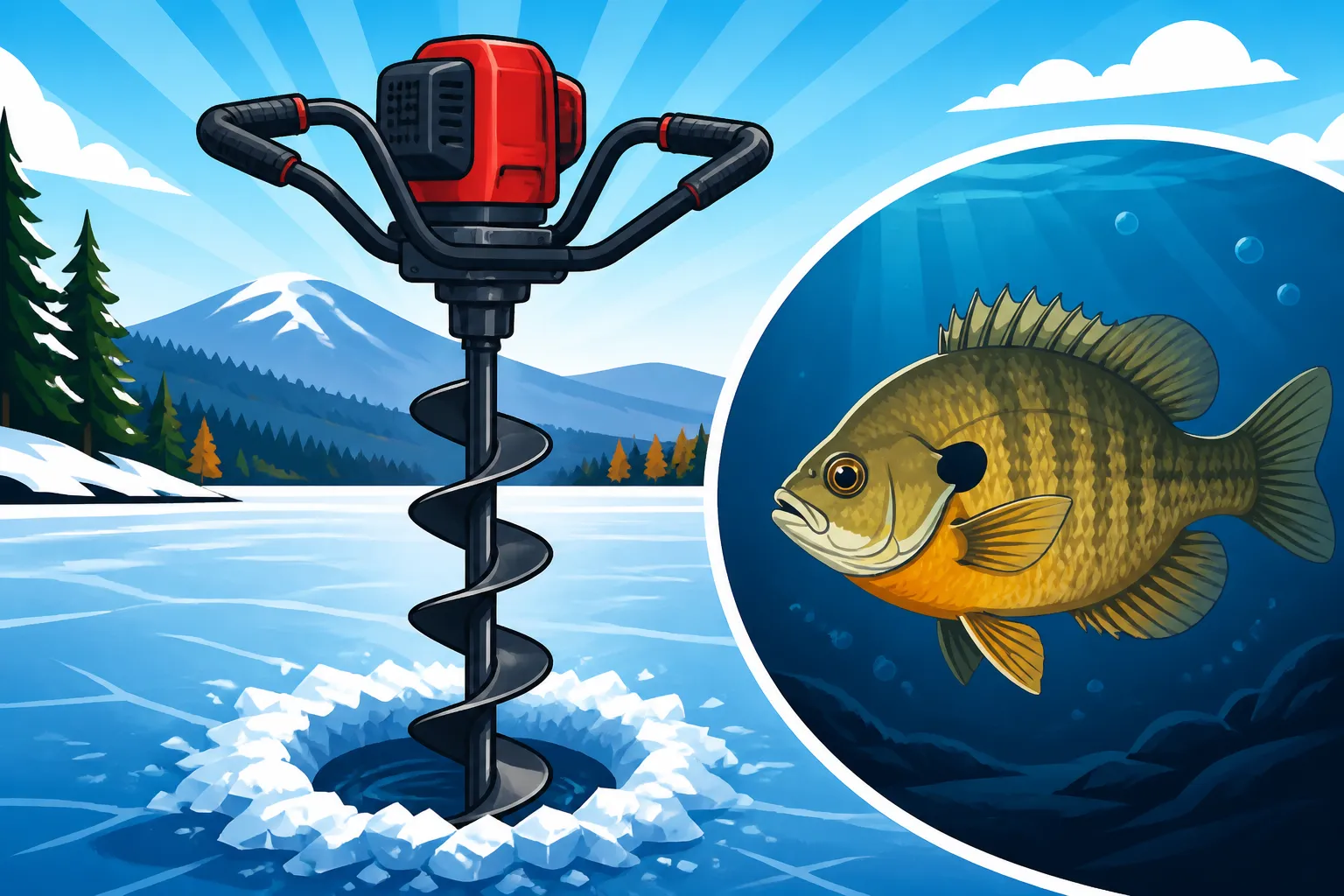
We touched on this earlier, but it truly is the most critical factor for a panfish auger. For panfish like yellow perch, crappie, bluegill, and sunfish, a 4-inch to 6-inch blade diameter is the absolute sweet spot. Why this range? Because it's small enough to cut through ice with minimal effort, yet large enough to easily land any panfish without snagging your fish or tearing your line on the ice edge.
Going larger, say to an 8-inch or 10-inch auger, is simply inefficient for panfish. You're removing far more ice than necessary, which means more physical exertion (for hand augers), faster battery drain (for electric or drill augers), and a bigger pile of slush to contend with. Conversely, going much smaller than 4 inches can be tricky. While a tiny hole is easy to drill, it limits your ability to move your lure effectively and can make landing even a decent-sized perch a tight squeeze. Sticking to the 4-6 inch range for your panfish holes ensures optimal efficiency and angling comfort.
The power required to cut through ice increases exponentially with blade diameter. A 6-inch auger cuts a hole roughly 2.25 times larger in area than a 4-inch auger, and an 8-inch auger cuts a hole 4 times larger. This is a significant difference in the work your auger has to do. For panfish, you want to cut just enough ice to safely get your catch out, and that's precisely what a 4- to 6-inch auger accomplishes, allowing for quick, clean holes that get you fishing faster.
Weight and Portability: Mobility on the Ice
Remember, panfish anglers are often on the move. You’re not typically sitting in one spot all day; you're drilling, checking, and moving to find active fish. This means the weight and overall portability of your auger are paramount. A heavy, cumbersome auger will quickly turn a fun day into a chore, discouraging you from exploring new spots or reacting to a school of moving fish.
Look for augers constructed with lightweight materials like aluminum or advanced composites. Many modern hand and electric augers are designed with weight savings in mind, featuring hollow shafts or minimalist frames. Collapsible shafts are another fantastic feature, allowing you to break down the auger into a smaller, more manageable package for transport in your sled or on your back. This is particularly useful when accessing remote ponds or if you're hiking a bit to your chosen spot.
Even with electric augers, there's a significant weight difference between models. Always check the specs. A few pounds might not sound like much, but after a day of drilling a dozen holes, lifting and moving the auger repeatedly, those extra pounds add up. Prioritizing a lightweight and easily portable design ensures you stay nimble and energetic, ready to chase those Best Techniques for Panfish in Vermont wherever the fish lead you.
Blade Design and Sharpness: Efficiency is Everything
The best auger motor or the lightest frame won't matter if your blades are dull. Sharp blades are the secret to effortless drilling, regardless of whether it's a hand, drill, or electric auger. Dull blades will bind, chatter, and make drilling feel like an impossible task, turning a quick hole into a frustrating wrestling match with the ice. This is especially true when targeting panfish, where you often want to drill many holes quickly.
When evaluating augers, pay attention to the blade design. Most modern augers feature either curved (chipper style) or straight (shaving style) blades. Chipper blades are often more forgiving if they hit dirt or rocks, but can be slower. Shaving blades are incredibly efficient and fast when sharp, but can dull more quickly if not properly protected. Many blades are also replaceable, which is a huge bonus. Instead of buying a whole new auger or struggling with a sharpening stone, you can simply swap out dull blades for new, razor-sharp ones.
Always invest in a blade protector. This simple piece of plastic or rubber snaps over your blades when not in use, preventing them from dulling against pavement, rocks, or other gear during transport. Keeping an extra set of sharp blades in your Best Ice Fishing Gear for Vermont is also a smart move, ensuring a sudden dulling incident doesn't cut your fishing day short. A sharp auger, regardless of its power source, is key to an enjoyable and efficient experience on the hard water.
Making Your Decision and Getting Ready for the Ice
Choosing the perfect auger for panfish holes isn't just about the tool itself; it's also about understanding the environment you'll be using it in and preparing properly. Vermont's ice conditions can vary wildly, and a little planning goes a long way.
Matching Your Auger to Vermont's Ice Conditions
Vermont offers a fantastic array of ice fishing opportunities, from shallow ponds to expansive lakes. The ice thickness can range from just a few inches in the early season to several feet during the heart of winter. Your choice of auger should ideally align with the typical conditions you expect to encounter.
For early season ice, or smaller ponds that don't get excessively thick, a hand auger or a compact drill auger is often more than sufficient. They're quick, light, and perfectly capable of punching through 6-10 inches of ice. However, if you're planning on hitting larger, deeper lakes like Lake Champlain or Willoughby during mid-winter, where the ice can easily exceed 18-24 inches, you might appreciate the extra power of a cordless drill auger with good battery life or a dedicated electric auger. While a hand auger can still do the job, it will require significantly more effort.
Always check ice conditions before heading out, and remember that How thick ice needs to be for Vermont anglers to walk on it safely is paramount. No matter which auger you choose, make sure it has the capacity to drill through the expected ice thickness without putting yourself at risk or exhausting yourself. Having the right tool for the job makes the experience safer and more enjoyable.
Essential Accessories and Maintenance Tips
Once you've settled on your ideal panfish auger, there are a few accessories and maintenance habits that will ensure its longevity and peak performance. These small investments can save you a lot of frustration down the road.
Firstly, a blade protector is non-negotiable. It protects those razor-sharp blades from damage when you’re not actively drilling, and it protects you from accidental cuts. Dulling your blades by dragging them across asphalt or hitting a rock is a quick way to ruin your day. Secondly, consider spare blades. Even with the best care, blades can eventually dull or get chipped. Having a fresh set ready means you can quickly swap them out and get back to fishing.
For cordless drill augers, a high-quality, high-capacity battery (or two) is crucial. Keep them charged and, crucially, keep your spare batteries warm, ideally in an insulated pocket of your jacket. Cold saps battery life quickly. Similarly, for dedicated electric augers, understand your battery's range and cold-weather performance. A reliable battery charger is also a must-have, allowing you to recharge quickly between trips. You can find all these essential accessories from trusted outdoor retailers and online marketplaces like Bass Pro Shops and Amazon.
| Auger Type | Best For | Pros | Cons | Typical Hole Size |
|---|---|---|---|---|
| Hand Auger | Early/moderate ice, casual trips, quiet spots | Lightweight, affordable, silent, no fuel/batteries, minimal maintenance | Requires physical effort, slower on thick ice, can be tiring | 4-6 inches |
| Cordless Drill | Mobile anglers, moderate to thick ice | Fast, less effort, compact (if drill owned), no fumes | Battery life in cold, requires powerful drill, some noise | 4-6 inches |
| Electric Auger | Dedicated anglers, thick ice, maximum convenience | Very fast, quiet, powerful, no fumes, push-button start | Higher initial cost, battery management in cold, can be heavier | 4-8 inches |
Regular cleaning and storage are also key. After each trip, wipe down your auger blades to prevent rust, especially if you've been fishing in brackish water. Store your auger in a dry place, preferably with the blade protector on. Following these simple tips will ensure your panfish auger is always ready for your next adventure on Vermont's frozen waters.
Disclaimer
This article is for general informational purposes only and does not constitute professional advice. Laws, prices and regulations vary by location and change over time. Consult a qualified professional for guidance on your specific situation.