Best anchor for fishing moving river current
There's nothing quite like the rush of casting into a prime eddy on a Vermont river, watching your line drift perfectly, only to feel your boat slowly succumb to the current and pull away from that sweet spot. It's a universal frustration for river anglers – the endless dance of trying to stay put, battling the relentless flow. This guide is all about cutting through that struggle, helping you find the absolute best anchor solutions designed to keep you firmly in place so you can focus on the fish, not fighting the river.
Understanding the Challenges of River Anchoring
Fishing in moving water, like many of Vermont's beautiful rivers and streams, presents a unique set of challenges compared to still lakes or ponds. The current, the ever-changing bottom, and the snags lurking beneath the surface can turn a peaceful fishing trip into a constant battle with your gear. It's not just about dropping a weight; it's about understanding how that weight interacts with the environment.
The Dynamics of Moving Water
Even a river that looks calm on the surface can have surprising power just below. That gentle drift you feel in your kayak or jon boat is the river constantly working to move you downstream. This current isn't uniform; it can accelerate around bends, deepen over drop-offs, and create eddies behind obstacles. When you drop an anchor, it's not simply settling on the bottom; it's being pulled by that water, trying to drag it along. The riverbed itself plays a huge role. Are you fishing over smooth, flat rock that an anchor will just slide across? Or is it a mix of gravel, sand, and submerged logs that an anchor can actually dig into or hook onto? The deeper the water, the more anchor line you'll need to deploy to achieve a good "scope," which is the ratio of rope to depth, critical for an anchor to dig in effectively rather than just pulling horizontally. Understanding these dynamics is the first step to choosing the right gear.
Common Frustrations Anglers Face
Oh, the stories I could tell (and have heard) about anchors! The classic scenario: you've finally found the perfect seam, the one where you just know a big brown trout is lurking. You drop your anchor, feel it catch for a moment, and then… thump, thump, thump as it skips along the bottom, pulling you slowly but surely out of position. Or perhaps you hook up on a submerged root or rock, and your expensive anchor is now a permanent fixture of the riverbed. Many of us have been there, pulling and straining, trying to free a snagged anchor, often ending in a lost anchor or a broken rope. And let's not forget the sheer physical effort, especially if you're in a smaller craft. Hauling a heavy, mud-caked anchor back into a kayak or canoe multiple times a day is a workout, not a relaxing fishing trip. These frustrations are real, and they highlight why a well-thought-out anchoring strategy is so important for river fishing.
Types of Anchors Best Suited for River Current
When you're trying to defy the river's flow, not all anchors are created equal. You need something designed to grip, dig, or simply hold its ground against the current. Let's look at the best contenders for Vermont's moving waters.
Grapple Anchors and Claw Anchors
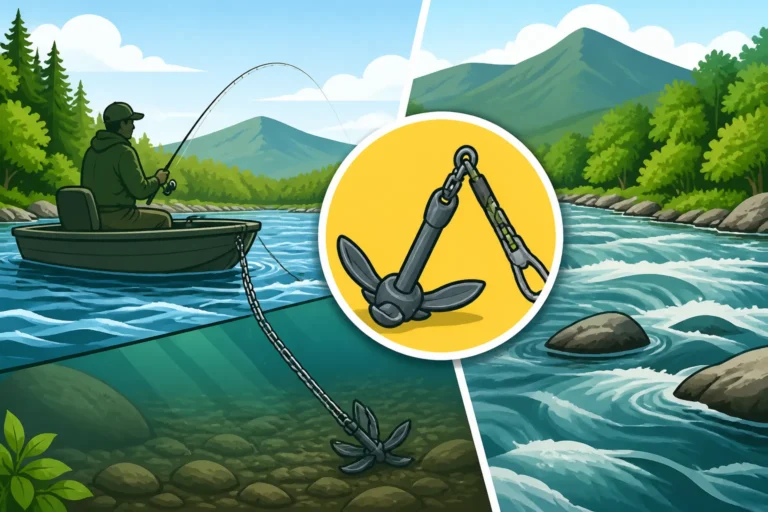
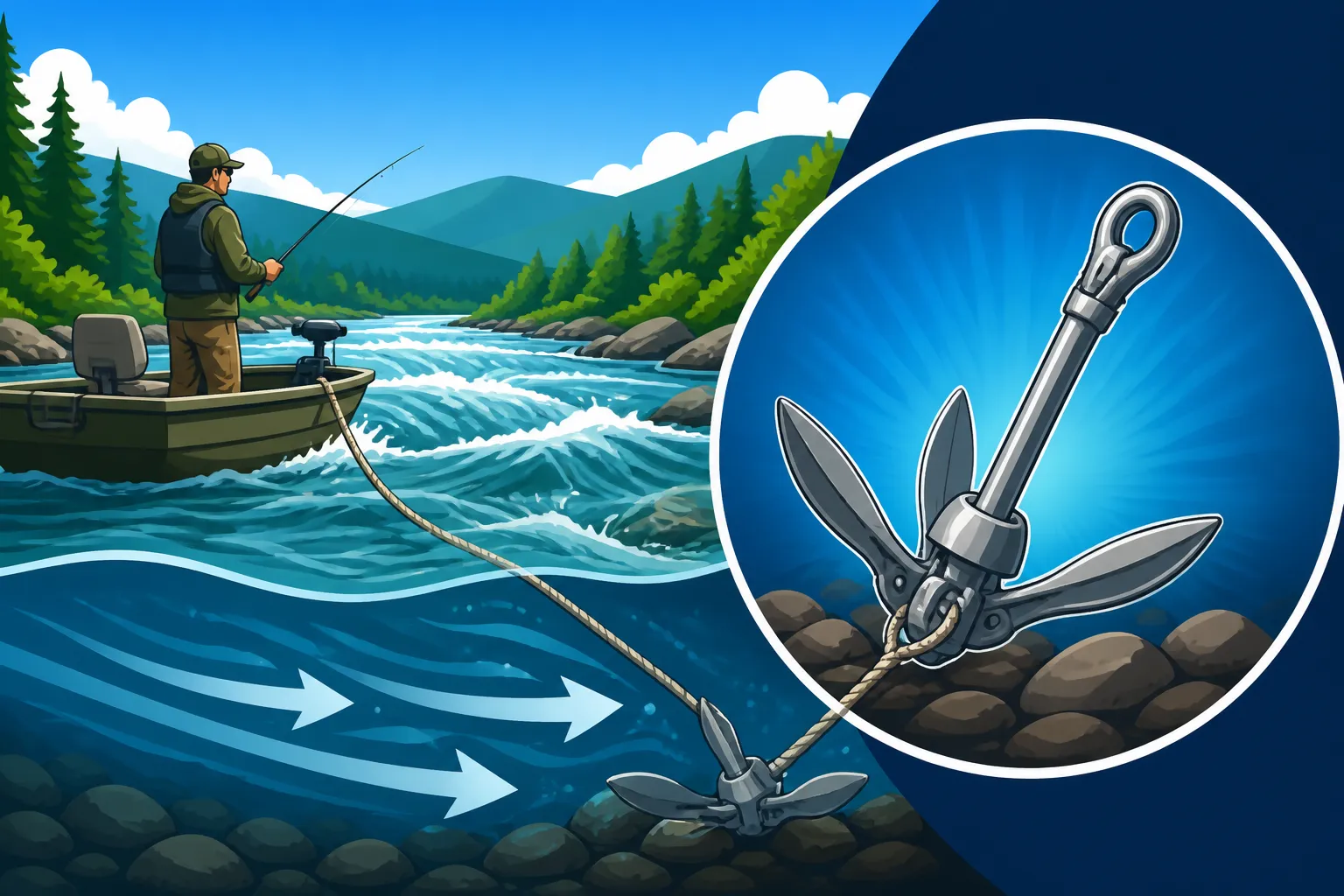
Grapple anchors, sometimes called folding grapnels, are a go-to for many small boat and kayak anglers. Imagine a set of four or more sharp-ended tines that fold out like an umbrella. When deployed, these tines are designed to hook onto rocks, submerged logs, or other bottom structure. They're fantastic in rivers with rocky or debris-laden beds, offering surprising holding power for their relatively light weight. Plus, their folding design means they're incredibly compact for storage, which is a huge bonus in a cramped kayak. However, that very hooking ability can be their downfall; they are notorious for getting permanently snagged. Many anglers rig them with a "breakaway" system, attaching the anchor line to the crown (top) of the anchor and using a zip tie or light line to hold it to the shank (bottom). If it snags, a hard pull breaks the zip tie, allowing you to pull it out backward.
Then there are claw anchors, often seen in the form of a Bruce-style or "plow" anchor. While more commonly associated with larger boats and softer bottoms in lakes, smaller versions can be effective in rivers with mixed gravel or sandy sections. Their design is meant to dig into the substrate, providing excellent holding power once set. They tend to re-set themselves if they get pulled loose, which is a nice feature. However, they don't grip onto hard rock as well as a grapple, and they can be quite heavy for their holding power compared to a grapple in the right conditions. For consistent holding in variable river conditions, you need to consider the specific bottom you'll encounter.
River Anchors (Box/Pyramid Anchors)
If you're serious about holding still in a strong current, especially from a larger jon boat, drift boat, or even a robust fishing kayak, dedicated river anchors are your friend. These typically come in pyramid or box shapes, often with stabilizing fins or flukes. Their design isn't just about weight; it's about creating a profile that digs in or creates significant resistance against the current without rolling or tumbling. A well-designed river anchor will dig into soft or gravelly bottoms, and its sheer weight combined with its shape prevents it from being easily dislodged on harder bottoms.
The primary advantage of these specialized river anchors is their superior holding power in currents. They're designed to be stable and resist dragging. For example, a 10-pound pyramid anchor might hold a small jon boat more effectively in a moderate current than a 15-pound mushroom anchor, simply because of its shape and how it interacts with the bottom. However, this holding power often comes with significant weight. While great for stability, this can be a real workout for deployment and retrieval, especially if you're frequently repositioning. You can find robust options for river anchors at places like Bass Pro Shops, designed to stand up to the rigorous demands of river environments. If you're using a large drift boat on, say, the White River, a heavy-duty box anchor might be exactly what you need.
Drag Chains and Weighted Bags
For the ultimate in finesse anchoring or for smaller, lighter craft like kayaks and canoes, drag chains or weighted bags offer a different approach. A drag chain isn't really an anchor in the traditional sense; it's more of a drift retardant. Picture a heavy chain (think a length of anchor chain you might use for scope, but sometimes longer) that you simply drop overboard. It drags along the bottom, creating friction that slows your drift to a crawl. This is fantastic for covering long stretches of river slowly, allowing you to methodically fish productive water without stopping completely or constantly resetting an anchor. They rarely get permanently snagged because they don't have flukes or tines, and if they do, a strong pull usually frees them. They're also incredibly stealthy, creating minimal disturbance.
Weighted bags, often made from durable canvas and filled with sand, gravel, or even lead shot, are another low-profile option. These are especially popular with kayak anglers who prioritize avoiding snags and minimizing equipment bulk. You can easily dump the contents if you need to lighten your load for portaging or storage. Their holding power is based purely on weight and friction, so they are best suited for slower currents or situations where a complete stop isn't necessary, but rather a significant slowdown. They offer flexibility and a low environmental impact. You might even find some creative DIY solutions on platforms like Amazon that involve fillable bags for personalized weight. When fishing smaller, gentler waters like sections of the Lamoille River, these lighter options can be incredibly effective.
Key Features to Consider for River Anchors
Choosing the right anchor involves more than just picking a type. You need to think about how it will perform with your specific boat in Vermont's diverse river conditions.
Weight and Holding Power vs. Craft Size
It's a common misconception that more weight automatically means better holding power. While weight certainly plays a role, especially for pyramid or box anchors, the design of the anchor and its ability to engage with the riverbed is often more critical. A well-designed 8-pound grapple anchor can hold a kayak better in a rocky stream than a smooth, round 15-pound barbell weight. The key is to match the anchor's weight and type to your craft's size and the typical current you'll encounter. For a 12-foot fishing kayak on a moderately flowing river like parts of the Winooski River, an 8-10 pound grapple or folding river anchor might be sufficient. For a 16-foot jon boat on a faster stretch of the Connecticut River, you might need a 20-30 pound pyramid anchor.
Over-anchoring means you're just hauling around unnecessary weight, making deployment and retrieval a chore. Under-anchoring means you'll be constantly dragging and losing your spot, which is far more frustrating. It's a delicate balance, and often, starting with a slightly heavier option than you think you need, especially for your first river anchor, is a safe bet. Remember, an anchor is only as good as its ability to grip the bottom.
Retrieval Mechanism (Breakaway/Folding)
One of the most agonizing moments for a river angler is realizing your anchor is irrevocably stuck. This is where retrieval mechanisms truly shine. A breakaway anchor system is paramount for snag-prone rivers. As mentioned earlier, this involves rigging the anchor line to the top (crown) of the anchor, with a light link (like a zip tie or thin piece of monofilament) holding the line down to the shank (where it would normally attach). If the anchor gets stuck, a strong pull breaks the light link, allowing you to pull the anchor out backward, freeing it from the snag. This simple trick can save you countless anchors and a lot of frustration, especially when fishing rocky stretches of Vermont's trout streams.
Folding anchors, primarily grapnels, are designed for compact storage. Their tines fold in, making them small enough to stash in a kayak hatch or small tackle box. This is incredibly practical for anglers in canoes, kayaks, or even smaller john boats where space is at a premium. The ease of deployment and retrieval (assuming no snags!) makes them a favorite for quick stops and repositioning. When you're constantly moving to target specific pools or runs, the convenience of a folding anchor is invaluable.
Anchor Line and Setup Considerations
The anchor itself is only part of the equation; your anchor line (rope) and how you rig it are just as vital. For effective anchoring in current, you need sufficient scope. This means deploying a length of rope that is typically 5-7 times the depth of the water. So, if you're in 10 feet of water, you'll need 50-70 feet of rope out. This low angle allows the anchor to dig into the bottom rather than being pulled horizontally over it. In strong currents, you might even need more scope. A good quality nylon anchor rope with some stretch is ideal, as it helps absorb shock from boat movement and current surges.
Adding a short length of chain (typically 3-6 feet) between your anchor and your rope is a game-changer. The weight of the chain helps the anchor lay flat and dig into the bottom, improving its setting power. It also provides abrasion resistance, protecting your rope from sharp rocks and rough riverbeds. For a stronger hold and better protection, this chain addition is a non-negotiable for river fishing. You can purchase specific anchor chains from marine suppliers or even find suitable options at hardware stores. Think about a durable, marine-grade rope that can withstand the elements and the constant friction of river work. You can find comprehensive anchor line kits or bulk rope at Bass Pro Shops or browse various options on Amazon.
Practical Tips for Anchoring in Vermont Rivers
Knowing your gear is one thing, but using it effectively and safely in a river environment is another. These practical tips will help you maximize your success and minimize your headaches.
Proper Deployment and Retrieval Techniques
Anchoring in a river isn't like dropping anchor in a calm lake. It requires a bit more finesse. Always deploy your anchor from the bow (front) of your boat, or at least from an anchor trolley that positions the anchor point at the bow for kayaks. Dropping an anchor from the stern (back) in current can be incredibly dangerous, as the current can catch the stern, push it sideways, and potentially swamp your boat. Slowly let out your anchor line as your boat drifts downstream, allowing the anchor to gently settle and drag slightly along the bottom until it catches. Don't just drop it in a heap! Once you feel it catch, let out a bit more line to achieve proper scope, then cleat it off.
Before you fully commit to your spot, give the anchor a gentle "test" pull by trying to move your boat upstream with the motor or paddle. If it holds firm, you're good. If it drags, you need to retrieve it and try again, perhaps further upstream or in a different spot. For retrieval, motor or paddle towards your anchor, reeling in the slack line as you go. Once you're directly above it, pull straight up to free it. This vertical pull is much more effective than trying to drag it free from a distance. If it's still stuck, try motoring in a circle around the anchor while pulling, which can often dislodge it.
Safety Considerations in Current
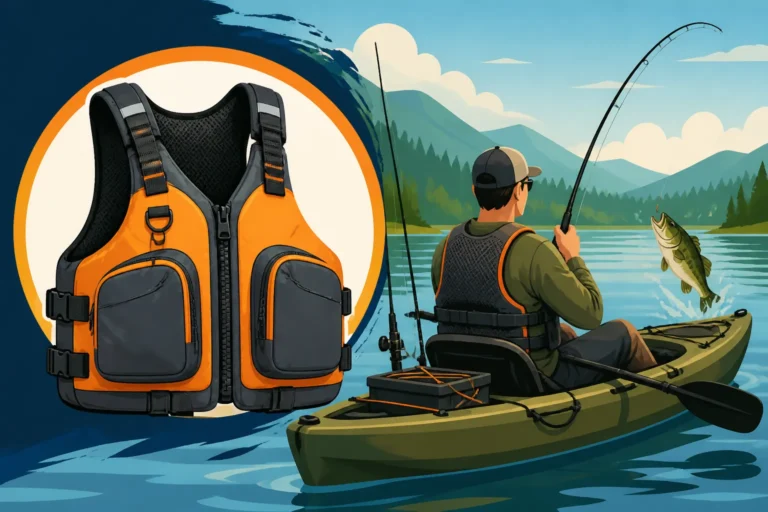
River currents, even seemingly mild ones, demand respect. Beyond the danger of anchoring from the stern, always be mindful of your surroundings. Are there rapids downstream? Fallen trees? Other boaters? You need to be able to react quickly if your anchor snags unexpectedly or if the current pushes you into danger. This is why a quick-release anchor system is critical. Have a sharp knife readily accessible to cut your anchor line in an emergency, or use a cleat setup that allows for instant release. Remember, your safety (and the safety of your passengers) is always paramount. Always wear your life jacket, especially when moving water is involved. For more information on crucial safety gear, check out Life Jacket Requirements for Vermont Boaters. Understanding Vermont Boating Laws for Anglers is also vital for a safe trip.
Combining Anchors and Other Gear for Stability
Sometimes one anchor just isn't enough, especially in stronger currents or when wind is also a factor. For maximum stability and to completely prevent your boat from swinging, consider using two anchors. Deploy one from the bow and one from the stern. This creates a "four-point" anchor system (if you count the bow and stern of the boat as the other two points), effectively pinning your boat in place. This is particularly useful if you're trying to fish a very specific lane or structure and need to be absolutely motionless.
For kayak anglers, an anchor trolley system is almost a necessity for river fishing. This ingenious setup uses a loop of rope and pulleys that runs the length of your kayak, allowing you to attach your anchor line at any point along the hull. This means you can drop your anchor from the bow, but then slide the attachment point to the side or stern of your kayak to change your fishing angle without actually moving the anchor. It gives you incredible versatility and control, letting you precisely position your craft relative to the current and target fish. This freedom of movement can open up many more Best Kayak Fishing Spots in Vermont for you.
Comparing River Anchor Types
To help you visualize the differences and make the best choice, here's a quick comparison of the anchor types we've discussed:
| Anchor Type | Best for Bottom Type | Current Rating (1-5, 5=Strongest) | Pros | Cons | Ideal Craft Size |
|---|---|---|---|---|---|
| Grapple/Folding | Rocky, debris, mixed | 3 | Compact, hooks structure well, lightweight | Prone to snagging (needs breakaway), less effective on soft bottom | Kayak, Canoe, Small Jon |
| Claw/Bruce | Sand, gravel, mud | 3-4 | Dugs in well, good re-setting, consistent hold | Heavy for size, less effective on hard rock, can snag | Medium to Large Jon, Drift |
| River (Pyramid/Box) | Sand, gravel, mud, mixed | 4-5 | Excellent holding in current, very stable, resists tumbling | Heavy, bulky, can snag, less effective on smooth rock | Medium to Large Jon, Drift |
| Drag Chain | Any, especially snag-prone | 1-2 (slows drift) | Rarely snags, quiet, provides slow drift, simple | Doesn't stop boat, limited holding in strong current | Kayak, Canoe, Small Jon |
| Weighted Bag | Any, soft | 1-2 (slows drift) | Budget-friendly, avoids snags, customizable weight | Purely friction-based, limited holding in strong current | Kayak, Canoe, Small Jon |
Ultimately, the best anchor for you will depend on the specific rivers you fish in Vermont, the size of your craft, and your personal fishing style. Don't be afraid to experiment, and always prioritize safety! A good anchor is an investment in your peace of mind and your fishing success.
Disclaimer
This article is for general informational purposes only and does not constitute professional advice. Laws, prices and regulations vary by location and change over time. Consult a qualified professional for guidance on your specific situation.