Best portable fish finder for kayak fishing
There's nothing quite like the freedom of kayak fishing in Vermont, paddling silently across a glassy lake or drifting down a gentle river current, but let's be honest: finding fish from a small, low-to-the-water craft can sometimes feel like searching for a needle in a haystack. This guide is all about cutting through that frustration and empowering you with the knowledge to choose and use the best portable fish finder for your kayak, transforming your fishing adventures into more successful and enjoyable experiences on Vermont's beautiful waters.
The Kayak Angler's Advantage: Why a Portable Fish Finder is a Game-Changer
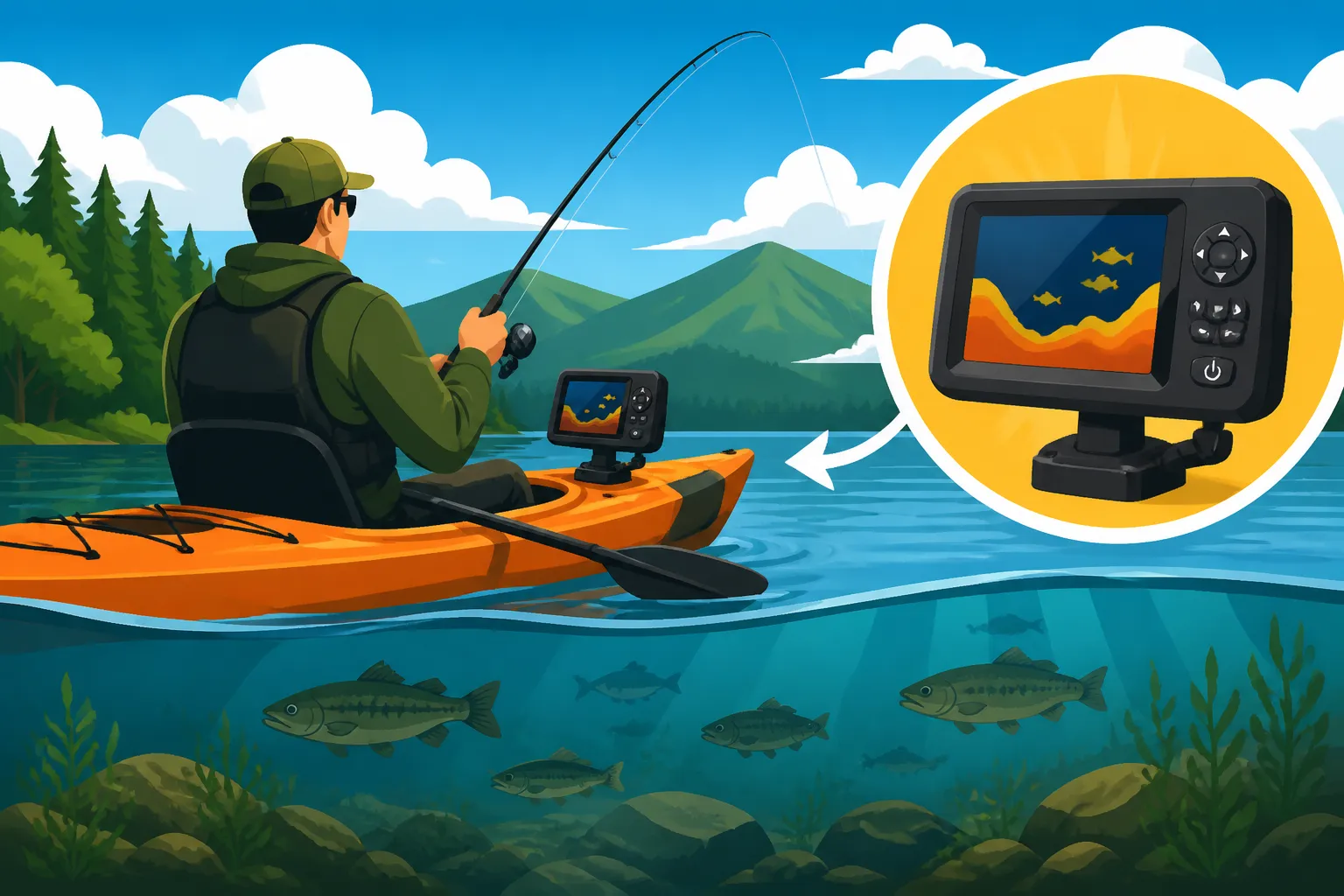
For years, kayak anglers relied on intuition, experience, and maybe a depth map if they were lucky. While those skills are invaluable, a portable fish finder brings a whole new level of intelligence to your paddling adventures. It's not just about seeing fish; it's about understanding the underwater world, identifying structure, and finding those hidden sweet spots that can make or break a day on the water.
Pinpointing Hidden Structure and Depths
Imagine you're paddling along Lake Champlain, perhaps near the Mallets Bay area, and you're just casting blindly. With a fish finder, that guesswork fades away. You can actively scan the bottom, spotting sudden drops, submerged timber, rock piles, or even old roadbeds that hold big bass or walleye. These are the kinds of features that baitfish congregate around, and where predator fish lie in ambush. Without a fish finder, you might paddle right over them, never knowing what treasures lie beneath your hull. The device literally paints a picture of the contours, helping you understand why fish might be holding in one spot versus another. It’s like having x-ray vision for the water.
Identifying Fish and Baitfish Schools
While the term "fish finder" might be a bit literal – it doesn't always scream "here's a lunker!" – it absolutely helps you identify activity. You'll learn to distinguish between larger individual fish arches, dense bait balls, or even schools of smaller panfish. If you're targeting smallmouth bass in one of Vermont's lakes, seeing schools of baitfish can tell you exactly where the predators are likely to be lurking. On a cold day, knowing that fish are suspended at a certain depth due to temperature changes or thermoclines can be the difference between a skunk and a successful outing. This is particularly helpful when you're exploring new waters or trying new techniques, like figuring out How to Catch Walleye on Lake Champlain.
Enhancing Efficiency and Reducing Frustration
Let's face it, spending hours paddling and casting without a bite can be disheartening. A portable fish finder dramatically increases your efficiency. Instead of blindly covering miles of water, you can focus your efforts on high-probability areas. This is especially true when you're trying to master Kayak Fishing Techniques for Vermont Lakes. It helps you eliminate unproductive water quickly, allowing you to spend more time actively fishing in spots where fish are actually present. This translates to more bites, more fish, and a much more enjoyable day on the water, reducing that common angler frustration of "are there even fish here?"
Decoding the Features: What to Look for in a Portable Kayak Fish Finder
Choosing the right portable fish finder for your kayak isn't just about grabbing the first one you see. There are several key features that are absolutely crucial for the unique demands of kayak fishing. You need something robust, easy to power, and simple to operate from your low-profile craft.
Portability and Mounting Options
This is perhaps the most critical factor. For a kayak, you need a unit that is truly portable. This means it should be lightweight, compact, and designed for easy attachment and removal.
- Compact Size: You're working with limited space on a kayak. A bulky unit will get in the way of paddling, casting, and landing fish. Look for models with smaller screens and streamlined designs that won't overwhelm your cockpit.
- Battery Power: Most portable units run on rechargeable lithium-ion batteries or readily available AA batteries. Consider battery life – you don't want your unit dying midway through a long day of fishing. Some units are even designed to integrate with portable power stations or small 12V batteries often used in kayaks for other accessories, like a Best Trolling Motor for a Fishing Kayak.
- Versatile Mounting Systems: There are a few common ways to mount a transducer on a kayak:
- Suction Cup Mounts: Easy to attach and remove, but can sometimes lose suction in choppy water or at higher speeds. Best for calm lakes and slower paddling.
- Scupper Hole Mounts: If your kayak has scupper holes, specific kits allow the transducer to be mounted through them, providing a clean, protected installation that's flush with the hull. This is very popular and generally very stable.
- Transom/Side Mounts: These typically clamp onto the side of the kayak or a mounting track. They keep the transducer in the water but can be exposed to snags or damage in tight quarters.
- In-Hull Mounting: Some transducers can be glued directly to the inside of the hull (known as "shoot-through-hull"). This protects the transducer entirely but requires a very clean, bubble-free installation for optimal performance and may reduce sensitivity slightly.
Display Quality and Readability
You'll be looking at this screen constantly, often in bright sunlight or low light conditions, and sometimes with water splashing around.
- Screen Size: While you want portability, a screen that's too small can be difficult to read. A display between 3 and 7 inches often strikes a good balance for kayak fishing. Larger screens are great for detail but add bulk and consume more battery.
- Resolution and Color: Higher resolution means sharper images and better detail. Color displays, while sometimes more expensive, make it much easier to differentiate between fish arches, bottom structure, and baitfish. They also tend to be more readable in varying light conditions. Monochrome displays are functional but require more interpretation.
- Backlighting: Adjustable backlighting is key for visibility in both direct sunlight and low-light dawn or dusk fishing sessions.
Sonar Technology and Features
Modern fish finders offer a variety of sonar technologies, each with its own advantages.
- Traditional CHIRP Sonar: This is the bread and butter. CHIRP (Compressed High-Intensity Radiated Pulse) sonar provides a clearer, more detailed image than older fixed-frequency sonar, allowing for better target separation and discrimination between fish and structure. It's excellent for finding fish at various depths.
- Down Imaging/DownScan: This technology provides a picture-like view of what's directly beneath your kayak, making it incredibly easy to identify submerged trees, rock piles, and other bottom structure. It's fantastic for "seeing" exactly what you're fishing over.
- Side Imaging/SideScan: While less common on truly portable kayak units due to power and transducer size, some higher-end models offer it. Side imaging lets you scan wide swaths of water to either side of your kayak, making it invaluable for quickly covering large areas and finding structure or bait schools off to the sides. If you're fishing expansive waters like Lake Champlain, this feature, if available in a portable format, can be a huge time-saver.
- GPS and Chartplotting: Many portable fish finders now integrate GPS. This is a game-changer for kayak anglers.
- Waypoints: Mark hot spots, productive structure, or launch points.
- Track Recording: See where you've been and retrace your paths.
- Pre-loaded Maps: Some units come with basic mapping, while others allow you to load detailed charts of Vermont's lakes and rivers. This is incredibly helpful for navigating and understanding the layout of the water, especially on larger bodies like Lake Memphremagog or Lake Willoughby.
Comparison of Portable Fish Finder Types
Here's a quick look at the main categories you'll encounter when looking for a portable fish finder for your kayak:
| Feature | Castable Fish Finders | Portable Display Units (Mountable) |
|---|---|---|
| Transducer | Integrated into a small, floating ball/pod | Separate transducer, usually transom or scupper mounted |
| Display | Your smartphone or tablet via a dedicated app | Dedicated, built-in screen |
| Portability | Extremely portable, pocket-sized | Portable, but requires mounting hardware and dedicated screen |
| Power Source | Internal rechargeable battery (USB charged) | Internal rechargeable battery or external 12V battery |
| Sonar Type | Often CHIRP, sometimes with basic down imaging | Full range: CHIRP, DownScan, sometimes SideScan |
| GPS/Mapping | App-based mapping often available, limited detail | Integrated GPS, detailed mapping (model dependent) |
| Pros | Minimal footprint, cast to any spot, share screen | Dedicated, robust display, advanced sonar, integrated GPS |
| Cons | Relies on smartphone, limited range/depth on casts | Requires mounting, takes up cockpit space |
| Best For | Anglers prioritizing ultra-portability, exploring | Anglers wanting dedicated features, consistent performance |
From Setup to Success: Mounting and Maximizing Your Fish Finder on a Kayak
Once you've picked out the perfect portable fish finder, the next step is getting it properly set up on your kayak. A poor installation can negate all the advanced features of your unit. Then, knowing how to interpret what you see on the screen is key to turning those pings into fish.
Secure Mounting and Power Management
Your kayak is a dynamic platform, subject to paddling, waves, and the occasional battle with a trophy fish. Your fish finder needs to be rock-solid.
- Mounting the Display: Many kayaks come with gear tracks (like those from brands such as Hobie or Wilderness Systems) that are perfect for mounting your fish finder's head unit. If not, RAM mounts are incredibly popular and versatile, allowing you to position the screen exactly where you need it for easy viewing without obstructing your paddle stroke or casting. Ensure it's secure enough to withstand bumps and splashes. You can often find a variety of RAM mount accessories at Bass Pro Shops or by searching on Amazon.
- Transducer Placement is Critical:
- Clean Water: The transducer needs to be in clean, undisturbed water. Avoid placing it directly behind scupper holes where turbulent water flows, or too close to the bow where it might come out of the water in chop.
- Depth: It should be deep enough to stay submerged at all times, even when paddling or in waves.
- Level: The transducer should be as level as possible for accurate readings.
- Cable Management: Route transducer cables carefully to avoid kinks or snags, and secure them with cable clips or zip ties. Loose cables are a tripping hazard and can get damaged.
- Battery Placement and Protection: If you're using an external battery, make sure it's in a waterproof box or dry bag. Many kayak anglers keep their battery in the hull or a dedicated battery box within the cockpit, ensuring it's protected from water and balanced within the kayak. Proper routing of power cables, just like transducer cables, is essential for safety and longevity. Remember to check your battery's charge before every trip!
Interpreting Your Screen: What the Arches Mean
Understanding what you're seeing on your fish finder screen takes a little practice, but it's not as complex as it might seem.
- The Bottom: The solid band across the bottom is, of course, the lake or riverbed. The thickness and texture of this band can tell you about the bottom composition. A thick, hard return indicates rock or gravel, while a thinner, softer return suggests mud or silt.
- Structure: Submerged trees, brush piles, humps, and ledges will appear as distinct shapes rising from the bottom. These are often prime holding areas for fish. Pay close attention to these features as they are key to finding concentrations of fish, especially for species like largemouth bass that love cover.
- Fish Arches: Fish typically appear as arches because the sonar beam is conical. As the kayak moves, the fish enters the beam, passes through the widest part, and then exits, creating that characteristic arch.
- Size of Arch: A larger, thicker arch usually indicates a larger fish.
- Location: An arch suspended off the bottom means the fish is actively swimming. An arch right on the bottom might indicate a bottom-dwelling fish or a fish holding tight to structure.
- Bait Balls: These will show up as dense clouds of small dots or a fuzzy mass, often near structure or suspended in open water. Where there's bait, there are usually predators.
- Water Column: Observe the entire water column. Sometimes fish are suspended near the surface, other times they're holding deep. Your fish finder will show you these layers. Using your fish finder effectively is crucial when you're targeting specific fish like How to Catch Landlocked Salmon in Vermont, which can often be found suspended in deeper water.
Popular Portable Fish Finder Options for Vermont Kayak Anglers
The market for portable fish finders has exploded, offering a fantastic array of options for kayak anglers. While I can't name specific models with features that change constantly, I can highlight popular types and brands known for producing reliable units that are well-suited for Vermont's diverse fishing environments.
Castable Sonar Devices
These are incredibly popular for kayak fishing due to their ultimate portability and flexibility. Brands like Deeper and Lowrance (with their FishHunter series) have led the way here.
- How They Work: These are small, spherical or oval-shaped devices that contain a transducer and a Wi-Fi or Bluetooth transmitter. You cast them out, and they send sonar data wirelessly to an app on your smartphone or tablet.
- Advantages for Kayak Anglers:
- Minimal Footprint: They take up virtually no space in your kayak.
- Targeted Scanning: You can cast them to specific areas that your kayak can't easily reach, like tight pockets of lily pads or under overhanging branches.
- Versatility: You can use them from the bank, a dock, or your kayak, making them a multi-tool for anglers.
- Considerations:
- Reliance on a Smart Device: You need a charged phone/tablet, which can be a battery drain and adds another piece of tech to protect from water (a Best Dry Bag for Kayak Fishing is essential here).
- Limited Range/Depth: While good, their depth and range might not match dedicated units, and maintaining a stable connection can sometimes be tricky in crowded Wi-Fi areas.
- Battery Life: The internal batteries typically last a few hours, so bringing a portable power bank for recharging both your phone and the sonar unit is wise.
Dedicated Portable Display Units
These units feature a separate transducer that you mount to your kayak and a dedicated screen for viewing the sonar data. Brands like Humminbird (with their PiranhaMax or Helix series in portable kits), Garmin (Striker series), and Lowrance (Hook Reveal series) offer excellent options in this category.
- How They Work: The transducer is submerged, sending and receiving sonar signals, which are then processed and displayed on the unit's screen. Many come with quick-release mounts and compact battery boxes.
- Advantages for Kayak Anglers:
- Robust Displays: Designed for outdoor use, often brighter and more durable than a phone screen.
- Advanced Sonar: Access to more powerful CHIRP, DownScan, and sometimes even SideScan technologies for detailed underwater views.
- Integrated GPS/Mapping: Many models include built-in GPS with the ability to mark waypoints, track routes, and often come with pre-loaded maps or allow for custom mapping. This is invaluable when navigating larger water bodies like Lake Champlain and wanting to return to specific productive fishing holes.
- Reliable Performance: A dedicated system often means more consistent performance without relying on phone apps or wireless signals.
- Considerations:
- Mounting: Requires a bit more effort to set up and break down, including finding a secure spot for the display and transducer.
- Cockpit Space: Takes up more space in the kayak compared to a castable unit.
- Battery: While many come with compact 12V batteries, you'll still need to manage charging and ensure you have enough juice for your trip.
The Right Choice for Your Vermont Adventures
When considering which type is best for you, think about the kind of fishing you do most often in Vermont. If you're constantly exploring small, remote ponds or wading rivers where you want to quickly scan a hole, a castable unit might be perfect. If you're spending long days trolling for lake trout on Lake Willoughby Fishing Guide or actively searching for smallmouth on Lake Bomoseen Fishing Guide, a dedicated portable display with GPS and advanced sonar will likely provide more consistent, detailed information and greatly enhance your fishing experience. Both types, when chosen wisely, will give you a significant advantage over simply guessing what lies beneath the surface.
Disclaimer
This article is for general informational purposes only and does not constitute professional advice. Laws, prices and regulations vary by location and change over time. Consult a qualified professional for guidance on your specific situation.