Best Dry Bag for Kayak Fishing
The moment you push off from shore in your kayak, whether it's on a serene Vermont pond or the vast expanses of Lake Champlain, you're embracing the water in a way no shore angler ever can. But with that intimate connection comes the undeniable truth: your gear is going to get wet. From paddle drips and splashes to an unexpected capsize, the water is an ever-present force, and losing a phone, car keys, or even your carefully packed lunch to the drink can swiftly turn a perfect fishing day into a frustrating ordeal. This guide is here to ensure that doesn't happen, helping you navigate the world of dry bags to find the absolute best one to safeguard your essentials on your next Vermont kayak fishing adventure.
Why a Dry Bag is Non-Negotiable for Vermont Kayak Fishing
Let's be real, when you're out on the water, especially in a kayak, your focus should be on the fishing, the scenery, and the pure enjoyment of being outdoors. The last thing you want is a nagging worry about your phone getting soaked or your car keys disappearing into the depths. A reliable dry bag isn't just an accessory; it's an essential piece of safety and convenience gear that every Vermont kayak angler needs.
Protecting Electronics and Valuables from Unexpected Swimmers
Think about what you bring with you that absolutely cannot get wet. Your smartphone, for starters – not just for calls, but for navigation apps, checking weather radar, and snapping those trophy photos. Then there are your car keys, often equipped with finicky electronic fobs that despise water. Many anglers carry a wallet with credit cards and identification, and if you're like me, maybe a small camera to capture more than just fish. Even your Vermont Fishing License Guide for 2026 or a printout of specific regulations for Vermont Lake Champlain Fishing Rules could be ruined if exposed to moisture.
Even on the calmest mornings, a rogue wake from a passing motorboat, a gust of wind catching your paddle just wrong, or the simple act of landing a thrashing bass can send water cascading into your kayak. I've had more than one "almost" moment where my phone, carelessly left in a shallow well, was drenched by a splash. A good dry bag eliminates that anxiety. It provides a waterproof sanctuary for these critical items, allowing you to focus on the tug on your line, knowing your essentials are safe and sound, whether it's a small drizzle or an accidental dunking. Imagine the relief of knowing that if your kayak flips, your phone is still dry and ready to call for help, or your car keys will still unlock your vehicle when you finally get back to the launch ramp.
Battling Vermont's Variable Weather and Water Conditions
Vermont is beautiful, but its weather can be famously unpredictable. You might start your day under brilliant sunshine on the Winooski River, only for an afternoon thunderstorm to roll in quickly. Lake Champlain, while stunning, can go from glassy calm to significant chop with surprising speed, especially when the wind picks up. Those waves and whitecaps mean constant spray, and even the most skilled kayaker will find their boat collecting a decent amount of water.
Beyond the weather, there's the inherent wetness of kayak fishing itself. Your paddle drips, the fish you land might splash, your hands are constantly wet, and the bottom of your kayak almost always has some standing water from condensation or small leaks. A standard backpack or tote bag just won't cut it. It might offer some splash resistance, but it's not designed for immersion. A true dry bag, properly sealed, provides a hermetic seal against all these forms of moisture. This level of protection is crucial, not just for expensive electronics, but also for spare layers of clothing – because nothing ruins a day faster than being cold and wet when the temperature drops unexpectedly, a common occurrence on Vermont's colder waters, especially during Vermont Trout Season Opening Day Traditions or early spring bass fishing.
Understanding Dry Bag Types and Their Waterproof Ratings
Choosing the right dry bag starts with understanding the different styles available and, crucially, how waterproof they actually are. Not all "waterproof" claims are created equal, and knowing the nuances can save you a lot of heartache (and potentially water damage) out on the water.
Roll-Top Dry Bags: The Go-To for Most Anglers
When most people picture a dry bag, they're thinking of the classic roll-top design, and for good reason: it's incredibly effective and widely available. These bags typically feature a single main compartment and a wide opening at the top. To seal them, you fold the stiffened top edge down several times (usually 3-5 rolls), then clip the buckles together, often creating a handle. This rolling action creates a labyrinth seal that makes it incredibly difficult for water to penetrate.
They come in a vast range of sizes, from tiny 2-liter pouches perfect for your phone and keys to massive 60-liter duffels designed for multi-day trips. Common materials include PVC (polyvinyl chloride) and TPU (thermoplastic polyurethane) coated nylon. PVC bags tend to be more rigid, heavier, and generally more affordable, offering excellent puncture and abrasion resistance. TPU-coated nylon bags are often lighter, more flexible, and can pack down smaller, but might come at a higher price point. Many brands, which you can easily find at a local sporting goods store or through online retailers like Amazon, offer a variety of these styles. The simple, robust design makes them a popular choice for their proven ability to keep contents dry, whether you're navigating the currents of the White River or exploring quiet coves on Lake Bomoseen.
Dry Backpacks and Duffels: For Larger Loads and Easier Carrying
While the standard roll-top tube bag is fantastic for stuffing into a hatch or strapping down, sometimes you need more carrying comfort or organizational features. That's where dry backpacks and duffels come into play. These are essentially larger-capacity dry bags that incorporate features found in traditional luggage.
Dry backpacks offer shoulder straps, and sometimes even hip belts, making them much more comfortable for transporting gear from your vehicle to the launch, or for carrying essentials on a shore lunch break. They're excellent for holding extra layers, a full lunch, first-aid kits, and even some tackle boxes. Many feature external pockets (though these might not be as waterproof as the main compartment) and internal sleeves for laptops or tablets (though I'd strongly advise against bringing expensive electronics on the water unless absolutely necessary and triple-protected!). For anglers who paddle to remote spots and then hike in, or for those who carry a lot of gear, a dry backpack is a game-changer.
Dry duffels, on the other hand, are larger, cylindrical bags often with grab handles and sometimes a single shoulder strap. They're ideal for big loads, like multiple changes of clothes, sleeping bags for an overnight camping trip, or larger pieces of gear. They often have wider openings than standard dry bags, making packing and unpacking easier. Both dry backpacks and duffels typically still utilize the roll-top closure for the main compartment, ensuring that critical waterproof seal. If you're planning an extensive day out on a large body of water like Lake Memphremagog or heading out for Vermont Free Fishing Weekend Dates with the whole family's gear, these larger options from brands found at Bass Pro Shops can be incredibly useful.
Waterproof Rating Systems: What IPX Means for Your Gear
This is where the rubber meets the road (or rather, where the water meets the bag). Just saying a bag is "waterproof" isn't enough. You need to understand the Ingress Protection (IP) rating system, specifically the second digit, which indicates water resistance. When you see "IPX," the "X" simply means that the dust protection rating (the first digit) hasn't been tested or rated. What we care about is the number after the "X."
Here's a quick breakdown of what the most common IPX ratings mean for dry bags:
- IPX4 (Splash resistant): Protects against splashing water from any direction. Think light rain or paddle drips. Not suitable for kayak fishing where immersion is possible.
- IPX5 (Water jet resistant): Protects against low-pressure water jets. Better, but still not enough for immersion. A hose spray won't get in, but a dunk will.
- IPX6 (Powerful water jet resistant): Protects against powerful water jets. This is getting serious. It will withstand heavy rain, strong splashes, and likely brief, shallow dunkings without issue. Many good quality dry bags for general boating will have this rating.
- IPX7 (Temporary immersion): Protected against immersion in water for 30 minutes at a depth of up to 1 meter (about 3 feet). This is the minimum you should look for in a kayak fishing dry bag. It means if your kayak rolls and the bag floats for a while, or gets briefly submerged, your items should remain dry.
- IPX8 (Continuous immersion): Protected against continuous immersion in water under conditions specified by the manufacturer (usually deeper than 1 meter). This is the gold standard for full waterproof protection. If a dry bag has an IPX8 rating, you can be confident your gear is safe even if the bag spends significant time underwater, like after a major capsize in deeper sections of the Connecticut River.
Always check the IPX rating when purchasing. A bag with an IPX6 rating might be fine for paddle drips but could fail if your kayak overturns. For true peace of mind on Vermont's waters, aim for IPX7 or, ideally, IPX8, especially for electronics and irreplaceable items.
Here's a quick reference table for comparing dry bag characteristics:
| Feature Category | Roll-Top Dry Bag (Standard) | Dry Backpack | Dry Duffel | Considerations for Kayak Fishing |
|---|---|---|---|---|
| Capacity Range | 2L – 60L | 15L – 40L | 40L – 100L | Match to trip length and gear volume. |
| Waterproof Rating | IPX6 – IPX8 | IPX6 – IPX8 | IPX6 – IPX8 | Aim for IPX7/IPX8 for kayak fishing. |
| Portability | Minimal, often just D-rings | Comfortable backpack straps | Grab handles, shoulder strap | How far do you carry gear from car to water? |
| Material | PVC, TPU-coated Nylon | TPU-coated Nylon, PVC | PVC, Heavy-duty TPU-coated Nylon | Durability against abrasion (rocks, kayak surfaces). |
| Accessibility | Top-load only, requires unrolling | Top-load, sometimes external non-waterproof pockets | Wide top opening | Quick access to frequently used items. |
| Best Use Case | Essentials, small items, inside hatches | Day trips, portaging, hiking to water | Large gear loads, multi-day trips, base camp | Versatility for different Vermont adventures. |
Key Features to Look For in a Kayak Fishing Dry Bag
Once you understand the basic types and waterproof ratings, it's time to drill down into the practical features that will make a dry bag truly effective and enjoyable for your kayak fishing trips. Think about how you use your gear, the environments you fish, and what frustrates you most about keeping things dry.
Material Durability and Construction Quality
The material of your dry bag is its first line of defense. As mentioned, PVC (polyvinyl chloride) is common. It's tough, often feels a bit stiff, and offers excellent abrasion resistance – a huge plus when your bag is rubbing against the textured plastic of your kayak or bumping into rocks on a riverbank. However, it can be heavier and less flexible in cold weather. TPU (thermoplastic polyurethane) coated nylon is another fantastic option. It's often lighter, more pliable, and can pack down smaller when empty. TPU is also generally considered more environmentally friendly than PVC. Higher denier (thickness) nylon will offer better tear resistance.
Beyond the material itself, look at the construction. Welded seams are superior for waterproofness. Instead of stitching, which creates tiny holes (even if taped), welded seams fuse the material together, creating a truly impenetrable barrier. Stitched and taped seams can be good, but they are generally not as robust over time or under extreme pressure as welded seams. The quality of the buckles, D-rings, and grab handles also matters. Flimsy plastic buckles can snap under stress, especially in cold temperatures, potentially compromising your seal. YKK zippers, if present on external pockets (which might not be fully submersible), are a good sign of overall quality. Brands like Sea to Summit or Watershed, though often at a higher price point, exemplify this level of quality, and you can often find competitive options through retailers like Amazon and Bass Pro Shops. Investing a little more upfront in a well-constructed bag will save you money and headaches in the long run.
Size, Capacity, and Attachment Points
Choosing the right size is critical. Too small, and you'll leave important gear unprotected. Too large, and it becomes bulky and harder to secure. Here's a general guide:
- 2-5 liters: Perfect for absolute essentials: phone, keys, wallet, Printing or Carrying a Digital Fishing License in Vermont. Small enough to clip to a seat or tuck into a small hatch.
- 10-20 liters: A great size for a day trip. Holds essentials plus a light jacket, lunch, maybe a small tackle tray, and some snacks. Fits well in a kayak's tankwell or large bow hatch.
- 30-40 liters: Good for longer day trips, or if you carry more bulky items like a heavier jacket, camp stove components, or a full change of clothes. Often available as a dry backpack.
- 50+ liters: Reserved for overnight camping trips or extreme packing. Usually in duffel form.
Think about the specific items you carry most often. Do you need just a small pouch for electronics, or a larger bag for extra layers and food?
Attachment points are equally important. Look for sturdy D-rings, reinforced loops, or daisy chains on the exterior of the bag. These allow you to secure the dry bag to your kayak using bungee cords, carabiners, or cam straps. This prevents your bag from floating away if you capsize or shifting around dangerously while paddling. A bag with multiple attachment points offers more versatility in placement and securing. Many bags also feature grab handles, which are helpful for carrying and retrieving the bag from your kayak.
Accessibility, Pockets, and Special Features
While the primary function of a dry bag is to keep things dry, ease of access is a close second. After all, what good is a dry phone if it takes five minutes to dig it out?
- Roll-top closure: This is the standard, but consider how many rolls are truly needed for a secure seal. Some designs make rolling easier than others.
- External pockets: Be cautious here. Many "external pockets" on dry bags are only splash-resistant, not fully waterproof. They're great for items you need quick access to (like a water bottle, sunscreen, or a small fishing tool), but don't put anything in them that absolutely cannot get wet unless explicitly stated by the manufacturer that the pocket itself is submersible. Some premium dry bags have genuinely waterproof external zippered pockets, but these are less common and add to the cost.
- Internal organization: Some dry backpacks or duffels might have internal sleeves or zippered pockets. While these don't add to the waterproofness, they can help keep your gear organized inside the main compartment.
- Clear windows: A clear, waterproof panel on the side of the bag can be incredibly useful for quickly identifying contents without having to open the entire bag. This is particularly handy for smaller items or if you have multiple dry bags.
- Compression straps: These can help cinch down a partially filled bag, making it less bulky and easier to secure. They also provide additional attachment points.
- Purge valves: Some heavy-duty dry bags or dry duffels feature a one-way valve that allows you to compress the air out of the bag after sealing. This reduces bulk and helps the bag sink if submerged (though most dry bags are designed to float).
Ultimately, the best dry bag balances maximum protection with practical usability. You need to be able to get to your gear when you need it, without compromising its safety.
Integrating Your Dry Bag into Your Kayak Fishing Setup
Having a great dry bag is only half the battle. The other half is knowing how to effectively incorporate it into your kayak fishing routine. This isn't just about throwing it in and hoping for the best; it's about strategic placement, smart packing, and diligent maintenance to ensure its longevity and your peace of mind.
Strategic Placement and Securing on Your Kayak
Where you put your dry bag on your kayak can make a big difference in both accessibility and safety. Your choices will depend on your kayak's design (sit-on-top vs. sit-in, hatches, tankwells), the size of your dry bag, and what's inside it.
- Inside Hatches: For smaller, more critical items (phone, keys, wallet), tucking a small dry bag into a bow or stern hatch offers maximum protection from splashes and direct sunlight. It also keeps valuable items out of sight, reducing temptation. However, it means less immediate access. Make sure the dry bag is small enough to be easily retrieved, perhaps with a short lanyard attached to a grab point in the hatch.
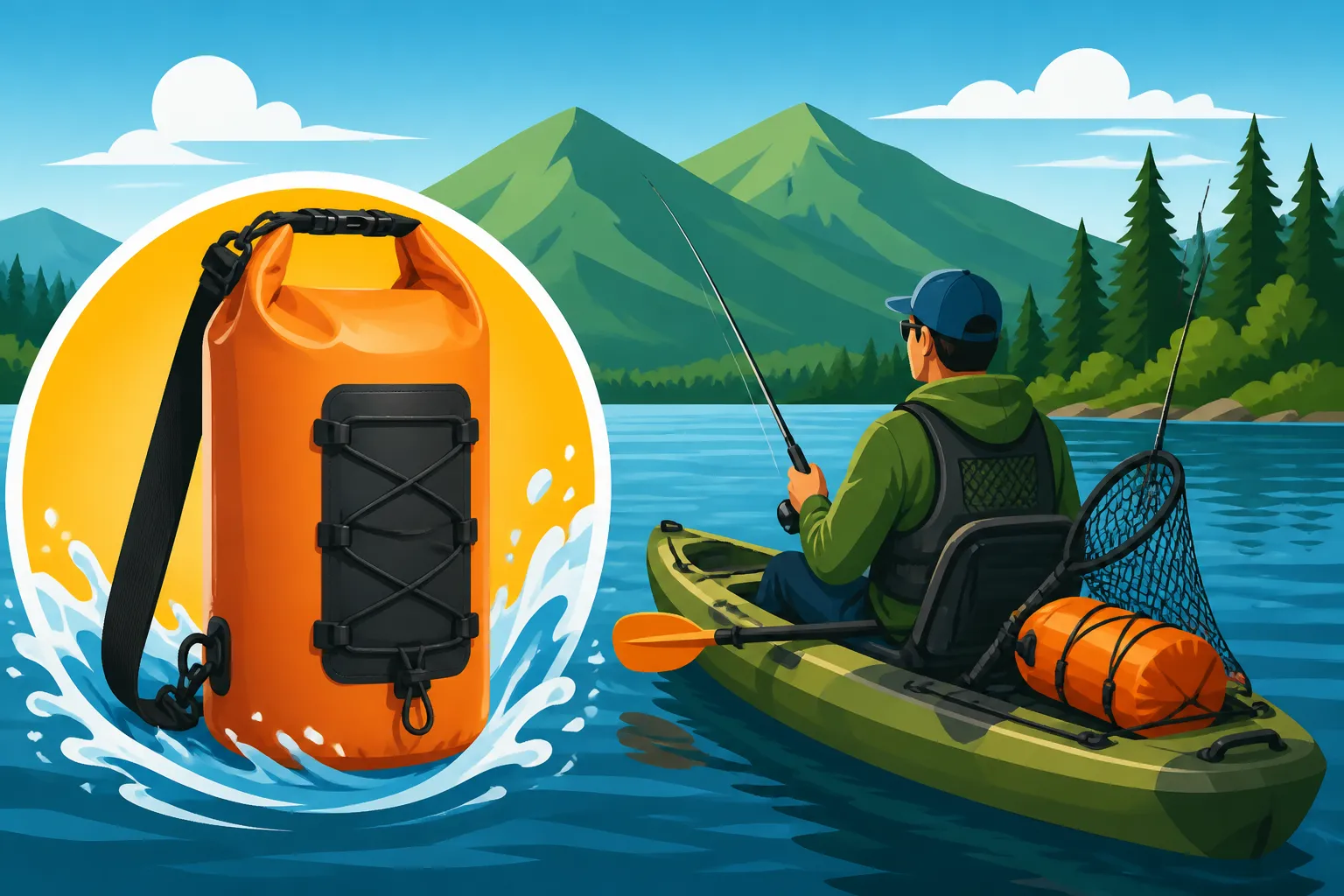
- Tankwell/Rear Deck (Sit-on-tops): The tankwell, the open storage area behind the seat on most sit-on-top kayaks, is a common spot for larger dry bags. It's easily accessible but also exposed. Always secure your dry bag here with bungee cords or cam straps. Imagine rolling over – you don't want your dry bag floating away! Using a net or crate in the tankwell can also provide additional points to secure your dry bag.
- Bow Deck: Some anglers place a dry bag on the bow deck, especially if it's a smaller bag for items like snacks or a map. Again, securing it is paramount. This area is more exposed to splashes and wind.
- Behind the Seat: A smaller dry bag can often be tucked behind your seat, perhaps clipped to the seat frame or a nearby D-ring. This provides quicker access than a hatch but keeps it low profile.
When securing, avoid simply "stuffing." Use the D-rings or loops on your dry bag and corresponding points on your kayak. Bungee cords are convenient but can stretch; cam straps offer a more rigid, secure hold, especially for heavier bags or rougher conditions. Always ensure the weight is balanced, especially if you have multiple dry bags, to maintain your kayak's stability.
Organizing Contents for Quick Access and Protection
Once you've chosen the right dry bag, how you pack it is key. A common mistake is just dumping everything in. This makes it impossible to find what you need quickly and can also compromise the bag's efficiency.
- Layering: Place items you'll need less frequently at the bottom (e.g., extra clothes, first-aid kit, a Vermont fishing license refund policy document). Items you'll want quicker access to, like your phone in a smaller, dedicated dry pouch or your lunch, should go closer to the top.
- Smaller Dry Bags/Stuff Sacks: For ultimate organization and multi-layered protection, use smaller dry bags or waterproof stuff sacks inside your main dry bag. For example, your phone, keys, and wallet could go into a very small, bright-colored dry pouch that's easy to spot and grab. This also provides redundancy: if your main dry bag gets a pinhole, these critical items still have another layer of protection.
- Air Space: Don't pack your roll-top dry bag so full that you can't properly roll the top 3-5 times. Leaving some air inside can also help it float better if it goes overboard.
- Hard vs. Soft Items: Place softer items around any hard, sharp objects (like a multi-tool or a small tackle box) to prevent abrasion or punctures to the dry bag material. A tear in your dry bag is the quickest way to ruin its purpose.
Think about the flow of your day. What do you reach for most? What could you potentially need in an emergency? Pack accordingly.
Maintenance and Care for Longevity
A dry bag is an investment in protecting your gear, and like any good piece of equipment, it needs a little TLC to last. Proper care will extend its life and ensure it performs optimally every time you hit the water.
- Rinse After Use: Especially if you've been in saltwater (like parts of Lake Champlain that can be brackish) or muddy river water, give your dry bag a good rinse with fresh water. Dirt, salt, and grime can degrade the material and seals over time.
- Thoroughly Air Dry: This is probably the most important step. Unroll the top completely and hang the bag upside down (or open-side down) in a well-ventilated area until it is completely dry, inside and out. Trapped moisture will lead to mildew, odors, and can weaken the material. Never store a damp dry bag.
- Store Properly: Once dry, roll the top loosely or store it with the top open. Avoid folding it tightly in the same spots repeatedly, as this can create permanent creases and weaken the material over time, potentially leading to cracks, especially with PVC. Store it out of direct sunlight in a cool, dry place.
- Inspect Regularly: Before each season, and periodically throughout, inspect your dry bag for signs of wear and tear. Look for:
- Pinholes: Hold the bag up to a light source. Small pinpricks of light indicate tiny holes. These can often be patched with a gear repair kit.
- Cracks or abrasion: Check the material, especially at the bottom and corners, and along the roll-top crease.
- Damaged buckles or straps: Ensure all hardware is intact and functioning correctly.
- Delamination: For coated bags, check if the waterproof coating on the inside is peeling away. This is a sign the bag is nearing the end of its life.
Taking these few simple steps will ensure your dry bag remains a reliable partner for many seasons of Vermont kayak fishing.
Top Considerations for Vermont-Specific Kayak Anglers
Vermont's unique fishing environments, from its chilly mountain streams to its sprawling, sometimes tempestuous lakes, present specific challenges and opportunities for kayak anglers. Your dry bag strategy should adapt to these local conditions to provide the best protection and utility.
Cold Weather and Ice Fishing Dry Storage
While "kayak fishing" typically conjures images of open water, serious Vermont anglers know that late fall and early spring extend the kayak season into colder temperatures, and some brave souls even use specialized kayaks for accessing thinner ice during Vermont Ice Fishing Season Dates. In these conditions, a dry bag isn't just about keeping water out; it's about protecting gear from freezing.
Electronics are particularly sensitive to extreme cold, as battery life plummets. A dry bag, especially one made of more flexible TPU-coated nylon, can provide an insulating layer for your phone, GPS, or camera, keeping them closer to body temperature. If you're using a dry bag to carry extra layers of clothing for warmth, ensuring they stay absolutely dry is critical. Getting wet in cold weather isn't just uncomfortable; it can be dangerous, leading to hypothermia. A highly reliable, IPX7 or IPX8 rated dry bag for your spare fleece or wool socks is a non-negotiable. Even a small dry bag to hold hand warmers can make a huge difference in comfort.
River vs. Lake Kayaking Needs
The type of water you're fishing in Vermont heavily influences the demands on your dry bag.
- River Kayaking: If you're paddling rivers like the Lamoille River or the Ottauquechee River, especially those with rapids or rocky sections, the risk of capsizing is higher, and the potential for abrasion against rocks is significant. For river use, prioritize a dry bag made from very durable, puncture-resistant material like heavy-duty PVC or robust TPU-coated nylon. Secure all bags extremely well to your kayak. Multiple smaller dry bags might be preferable to one large one, as they're easier to manage in a swift current if you do go over. Look for bags with multiple attachment points for redundancy.
- Lake Kayaking: On vast lakes like Lake Champlain or Lake Willoughby, the primary concerns are often strong winds, large waves, and spray, which can quickly fill an open kayak. While capsizing risk might be lower on calm days, a sudden change in weather can make conditions treacherous. Larger dry bags are often suitable here, as they can hold more gear for longer outings. Good attachment to prevent the bag from blowing overboard or shifting is still crucial. If you're venturing out onto Lake Champlain Fishing Guide, consider an IPX8 rated bag for anything truly precious, given the sheer size and potential for rough water.
Protecting Your Vermont Fishing License and Documents
This might seem like a small detail, but it's one that can cause a major headache if neglected. Your Vermont fishing license, whether it's a paper printout or a digital version on your phone, is your permit to fish. Losing or damaging it can lead to fines or cut your trip short.
Many anglers use a small, clear, dedicated dry pouch for their license, ID, and vehicle registration. These pouches are often rated IPX7 or IPX8 and are designed specifically for phones and documents. They can be worn around your neck or clipped to your PFD (Personal Flotation Device) for immediate access. This way, even if your main dry bag is in a hatch, your most critical document is always on your person and visible. This is especially important if you're ever stopped by a game warden on the water or when participating in Vermont Fishing Tournament Permit Requirements. Don't forget any specific permits for Special Regulation Waters in Vermont or rules for Vermont Lake Champlain Fishing Rules or Trout Fishing in Vermont if you're targeting specific species or areas.
A dry bag, chosen wisely and used correctly, becomes more than just storage; it becomes an integral part of your safety and enjoyment on the water. It’s the silent guardian of your adventure, ensuring that your focus remains where it belongs: on the cast, the retrieve, and the thrill of the catch.
Disclaimer
This article is for general informational purposes only and does not constitute professional advice. Laws, prices and regulations vary by location and change over time. Consult a qualified professional for guidance on your specific situation.