Best starter combo for a first-time angler
Stepping into the world of fishing for the very first time can feel like you've walked into a secret club where everyone knows the handshake but you. The sheer volume of rods, reels, lines, and lures out there is enough to make anyone's head spin, leaving you wondering where on earth to even begin. This guide is here to cut through that confusion, helping you understand exactly what to look for in a "starter combo" so you can spend less time guessing and more time enjoying Vermont's beautiful waters.
Why a Fishing Combo is Your Best Friend as a Beginner
When you're just starting out, the thought of piecing together a fishing setup can be genuinely overwhelming. You've got to match a rod to a reel, then pick the right line weight, and then, then you can even think about what hooks or lures you need. It’s a lot, and it often leads to mismatched gear that makes fishing harder, not easier. That's where a "fishing combo" swoops in like a superhero.
A fishing combo is simply a rod and reel that are pre-matched and sold together as a single unit. Think of it as a pre-packaged meal for your fishing adventure – all the essential ingredients are there, and they've been chosen to work harmoniously. This means the rod's power and action are already suited to the reel's size and line capacity, taking all the guesswork out of the equation. For a first-time angler, this is an absolute godsend. You don't have to worry about whether your reel is too big for your rod or if your line will snap with every cast. You get a balanced setup right out of the box, ready for you to spool with line and hit the water. This convenience also often comes with a more beginner-friendly price tag than buying components separately.
Demystifying the Rod: What to Look For
The fishing rod is more than just a stick; it's a finely tuned instrument. For a beginner, understanding a few key terms can make a world of difference in choosing a combo that feels right and performs well. You'll often see terms like "action," "power," and "length" – let's break those down simply.
Rod Action: How Much Does It Bend?
Rod "action" refers to where along the rod's length it bends when pressure is applied. This might sound overly technical, but it directly impacts how well you can cast, feel bites, and fight fish.
- Fast Action: A fast-action rod bends mostly in the tip section. This means it's super sensitive, allowing you to feel even the faintest nibbles, which is fantastic when you're trying to detect those shy trout bites or light taps from a perch. It also gives you quick, powerful hook sets. The downside for a beginner is that it can be a bit less forgiving if your casting isn't perfected, and it might not load as smoothly with lighter lures.
- Moderate Action: A moderate-action rod bends more in the middle section of the blank. This is often the sweet spot for a versatile starter combo. It's more forgiving on the cast, allowing you to sling lures a bit farther with less effort. It also acts like a shock absorber when fighting a fish, which can prevent you from accidentally pulling the hook out of a fish's mouth, especially if you're a little heavy-handed. For chasing a variety of fish like panfish, stocked trout, and smaller bass in Vermont, a moderate action is a fantastic all-around choice.
Rod Power: How Stiff Is It?
Rod "power," often called "taper" or "weight," indicates how much pressure it takes to bend the rod. Essentially, it tells you how stiff the rod is. This is crucial for matching the rod to the size of the fish you're targeting and the weight of the lures you'll be throwing.
- Ultralight (UL): These rods are incredibly flexible and ideal for tiny fish like bluegill, perch, or small brook trout. They make even small fish feel like giants, which can be a blast! They're best paired with very light line and small baits.
- Light (L): A step up from ultralight, light power rods are great for panfish, stocked trout, and smaller stream trout. They offer a good balance of sensitivity and backbone for these species.
- Medium (M): This is often the most recommended power for a general-purpose starter combo, especially if you're looking to target a mix of species like smallmouth bass, largemouth bass, and larger trout found in many Vermont lakes and rivers. A medium power rod can handle a wider range of lure weights and fish sizes.
- Medium-Heavy (MH) / Heavy (H): These are stiffer rods designed for bigger fish and heavier lures. While they have their place, they're generally overkill for a first-time angler's general-purpose combo in Vermont unless you're specifically targeting large fish with big baits.
For your very first combo, a light to medium power rod with a moderate action is often the most versatile and forgiving option for exploring Vermont's diverse fishing opportunities. You'll be able to effectively fish for Best Tackle for Panfish, handle most stocked trout, and even enjoy battling a feisty smallmouth bass.
Rod Length: How Long Should It Be?
Rod length affects casting distance, accuracy, and how easy it is to manage.
- Shorter Rods (Under 6 feet): These are great for tight, brushy areas where you don't have much room to cast, like small streams or dense riverbanks. They offer excellent accuracy but sacrifice casting distance.
- Medium Rods (6 to 7 feet): This is the sweet spot for most beginners and is highly recommended for a versatile starter combo. A 6 to 6.5-foot rod offers a good balance of casting distance and accuracy, and it's manageable enough for most adult anglers to handle comfortably from shore or a small boat.
- Longer Rods (Over 7 feet): Longer rods excel at maximizing casting distance, which can be beneficial on larger lakes or when trying to reach distant fish from the shore. However, they can be a bit unwieldy for new anglers and in confined spaces.
For a versatile first-time setup, aim for a 6-foot to 6-foot, 6-inch rod. It's easy to learn with and will serve you well in many Vermont fishing scenarios.
Understanding the Reel: Spinning for Simplicity
For new anglers, the choice of reel typically boils down to two main types: spincast or spinning. While baitcasting reels are popular among experienced anglers, they have a steeper learning curve and are not ideal for a first-timer's combo.
Spincast Reels: The Easiest Entry Point
Spincast reels are incredibly simple to use. You press a button, cast, and then release the button. They're very beginner-friendly and great for kids or anyone who wants absolute simplicity.
Pros:
- Extremely easy to learn and operate.
- Less prone to tangles and "bird's nests" (line snarls).
- Great for very light lures.
Cons:
- Limited casting distance compared to spinning reels.
- Less durable and often lower quality components in budget models.
- Can have a smaller line capacity and less powerful drag.
Spinning Reels: The Versatile All-Rounder
Spinning reels are widely popular for good reason. They're versatile, relatively easy to use, and perform well for a huge variety of fishing techniques and species. They're often the go-to choice for a Best Rod and Reel Combo for Beginners because they strike an excellent balance between ease of use and performance.
Pros:
- Good casting distance and accuracy.
- Handles a wide range of lure weights.
- More powerful and smoother drag systems, which is crucial when fighting bigger fish.
- Generally more durable and higher quality options available.
- Excellent for a variety of fish, from panfish to bass to trout.
Cons:
- Slightly more prone to tangles than spincast reels if not spooled correctly or if using too light line without proper technique.
- Requires a bit more finesse to master casting, but it's still quite easy to learn.
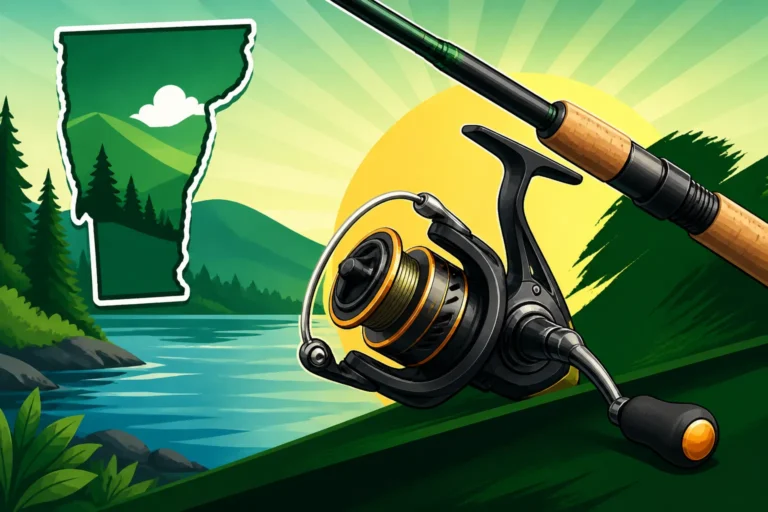
Recommendation: For a first-time angler's combo, a spinning reel is usually the best long-term choice. It offers more versatility as you grow in your fishing journey and will teach you fundamental skills that translate well to other types of fishing. When looking at spinning reels in a combo, you'll see sizes like 1000, 2000, 2500, or sometimes 10, 20, 25. For a general Vermont fishing combo, a 2000 or 2500 series spinning reel (or equivalent) is typically perfect. It will balance well with a 6 to 6.5-foot medium-light to medium power rod. You can often find great value starter combos at retailers like Bass Pro Shops, or even online through Amazon, which offer a wide range of options to fit any budget.
Here’s a quick comparison of the two reel types for beginners:
| Feature | Spincast Reel | Spinning Reel |
|---|---|---|
| Ease of Use | Easiest, push-button cast | Easy, requires a bit more finger coordination |
| Casting | Good for short, accurate casts | Excellent distance and accuracy |
| Line Capacity | Generally lower | Higher, good for various line types |
| Drag System | Basic, often less smooth | Smoother, more adjustable, better for fighting fish |
| Lure Weights | Best for lighter baits | Handles a wide range of light to medium lures |
| Durability | Entry-level models can be less durable | Generally more robust, longer lasting |
| Versatility | Good for basic pond fishing | Great for diverse fishing, from streams to lakes |
| Maintenance | Very low | Low, but occasional cleaning helps |
The Essential Line and Basic Terminal Tackle
Once you have your rod and reel combo, the next crucial step is getting the right fishing line. For beginners, the choice is pretty straightforward.
Fishing Line: Monofilament is Your Friend
There are three main types of fishing line: monofilament, fluorocarbon, and braided. For a first-time angler, monofilament line (mono) is, hands down, the best place to start.
- Cost-Effective: It's usually the cheapest option, which is great when you're just learning and might experience some tangles or snags.
- Easy to Tie Knots: Mono is supple and forgiving, making it much easier for beginners to tie reliable knots.
- Stretch: It has a good amount of stretch, which acts as a shock absorber. This helps prevent hooks from tearing out of a fish's mouth and can be more forgiving when you make an aggressive hook set or reel too quickly.
- Visibility: While it's generally more visible in water than fluorocarbon, this isn't usually a major concern for panfish or stocked trout in most Vermont waters.
For a general-purpose light to medium power spinning combo, 6 to 8-pound test monofilament line is a fantastic choice. It's strong enough to handle most fish you'll encounter in ponds and smaller lakes (like Lake Bomoseen Fishing Guide), yet light enough to cast smaller lures effectively. You can often buy a spool of line separately and have a local tackle shop or even Bass Pro Shops spool your reel for you if you're unsure how.
Basic Terminal Tackle: The Absolute Essentials
You've got the rod, reel, and line. Now, what do you attach to the end of that line to actually catch a fish? This is your "terminal tackle," and for a beginner, you don't need much.
- Hooks: For panfish and trout, small, sharp hooks are key. Look for Aberdeen or Baitholder hooks in sizes #6, #8, or #10. Baitholder hooks have small barbs on the shank to keep your bait from sliding off. For slightly larger bass, you might go up to a #2 or #1 hook. Remember, hook size goes down as the number goes up (e.g., #10 is smaller than #6).
- Sinkers: These add weight to your line to help cast further and get your bait down to the fish.
- Split Shot Sinkers: These are small, round weights that pinch onto your line. They're great for subtle presentations and adjusting weight on the fly. Get an assorted pack of small sizes.
- Worm Weights (Bullet Weights): If you're planning to fish with plastic worms for bass, these cone-shaped weights are ideal as they allow the worm to slide through weeds and cover.
- Bobbers/Floats: Bobbers indicate when a fish bites by dipping or moving. They also suspend your bait at a desired depth.
- Clip-On Round Bobbers: These are the classic red-and-white bobbers, super easy to use for beginners.
- Slip Bobbers: While slightly more advanced, slip bobbers allow you to fish much deeper water by letting your line slide through them, stopping at a pre-set knot. A great option to learn once you're comfortable.
- Swivels: Small, metallic devices that prevent your line from twisting, especially when using spinning lures. A small barrel swivel in size 10 or 12 is perfect. You can add a snap to one end (a "snap swivel") to easily change lures.
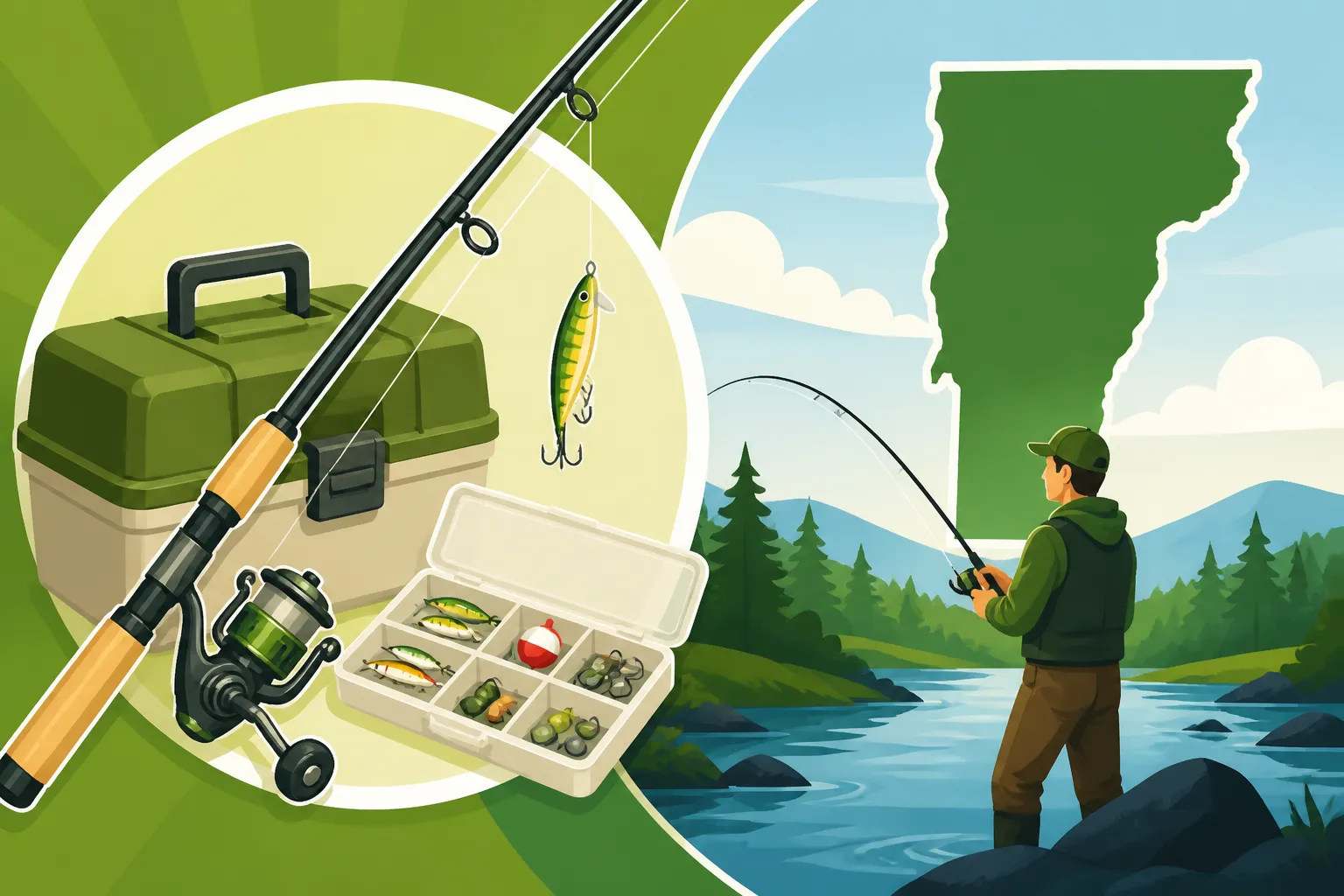
With these few items, you're pretty much ready to go. You can find "starter tackle kits" that include a basic assortment of these items, which is a great way to build your first Best Tackle Box Setup for Vermont Anglers.
What to Look For in a Good Starter Combo
Now that you know the components, how do you pick a good starter combo from the myriad of options?
Versatility is Key
The best starter combo for a first-time angler in Vermont is one that can do a little bit of everything. You want a setup that's capable of catching a variety of fish, from the plentiful yellow perch and bluegill in many ponds to the stocked rainbow and brook trout in streams and lakes. A 6 to 6.5-foot spinning combo with a medium-light to medium power rod and a moderate action, paired with a 2000 or 2500 size reel, fits this bill perfectly. This kind of setup is also ideal for learning Spring Trout Fishing Techniques for Vermont Streams or How to Catch Smallmouth Bass in Vermont Lakes.
Balance and Feel
When you pick up a combo, it should feel comfortable in your hands. The rod and reel should feel "balanced," meaning one end doesn't feel significantly heavier than the other. This prevents fatigue and makes casting and retrieving much smoother. Go to a sporting goods store, pick up a few different combos, and see how they feel. Imagine casting it repeatedly. Does it feel awkward or natural?
Durability and Construction
While you don't need the most expensive gear, you also don't want something that will fall apart after a few outings. Look for combos from reputable brands. Check the rod guides (the rings your line passes through) – they should be smooth and securely attached. The reel should turn smoothly with minimal wobble. Graphite or composite rods are generally lightweight and durable, perfect for beginners.
Price Point
Starter combos are designed to be affordable. You can find excellent options that won't break the bank. Expect to pay a reasonable sum, but remember, you don't need top-of-the-line equipment to catch fish. The goal is to get something functional, durable, and easy to use. Investing a little bit more than the absolute cheapest option often translates to a much more enjoyable and successful experience. Remember, shops like Bass Pro Shops and online retailers like Amazon offer detailed descriptions and customer reviews that can help guide your decision. Many combo brands (like Ugly Stik, Shakespeare, Penn, Daiwa, Shimano) offer fantastic entry-level options that have introduced countless anglers to the sport.
Taking Your Combo to the Water: Next Steps
Once you've got your perfect starter combo, you're almost ready! But before you hit Best Fishing Lakes in Vermont, make sure you've also got:
- A Vermont Fishing License: This is non-negotiable! You can usually buy one online or at many bait and tackle shops. You can learn all about it in our Vermont Fishing License Guide for 2026.
- Basic Bait or Lures: For panfish and stocked trout, simple options like worms, corn, or small spinners are incredibly effective. For bass, try plastic worms or small crankbaits.
- Pliers: Essential for unhooking fish safely and cutting line.
- A Small Tackle Box or Bag: To keep your hooks, sinkers, and bobbers organized.
- A Ruler or Tape Measure: To ensure your catch meets Vermont Bass Minimum Length Limits or other regulations.
- A Camera: To capture those first proud catches!
Don't be afraid to start small. A local pond filled with panfish is the perfect training ground. You'll get plenty of bites, practice casting, and learn how to handle fish. The most important thing is to get out there and enjoy the process. Fishing is a journey, and your starter combo is just the beginning of many amazing adventures on the water.
Disclaimer
This article is for general informational purposes only and does not constitute professional advice. Laws, prices and regulations vary by location and change over time. Consult a qualified professional for guidance on your specific situation.