Best Cooler for a Fishing Boat
There's nothing quite like a day out on the shimmering waters of a Vermont lake or river, casting a line and soaking in the peace. But let's be honest, that serene feeling can quickly turn to frustration if you're constantly worrying about your catch spoiling, your sandwiches turning soggy, or your drinks warming up in the summer sun. A flimsy, poorly insulated cooler is a recipe for disappointment and can frankly ruin an otherwise perfect day on the water. This guide is here to cut through the confusion and help you pick the absolute best cooler for your fishing boat, ensuring your provisions stay cold and your prized catches remain pristine from the moment they hit the deck until they're ready for the pan.
Why a Good Cooler is Non-Negotiable for Vermont Anglers
When you're out on the water, whether it's the expansive waters of Lake Champlain or a quiet Green Mountain pond, your cooler isn't just a luxury; it's an essential piece of equipment. Think about it: you’ve invested in your boat, your rods, your reels, and your Vermont Fishing License Guide for 2026 – why skimp on something so critical to the success and enjoyment of your trip? A reliable cooler is truly the unsung hero of many a fishing adventure.
Beyond Just Keeping Fish Fresh: Safety and Comfort
Sure, the primary job of a cooler is to keep things cold, especially your hard-earned catch. Nobody wants to haul in a beautiful smallmouth bass from Lake Champlain only to have it degrade in quality before you even get it home. But a good cooler's utility stretches far beyond just fish preservation. It's about food safety, first and foremost. Pack a lunch for a full day of fishing, and you need assurance that your perishables aren't going to turn into a health hazard under the sun. Warm, spoiled food is a quick way to sour a trip.
Hydration is another massive factor, particularly during those warmer Vermont summer days. Whether you're chasing How to Catch Walleye on Lake Champlain or simply enjoying the scenery, staying hydrated is crucial. Lukewarm water or soda just doesn't cut it when the sun is beating down. A cooler full of icy drinks is a welcome relief and contributes significantly to the overall comfort and energy levels of everyone on board. It’s not just about luxury; it’s about maintaining peak condition for a long day of casting and reeling.
The Harsh Realities of Vermont Weather: From Scorching Sun to Sudden Storms
Vermont's weather can be notoriously fickle, even during the prime fishing seasons. You might start your morning with a crisp, cool breeze, only to find yourself sweating under a blazing sun by midday. The sun's rays can be surprisingly intense, especially when reflecting off the water, and they can absolutely cook the contents of an inferior cooler. That cheap cooler you picked up at the grocery store might work for a backyard BBQ, but it stands no chance against direct sun exposure on a boat for hours on end.
Then there are the sudden shifts. A beautiful day can turn into a squall with surprising speed, bringing rain, wind, and spray. Your cooler needs to be able to withstand these conditions without letting water seep in and compromise its insulation or, worse, soak your lunch. A well-built boat cooler will have robust latches and a tight seal to keep the elements out and the cold in, regardless of what Mother Nature throws at your fishing expedition. It’s an investment in your peace of mind, knowing your essentials are protected.
Key Factors to Consider When Choosing Your Boat Cooler
Choosing a cooler for your fishing boat isn't as simple as grabbing the first one you see. There are several critical factors that differentiate a mediocre cooler from one that will truly serve you well on the water. Taking the time to evaluate these aspects will ensure you make a wise investment that stands up to the demands of Vermont fishing.
Insulation Performance: The Heart of the Matter
This is where the rubber meets the road. The whole point of a cooler is to keep things cold, and its ability to do so relies almost entirely on its insulation performance. You want a cooler that can hold ice for days, not just hours. This is especially true if you're planning longer trips or even multi-day adventures on Best Fishing Lakes in Vermont.
Look for coolers featuring roto-molded construction. This process creates a single, seamless piece of plastic, eliminating weak points where heat can seep in. Inside that rugged exterior, you'll find thick walls filled with pressure-injected polyurethane foam. This dense foam is a fantastic insulator, far superior to the thinner walls and lesser insulation found in cheaper models. Beyond the walls, pay attention to the lid. It should be equally thick and well-insulated. Finally, a quality cooler will have a freezer-grade gasket around the lid and heavy-duty, often rubber, latches that pull the lid down tight, creating an airtight seal. This seal is crucial for preventing cold air from escaping and warm air from getting in. Without a good gasket and strong latches, even the best insulation can't do its job effectively.
Size and Capacity: Finding the Right Fit for Your Vessel and Crew
"How big of a cooler do I need?" is a question every angler asks. The answer, of course, depends on your typical fishing trips. Are you usually out for a quick few hours alone, or do you embark on all-day excursions with a few buddies and plan to bring home a limit of Vermont Bass Daily Bag Limit?
Cooler capacity is typically measured in quarts or liters. As a general guideline, consider the following:
- Short Trips (2-4 hours, 1-2 people): A 20-35 quart cooler might suffice for drinks and a small lunch, perhaps a couple of fish.
- Day Trips (4-8 hours, 2-3 people): A 45-65 quart cooler is often a sweet spot, offering enough room for food, drinks, and a good amount of fish, especially if you're targeting species like How to Catch Smallmouth Bass in Vermont Lakes.
- Longer Trips/Multiple People (8+ hours, 3+ people): You'll likely want something in the 75-100+ quart range. This allows for ample ice, provisions for everyone, and plenty of space for a substantial catch.
Remember, the advertised capacity doesn't always account for ice. Factor in that roughly 1/3 to 1/2 of your cooler's volume will be taken up by ice to maintain optimal temperatures. Also, consider the physical dimensions of the cooler in relation to your boat. You don't want a cooler that's so large it impedes movement, blocks access to essential areas, or simply doesn't fit comfortably. Measure the space you have available on your Best Boats for Vermont Lakes and Rivers before you buy!
Durability and Construction: Built to Withstand the Vermont Elements
A fishing boat is not a gentle environment for gear. Your cooler will be bumped, dropped, sat on, slid around, and exposed to sun, spray, and fish slime. It needs to be tough. Again, roto-molded construction shines here, as the seamless design is incredibly robust and resistant to cracking and impact.
Look for coolers made from UV-resistant materials, often linear low-density polyethylene (LLDPE). This helps prevent the plastic from becoming brittle and discolored after prolonged sun exposure. Examine the hardware: hinges should be heavy-duty and preferably integrated or made of stainless steel that won't rust. Latches should be durable rubber or high-quality plastic, designed to withstand repeated use without breaking. Even the drain plug matters – larger, threaded drain plugs are less likely to get lost and make drainage much easier. Finally, non-slip feet are crucial on a boat to prevent the cooler from sliding around, which can be both annoying and a safety hazard. When you're out there, you want gear that can take a beating and keep performing, season after season.
Types of Coolers Suited for Fishing Boats
The cooler market has exploded in recent years, offering a range of options beyond the traditional picnic cooler. For serious anglers, understanding the pros and cons of each type is key to making the right choice for your specific needs and fishing style.
Roto-Molded Hard Coolers: The Gold Standard for Serious Anglers
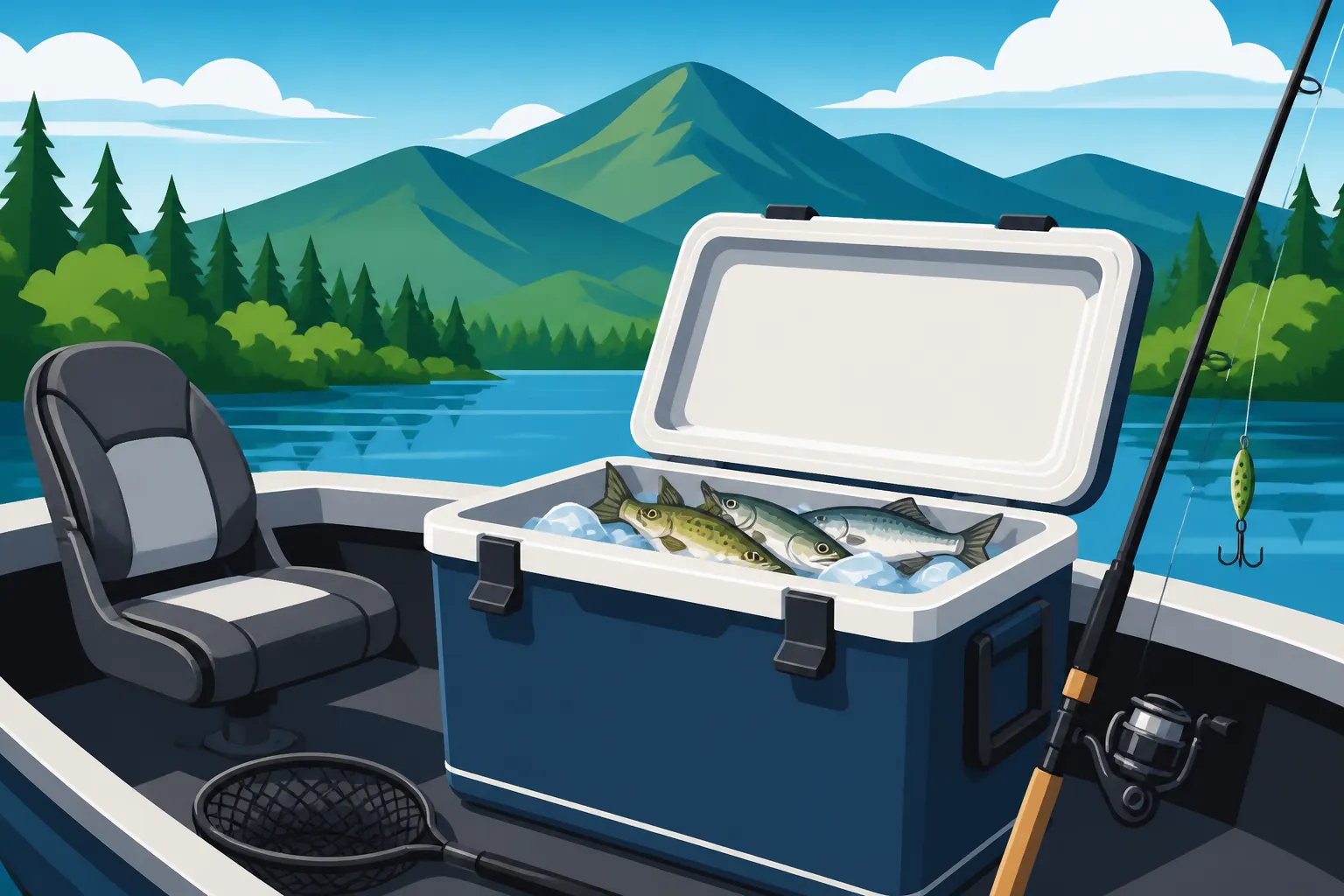
If you're serious about your fishing and demand the absolute best in ice retention and durability, a roto-molded hard cooler is probably what you're looking for. These are the tanks of the cooler world, designed to withstand extreme conditions and keep ice frozen for days on end, sometimes even a week or more.
Pros:
- Unrivaled Ice Retention: Thanks to their thick, pressure-injected insulation and freezer-grade gaskets, these coolers are champions at keeping things cold. This means less worrying about ice runs and more time fishing.
- Extreme Durability: As discussed, the seamless roto-molded construction makes them incredibly tough. They can withstand impacts, drops, and the general abuse of a fishing environment. You can stand on them, use them as a casting platform, or even an extra seat on your boat without a second thought.
- Versatility: Many come with tie-down slots, allowing you to secure them firmly to your boat. Their robust nature means they often double as dry storage or a temporary bait well if needed.
Cons:
- Weight: All that insulation and heavy-duty construction comes at a cost – these coolers are significantly heavier than other types, especially when full of ice and fish. Moving them around can be a two-person job.
- Cost: They represent a substantial investment. While you can find a wide range of options at places like Bass Pro Shops, they are definitely at the higher end of the price spectrum. However, for many anglers, the longevity and performance justify the initial outlay.
- Bulk: Their thick walls mean they take up more space for a given internal capacity compared to thinner-walled coolers.
Soft-Sided Coolers: Portability and Convenience
For those who prioritize portability, flexibility, or shorter trips, soft-sided coolers offer a compelling alternative. These aren't your flimsy fabric lunch bags; modern soft-sided coolers use advanced insulation and durable materials to provide surprisingly good performance.
Pros:
- Lightweight and Portable: This is their biggest advantage. Easy to carry from the car to the boat, and much less cumbersome to move around when empty.
- Flexible and Space-Saving: Many soft-sided coolers can be squished into tighter spaces or even folded down when empty, which is a huge plus on smaller boats or Best Kayaks for Vermont Fishing where space is at a premium.
- Comfortable to Carry: Often equipped with shoulder straps or comfortable handles, making them ideal for carrying to remote fishing spots or shore lunches.
Cons:
- Less Ice Retention: While much improved, soft-sided coolers generally cannot match the ice retention of their roto-molded counterparts. They are better suited for day trips or 24-48 hour cooling needs.
- Durability: While robust for soft goods, they are not as puncture-resistant or crush-proof as hard coolers. Sharp hooks or finned fish could potentially damage them if not handled carefully.
- Cleaning: The soft fabric interiors can sometimes be a bit more challenging to clean thoroughly, especially if fish slime or bait residue gets into the seams.
You'll find a good selection of these on Amazon with various features and designs to fit different needs. They are often excellent as a secondary cooler for drinks and snacks, keeping your main hard cooler dedicated to fish.
Electric Coolers: The Power Option (with caveats)
Electric coolers, also known as thermoelectric coolers, can be intriguing because they don't require ice. They plug into a 12V outlet (like your boat's cigarette lighter port) and can cool their contents to a certain temperature below the ambient air, or sometimes even warm them.
Pros:
- No Ice Needed: This eliminates the hassle and expense of buying ice, and frees up internal space that would otherwise be taken by ice.
- Consistent Cooling: As long as they have power, they maintain a consistent temperature.
Cons:
- Power Drain: They draw power from your boat's battery, which can be a concern on long trips, especially if you don't have a dedicated auxiliary battery. Running your boat's starting battery down is a nightmare scenario.
- Limited Cooling Performance: Most thermoelectric coolers only cool to a certain degree below ambient temperature, not to a specific temperature like a refrigerator. On a very hot Vermont summer day, "20-30 degrees below ambient" might still leave your drinks only lukewarm. They are not true refrigerators.
- Less Rugged: Generally, these coolers are not built with the same robust construction as roto-molded coolers and are less tolerant of bumps, drops, and wet environments.
- Not Ideal for Fish: The cooling performance is often insufficient for rapidly chilling a fresh catch to preserve its quality, and the electrical components aren't designed for constant exposure to fish guts and water.
While they have their niche for car camping or light-duty applications, electric coolers are usually not the best primary option for storing fresh fish or keeping things truly ice-cold on a dedicated fishing boat, especially in challenging conditions.
Features That Make a Cooler Truly "Boat-Friendly"
Beyond the core aspects of insulation and durability, there are specific design features that can elevate a good cooler to a great boat cooler. These often overlooked details can make a huge difference in convenience, safety, and overall user experience on the water.
Non-Slip Feet and Tie-Down Slots: Keeping Your Cooler Put
Imagine you're cruising across Lake Champlain, maybe hitting some chop, or you're reeling in a big one and the boat starts rocking. The last thing you want is your heavy cooler sliding across the deck, potentially causing a trip hazard, damaging other gear, or even going overboard. This is where non-slip feet and tie-down slots become absolutely essential.
Non-slip feet are usually made of rubber and are strategically placed on the bottom corners of the cooler. They grip the boat deck, providing stability even when the boat is moving or tilting. They prevent the cooler from wandering around, which is a common frustration with cheaper models.
Integrated tie-down slots allow you to secure the cooler firmly to your boat using straps or ropes. These are typically molded directly into the cooler's body, providing strong, reliable points to lash it down. This is not only a matter of convenience, keeping the cooler exactly where you want it, but also a significant safety feature. A heavy, unsecured cooler can be a dangerous projectile in rough waters or during sudden maneuvers. Before you head out, make sure you know your Vermont Boating Laws for Anglers, and ensuring your gear is secure is a big part of that!
Drain Plugs and Easy Cleaning: Maintaining Hygiene and Simplicity
After a successful day of fishing, your cooler will likely be a messy mix of melted ice, fish scales, blood, and general boat grime. Cleaning it efficiently is crucial for hygiene and to prevent odors from lingering.
Look for coolers with a large, threaded drain plug. Small, flimsy plugs are easily lost or break, and slow drains are incredibly frustrating. A larger diameter plug allows for quicker drainage of melted ice and wash-down water, speeding up the cleaning process. Threaded plugs are more secure and less likely to accidentally open during transport.
The interior design also matters for cleaning. Coolers with smooth, seamless interior walls are much easier to wipe down. Avoid interiors with lots of nooks, crannies, or rough textures where grime and bacteria can accumulate. Antimicrobial liners are a nice bonus, but a smooth, easily accessible interior is paramount. After you've had a great day following your Vermont Trout Season and Stocking Rules, you want to make sure your cooler is clean and ready for the next adventure.
Integrated Features: From Measuring Boards to Bottle Openers
While not strictly necessary for a cooler's primary function, several integrated features can significantly enhance its utility and convenience on a fishing boat.
- Measuring Boards: Many cooler lids feature an integrated fish measuring scale. This is incredibly handy for quickly checking if your catch meets Vermont Bass Minimum Length Limits or other regulations without having to hunt for a separate measuring tape. It's right there on the lid, ready to go.
- Cupholders: Simple, but effective. Integrated cupholders on the lid help prevent drinks from spilling on a rocking boat.
- Bottle Openers: Some coolers come with built-in bottle openers, which is a small but appreciated convenience when you're enjoying a cold beverage after a long day of casting.
- Comfortable Handles: While heavy, a cooler needs good handles for those times you do need to move it. Look for ergonomic, robust handles that are comfortable to grip, even when carrying a heavy load. Rope handles with rubber grips are a common and effective design.
- Basket/Divider Options: Some coolers offer internal baskets or dividers. These are great for keeping dry items like sandwiches and snacks out of the melted ice water, or for separating different types of bait or fish.
These thoughtful additions, often found in higher-end models available through retailers like Bass Pro Shops, really show that the cooler was designed with the angler in mind.
Maintenance and Maximizing Your Cooler's Performance
Even the best cooler in the world won't perform optimally if you don't use and care for it correctly. A little bit of knowledge and a few good habits can significantly extend your ice retention and the lifespan of your cooler, ensuring it's always ready for your next Vermont fishing trip.
Pre-Chilling and Proper Loading Techniques
This is probably the most overlooked step in maximizing your cooler's performance, but it makes a huge difference. Don't just throw warm drinks and ice into a hot cooler.
- Pre-Chill Your Cooler: The day before your trip, or at least several hours beforehand, fill your cooler with sacrificial ice or a few frozen water bottles. Let it sit with the lid closed. This brings the internal temperature of the cooler down, so your primary ice isn't wasted cooling the cooler itself. Just like you wouldn't put a warm engine in a cold car, you don't want to put warm items into a cold cooler.
- Pre-Chill Your Contents: Whenever possible, put your drinks, food, and anything else going into the cooler in your refrigerator or freezer beforehand. Cold items stay cold longer.
- Use Quality Ice: Block ice melts slower than cubed ice. A combination is often best: a layer of block ice on the bottom for long-term cooling, then cubed ice to fill in gaps and surround items for faster chilling.
- Layer Smart: Put items you need less frequently on the bottom. If you're packing fish, consider a layer of ice, then fish, then more ice. For food and drinks, place cold packs or block ice strategically around and on top of your items.
- Minimize Air Space: A full cooler performs better than a half-empty one. If you have extra space, fill it with more ice, towels, or crumpled newspaper to reduce air circulation.
- Keep it Closed: Every time you open the lid, cold air escapes and warm air rushes in. Try to plan what you need and grab it quickly. Consider having a smaller, secondary soft-sided cooler for frequently accessed drinks if your main cooler is for fish or long-term storage.
Cleaning and Storage for Longevity
Proper cleaning and storage are vital for keeping your cooler in top shape, preventing odors, and ensuring its longevity.
- Immediate Cleaning: As soon as you're off the water, empty your cooler. Remove all fish, ice, and food. For fish storage, a quick rinse with a hose immediately is key to getting rid of blood and scales before they dry and become stubborn.
- Thorough Wash: Wash the interior and exterior with warm, soapy water. A mild dish soap works great. For stubborn stains or odors, a solution of baking soda and water or a diluted bleach solution (one tablespoon of bleach per gallon of water) can be effective. Use a brush for tough spots, especially around seals and drain plugs.
- Rinse and Dry Completely: Rinse the cooler thoroughly to remove all soap or cleaning solution. Then, and this is crucial, leave the lid open to allow the interior to air dry completely. Storing a cooler with any moisture inside is an invitation for mold, mildew, and persistent funky odors.
- Odor Control: If you still detect lingering odors, try placing an open box of baking soda or a few pieces of crumpled newspaper inside the closed cooler for a few days. Activated charcoal packets can also work wonders.
- Proper Storage: Store your cooler in a cool, dry place, ideally with the lid slightly ajar to ensure airflow and prevent moisture buildup. Avoid storing it in direct sunlight when not in use, as prolonged UV exposure can degrade the plastic over time.
By following these simple steps, your fishing boat cooler will remain a reliable companion for countless trips to come, making sure your adventures are always well-provisioned and your catches are perfectly preserved.
Cooler Comparison for Vermont Fishing Boats
To help you visualize the different options, here's a quick comparison of the main cooler types we've discussed:
| Feature | Roto-Molded Hard Cooler | Soft-Sided Cooler | Electric Cooler |
|---|---|---|---|
| Ice Retention | Excellent (Multiple days to a week+) | Good (1-3 days) | N/A (requires no ice, uses power) |
| Durability | Extremely High (Impact, UV, Puncture Resistant) | Moderate (Resistant to minor abrasions, less puncture) | Low to Moderate (Less rugged, not for heavy abuse) |
| Weight (Empty) | Heavy | Light | Moderate |
| Cost | High | Moderate | Moderate |
| Boat Use Case | Primary cooler for fish, food, long trips, extra seating | Secondary cooler for drinks/snacks, short trips, kayaks | Limited (might be okay for drinks, but not ideal for fish) |
| Key Advantage | Max performance, long-term preservation, ruggedness | Portability, flexibility, ease of transport | No ice required, consistent temperature (with power) |
| Key Disadvantage | Bulk, weight, higher initial investment | Limited ice retention, less protective | Battery drain, limited cooling, not very rugged |
No matter which type of cooler you choose, remember that the best cooler is the one that fits your specific fishing needs and enhances your overall enjoyment on the water. Happy fishing out there on Vermont's beautiful lakes and rivers!
Disclaimer
This article is for general informational purposes only and does not constitute professional advice. Laws, prices and regulations vary by location and change over time. Consult a qualified professional for guidance on your specific situation.