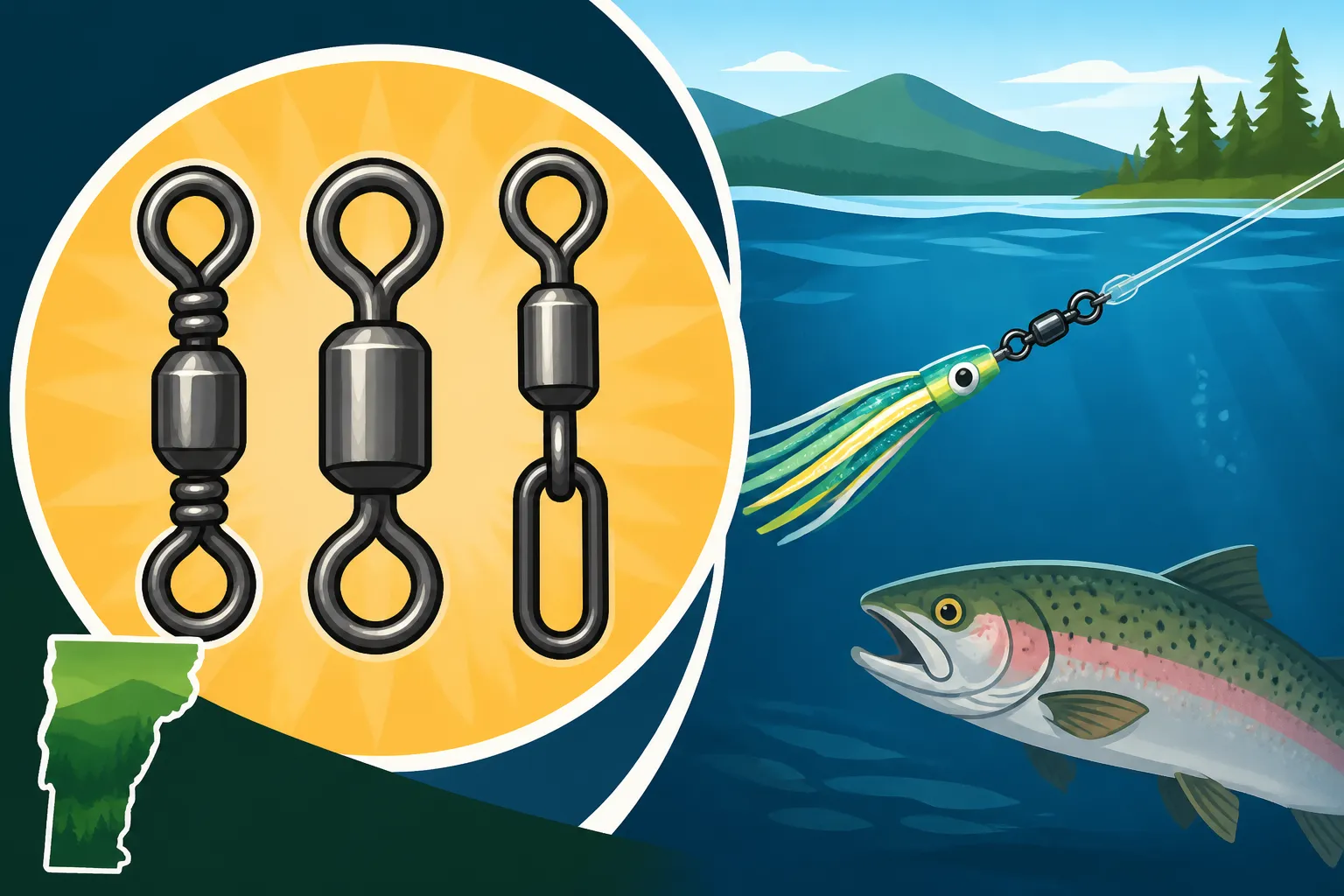
Best swivel type for trolling leaders
One of the most frustrating things about trolling, especially here in Vermont where we chase everything from feisty smallmouth bass to powerful lake trout, is that inevitable moment when you reel in to find your line twisted into a bird's nest. This isn't just annoying; it weakens your line, messes with your lure's action, and can cost you a prized catch. This guide is all about tackling that exact problem by helping you understand and choose the best swivel types for your trolling leaders.
Why Swivels Are Non-Negotiable for Trolling Leaders
Picture this: you've spent hours on Lake Champlain, carefully setting your lines, adjusting your speed, and finally, you get a solid hit. You fight the fish, bring it in, and when you go to re-deploy, your leader is a tangled mess of twisted monofilament. Sound familiar? That's the exact scenario swivels are designed to prevent. They might seem like a small, insignificant piece of tackle, but their role in a trolling setup is absolutely critical.
The Battle Against Line Twist
Line twist is the silent killer of many a trolling trip. It happens for a few key reasons, and it's a persistent enemy. First, many popular trolling lures, like spoons and some plugs, are designed to wobble, rotate, or spin through the water to attract fish. This action, while effective, imparts a twisting motion to your line. Every rotation of the lure is a rotation on your line. Second, when you're fighting a fish, especially an energetic species that likes to roll or spin, that rotational force transfers directly to your line. A bass jumping and shaking its head, or a lake trout digging deep and doing barrel rolls, will spin your leader like a propeller.
Over time, this constant twisting, even if subtle, accumulates. It can cause your line to coil, creating kinks and tangles. More importantly, it weakens the line's integrity, especially at knots. A compromised line is far more likely to snap under the stress of a strong fish, turning what should be a triumphant moment into a heartbreaking loss. Swivels act as a rotational buffer, absorbing these twists and preventing them from traveling up your leader and into your main fishing line.
Protecting Your Main Line and Presentation
Beyond just preventing tangles and weak spots, swivels play a vital role in maintaining the effectiveness of your fishing presentation. When your leader is twisted, your lure simply doesn't move through the water as it's designed to. A spoon might spin erratically instead of wobbling enticingly, or a plug might track off to one side. This unnatural action can be a huge turn-off for wary fish.
By isolating the twist to the short section of line between the lure and the swivel, your main line and the upper part of your leader remain untwisted and straight. This allows your lure to perform its intended action freely, giving you the best chance to attract strikes. Furthermore, a clean, untwisted leader is less visible in the water. Kinks and coils can catch and reflect light in unnatural ways, potentially spooking fish. A properly functioning swivel ensures that your presentation looks as natural and appealing as possible, whether you're chasing walleye on Lake Champlain Walleye Fishing or landlocked salmon on Lake Willoughby.
Understanding the Main Swivel Types for Trolling
When you walk into a tackle shop or browse online at Bass Pro Shops, you'll see a dizzying array of swivels. While many exist for specialized applications, a few core types are most relevant for trolling leaders. Knowing the differences between them is key to making the right choice for your Vermont fishing adventures.
Barrel Swivels: The Workhorse of Angling
The barrel swivel is probably the most common and recognizable swivel out there. It's a simple, cylindrical design with a loop at each end, allowing it to rotate along its central axis. These are often the most budget-friendly option and are ubiquitous in tackle boxes everywhere.
Pros of Barrel Swivels:
- Cost-Effective: They are generally the cheapest option, making them great for anglers on a budget or for setups where you might lose a lot of tackle.
- Simplicity: Their straightforward design makes them easy to tie and understand.
- Versatility: They work well for a wide range of basic fishing applications, not just trolling.
Cons of Barrel Swivels:
- Limited Anti-Twist Performance: While they do help reduce twist, their rotation isn't as free or efficient as other types, especially under heavy load or with highly spinning lures. They can bind up more easily.
- Bulkier for their Strength: To achieve higher breaking strengths, barrel swivels often need to be physically larger than more advanced designs, which can be less desirable in clear water or with smaller baits.
Best Applications for Barrel Swivels in Vermont Trolling:
Barrel swivels are suitable for lighter trolling setups where the lures don't generate extreme twist or when targeting less aggressive fish that might not put as much rotational strain on the line. Think about trolling for yellow perch or smaller crappie with subtle jigs or tiny spoons. They can also work for slow-speed trolling with simpler bait rigs. However, if you're pulling a flasher or a large, aggressively wobbling crankbait, you'll likely want to consider something with better anti-twist capabilities.
Crane Swivels: Stepping Up the Performance
Crane swivels are an upgrade from the basic barrel design. Instead of a simple barrel, they feature a more refined, often smoother, cylindrical body that allows for freer rotation. This improved design comes with a slight increase in cost but offers a significant jump in performance.
Pros of Crane Swivels:
- Improved Rotation: They offer much smoother and more reliable rotation than barrel swivels, making them more effective at mitigating line twist.
- Better Strength-to-Size Ratio: Crane swivels tend to be stronger for their physical size compared to barrel swivels, meaning you can use a smaller swivel for the same breaking strength, leading to a less conspicuous presentation.
- Increased Durability: The more robust construction often means they hold up better over time.
Cons of Crane Swivels:
- Slightly More Expensive: They are a bit pricier than barrel swivels, though still quite affordable.
Best Applications for Crane Swivels in Vermont Trolling:
Crane swivels are an excellent all-around choice for many Vermont trolling scenarios. They are perfect for medium-duty trolling, such as chasing smallmouth and largemouth bass with crankbaits and spinnerbaits, or targeting brown trout and rainbow trout with spoons in rivers like the White River or Lamoille River. If you're using lures that have a moderate amount of spin or wobble, or if you anticipate more spirited fights, crane swivels are a reliable step up that will greatly reduce line twist issues.
Ball Bearing Swivels: The Ultimate Twist Stopper
For the ultimate in line twist prevention, look no further than ball bearing swivels. These are engineered with tiny ball bearings inside the swivel body, allowing for incredibly smooth, nearly frictionless rotation even under significant load. They are the gold standard for demanding trolling applications.
Pros of Ball Bearing Swivels:
- Unparalleled Rotation: Their ball bearing mechanism provides virtually frictionless rotation, making them supremely effective at eliminating line twist, no matter how aggressively your lure spins or how much a fish rolls.
- Exceptional Strength: Ball bearing swivels boast an incredible strength-to-size ratio. You can use very small swivels that are still immensely strong, perfect for clear water or when targeting species with keen eyesight.
- Superior Durability: They are built to last, resisting corrosion and maintaining their smooth action even after many uses and fish.
Cons of Ball Bearing Swivels:
- Most Expensive: This superior performance comes at a cost; ball bearing swivels are significantly more expensive than barrel or crane types.
- Can Be Bulkier in Smaller Sizes: While strong for their size, the smallest ball bearing swivels can still be slightly bulkier than comparable crane swivels at the very lightest end of the spectrum, though their performance usually outweighs this.
Best Applications for Ball Bearing Swivels in Vermont Trolling:
If you're serious about trolling for trophy fish in Vermont, ball bearing swivels are an essential investment. They are ideal for high-speed trolling, for pulling large dodgers or flashers ahead of spoons, or for using big, aggressively actioned lures designed for species like muskellunge on Muskellunge Fishing on Lake Memphremagog or the largest lake trout on Lake Champlain. When every detail counts, and you cannot afford line twist, such as when targeting picky landlocked salmon or when dealing with heavy setups, ball bearing swivels are the definitive choice. You'll often find these types of swivels readily available at specialized fishing retailers like Bass Pro Shops or online at Amazon, especially when looking for heavy-duty options.
Three-Way Swivels and Other Specialty Swivels
While barrel, crane, and ball bearing swivels handle the primary job of twist prevention, there are a few other specialty swivels that anglers might encounter or choose for specific trolling rigs:
- Three-Way Swivels: As the name suggests, these have three rings. They are fantastic for creating specific trolling presentations, such as a dropper rig where one line goes to a weight, another to a lure, and the third to your main line. This is commonly used for bottom-bouncing walleye rigs or for presenting multiple baits at once.
- Snap Swivels: These combine a swivel (usually barrel or crane) with a snap clip at one end. They are incredibly convenient for quickly changing lures without retying. However, the added hardware of the snap can be a potential weak point or create extra drag, so choose high-quality snaps and use them judiciously, especially for larger, stronger fish. For light tackle panfishing, they're great, but for a prize lake trout, you might prefer a direct knot to a high-quality swivel.
- Interlock Swivels: Similar to snap swivels but with a stronger, more secure interlocking clip mechanism. These are a good compromise if you need quick changes for larger lures but want more security than a standard snap.
Factors to Consider When Choosing Your Trolling Swivel
Choosing the right swivel isn't a one-size-fits-all decision. Several factors should influence your selection to ensure you have the best setup for your specific fishing conditions in Vermont.
Target Species and Lure Type
The fish you're targeting and the lures you're using are paramount. A small barrel swivel might suffice for panfish, but it would be completely inadequate for the powerful runs of a landlocked salmon or the thrashing head-shakes of a large smallmouth bass.
- Aggressive Lures: If you're pulling fast-spinning spoons, dodgers, or large plugs that generate significant torque, a high-quality crane or, ideally, a ball bearing swivel is a must. Think about when you're targeting walleye on Best Lures for Walleye Trolling on Lake Champlain with deep-diving crankbaits or trying for lake trout with large spoons. These lures inherently twist the line, and a superior swivel is your best defense.
- Passive Baits/Lighter Tackle: For more subtle presentations like still-fishing with live bait on a dropper rig or slow-trolling smaller, less active lures, a barrel or crane swivel might be perfectly adequate. The key is to match the swivel's twist-prevention capability to the potential for line twist from your lure and the fighting style of your target species.
Line Weight and Breaking Strength
Your swivel should be the strongest link in your leader system, not the weakest. Always choose a swivel with a breaking strength that matches or ideally exceeds the pound-test of your main line and leader. There's no point in having a 20-pound test main line if your swivel is only rated for 10 pounds; you've just created a guaranteed failure point.
When selecting swivels, pay close attention to the manufacturer's stated breaking strength. Remember that these ratings are often for a perfect, static pull. Real-world fishing involves sudden shocks, jerks, and dynamic loads. Giving yourself a little buffer by choosing a swivel slightly stronger than your line is always a good idea. This ensures that your knots are more likely to fail before the swivel itself does, and frankly, a knot failure is often easier to recover from than a snapped piece of hardware.
Water Clarity and Visibility
Vermont's waters range from crystal-clear mountain streams like those you might find covered in Best Fly Fishing Rivers in Vermont to the vast, sometimes turbid depths of Lake Champlain. The clarity of the water can influence your swivel choice. In extremely clear water, fish can be very visual and wary of any unnatural elements in your presentation.
- Clear Water: Opt for the smallest possible swivel that still meets your strength requirements. Smaller swivels are less conspicuous. Many anglers also prefer dark, non-reflective finishes (like black nickel) in clear water to minimize flash that might spook fish.
- Stained or Murky Water: In darker, stained waters, visibility is less of a concern, and you can get away with slightly larger or brighter finished swivels if necessary. However, the rule of thumb is usually to go as small and unobtrusive as you can without compromising strength or performance.
Budget and Durability
Let's be real, fishing tackle costs money, and it's easy to get carried away. Swivels are no exception, with prices varying significantly between types.
- Budget Considerations: If you're just starting out or primarily doing casual fishing, basic barrel or crane swivels are very affordable and will get the job done for many applications. They can be bought in bulk from places like Amazon, which is great for stocking up.
- Investment in Durability: For serious anglers, especially those targeting larger game fish or spending a lot of time trolling, investing in higher-quality ball bearing swivels is usually worth it. Their superior durability and twist-prevention mean fewer lost fish, less time spent untangling lines, and a better overall fishing experience. While the upfront cost is higher, their longevity often makes them more economical in the long run. Good quality swivels, especially those used for species like How to Catch Muskellunge on Lake Memphremagog, need to withstand significant stress and exposure to water without corroding or failing. Regularly check all your swivels for signs of wear, rust, or stiffness, regardless of type.
Integrating Swivels into Your Vermont Trolling Setups
So you've picked the perfect swivel – now what? How do you actually incorporate it into your leader system for maximum effectiveness? It's not just about tying a knot; it's about thoughtful integration.
Leader Length and Material
The leader is the critical link between your main line and your lure, and the swivel sits right there in the middle. The material and length of your leader will depend heavily on your target species and fishing conditions.
- Leader Material: For many Vermont freshwater applications, fluorocarbon leaders are a popular choice due to their near-invisibility underwater and abrasion resistance. Monofilament can also be effective, offering more stretch and shock absorption, which can be beneficial for fighting hard-charging fish like pike or larger smallmouth bass. When using a swivel, you'll typically tie your main line to one end and then tie a section of leader material to the other end, which then connects to your lure.
- Leader Length: The length of your leader (the section between the swivel and the lure) can vary from just a few inches to several feet.
- Shorter Leaders (6-12 inches): Often used with dodgers or flashers, where the primary purpose is to impart action to the trailing lure. The swivel will be very close to the dodger.
- Medium Leaders (1-3 feet): A good all-around length for many trolling setups, providing enough separation for the lure to swim naturally while still allowing the swivel to effectively manage twist. This is a common setup for targeting various trout species or bass.
- Longer Leaders (4+ feet): Sometimes used in extremely clear water with very wary fish, or when using subtle presentations that need maximum freedom of movement. For example, when trolling for landlocked salmon on How to Catch Landlocked Salmon in Vermont in clear deep lakes, a longer, nearly invisible fluorocarbon leader is often preferred.
The key is that the swivel acts as the pivot point, isolating the twist from the lure to that specific leader section.
Best Practices for Attaching Swivels
Properly attaching your swivel is just as important as choosing the right one. A poorly tied knot can negate all the benefits of a high-quality swivel.
- Use Strong, Reliable Knots: For attaching fishing line to swivels, the Palomar knot and the Uni knot are two excellent choices known for their strength and reliability. The Improved Clinch knot is also widely used. Practice these knots until you can tie them quickly and correctly, even in less-than-ideal conditions.
- Moisten Your Knots: Always moisten your knots with saliva before tightening them. This lubricates the line, allowing the knot to cinch down properly and preventing friction heat that can weaken the line.
- Trim Tags Closely: After tying, trim the tag end of your line closely but not so close that the knot could unravel. A small tag end is acceptable.
- Regular Inspection: Swivels are subject to incredible stress and wear. Make it a habit to inspect your swivels regularly, especially after catching a significant fish or if you notice any changes in your lure's action.
- Check for Corrosion: Even high-quality swivels can corrode over time, especially in certain water conditions. If you see any rust or discoloration, replace it immediately.
- Test for Free Movement: Gently rotate the swivel with your fingers. It should spin freely and smoothly. If it feels stiff, gritty, or binds, it's time for a replacement. A frozen swivel is essentially a weak link that won't prevent twist.
- Inspect Rings/Eyes: Check the attachment points (the rings or eyes) for any signs of bending, distortion, or wear from repeated stress.
- Replace Proactively: If you have any doubt about a swivel's integrity, replace it. It's a small cost compared to losing a trophy fish due to a preventable tackle failure.
By paying attention to these details, you'll ensure that your chosen swivel performs its vital job effectively, keeping your lines straight and your lures running true, giving you the best shot at success on the waters of Vermont.
| Swivel Type | Pros | Cons | Best Use Cases for Vermont Trolling |
|---|---|---|---|
| Barrel Swivel | – Very cost-effective | – Less efficient at twist prevention | – Light tackle, subtle lures, panfish, simple bait rigs. |
| – Simple and widely available | – Can bind under heavy load/fast rotation | – Less aggressive species like yellow perch or small crappie. | |
| Crane Swivel | – Good rotation, better than barrel | – Slightly more expensive than barrel | – All-around choice for bass, medium trout, smaller walleye. |
| – Better strength-to-size ratio | – Lures with moderate wobble/spin (crankbaits, medium spoons). | ||
| Ball Bearing Swivel | – Superior, virtually frictionless rotation | – Most expensive option | – Heavy-duty trolling, large lake trout, muskellunge, high-speed walleye trolling on Lake Champlain. |
| – Excellent strength-to-size ratio | – Smallest sizes can still be slightly bulkier | – Lures with extreme twist (flashers, dodgers, large spoons/plugs). Critical for trophy species. |
Disclaimer
This article is for general informational purposes only and does not constitute professional advice. Laws, prices and regulations vary by location and change over time. Consult a qualified professional for guidance on your specific situation.