Best boat for shallow rocky rivers
Anyone who's ever tried to navigate Vermont's countless rivers and streams knows the frustration: you spot a perfect-looking riffle or a deep bend upstream, but your trusty lake boat simply isn't going to make it. The shallow water, the hidden rocks, the unpredictable currents – it all adds up to a recipe for a bent prop, a scraped hull, or worse, getting completely stuck. This guide is all about helping you understand the unique demands of these waterways and identifying the best boat options to get you to those elusive fishing spots safely and effectively.
Understanding the Challenges of Vermont's Rocky Rivers
Vermont is a tapestry of sparkling lakes, winding rivers, and countless smaller streams, each offering its own angling charm. But when it comes to rivers, especially those that aren't the broad, deep stretches of the Connecticut or parts of the Winooski, you're dealing with a completely different beast than your typical lake environment. The challenges are real, and they demand a specialized approach to boating.
The Nature of Shallow, Rocky Waterways
Imagine a clear, swift-moving stream, barely knee-deep in spots, with basketball-sized rocks littering the bottom, some visible, many lurking just beneath the surface. This is the reality for many of Vermont's prime trout and smallmouth bass rivers. The current, even if not raging, can push you sideways into obstacles. Depths can change dramatically within a few feet, from a mere trickle over gravel to a sudden, deep pool. These dynamic conditions are exactly what makes these rivers fantastic for fish but incredibly tricky for conventional boats. A momentary lapse in attention, a misread of the current, and you could find yourself high and dry on a rock, or worse, damaging your vessel.
Traditional boat designs, with their deep V-hulls, are designed to cut through waves and provide a smooth ride on open water. But in a shallow river, that deep keel becomes a major liability, constantly dragging and banging against the bottom. The propellers on standard outboard motors are also incredibly vulnerable, acting like expensive blenders for any rock they encounter. Even small pieces of submerged debris can cause significant damage to a prop, the prop shaft, or even the lower unit of your motor, leading to costly repairs and cutting your fishing day short.
Why Standard Fishing Boats Fall Short
Most fishing boats on the market are designed with lakes and large reservoirs in mind. They prioritize stability for standing, speed for covering distance, and capacity for multiple anglers and gear. While these features are fantastic on Lake Champlain or Lake Willoughby, they become detrimental on a river like the Battenkill or the Lamoille. A 20-foot bass boat, for instance, with its powerful outboard and deep V-hull, would be utterly useless, and frankly, dangerous, on many of Vermont's smaller, rock-strewn rivers.
The sheer size and weight of these boats also present insurmountable logistical challenges. Many river access points in Vermont are undeveloped, lacking proper ramps. You might be launching from a gravel bank, a grassy verge, or even carrying your boat down a short trail. Hauling a heavy, unwieldy craft over uneven terrain is simply not feasible for many of us. Furthermore, the noise and wake generated by larger, faster boats can disturb other anglers, disrupt the natural environment, and frankly, scare off the very fish you're trying to catch in these more intimate settings. It's clear that a different kind of vessel is needed for successful and responsible river fishing in Vermont.
Essential Boat Characteristics for River Navigation
When you're looking to tackle Vermont's shallow, rocky rivers, you need to completely rethink what makes a "good" fishing boat. It's less about horsepower and fancy electronics, and more about smart design, durable materials, and nimble handling. The ideal river boat is a specialized tool, built to endure bumps and scrapes while getting you into those hard-to-reach pockets where the fish are hiding.
Hull Design and Material Matters
The very first thing to consider for a shallow, rocky river boat is its hull design. Forget deep V-hulls; they're the enemy here. What you need is a boat with a very shallow draft, meaning it sits high in the water, minimizing the amount of boat submerged. This usually translates to a flat bottom or a modified V-hull that flattens out significantly towards the stern. A flat bottom allows the boat to glide over very shallow water and, crucially, to slide over rocks rather than getting hung up on them. While a flat bottom can feel a bit less stable in choppy water, that's rarely an issue on narrow rivers.
Beyond the shape, the material is paramount. You're going to hit things; it's an inevitability.
- Aluminum is a popular choice for jon boats and river boats for a reason. It's incredibly durable, able to withstand significant impacts with rocks and logs without puncturing. Welded aluminum boats are generally preferred over riveted ones for their superior strength and leak resistance in rough conditions.
- Roto-molded plastic (like polyethylene) is another excellent option, often found in kayaks and smaller canoes. This material is remarkably tough, flexible, and can absorb impacts without denting or deforming permanently. It's also often quieter than aluminum, which can be a huge advantage for stealthy approaches to fish.
- Inflatables, made from heavy-duty PVC or Hypalon, offer an entirely different kind of durability. They flex and bounce off obstacles, making them incredibly forgiving in rocky environments. While not indestructible, a quality inflatable is surprisingly robust against punctures from sharp rocks.
Propulsion Systems for Skinny Water
The propeller of a traditional outboard motor is perhaps the most vulnerable part of a standard boat in shallow, rocky conditions. One good rock strike can render your motor useless. This is why specialized propulsion is a must.
- Jet Drives: These are often the go-to for serious river anglers using motorized boats. Instead of a propeller, a jet drive sucks water into an intake and expels it through a nozzle, propelling the boat forward. Since there's no prop hanging below the hull, you can run in incredibly shallow water – often just a few inches, as long as the intake isn't sucking air. This opens up vast stretches of river that would be impassable with a standard prop. They do, however, require more power for the same thrust as a prop, and they can be sensitive to weeds and debris clogging the intake.
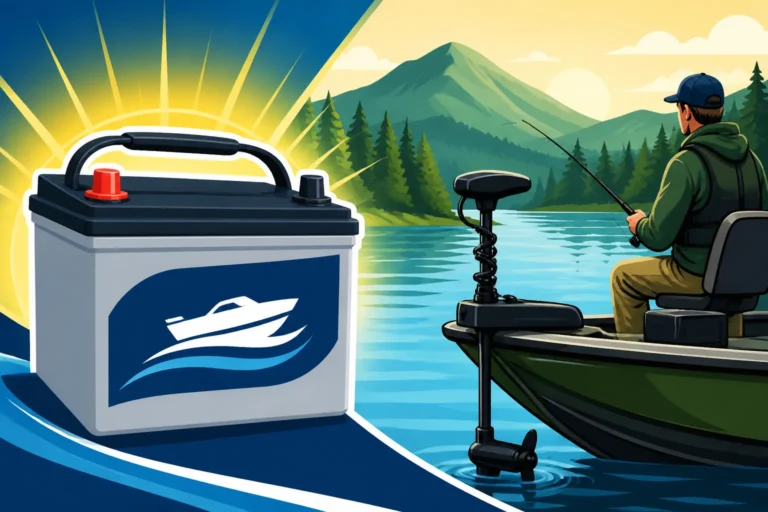
- Electric Trolling Motors: For smaller boats like jon boats, canoes, or kayaks, a bow-mounted or transom-mounted electric trolling motor can be ideal. They offer quiet, precise control, and many models have breakaway or high-riding propeller designs that minimize rock strikes. They're perfect for slowly working a stretch of river and for maintaining position in a current. Check out some options at retailers like Bass Pro Shops or online at Amazon.
- Oars and Paddles: Sometimes, the simplest solution is the best. Many shallow, rocky rivers are best navigated under human power. Oars or paddles allow for extremely precise maneuverability, silent operation, and immediate reaction to obstacles. A well-placed oar stroke can save your boat from a nasty scrape or prevent you from drifting into a dangerous section of rapids. Even with a motor, having a good set of oars or a sturdy paddle is absolutely critical for backup and fine-tuning your position.
Size, Weight, and Portability
When fishing Vermont's backcountry rivers, accessibility is key, and that often means launching where there's no concrete ramp. This is where the size and weight of your boat become crucial factors. A lighter boat is easier to car-top, easier to slide into the water from an unimproved bank, and critically, easier to portage around small rapids, fallen trees, or low bridges.
A boat that can be comfortably launched by one or two people opens up a world of fishing opportunities that larger, heavier boats simply can't access. Moreover, a smaller footprint means better maneuverability in tight bends and narrow channels. You're not fighting the river; you're flowing with it, able to navigate around obstacles rather than trying to power through them. Whether you're considering a canoe, a jon boat, or one of the many Best Kayaks for Vermont Fishing, think about how easily you can get it to and from the water.
Top Boat Types for Vermont's Skinny Rivers
With the unique challenges of Vermont's shallow, rocky rivers in mind, certain boat types rise to the top as ideal choices. Each has its own set of advantages and disadvantages, making the "best" choice highly dependent on your personal fishing style, how much gear you carry, and the specific rivers you plan to explore.
Jon Boats: The Workhorse of Shallow Water
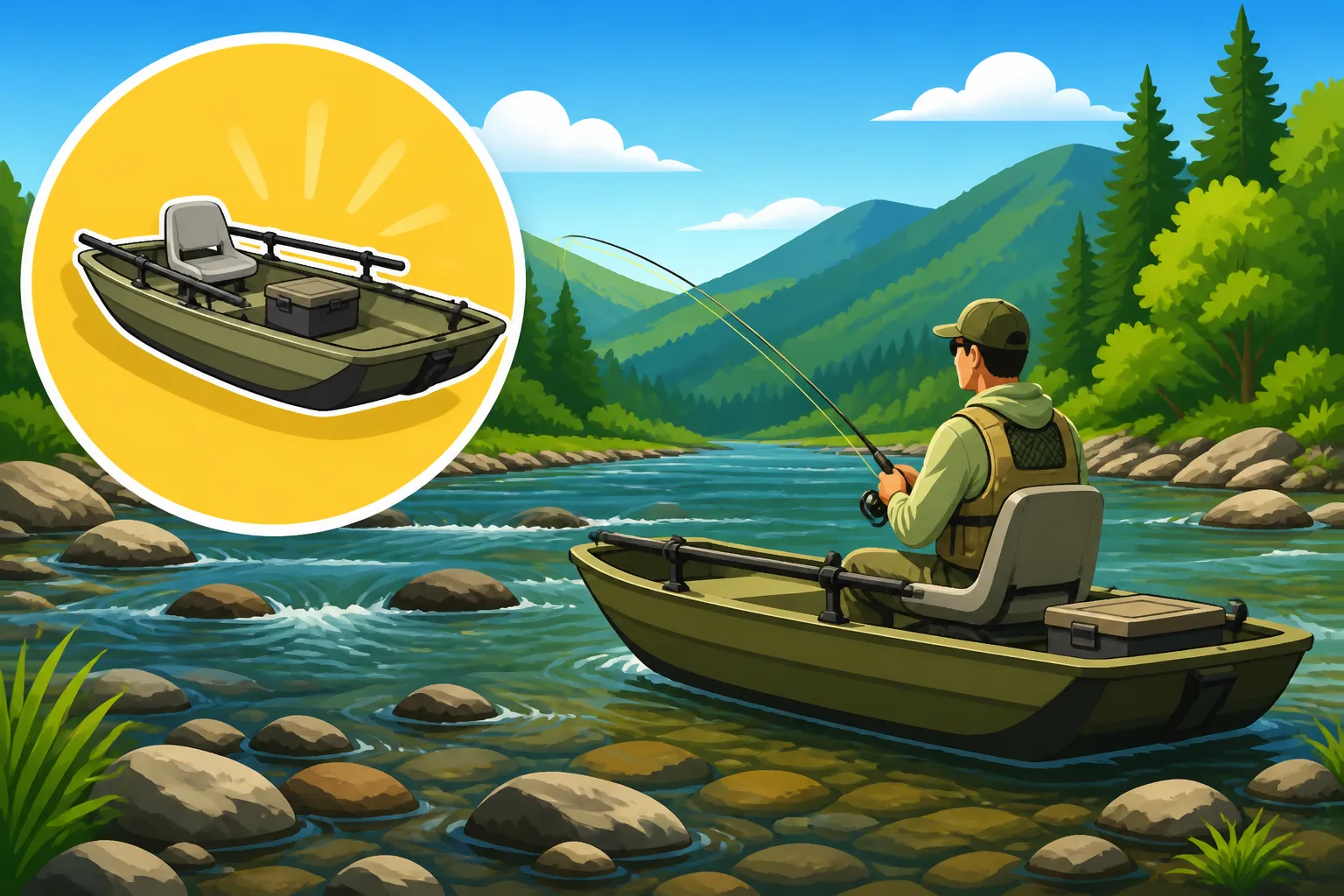
Jon boats are arguably the quintessential shallow-water fishing machine, and they're a fantastic option for Vermont's rivers. Their signature flat-bottomed design allows them to float in extremely shallow water, often just a few inches, making them perfect for skimming over gravel bars and shallow riffles. The wide, flat hull also provides exceptional stability, which is a huge plus if you like to stand and cast, especially for fly fishing.
Most jon boats are constructed from aluminum, which is incredibly durable and can take a beating from rocks and debris without major structural damage. When looking for a river-specific jon boat, prioritize models with a stout, all-welded hull rather than riveted construction, as welds tend to hold up better to repeated impacts and stresses. They typically come in sizes ranging from 10 to 16 feet, offering a good balance between capacity for gear and ease of maneuvering. While they can be heavier than a canoe, many smaller jon boats can still be trailered with a compact vehicle or even carefully loaded into the bed of a truck. For those serious about river fishing, pairing a jon boat with a jet-drive outboard motor is a powerful combination that allows access to vast stretches of water. You can find excellent options for Best Jon Boats for Shallow Rivers at specialty retailers and marine dealers throughout the region.
Inflatable Kayaks and Rafts: Lightweight and Agile
For solo anglers or duos looking for maximum portability and impact resistance, inflatable kayaks and rafts are hard to beat. Unlike rigid boats, inflatables are incredibly forgiving when they encounter rocks. Instead of scraping or denting, they tend to bounce and flex, shrugging off impacts that would damage other vessels. Made from tough PVC or Hypalon, a quality inflatable fishing kayak is surprisingly durable against punctures.
Their lightweight nature means they can be easily deflated, rolled up, and transported in the trunk of a car or a duffel bag, making them ideal for accessing remote stretches of river where vehicle access is limited. Once at the water's edge, they can be quickly inflated with a hand or electric pump. While they don't offer the standing stability of a jon boat, many modern inflatable fishing kayaks are designed with wider profiles and elevated seats for comfortable casting. They are incredibly quiet, allowing for stealthy approaches to fish, and can be paddled with a kayak paddle or propelled with a small electric trolling motor. For exploring intimate trout streams or navigating smaller, less forgiving rivers, an inflatable often provides the perfect blend of resilience and accessibility. You'll find a wide range of inflatable kayaks and related accessories available from outfitters and online at retailers like Amazon.
Canoes: Traditional and Versatile
The canoe is a timeless classic for a reason, and it remains an excellent choice for navigating Vermont's rivers. Its long, slender profile and shallow draft allow it to glide efficiently through skinny water, and with proper paddling technique, it can be incredibly maneuverable around obstacles. Canoes offer a fantastic balance of capacity for gear, often enough for a multi-day trip, with a relatively light weight that makes portaging feasible.
Modern canoes, especially those made from roto-molded polyethylene or Royalex (though Royalex is no longer produced, used models are still highly sought after), are remarkably durable against impacts with rocks. They can bend and flex, absorbing blows without cracking or deforming like fiberglass. Aluminum canoes are also very popular for their robustness, though they can be noisy if you're bumping over rocks. While stability can be a concern for beginners, particularly when standing, experienced paddlers can comfortably fish from a canoe. The quiet, natural glide of a canoe also makes it an excellent choice for stealthily approaching wary fish in serene river settings. When combining a canoe with a small electric motor or simply a pair of oars, you have a versatile and quiet fishing platform ideal for many of Vermont's river environments.
Here's a quick comparison of these river-friendly boat types:
| Feature | Jon Boat (Aluminum) | Inflatable Kayak/Raft | Canoe (Plastic/Aluminum) |
|---|---|---|---|
| Shallow Draft | Excellent (few inches) | Excellent (few inches) | Excellent (few inches) |
| Durability (Rocks) | Very Good (can dent, but rarely puncture) | Excellent (flexes, bounces off) | Good (can scuff/dent, less likely to crack) |
| Stability (Standing) | Excellent | Fair to Good (depending on design) | Fair (requires practice) |
| Portability | Fair (can be heavy, often needs trailer) | Excellent (deflates, rolls up) | Good (car-top, light trailers) |
| Maneuverability | Good (especially with jet drive) | Excellent (very agile) | Excellent (skilled paddler) |
| Capacity (Gear) | Good | Fair to Good (limited space) | Excellent (often for multi-day trips) |
| Propulsion Options | Jet drive, electric motor, oars | Paddle, electric motor | Paddle, oars, small electric motor |
| Noise Level | Can be noisy on impacts | Very Quiet | Very Quiet |
Key Considerations Before You Buy
Choosing the best boat for Vermont's shallow, rocky rivers isn't just about picking a type; it's about making sure that choice aligns with your specific angling habits, practical needs, and local river conditions. A little foresight before you commit can save you a lot of headaches (and money) down the line.
Your Fishing Style and Target Species
Think about how you actually fish. Do you primarily fly fish, which often requires standing to make accurate casts and sight-fish for trout? If so, the stability of a wider jon boat might be more appealing. Perhaps you prefer spin fishing for smallmouth bass, casting lures into eddies and structure; in that case, the stealth and maneuverability of a Kayak Fishing Techniques for Vermont Lakes might be more your speed. Or maybe you're a purist who enjoys the quiet solitude of paddling a canoe down a remote river, casting to brook trout in undisturbed pockets.
Consider your target species as well. If you're chasing trophy brown trout in a popular, yet technical, river section, the ability to quietly drift and precisely position your boat without spooking fish is paramount. If you're targeting smallmouth bass that tend to hold near submerged logs and rocky points, a boat that can confidently bump over those obstacles without damage is crucial. Different fish, different tactics, different boat needs. Consider if you need a boat robust enough to handle the challenges described in How to Fish a River for Smallmouth Bass.
Transport and Storage Logistics
This is a really practical consideration that many anglers overlook. How will you get your new river boat to and from the water? If you're eyeing a larger aluminum jon boat, do you have a vehicle capable of towing a small trailer? Is there a safe place to store the trailer and boat when not in use, like a garage or a secure yard? For smaller boats, can it be easily car-topped? Some canoes and even compact jon boats can be loaded onto a roof rack, but this often requires two people and a sturdy rack system.
If you're planning to fish very remote sections of river with limited access, the ability to simply toss an inflatable kayak into your car's trunk or strap a lightweight canoe to your roof and carry it a short distance to the water becomes a massive advantage. Think about the physical effort involved in launching and retrieving your boat at undeveloped access points. Will you be fishing alone, or will you always have a partner to help? These logistical questions often narrow down the options more than any other factor.
Safety First: Essential Gear and Practices
No matter which boat you choose, safety on the river is non-negotiable. Shallow, rocky rivers can be deceptive, and even a minor mishap can quickly become serious. Always wear a properly fitting life jacket; in fact, Life Jacket Requirements for Vermont Boaters mandate it for certain ages and situations, but it's wise for everyone. A spare paddle, even if you have a motor, is absolutely critical. Imagine a motor failure or a lost oar in a swift current – a spare could be a literal lifesaver.
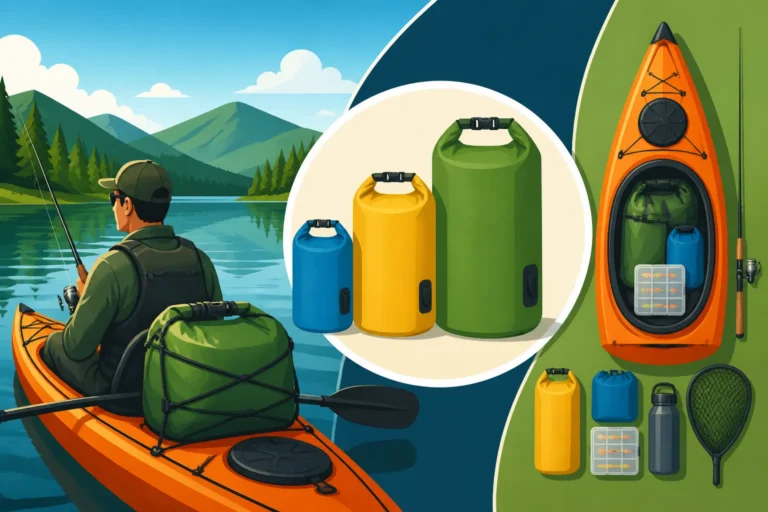
Beyond the basics, consider a throw bag with rescue rope, a small first-aid kit, and reliable dry bags for your electronics and essentials. Before heading out, always check river conditions, including water levels and flow rates, especially after heavy rains, which can dramatically change the river's character. Familiarize yourself with local regulations and any special rules for the specific river you're fishing. Being prepared and understanding the river's potential hazards, as outlined in guides like Vermont Boating Laws for Anglers, will ensure a safe and enjoyable fishing experience.
Disclaimer
This article is for general informational purposes only and does not constitute professional advice. Laws, prices and regulations vary by location and change over time. Consult a qualified professional for guidance on your specific situation.