How to tell a brook trout from a rainbow trout
There's nothing quite like the thrill of a trout rising to your fly or taking your bait in a pristine Vermont stream. But for many anglers, especially those just getting to know our diverse waters, telling the difference between a brook trout and a rainbow trout can be a real head-scratcher. You might be staring at your catch, wondering, "Is this the native beauty or the spirited introduced species?" This guide is here to strip away the confusion, offering clear, actionable tips to help you confidently identify whether you've landed a brook trout or a rainbow trout, ensuring you're compliant with regulations and appreciating the unique biology of each fish.
The Pressing Need for Trout Identification in Vermont Waters
Knowing your trout isn't just a fun fact for bragging rights; it's a critical part of responsible angling in Vermont. Our state's fisheries are managed with specific goals for different species, and regulations often reflect these distinctions. Understanding the visual cues can save you from potential headaches and deepen your connection to the aquatic environment you love.
Regulatory Compliance and Conservation
Imagine you're fishing a stream with specific size or creel limits for brook trout, but a more generous limit for rainbow trout. Mistaking one for the other could mean inadvertently violating fishing regulations. The Vermont Fish & Wildlife Department works tirelessly to manage populations, and these rules are in place to protect sensitive species, particularly our beloved Brook Trout: Vermont's Native Trout. Misidentification can lead to overharvesting of vulnerable populations or the improper release of a fish that should have been kept, impacting local ecosystems. It’s a responsibility we all share as stewards of Vermont's natural resources. Checking the current Vermont Fishing Regulations Explained before you head out is always a smart move.
Appreciating Vermont's Diverse Fisheries
Vermont is home to a fantastic array of trout species, each with its own story and preferred habitat. Brook trout, for instance, are often found in colder, clearer headwater streams, while rainbow trout are more adaptable and can thrive in a wider range of river and lake environments. Knowing which species you're catching allows you to appreciate the specific conditions of that particular waterbody. It helps you understand where to focus your efforts for certain species and gives you a deeper respect for the intricate balance of Vermont's aquatic ecosystems. Learning about Rainbow Trout Stocking in Vermont can also provide context for where you might encounter them.
Unpacking the Distinctive Features of a Vermont Brook Trout
The brook trout, technically a char but commonly referred to as a trout, is a stunning fish and a true gem of Vermont's wild places. Once you learn its distinct markings, you'll find it quite easy to spot. These fish are often found in those idyllic, pristine mountain streams and remote ponds that Vermonters cherish.
Classic Coloration and Markings
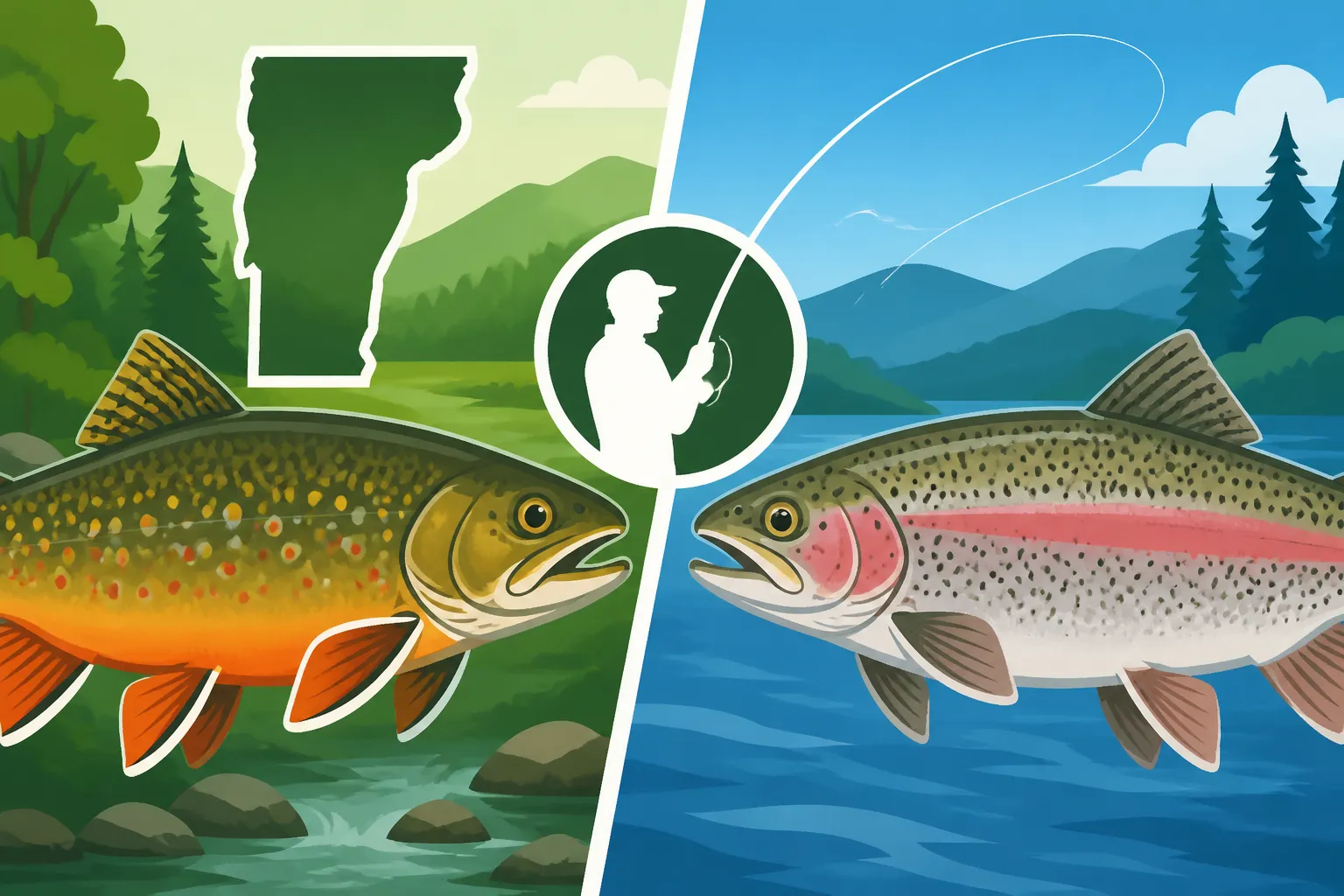
When you pull a brook trout from the cool, clear water, the first thing that often strikes you is its vibrant, almost jewel-like coloration. Their flanks are typically a mosaic of olive green to dark brown, often fading to a reddish-orange or even bright red on the belly, especially during spawning season. But the real giveaway? Those distinctive, worm-like markings. These intricate, light-colored squiggles, known as vermiculations, are spread across their back and dorsal fin. They look like a topographic map or swirling marble pattern, and they are a dead giveaway for a brook trout. You won't find anything quite like them on a rainbow trout.
Beyond the vermiculations, look for small, colorful spots. Brook trout usually have pale yellow spots scattered along their sides, often accompanied by a few brighter red spots, each encircled by a blue halo. These "halo" spots are particularly characteristic. The intensity of these colors can vary greatly depending on the specific water body, time of year, and even the fish's diet, but the pattern of vermiculations and haloed spots remains consistent. If you want to learn more, our Trout Species Identification Guide for Vermont dives deeper into these nuances.
Fins, Mouth, and Tail Shape
Pay close attention to the fins, especially the lower fins – the pectoral, pelvic, and anal fins. On a brook trout, these fins will almost always have a striking leading edge of white, followed by a band of black, and then the orange-red color of the fin itself. This "white-black-orange" fin tip is a very reliable identifier. It's a sharp contrast that really stands out against the darker body.
Their mouth is also a good clue; brook trout tend to have a larger mouth that extends back to or slightly beyond the rear margin of the eye. This isn't always as obvious as the color patterns, but it's a detail that, when combined with other features, solidifies the identification. Lastly, the tail fin of a brook trout is typically square or only very slightly forked, not deeply forked like some other salmonids. Getting a good look at all these features can be tough when you're excited about a catch, but a quick glance can usually confirm your suspicions. If you're photographing your catch for a memory, ensure you get a good shot of the fins. Some excellent waterproof cameras can be found on Amazon that help capture these details without fuss.
Decoding the Look of a Vermont Rainbow Trout
Rainbow trout are another beloved species in Vermont, known for their powerful fights and willingness to bite. While not native to our waters, they've been extensively stocked and have established wild populations in many rivers and lakes. Their identification cues are quite different from brook trout, making the distinction relatively straightforward once you know what to look for.
The Signature Pink or Reddish Stripe
The most iconic feature of a rainbow trout is, undoubtedly, the prominent pink or reddish stripe that runs horizontally along its lateral line, from the gill plate all the way to the tail. This "rainbow" stripe can range in intensity from a faint blush to a vivid, almost neon band, depending on the fish's age, sex, and environment. Wild rainbows, or those in very clear, cold water, often display this stripe with remarkable vibrancy. Stocked rainbows might have a duller stripe, or it might be less defined, but it's almost always present in some form. This stripe is completely absent on a brook trout.
Beyond the stripe, rainbow trout generally have a silvery, often iridescent body that can appear greenish or bluish on the back, fading to a white belly. Their entire body, from head to tail, including the dorsal fin and tail fin, is usually covered in numerous small, dark spots. These spots are typically round or oval and lack the blue halos seen on brook trout. The spotting pattern is more uniform and less "worm-like" than the brook trout's vermiculations. For anglers specifically targeting these powerful fish, understanding their preferred habitats and typical appearance is key to a successful Trout Fishing in Vermont outing.
Tail, Mouth, and Gill Plate Details
Unlike the brook trout's square tail, the rainbow trout almost always has a noticeably forked tail fin. The deeper the fork, the more pronounced this characteristic is. While the fork can vary in depth, it's generally more indented than a brook trout's tail. As mentioned, the tail fin itself is usually heavily spotted, which is another distinguishing mark.
The mouth of a rainbow trout is typically smaller than a brook trout's, usually not extending beyond the middle of the eye. Again, this is a subtle difference that becomes more apparent with practice. Pay attention to the gill plate as well; on some rainbow trout, especially larger ones, you might notice a reddish blush or iridescent sheen here, complementing the lateral stripe. While brook trout have vibrant colors, their gill plates don't typically exhibit this particular hue. Having a good field guide, perhaps one you picked up on Amazon, can be incredibly helpful for comparing these fine details right on the bank.
Beyond the Obvious: Subtle Clues and Habitat Hints
Sometimes, the initial glance doesn't quite seal the deal. This is where you put on your detective hat and start looking for those nuanced clues and considering the environment where you made your catch. Vermont's waters are diverse, and fish often adapt their appearance to their surroundings.
The Dorsal Fin and Adipose Fin
Let's talk fins again, but specifically the dorsal and adipose fins. The dorsal fin (the large fin on the fish's back) of a brook trout will display those characteristic vermiculations, often blending into the body's pattern. On a rainbow trout, the dorsal fin will be heavily spotted, just like its body and tail. This is a crucial distinction if other markings are faded or unclear.
Both brook and rainbow trout possess an adipose fin – that small, fleshy fin located between the dorsal and tail fins. While not a primary identifier between these two species, it's a feature that confirms you're dealing with a salmonid (trout, salmon, char) as opposed to other fish families. Sometimes, particularly with stocked fish, the adipose fin might be clipped. This is a common practice in some hatcheries to mark fish for research or to differentiate them from wild populations, though it doesn't happen with all stocked fish in Vermont.
Habitat as an Indicator
The water body itself can offer strong clues. If you're fishing in a tiny, cold, clear mountain brook, especially one that tumbles down from higher elevations, you're overwhelmingly likely to be catching brook trout. These native char prefer the coldest, most oxygen-rich headwaters. Conversely, if you're pulling fish from a larger river, a warmer lake, or a stream that has been historically stocked, your chances of encountering rainbow trout increase significantly. Best Trout Streams in Vermont will often indicate which species are predominant.
Consider the "wild" versus "stocked" factor. While rainbow trout can establish wild, reproducing populations in Vermont, many you encounter might be recently stocked. Often, stocked fish can appear a bit more "worn" or have slightly blunted fins compared to truly wild specimens. Brook trout, especially the truly wild ones, tend to have pristine fins and incredibly vibrant colors. If you're interested in which waters get supplemental fish, the Vermont Fish Stocking Search Tool, Explained can be a fantastic resource.
Quick Reference: Brook Trout vs. Rainbow Trout Key Differences
To help you keep these distinctions straight, here's a handy table summarizing the key visual differences between Vermont's brook trout and rainbow trout. Keep this in mind as you're reeling in your next catch!
| Feature | Brook Trout (Salvelinus fontinalis) | Rainbow Trout (Oncorhynchus mykiss) |
|---|---|---|
| Back/Dorsal Fin | Distinctive worm-like markings (vermiculations), olive-green/brown. | Numerous small, dark spots, no vermiculations; silvery-green/blue-back. |
| Sides | Pale yellow spots, some red spots with blue halos. | Prominent pink/reddish stripe along lateral line; numerous small, dark spots. |
| Belly | Creamy white to reddish-orange, especially during spawning. | White or silvery-white. |
| Lower Fins | White leading edge, followed by a black band, then orange-red. | No white leading edge; often dusky or clear with small spots. |
| Tail Fin | Square or very slightly forked. | Noticeably forked, often heavily spotted. |
| Mouth Size | Larger, typically extends to or slightly beyond the eye. | Smaller, usually doesn't extend beyond the middle of the eye. |
| Habitat Preference | Cold, clear headwater streams, remote ponds. Native. | More adaptable, larger rivers, lakes. Widely stocked. |
This table provides a concise way to quickly compare the most important identification points. You might even consider printing a small version of it to keep in your tackle box or a laminated copy with your Vermont Fishing License Guide for 2026!
Practical Tips for On-the-Water ID
When you're out on the water, excited with a fish on the line, quick identification skills come in handy. It's about combining observation with your knowledge of the species. Remember, the goal is always to handle fish gently, identify quickly, and release carefully if it's not a keeper or you prefer catch-and-release.
Get a Clear View and Look for Multiple Cues
The moment you land a fish, try to get a clear, unobstructed view of its body while keeping it wet and minimizing handling. Gently cradle the fish in the water if possible, or use a knotless, rubberized landing net to keep it submerged. The rubberized net also protects the fish's slime coat. Look for the most obvious indicators first: the worm-like markings versus the spots, and the presence or absence of a lateral stripe. Then, quickly check the fins for those white and black leading edges. No single feature is always 100% foolproof, as fish can have variations, but when you combine two or three key identifiers, you can be quite certain. If you're carrying a small pair of polarized sunglasses, available from many outdoor retailers or Amazon, they can significantly reduce glare and help you see the fish more clearly in the water before you even net it.
Photography for Later Review
If you're still unsure, or if you simply want to document your catch, a quick photo can be invaluable. Make sure to get a clear shot of the fish's entire body, including its back, sides, and fins. If possible, a second photo showing the mouth and tail can also be helpful. Always prioritize the fish's health: keep it wet, handle it gently with wet hands, and minimize its time out of the water. Later, you can compare your photos to reliable identification guides, like the official resources from the Vermont Fish & Wildlife Department. This practice not only helps you learn but also creates a wonderful record of your angling adventures. For more on safe handling, check out resources on effective Spring Trout Fishing Techniques for Vermont Streams.
When in Doubt, Consult the Regulations
When you're really stumped, and especially if specific regulations are at play, err on the side of caution. If you believe it might be a species with a stricter limit or a protected status, treat it as such. A quick check of the Vermont fishing regulations booklet, which you should always have with you, can often clear things up. Sometimes, certain areas have "Special Regulation Waters in Vermont" where rules might be species-specific, making accurate identification even more vital. Don't be afraid to ask experienced local anglers for help or consult online forums with photos – but always verify information with official sources.
By familiarizing yourself with these key differences and practicing observation, you'll soon be able to confidently tell a brook trout from a rainbow trout in Vermont, adding another layer of enjoyment and responsibility to your fishing experience. Happy angling!
Disclaimer
This article is for general informational purposes only and does not constitute professional advice. Laws, prices and regulations vary by location and change over time. Consult a qualified professional for guidance on your specific situation.