Brook Trout: Vermont’s Native Trout
Many anglers, myself included, often get swept up in the excitement of chasing big lake trout or the feisty smallmouth bass of Lake Champlain. But sometimes, we overlook a true gem right here in our backyard: the humble yet magnificent brook trout. This isn't just any trout; it's Vermont's only native salmonid, a living relic of our pristine wilderness. This guide aims to pull back the curtain on this incredible fish, helping you understand its allure, find its hidden haunts, and engage with it ethically, connecting you to the very heart of Vermont's natural heritage.
Understanding Vermont's Native Brook Trout
The brook trout, or Salvelinus fontinalis, isn't just a fish; it's a vibrant, living jewel of Vermont's waterways. Often mistakenly called a "trout," it actually belongs to the char genus, making it a close cousin to lake trout and Arctic char. But don't let the scientific classification confuse you; in the hearts of Vermont anglers, it's unequivocally our native trout, and its presence is a testament to the health and purity of our coldest, cleanest waters.
The Distinctive Beauty of Salvelinus fontinalis
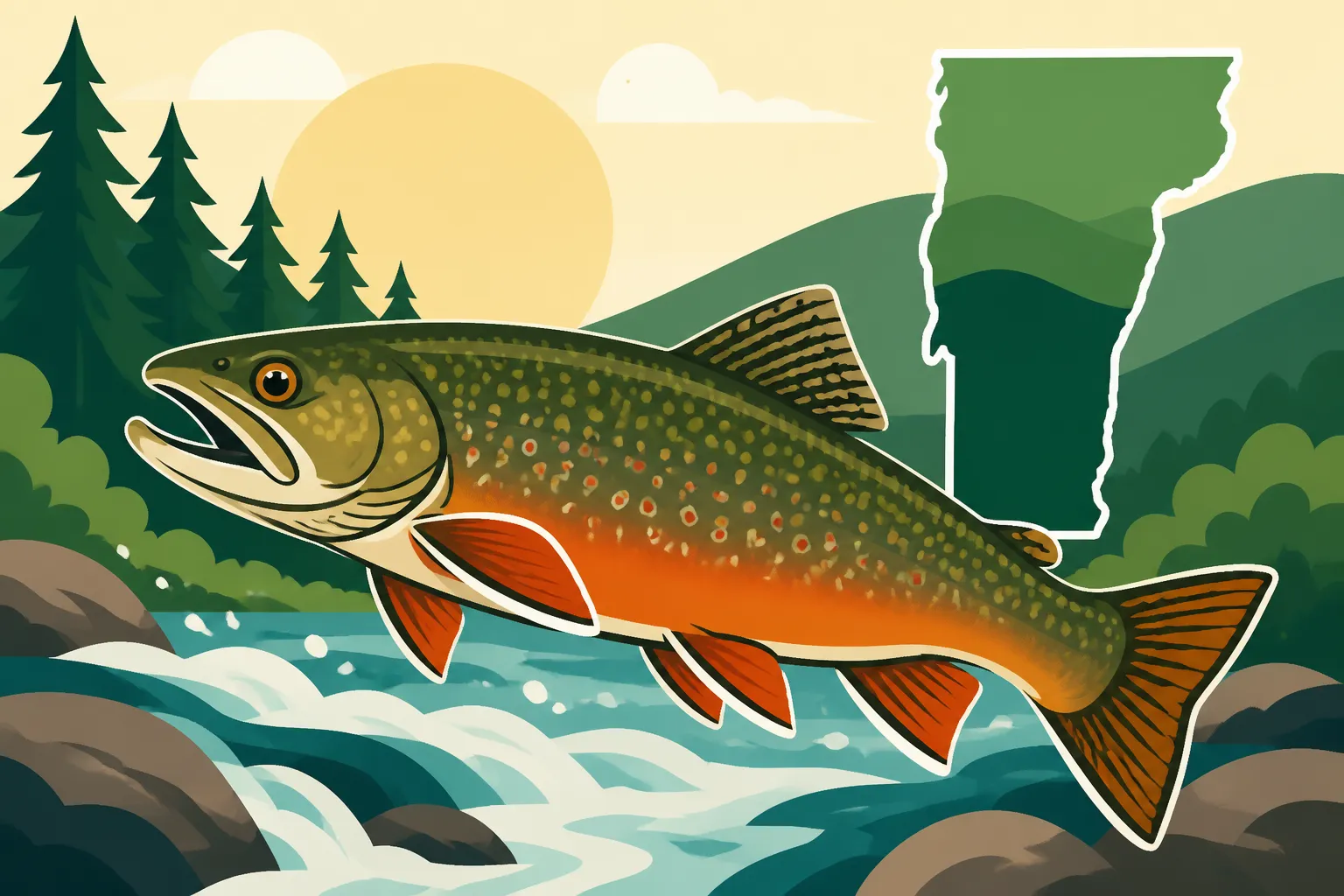
What makes a brook trout so breathtakingly beautiful? It starts with their colors, which can vary wildly depending on their habitat and diet, but always retain a certain characteristic charm. Their backs are usually a mottled, olive-green to dark brown, covered with an intricate pattern of lighter, worm-like markings known as "vermiculations." These patterns are unique to each fish, like a fingerprint, and provide incredible camouflage in shaded, rocky streams.
Move down their sides, and you'll often see small, vibrant red spots, sometimes ringed with pale blue halos. Their lower fins — the pectorals, pelvic, and anal fins — are truly striking, typically edged with a crisp white stripe, followed by a black band, and then brilliant reds or oranges. During spawning season, especially in males, these colors intensify to an almost fiery display of red, orange, and deep bronze. When you hold a wild brook trout, even a small one, you're holding a miniature masterpiece, a flash of primeval beauty that simply doesn't compare to its stocked cousins. To help distinguish it from other species, you might find our Trout Species Identification Guide for Vermont helpful.
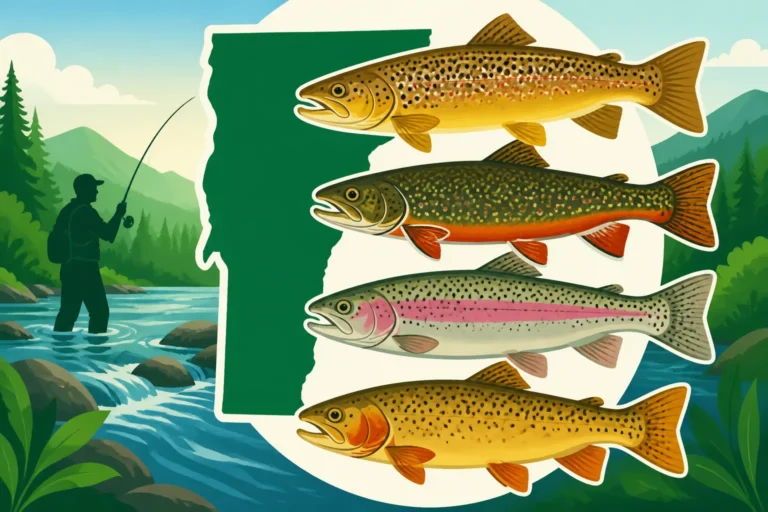
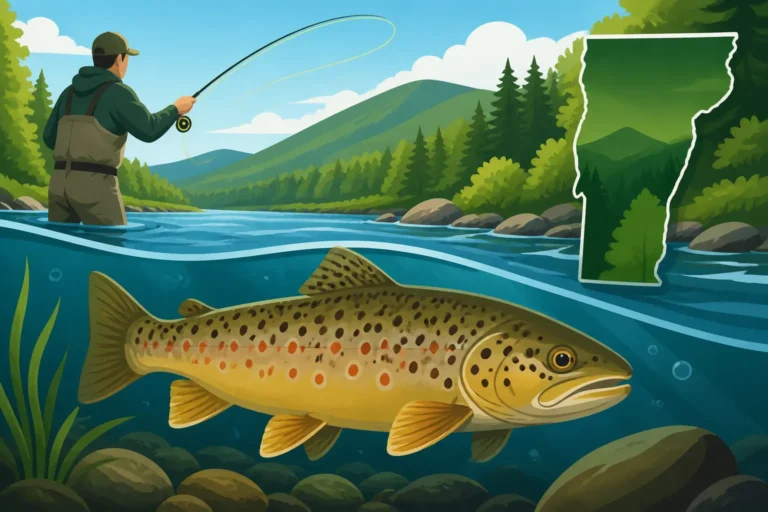
Distinguishing brook trout from other species, particularly non-native brown trout and rainbow trout, is a crucial skill for any ethical angler. Brown trout typically have larger, more pronounced dark spots, often with a few red spots but without the blue halos, and generally lack the distinctive white leading edge on their lower fins. Rainbow trout are identifiable by their iridescent pink or red band running down their side and their uniformly small black spots. There's no mistaking the brook trout's unique vermiculations and the crisp white trim on its fins once you know what to look for. This accurate identification isn't just for bragging rights; it's essential for adhering to specific regulations that often protect our wild, native populations differently from stocked fish.
Habitat: The Cold, Clear Waters They Call Home
Brook trout are incredibly particular about their living conditions, which is why their presence is often an indicator of a healthy, undisturbed ecosystem. They are creatures of cold water, needing consistent temperatures, typically below 68°F (20°C), to thrive. Above that, they become stressed, and prolonged exposure can be lethal. This means they seek out spring-fed streams, high-elevation mountain brooks, and remote ponds that remain consistently cool even during the peak of summer. The colder the water, the more oxygen it can hold, and brook trout demand highly oxygenated environments to breathe and flourish.
Beyond temperature and oxygen, brook trout require exceptionally clean water, free from pollutants and excessive sediment. Siltation can smother their eggs, destroy their food sources, and clog their gills, making healthy stream bottoms with gravel and cobble essential for successful spawning. They also need plenty of in-stream structure: downed logs, undercut banks, boulders, and deep pools provide critical cover from predators, resting areas from strong currents, and ambush points for foraging. Without these natural features, even a cold, clear stream might not be able to sustain a healthy brook trout population. You can learn more about specific locations where they thrive in our Where brook trout still live wild in Vermont article.
The importance of healthy riparian zones—the vegetated areas along the stream banks—cannot be overstated for brook trout. A dense canopy of trees and shrubs provides crucial shade, keeping water temperatures cool, especially on hot summer days. The roots of these plants stabilize banks, preventing erosion and providing vital cover in the form of undercut banks. They also contribute insect life to the stream, an important food source for trout. When these critical habitat components are intact, brook trout flourish, becoming a vibrant part of Vermont's wild landscape.
Where to Find Brook Trout in Vermont
Finding brook trout in Vermont is often less about finding a specific, well-known "spot" and more about understanding the type of water they inhabit and then venturing off the beaten path. These aren't the fish you'll typically find in large, slow-moving rivers or easily accessible ponds (though exceptions exist, especially if they are spring-fed). Their preferred territories are generally wilder, more remote, and require a bit of effort to reach, which is part of their mystique.
Identifying Prime Brookie Waters
When you're searching for prime brook trout waters, think "mountain stream." Look for characteristics like high elevation, where the water originates from cold springs or snowmelt, ensuring consistently low temperatures. Dense tree canopies are a huge plus, as they provide shade that keeps the water cool even on the hottest summer days. The stream bottom should be rocky, with plenty of gravel and cobble, indicating good water flow and suitable spawning habitat. You'll also want to look for streams that are relatively small, often no wider than a car, with plenty of twists, turns, and structure.
Keep an eye out for tell-tale signs: fallen logs creating current breaks and deep pockets, undercut banks where fish can hide, and stretches of riffles transitioning into calm, deeper pools. Don't overlook beaver ponds, either. These can be fantastic brook trout havens, as the beaver dams create deeper, cooler water and abundant insect life. While some guides might recommend specific locations, the real joy of brook trout fishing comes from exploring new water and discovering your own hidden gems. Learning to "read" the landscape and identify these habitat characteristics is a far more valuable skill than simply memorizing a list of names.
Public Access and Hidden Gems
Vermont is fortunate to have extensive public lands, including vast tracts of the Green Mountain National Forest, numerous State Forests, and Wildlife Management Areas (WMAs). These areas are often your best bet for finding wild brook trout streams and ponds. Within these public spaces, you'll find countless small tributaries and headwater streams that receive little fishing pressure, primarily because they require some hiking and bushwhacking to access. These are the places where brookies truly thrive, unmolested by crowds. For more guidance on accessing these remote areas, check out our guide on Green Mountain Trout Stream Access.
The challenge, and indeed the adventure, lies in finding those truly wild, unpressured spots. This often involves studying topographical maps, looking for areas with high concentrations of small, blue lines (indicating streams) that are far from roads. Be prepared for a hike, often through dense forest, and remember that the best brook trout fishing is often found where others are unwilling to go. Always be mindful of private land boundaries, and secure permission before entering private property. Respecting landowners and their property is paramount to ensuring continued access to our natural resources.
Fishing Techniques for Vermont Brook Trout
Catching Vermont brook trout is a rewarding experience, but it often requires a different approach than targeting larger, more aggressive fish in bigger waters. These fish, especially the wild ones, tend to be smaller, more skittish, and inhabit tighter, more intimate spaces. Precision, stealth, and a lighter touch are generally the keys to success.
Fly Fishing: The Classic Approach
For many purists, fly fishing is the quintessential method for pursuing brook trout. It lends itself perfectly to the small streams and subtle presentations these fish require. You'll want to opt for lighter tackle: a 2-weight to 4-weight fly rod, typically shorter (7 to 8 feet), paired with a small, lightweight reel. Accuracy is more important than distance here, as you'll often be making short, delicate casts into tight pockets of water, under branches, or along undercut banks. Read more about this in our Fly Fishing for Trout in Vermont guide.
During the warmer months, dry flies can be incredibly effective. Brook trout are opportunistic eaters and will readily rise to a well-presented imitation of a caddis, mayfly, or terrestrial insect like an ant or beetle. Focus on natural drifts, minimizing drag, and being ready for a quick, subtle take. Nymphing, either with an indicator or using a Euro-nymphing approach, is excellent for deeper pools or during cooler parts of the season when fish are feeding sub-surface. Small, weighted nymphs mimicking caddis larvae, stoneflies, or even a simple Pheasant Tail can be deadly. And don't forget small streamers; a brightly colored Woolly Bugger or small sculpin imitation can entice an aggressive strike, especially from larger brookies defending their territory.
Spin Fishing: Simplicity and Effectiveness
If fly fishing isn't your style, or if you're just starting out, spin fishing can be equally effective and a fantastic way to connect with brook trout. The key is to downsize your gear significantly. An ultralight spinning rod, around 4 to 6 feet long, paired with a small spinning reel spooled with 2 to 4-pound test monofilament or fluorocarbon line, is ideal. This lighter setup allows for delicate presentations and prevents spooking these sensitive fish.
Small spinners, such as classic Mepps Aglias or Panther Martins, in sizes 0 to 2, are consistently productive. Their flashing blades and vibrations mimic small baitfish or insects, drawing strikes from curious brookies. Tiny spoons, like a Little Cleo or a Kastmaster, can also work well, especially in slightly deeper pools. If allowed by local regulations, bait fishing with small worms or grubs can be incredibly effective, particularly for beginners or in very cold water. However, if practicing catch and release, consider going barbless with bait hooks to minimize harm. Always check the Vermont Fishing Regulations Explained for specific rules regarding bait use on particular waters.
Stealth and Approach: The Brook Trout Challenge
Regardless of your chosen method, stealth is paramount when fishing for brook trout. These fish are incredibly wary and will spook at the slightest disturbance. Their small, clear stream habitats offer little cover for you, the angler, so you need to become part of the background. Approach the water slowly, often on your hands and knees or crouched low, especially when targeting smaller streams.
Cast upstream and allow your lure or fly to drift naturally downstream toward suspected holding lies. This presents your offering to the fish first, before your shadow or presence warns them. Avoid stomping along the bank or making sudden movements. Quiet wading is essential; shuffle your feet rather than lifting them to minimize splashing. The less disturbance you create, the more likely you are to fool these beautiful, cautious fish. Remember, often the biggest challenge isn't finding the fish, but approaching them without them even knowing you're there.
Essential Gear for Brook Trout Anglers
Venturing into the wilder, more remote corners of Vermont in pursuit of brook trout means being prepared. Your gear doesn't need to be extravagant or expensive, but it does need to be functional, lightweight, and suited to the unique demands of these environments. Think minimalist and effective.
Rods, Reels, and Line for Success
For the fly angler, as mentioned, a light and short setup is your best friend. A 2-weight to 4-weight fly rod, typically between 6'6" and 8 feet, is perfect for tight casting spaces and delicate presentations. Pair this with a small, click-and-pawl or disc-drag reel that balances the rod well, spooled with a weight-forward floating line appropriate for your rod's weight. For leaders, a 7.5 to 9-foot tapered leader ending in 4x to 6x tippet is generally ideal. Having a spool of extra tippet material is a must, as you'll likely be changing flies often or re-tying after snags. If you're looking for recommendations, our Best Fly Rods for Vermont Trout Streams guide has some excellent choices.
Spin fishermen will want an ultralight rod, typically 4 to 6 feet in length, with a fast or extra-fast action to detect subtle bites. A small, high-quality spinning reel (size 500 or 1000) spooled with 2 to 4-pound test monofilament or fluorocarbon is ideal. Monofilament offers a bit more stretch, which can be forgiving on light bites, while fluorocarbon offers greater sensitivity and is nearly invisible underwater. A good quality, low-diameter braided line with a fluorocarbon leader can also be a potent combination, offering strength and stealth. The key is to keep everything light and sensitive to maximize your feel and presentation.
Wading Gear, Protection, and Essentials
When you're exploring small, brushy streams, good wading gear is crucial. Breathable chest waders are often preferred for warmer spring and summer days, allowing you to stay cool while navigating deeper sections or crossing the stream. In colder shoulder seasons, neoprene waders might offer more insulation. Combine these with sturdy wading boots. Felt soles provide excellent grip on slick, algae-covered rocks, but they can be problematic in some areas due to potential invasive species transfer. Rubber soles, especially those with studs, offer a good alternative and are often more versatile for hiking to and from the stream. Check out our detailed guides on Best Waders for Vermont Trout Streams and Best Wading Boots for Rocky Streams for more specific advice.
Beyond wading, consider personal protection and essentials. A wide-brimmed hat and polarized sunglasses are invaluable for spotting fish and protecting your eyes from glare and errant hooks. Bug spray is almost a non-negotiable, especially in spring and early summer when black flies and mosquitoes are prevalent – you can find reliable options on Amazon. A small, comfortable backpack or sling pack is perfect for carrying water, snacks, a basic first-aid kit, and your tackle. And always, always carry a small, sharp knife or multi-tool; it's surprising how often you'll need one.
Tackle Box or Fly Box for Brookies
For brook trout, less is often more when it comes to tackle. You don't need a huge, cumbersome tackle box. A small, compact tackle organizer or a slender fly box is usually sufficient. For spin fishermen, a selection of small spinners, spoons, and perhaps a few micro jigs will cover most situations. Keep colors varied: silver, gold, black, and maybe a bright orange or chartreuse for stained water.
Fly anglers should carry a selection of dry flies, nymphs, and a few small streamers. Popular dry patterns include Elk Hair Caddis, Adams, Parachute Adams, and various ant or beetle patterns. For nymphs, think Pheasant Tail, Hare's Ear, Prince Nymph, and Squirmy Wormies. Small Woolly Buggers in olive or black are always good to have. A quality fly box that keeps your delicate flies organized and protected is a smart investment – many anglers find a great selection of these on Amazon. Don't forget essential accessories: forceps or hemostats for hook removal, line nippers, and a small, soft-mesh landing net. A small net not only helps land fish but also aids in gentle catch and release, minimizing stress on the fish. For more on net selection, see Best Landing Net for Trout.
Conservation and Ethical Angling
When you're fortunate enough to spend time in Vermont's wild brook trout waters, you're interacting with a delicate and precious resource. These native fish populations are often fragile, existing in sensitive ecosystems. Therefore, practicing ethical angling and prioritizing conservation isn't just a suggestion; it's a responsibility we all share to ensure these beautiful fish thrive for generations to come.
Catch and Release: Protecting the Resource
For wild brook trout, especially in remote, self-sustaining populations, catch and release is absolutely vital. These fish often grow slowly and exist in limited numbers, making every individual fish important to the overall health of the population. While keeping a few stocked trout is perfectly acceptable (and encouraged for some species), the wild brook trout is a different story. The act of releasing a fish unharmed ensures it can spawn again, contribute to the gene pool, and continue its life cycle.
To maximize a fish's survival chances, handle it as little as possible. Wet your hands thoroughly before touching the fish; dry hands can remove the protective slime layer, leaving the fish vulnerable to infection. Use barbless hooks, or pinch down the barbs on your hooks with pliers; this makes hook removal much easier and less damaging. Try to keep the fish in the water as much as possible, especially during warm weather. If you must take a photo, do it quickly, holding the fish horizontally with support under its belly, and get it back into the water immediately. Gently revive the fish by holding it upright in the current, allowing water to flow over its gills, until it swims away on its own power. Every ethical release is a victory for conservation.
Respecting Their Environment
The pristine habitats that brook trout call home are themselves incredibly delicate. Practicing Leave No Trace principles is fundamental. This means packing out everything you pack in, including all trash, fishing line, and any discarded bait. Avoid leaving behind any trace of your presence.
Stay on existing trails whenever possible to prevent erosion of stream banks, which can lead to sediment runoff and harm spawning beds. If you must go off-trail, walk lightly and spread out to minimize your impact. Be mindful of stream-side vegetation; don't break branches or trample plants unnecessarily, as these are critical for shade and bank stability. These small streams are not just fish habitats; they are vibrant ecosystems supporting a myriad of wildlife. Your actions can have a ripple effect, so always strive to leave the environment better than you found it.
Regulations and Identification
Understanding and adhering to Vermont's fishing regulations is crucial, not only for your own legal standing but for the health of the fishery. Regulations for brook trout can be quite specific, with different rules for wild populations versus stocked waters. For instance, some wild brook trout streams might have special length limits, reduced creel limits, or even be designated "catch and release only" or "fly fishing only" to protect them. You can find comprehensive details in our Vermont Fishing Regulations Explained guide.
Accurate fish identification, as discussed earlier, becomes paramount here. You need to be able to confidently distinguish a native brook trout from a brown trout or rainbow trout, as their respective Vermont Trout Limit and Possession Rules can vary significantly. Fishing without a proper understanding of these rules isn't just a risk for a fine; it's a risk to the very resource you enjoy. Take the time to study the regulations for the specific waters you plan to fish, and if you're ever unsure, always err on the side of caution.
When to Target Brook Trout in Vermont
Timing your brook trout excursions can significantly impact your success and the overall experience. Each season in Vermont offers unique opportunities and challenges when pursuing these beautiful native fish, influenced heavily by water temperatures, insect activity, and fish behavior.
Spring: Opening Day Excitement (and Challenges)
Spring, particularly in April and May, marks the traditional opening of trout season in Vermont, and it brings a mix of excitement and challenges for brook trout anglers. Early spring often means high, cold water from snowmelt and spring rains. Fish might be less active, hugging the bottom or seeking out slower currents in deeper pools. Patience and a willingness to fish subsurface with nymphs or small baits are often key during this period. Access can also be a challenge, with muddy roads and trails. You can learn more about this in Vermont Trout Opening Day Traditions.
As spring progresses into late May and early June, things begin to warm up. Water levels usually recede, and temperatures become more favorable. This is when insect hatches start to become more consistent, bringing fish to the surface for dry flies. The foliage is emerging, offering more shade and making for beautiful scenery. It's a fantastic time to explore those headwater streams as fish become more active and willing to chase a well-presented fly or spinner.
Summer: The Mountain Stream Prime Time
Summer is, for many brook trout anglers, the prime time to hit the mountain streams. As air temperatures rise, these high-elevation, spring-fed waters truly shine, maintaining the cold, oxygen-rich conditions brook trout crave. The lower, clearer water of summer streams often means increased stealth is required, but it also makes sight fishing a real possibility. This is when terrestrial insects like grasshoppers, ants, and beetles are prevalent, and brook trout will often key in on them, making topwater dry fly action explosive and incredibly fun.
During the hottest parts of July and August, focus on the earliest morning or late evening hours, and seek out streams with dense canopy cover or those fed directly by cold springs. Deeper pools, undercut banks, and areas with large boulders offer sanctuary from both predators and warm water. Remember, while the air might be warm, the water itself needs to stay cold for brook trout to be comfortable and active. This is a time for lightweight gear, plenty of water, and an appreciation for the cool, shaded retreats of the Green Mountains.
Fall: Colors, Spawning, and Colder Waters
Fall in Vermont is arguably the most beautiful time to be outdoors, and brook trout fishing during the leaf-peeping season is an experience not to be missed. As air temperatures drop, water temperatures cool down, often invigorating the brook trout. They become more aggressive, actively feeding to build reserves before the lean winter months. The vibrant reds, oranges, and yellows of the changing leaves provide a stunning backdrop to your angling adventures.
However, fall is also the brook trout's spawning season. As early as September, and definitely into October and November, these fish will begin to display their most brilliant spawning colors and move into shallow, gravelly areas to lay their eggs. While they might be more concentrated and aggressive, it's crucial to approach spawning fish with the utmost respect. Avoid wading directly on redds (spawning beds), which appear as clean, disturbed patches of gravel, as you can crush eggs. Observe their incredible natural behavior, perhaps catch a few healthy, non-spawning fish in deeper pools, but prioritize giving them the space they need to ensure the next generation of Vermont's native trout.
| Feature | Brook Trout | Brown Trout | Rainbow Trout |
|---|---|---|---|
| Native Status | Native to Vermont | Introduced (European) | Introduced (Western North America) |
| Back Pattern | Distinctive worm-like "vermiculations" | Fewer, larger dark spots; no vermiculations | Small, evenly distributed dark spots |
| Side Spots | Light spots with red/blue halos | Dark spots, some red spots (no halos) | Numerous small dark spots |
| Tail Fin | Square or slightly forked, often mottled | Slightly forked, usually plain | Slightly forked, with radial rows of small spots |
| Lower Fins | White leading edge, black band, often red | No white leading edge | No white leading edge |
| Preferred Water | Cold, clean, high-oxygen, small streams/ponds | Tolerates warmer/murkier water, larger rivers | Tolerates warmer water, rivers & lakes |
| Diet | Insects, crustaceans, small fish, larvae | Insects, small fish, crayfish, mice | Insects, crustaceans, small fish |
Disclaimer
This article is for general informational purposes only and does not constitute professional advice. Laws, prices and regulations vary by location and change over time. Consult a qualified professional for guidance on your specific situation.