Best Landing Net for Trout
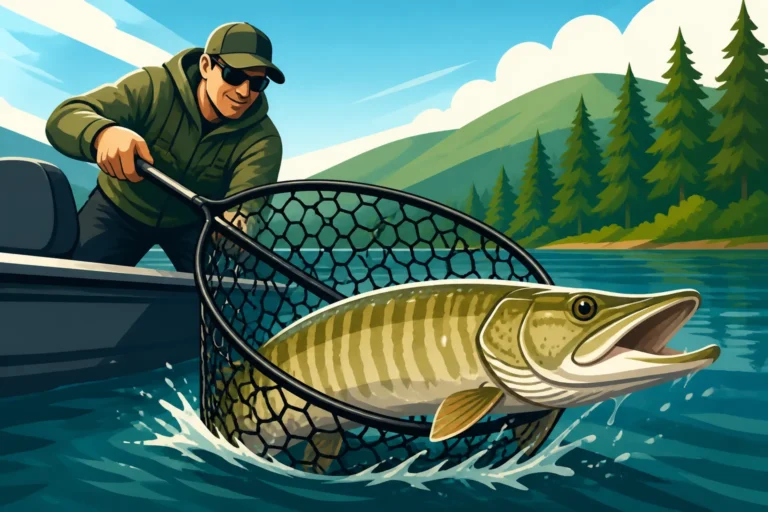
There's nothing quite as frustrating as hooking into a beautiful Vermont brook trout, fighting it expertly through a swift current, and then, in the final moments, losing it right at your feet because you fumbled with an inadequate net or, worse, didn't have one at all. Many anglers have been there, watching that prized fish slip away, and it’s a disheartening experience that can be easily avoided. This guide is dedicated to helping you choose the absolute best landing net for trout, ensuring that your next Vermont fishing adventure ends with a successful and fish-friendly capture, whether you're wading a wild mountain stream or casting from a boat on a crystal-clear lake.
Why the Right Landing Net Matters for Trout Anglers in Vermont
When you’re out on Vermont’s pristine waters, whether it's a tiny, brush-lined brook or a sprawling lake, the gear you choose makes a real difference. A landing net might seem like a simple accessory, but for trout fishing, it's actually one of the most critical tools in your arsenal, impacting everything from fish health to your overall success and enjoyment. It's not just about scooping up a fish; it's about doing it quickly, efficiently, and most importantly, with the utmost care for the trout.
Protecting Vermont's Delicate Trout
Vermont is renowned for its diverse trout populations, including native brook trout, robust browns, and spirited rainbows. These fish are more delicate than many anglers realize, especially when removed from their aquatic environment. The fine scales and protective slime coat of a trout are its first line of defense against disease and infection. When a fish thrashes on the bank, or is handled with dry hands, or worse, put into a coarse, knotted net, that crucial slime layer can be rubbed off, leaving the fish vulnerable.
Using a proper, fish-friendly landing net minimizes physical contact and stress. Instead of wrestling a fish in the air, you can gently guide it into the net while it's still in the water, reducing the time it spends out of its element. This gentle approach is especially vital for the wild trout populations found in many of Vermont's backcountry streams, which are often less resilient than their hatchery-raised counterparts. Protecting the fish we seek is a core tenet of responsible angling, ensuring these precious resources remain vibrant for future generations.
Enhancing Your Catch-and-Release Success
For many trout anglers in Vermont, catch-and-release isn't just a practice; it's a philosophy. It's about enjoying the thrill of the catch without depleting the fishery. To truly succeed at catch-and-release, however, simply letting the fish go isn't enough. You need to ensure the fish is released in the best possible condition, ready to fight another day and continue its role in the ecosystem. This means reducing injury and stress during the landing, unhooking, and release process.
A well-designed landing net, particularly one with a rubberized or knotless mesh, cradles the fish securely without abrading its skin or damaging its fins. It prevents hooks from snagging in the mesh, which can lead to tangled lines, frustrated anglers, and extended time handling a stressed fish. Imagine you’ve just landed a gorgeous 18-inch brown trout from the Battenkill River, carefully brought it to your net, and then effortlessly unhooked it while it remains submerged, breathing easily. That's the ideal scenario, and it's made possible by having the right net. This efficiency in handling greatly increases the fish's survival rate post-release, directly contributing to healthy fish populations, especially for species like Brook Trout: Vermont's Native Trout.
Making Your Life Easier on the Water
Let's be honest, fishing should be enjoyable, not a wrestling match. Beyond the noble goals of fish conservation, the right landing net simply makes your fishing experience smoother and less stressful. Trying to land a lively trout by hand in a swift current, especially when you're wearing waders and perhaps standing on slippery rocks, can be awkward, dangerous, and often results in lost fish or a dunked cell phone. A net provides a controlled environment for landing.
When you're fighting a strong rainbow on a Fly Fishing for Trout in Vermont outing, having a net hanging comfortably at your side, ready for action, allows you to focus on the fight rather than the landing strategy. You can guide the fish into the net with one hand, freeing your other hand for tools or simply for balance. This convenience becomes even more apparent when fishing alone, where a proper net is your best friend for securing a fish quickly and safely. It turns what could be a frantic, slippery moment into a calm, practiced routine, letting you truly savor the moment of success.
Understanding Different Landing Net Materials and Designs
The world of landing nets is surprisingly diverse, offering various materials and designs, each with its own advantages and disadvantages. For Vermont trout fishing, understanding these differences is key to selecting a net that performs optimally for your specific needs and the conditions you'll encounter. It's not a one-size-fits-all situation; what works perfectly for a small stream might be entirely inadequate for a larger river or lake.
Netting Materials: Rubber vs. Nylon vs. Knotless
The material of the net mesh is arguably the most important feature for trout fishing, particularly for catch-and-release.
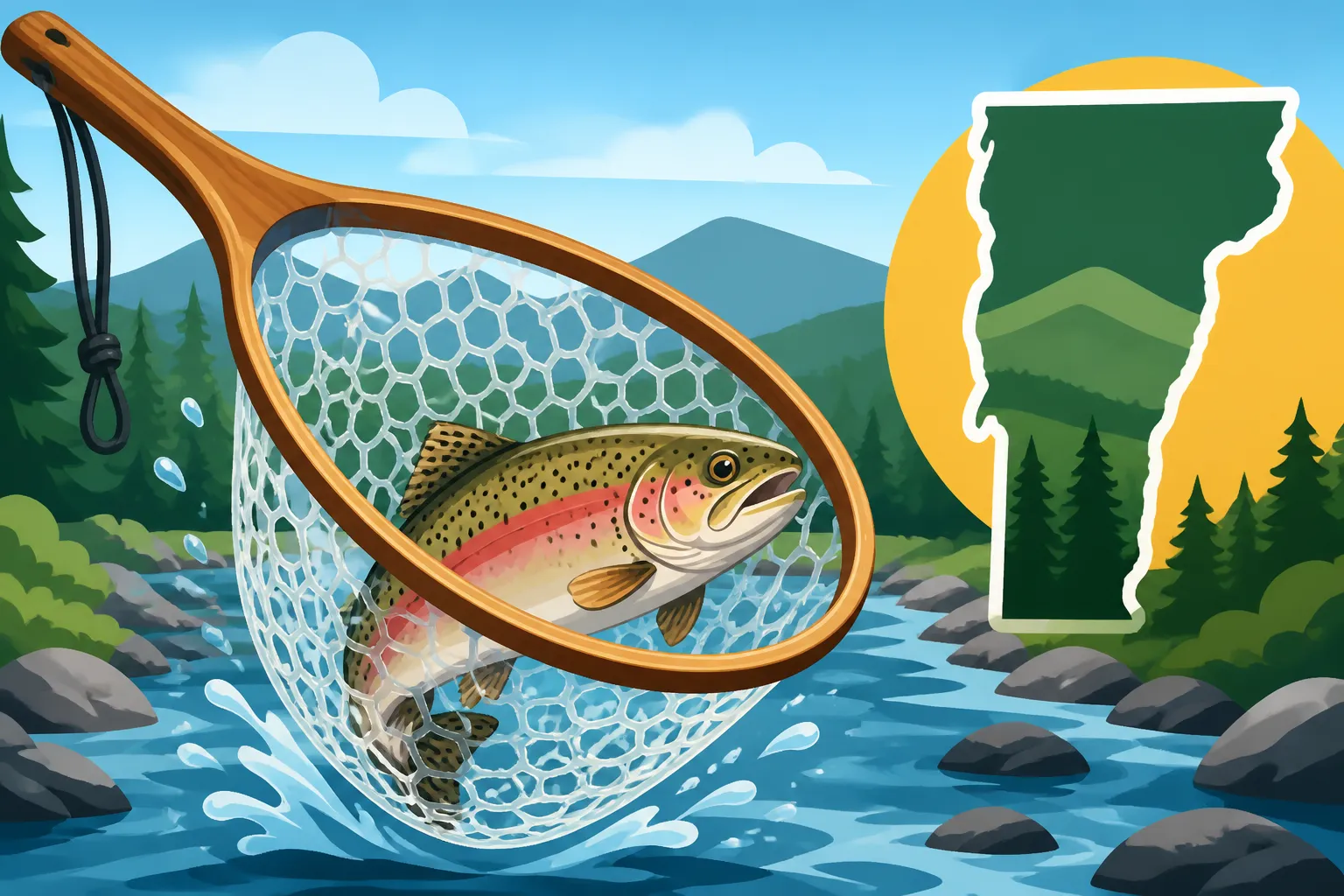
- Rubber (or Rubberized) Nets: These are the gold standard for catch-and-release trout fishing. The soft, pliable, and smooth texture of rubber mesh is incredibly gentle on fish. It minimizes damage to the delicate slime coat and scales, and importantly, hooks rarely get tangled in the smooth material. This means less time struggling to free your fly or lure, and less stress on the fish. Rubber nets are also easy to clean and don't absorb water or fish odors, making them very hygienic. They can be a bit heavier and bulkier than nylon nets, and sometimes more expensive, but the benefits for fish welfare and angler convenience are undeniable. You'll find a wide variety of rubber nets available from retailers like Bass Pro Shops and on Amazon, offering different hoop sizes and handle lengths.
- Knotless Nylon Nets: These are a step up from traditional knotted nylon nets and offer a good compromise if a full rubber net isn't an option. Knotless nylon still presents a smoother surface than knotted mesh, reducing the risk of scale damage and entanglement. They are often lighter and more compact than rubber nets, making them a popular choice for backpackers or anglers who prioritize weight. While better than knotted nets, they are still not quite as fish-friendly or tangle-free as solid rubber. They tend to dry faster than rubber, which can be a plus in some situations.
- Knotted Nylon Nets: These are generally discouraged for trout fishing, especially for catch-and-release. The knots in the mesh can scrape off the fish's protective slime, damage fins, and even injure eyes. Hooks get notoriously tangled in knotted mesh, turning a quick release into a frustrating and often harmful ordeal for the fish. While they might be the cheapest option, the potential harm to the fish and the hassle they create for the angler usually outweigh any cost savings. For the sake of Vermont's trout, it's best to avoid these.
Frame Materials: Wood, Aluminum, and Carbon Fiber
The frame of your landing net provides its structure and durability. Different materials offer various characteristics in terms of weight, buoyancy, and aesthetics.
- Wood Frames: Many traditional trout nets, especially those favored by fly anglers, feature beautiful laminated wooden frames. These nets are often aesthetically pleasing and have a classic feel. Good quality wooden frames are surprisingly durable and have a natural buoyancy that can be helpful if you accidentally drop your net in the water. They are generally heavier than aluminum or carbon fiber, but the weight often feels balanced and comfortable in hand. Maintenance can be a factor, as wood frames may require occasional oiling or sealing to prevent warping or cracking, especially with repeated exposure to water. They are a popular choice for wading nets due to their traditional appeal and solid feel.
- Aluminum Frames: Aluminum nets are a popular choice for their balance of durability, lightness, and affordability. They are corrosion-resistant, which is crucial for a piece of gear constantly exposed to water. Aluminum frames can be found in a wide range of sizes and designs, from compact wading nets to larger boat nets with telescoping handles. They don't have the natural buoyancy of wood, so if dropped, they tend to sink. However, their robust construction can withstand more abuse than wood or carbon fiber, making them a practical choice for many anglers.
- Carbon Fiber (or Composite) Frames: These represent the cutting edge in net technology, offering exceptional strength-to-weight ratios. Carbon fiber nets are incredibly lightweight, making them ideal for long days on the water, backpacking into remote areas, or for anglers who simply want to minimize fatigue. They are also highly durable and resistant to corrosion. The main drawback is typically the higher price point compared to wood or aluminum. Some carbon fiber nets are designed to be neutrally buoyant or even float, a significant advantage. Their sleek, modern appearance appeals to many contemporary anglers.
Handle Length and Design: Fixed vs. Telescoping vs. Short Handled
The handle design dictates how you carry and use your net, and what fishing scenarios it's best suited for.
- Short-Handled (Wading) Nets: These nets typically have handles ranging from 6 to 12 inches. They are designed to be carried on your person while wading, usually attached to a lanyard or magnetic release on your back or vest. Their compact size makes them unobtrusive and easy to maneuver in tight spaces, perfect for small stream Trout Fishing in Vermont or Wading Techniques for Vermont Trout Streams. The short handle requires you to be relatively close to the fish, making them ideal for landing fish in shallow water or when you can easily control the fish's proximity.
- Fixed Long-Handled Nets: These nets feature handles that are significantly longer, often 2-4 feet or more, and do not extend or retract. They are excellent for boat fishing, kayak fishing, or bank fishing where you need extra reach to land a fish that's just out of arm's length. The fixed length means no moving parts to break or jam, making them very sturdy. However, their length makes them cumbersome for wading or carrying through dense brush. They are popular for larger fish and situations where maximum reach is consistently needed.
- Telescoping (Extendable) Handles: These nets offer the best of both worlds, providing compactness for transport and extended reach for landing. A telescoping handle can often extend from a short length (e.g., 18 inches) to several feet (e.g., 4-6 feet or more) with a simple twist or button mechanism. This versatility makes them great for anglers who fish a variety of environments – from stream banks to boats. However, the telescoping mechanism can sometimes be a weak point, prone to sand, dirt, or ice jamming, and can occasionally flex under heavy load. Quality matters greatly with telescoping nets; investing in a reputable brand from places like Bass Pro Shops or via Amazon reviews is wise.
Key Features to Look for in a Vermont Trout Net
Beyond the basic materials and designs, there are specific features that can elevate a good net to a great one for Vermont trout fishing. These considerations focus on practicality, fish welfare, and ease of use in our diverse fishing environments. Thinking through these points before you buy can save you frustration later on.
Net Size and Depth for Various Trout Species
The size and depth of your net's hoop and basket are critical. Too small, and you'll struggle to land a decent-sized fish; too shallow, and a lively trout will jump right out.
- Hoop Size: For general Vermont trout fishing, a hoop with dimensions around 10-15 inches wide and 15-20 inches long is a good starting point for wading nets. This size can comfortably handle most stream-dwelling brook, brown, and rainbow trout up to 20 inches. If you're specifically targeting larger "trophy trout" in certain rivers or lakes, or if you're venturing into waters known for bigger fish, you might consider a hoop size closer to 18×24 inches. It’s better to have a slightly oversized net than one that’s too small, as it provides a larger target and reduces frantic lunges.
- Net Depth: The basket of the net should be deep enough to completely envelop the fish once it's inside, preventing it from flopping out. For most trout, a net depth of at least 10-12 inches when stretched is ideal. A deeper net allows the fish to remain submerged while you unhook it, minimizing air exposure and stress, which is particularly important for catch-and-release success. Imagine you're trying to land a feisty 16-inch Rainbow Trout Stocking in Vermont – if your net is too shallow, that fish will be out before you can blink.
Portability and Carry Options
How you carry your net can significantly impact your comfort and efficiency, especially if you spend long hours wading or hiking.
- Lanyards and Magnetic Releases: For short-handled wading nets, a coiled lanyard or a magnetic net release is a game-changer. These systems allow the net to hang securely on your back, out of the way, but instantly accessible with a quick pull. The magnetic release detaches the net for use, and the lanyard prevents it from floating away if dropped. This hands-free carrying method is invaluable when navigating slippery riverbeds or bushwhacking to a secluded spot. You’ll want to make sure the lanyard is strong and the magnet robust enough to hold your net securely, even when scrambling.
- Built-in Clips or Belt Loops: Some nets, particularly those with slightly longer handles, might have integrated clips or loops designed to attach to a belt or the wading belt of your Best Waders for Vermont Trout Streams. While convenient for carrying, ensure the net doesn't swing too much or interfere with your casting motion. Consider how the net will hang and if it will catch on branches as you move along the bank.
- Boat Holders and Storage: For boat-based fishing, portability shifts to storage. Fixed long-handled nets can be cumbersome. Look for nets with collapsible handles or those that fit neatly into rod holders or dedicated net storage areas on your boat or kayak. Easy access is still paramount, but so is keeping it out of the way when not in use.
Fish-Friendly Features and Knotless Design
This ties back to protecting our precious resource, but it's worth reiterating and expanding on specific features.
- Rubber Mesh is King: As discussed, rubber mesh is the most fish-friendly option. It's gentle on fins and scales, prevents slime coat removal, and minimizes hook tangles. When evaluating a rubber net, pay attention to the size of the holes in the mesh. While generally less important than for nylon nets, smaller holes can prevent smaller trout from pushing through and offer better support.
- Deep Basket for Submerged Unhooking: A net with ample depth allows you to keep the trout in the water while you remove the hook. This drastically reduces stress and air exposure, which are major factors in post-release mortality. Many experienced anglers prioritize this feature for ethical catch-and-release.
- Darker Netting Colors: While not always a primary concern, some anglers believe darker colored nets (e.g., black or dark green rubber) are less startling to fish than bright or clear netting. The idea is that the fish perceives the darker net as less of a threat, making the landing process smoother. This might be a subtle advantage, but every little bit helps when trying to minimize stress on a fish.
Table: Trout Net Comparison for Vermont Anglers
Here's a quick look at common trout net types and their best applications for Vermont's varied fishing landscapes:
| Net Type | Handle Length (Typical) | Frame Material | Mesh Material | Best For Vermont Scenarios | Pros | Cons |
|---|---|---|---|---|---|---|
| Short-Handled Wading | 6-12 inches | Wood, Aluminum | Rubber, Knotless Nylon | Small streams, wading rivers, fly fishing | Unobtrusive, easy to maneuver, classic look (wood) | Limited reach, requires close proximity to fish |
| Fixed Long-Handled | 2-4+ feet | Aluminum, Composite | Rubber, Knotless Nylon | Boat fishing, kayak fishing, bank fishing on larger waters | Max reach, very sturdy, no moving parts | Cumbersome for wading, difficult to transport/store |
| Telescoping Handle | 18 inches – 6 feet | Aluminum, Composite | Rubber, Knotless Nylon | Versatile for mixed use: boat, bank, some wading | Adjustable reach, good for varied situations, compact | Mechanism can be fragile, may jam, heavier than fixed |
| Backpacking Net | 6-12 inches (often folding) | Carbon Fiber, Aluminum | Rubber, Knotless Nylon | Remote ponds, high-elevation streams, long hikes | Extremely lightweight, packable, robust (carbon fiber) | Often higher cost, smaller hoop size |
Matching Your Net to Vermont's Diverse Trout Fishing Scenarios
Vermont offers an incredible array of fishing environments, from tiny, trickling mountain brooks to expansive, deep lakes. The "best" landing net for trout isn't just one net; it's the right net for the specific fishing you're doing. Let's break down how to choose a net that truly complements your Vermont angling adventures.
Stream and River Wading Nets
If your passion lies in exploring Vermont's countless trout streams and rivers – whether it’s a blue-ribbon section of the Winooski River or a hidden brook in the Green Mountains – a wading net is likely your primary tool. These nets are designed for mobility and convenience while actively moving through the water.
When you're Spring Trout Fishing Techniques for Vermont Streams, or simply casting dries on a warm summer evening, you need a net that's lightweight and doesn't get in your way. Short-handled nets, typically with a wood or lightweight aluminum frame and a rubber or knotless nylon mesh, are ideal. These are often carried on a magnetic release attached to the back of your vest or pack, allowing them to hang out of the way until needed. The key here is quick access and a design that doesn't impede your casting stroke or snag on streamside vegetation. A good wading net will have a hoop size that comfortably handles the typical 8-16 inch trout found in many Vermont streams, with enough depth to cradle the fish gently while you unhook it, perhaps even keeping it submerged. Consider the type of water you fish most often – slower, more open stretches might allow for a slightly larger net, while tight, brushy streams demand something very compact.
Pond and Lake Shore/Boat Nets
Vermont is also home to numerous ponds and lakes, offering fantastic opportunities for trout, especially lake trout and landlocked salmon in larger bodies of water like Lake Champlain or Lake Willoughby. Fishing from shore, a boat, or a kayak presents different net requirements.
For shore fishing, especially on ponds where trout might be stocked, a net with a longer, fixed handle or a telescoping handle can be very advantageous. This extra reach helps you land fish that you might not be able to get close to without a sturdy bank. If you're fishing from a boat, like a bass boat or a pontoon on Lake Bomoseen, a long-handled net is almost a necessity. These allow you to reach fish caught further from the boat, navigate around boat motors, and bring bigger fish aboard safely. A telescoping net can be particularly versatile here, extending for maximum reach when needed and collapsing for easier storage when cruising or tying lures. For species that can grow quite large, like lake trout or landlocked salmon, ensure the net has a sufficiently large hoop and deep basket to accommodate them without folding them up. Look for nets with robust aluminum or composite frames that can handle the weight and power of larger fish.
High-Country and Backpacking Nets
For the adventurous angler who loves to hike into Vermont's remote backcountry ponds and streams, chasing wild brook trout in pristine environments, portability and minimal weight are paramount. These trips often involve significant mileage, and every ounce counts.
A specialized backpacking net is designed with extreme lightness and compactness in mind. Often, these feature carbon fiber frames and short handles, sometimes with folding or collapsible hoop designs to make them fit easily into a pack. They almost exclusively feature rubber or knotless mesh to protect the delicate wild trout found in these sensitive ecosystems. While these nets might have smaller hoops than a general-purpose lake net, they are perfectly sized for the native Brook Trout: Vermont's Native Trout you’re likely to encounter in these high-elevation waters. The ability to attach it securely to the outside of your pack without it snagging on brush or becoming a hindrance is crucial. Investing in a high-quality, lightweight carbon fiber model, which you might find at specialty fly shops or well-stocked outdoor retailers like Bass Pro Shops, or even a good selection on Amazon, is usually worth the extra cost for these demanding adventures.
Maintenance and Care for Your Vermont Trout Net
Just like your Best Fly Rods for Vermont Trout Streams or your prized reel, your landing net needs a little love and care to ensure it serves you well for many seasons. Proper maintenance not only extends the life of your net but also plays a crucial role in preventing the spread of aquatic invasive species and keeping Vermont's waters healthy. Ignoring these simple steps can lead to a smelly, damaged, or even dangerous piece of equipment.
Cleaning and Disinfecting Your Net
After every single fishing trip, especially if you've been in different bodies of water, your net needs attention. This isn't just about aesthetics; it's about protecting our aquatic ecosystems.
- Rinse Thoroughly: The first step is always to thoroughly rinse your net with clean, fresh water. This removes mud, weeds, fish slime, and any debris that might be clinging to the mesh or frame. Pay close attention to any joints or telescoping mechanisms, as grit can cause them to seize up. Use a gentle scrub brush on the mesh if necessary to dislodge stubborn debris.
- Disinfect Regularly (Especially Between Waterways): Disinfection is crucial for preventing the transfer of aquatic invasive species, such as zebra mussels, spiny water fleas, or diseases like whirling disease, between Vermont's lakes and rivers. If you fish multiple bodies of water in a short period, disinfecting your net is not optional. A simple, effective method is to create a diluted bleach solution (e.g., 1 part bleach to 10 parts water) or use a specialized aquatic disinfectant available at outdoor stores. Submerge the mesh and frame of your net in this solution for at least 10 minutes, then rinse thoroughly with fresh water to remove any chemical residue. Alternatively, a prolonged soak in hot water (above 120°F/50°C) for a few minutes can also be effective. Always allow your net to fully air dry in the sun, if possible, before your next outing. This "clean, drain, dry" approach applies to all your Best Gear for Vermont Trout Fishing, not just your net!
- Remove Odors: Rubber nets are generally good at resisting odors, but nylon nets can absorb fishy smells over time. A thorough cleaning with mild soap and water, followed by disinfection and sun exposure, usually takes care of most odors. For persistent smells, some anglers use a baking soda solution or a diluted vinegar soak, followed by rinsing.
Repairing and Storing Your Net
Even the most durable nets can suffer wear and tear. Knowing how to make minor repairs and properly store your net can significantly extend its lifespan.
- Mesh Repair: For rubber nets, small tears are rare but can happen. Depending on the severity, specialized rubber repair kits (similar to those for patching waders) might work, or it might be time for a mesh replacement if widely available for your net model. For nylon nets, small holes can often be repaired with strong fishing line or a nylon repair kit. However, if the damage is extensive, replacing the mesh is usually the best option, especially if it's a knotless design crucial for fish safety.
- Frame and Handle Maintenance: Wooden frames can benefit from occasional sanding and re-sealing with a marine-grade varnish or oil, especially if you notice the wood drying out or showing signs of splintering. This protects against water damage and keeps the net looking good. Aluminum and carbon fiber frames are generally low maintenance, but check for any bends, cracks, or loose rivets. Tighten any screws on the handle or hoop connections as needed. For telescoping handles, keep the mechanism clean and occasionally lubricate with a dry silicone spray to ensure smooth operation. Avoid using oil-based lubricants that can attract dirt.
- Proper Storage: When not in use, store your net in a cool, dry place, away from direct sunlight and extreme temperatures. Sunlight can degrade rubber and nylon over time, and extreme cold can make plastic components brittle. Hang your net by its handle or hoop to allow for air circulation and prevent any moisture from getting trapped, which can lead to mold or mildew, especially on nylon mesh. Proper storage ensures your net is ready for action whenever Vermont's beautiful waters call your name.
Disclaimer
This article is for general informational purposes only and does not constitute professional advice. Laws, prices and regulations vary by location and change over time. Consult a qualified professional for guidance on your specific situation.