Best Fly Rods for Vermont Trout Streams
Trying to pick the "perfect" fly rod for Vermont's incredibly diverse trout streams can feel like a daunting task, especially when you consider everything from tiny, overgrown mountain brooks to wide, open rivers and even stillwater ponds. It's not just about finding a rod, it's about finding the right rod that makes your time on the water more enjoyable and successful. This comprehensive guide is here to break down the nuances of fly rod selection, helping you understand how different rod characteristics impact your fishing experience in the Green Mountain State.
Understanding Vermont Trout Streams: Diverse Waters, Diverse Needs
Before you even think about rod weight or action, it's crucial to consider the types of water you'll be fishing most often in Vermont. Our state is a tapestry of aquatic environments, each demanding a slightly different approach and, consequently, a slightly different tool. What works perfectly on a small, brush-choked feeder stream might feel completely out of place on a wide, open river. Thinking about your typical fishing grounds will dramatically narrow down your choices and lead you to a rod that truly enhances your experience.
Classic Freestones and Mountain Brooks
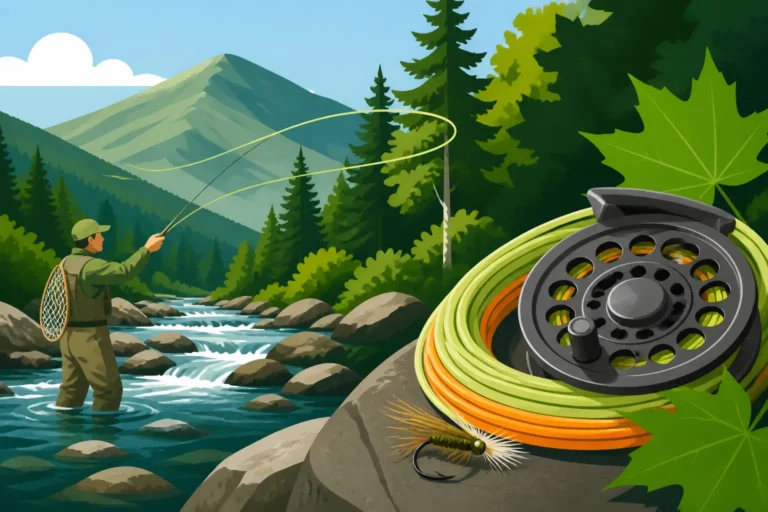
Vermont is famous for its picturesque freestone streams and high-gradient mountain brooks, the kind that tumble down through dense forests. These waters are often characterized by tight casting quarters, overhanging vegetation, and relatively small fish, primarily native brook trout or smaller rainbows and browns. Think about wading a tributary of the Winooski River, where every cast needs to be precise and often less than 20 feet. You're usually making short roll casts or careful bow-and-arrow casts under a canopy of trees.
The challenges here are obvious: space is at a premium, delicate presentations are key to not spooking wary fish in clear, shallow water, and you won't be making many long bombs. A rod that's too long or too stiff can become a liability, constantly snagging branches or making it impossible to load for those close-range casts. The joy of these smaller waters lies in the intimacy of the experience, the subtle tug of a wild brook trout, and the satisfying feel of a well-placed fly in a pocket of calm water.
For these intimate settings, anglers often favor shorter, lighter rods that allow for quick, accurate casts without needing a lot of backcasting room. The ability to flick a small dry fly or a tiny nymph into a precise spot under a rhododendron bush without getting tangled is paramount. It’s about feeling every head shake of even a modest fish, truly connecting with the spirit of these wild, untamed places.
Bigger Rivers and Tailwaters
On the other end of the spectrum, Vermont boasts larger rivers like the Battenkill, White River, and sections of the Lamoille, as well as tailwaters below some dams. These waters offer more open casting lanes, greater potential for larger trout, and often require longer casts to reach productive seams or across strong currents. Here, you might be nymphing with multiple flies and split shot, swinging streamers through deeper runs, or making long, accurate dry fly casts to rising fish in the middle of a wide pool.
The demands on your fly rod shift considerably in these environments. You need a rod with enough backbone to cast heavier rigs, punch through wind, and effectively mend line across complex currents. A longer rod becomes an asset for line control, helping you keep your fly drifting naturally without drag. Fighting larger fish in strong currents also calls for a rod with some authority, allowing you to turn a powerful brown trout before it disappears under a log jam or into faster water.
These rivers often hold impressive populations of brown and rainbow trout, sometimes growing to significant sizes, especially in areas like Vermont Trophy Trout Program Waters. Your gear needs to be up to the task of handling these stronger fish, preventing break-offs and ensuring a clean, quick fight. It's a different kind of challenge and reward compared to the tight quarters of a mountain brook, requiring a rod that can deliver both power and precision over greater distances.
Ponds and Small Lakes
While often overlooked by stream purists, Vermont's numerous ponds and smaller lakes offer fantastic trout fishing opportunities, particularly for holdover trout, stocked fish, and even landlocked salmon in certain waters. Whether you're casting from shore, wading out a bit, or fishing from a float tube or kayak, these stillwater environments present their own set of challenges. You'll frequently need to achieve longer casts, especially when fish are cruising further out or when trying to reach specific structure.
The wind can become a major factor on open water, demanding a rod that can generate high line speed to punch flies through gusts. When fishing stillwaters, you might be stripping streamers, presenting delicate emergers, or using indicators with balanced leeches or nymphs. The need for precise turnover, particularly with larger flies or wind-resistant patterns, is often greater here than on a small stream. Think about fishing Lake Bomoseen Fishing Guide from a small boat, trying to reach a distant weed line.
Fighting fish in stillwater also changes the dynamic. Without the current to help, you're relying more on the rod's power to subdue a larger trout or salmon. A rod that offers a good balance of casting prowess and fighting leverage will serve you well in these settings. Many state parks, as highlighted in the Vermont State Park Fishing Guide, offer accessible pond fishing that can be incredibly rewarding, making these waters a crucial consideration for any comprehensive rod selection.
Fly Rod Weight: Matching the Fish and Water
The "weight" of a fly rod (e.g., 3-weight, 5-weight) refers to the optimal weight of the fly line it's designed to cast. This rating is absolutely critical because it dictates the rod's sensitivity, casting power, and its ability to handle different fly sizes and fish sizes. Choosing the right weight is arguably the most important decision you'll make when selecting a fly rod for Vermont.
The Delicate Touch: 1 to 3-Weight Rods
When you think about stalking tiny, native brook trout in those quintessential, overgrown Vermont mountain streams, a 1 to 3-weight fly rod comes to mind. These ultralight rods are designed for the most delicate presentations, allowing you to cast tiny dry flies, midge patterns, or small nymphs with exquisite precision. They load with minimal line, making short, accurate casts in tight quarters effortless. Imagine the thrill of a feisty six-inch brook trout putting a deep bend in one of these delicate instruments – it's an experience that connects you intimately with the fish and the environment, often more so than landing a larger fish on heavier gear.
However, this delicacy comes with trade-offs. Ultralight rods struggle with casting distance, especially if you encounter any wind, and they're generally not suited for throwing heavy or wind-resistant flies like larger streamers. While they make small fish feel like giants, they can be easily overpowered by even a moderately sized trout, leading to prolonged fights that can be stressful for the fish. For the dedicated small stream enthusiast pursuing Brook Trout: Vermont's Native Trout, a 1-to-3-weight rod is a sublime tool, but it's a specialized instrument, not an all-rounder.
These rods are typically employed in high-gradient headwater streams, tiny spring creeks, or any water where the fish are small, wary, and the casting is tight and close-range. If your primary goal is to appreciate the subtle beauty of a small native trout or to practice the art of precise, gentle presentation, then a rod in this weight class will be an absolute joy to fish with. Just be mindful of its limitations when conditions or target species shift.
The All-Around Workhorse: 4 to 5-Weight Rods
If you ask most Vermont anglers what their "go-to" fly rod is for trout, chances are they'll point to a 4-weight or 5-weight. This range represents the sweet spot for versatility, making it the most popular choice for good reason. A 4-weight offers a bit more delicacy than a 5-weight, excelling with dry flies and small nymphs on medium-sized streams, where longer casts are sometimes needed but subtlety remains important. It’s fantastic on places like the smaller sections of the Lamoille River or Otter Creek for average-sized trout.
The 5-weight, however, is often considered the quintessential all-around trout rod. It has enough backbone to cast a decent distance, handle a variety of fly sizes from tiny dries to medium streamers, and effectively fight most trout you'll encounter in Vermont. It’s forgiving for beginners yet responsive enough for experienced anglers to appreciate. Whether you're tossing dries on the Battenkill, nymphing a run on the White River, or even casting light streamers for smallmouth bass, a 5-weight will get the job done admirably. You'll find a wide selection of excellent 4- and 5-weight rods at retailers like Bass Pro Shops or even online through Amazon, often with fantastic reviews for their balanced performance.
This weight class strikes a near-perfect balance between finesse and power. It's capable of delicate presentations when needed, but also possesses enough authority to turn a respectable trout in current or cast into a moderate breeze. If you're only going to own one fly rod for Vermont trout fishing, a 4 or 5-weight is by far your most practical and enjoyable option, covering the vast majority of scenarios you'll encounter on our diverse waters.
Stepping Up to Power: 6-Weight Rods
While primarily associated with larger fish like smallmouth bass, salmon, or even light saltwater applications, a 6-weight fly rod can certainly find a place in a Vermont trout angler's arsenal, particularly if you're targeting bigger rivers, battling strong winds, or throwing larger, heavier flies. When you’re fishing a wide river like the lower Connecticut or targeting the larger brown trout in the bigger sections of the White River, a 6-weight provides the muscle needed to deliver heavy nymph rigs, substantial streamers, and to effectively fight powerful fish without exhausting them (or you).
A 6-weight is less common purely for trout, as its power can feel like overkill for average-sized stream trout, making the fight less engaging and the presentation less subtle. However, if your fishing often involves windy conditions on open water, or you frequently switch between trout and species like Smallmouth Bass Fishing in Vermont, it offers excellent crossover utility. It’s also a good choice if you're exploring the lower reaches of rivers that flow into Lake Champlain, where larger trout and other species might be encountered.
It’s important to acknowledge that using a 6-weight for small stream trout will diminish the "sport" of the fight for smaller fish. But for those specific situations where you need to cast heavy loads, maintain control over powerful fish, or simply want a more robust setup for larger river systems or smaller lakes, the 6-weight can be an invaluable tool. It adds a significant amount of backbone to your casting and fish-fighting capabilities, extending your reach and versatility for those bigger challenges.
Here's a quick look at how rod weights generally align with Vermont fishing scenarios:
| Rod Weight | Ideal Fish Size/Type | Typical Vermont Water | Common Techniques | Pros | Cons |
|---|---|---|---|---|---|
| 1-3 wt | Small Brook/Rainbow Trout | Mountain Brooks, Tiny Streams | Dry Flies, Small Nymphs | Delicate, Fun with Small Fish | Limited Distance, Struggles in Wind |
| 4-5 wt | Small-Medium Trout/Bass | Most Rivers, Medium Streams | Dry Flies, Nymphs, Light Streamers | Versatile, Good All-Around | Can be Overpowered by Big Fish/Wind |
| 6 wt | Large Trout, Smallmouth Bass | Larger Rivers, Smaller Lakes | Streamers, Heavier Nymphs | Power, Handles Wind/Large Fish | Less Delicate, Overkill for Small Fish |
Fly Rod Action: From Nymphing to Dry Flies
Beyond weight, a fly rod's "action" is its most defining characteristic, referring to how much of the rod bends during a cast and how quickly it returns to its straightened position. This quality profoundly influences how a rod casts, how delicately it presents a fly, and how it feels when fighting a fish. Understanding the difference between slow, medium, and fast action rods will help you choose one that matches your casting style and the techniques you prefer for Vermont trout.
Slow Action: The Art of the Presentation
Slow action rods, often made of fiberglass or sometimes bamboo, are the traditionalists' choice. These rods bend deeply into the blank, sometimes even into the handle section, and have a leisurely, deliberate casting stroke. They load with very little line, making them superb for short, delicate presentations where precision and stealth are paramount. Imagine floating a tiny Trico spinner on a glassy pool, or gently placing a dry fly just under an overhanging branch – this is where a slow action rod truly shines. Their forgiving nature also makes them excellent for protecting light tippets, absorbing the shock of a sudden run from a fish.
For Vermont anglers who frequent smaller streams, quiet spring creeks, or desire to truly feel the rod load and unload during the cast, a slow action rod can be incredibly rewarding. They force you to slow down, to focus on the grace and rhythm of your cast rather than sheer power. While they might not cast a mile, their ability to deliver a fly with minimal disturbance to the water is unmatched. If you're a proponent of delicate dry fly fishing in intimate settings, such as many of the Green Mountain tribs, a slow action rod will become a cherished tool.
The "feel" of a slow action rod is often described as smooth and soulful, offering a tactile connection to the casting stroke that many modern graphite rods can't replicate. It’s not about brute force; it's about finesse. However, they do require a slower casting stroke and can struggle with heavier flies, windy conditions, or situations requiring quick, repetitive casts.
Medium Action: The Versatile Balancer
The medium action rod is the quintessential all-rounder, striking a fantastic balance between the delicate feel of a slow rod and the power of a fast rod. It typically bends in the top half to two-thirds of the blank, providing enough flex for delicate presentations while still retaining sufficient backbone for casting longer distances and handling larger flies. This versatility makes it an excellent choice for anglers who fish a variety of water types and techniques in Vermont.
For beginners, a medium action rod is often recommended because its forgiving nature makes it easier to learn proper casting mechanics. It provides enough feedback to help you feel the rod load, but recovers quickly enough to avoid the "floppy" feeling that can frustrate new anglers with slow action rods. For experienced anglers, it’s a dependable workhorse that can adapt to changing conditions, whether you're switching from dry flies to nymphing or needing to reach a little further across a river.
In Vermont, where one day you might be fishing a medium-sized river with dry flies and the next you're bouncing nymphs through a rocky run, a medium action rod excels. It offers enough power to cast into a light breeze and enough sensitivity to detect subtle strikes. Many popular 5-weight rods fall into the medium-fast action category, offering a blend of power and feel that satisfies a broad spectrum of fishing situations and angler preferences.
Fast Action: Power and Distance
Fast action rods are designed for power, distance, and quick line speed. They bend primarily in the tip section, recovering very quickly, which allows them to generate high line speeds and punch lines through wind. If you're consistently making long casts, throwing heavy nymph rigs with multiple split shot, or slinging large, wind-resistant streamers, a fast action rod is your friend. They provide excellent control over heavy line systems and offer significant backbone for fighting larger, stronger fish, particularly in heavy currents or open water.
In Vermont, a fast action rod really shines when you're fishing larger rivers like the White River or the Battenkill in sections that demand longer casts or require you to actively mend line to achieve a drag-free drift over complex currents. They are also incredibly effective for techniques like Euro Nymphing Vermont Trout Streams, where sensitivity to subtle takes and the ability to control multiple nymphs in fast water are key. On windy days on Lake Champlain or other open bodies of water, a fast action rod can make casting a pleasure rather than a chore.
While powerful, fast action rods can be less forgiving for beginners due to their stiffness, requiring a more precise casting stroke to load effectively. They also tend to be less delicate for presenting small dry flies, as the stiff tip can make it harder to soften the landing of a tiny pattern. However, for those situations demanding maximum performance, casting distance, and the ability to handle heavy loads or battle big fish like those in Vermont Trophy Trout Program Waters, a fast action rod is an indispensable tool.
Fly Rod Length: Balancing Reach and Maneuverability
The length of your fly rod, typically ranging from 6 feet to over 10 feet, plays a crucial role in how well it performs in specific fishing environments. Rod length directly impacts your casting distance, line control, and maneuverability, especially when dealing with overgrown banks or complex river currents.
Short and Sweet: Rods under 8.5 feet
For many Vermont anglers, especially those who cherish the challenge and solitude of small, brush-choked streams, a shorter fly rod (typically 6 to 8 feet) is an absolute game-changer. These rods are designed for tight quarters, where long backcasts are impossible due to overhanging trees, dense foliage, or steep banks. Imagine trying to cast on a small tributary of the Black River or a tiny feeder stream of the Winooski; a 9-foot rod would constantly be snagging branches behind you. Shorter rods allow for incredibly precise, close-range casts, often roll casts or bow-and-arrow casts, that simply can't be achieved with longer gear.
The maneuverability of a short rod is its greatest asset. It allows you to navigate dense streamside vegetation with ease and make quick, accurate casts into small pockets and eddies that longer rods would blow over or simply get stuck in. While they won't win any awards for casting distance, that's not their purpose. Their strength lies in their ability to excel in intimate environments, enhancing the joy of catching even small brook trout in challenging conditions. The downside, of course, is that they offer less line control on larger water and can make mending difficult in strong currents.
However, for a dedicated small stream angler, the trade-off is well worth it. A short, light rod can transform a frustrating bushwhacking experience into a delightful outing, letting you focus on the fishing rather than fighting your gear. When choosing a rod for these highly specific conditions, prioritizing maneuverability will greatly improve your success and enjoyment.
The Standard Bearers: 8.5 to 9 feet
The 8.5 to 9-foot length range is, without a doubt, the most common and versatile choice for trout fishing across North America, and Vermont is no exception. A 9-foot rod, in particular, has become the industry standard for a reason: it offers an excellent balance of casting distance, line control, and all-around utility. It's long enough to achieve respectable casts on wider rivers, provides good leverage for fighting fish, and allows for effective line mending over moderate currents, which is crucial for achieving a natural drift.
This length works well for a vast array of techniques, from delicate dry fly presentations to indicator nymphing and even casting smaller streamers. It’s maneuverable enough for many medium-sized streams yet provides the reach and control needed for larger waters like the Battenkill or the White River. For an angler in Vermont who wants one rod that can handle the majority of situations they might encounter – from a day on a medium-sized freestone to a brief float tube session on Lake Bomoseen Fishing Guide – a 9-foot rod is an exceptionally safe and often superior bet.
If you're buying your first fly rod, or if you only plan to own one for trout fishing, a 9-foot, 5-weight rod is almost universally recommended as the best starting point. It's forgiving enough for learning, yet capable enough to grow with your skills. Its widespread popularity also means you'll find an enormous selection of rods in this length and weight across all price points, from entry-level combos to high-end specialist rods.
Extra Reach: Rods over 9 feet
While 9 feet is the standard, longer rods (9.5 to 10 feet, or even longer for specific disciplines) offer distinct advantages in certain Vermont fishing scenarios. The primary benefit of an extra-long rod is superior line control and reach. This is especially critical when nymphing on complex rivers with multiple current seams. A longer rod allows you to hold more line off the water, reducing drag and enabling longer, more natural drifts with your nymphs. It’s an invaluable tool for dedicated nymph anglers, particularly those employing European nymphing techniques.
Beyond nymphing, a longer rod provides greater leverage when fighting larger fish, helping you steer them away from snags and bring them to net more efficiently, especially in strong currents. It also aids in keeping your fly line higher off the water when wading, which can be advantageous for avoiding bankside obstructions or for subtle fly presentations. For anglers fishing from a boat or float tube on larger waters like Lake Champlain's shallower bays or wider sections of big rivers, the added reach can significantly extend your casting range and control.
However, the extra length comes with a trade-off: reduced maneuverability in tight, overgrown areas. Casting an extra-long rod in brushy streams can quickly become frustrating. But for the dedicated technical angler, particularly those focused on nymphing or streamer fishing on larger, more open water, a rod over 9 feet can be a powerful asset. It allows for advanced line manipulation and presents a distinct advantage in specific, often challenging, fishing situations. For an in-depth dive into such techniques, consider exploring Euro Nymphing Vermont Trout Streams.
Rod Material and Construction: What's Under the Hood?
The material a fly rod is made from fundamentally dictates its performance characteristics, including its weight, strength, sensitivity, and action. While modern technology continually introduces new composites, the vast majority of fly rods fall into two main categories: graphite and fiberglass. Each has its distinct advantages and a loyal following among Vermont anglers.
Graphite: The Modern Standard
Graphite, also known as carbon fiber, is by far the most dominant material in modern fly rod construction. Its popularity stems from its incredible strength-to-weight ratio, allowing manufacturers to create rods that are remarkably light yet powerful. Graphite rods are known for their sensitivity, enabling anglers to feel subtle takes even when fishing nymphs in deep water. They can also be engineered to achieve a wide range of actions, from medium-fast to ultra-fast, making them highly versatile for different fishing styles and casting preferences.
The evolution of graphite technology, with different moduli (stiffness ratings) and resin systems, has led to rods that are lighter, stronger, and more responsive than ever before. This means better line speed, longer casts, and a more crisp, powerful feel. For the angler who values performance, casting distance, and the ability to punch flies through the wind, graphite is the go-to choice. Whether you're making precise dry fly casts on the Battenkill or slinging heavy streamers on the White River, a well-designed graphite rod offers the performance demanded by a variety of Vermont fishing scenarios.
The vast majority of fly rods you'll find available at retailers like Bass Pro Shops or online through Amazon will be graphite, reflecting its status as the industry standard. This material allows for rods to be built across all price points, from incredibly affordable entry-level options to highly specialized, premium models that push the boundaries of fly casting performance.
Fiberglass: The Nostalgic Comeback
Once the reigning king before graphite's ascent, fiberglass fly rods have experienced a significant resurgence in popularity, not just for their nostalgic charm but for their unique fishing qualities. Modern fiberglass rods are not your grandpa's heavy, wobbly stick; advancements in resin and blank tapers have produced lightweight, surprisingly responsive rods that excel in specific applications. Fiberglass rods are characterized by their deep-bending, slower action, which translates into an incredibly smooth and forgiving casting stroke.
The major advantages of fiberglass lie in its feel and durability. These rods are superb for delicate dry fly presentations and for protecting light tippets, making them a joy to fish on small, intimate streams where stealth is paramount. The deep flex of a fiberglass rod loads effortlessly for short casts, making it perfect for those tight, brush-lined Vermont brooks. When fighting a fish, a fiberglass rod offers a highly engaging experience, bending deep into the blank and making even a modest trout feel like a powerhouse. They are also incredibly durable and less prone to breakage from accidental knocks compared to the stiffer, more brittle graphite.
For the angler seeking a more "connected" and forgiving experience, particularly for small stream brook trout fishing or precise dry fly work, a modern fiberglass rod is an excellent choice. It invites a slower, more deliberate casting style and rewards the angler with a unique, soulful feel that is distinct from graphite. While not ideal for long-distance casting or heavy fly setups, their niche in delicate, close-quarters fishing is undeniable.
Hybrid and Specialty Materials
While graphite and fiberglass remain the primary materials, the fly rod industry constantly innovates. You might encounter rods that incorporate hybrid constructions, blending different materials to achieve specific performance characteristics. For example, some rods might use a blend of graphite and other fibers to enhance durability or create a unique action. Boron or other composite materials are sometimes added to graphite blanks to increase stiffness and power without adding significant weight, often found in higher-end models designed for demanding applications like saltwater or big game.
The goal of these specialty materials is often to push the boundaries of what's possible in terms of weight reduction, strength, sensitivity, or a very specific action profile. However, for the vast majority of trout fishing in Vermont, graphite or fiberglass will be the primary materials you consider. These classic materials have proven their worth over decades and continue to offer excellent performance across all price points and fishing styles.
Unless you have very specific, advanced needs or a keen interest in cutting-edge technology, focusing on the well-established properties of graphite and fiberglass will provide you with ample choices for a superb Vermont trout fishing experience. These materials offer a clear distinction in feel and performance, allowing you to choose a rod that truly matches your preferred style.
Considering Your Budget and Skill Level
Choosing a fly rod isn't just about matching the water and fish; it's also about finding a rod that fits your personal budget and current skill level. You don't need to break the bank to get a capable rod, especially when you're just starting out. Conversely, a premium rod, while offering marginal gains, might not be fully appreciated by a novice angler.
Entry-Level Combos: Getting Started Right
If you're new to fly fishing or looking for an affordable way to expand your arsenal, entry-level rod and reel combos are an excellent starting point. These kits typically include a rod, a pre-spooled reel with fly line and backing, and sometimes a leader, all designed to work together in a balanced fashion. The beauty of a combo is that it removes the guesswork of matching components, providing a ready-to-fish setup right out of the box. You'll find a wide selection of these, often a 9-foot, 5-weight setup, at various price points on Amazon or at your local Bass Pro Shops.
While they may not feature the lightest graphite or the fanciest components, modern entry-level combos offer surprisingly good performance. They are usually designed with a forgiving, medium-fast action that helps new anglers learn to cast effectively without frustration. The focus here is on ease of use and getting you on the water quickly and successfully, not on hyper-specialized performance. Think about grabbing one of these for your first foray into Fly Fishing for Trout in Vermont, it will provide a solid foundation without a huge upfront investment.
Remember, the most important thing at this stage is to get out and fish, practice your casting, and enjoy the experience. A reliable entry-level combo will allow you to do just that, and you can always upgrade or specialize later as your skills and preferences evolve. Don't let the idea of needing expensive gear deter you from trying fly fishing.
Mid-Range Options: Stepping Up Your Game
Once you've gained some experience and have a clearer idea of your preferred fishing styles and the types of water you frequent most in Vermont, stepping up to a mid-range fly rod can be a very rewarding move. Rods in this category typically feature higher-modulus graphite, better quality components (like reel seats, cork handles, and guides), and more refined actions. They are lighter in hand, more sensitive, and often offer a noticeable improvement in casting performance compared to entry-level options.
A mid-range rod might allow you to cast further with less effort, detect more subtle strikes, or present flies with greater accuracy. This jump in performance often makes a significant difference in your overall fishing experience, particularly for anglers who have developed a consistent casting stroke. You might choose a mid-range 4-weight for improved dry fly delicacy or a more powerful 6-weight for streamer fishing on larger rivers. This is where you start to feel the nuances in rod design and appreciate the incremental improvements in materials and craftsmanship.
These rods offer excellent value, providing a significant performance upgrade without venturing into the premium price tags. They are often the sweet spot for passionate anglers who want a high-quality tool that will last for many seasons and perform exceptionally well across a wide range of Vermont trout fishing conditions. It's a great investment once you've committed to the sport and want a rod that can truly elevate your fishing.
Premium Rods: The Ultimate Experience
At the top tier of fly rod manufacturing are the premium rods, representing the pinnacle of design, material science, and craftsmanship. These rods utilize the most advanced, highest-modulus graphite or specialized materials, employ cutting-edge tapers, and feature the finest components available. The result is a rod that is incredibly lightweight, exceptionally sensitive, and often boasts a highly refined, specialized action tuned for specific casting styles or fishing techniques.
For the discerning angler, a premium rod offers marginal but often profound gains: effortless casting, unparalleled feel, and the ability to execute highly technical presentations with precision. They are designed to extract every last bit of performance from your casting stroke and to provide an almost telepathic connection to your fly and the fish. While the performance jump from mid-range to premium might be less dramatic than from entry-level to mid-range, the subtle improvements in feel, balance, and casting efficiency can be deeply appreciated by experienced anglers.
It’s important to recognize that premium rods are a significant investment. For many casual anglers, the performance benefits might not justify the cost. However, for those who spend countless hours on the water, who demand the absolute best from their equipment, or who specialize in particular techniques like Wading Techniques for Vermont Trout Streams where every advantage counts, a premium rod can be a lifelong companion and a source of immense satisfaction. It's not just a tool; it's a finely tuned instrument designed to maximize every moment you spend pursuing trout in Vermont's beautiful waters.
Disclaimer
This article is for general informational purposes only and does not constitute professional advice. Laws, prices and regulations vary by location and change over time. Consult a qualified professional for guidance on your specific situation.