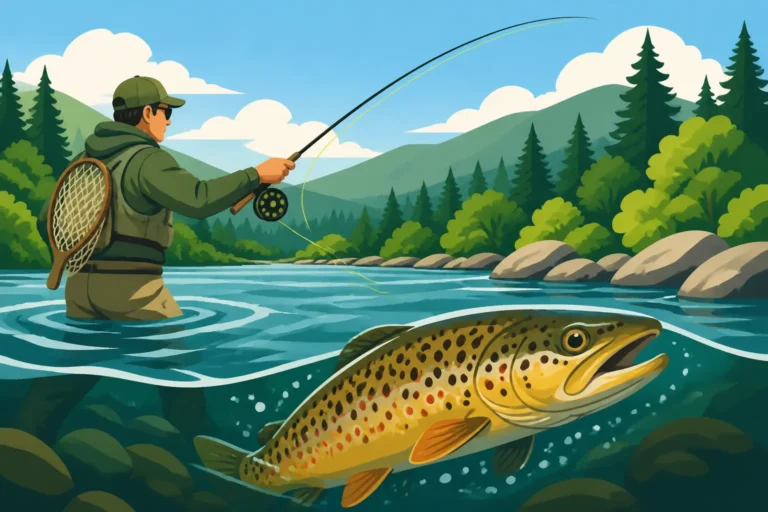
Euro Nymphing Vermont Trout Streams
Vermont's trout streams, with their diverse pockets, swift currents, and often wary fish, can present a real challenge for even seasoned anglers. If you've ever found yourself struggling to get your fly deep enough, detect those subtle takes, or simply maintain contact in tricky currents, you're not alone. This comprehensive guide is here to shed light on Euro Nymphing, a highly effective technique designed to overcome these very frustrations and help you connect with more trout in the Green Mountain State's beautiful waters.
Understanding the Essence of Euro Nymphing for Vermont Waters
Euro Nymphing, or European Nymphing, isn't just another way to fish for trout; it's a paradigm shift in how you approach river fishing. It's about precision, direct contact, and a level of sensitivity that often outshines traditional indicator nymphing methods, especially in the challenging, varied currents found across Vermont. If you've spent frustrating hours watching your indicator bob aimlessly or, worse, not detecting the lightest of takes, Euro Nymphing offers a refreshing, highly engaging alternative that puts you squarely in control.
What Makes Euro Nymphing Different?
At its heart, Euro Nymphing strips away much of the excess, focusing on a direct connection between you, your flies, and the fish. Unlike traditional indicator fishing, where a bobber signals a strike, Euro Nymphing relies on a specialized leader system with a highly visible "sighter." This sighter, often a brightly colored monofilament or braided line section, becomes your strike indicator, twitching or pausing when a fish takes your fly. This direct connection also means you're almost always in contact with your flies, feeling even the most subtle bumps and takes that an indicator might miss. The setup usually involves a longer, lighter rod, a thin Euro Nymph specific line, and heavily weighted, often tungsten-beaded, nymphs designed to get down to the fish zone quickly. The emphasis is on precise, controlled drifts rather than casting for distance, which is a game-changer when targeting specific seams or pockets.
Why it's Perfect for Vermont's Diverse Trout Streams
Vermont's rivers and streams are a patchwork of deep pools, turbulent riffles, fast runs, and intricate pocket water, all of which can make conventional nymphing a headache. Imagine trying to get a small nymph down quickly in a fast, boulder-strewn section of the White River, or trying to detect a subtle take in a churning pocket on the Battenkill. This is where Euro Nymphing truly shines. Its ability to achieve immediate depth and maintain constant contact is incredibly advantageous. The heavily weighted flies cut through strong currents, reaching the fish's feeding lanes much faster. The long rod helps you keep nearly all your fly line off the water, reducing drag that often plagues traditional setups and ruins a natural drift. This means your flies move at the speed of the current, just like natural insects, which is absolutely crucial for fooling wary trout. Whether you're navigating the clear, often challenging waters of the Battenkill River, or exploring some of the smaller, higher-elevation tributaries in the Green Mountains, Euro Nymphing provides the tools to effectively fish these varied environments.
The Core Principles: Contact, Control, and Presentation
Success in Euro Nymphing boils down to three fundamental pillars: contact, control, and presentation.
- Contact: This is paramount. You want to feel everything – the bottom, the current, and most importantly, the fish. Your specialized leader setup and short line approach facilitate this constant connection. Every tick, every slight pause in your sighter or on your rod tip could be a fish.
- Control: With a longer rod and minimal line on the water, you have incredible control over your flies' drift. You're not just casting and hoping; you're actively guiding your flies through the current, manipulating their speed and depth with subtle rod movements. This allows you to target specific holding lies with surgical precision.
- Presentation: Because you have such excellent contact and control, your nymphs present naturally. They tumble along the bottom, mimicking real insects dislodged by the current, without the unnatural drag caused by a floating indicator or excess fly line. This natural presentation is what ultimately coaxes those selective Vermont trout into biting. Mastering these principles will elevate your nymphing game significantly, especially in waters known for their discerning trout.
Essential Gear for Euro Nymphing Vermont Streams
Diving into Euro Nymphing requires a slightly different gear setup than what you might be accustomed to with traditional fly fishing. While you can certainly start with some modifications to existing gear, investing in specialized equipment will drastically improve your effectiveness and enjoyment on the water. Think of it as having the right tool for the job – you wouldn't use a screwdriver to pound a nail, right? The same goes for this technique, where the subtle nuances of rod action and line design make a world of difference.
The Right Rod and Reel Setup
The rod is arguably the most critical component for successful Euro Nymphing. You're generally looking for a longer rod, typically between 10 and 11.5 feet, paired with a lighter line weight (often a 2, 3, or 4-weight). This extended length is key for keeping your fly line off the water, managing drifts, and reaching across complex current seams. Crucially, these rods aren't just long; they have a distinct action. They are typically softer in the tip, allowing for incredible sensitivity to detect light takes, but with a progressive stiffness in the butt section to fight larger fish effectively. For instance, a 10.5-foot 3-weight rod designed for Euro Nymphing will feel drastically different from a standard 9-foot 5-weight trout rod. Companies like Orvis, Echo, and Redington produce excellent dedicated Euro Nymphing rods that are readily available on platforms like Amazon.
Your reel, on the other hand, is primarily for line storage and balance. Since you'll rarely cast much fly line, its primary function is to perfectly balance the longer rod. A lightweight reel with a smooth drag is ideal, but it doesn't need to be top-of-the-line. Many anglers opt for a reel that is one size larger than what they might typically pair with a given rod weight to achieve that perfect balance. The goal is to create a setup that feels light and responsive in your hand, reducing fatigue over a long day of actively holding the rod tip high.
Specialized Lines and Leaders
Forget your standard weight-forward floating lines for Euro Nymphing. Here, the line system is designed for minimal drag and maximum sensitivity.
- Euro Nymph Line: These are incredibly thin, level lines, often with a diameter similar to monofilament. Their thin profile drastically reduces sag and drag, allowing for the direct contact essential to the technique. Some lines might have a slightly textured surface or a different color to help with visibility, but their core characteristic is minimal mass. You don't cast these lines in the traditional sense; rather, you lob or flick your weighted nymphs.
- Sighter Material: Attached to the end of your Euro Nymph line (or often integrated into a dedicated Euro Nymph leader), the sighter is your visual strike indicator. It's typically a multi-colored segment of monofilament (often fluorescent pink, chartreuse, and black) or a piece of specialized two-tone bi-color mono. The contrasting colors help you see even the most subtle movements against varying backgrounds. The sighter's length can vary, but typically 12-24 inches is common, ending in a tippet ring.
- Tippet: From the tippet ring, you'll attach your tippet, usually in varying diameters (e.g., 5x, 6x, 7x) depending on water conditions, fly size, and fish size. It's common to run two or even three flies, with dropper tags tied off the main tippet line. The strength and knot integrity of your tippet are crucial, especially when fishing heavily weighted flies that can snag the bottom.
Nymph Selection: Weight, Profile, and Color for Vermont Trout
The flies themselves are critical. Euro Nymphs are built to sink fast and fish vertically.
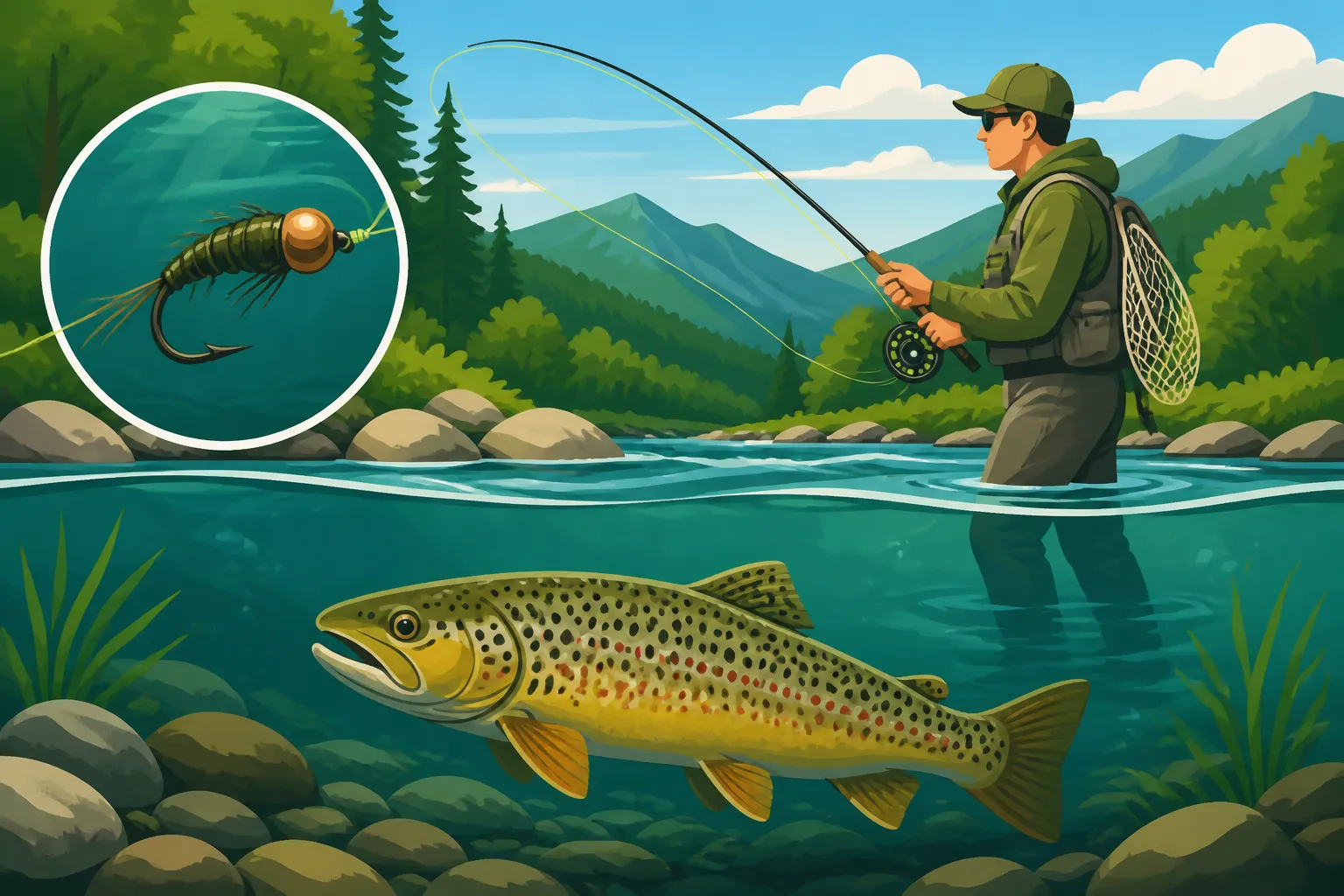
- Weight: Tungsten beads are a cornerstone of Euro Nymphing. They are significantly heavier than brass beads of the same size, allowing your flies to sink quickly to the bottom and stay there, even in swift currents. You'll carry a range of weights, from tiny micro-tungsten for shallow, slow water to heavily beaded size 12 or 10 flies for deep, fast runs.
- Profile: Most Euro Nymphs are slim and hydrodynamic. Patterns like Perdigons, French Nymphs, and Squirmy Wormies excel because their slender profiles offer minimal resistance to the current, helping them plunge to depth. This sleekness, combined with tungsten, is a powerful sinking combination.
- Color: While natural colors like olive, brown, and black are always effective, don't shy away from "hot spots" – small, brightly colored elements like a fluorescent bead, a collar of brightly colored thread, or a dab of UV resin. These hot spots can act as a trigger, attracting the trout's attention in murky water or during slower periods. For instance, a natural-colored Pheasant Tail nymph with a small orange hot spot can be deadly. When choosing flies, consider what insects are present in Vermont's streams. Common patterns imitate caddis larvae, stoneflies, mayfly nymphs, and even small aquatic worms. Having a selection of sizes (from size 18 up to size 10) and weights will prepare you for almost any scenario.
Here's a quick look at some effective Euro Nymph patterns for Vermont trout streams:
| Nymph Pattern | Primary Imitation | Ideal Conditions | Key Features |
|---|---|---|---|
| Perdigon Nymph | Mayfly, Caddis | Fast, deep water; clear water; wary fish | Tungsten bead, slim profile, often hot spot |
| French Nymph | Mayfly, Stonefly | Varied water types; excellent general attractor | Tungsten bead, segmented body, often natural colors |
| Squirmy Wormy | Aquatic Worm | Post-rain runoff; murky water; aggressive takes | Flexible, vibrant material; highly visible |
| Pheasant Tail Nymph | Mayfly Nymph | All water types; staple pattern, especially for browns | Tungsten bead, natural fibers, segmented look |
| Pat's Rubber Legs | Stonefly Nymph | Larger rivers; targeting larger trout; faster currents | Tungsten bead, rubber legs, bulky profile |
| Hare's Ear Nymph | Mayfly, Caddis | General attractor; varied conditions | Tungsten bead, buggy appearance |
Mastering Euro Nymphing Techniques on Vermont's Rivers
Getting your gear together is just the first step; actually putting it to use effectively on the water requires practice and a keen understanding of the techniques. Unlike traditional fly casting, Euro Nymphing is less about distance and more about precision, control, and staying connected. It's an active, engaging way to fish, almost like a dance with the current and the fish below. You’ll find yourself becoming hyper-aware of your rod tip and sighter, feeling for every subtle movement, which is a truly rewarding aspect of the technique.
The "Sighter" and Reading the Take
Your sighter is your best friend in Euro Nymphing. It's not just a colorful piece of line; it's your window into what's happening beneath the surface. When you're fishing, you want to keep your sighter above the water as much as possible, just barely touching the surface or hovering a few inches above it. This allows for an unobstructed view and maximum sensitivity.
Reading the take can be incredibly subtle. It might be a slight twitch of the sighter, a sudden stop or hesitation in its downstream movement, or even a very slight acceleration. Sometimes, you wont see anything at all, but you'll feel a subtle tick or bump through the rod. If you see or feel anything out of the ordinary, set the hook! Many beginners hesitate, and by the time they react, the fish has spit the fly. Practice observing the natural movement of your sighter and flies in different currents. Notice how it behaves when it bumps a rock versus when a fish mouths the fly. This acute awareness is developed over time and through countless drifts. The more you pay attention, the quicker you'll learn to differentiate between a snag and a strike.
Casting and Presentation: Keeping a Tight Line
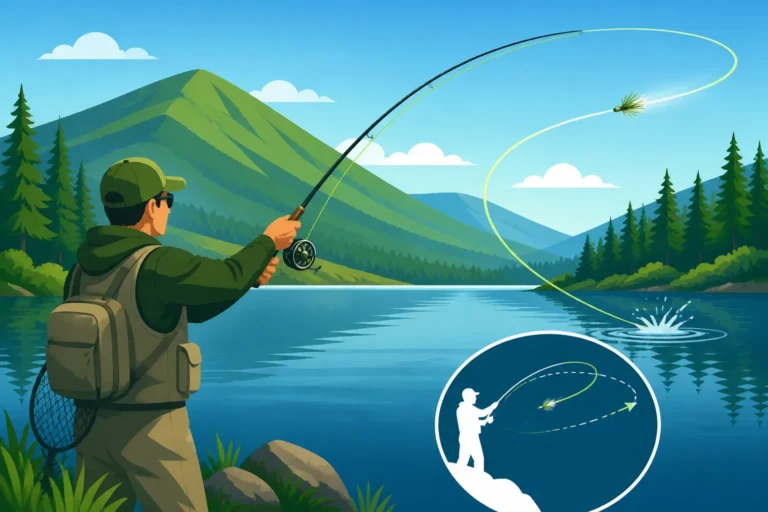
Forget those long, elegant overhead casts you might be used to. Euro Nymphing casts are often short, lobbed presentations designed to place your flies precisely where you want them, with minimal disturbance, and to immediately get them sinking.
- The Lob Cast: The most common cast involves a simple lob, letting the weight of your nymphs carry the leader forward. With the longer rod, you can "reach cast" by extending your arm to place the flies upstream.
- The "Water Haul": This technique uses the water tension to load your rod and lift your flies, allowing for a quick, efficient re-cast upstream without disturbing the water too much.
- Maintaining a Tight Line: The key to presentation is keeping a "tight line" – not taut, but just enough tension so that your sighter is visible and responsive. You want a subtle bow in the leader between your rod tip and the sighter, allowing your flies to sink naturally without being pulled. As your flies drift downstream, you'll "lead" them with your rod tip, keeping it ahead of your sighter and maintaining that direct connection. This is often referred to as "high-sticking," and it's essential for achieving drag-free drifts and detecting those incredibly light bites.
Drifting and Mending: Maximizing Bottom Contact
The goal of Euro Nymphing is to get your flies down to where the fish are feeding – typically near the bottom – and to keep them there throughout the drift.
- Vertical Presentation: Unlike traditional nymphing where flies might swing in an arc, Euro Nymphing aims for a more vertical presentation, with the flies tumbling along the riverbed. This is achieved by keeping your rod tip high and leading the flies.
- Reading the Current: Vermont's rivers are rarely uniform. You'll encounter different current speeds in a single drift. Learning to read these currents and adjust your rod position is vital.
- Micro Mending: Instead of big, obvious mends that disrupt your drift, Euro Nymphing employs "micro mends." These are small, subtle adjustments of your rod tip to feed just a tiny bit more line, adjust the angle of your leader, or counter opposing currents. The goal is to keep your flies drifting naturally and at the correct depth, always maintaining contact through your sighter. This might mean lowering your rod tip slightly to let the flies sink deeper in a slow seam or raising it slightly to prevent snags in a shallow riffle. Mastering these subtle adjustments is what truly separates effective Euro Nymphers from those just getting started.
Navigating Different Water Types: Riffles, Runs, and Pools
Vermont's diverse trout streams demand versatility. Each type of water requires a slightly different approach to maximize your Euro Nymphing success.
- Riffles: These are typically shallower, faster sections with broken water. They're prime feeding lies for trout due to the oxygen and dislodged food. Here, you'll want to use shorter leaders and perhaps slightly lighter flies to avoid snagging the bottom constantly, while still getting them down. Your drifts will be quicker, and you'll need to stay attentive to your sighter. Often, a quick, short lob upstream into a riffle and then leading the flies downstream will be most effective.
- Runs: Longer, smoother sections of moving water are "runs." These can be deceptively deep and hold a lot of fish. Here, you can utilize slightly longer drifts, paying close attention to current seams – the visible lines where different current speeds meet. Trout often sit in the slower water of a seam, waiting for food to be carried past in the faster current. Use your rod length to extend your reach and follow your flies through the entire drift, keeping that tight line. This is where your ability to make subtle mends really pays off.
- Pools: While traditional nymphing might involve casting an indicator rig far into a pool, Euro Nymphing usually targets the entrance and exit of pools, or specific deep pockets and eddies within them. Trout often congregate at the head of a pool where food funnels in, or in deeper, slower sections. You might need heavier flies to reach the bottom of deeper pools. Use your long rod to carefully drop your flies into these areas and allow them to sink vertically, staying in the strike zone longer. Avoid casting too much line into the slow water of a pool, as it creates drag and reduces sensitivity. Instead, try to approach from upstream or downstream and make targeted drifts along current breaks or drop-offs.
Strategic Approach to Vermont's Unique Trout Habitats
Vermont offers an incredible variety of trout fishing opportunities, from small, intimate mountain brooks to larger, sprawling rivers. Each habitat presents its own set of challenges and rewards, and understanding how to adapt your Euro Nymphing strategy to these different environments is crucial for consistent success. It’s not a one-size-fits-all approach; what works brilliantly on a tight, brushy brook might be ineffective on a wide, open river.
Targeting Pocket Water and Small Streams
Vermont is dotted with countless small streams and sections of larger rivers that feature "pocket water" – areas with numerous rocks, boulders, and irregular currents creating small pockets of slower water. These pockets are prime holding lies for brook trout and smaller brown trout.
- Short Line, Precise Casts: In these tighter confines, long casts are impractical and often unnecessary. Focus on short, precise lob casts to drop your flies directly into the pockets. Your long rod acts like an extension of your arm, allowing you to dab the flies into small openings.
- Reading the Water: Look for any break in the current – behind a boulder, in front of a log, or at the edge of a deep plunge pool. These are where trout will hide, conserving energy and waiting for food.
- Efficiency is Key: Your drifts will be short and quick. You might only get a few seconds of effective drift in a pocket. Be ready to set the hook immediately. If you don't get a take after a few drifts, move on to the next pocket. Don't waste time in unproductive water. This technique is particularly effective on small, wild trout streams where fish are often eager but you need to be stealthy.
Fishing Larger Rivers and Tailwaters
Larger rivers like the Winooski River, Lamoille River, or specific sections of the Connecticut River present different challenges. Here, you often deal with wider currents, greater depths, and potentially larger, more experienced trout. Tailwater fisheries, found below dams, can also have very consistent temperatures and rich insect life, leading to particular strategies.
- Longer Drifts, Current Management: While still maintaining a tight line, you'll often need to make longer drifts to cover more water in a large river. Your rod's length is crucial here for keeping your line off the water across wider current seams. Focus on identifying and targeting those subtle current breaks, eddy lines, and seams where fast water meets slow.
- Heavier Flies, Deeper Runs: In deeper sections or stronger currents, don't hesitate to use your heaviest tungsten nymphs. The goal is to get your flies down to the bottom quickly. You might also experiment with a three-fly rig (where legal) to cover more of the water column.
- Wading Strategies: Wading techniques for Vermont trout streams become even more important in larger rivers. Be mindful of your approach, as you can easily spook fish. Stealth is key, as is understanding how to safely navigate stronger currents. Consider using a wading staff for stability, especially in fast currents where a good foothold is crucial. For detailed information on specific waters, check out guides like those for the Connecticut River Fishing Access in Vermont or White River Fishing Guide.
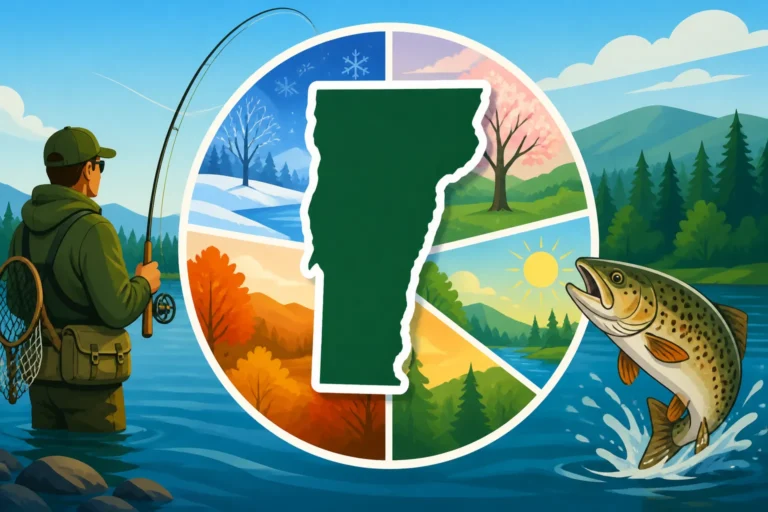
Adjusting for Seasonal Conditions
Vermont's seasons bring dramatic changes to its waterways, and a successful Euro Nympher must adapt.
- Spring: During spring trout fishing techniques for Vermont streams, you'll often encounter high, cold, and sometimes turbid water from snowmelt and rain. This is a prime time for heavier, larger nymphs that imitate stoneflies or aquatic worms. Fish will often hug the bottom to escape strong currents. Focus on the slower edges, eddies, and seams where fish can hold without expending too much energy. The added weight of Euro Nymphs is particularly beneficial here, punching through the fast water to reach lethargic fish.
- Summer: As waters warm and levels drop, trout can become more selective and seek cooler, oxygenated water. Focus on shaded areas, deeper pools, and the faster, oxygen-rich riffles, especially early mornings or late evenings. Smaller, more imitative nymphs are often more effective. This is also a good time to explore higher-elevation trout streams in the Green Mountains where water stays colder.
- Fall: Fall can be fantastic, as trout become more active, feeding heavily before winter. Water levels are typically lower and clearer. Trout may spread out more, but also key into specific food sources. Larger patterns might be effective as trout try to put on weight. The clarity of the water means you need to be extra stealthy. Understanding how trout prepare for winter will greatly enhance your success. And don't forget to review Vermont Fishing Season Dates and Closures as regulations can change with the seasons!
Common Challenges and Troubleshooting for Vermont Anglers
Even with the right gear and a solid understanding of the techniques, Euro Nymphing, like any fishing method, has its quirks and challenges. Vermont's environment, with its rocky bottoms and sometimes finicky trout, can amplify these. Don't get discouraged when things don't go perfectly; that's part of the learning curve. The good news is, many common frustrations have straightforward solutions that will get you back to catching fish.
Dealing with Snags and Lost Flies
This is perhaps the most common frustration for anyone Euro Nymphing, especially when you're diligently trying to keep your flies on the bottom. Vermont's streams are not devoid of structure – think rocks, logs, branches, and debris.
- Leader Setup: A common solution is to design your leader so the lightest tippet section, where your point fly is tied, is shorter and slightly weaker than the tippet above it (where your dropper fly is attached, if you're running one). This way, if you snag your bottom-most point fly, you're more likely to break off just that fly, saving your more expensive sighter and dropper fly.
- The "Line Up" Approach: When you feel a snag, immediately point your rod directly at the snag. This reduces the angle of pull and often allows the current to dislodge your flies. If that doesn't work, apply steady pressure directly upstream from the snag. Avoid yanking directly back, as this often wedges the hook deeper.
- Fly Selection: Sometimes, the issue is simply using too heavy a fly for the depth and current. If you're constantly snagging, switch to a slightly lighter nymph or fish a two-fly rig with the heaviest fly as your bottom-most point fly and a lighter one as a dropper. Remember, the aim is to tick the bottom, not constantly get hung up. It's a fine line, but one you'll learn to walk with practice. If you find yourself losing flies frequently, remember you can always restock your fly box from online retailers like Amazon.
Reading Subtle Takes and Missed Fish
Vermont trout, especially in heavily fished waters or during clear, low-water conditions, can be incredibly subtle in their takes. It's a frustration many anglers face: "Was that a bite, or just the bottom?"
- Hyper-Focus on the Sighter: Your sighter is your primary indicator. Any hesitation, twitch, stop, or acceleration that isn't consistent with the current's flow should be treated as a take.
- Feel the Force: Beyond the visual cue, try to feel for takes. With a longer, sensitive rod and a tight line, you'll often feel a subtle "tick" or "bump." Practice actively holding your rod, feeling for that connection.
- Setting the Hook: Don't hesitate! If you suspect a take, even faintly, set the hook with a quick, upward wrist flick. You'll either connect with a fish, or you'll reposition your flies, which isn't a bad thing. Many missed fish are due to delayed reactions. It's better to set the hook on a rock than to miss a trophy trout. Continuously resetting your focus and practicing quick, decisive hook sets will dramatically improve your catch rate.
Adapting to Wary Vermont Trout
Vermont trout can be notoriously wary. They see a lot of angling pressure, especially in popular spots, and they often spook easily. This is a common pain point for anglers.
- Stealth is Paramount: Your approach needs to be as subtle as your flies. Stay low, move slowly, and avoid casting shadows over the water. Wear natural, subdued clothing. When Wading Techniques for Vermont Trout Streams in clear water, aim to stay out of the fish's direct line of sight.
- Fly Changes: If you're getting no action, don't be afraid to change flies frequently. Vary the size, weight, and color. Sometimes, simply going down a hook size (e.g., from a size 16 to an 18) or using a different hot spot color can make all the difference. This is where having a diverse selection of flies comes in handy, perhaps from a well-stocked fly box you acquired through Amazon.
- Varying Depths and Presentation: If fish aren't taking on the bottom, try varying your drift depth slightly. Maybe they're suspended a few inches up. Adjust the weight of your flies or the angle of your presentation. Sometimes, a slightly faster or slower drift can trigger a strike. Observing the behavior of the fish, if visible, can provide valuable clues as well. Remember, trout often hold in the subtle breaks and seams, not necessarily in the fastest or slowest water. A guide on Fly Patterns for Vermont Trout Streams can also offer further insight into effective choices.
Disclaimer
The information provided in this guide is for general informational purposes only and is not intended as legal advice regarding fishing regulations. Fishing regulations, season dates, and license requirements are subject to change. Always consult the most current Vermont Fish & Wildlife Department regulations before engaging in any fishing activities. Adherence to all local, state, and federal laws is the responsibility of the angler.