Best technique for fan casting a new lake
Arriving at a brand new lake can feel both incredibly exciting and utterly daunting. You pull up, look out across the expanse of water, and wonder, "Where do I even start?" The sheer unknown of depths, structures, and hidden fish can make even seasoned anglers feel a touch of paralysis. This comprehensive guide is designed to cut through that initial overwhelm, equipping you with the highly effective strategy of fan casting to quickly and efficiently unlock the secrets of an unfamiliar Vermont lake.
Understanding the 'Why' Behind Fan Casting on a New Lake
When you're faced with an entirely new body of water, it's like a blank canvas. You don't know the contours of the bottom, where the weed lines truly end, or if that seemingly featureless shore actually hides a promising drop-off. Fan casting isn't just about throwing your lure out; it's a systematic approach to gathering vital intelligence, allowing you to cover water effectively and begin to build a mental map of what lies beneath the surface. It’s your first crucial step in breaking down a large, unknown environment into manageable, fishable sections.
The Purpose of Efficient Water Coverage
Think of fan casting as a methodical sweep. Instead of just casting straight out or randomly tossing your lure, you're creating a pattern, usually a wide arc, with your casts. This technique ensures that you're not leaving large un-fished areas, which is especially critical when you have no prior knowledge of where fish might be holding. It maximizes your chances of encountering fish or discovering key structural elements that will guide your subsequent efforts. Without this systematic approach, you might cast over a productive spot repeatedly while ignoring a prime fish-holding area just a few yards to your left or right.
It's about making every cast count towards a larger objective: understanding the lake. Each retrieve, whether it yields a fish or not, provides data. Did your lure snag on rocks? Did it pull through soft mud? Did you feel a distinct depth change? All these small pieces of information contribute to painting a clearer picture of the underwater landscape. This efficiency is paramount when you have limited time and a vast amount of water to explore, turning your initial outing from a guessing game into a strategic reconnaissance mission.
How Fan Casting Helps Scout for Structure and Depths
One of the biggest challenges on a new lake is locating fish-holding structure. Fish, particularly bass, walleye, and even panfish, are highly structure-oriented. They gravitate towards changes in depth, cover like submerged timber or weed beds, and rocky transitions. Fan casting with the right lure allows you to literally "feel" these features. As you retrieve, you're constantly tactilely surveying the bottom. A sudden absence of weeds, the distinct bump of a rock pile, or the soft pull of mud can all be communicated through your rod tip.
This method also helps you map out depth changes. If you're using a diving crankbait, for example, the depth it reaches before hitting bottom, or the way its retrieve changes as you pull it up a slope, provides invaluable clues. You might discover a subtle point extending from shore, a hidden hump, or the edge of a deep channel, all without the aid of a fish finder. For anglers starting from scratch on a new lake, it’s an indispensable technique for quickly identifying potential hot spots and eliminating unproductive water, making your future casts far more targeted.
The Step-by-Step Guide to Effective Fan Casting
Mastering fan casting isn't complicated, but it does require a deliberate approach. It's about combining precise casting with attentive retrieving to gather as much information as possible from each section of the lake. Whether you're standing on the shore, paddling a kayak, or drifting in a boat, the principles remain the same: cover the water in front of you systematically.
Setting Up Your Casting Grid
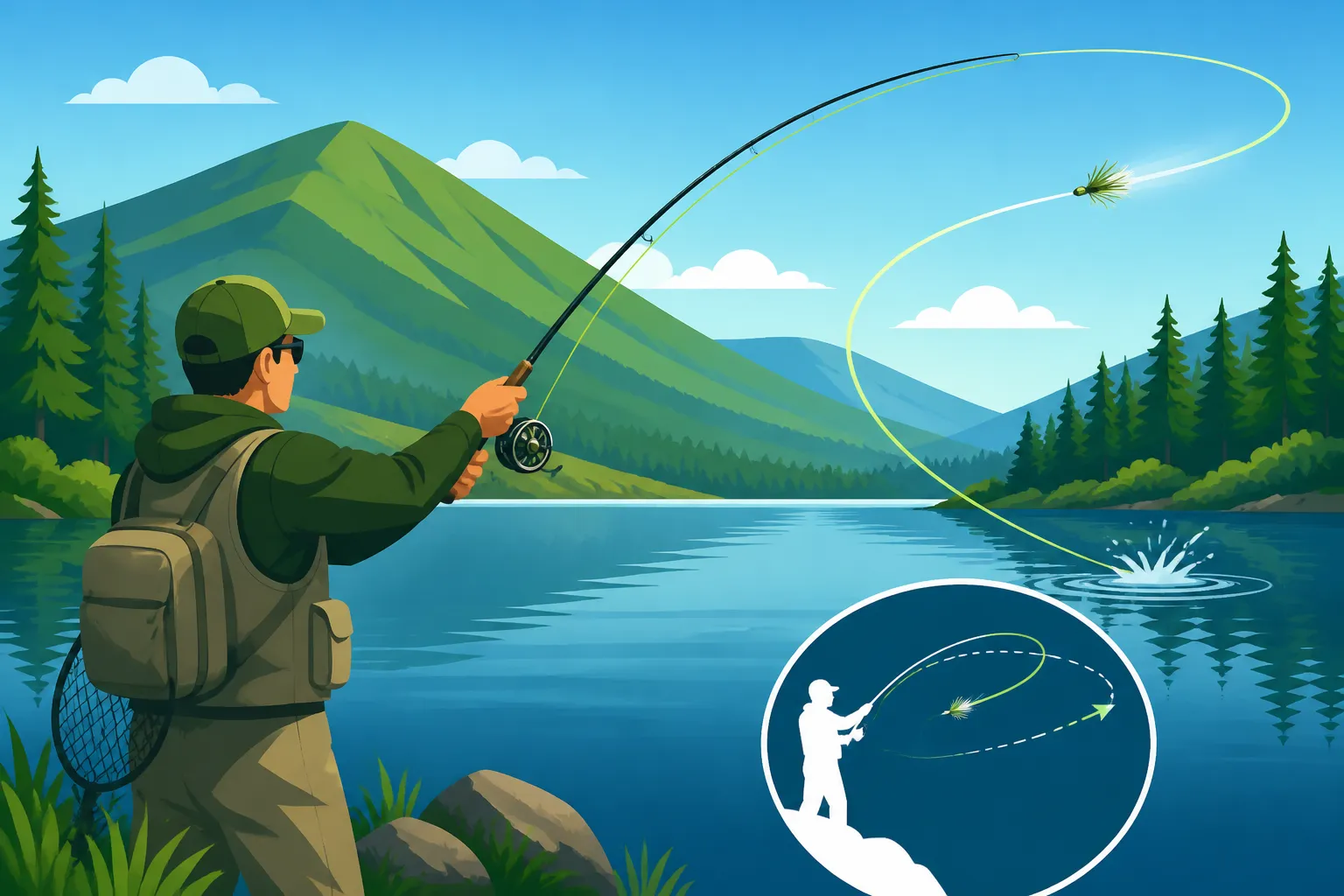
The core of fan casting is establishing a mental "grid" or series of arcs in front of you. Imagine a clock face. Your first cast should be directly in front of you, at 12 o'clock. Then, cast slightly to your right, maybe towards 1 o'clock, then 2 o'clock, and so on, until you reach 3 o'clock (straight to your right). After covering that arc, shift your focus to the left side, starting again from 12 o'clock and moving towards 11 o'clock, 10 o'clock, and eventually 9 o'clock (straight to your left). The exact angle increment depends on how much area you want to cover with each cast, but typically 5-10 degree increments work well.
It's critical to make each cast a complete retrieve before moving to the next angle. This ensures that you're thoroughly working the water column and bottom at each point. Once you've completed a full arc (from 9 o'clock to 3 o'clock), take a few steps or a short paddle forward, and repeat the entire fan casting process. This systematic progression allows you to "mow the lawn," so to speak, methodically investigating an entire section of the lake before moving on. This disciplined approach often reveals overlooked pockets of fish.
Precision Casting and Retrieving
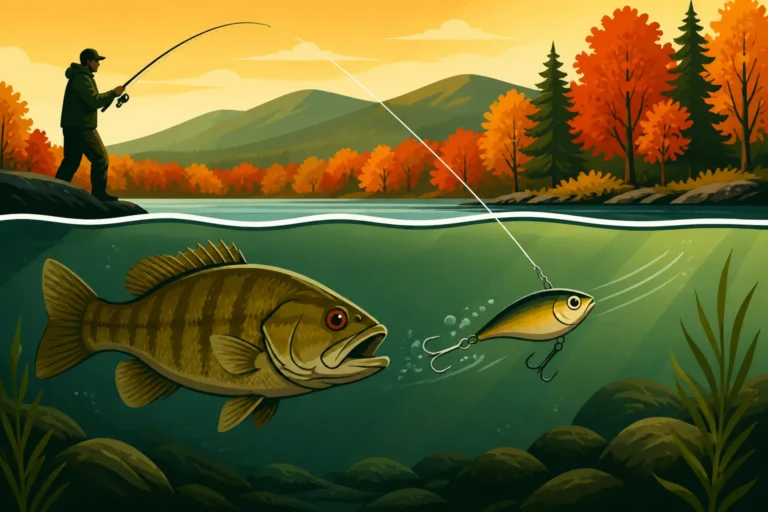
Precision in fan casting goes beyond just hitting your mark. It’s about how you feel the retrieve. As your lure travels through the water, pay close attention to any changes in resistance, any bumps, scrapes, or sudden drops. Use a medium-heavy rod with a sensitive tip, like those you might find on Amazon, which allows you to detect subtle changes. For specific species, consider what depth they prefer and adjust your lure choice and retrieve accordingly. For instance, when targeting smallmouth bass in the deeper sections of Lake Champlain Fishing Guide waters, you'd want a lure that dives effectively and a retrieve that lets you feel the rocky bottom.
Vary your retrieve speed and retrieve pattern (e.g., stop-and-go, steady reel, twitching) during your initial scouting casts. This variation helps you identify not only where fish are but also what action might trigger a strike on that particular day. Sometimes a fast, erratic retrieve works; other times, a slow, deliberate presentation is key. By experimenting during your fan casting, you gather more comprehensive information about both the fish and the underwater environment. Don't be afraid to try a few different options before settling on one, especially in new territory.
Reading the Water: What Fan Casting Tells You
Fan casting is about more than just presenting a lure; it’s about active listening to what the water is telling you. Every bump, every snag, every change in resistance is a clue. Interpreting these subtle signals is key to transforming random casts into informed, strategic fishing decisions that will help you locate active fish on an unfamiliar lake.
Identifying Submerged Structure and Cover
As you retrieve your lure during a fan cast, pay keen attention to how it interacts with the bottom. A sudden, sharp "thunk" followed by resistance likely means you've hit a rock or a log—classic fish cover. If your lure suddenly gets bogged down with a spongy feel, you might be dragging it through a weed bed. A distinct change from hard bottom to soft, muddy bottom can indicate a transition zone that fish often utilize. These tactile clues, transmitted through your fishing line and rod, are invaluable. For example, when exploring for bass in Lake Bomoseen Fishing Guide, feeling the transition from sandy flats to rocky ledges through your crankbait can pinpoint prime ambush points.
Take mental notes, or better yet, use a simple fishing app on your phone to mark these spots. Even if you don't catch a fish on the first pass, identifying a prominent submerged log, a deep rock pile, or a dense weed edge gives you a starting point for more focused fishing. These are the places you'll want to revisit with different lures and techniques once you've completed your initial fan casting sweep. Over time, you'll develop an intuition for these underwater features, even without seeing them directly.
Interpreting Strikes and Bites
Receiving a strike, even a missed one, during a fan cast is a golden piece of information. It tells you immediately that there are active fish in that specific area. Don't just shrug off a missed bite; analyze it. Did it happen near a particular depth? Was it right after your lure cleared a certain type of cover? Was it at the end of a long cast or closer to your position? These details help you narrow down the location and potential holding patterns of the fish. If you get multiple bites in the same general area while fan casting, it’s a strong indicator of a productive zone, possibly a feeding flat or a schooling area.
A subtle tick, a sudden slackening of the line, or even just feeling "heavy" can all be indicators of a bite, especially from species like walleye. If you get a bite on a specific retrieve speed or lure color, it gives you a starting point for what might be working on that day. Even a small panfish or a less desirable species can tell you that there's life in that spot, hinting that larger predators might not be far away. Record these observations mentally or on a notepad, as they are crucial for developing a successful pattern on a new lake. This immediate feedback helps you adjust your strategy on the fly, making your fishing far more responsive.
Choosing the Right Lures and Gear for Your Scouting Mission
When you're fan casting a new lake, you're not necessarily trying to catch the biggest fish on every cast. Your primary goal is information gathering and efficiently covering water. This means selecting lures and gear that are versatile, allow for long casts, and provide good feedback on bottom structure. Having the right tools for this reconnaissance phase is just as important as the technique itself.
Versatile Lure Selections for Scouting
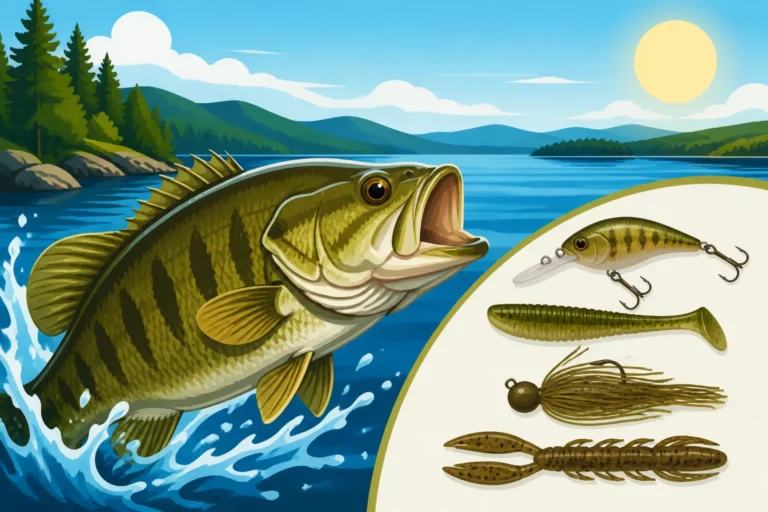
The best lures for initial fan casting are those that can cover a lot of water and help you "read" the bottom and water column. Crankbaits are often excellent choices because they dive to specific depths and their vibrating action transmits bottom contact very well. Medium-diving crankbaits are a great starting point, allowing you to probe depths from 5 to 12 feet, which often encompasses many productive zones. Another excellent option is a spinnerbait, especially in areas with potential weed growth or submerged timber, as they are relatively weedless and create a lot of flash and vibration.
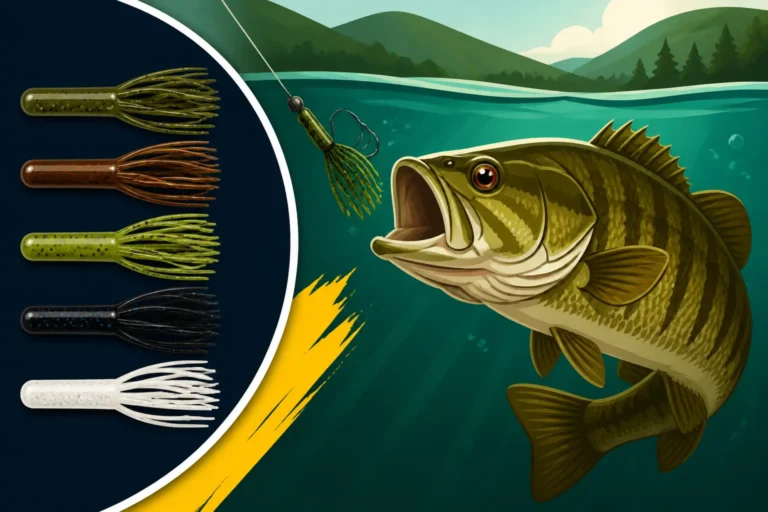
Jigs, particularly football jigs or Texas-rigged soft plastics, are fantastic for feeling out different bottom compositions – rocks, gravel, mud, or wood. For shallow areas or when fish are active near the surface, a topwater lure like a popper or walking bait can draw attention and cover water quickly, especially effective for species like smallmouth bass in the warmer months. Keep a small selection of these versatile options in your tackle box. Many anglers find great deals on these foundational lures on Amazon or at local bait shops.
Here's a quick comparison of popular scouting lures:
| Lure Type | Best For | Key Features for Scouting | Pros | Cons |
|---|---|---|---|---|
| Crankbait | Varying depths, hard bottom, transitions | Vibrates strongly, dives to specific depths, good for contact | Excellent bottom feedback, covers water quickly, triggers reaction | Can snag easily in heavy cover, depth specific |
| Spinnerbait | Weeds, wood, moderate depths, stained water | Flash and vibration, relatively weedless, single hook | Great for cover, good visibility, versatile retrieve speeds | Less bottom contact feedback than jigs/crankbaits |
| Jig (Football/TX-Rig) | Deep structure, heavy cover, bottom bouncing | Excellent bottom feel, mimics crawfish/forage, weedless options | Supreme bottom feedback, precise targeting, good for slow work | Slower coverage, requires more feel to use effectively |
| Swimbait | Open water, suspended fish, searching | Realistic profile, natural swimming action | Attracts larger fish, covers water well in open areas | Can be expensive, less bottom feedback, can foul in weeds |
| Topwater Lure | Shallow water, low light, active fish | Surface disturbance, visual strikes | Exciting strikes, good for scouting shallow flats | Only effective in specific conditions, no depth information |
Recommended Rod, Reel, and Line Setup
For effective fan casting, you want a setup that offers a balance of casting distance, sensitivity, and enough power to handle any fish you might encounter. A medium-heavy to heavy power spinning or baitcasting rod, typically 6'6" to 7'6" in length, is ideal. This length provides good casting distance while still offering the backbone to set hooks and control fish. The action should be fast or extra-fast, which means the rod bends primarily in the tip, allowing for excellent sensitivity to detect subtle bites and bottom changes. Many excellent rods for this purpose can be found by browsing Best Fishing Rods for Vermont Lakes.
Pair your rod with a reliable spinning reel (size 2500-4000) or a baitcasting reel that is smooth and allows for long, accurate casts. Spool your reel with braided line in the 15-30 lb test range. Braid has virtually no stretch, which significantly enhances sensitivity, allowing you to feel every nuance of the bottom and every tentative bite. Attach a 4-8 foot fluorocarbon leader (10-20 lb test) to your braid using an FG knot or similar strong knot. Fluorocarbon is nearly invisible underwater and is more abrasion-resistant than braid, providing a crucial buffer against sharp rocks or fish teeth. This combination gives you the best of both worlds: casting distance and sensitivity from the braid, and stealth and abrasion resistance from the fluorocarbon leader. When you’re trying to understand a new fishery, like the trout-rich Battenkill River Trout Fishing, having gear that transmits information clearly is paramount.
Adapting Your Fan Casting Strategy for Different Vermont Waters
Vermont's fishing landscape is incredibly diverse, offering everything from vast, deep lakes to intimate, winding rivers and small, tranquil ponds. While the core principles of fan casting remain consistent, the nuances of your approach will need to shift depending on the specific type of water you're exploring. A strategy that works perfectly on Lake Champlain might be totally ineffective on a Green Mountain brook trout stream.
Large Lakes and Reservoirs
For large bodies of water like Lake Champlain or Lake Memphremagog, fan casting from shore can feel like trying to empty an ocean with a thimble. Here, a boat or kayak becomes almost essential for truly effective scouting. When fishing from a boat, you can expand your fan casting arcs dramatically. Instead of moving just a few feet at a time, you might drift with the wind or current, making long, sweeping casts from different angles as you go. Focus on prominent features visible on the surface: points, coves, visible weed lines, and rocky outcrops. These are often indicators of more extensive underwater structure. On a lake as large as Lake Champlain Fishing Guide, it's also smart to consult a bathymetric map beforehand to identify potential contours, even if you're not using a fish finder.
If you're limited to shore fishing on a large lake, narrow your focus. Look for areas with obvious structure, like boat docks, fallen trees, rock piles, or abrupt changes in the shoreline contour. These concentrated areas are more likely to hold fish and make your fan casting efforts more productive. Cast beyond these features and work your lure back through them, paying close attention to the feel. For anglers exploring Best Shore Fishing Spots in Vermont, fan casting around docks and rocky points is a prime tactic.
Rivers and Streams
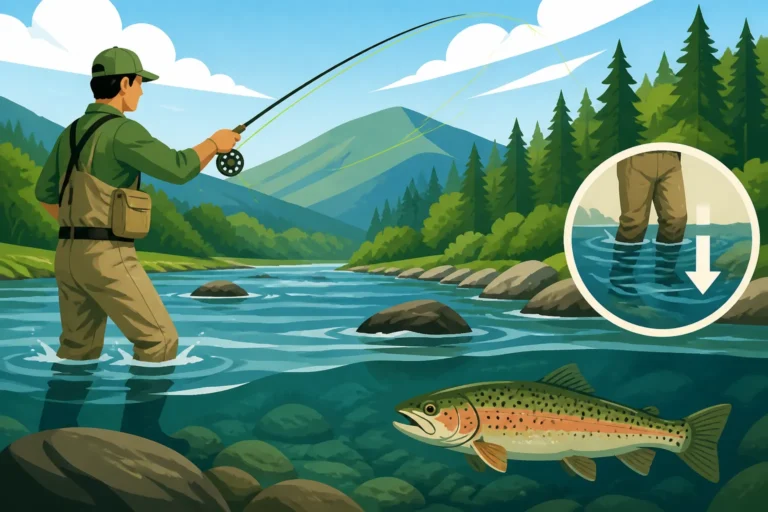
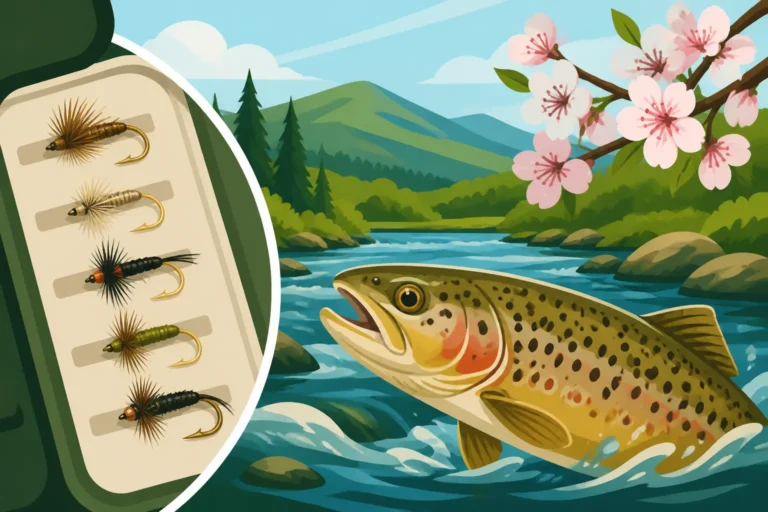
Fan casting in rivers and streams, especially the faster-flowing trout waters of Vermont like the White River or Lamoille River, requires a different mindset. The current becomes a major factor. Instead of a wide arc, your "fan" might be more linear, casting upstream or quartering upstream and allowing your lure to drift naturally with the current as you retrieve. This is known as a "swing" retrieve for many fly anglers. When exploring Best Trout Streams in Vermont, you'll often cast across current into seams, eddies, and behind boulders, allowing the current to carry your lure into potential holding lies.
Look for classic riverine structure: bends, pools, riffles, logjams, and undercut banks. These are prime areas where fish hide from the current and ambush prey. Your lure choice will also differ, favoring smaller spinners, spoons, or jigs that can be worked effectively in flowing water without getting hung up immediately. Make sure your line is heavy enough to handle snags, but light enough not to impede the lure's natural presentation. Fan casting here helps you identify subtle current breaks and pockets where fish are likely to conserve energy.
Ponds and Smaller Bodies of Water
Smaller ponds and lakes often have more uniform depths and fewer dramatic structural changes, but fan casting is still incredibly effective. Here, you might be able to effectively cover the entire body of water from just a few key access points. Focus your fan casts on areas with emergent vegetation, lily pads, old docks, or beaver lodges – any visible cover that offers shade and ambush points. The retrieve can often be slower and more deliberate, allowing your lure to spend more time in potential strike zones.
In these smaller, often shallower, waters, observing baitfish activity or insect hatches can give you immediate clues about where to direct your fan casts. If you see minnows scattering near a weed line, that’s a perfect spot to cast your lure across the area and work it back. The key is to be thorough, even in a small pond, as a fish might be holding in a very specific, isolated piece of cover. This systematic approach ensures you don't overlook any potential hotspots.
Advanced Fan Casting Strategies and Common Pitfalls
Once you've mastered the basics of fan casting, you can begin to refine your technique, making it even more productive. However, it's also important to be aware of common mistakes that can hinder your efforts, especially when you're trying to quickly learn a new body of water. Avoiding these pitfalls will help you maximize your scouting efficiency and put more fish in the net.
The Power of Varied Retrieves
Many anglers fall into the trap of using a single, monotonous retrieve during fan casting. While a steady retrieve is a good baseline for feeling out the bottom, varying your retrieve is a powerful tool for triggering strikes and gathering more information. Try a few casts with a slow, steady reel. Then, on your next few casts in the same arc, try a stop-and-go retrieve, letting your lure pause and sink periodically. Experiment with twitching or jerking your rod tip to impart erratic action, mimicking a struggling baitfish.
The goal is to determine what kind of action the fish are responding to on that particular day. Sometimes, a subtle flutter is all it takes; other times, an aggressive, fleeing action is what triggers a bite. By varying your retrieve within your fan casting pattern, you're essentially testing different presentations across the same piece of water, rapidly increasing your chances of finding a winning formula. This also helps you understand how different lures behave at various speeds and depths, making you a more versatile angler.
Leveraging Environmental Clues
Don't just look at the water; look around it. Environmental clues can significantly enhance your fan casting strategy. Observe the wind direction – it often pushes baitfish and plankton, concentrating predators on the downwind side of a lake. Look for diving birds, which indicate baitfish schools near the surface, or subtle ripples and boils that might signal active fish. Pay attention to water clarity, which will influence your lure color and line choice. If the water is murky, brighter colors and more vibration might be necessary. In clear water, natural colors and a stealthier approach with fluorocarbon leaders are usually more effective.
Even the type of trees or vegetation on the shore can offer clues. For example, if you see mature hardwoods along the bank, there's a good chance that submerged branches or logs could extend into the water, providing excellent fish cover. On some of Vermont's wilder lakes, like those in the Northeast Kingdom, understanding the surrounding topography can guide your initial casts towards likely fish haunts. Combining these environmental observations with your systematic fan casting makes you a truly formidable scout.
Common Fan Casting Mistakes to Avoid
The most common mistake is impatience. Many anglers will make a few half-hearted casts in an area, get no bites, and immediately move on. Fan casting is designed to be systematic and thorough. Resist the urge to jump around randomly. Commit to completing a full fan casting arc before moving to your next position. Another pitfall is using the wrong lure for the job. Trying to fan cast a deep lake with a shallow-running topwater lure is inefficient and provides little information about the deeper water. Ensure your chosen lure matches the depth and cover you're trying to investigate.
Lastly, don't neglect your retrieve feedback. It's easy to get distracted or simply go through the motions. Every cast is an opportunity to learn. If you're not actively feeling the bottom or noticing subtle changes in resistance, you're missing out on vital information. Be present and engaged with every turn of the reel handle. By staying disciplined and attentive, your fan casting efforts on any new Vermont lake will be far more rewarding and efficient.
Disclaimer
This article is for general informational purposes only and does not constitute professional advice. Laws, prices and regulations vary by location and change over time. Consult a qualified professional for guidance on your specific situation.