Best Fly Boxes for Trout Streams
There's nothing quite as frustrating as finally making it to your favorite Vermont trout stream, conditions are perfect, you tie on that delicate dry fly, and then realize your entire fly box is a soggy mess. Or worse, you spend precious minutes fumbling through a disorganized mess, only to find your crucial nymph patterns are crushed or missing. This guide is all about preventing those headaches, diving deep into the world of fly boxes to help you choose the best ones for your Vermont trout fishing adventures, ensuring your precious flies are protected, organized, and ready for action.
The Unsung Hero: Why a Good Fly Box Is Essential for Vermont Anglers
It might seem like a simple accessory, but a well-chosen fly box is just as crucial as your rod or waders when you're out chasing trout in the Green Mountain State. Vermont's diverse trout waters, from the gentle flows of the Battenkill to the rugged pocket water of mountain streams, demand a variety of flies, and keeping them in prime condition and easily accessible is paramount. Without a reliable fly box, you're not just risking lost flies; you're risking lost opportunities on the water.
Protecting Your Precious Patterns
Think about it: you spend hours at the vise, painstakingly tying delicate dry flies, intricate nymphs, or robust streamers. Or perhaps you've invested good money at your local fly shop, carefully selecting patterns known to entice Vermont's wily brookies, browns, and rainbows. The last thing you want is for those flies to get crushed, their hackle flattened, their tails bent, or their hooks rusted. A quality fly box provides a safe, secure home, protecting those delicate materials from the rigors of being bumped around in a vest pocket, backpack, or boat. It's about preserving the integrity of your art and your investment.
Beyond physical protection, waterproofing is a huge consideration, especially with Vermont's unpredictable weather. A sudden downpour or an accidental dunk in the river can turn a non-waterproof box into a mini-swimming pool for your flies, leading to rust, mold, and damaged materials. Imagine pulling out a perfect caddis only to find its hook is completely rusted over – that's a day-ender right there. A good seal is non-negotiable for many serious anglers, guarding against moisture and keeping your flies pristine, ready for their moment of glory on the water. This also makes them last longer, saving you money in the long run.
Ensuring On-Stream Organization and Efficiency
There’s nothing that breaks the rhythm of a perfect drift like fumbling for the right fly. When the hatch is on, or you've finally located that tricky trout in a deep run, every second counts. A disorganized fly box can turn a moment of opportunity into a moment of frustration. A properly organized fly box means you can quickly identify and select the exact pattern you need, minimizing downtime and maximizing your fishing time. This is especially true when you’re dealing with the sheer variety of Fly Patterns for Vermont Trout Streams that you might encounter.
Efficiency also comes into play when you’re changing tactics. Maybe you started with dry flies during a morning hatch, but as the sun gets higher, you need to switch to nymphs for subsurface feeding. If your dry flies, nymphs, and streamers are all jumbled together, or worse, spread across multiple small, identical boxes, you're losing valuable time. A well-designed fly box, or a system of specialized boxes, allows for quick transitions, keeping you focused on the fish, not on your gear. It’s about creating a flow to your fishing, where the right tool is always at your fingertips. This organization becomes even more critical when trying different techniques like Euro Nymphing Vermont Trout Streams where specific weights and sizes are critical.
Anatomy of a Fly Box: Materials and Designs
Fly boxes come in an astonishing array of shapes, sizes, and materials, each designed with specific purposes and preferences in mind. Understanding the fundamental differences can help you navigate the options and choose what truly suits your style of Fly Fishing for Trout in Vermont. From durable plastics to elegant wood, and slim pocket-sized options to large chest-pack beasts, there's a box for every angler and every situation.
Popular Materials for Fly Boxes
The material a fly box is made from often dictates its durability, weight, and price point. Most modern fly boxes are constructed from either plastic or aluminum, with some traditionalists still favoring wood.
- Plastic Fly Boxes: These are by far the most common and versatile. High-density plastics, often polycarbonate or polypropylene, are lightweight, robust, and can be molded into various designs to accommodate different fly types. Many feature clear lids, which are a huge plus for quick visual identification of your flies without opening the box. The downside is that while durable, they can sometimes crack if dropped on hard surfaces in very cold weather. However, their affordability and functionality make them a go-to for many anglers. Often, you'll find a wide selection of these, from basic utility models to more refined, waterproof designs, at places like Bass Pro Shops or online at Amazon.
- Aluminum Fly Boxes: These offer superior durability and a classic aesthetic. They're much tougher than plastic, resisting crushing and impact, making them ideal for rough-and-tumble adventures or for those who appreciate gear that will last a lifetime. The drawback is that they tend to be heavier and often lack a clear lid, meaning you have to open them to see what's inside. They can also be a bit pricier. Many anglers use aluminum boxes for smaller, more delicate patterns, or simply because they enjoy the traditional feel.
- Wooden Fly Boxes: These are more of a niche choice, often prized for their aesthetic appeal and traditional charm. Handcrafted wooden boxes, sometimes made from local Vermont hardwoods, can be truly beautiful, making them fantastic gifts or collector's items. They typically feature compartments or foam inserts, much like their plastic or aluminum counterparts. However, wood is less durable against impacts than aluminum, can warp if not properly sealed and exposed to moisture, and usually offers no waterproofing whatsoever. They are generally not practical for everyday, rigorous stream use but are cherished for their beauty and history.
Diverse Designs for Every Angler's Needs
Just as materials vary, so do the designs of fly boxes, catering to different carrying preferences, fishing styles, and fly storage requirements.
- Pocket-Sized and Vest-Compatible Boxes: These are the workhorses for most stream anglers. Designed to fit neatly into the pockets of a fishing vest, shirt, or waders, they prioritize portability and quick access. They usually hold a moderate number of flies and are often slim to avoid bulk. These are perfect for a day trip to a specific river where you know which flies you'll mostly be using. For example, when you're spending a day on the White River chasing trout, you might carry one box specifically for dry flies and another for nymphs.
- Boat Boxes and Large Storage Boxes: If you're fishing larger waters like Lake Champlain from a boat or kayak, or if you're guiding and need to carry a vast selection of patterns, larger storage boxes are invaluable. These are too bulky for a vest but are perfect for stowing in a boat compartment, drift boat, or a dedicated fishing pack. They can hold hundreds, sometimes thousands, of flies, often organized into multiple compartments or flip-pages. They allow you to bring your entire arsenal, ensuring you're prepared for any hatch or fishing condition that arises on bigger bodies of water. These often come with more robust waterproofing and latching systems, given their potential exposure to splashes and weather.
- Specialized and System Boxes: Some manufacturers offer highly specialized boxes. There are ultra-thin boxes for just a few specific patterns, perfect for a minimalist approach. Others are designed as "system" boxes, where you can swap out internal trays or foam inserts, allowing for incredible customization. This modularity is fantastic for anglers who want to adapt their storage on the fly or who have a massive collection of flies that they rotate regularly. These can be particularly useful for a targeted outing, like when you’re fishing Vermont Trophy Trout Program Waters and need specific, larger patterns at the ready.
Key Features to Consider in a Fly Box
Choosing the right fly box isn't just about what it's made of; it's about the functionality and features that make your time on the water more enjoyable and productive. From how your flies are held to how well the box seals, these details make a significant difference.
Fly Holding Systems: Foam, Silicone, or Magnetic?
How a fly box holds your flies is perhaps its most critical feature, dictating accessibility, security, and the long-term health of your patterns.
- Foam Slit Inserts: This is the most traditional and widely used system. Flies are tucked into pre-cut slits in a foam liner. The foam can vary in density, from soft open-cell foam to firmer closed-cell foam. The primary advantage is that foam holds flies securely, prevents them from tangling, and keeps them in neat rows. It's excellent for dry flies, nymphs, and smaller streamers. However, over time, constant insertion and removal can wear out the foam slits, causing them to loosen their grip. Some cheaper foams can also absorb water, holding moisture against your flies if the box isn't completely waterproof. Look for high-density, closed-cell foam for better durability and moisture resistance.
- Silicone Inserts: A more modern innovation, silicone inserts are rapidly gaining popularity. Instead of foam, flies are held by being pressed into slits in a durable, flexible silicone sheet. Silicone is much more resistant to wear and tear than foam; the slits don't degrade as easily, providing a consistently firm grip. Crucially, silicone is completely waterproof and won't absorb moisture, making it ideal for keeping flies dry and preventing rust. It's also often more temperature-stable. The main drawback for some might be a slightly higher price point, but many anglers find the longevity and performance well worth it.
- Magnetic Bottoms: Less common but highly effective for certain fly types, magnetic bottoms use a powerful magnetic sheet to hold flies in place. This system is particularly excellent for very small nymphs, midges, and tiny emergers that are difficult to secure in foam slits. It also works well for heavier, non-delicate patterns that you simply want to keep from rattling around. The major downside is that delicate dry flies with hackle can get crushed if they're simply dropped onto a magnetic surface. They also offer no separation, so flies can still tangle if there are too many in one section. Often, magnetic systems are combined with foam or silicone in specialized sections of a box.
The Imperative of Waterproofing
For a Vermont angler, especially one who wades streams or fishes from a kayak, waterproofing isn't a luxury; it's a necessity. An accidental slip or a sudden downpour can quickly turn a day on the water into a frustrating exercise in drying out flies.
- Gasket Seals: The most effective waterproofing comes from a continuous rubber or silicone gasket running around the perimeter of the box where the lid meets the base. When the box is latched shut, this gasket compresses, creating a watertight seal that keeps moisture out. Look for boxes specifically advertised as "waterproof" or "water-resistant" that clearly feature a gasket. Brands like Umpqua, Cliff Outdoors, and Fishpond are known for their reliable waterproof designs. You'll often find these premium, sealed boxes at sporting goods retailers or specialty online stores like Amazon.
- Secure Latches: A gasket is only as good as the latches holding it tight. Look for strong, positive-locking latches that won't accidentally pop open. Single-latch designs are common on smaller boxes, while larger boxes might feature two or even three latches for extra security and a tighter seal across a wider area. Metal hinges and sturdy plastic latches tend to be more durable than flimsy plastic ones that can snap off over time.
Capacity, Size, and Portability
Matching the fly box to your typical fishing scenario is crucial. A massive boat box is useless if you're hiking into a remote Green Mountain pond, and a tiny midge box won't cut it for a day on the big water.
- Capacity: How many flies do you need to carry? For a dedicated dry fly box, you might need capacity for dozens of patterns in various sizes. For streamers, fewer, larger compartments are key. Consider a system where you have a few core boxes – perhaps one for dry flies, one for nymphs, and one for streamers – that you can pick and choose from depending on your trip. Remember that "capacity" isn't just about the number of slots, but also the usable space for the size of flies you carry.
- Size & Profile: Will it fit in your vest pocket, hip pack, or backpack? Slim-profile boxes are ideal for vest pockets as they don't add bulk. Larger, thicker boxes might be better for backpack storage or a chest pack where space isn't as constrained. Always think about how you plan to carry your box and measure your pockets if you're unsure. For instance, when fishing smaller freestone streams that require a lot of walking, a slim box that fits in your wader pocket for quick access to a few essential patterns is far more practical than a bulky one.
- Transparency: Clear lids are incredibly useful for quickly identifying which flies are inside without having to open the box. This saves time and minimizes exposure to the elements. Some boxes feature clear plastic on both sides, allowing you to view flies from either angle. However, if your flies are highly susceptible to UV degradation (though this is rare for most standard tying materials), an opaque box might be preferable, though less convenient.
Specialized Fly Boxes for Different Fly Types
Not all flies are created equal, and neither are all fly boxes. Different patterns have different storage needs, and using specialized boxes can optimize protection and organization for specific categories of flies. This is especially true when you have a diverse selection for various situations, from delicate Dry Fly Fishing Vermont Mountain Streams to targeting larger fish with bigger offerings.
Dry Fly Boxes: Protecting the Delicate
Dry flies are perhaps the most delicate of all artificial flies. Their primary purpose is to float high on the water's surface, mimicking emerging or spent insects. This requires carefully tied hackle, wings, and tails that can easily be crushed or deformed if not stored properly.
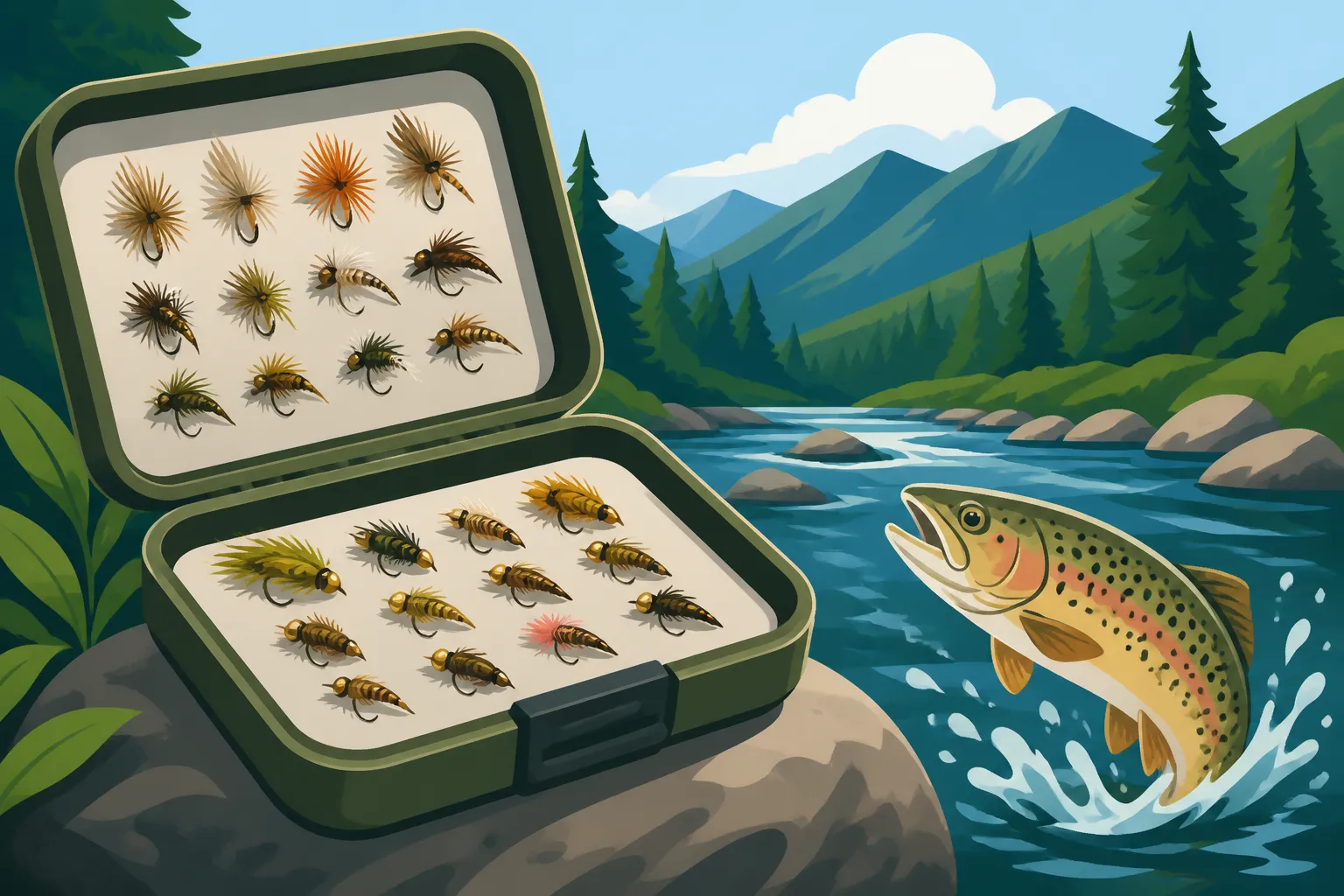
- Design Considerations: Dry fly boxes often feature individual compartments or shallower foam/silicone slits that keep flies separated and prevent their delicate components from being squashed. A shallow depth is often preferred, allowing flies to sit without their hackle being pressed against the lid. Boxes with clear lids are particularly useful for dry flies, as you can quickly spot the right pattern (e.g., a size 16 Elk Hair Caddis or a specific Mayfly dun) without opening the box and risking them flying out in a gust of wind.
- Optimal Holding Systems: Foam or silicone slit systems are excellent, provided the slits are sized appropriately for the hook. The key is that the fly sits securely without compressing the hackle. Some dry fly boxes even feature magnetic sections for those tiny midges you might encounter on a calm summer evening, while still offering foam for larger dries. Waterproofing is also critical; a wet dry fly is a useless dry fly.
Nymph and Wet Fly Boxes: Secure and Versatile
Nymphs and wet flies are designed to be fished subsurface, so their construction tends to be more robust than dry flies, but proper storage is still essential to prevent hook damage and maintain organization.
- Design Considerations: Nymph boxes generally feature deeper foam or silicone slits to accommodate the often heavier, bead-head designs of nymphs. They need to hold a larger volume of flies, as nymphing often involves carrying a wider array of patterns, sizes, and weights (e.g., different sizes of Prince Nymphs, Hare's Ear Nymphs, or Pheasant Tail Nymphs). Good nymph boxes allow for quick identification and retrieval, especially when you're tying on a dropper rig and need different flies in a hurry.
- Optimal Holding Systems: Both foam and silicone work very well for nymphs. Silicone offers superior durability, as heavy bead-head nymphs can wear out foam slits faster. Compartment-style boxes can also work for larger nymphs, but they can lead to tangles if the compartments are too big and the flies aren't separated by walls. Consider clear lids for nymph boxes, especially if you have many similar-looking patterns that vary only by size or bead color. This can save you a lot of time on the river when you're trying to match a subsurface hatch.
Streamer Boxes: Room for the Big Boys
Streamers are meant to imitate baitfish, leeches, or other larger prey, and as such, they are often bigger, bulkier, and feature longer hooks. They require a different approach to storage entirely.
- Design Considerations: Streamer boxes need ample space – both in length and depth – to accommodate long shank hooks and bulky materials like marabou, rabbit strips, or articulated shanks. Large, open compartments are often preferred, or very wide, deep foam slits that don't crush the materials. Some streamer boxes are designed with a single, large magnetic base, allowing the flies to lay flat and preventing their materials from getting matted. The key is to avoid cramming streamers together, which will quickly ruin their profile and action.
- Optimal Holding Systems: Magnetic bases are excellent for streamers, allowing them to lie flat and uncompressed. Wide, deep silicone slits can also work well, providing a firm grip on the hook bend. Another option is a simple foam sheet where you can pierce the hook eye or bend, allowing the streamer to hang freely. Since streamers are often fished from a boat or kayak, these boxes tend to be larger and more robust, prioritizing durability and maximizing storage for patterns like Woolly Buggers, Clouser Minnows, or Deceivers. When you're out targeting bigger fish like brown trout or even smallmouth bass with larger streamers, having these properly stored and readily available is key to success.
Organizing and Maintaining Your Fly Box
Having the "best" fly box is only half the battle; how you organize and maintain it makes all the difference in its effectiveness and longevity. A well-organized fly box is a joy to use, while a neglected one can become a source of frustration.
Strategies for Effective Organization
The way you arrange your flies can significantly impact your efficiency on the water. There's no single "right" way, but these strategies can help you find what you need faster.
- Categorize by Fly Type: The most common and often most effective method is to dedicate sections or even entire boxes to specific fly types. For example, one side of a box for dry flies, the other for nymphs. Or, a whole box for dries, another for nymphs, and a third for streamers. Within those categories, you can further organize by species (e.g., caddis, mayflies, stoneflies), size, or color. This way, if you know you need a dry fly, you go directly to the dry fly section or box.
- Organize by Size: Many anglers organize their flies by size within each category. So, all your size 18 Pheasant Tail Nymphs together, then your size 16s, and so on. This makes it incredibly easy to select the correct size when trying to match a hatch. Imagine you're on the Battenkill and notice trout keying in on tiny midges; you can quickly scan your midge section for the right size without rummaging.
- Color or Pattern Grouping: For certain flies, grouping by color can be helpful, especially for general attractor patterns or streamers. For example, all your olive Woolly Buggers together, then black, then brown. Some anglers group by specific patterns they know work well in certain situations, creating "go-to" sections in their box.
- Creating "Seasonal" or "Location-Specific" Setups: Instead of one massive box for all seasons, consider smaller, dedicated boxes for specific times of year or specific locations. For spring trout fishing in Vermont, you might have a box heavy with larger stoneflies, caddis, and early-season nymphs. For a summer trip to a specific lake, you might pack a box with terrestrial patterns and smaller streamers. This streamlines your gear for each outing, preventing you from carrying unnecessary weight and flies. Remember to check the Vermont Trout Season and Stocking Rules to know which patterns might be most effective.
- Using Labels: Don't underestimate the power of a small label! A strip of tape on the inside of the lid or on a divider, noting "Dries – Sizes 12-16" or "Nymphs – Bead Head," can save you precious moments. For clear-top boxes, you can even label the outside.
Care and Maintenance for Longevity
Your fly boxes take a beating – they're exposed to sun, rain, dirt, and constant opening and closing. A little care goes a long way in ensuring they last and continue to protect your flies.
- Drying Out Wet Flies and Boxes: After every fishing trip, especially if the box got wet, open it up and let all the flies and the box itself air dry completely. Never put a wet box away, as this is a recipe for rusty hooks and moldy flies. You can leave the box open in a well-ventilated area, away from direct sunlight, for a day or two. If you have foam or silicone inserts that are soaked, you might even consider removing them from the plastic shell to allow for better airflow.
- Cleaning Your Boxes: Periodically, give your fly boxes a good cleaning. Dust, dirt, and old leader bits can accumulate. A damp cloth (with a mild soap solution if needed) can clean the plastic or aluminum shell. Use a soft brush or compressed air to clean out foam slits or magnetic areas. Ensure everything is thoroughly dry before reloading your flies.
- Checking for Wear and Tear: Regularly inspect latches, hinges, and gasket seals. If a latch is getting loose, or a gasket is cracked, it might be time for a repair or replacement before it leads to a disaster on the water. Many higher-quality boxes have replaceable components. Also, check your foam or silicone inserts for signs of degradation; worn-out slits won't hold flies securely.
- Smart Storage When Not in Use: When your fly boxes aren't on the river, store them in a cool, dry place out of direct sunlight. Prolonged exposure to UV rays can degrade plastic and foam over time. Keep them organized in your gear bag or on a shelf, ready for your next adventure. Taking these steps not only protects your investment in the boxes themselves but also the countless hours you've spent tying or selecting your valuable patterns.
Choosing the Right Fly Box: A Comparative Look
With so many options, making a decision can feel overwhelming. Let's break down some common choices and their ideal uses to help you pinpoint the best fit for your Vermont fishing pursuits. Consider your primary fishing style, the types of flies you use most, and your budget.
| Feature / Type | Slim Foam/Silicone Box | Large Multi-Leaf Box (e.g., Tacky Original, Cliff Outdoors) | Magnetic Box (e.g., MFC, Umpqua) | Compartment Box (e.g., Plano) |
|---|---|---|---|---|
| Primary Use | Everyday stream fishing, vest/pocket | Extensive fly selection, boat/pack use | Small nymphs, midges, heavy flies | Larger flies, streamers, storage |
| Fly Types Best For | Dries, Nymphs, smaller Streamers | All types, high volume | Small delicate flies, heavy nymphs | Bulky streamers, poppers, big wets |
| Capacity | Medium (dozens of flies) | Very High (hundreds to thousands) | Low to Medium | Medium to High |
| Protection | Good (if waterproof) | Excellent (if robust and waterproof) | Excellent (for specific types) | Good (for bulky flies) |
| Organization | Excellent (rows of specific patterns) | Excellent (multiple pages/sections) | Fair (flies can mingle) | Good (separated compartments) |
| Waterproofing | Often excellent (gasketed) | Varies (look for gaskets) | Varies (some are gasketed) | Often poor to fair (usually not gasketed) |
| Portability | Excellent (vest/pocket) | Low (pack/boat) | Excellent (pocket/vest) | Medium (pack/small boat) |
| Typical Cost | Moderate | Moderate to High | Moderate | Low to Moderate |
| Pros | Slim, secure, easy access | Holds vast numbers, highly organized | Great for tiny flies, durable for heavy | Good for bulky flies, affordable |
| Cons | Limited capacity | Bulky, less portable | Limited for bushy dries, flies can shift | Less individual fly security, often not waterproof |
Practical Examples for Vermont Scenarios
Let's imagine some real-world Vermont fishing trips and how different fly boxes would fit in.
- A Day on a Small Mountain Stream (e.g., Best Fly Fishing Rivers in Vermont like a tributary of the Winooski River): You're hiking, stealth is key, and you're likely targeting brook trout with smaller, native patterns. You'd want a slim, waterproof foam or silicone box that fits comfortably in a wader or vest pocket. This box would hold a selection of small dry flies (e.g., Parachute Adams, Elk Hair Caddis) and a few essential nymphs (e.g., Pheasant Tail, Hare's Ear), probably in sizes 14-20. You only need a couple dozen flies, maximum, to cover your bases.
- Chasing Brown Trout on the Battenkill: This river demands versatility. You might be nymphing deep runs in the morning, switching to dry-dropper rigs mid-day, and then throwing streamers in the evening. You'd likely carry two or three medium-sized, waterproof boxes. One dedicated to a wide array of dry flies in varying sizes (maybe 40-60 patterns), another for nymphs (including bead-heads and larger stonefly patterns), and perhaps a smaller, more robust box for your streamers and heavier wet flies. These could fit in a chest pack or a small backpack.
- Float Fishing for Smallmouth Bass on Otter Creek: While technically not "trout," many trout anglers also pursue smallmouth. For this, you're throwing bigger, bulkier flies – poppers, large streamers, deer hair bugs. A compartment box or a large magnetic streamer box would be ideal. These boxes offer the necessary space without crushing the flies and are robust enough to handle being knocked around in a canoe or kayak. You might not need ultimate waterproofing if your boat is stable, but a splash-resistant option is still a good idea.
- Ice Fishing for Perch (with tiny jigs): Okay, not fly fishing, but illustrating the magnetic concept! If you were using tiny ice jigs, a magnetic fly box is perfect for keeping those small, often hook-heavy items from rolling around and tangling. Similarly, for fly anglers using very small flies, this applies directly.
- A Multi-Day Camping and Fishing Trip (e.g., to the Northeast Kingdom): Here, you'll need maximum versatility. You might carry your core stream boxes, but also a larger, multi-leaf storage box in your main pack. This "master" box would contain your entire arsenal, allowing you to restock your smaller daily boxes as needed. Think of it as your fly "base camp." These larger boxes are often too bulky for active fishing but are invaluable for extended trips where you might encounter varied conditions and need a broad selection. Many anglers find products from Bass Pro Shops or Amazon offer solid choices for these larger, more robust storage solutions.
Ultimately, the "best" fly box is the one that meets your specific needs, protects your flies, and allows you to fish effectively and enjoyably in the unique environments Vermont offers. Don't be afraid to mix and match different types of boxes to build a system that works perfectly for you.
Disclaimer
This article is for general informational purposes only and does not constitute professional advice. Laws, prices and regulations vary by location and change over time. Consult a qualified professional for guidance on your specific situation.