Best Wading Boots for Rocky Streams
There are few things more frustrating, and frankly, dangerous, than trying to navigate Vermont's slippery, boulder-strewn rivers and streams with inadequate footwear. One wrong step on a mossy rock or slick gravel can lead to a painful fall, a ruined fishing trip, or even a serious injury. This guide is all about helping you understand what makes a great pair of wading boots for those challenging Vermont waterways, ensuring you stay upright, comfortable, and focused on the fish.
Why Your Wading Boots Matter on Vermont's Rocky Streams
When you're out on the water, especially in Vermont's freestone rivers and mountain streams, your wading boots are truly your foundation. They're not just an accessory; they're a critical piece of safety equipment and a major contributor to your overall comfort and success. Thinking of them as mere "foot coverings" is a huge mistake that can lead to a lot of avoidable grief.
The Dangers of Inadequate Footwear
Imagine stepping into a section of the Battenkill or the White River, the current tugging at your legs, and suddenly your foot slips on a rock covered in a thin film of algae. Your heart jumps into your throat, you flail for balance, and if you're lucky, you just get a splash. If you're not, you could be taking an unexpected swim, possibly damaging your gear, or worse, injuring yourself on the sharp rocks. This isn't just a hypothetical scenario; it's a very real risk that many anglers face when they don't have the right traction.
Beyond the immediate danger of falling, poor wading boots can lead to chronic issues. Blisters from an ill-fitting boot, aching arches from lack of support, or constant cold feet due to poor insulation can quickly turn a beautiful day on the water into a miserable ordeal. These aren't just minor inconveniences; they detract from your ability to concentrate on casting, reading the water, and enjoying the serene beauty of Best Fly Fishing Rivers in Vermont. A bad pair of boots can genuinely cut short your fishing day, or even make you dread going out.
Protecting Your Feet and Enhancing Performance
Good wading boots do so much more than just keep your feet dry when paired with waders. They provide crucial ankle support, which is paramount when traversing uneven riverbeds. Think about how many times you step on a rock that shifts unexpectedly, or sink into soft gravel. Proper ankle support minimizes the risk of twists and sprains, allowing you to move with confidence. This confidence translates directly into better fishing.
When you're not constantly worried about where your next step will land, you can focus on spotting trout, executing a perfect drift, or making that critical cast. Traction, stability, and comfort combine to reduce fatigue, letting you spend more hours happily pursuing fish. It allows you to access those harder-to-reach pockets and runs, giving you an edge over less adventurous anglers. In essence, quality wading boots are an investment in both your safety and your angling prowess.
Key Features to Look for in Wading Boots
Choosing the right wading boots involves understanding several key features that contribute to their effectiveness and your comfort. It's not a one-size-fits-all decision, as different waterways and personal preferences come into play. However, certain aspects are universally important when battling Vermont's tricky terrain.
Sole Type: Felt vs. Rubber
This is often the first and most critical decision when selecting wading boots, especially for Vermont's renowned trout streams and rivers. Felt soles, made from compressed synthetic fibers, are legendary for their grip on wet, slimy rocks. They truly cling to slick surfaces, providing a level of traction that is hard to beat in certain conditions. However, felt can pick up and transport invasive species, making them controversial in some areas or even prohibited in others. It's always wise to check Vermont Fishing Regulations Explained for any specific restrictions.
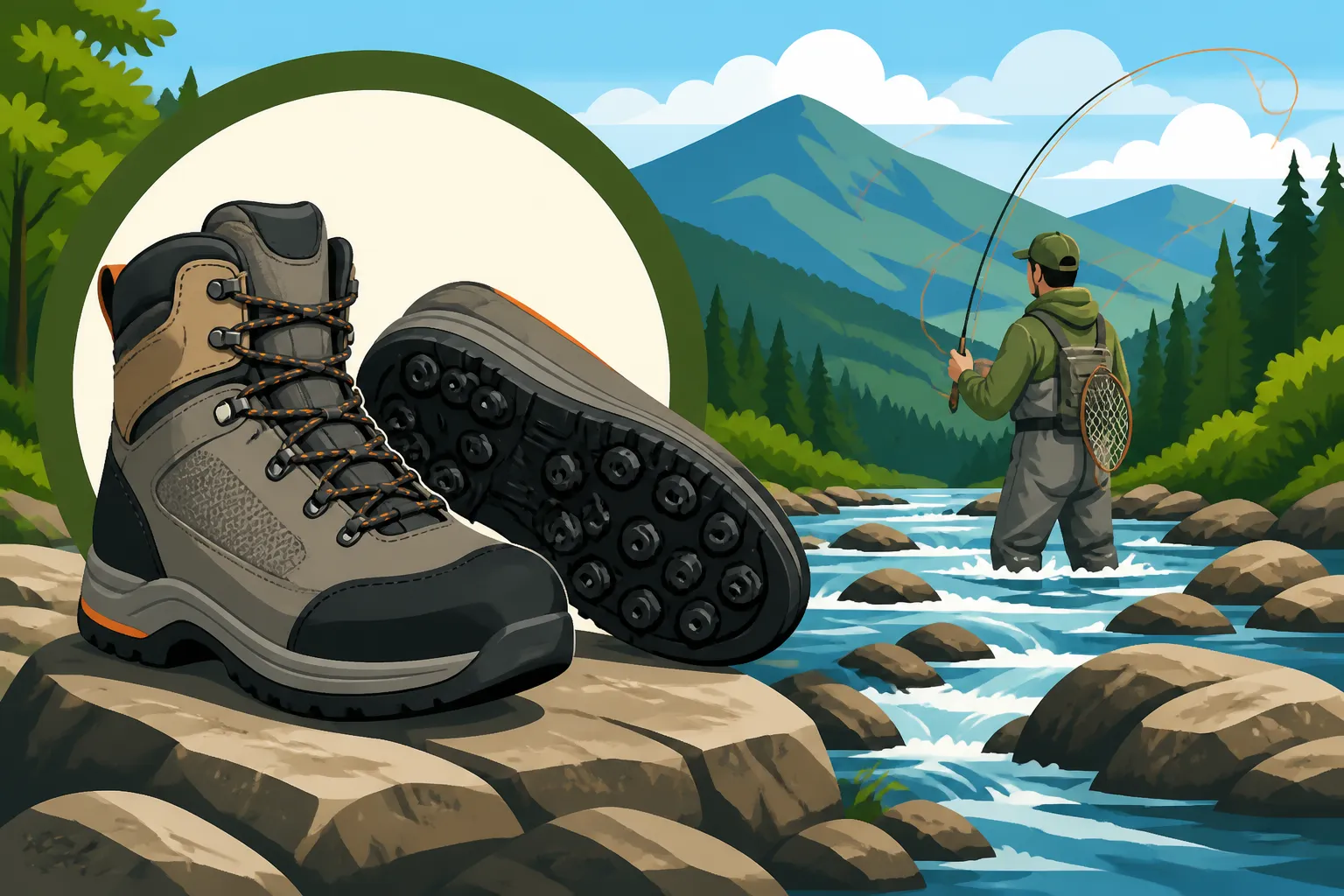
Rubber soles, on the other hand, offer more versatility. Modern rubber compounds are incredibly advanced, providing excellent grip on various surfaces, including mud, gravel, and dry land, where felt can feel extremely slick. Many rubber soles also feature aggressive lug patterns designed to shed mud and provide multi-directional traction. The trade-off has historically been slightly less grip on very slimy rocks compared to felt, though this gap is closing with new technologies and the addition of studs. Each type has its ardent supporters, and for good reason.
Durability and Construction Materials
Your wading boots are going to take a beating. They'll be scraped against rocks, soaked in water, exposed to varying temperatures, and put through rigorous paces. Therefore, durability is paramount. Look for boots made from robust synthetic materials like heavy-duty nylon, PVC, or specialized synthetic leather. Stitching should be reinforced, and seams should be minimized or expertly sealed to prevent premature wear and tear.
Rubberized toe and heel caps are also essential features. These provide extra protection against impact and abrasion, extending the life of the boot significantly. A well-constructed boot might feel a bit stiff at first, but it will break in and offer years of reliable service. Cutting corners on material quality usually means you'll be replacing your boots much sooner, which is a false economy in the long run.
Ankle Support and Stability
Wading in moving water, especially over uneven, rocky bottoms, demands excellent ankle support. A sprained ankle can ruin your day, your season, or even require serious medical attention. Look for boots that extend above the ankle, providing a snug fit that cradles and supports the joint. Many high-quality boots incorporate internal support structures or stiffeners to prevent lateral movement of your foot.
A stable platform is also critical. A wide, well-designed sole base contributes to overall stability, reducing the likelihood of rolling an ankle or losing your footing. When trying on boots, pay close attention to how your ankle feels when you simulate uneven ground – do you feel secure, or does your foot wobble? This is where trying boots on with your actual waders and socks makes a huge difference.
Drainage and Quick-Drying Properties
No matter how well-made your boots are, water is going to get in – that's the nature of wading! What matters is how quickly that water gets out, and how well the boots dry once you're off the river. Boots that retain water become heavy, uncomfortable, and can lead to foot issues like blistering or fungal growth. Look for boots with mesh panels, drainage holes, or permeable materials that allow water to escape efficiently.
Quick-drying properties are also important for hygiene and extending boot life. Materials that shed water quickly prevent mildew and odors, and are ready for your next outing sooner. While no boot will dry instantly, some are significantly better than others at resisting prolonged saturation. This is especially useful for multi-day trips or if you're frequently on the water.
Felt Soles: The Traditional Choice for Rocky Bottoms
For decades, felt-soled wading boots were the undisputed champion for anglers tackling slick, rock-bottomed rivers. There's a certain old-school wisdom to their design that still holds true for many specific conditions, and many seasoned Vermont anglers swear by them, especially for places like the Lamoille or the Otter Creek where the rocks can be notoriously slippery.
The Unmatched Grip of Felt
The primary advantage of felt soles lies in their incredible ability to conform to irregular surfaces and provide a high coefficient of friction on wet, algae-covered rocks. Think of it like thousands of tiny fibers gripping and molding to the contours of a slick stone, creating a tenacious hold that a flat rubber surface often can't match. When you're carefully placing your foot on a submerged boulder, that sticky, secure feeling felt provides is genuinely reassuring. It can make the difference between a confident step and a precarious slide.
For many dedicated trout anglers who spend their days navigating the clear, cold, and often treacherous bottoms of Vermont's classic trout streams, felt remains the top choice for pure traction. It allows for a stealthier approach as well; the softer material tends to glide over rocks rather than clunk, which can be a subtle advantage when stalking wary fish. This superior grip in specific, challenging conditions is why felt has maintained its loyal following despite the rise of modern alternatives.
When Felt Might Not Be the Best Option
While felt excels on slick rocks, it does have its drawbacks. One of the most significant concerns, particularly in environmentally conscious regions like Vermont, is the potential for felt to harbor and transport invasive species such as New Zealand mudsnails or whirling disease spores. These microscopic organisms can get trapped in the felt fibers and then be unwittingly spread from one waterway to another, posing a serious threat to native ecosystems. Many states and provinces have even banned felt soles for this very reason, so checking local regulations is non-negotiable. Vermont Fishing Regulations Explained is a good place to start.
Beyond the ecological concerns, felt can be a liability on dry land, snow, or ice. Walking on riverbanks, trails, or especially icy parking lots with felt soles is like walking on roller skates – extremely slippery and dangerous. They also tend to wear down more quickly than rubber soles, especially if you do a lot of walking on abrasive surfaces. For anglers who transition frequently between water and land, or those fishing in areas with mixed terrain, felt's singular advantage can quickly become a significant disadvantage.
Rubber Soles: Versatility and Modern Advancements
The world of rubber-soled wading boots has come a long, long way. Gone are the days when rubber meant inevitable slips and slides on anything other than gravel. Modern technology and innovative designs have propelled rubber soles into a position of serious contention, offering versatility that felt can't always match. Many popular brands found at places like Bass Pro Shops or online retailers like Amazon now offer a wide array of rubber-soled boots with impressive traction.
The Rise of Vibrating and Specialized Rubber Compounds
Today's rubber wading boots are engineered with incredibly sophisticated compounds and tread patterns. Brands have invested heavily in developing proprietary rubber formulations that offer improved grip on wet surfaces, often rivaling or even surpassing traditional felt in certain conditions. These aren't just smooth, flat rubber soles anymore; they feature aggressive lugs, siping, and multi-directional patterns designed to dig into soft bottoms, shed mud, and cling to irregular surfaces. This advancement means you get a reliable grip not just on the slick river rocks, but also on muddy banks, grassy trails, and even snowy approaches.
One of the biggest advantages of these specialized rubber compounds is their "all-around" performance. You can confidently walk from your car, down a slippery embankment, wade a rocky stream, and then trek through a field to another fishing spot, all without changing footwear or feeling dangerously unstable. This versatility is a game-changer for anglers who cover a lot of different terrain during their fishing expeditions, making them ideal for exploring various fishing spots along rivers like the Winooski or the Missisquoi.
Adding Traction with Studs and Cleats
While modern rubber compounds are excellent, sometimes you need an extra edge, especially on truly treacherous, slime-covered rocks or icy patches during Vermont Ice Fishing Season Dates. This is where studs and cleats come into play. Many rubber-soled boots are designed to accept screw-in studs or metal cleats, which can dramatically increase traction in challenging conditions. These metal points bite into slippery surfaces, providing a grip that neither plain felt nor plain rubber can offer.
The beauty of a studded rubber sole is its adaptability. You can add or remove studs as needed, customizing your traction for the specific conditions you anticipate. Some anglers opt for a full array of studs, while others might place them strategically in key areas. These additions are particularly valuable when fishing fast, turbulent water or when targeting areas known for extremely slick bottom structures. It's like having four-wheel drive for your feet, giving you an extra layer of confidence and safety when wading the most difficult sections of a river.
Beyond the Soles: Other Important Considerations
While the sole of your wading boot is undoubtedly crucial, there's more to a great pair of boots than just what's on the bottom. Several other design elements and fit considerations play a significant role in your overall comfort, safety, and long-term satisfaction with your purchase. Ignoring these details can lead to discomfort, premature wear, or even negatively impact your wading experience.
Fit and Sizing: Avoiding Foot Fatigue
Getting the right fit for your wading boots is absolutely essential. It's not the same as buying regular shoes, because you'll be wearing thick neoprene wading socks and possibly additional thermal socks inside your waders. Therefore, you typically need to size up by at least one, if not two, full sizes from your street shoe size. The best approach is to try on boots while wearing your actual waders and the specific socks you'll use for fishing.
A properly fitting boot should be snug but not tight, with enough room in the toe box for your toes to wiggle comfortably, but not so much that your foot slides around. Too loose, and you risk blisters, lack of support, and poor traction. Too tight, and you'll experience painful pressure points, restricted circulation, and cold feet. Foot fatigue is a real problem, especially during long days of wading, and an ill-fitting boot will accelerate it dramatically. Take your time, walk around in them, and make sure they feel right before committing.
Compatibility with Waders and Gravel Guards
Modern wading boots are designed to work in conjunction with your waders, specifically with the neoprene booties and integrated gravel guards that come with most waders. The top of your wading boot needs to be wide enough to accommodate the neoprene bootie of your wader without bunching or restricting circulation. More importantly, the gravel guard of your wader needs to fit securely over the top of the boot to prevent small stones, sand, and other debris from entering the boot.
If your gravel guards don't fit snugly or constantly ride up, you'll end up with a boot full of grit, which is incredibly irritating and can damage both your waders and your feet. Some boots have integrated lacing hooks or velcro tabs specifically designed to secure gravel guards, providing an extra layer of protection. This synergy between waders and boots is key to a comfortable and grit-free wading experience. Looking for compatible options can be easier at dedicated outdoor retailers or on platforms like Amazon where product specifications are detailed.
Lacing Systems and Ease of Use
The lacing system on your wading boots might seem like a minor detail, but it can significantly impact your experience. Traditional laces are reliable and allow for a customizable fit, but they can be slow to tie, get tangled, or come undone during a long day. Some boots feature speed laces, D-rings, or quick-cinch systems that allow for faster and easier on-and-off, which is a blessing on a cold morning or after a long day.
Another increasingly popular option is the BOA lacing system, which uses a dial and steel cables to provide incredibly fast and precise tightening and loosening. This system is excellent for rapid adjustments and offers a very uniform, snug fit across the foot. However, they can be more susceptible to mud and grit interfering with the mechanism, though modern designs have largely mitigated this. Consider your personal preference for speed versus traditional reliability, and how much time you want to spend fiddling with laces on the riverbank.
Maintenance and Longevity of Your Wading Boots
You've invested in a quality pair of wading boots to conquer Vermont's challenging waters, so it only makes sense to take care of them. Proper maintenance isn't just about keeping them looking good; it's about preserving their performance, extending their lifespan, and preventing the spread of aquatic invasive species. Neglecting your boots can lead to premature breakdown, funky odors, and potential environmental harm.
Cleaning and Drying Best Practices
After every single outing, especially if you've been in different waterways, it's crucial to thoroughly clean your wading boots. For felt-soled boots, this is particularly important to prevent the spread of invasive species. Start by rinsing them thoroughly with fresh water – a strong hose spray works wonders. Pay close attention to the soles, scrubbing them with a stiff brush to remove all visible mud, algae, and debris. If you have felt soles, consider a more rigorous treatment, like soaking them in a dilute bleach solution or a specialized aquatic invasive species disinfectant, though always check product instructions and local guidelines.
Once cleaned, the most critical step is proper drying. Never store wet boots. Remove any insoles and open up the lacing system completely to maximize airflow. Dry them in a well-ventilated area, out of direct sunlight and away from direct heat sources, which can degrade materials over time. Using a boot dryer can significantly speed up the process and prevent mildew and odors. For felt soles, ensure they are bone-dry before storing, which can sometimes take a couple of days in humid conditions. Patience here will pay dividends in boot longevity and fresh-smelling gear.
Storage and Extending Boot Life
Once your boots are thoroughly clean and dry, proper storage is key to extending their life. Store them in a cool, dry, and well-ventilated space. Avoid cramming them into a tight gear bag or a damp basement corner, as this promotes mildew and breakdown of materials. Keeping them upright with some crumpled newspaper inside can help them maintain their shape and absorb any lingering moisture.
Periodically inspect your boots for wear and tear. Check seams for any signs of fraying, look at the soles for excessive wear, and examine the lacing system for any damage. Addressing small issues promptly, like loose stitching or a worn lace, can prevent them from becoming bigger, more expensive problems down the road. Some anglers even apply a waterproofing treatment to the upper materials periodically, especially if they are leather or heavy fabric, to maintain their water resistance and flexibility. With a little care, a good pair of wading boots can be a reliable companion on countless Vermont fishing adventures.
Wading Boot Sole Comparison
Choosing between felt and rubber soles is a common dilemma for Vermont anglers. Both have distinct advantages and disadvantages depending on the specific conditions you'll encounter. This table offers a quick comparison to help you weigh your options.
| Feature | Felt Soles | Rubber Soles |
|---|---|---|
| Grip on Slick Rocks | Excellent, conforms to surfaces, very sticky | Good to Very Good (especially with modern compounds or studs) |
| Grip on Mud/Gravel | Poor, can be very slippery | Excellent, aggressive lugs shed mud and grip loose surfaces |
| Grip on Dry Land | Extremely poor, very slippery | Excellent, similar to hiking boots |
| Grip on Snow/Ice | Extremely poor, dangerous | Fair to Good (can be enhanced with studs) |
| Invasive Species Risk | High, can easily transport organisms | Low to Moderate, easier to clean and disinfect |
| Durability | Moderate, wears faster on abrasive surfaces | High, very durable and resistant to abrasion |
| Noise Level | Quieter, glides over rocks | Can be noisier, 'clunking' on rocks |
| Maintenance | Requires thorough cleaning/disinfection for AIS | Easier to clean, less concern for AIS transport |
| Ideal Conditions | Primarily slick, rocky stream bottoms, minimal land walking | Mixed terrain, wading in diverse environments, dry land walking |
Best Waders for Vermont Trout Streams are often paired with a sturdy set of boots, so thinking about how they'll work together is crucial. You'll find a great selection of both felt and rubber options, as well as stud kits, at specialty outdoor stores and online retailers. Don't underestimate the role your footwear plays in your overall fishing experience; it truly is the foundation of a great day on the water.
Disclaimer
This article is for general informational purposes only and does not constitute professional advice. Laws, prices and regulations vary by location and change over time. Consult a qualified professional for guidance on your specific situation.