Native trout species found in Vermont
It’s easy to get lost in the sea of trout species that swim in Vermont’s beautiful waters. Many anglers, new and seasoned alike, often wonder which of these finned beauties truly belong here, deep in the Green Mountain State, and which are introduced. This guide aims to clear up that confusion, diving deep into the fascinating world of Vermont's native trout, how to identify them, and why their preservation is so vital to our ecosystem and angling heritage.
Understanding the Distinction: Native, Wild, and Stocked Trout
Before we dive into specifics, let's untangle a common point of confusion: the difference between "native," "wild," and "stocked" trout. You've probably heard all these terms, and it’s natural to mix them up. A "native" species is one that naturally occurs in a region, having evolved there without human intervention. Think of it as the original Vermonter of the fish world. A "wild" trout, on the other hand, is simply a fish that was born and raised in the wild, whether its ancestors were native or introduced. So, you can have wild brown trout in Vermont, even though brown trout aren't native to North America. "Stocked" trout are those raised in hatcheries and then released into rivers and lakes by human hands. These fish are essentially guests in our waters, meant to provide angling opportunities.
The key frustration for many anglers is assuming that because a species is widespread or has been here for over a century, it must be native. That's simply not true for several popular trout species you'll encounter. Understanding this distinction isn't just academic; it profoundly impacts how we approach conservation and what we cherish most about Vermont's aquatic environments. For a deeper dive into these terms, you might find Difference between wild and stocked trout in Vermont helpful.
Why the History Matters for Vermont's Fish
The history of trout in Vermont is a story of natural selection, glaciation, human exploration, and, eventually, intentional stocking. After the last ice age, as glaciers receded, they left behind a landscape ripe for colonization. Certain fish species, adapted to cold water, slowly made their way into the newly formed lakes and rivers. These are our true natives.
Fast forward a few centuries, and with European settlement came a desire to enhance fishing opportunities and, sometimes, a nostalgic impulse to introduce familiar species from back home. Brown trout, for instance, were brought over from Europe. Rainbow trout, while native to the Pacific drainages of North America, were introduced to the East. These introductions, while often well-intentioned, altered the ecological balance, sometimes competing with or even displacing native species. It highlights why appreciating and protecting what is truly native is so important.
Vermont's True Native Trout: Brook Trout and Lake Trout
When we talk about native trout in Vermont, two species primarily come to mind: the beloved Brook Trout and, in specific deep, cold waters, the Lake Trout. While technically chars, both are commonly referred to as trout by anglers and are indigenous to certain Vermont ecosystems.
The Jewel of the Green Mountains: Brook Trout
The Brook Trout (Salvelinus fontinalis) is, without a doubt, Vermont's most iconic and widely distributed native trout. It’s even our state fish! These fish are a vibrant testament to the health of our pristine headwater streams and remote ponds. Catching a brightly colored brook trout from a secluded mountain stream is a quintessential Vermont angling experience.
Distinguishing Characteristics of the Brook Trout
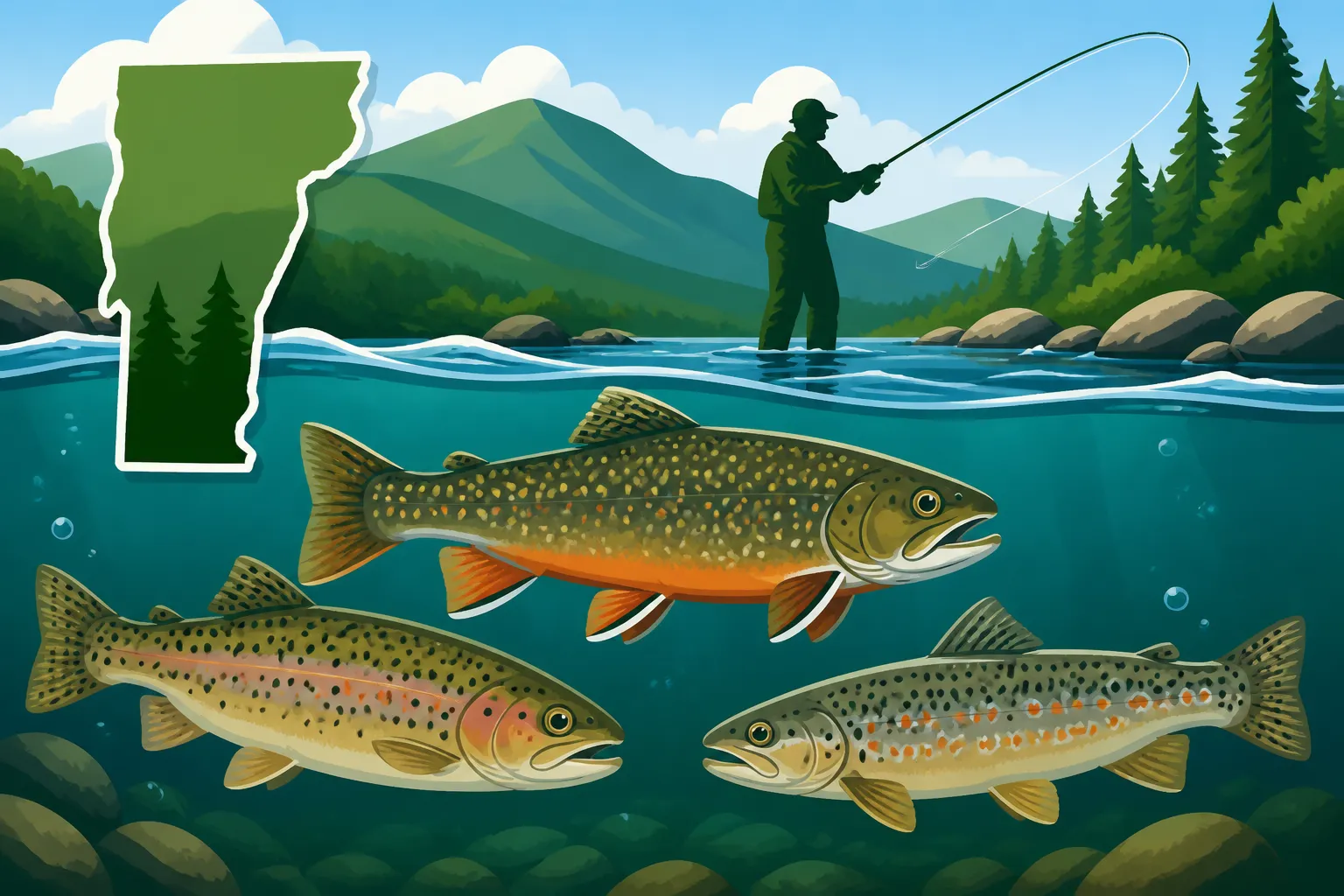
Identifying a brook trout is often a joyous moment for an angler, thanks to their striking appearance. They possess a dark, almost mottled, olive-green back that transitions into lighter flanks, adorned with distinctive, worm-like markings called vermiculations. But what really makes them stand out are the vibrant red spots, often encircled by blue halos, scattered along their sides. Their lower fins (pelvic, pectoral, and anal) typically have a distinctive white leading edge, followed by a black stripe, and then a reddish-orange hue. Their tail fin is usually square or slightly forked. They tend to be smaller than their introduced cousins, rarely growing beyond 12-14 inches in most wild Vermont streams, though larger specimens can be found in more fertile waters or remote ponds. For more details on this specific species, check out Brook Trout: Vermont's Native Trout.
Preferred Habitats and Behavior
Brook trout are picky residents. They demand exceptionally cold, clean, and highly oxygenated water. This is why you'll primarily find them in the higher elevations of the Green Mountains, in small, spring-fed streams, beaver ponds, and remote backcountry lakes. These fish are extremely sensitive to habitat degradation, pollution, and rising water temperatures, making them excellent indicator species for environmental health. If a stream holds brook trout, you know it's a healthy waterway.
They are often shy and elusive, especially the larger wild specimens. They'll hide under cutbanks, submerged logs, overhanging vegetation, or in deep pools, darting out quickly to ambush insects, small crustaceans, or baitfish. Their diet consists mostly of aquatic insects like caddisflies, mayflies, and stoneflies, as well as terrestrial insects that fall into the water, and occasionally small fish or amphibians. They are voracious eaters when conditions are right, but can be finicky in high-pressure situations.
Conservation Status and Angler Responsibility
While still widespread, native brook trout populations face increasing threats from climate change, habitat fragmentation, and competition from introduced species. Conservation efforts focus on protecting their fragile habitats, maintaining riparian buffers, and managing fishing pressure. Anglers play a crucial role in their survival. Practices like catch-and-release, especially for larger breeding fish, using barbless hooks to minimize harm, and proper handling (wet hands, keeping fish in the water as much as possible) are paramount.
Many anglers are now actively seeking out wild brook trout streams, valuing the challenge and the beauty of these native fish above sheer size or quantity. It's a way of connecting with Vermont's natural heritage. Understanding Do Trout Reproduce Naturally in Vermont Streams? can provide more context on their population dynamics.
The Deepwater Dweller: Lake Trout
While colloquially called a "trout," the Lake Trout (Salvelinus namaycush) is technically a char, just like the brook trout. However, it's distinct enough in appearance and habitat preferences to warrant its own discussion as a native species in specific Vermont waters. Lake Trout are native to Lake Champlain and some of Vermont’s deep, cold glacial lakes, making them an important part of our native fish fauna.
Identifying Vermont's Lake Trout
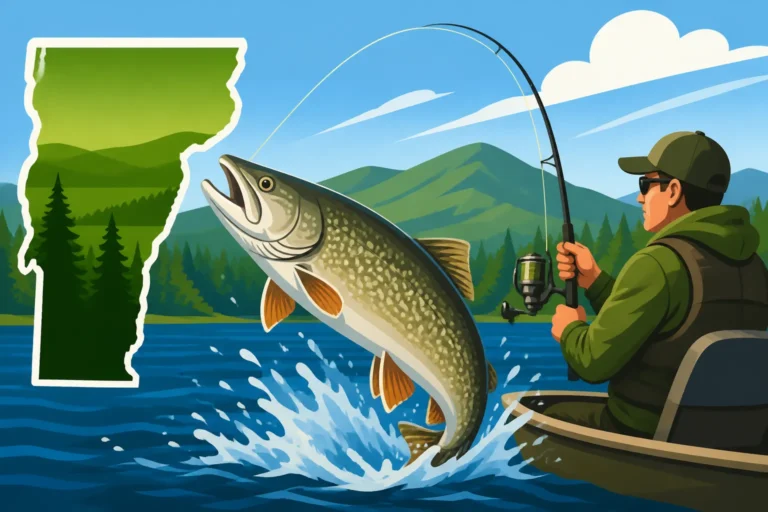
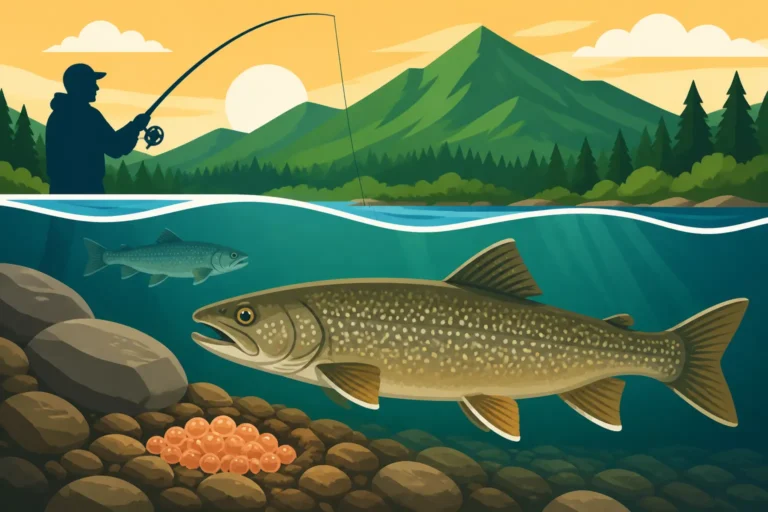
Lake trout have a streamlined body, typically dark green to gray on the back, fading to lighter sides and a white belly. Their bodies are covered in irregular, light spots that are often elongated or worm-like, especially on their head and back. Unlike brook trout, they lack the vibrant red spots and blue halos, and their fins do not have the distinct white leading edge. They possess a deeply forked tail, which is a key identifying feature. These fish can grow to impressive sizes, much larger than brook trout, with specimens reaching into the double digits in pounds, particularly in places like Lake Champlain. If you're looking for more identification tips across species, a Trout Species Identification Guide for Vermont is invaluable.
Preferred Habitats and Behavior
True to their name, lake trout are denizens of deep, cold lakes. They require consistently cold water, especially during the summer months, and will retreat to the deepest, coldest sections of lakes when surface temperatures rise. In Vermont, their primary native strongholds are Lake Champlain and Lake Willoughby, where they have vast, deep water environments to thrive.
They are primarily piscivorous, meaning they feed heavily on other fish. In Lake Champlain, they'll target alewives and rainbow smelt. In Lake Willoughby, smelt are also a key forage. They're often found patrolling deep structure, such as underwater humps, ledges, and drop-offs. Anglers targeting lake trout often employ specialized techniques like deep trolling with downriggers or vertical jigging over structure. Check out Lake Champlain Lake Trout Fishing for specific tactics.
Conservation Efforts for Lake Trout
Lake trout populations in Vermont have faced challenges from overfishing and competition with introduced species. However, significant conservation efforts, including stocking programs to supplement native populations and strict regulations, have helped stabilize and even improve their numbers in key lakes. Maintaining water quality and managing invasive species that can impact their food sources are ongoing priorities.
Other Trout Species You'll Encounter in Vermont
While brook trout and lake trout are Vermont's native representatives, several other trout species thrive in our waters due to extensive stocking programs. These non-native species are integral to Vermont's diverse fishing opportunities, but it's important to remember their introduced origins.
The Athletic Acrobats: Rainbow Trout
Rainbow trout (Oncorhynchus mykiss) are native to the Pacific drainages of North America and Asia but have been widely introduced across the globe, including throughout Vermont. They are immensely popular with anglers due to their spirited fights and willingness to strike a variety of baits and lures.
Appearance and Habitat of Rainbow Trout
Rainbow trout are typically silver-sided with a distinct pink or reddish stripe running horizontally along their flank, from gill plate to tail. Their backs are usually olive-green to bluish-black, covered in small, dark spots that extend into their dorsal and caudal fins. Unlike brook trout, they lack the vermiculations and the prominent white fin edges.
They are often stocked in rivers, streams, and ponds, and can adapt to a wider range of water temperatures than brook trout, though they still prefer cool, clean water. You'll find them in many of Vermont's larger rivers and smaller ponds. They are often stocked for immediate put-and-take fisheries, providing ample opportunity for anglers, especially on opening day. You can learn more about where and why these fish are stocked in Rainbow Trout Stocking in Vermont.
The Hardy European: Brown Trout
Brown trout (Salmo trutta) are native to Europe and western Asia but were introduced to North America in the late 19th century. They have adapted exceptionally well to many Vermont waterways, often outcompeting native brook trout in systems where habitat has been altered or water temperatures have risen.
Identifying and Fishing for Brown Trout
Brown trout typically have a yellowish-brown to golden-brown body, often with larger, sparse dark spots, and sometimes red or orange spots surrounded by lighter halos, particularly on their flanks. Their spots usually extend onto their dorsal and adipose fins. They have a square or slightly forked tail. Like rainbows, they can grow quite large, and are known for being cunning and elusive, offering a significant challenge to experienced anglers.
They are incredibly adaptable and can tolerate warmer water temperatures and more varied habitats than brook trout. You'll find them in larger rivers and streams, thriving even in waters that might be marginal for brook trout. They are often nocturnal feeders and can be particularly aggressive. For more on their habits, consider reading Brown Trout Habits in Vermont Streams.
Hybrids and Other Stocked Fish: Splake and Tiger Trout
Vermont also occasionally stocks hybrid trout to offer unique angling experiences, or to utilize specific ecological niches. These include:
- Splake: A cross between a brook trout and a lake trout. Splake inherit characteristics from both parents, often growing larger than brook trout but preferring slightly shallower waters than lake trout. They are solely a product of hatcheries and are not naturally reproducing in Vermont.
- Tiger Trout: A sterile hybrid created by crossing a brown trout and a brook trout. They are easily recognizable by their distinctive, tiger-like vermiculations across their entire body. These are stocked for novelty and sport, as they cannot reproduce.
These hybrids offer exciting opportunities for anglers but further emphasize the distinction between native, wild, and intentionally introduced or created fish.
The Importance of Protecting Vermont's Native Trout Populations
Preserving native trout species is more than just an ecological endeavor; it's about safeguarding a piece of Vermont's natural identity and ensuring a legacy for future generations of anglers.
Ecological Value as Indicator Species
Native brook trout, in particular, serve as a vital indicator of ecosystem health. Their strict requirement for cold, clean water means that if brook trout populations are thriving in a stream, that waterway is likely healthy and pristine. Conversely, a decline in native brook trout can signal environmental problems like pollution, habitat degradation, or warming water temperatures, which can affect the entire aquatic food web. They are a crucial component of the biodiversity that makes Vermont's natural landscapes so rich and vibrant.
Our Angling Heritage and Future
There’s a unique satisfaction that comes from catching a fish that has evolved in its environment over millennia, perfectly adapted to its surroundings. This connection to the past, to the untouched wild, is what draws many anglers to seek out native brook trout. It’s not just about the size of the fish, but the purity of the experience – fishing in a pristine environment for a true Vermonter. Ensuring the survival of these species means preserving that authentic angling heritage for our children and grandchildren. We want them to have the same chance to experience the magic of catching a native brook trout in a clear mountain stream.
How Anglers Can Help Protect Native Trout
Every angler has a role to play in the conservation of Vermont's native trout. It's a collective responsibility that ensures these species continue to thrive.
- Practice Responsible Catch-and-Release: This is especially critical for native brook trout, whose populations are often smaller and more vulnerable. Using barbless hooks significantly reduces injury, and keeping the fish in the water as much as possible for unhooking and photos minimizes stress. A good, knotless rubber landing net, easily found on Amazon or at local tackle shops, is also crucial for fish safety.
- Know Your Regulations: Vermont has specific rules for different waters, including catch limits, length limits, and even tackle restrictions (like fly-fishing-only sections) that are designed to protect sensitive populations. Always consult the latest Vermont Fishing Regulations Explained or Vermont Trout Season and Stocking Rules before you head out.
- Support Conservation Efforts: Donations to local watershed groups or purchasing conservation licenses directly contributes to habitat restoration and protection projects that benefit native trout.
- Clean, Drain, Dry: Prevent the spread of aquatic invasive species by thoroughly cleaning your gear, draining all water from boats and waders, and letting them dry completely before moving between different waterways. Invasive species can drastically alter habitats and compete with native fish.
- Be Mindful of Habitat: Stick to established trails, avoid disturbing stream banks, and be conscious of your footprint when fishing in sensitive native trout waters. Even simple actions like not leaving trash behind make a huge difference.
- Educate Yourself and Others: Share your knowledge about native trout and responsible angling practices with fellow enthusiasts. The more people who understand the importance of native species, the stronger our collective conservation efforts will be.
By embracing these practices, we can all contribute to the enduring health and vitality of Vermont’s truly native trout, ensuring that these incredible fish continue to grace our waters for generations to come.
Disclaimer
This article is for general informational purposes only and does not constitute professional advice. Laws, prices and regulations vary by location and change over time. Consult a qualified professional for guidance on your specific situation.