Best Techniques for Early Spring Trout
That crisp bite in the air, the lingering chill in the water, and the tantalizing promise of hungry trout – early spring fishing in Vermont can be incredibly rewarding, but it definitely throws a few curveballs. Anglers often face sluggish fish, unpredictable weather, and tricky water conditions that can make success feel elusive. This comprehensive guide will dive deep into the specific techniques and strategies you need to master to consistently catch trout in Vermont's awakening waters.
Understanding Early Spring Trout Behavior and Conditions
Early spring in Vermont is a transitional period, and the fishing reflects that. You're not dealing with summer's warm, active fish, nor winter's dormant ones. Instead, trout are slowly shaking off their cold-weather lethargy, influenced heavily by melting snow, cold rain, and fluctuating water temperatures. Understanding these conditions is your first step to success.
The Challenge of Cold Water
When the water temperatures are still hovering in the low 40s or even upper 30s, trout metabolism slows down significantly. This means they're not expending a lot of energy, and they're certainly not chasing after baits or flies with the same vigor they would in July. Their feeding windows are shorter, and they tend to be much less aggressive. You won't find them darting across a stream or rising freely to every bug that floats by. They're conserving energy, holding in slower currents, and waiting for an easy meal. This demands a change in your approach, focusing on slow, deliberate presentations that put the food right in front of them without requiring much effort on their part.
Beyond the trout themselves, cold water also means colder air, especially in the mornings and evenings. Dressing in layers is absolutely critical, and having good, insulated waders can make or break your comfort level. Always remember that a cold angler is rarely a patient or successful one.
Reading the Water: Depth and Current
The early spring landscape often features swollen rivers and streams from snowmelt and rain, leading to higher, faster water. However, the trout will not be in the fastest currents. Instead, they seek refuge in slower, deeper pockets where they can avoid fighting the heavy flow and conserve energy. Look for eddies behind large rocks, fallen trees, or bends in the river. Deeper pools, especially those with some overhead cover or structure, become prime holding areas. On lakes and ponds, trout will often be found hugging the bottom in deeper sections, or slowly cruising along drop-offs and ledges near where warmer, shallower water might start to attract early insect activity.
Identifying these slower currents and deeper spots is paramount. Don't waste your time casting into roaring rapids; instead, focus on the seams, the inside bends, and any calm water you can find. Sometimes, even a slight change in the bottom contour can create a soft spot where trout will hold, waiting for food to drift by.
Trout Behavior: Slow and Deep
As mentioned, early spring trout are generally lethargic. This translates directly into their feeding habits. They are much less likely to move far to grab a meal, so your presentation needs to be almost perfect. Think about putting your bait or lure right on their nose, or at least very close. You'll want to use techniques that allow your offering to drift naturally with the current, staying in the strike zone for as long as possible. This means longer drifts, slower retrieves, and ensuring your weight is appropriate to get your presentation down to where the fish are holding.
Another key aspect of their behavior is their preference for solitude. While you might find a few fish grouped together in a prime holding lie, they're not schooling up to feed aggressively. Each fish is generally looking out for itself, making finding the first fish a process of methodical searching rather than anticipating a feeding frenzy. Understanding this helps manage expectations and encourages a more patient, persistent fishing style.
Bait Fishing Strategies for Hesitant Trout
For many anglers, especially on those chilly opening days, bait fishing remains one of the most effective methods for early spring trout. There's just something about natural bait that even the most reluctant trout can't resist, particularly when their metabolism is slow and they're looking for an easy, protein-rich meal.
Natural Baits: Worms and Minnows
Earthworms, especially juicy nightcrawlers, are a classic choice for a reason. They offer a natural scent, texture, and movement that trout find irresistible. Rigging a worm can be as simple as threading a piece onto a small hook, allowing the ends to wiggle freely. This natural movement, combined with the scent, can entice even the most stubborn trout. When fishing worms, consider using a slip sinker rig, which allows the worm to drift naturally with the current while still getting down to the fish. The line can slip through the sinker, giving the trout a chance to take the bait without feeling immediate resistance.
Small live minnows, where legal, are another incredibly effective option, especially for larger, more predatory trout like brown trout. A shiner or dace, hooked lightly through the lip or dorsal fin, will swim naturally, attracting attention. Presentation is key; you want the minnow to look injured or disoriented, making it an easy target. A slow retrieve or a patient drift can often provoke a strike. Always check local regulations, as some waters might have restrictions on using live baitfish to prevent the spread of invasive species. For specific guidance on what baits are best, you might want to read up on Best Bait for Opening Day Trout in Vermont.
Prepared Baits: PowerBait and Dough
For stocked trout, prepared baits like Berkley PowerBait or various dough baits are often king. These baits are designed to float, which is a huge advantage when fishing a still or slow-moving water body where trout might be cruising near the bottom. By floating just off the bottom, your bait remains visible and accessible without getting lost in sediment or snags. A common setup involves a small treble hook (or a single hook, size 10-14) with a small amount of PowerBait molded around it, suspended off the bottom by a swivel and a small split shot or egg sinker.
The key to success with these baits is patience and proper rigging. Let the bait sit for a while, allowing its scent to disperse. Trout often mouth these baits before committing, so a sensitive rod tip can help detect those subtle bites. Brands like PowerBait come in various colors and scents, and experimenting with different options can sometimes make a big difference on a particular day. You can find a good selection of these prepared baits on platforms like Amazon, making it easy to stock up before your next trip.
Rigging for Success
The choice of rig for bait fishing in early spring is crucial for getting your offering into the strike zone and presenting it naturally.
- Slip Sinker Rig: This is fantastic for both worms and prepared baits. A main line goes through an egg sinker, then ties to a swivel, and then a leader (usually 12-24 inches) to your hook. The sinker sits on the bottom, but the line can slide, allowing the trout to pick up the bait without feeling the weight, leading to fewer dropped bites.
- Carolina Rig: Similar to a slip sinker, but the weight is usually a bullet sinker and a bead is placed between the sinker and swivel. This is more common in bass fishing but can be adapted for trout.
- Simple Split Shot Rig: For lighter currents or shallower water, a few small split shots crimped onto your leader a foot or so above your hook can be all you need to get your bait down. This offers a very natural, almost weightless drift.
- Bobber/Float Fishing: While typically associated with warmer water, a sensitive float can be useful in slower pools or ponds to keep your bait at a precise depth, especially if trout are suspended just off the bottom. The critical thing is to use a light enough float so that it doesn't create undue resistance when a trout takes the bait.
Remember, clear, low-visibility fluorocarbon leaders are a wise choice in early spring's often clear waters, as trout can be quite spooky.
Spin Fishing Techniques for Active and Passive Trout
Spin fishing offers incredible versatility, allowing you to cover water effectively and present a variety of lures that appeal to both passively feeding and slightly more active trout. Even when fish are sluggish, the flash, vibration, or subtle movement of a well-presented lure can trigger a reaction strike.
Spinners and Spoons: Flash and Vibration
Classic inline spinners like the Panther Martin or Mepps Aglia are workhorses for early spring trout. Their spinning blades create flash and vibration that can be detected by trout even in murky water or low light conditions. The key is to retrieve them slowly, just fast enough to get the blade to turn. On those cold days, a slow, steady retrieve along the bottom of a pool or through a deep run can be deadly. Look for sizes from #0 to #3, often with natural colors like silver, gold, or brass, though sometimes a bright chartreuse or orange can illicit a strike in stained water.
Small casting spoons, such as the Kastmaster or Little Cleo, also excel in early spring. Their wobbling action imitates an injured baitfish, making them an attractive, easy meal. Spoons are particularly effective for casting long distances and getting down into deeper water quickly. A slow, erratic retrieve with pauses, letting the spoon flutter, often triggers strikes. Remember, trout aren't going to chase these lures far, so cast upstream or across, let the lure sink, and retrieve it slowly through potential holding lies. These are readily available at most tackle shops and on Amazon.
Jigs and Soft Plastics: Slow and Subtle
When trout are truly sluggish, jigs and soft plastics can be your secret weapon. Small marabou jigs (1/32 to 1/8 ounce) in natural colors like olive, black, white, or brown have an incredible subtle action, mimicking a small invertebrate or baitfish. Tipped with a small piece of worm or grub for added scent, they can be irresistible. Fish them with a slow lift-and-drop retrieve, letting them drift with the current, barely bouncing along the bottom. The key is finesse and patience.
Similarly, small soft plastic grubs, tubes, or worm imitations on a lightweight jig head (1/16 or 1/8 ounce) can be incredibly effective. Colors like white, motor oil, or pumpkinseed can imitate natural forage. The action of these plastics, even with minimal rod movement, can be enough to draw a strike from a trout that won't move for anything else. A classic technique is to cast upstream, let the jig sink, and then slowly "swim" it back downstream, keeping just enough tension to feel subtle bites. Consider using a sensitive ultralight rod for these finesse presentations to detect even the slightest tap.
Covering Water Effectively
Spin fishing allows you to cover a lot of water quickly, which is crucial when early spring trout are spread out and not actively feeding in large numbers. Instead of staying in one spot, systematically work through a stretch of river or lake shore.
Start by casting to obvious holding lies: the tailouts of pools, eddies, current seams, and around any structure like fallen trees or large boulders. Make several casts to each spot, varying your retrieve speed and depth, before moving on. Don't be afraid to cast directly upstream and let your lure drift downstream, retrieving just enough line to maintain control. This allows your lure to get down to depth and drift naturally, presenting itself to fish that are facing upstream.
On lakes, fan casting from a boat or shore can help you explore different depths and bottom contours. Pay close attention to any changes in depth or structure that might concentrate fish. Early morning and late afternoon are often the best times to find trout slightly more active, though mid-day can be productive if you find deep, slow-moving water. Remember, covering ground and trying different presentations will increase your chances of stumbling upon a willing trout.
Fly Fishing Approaches for Early Season Trout
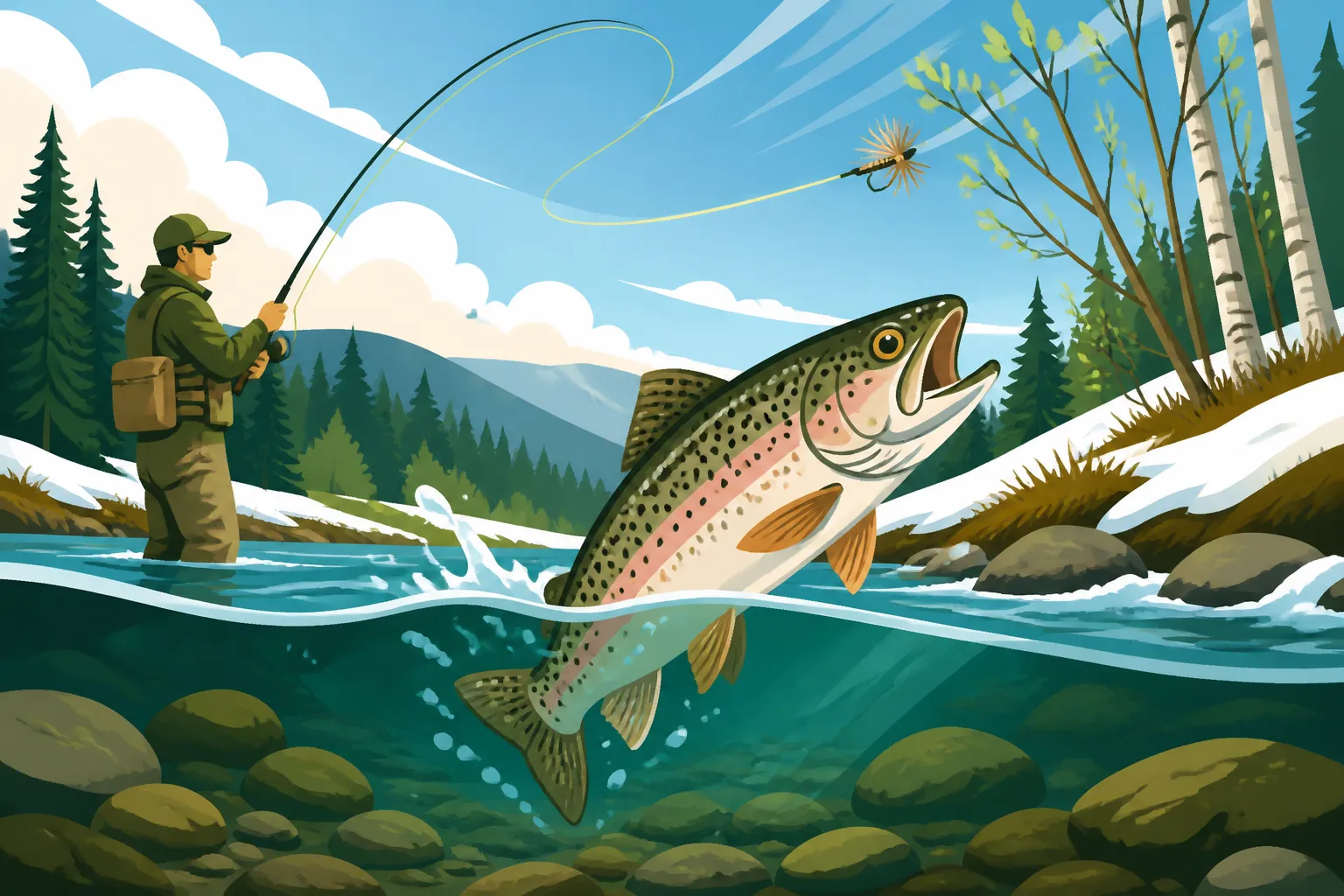
Fly fishing in early spring offers its own unique set of challenges and rewards. While dry fly fishing might be a distant dream on most days, subsurface techniques are incredibly effective for targeting those cold, deep-dwelling trout. It requires patience and a good understanding of what trout are eating beneath the surface. For deeper dives into this, you might explore Fly Fishing for Trout in Vermont.
Nymphing: The Subsurface Advantage
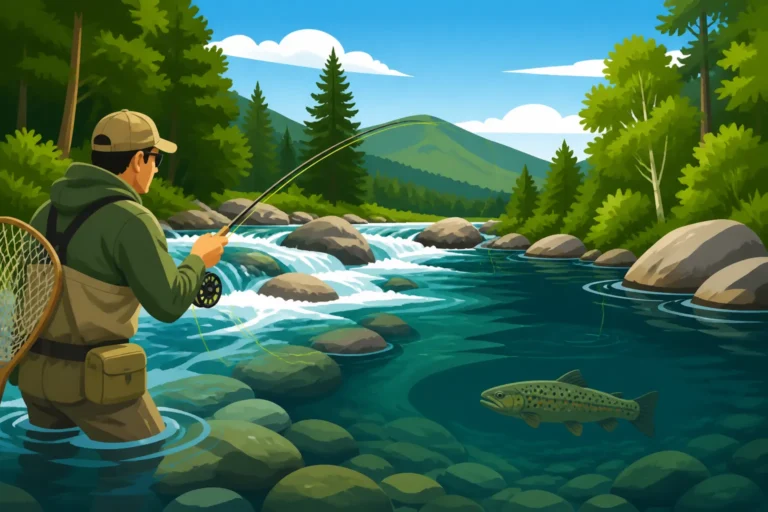
Nymphing is arguably the most productive fly fishing technique for early spring trout in Vermont. Trout are primarily feeding on aquatic insect larvae and nymphs that cling to the bottom, slowly drifting in the current. Your goal is to imitate these insects and present your fly at the same depth and speed as the natural drift. Heavy nymphs, often weighted with tungsten beads, are essential for getting down quickly in fast, cold water. Patterns like the Hare's Ear, Pheasant Tail, Prince Nymph, and Squirmy Wormy are perennial favorites. Even a small San Juan Worm or an Egg Pattern can be incredibly effective, especially after rain or when trout are keying into a protein-rich meal.
Indicator nymphing, where a strike indicator (a fancy bobber, really) helps suspend your nymphs at the correct depth and detect subtle takes, is the most common method. The depth of your indicator should be about 1.5 to 2 times the depth of the water you're fishing. Another highly effective, albeit more active, technique is Euro Nymphing. This involves using a long, sensitive rod and specialized leader to maintain direct contact with your flies, allowing you to feel even the slightest bump. It's fantastic for detecting soft takes from lethargic trout and is incredibly popular on Vermont's many quality trout streams.
Streamer Fishing: Big Meals for Big Trout
While nymphing targets the smaller, more passive meals, streamer fishing appeals to the predatory instincts of larger trout, particularly brown trout. Big, meaty streamers imitate baitfish like sculpins, dace, or even juvenile trout, offering a substantial meal that a cold-water fish might not pass up. Patterns like the Woolly Bugger (in black, olive, or white), Clouser Minnow, or Sex Dungeon can be deadly.
The key to streamer fishing in early spring is a slow, deliberate retrieve. Don't strip too fast; instead, focus on short, erratic strips with long pauses, allowing the streamer to sink and flutter. This stop-and-go action makes the baitfish imitation appear injured or disoriented, an easy target for a hungry trout. Focus your casts on deeper pools, undercut banks, and around fallen trees where larger trout might be lurking. A sink-tip or full sinking line can be invaluable for getting your streamer down to the fish in strong currents or deep water. For the best gear specific to this, you might check out Best Fly Rods for Vermont Trout Streams.
Dealing with Variable Hatches
Truth be told, significant insect hatches are rare in early spring in Vermont. Water temperatures are generally too cold to trigger widespread emergence. You might occasionally see a few early black stoneflies or small midges on warmer, sunnier days, particularly in late morning or early afternoon. If you do, have a few small dry flies ready, like a Griffith's Gnat or a small Elk Hair Caddis, just in case. However, don't build your entire day around the expectation of a hatch.
Most of your success will come subsurface. If you do see trout rising, it's more likely they're taking emergers or drowned adults just beneath the surface film rather than fully emerged dry flies. In these rare instances, a soft hackle wet fly swung through the feeding lane can be incredibly effective, mimicking an insect struggling to emerge. Always keep an eye on the water, but prioritize your subsurface techniques first. For a general overview, consider reading Best Time of Year to Fish in Vermont.
Essential Gear for Early Spring Trout Fishing
Having the right gear isn't just about comfort in early spring; it's about safety and effectiveness. The cold weather and water demand specific considerations for your rods, reels, lines, and especially your apparel. Being prepared means you can focus on fishing, not shivering.
Rods, Reels, and Line Choices
For spin fishing, an ultralight or light action spinning rod, typically 5'6" to 7' long, is ideal. This lighter action allows for better sensitivity to detect subtle bites from lethargic trout and makes casting small, lightweight lures much easier. Pair it with a small spinning reel (size 1000-2000) spooled with 4-6 pound test monofilament or fluorocarbon. Monofilament offers good knot strength and stretch, which can be forgiving on light bites, while fluorocarbon offers excellent abrasion resistance and low visibility, which is crucial in clear, cold water.
Fly anglers will find a 4-weight or 5-weight fly rod, 8'6" to 9' long, to be the most versatile for Vermont trout streams. This provides enough backbone to cast nymphs and streamers but is sensitive enough to enjoy fighting smaller trout. A matching reel with a reliable drag and a weight-forward floating fly line is standard. For streamer fishing, a sink-tip line can be a huge advantage to get your flies down faster. Make sure your leader and tippet choices are appropriate; 3x or 4x for general nymphing, stepping down to 5x or 6x for very small dry flies (if any), and perhaps 2x or 3x for larger streamers.
Essential Terminal Tackle
No matter your fishing method, having the right terminal tackle is non-negotiable.
- Hooks: A selection of small, sharp hooks (size 8-14 for bait fishing) is crucial. Barbless hooks are highly recommended for catch-and-release, which is often practiced in the early season to protect spawning fish or in special regulation waters like those found in Vermont Catch and Release Fly Fishing Only Waters.
- Weights: An assortment of split shot and small egg sinkers will allow you to adjust your presentation to match current speeds and depths.
- Swivels: Barrel swivels help prevent line twist, especially with spinners.
- Leaders: Keep a variety of fluorocarbon leaders in different pound tests (4-8lb for spin, 2x-6x for fly) for quick changes.
- Lures/Flies: Ensure your tackle box is stocked with a good selection of the aforementioned spinners, spoons, jigs, nymphs, and streamers. Don't forget a few small dry flies for those rare, hopeful moments!
- Pliers/Forceps: Essential for safely removing hooks.
- Line Clippers: For quick and clean line cuts.
It's always a good idea to organize your tackle well. A tackle box or a quality tackle bag, easily found on Amazon, can keep everything sorted and accessible when your fingers are cold.
Waders, Layering, and Cold Weather Comfort
Staying warm and dry is paramount in early spring. Neoprene waders offer excellent insulation in cold water, though breathable waders with heavy layering underneath can also work. Look for good quality wading boots with aggressive soles for traction on slippery rocks. Consider felt soles if permitted in your fishing area for superior grip on slick stream bottoms; however, be mindful of regulations regarding felt to prevent the spread of invasive species. For specific advice on footwear, you can refer to Best Waders for Vermont Trout Streams.
Layering is key for your upper body. Start with a moisture-wicking base layer, add an insulating fleece or wool mid-layer, and top it with a waterproof and windproof jacket. Don't forget a warm hat (you lose most heat through your head!), gloves, and thick wool socks. Hand warmers can be a lifesaver on particularly frigid days. Having a thermos with a hot beverage can also dramatically improve your comfort and morale out on the water. These items are investments, but they are absolutely worth it for an enjoyable and safe early season fishing experience in Vermont.
Tactics for Specific Early Spring Scenarios
Early spring in Vermont isn't a monolith; conditions can vary wildly depending on the day, the weather, and the specific body of water you're fishing. Being adaptable is a mark of a seasoned angler.
Post-Rain and Snowmelt Runoff
Heavy rain or rapid snowmelt can cause rivers and streams to swell, turn muddy, and dramatically increase current speed. This can be challenging, but not impossible. Trout will often move out of the main current into slower, clearer pockets of water close to the banks, behind large structures, or in deep eddies. Focus your efforts on these areas. The turbidity can also make fish less spooky, allowing for slightly bolder presentations.
In these conditions, scent becomes even more important for bait anglers, as visual cues are diminished. For lure anglers, brighter colors (like chartreuse, orange, or white) and lures with strong vibrations (like larger spinners or wobbling spoons) can help trout locate your offering in murky water. Fish your presentations slower and closer to the bottom, where trout are hunkering down. Sometimes, waiting a day or two after a major runoff event for the water to begin clearing and dropping can drastically improve fishing conditions.
Clear, Low-Water Conditions
Conversely, a dry, cold spell can lead to clear, low water conditions in some streams. In these situations, trout become incredibly wary and easily spooked. Stealth is paramount. Approach fishing spots cautiously, avoid heavy footsteps on the bank, and keep a low profile. Long, light leaders (fluorocarbon is a must) are essential to prevent fish from seeing your line.
Finesse presentations are key. For spin fishermen, tiny inline spinners (size 0 or 1), micro-jigs, or small, subtle soft plastics are often best. For fly anglers, small, well-presented nymphs (like a zebra midge or tiny pheasant tail) on long leaders are your best bet. Cast upstream and allow your offering to drift naturally with the current, minimizing drag. On particularly bright, clear days, early morning and late evening can be the most productive times when light levels are lower and trout feel more secure moving out of their hiding spots.
Fishing Stocked vs. Wild Trout Waters
Vermont's early spring trout season often kicks off with fresh stockings by the Vermont Fish & Wildlife Department. These freshly stocked trout can behave differently than wild fish. Initially, they might be disoriented and eager to take easily presented baits like PowerBait, worms, or small spinners. They often congregate near stocking points in accessible areas. If you're targeting these fish, simple bait rigs or small, bright lures can be incredibly effective right after a stocking. You can often find information on stocking schedules and locations through the Vermont Fish Stocking Search Tool, Explained.
Wild trout, on the other hand, are typically more wary and hold in more challenging-to-reach locations. They are more attuned to natural food sources and often require a more subtle, natural presentation with nymphs or well-imitated natural baits. They also tend to be found in specific holding lies that offer cover, current breaks, and easy access to feeding lanes. Respecting the differences in behavior can help you tailor your approach to the specific type of fishery you're targeting. For more about general trout regulations, check out the Vermont Trout Season and Stocking Rules.
Safety and Conservation in Cold Water
Early spring fishing in Vermont is a beautiful experience, but it comes with inherent risks due to cold water and unpredictable weather. Practicing good conservation habits is also vital to ensure the health of Vermont's trout populations for generations to come.
Cold Water Hazards and Preparation
Hypothermia is a serious risk in early spring. Even on sunny days, a sudden fall into cold water can quickly become life-threatening. Always wear multiple layers of synthetic or wool clothing (avoid cotton), a quality waterproof outer shell, and good waders. A PFD (Personal Flotation Device) is highly recommended, especially when wading in unfamiliar or swift water, or when fishing from a boat. If wading, consider using a wading staff for added stability. Inform someone of your fishing plans and expected return time, especially if you're venturing to remote areas.
Beyond personal safety, be mindful of ice. While most lakes will be open by early spring, lingering ice shelves or unstable ice near shorelines can be dangerous. Always check conditions before stepping out. Keep an emergency kit with you, including a fire starter, extra warm clothes, and a first-aid kit. A reliable phone or communication device is also a must.
Responsible Catch and Release
Many anglers practice catch and release for trout, especially for wild populations or larger fish. In early spring, when trout are already stressed by cold water and potentially spawning, proper catch and release techniques are even more critical.
- Minimize Handling: Try to keep the fish in the water as much as possible. If you must handle it, do so with wet hands and support its belly.
- Quick Release: Remove the hook as quickly and gently as possible. Barbless hooks greatly facilitate this. If the hook is deeply set, consider cutting the line and leaving the hook in place rather than causing excessive damage.
- Revive the Fish: If the fish seems sluggish, hold it gently in the current, facing upstream, until it regains its strength and can swim away on its own. Do not "pump" it back and forth, as this can force water the wrong way through its gills.
- Respect Spawning Fish: Be extra cautious around areas where trout might be spawning (redds). Avoid wading on them or disturbing spawning fish. While the primary spawning season for many trout is in the fall, some rainbows might spawn in spring. Understanding Vermont Fishing Season Dates and Closures can help you be aware of sensitive periods.
Following these practices ensures that the trout you release have the best possible chance of survival, contributing to a healthy and thriving fishery for all.
Understanding Special Regulations
Vermont has specific regulations for different waters, and some streams or lakes may have special rules regarding season dates, bag limits, or even tackle restrictions (e.g., fly fishing only, artificial lures only). It's your responsibility as an angler to be familiar with these rules before you cast a line. The Vermont Fishing Regulations Explained guide is your best friend here. Always consult the most current Vermont Fish & Wildlife regulations handbook.
For instance, certain "trophy trout" waters might have different length and bag limits, or some areas might be designated as "catch-and-release only" zones. Being informed not only keeps you compliant with the law but also helps you understand the conservation goals for specific fisheries.
| Technique/Bait | Best for Conditions | Recommended Lure/Bait | Rod/Line Suggestion | Key Tip for Early Spring |
|---|---|---|---|---|
| Bait Fishing | Cold, murky, stocked | Worms, PowerBait, Minnows | Ultralight Spin, 4-6lb Mono | Use slip sinker, let it sit |
| Spinners | Clear to stained, searching | Mepps, Panther Martin (silver/gold) | Light Spin, 4-6lb Fluorocarbon | Slow retrieve, just enough blade spin |
| Spoons | Deep water, long casts | Kastmaster, Little Cleo (silver) | Light Spin, 6lb Fluorocarbon | Erratic retrieve with pauses |
| Jigs/Plastics | Lethargic fish, clear water | Marabou jigs, Grubs (white/olive) | Ultralight Spin, 4lb Fluorocarbon | Slow lift & drop, scent often helps |
| Nymphing | All conditions, primary fly | Pheasant Tail, Hare's Ear, Squirmy | 4-5wt Fly, Floating Line, 3-5x Tippet | Heavy nymphs, proper indicator depth |
| Streamers | Larger trout, stained water | Woolly Bugger, Clouser Minnow | 5-6wt Fly, Sink-tip Line, 2-3x Tippet | Slow, erratic strips with long pauses |
Disclaimer
The information provided in this guide is for general informational purposes only and is subject to change. Always consult the official Vermont Fish & Wildlife Department regulations for the most current and accurate rules and regulations before fishing. Fishing conditions and fish behavior can vary, and success is never guaranteed. Be aware of weather conditions and practice safe angling habits.