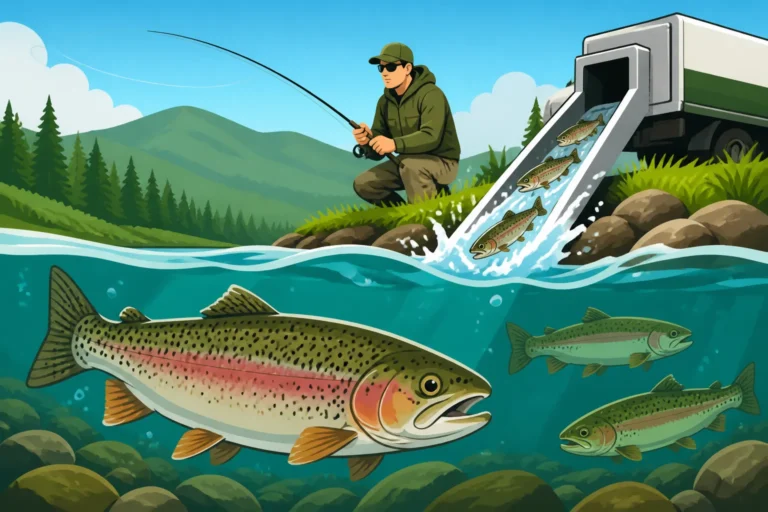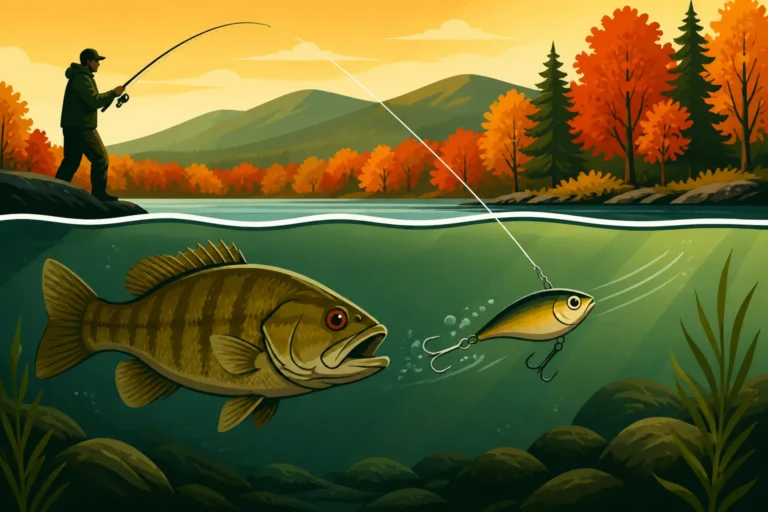
When Vermont trout streams get too warm to fish
Every summer it happens: a heat wave settles over the Champlain Valley, the White River drops to a trickle over warm ledges, and you are left wondering whether casting to trout is still fair to the fish. This guide explains the water temperatures that matter, how to measure them, which Vermont streams stay cold, and what to fish for instead when trout need a break.
Why Warm Water Is So Hard on Vermont Trout
Trout are cold-water fish, and that is not just a fun fact for the back of a fly box. Their entire biology is tuned for cool, oxygen-rich water. Vermont’s brook trout, brown trout and rainbow trout all share that need, though each species tolerates heat a little differently. Once a stream warms beyond a certain point, every minute a trout spends fighting a hook costs it more than it can easily repay.
I have stood on the banks of the Battenkill in late July with a rod in hand and a thermometer reading that told me to go home. It is frustrating. You took the day off, you drove an hour, and the river looks beautiful. But understanding why warm water is dangerous makes it much easier to make the right call.
Oxygen, Metabolism and Stress
Warm water holds less dissolved oxygen than cold water. At the same time, a trout’s metabolism speeds up as the water warms, so it needs more oxygen exactly when less is available. Picture trying to sprint a mile while breathing through a straw. That is roughly what a long fight in warm water does to a trout.
When a trout is hooked and played in warm water, lactic acid builds up in its muscles, and it struggles to recover. A fish can swim away from your net looking fine and still die hours later from the stress. This delayed mortality is the reason conscientious anglers pay attention to temperature, even when the fish seem to be biting eagerly.
Low summer flows make the problem worse. Shallow, slow water heats faster in the sun, and there is less volume to buffer the daily swing. Stretches of Vermont rivers that run through open farmland, like parts of the lower Lamoille or Otter Creek, can heat up dramatically on a sunny afternoon, while a shaded mountain brook nearby stays much cooler.
The Temperature Thresholds That Matter
Here is how most fisheries biologists and experienced trout anglers think about water temperature. These numbers are widely used guidelines rather than legal limits, and individual fish respond differently, but they are a reliable framework for decision-making.
| Water temperature | What it means for trout | What to do |
|---|---|---|
| Below 60 degrees F | Ideal range, fish active and recover well | Fish normally, handle with care |
| 60 to 65 degrees F | Still good, fish active | Fish normally, keep fights short |
| 65 to 68 degrees F | Getting warm, stress begins to rise | Use heavier tippet, land fish quickly, limit handling |
| 68 to 70 degrees F | Stressful, recovery slows noticeably | Consider stopping or switching to cooler water |
| Above 70 degrees F | High stress and elevated mortality risk | Stop fishing for trout and find another target |
| Mid-70s degrees F and above | Approaching lethal range for brook trout, very dangerous for all trout | Leave trout alone entirely |
Most anglers use 68 degrees F as the point where they start reconsidering and 70 degrees F as the point where they stop. Those simple numbers are easy to remember on the stream and have become a kind of shared ethic among Vermont fly fishers.
Species Differences Among Vermont Trout
Not every trout in Vermont handles heat the same way.
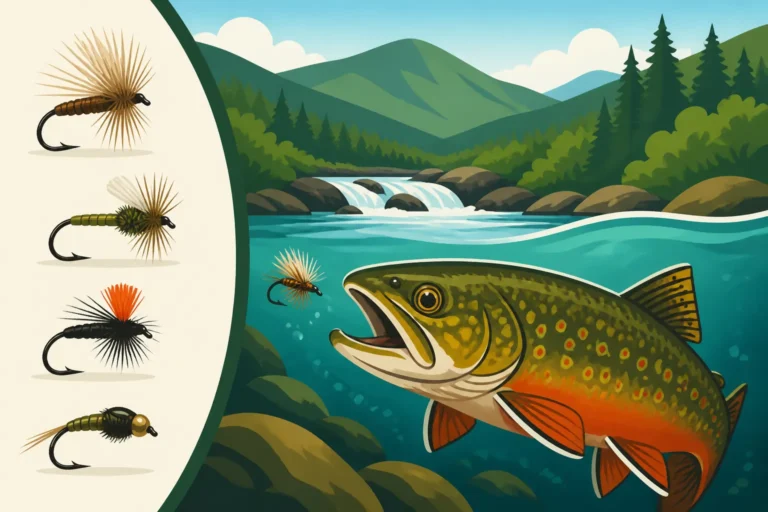
Brook trout are the most sensitive. They are Vermont’s native char and one of its two state fish, and they thrive in the cold, shaded headwater streams of the Green Mountains and Northeast Kingdom. Even moderately warm water can be hard on them. If you want to learn more about this remarkable fish, Brook Trout: Vermont’s Native Trout is a great place to start.
Brown trout are a bit more heat tolerant and are often found in the larger, warmer rivers. They will hold in deep pools, under undercut banks and near springs to ride out summer heat. Rainbow trout fall somewhere in between and are widely stocked in rivers and ponds. Despite these differences, the same general rule applies to all three: once the water passes the upper 60s, stress climbs fast.
Legal Rules Versus Ethical Choices
One of the most common questions I hear is whether it is actually illegal to fish for trout when the water is warm. In most Vermont trout water, there is no automatic temperature-based closure. If the season is open and you have a valid license, you are generally allowed to fish. The decision to stop when the water gets too warm is an ethical one, not a legal one, which is exactly why it matters that anglers understand the science.
That said, regulations can change and some waters carry their own special rules, including catch-and-release sections and fly-fishing-only stretches. Always read the current regulations for the water you plan to fish, and pay attention to any emergency notices from Vermont Fish and Wildlife during extreme drought or heat. Treat the legal season as the outer boundary and your thermometer as the real decision-maker.
There is also a practical side to this. A stream that has been hammered by anglers during a heat wave often fishes poorly for weeks afterward, because the surviving fish are stressed and wary. Giving trout a break when they need it most is the best investment you can make in your own fall fishing.
How to Measure Stream Temperature the Right Way
You cannot make good decisions without good data. Guessing based on air temperature or how the water feels on your hand simply does not work. I have been wrong more than once, standing in a river that felt cool through my waders, only to find the thermometer reading 71 degrees.
Pick a Reliable Stream Thermometer
A stream thermometer is the cheapest and most useful piece of ethical trout gear you can own. Look for one that is durable, easy to read and has a clip or lanyard so it does not end up at the bottom of a pool. Many anglers order a simple dial or digital stream thermometer from Amazon, and it is worth having a spare in your vest and one in your truck. You do not need anything fancy. You just need something you will actually use every time.
Digital models read quickly and are easy to see, while traditional armored glass thermometers have no batteries to die. Either will do the job well if you use it correctly.
When and Where to Take the Reading
Temperature changes through the day and from place to place in the same stream, so where you take your reading matters.
- Take your first reading when you arrive, before you start fishing.
- Measure in moving water, not in a stagnant side pool or right next to a sun-warmed rock.
- Hold the thermometer below the surface for at least a minute, or until the reading stabilizes.
- Recheck every hour or so, especially as the sun climbs and the day warms.
- If you move to a new stretch, take another reading, since conditions can vary a lot within a few miles.
The most important rule is this: streams warm through the day. A river that reads 62 degrees at 6 a.m. can climb into the low 70s by mid-afternoon on a hot July day. That daily cycle is your best friend, because it means you can still fish responsibly early in the morning on many streams that would be too warm by lunchtime.
Using Flow and Weather Data
Beyond your thermometer, pay attention to river flows and the weather pattern. Long dry spells mean low, slow water that heats quickly. A cool front with overnight lows in the 50s can bring water temperatures back into a comfortable range for a few days. Heavy summer thunderstorms can temporarily cool streams, though they may also blow out the water with mud. If you are trying to decide whether a stream will fish after a storm, Fishing after a heavy rain on Vermont rivers offers useful guidance.
Many anglers also check public stream gauges and track local weather forecasts before heading out. Over a few seasons, you will start to recognize which streams stay cool and which ones overheat quickly, and that knowledge is worth more than any single tool.
Where to Find Cold Water in a Vermont Summer
The good news is that Vermont has a lot of cold water, even in July and August. The trick is knowing where to look. Some streams and stretches stay cool all summer because of elevation, shade, springs or dam releases.
High-Elevation Mountain Brooks
Small, shaded streams high in the Green Mountains often stay cool even during heat waves. These are classic brook trout waters, with plunge pools, boulders and dense forest canopy. The fish are usually small, but they are wild, beautiful and eager. A day spent hiking up a mountain brook with a short rod and a handful of dry flies is one of the best ways to beat the heat.
These streams are also very sensitive, so the same temperature rules apply. Check the water, fish early, keep fights short and release fish quickly. For ideas on where to go, Best high-elevation trout streams in the Green Mountains and Where brook trout still live wild in Vermont are both worth reading.
Spring Seeps, Tributary Mouths and Deep Pools
Even in warmer rivers, trout find thermal refuges. These are places where cold groundwater seeps into the stream, a cool tributary enters a larger river, or a deep pool holds cooler water near the bottom. In summer, trout often crowd into these refuges in large numbers.
This is where ethics get tricky. Fish packed into a cold-water refuge are stressed, concentrated and easy to catch. Many experienced anglers leave these spots alone during heat waves, because pressuring trout in their last refuge can do real harm. If you find a tributary mouth packed with trout on a hot afternoon, the kind thing is to admire them and move on. It is the same reason many anglers avoid wading through spawning areas.
Tailwaters Below Dams
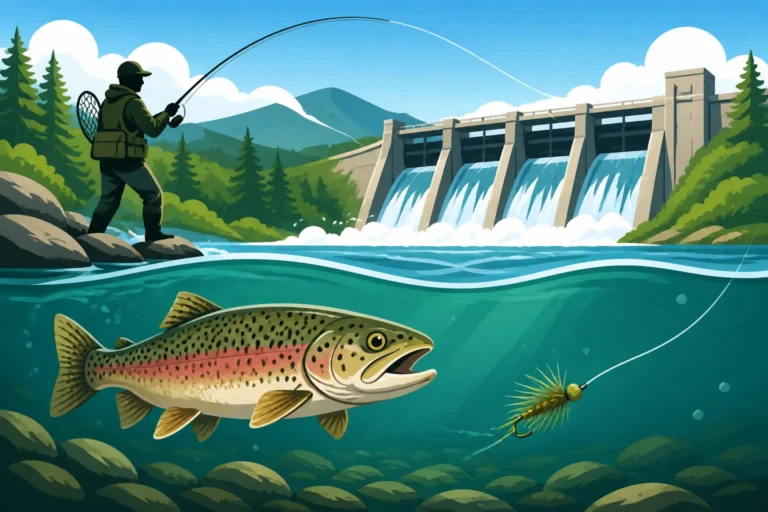
Some rivers below dams release cold water drawn from the depths of a reservoir, creating stretches that stay cool all summer. In southern Vermont and along the Massachusetts line, rivers such as the Deerfield are known for these cold tailwater conditions, though flows can change quickly with power generation schedules. Always check release schedules and be cautious when wading. Best technique for tailwater trout below a dam and What fish species thrive in cold tailwaters explain how to approach these unique fisheries.
Reading the Landscape Before You Go
You can predict a lot about stream temperature before you ever leave the house. Look at a topographic map or satellite view of the stream you want to fish and ask a few questions. Is the stream lined with dense forest, or does it run through open fields and pasture? Does it drop steeply from high elevation, or meander slowly through a valley floor? Are there obvious ponds, beaver flowages or impoundments upstream that might be warming the water before it reaches you?
Forested, steep, high-elevation streams usually stay cooler. Open, slow, low-elevation stretches below ponds or beaver dams usually run warmer. Streams that drain north-facing slopes or deep hollows often hold cold water longer into the summer. With a little map study, you can narrow your options and save yourself a wasted drive.
Over time, keep a simple log. A small waterproof field notebook, the kind many anglers pick up on Amazon or at an outdoor store, lives in my vest for exactly this purpose. Write down the stream, date, time, air temperature and water temperature each time you fish. After a season or two, you will have your own personal map of where cold water hides in July and August, and that kind of local knowledge is worth more than any rumor at the fly shop.
Here is a summary of the most common cool-water options in summer.
| Water type | Why it stays cool | Typical fish | Things to watch |
|---|---|---|---|
| High-elevation mountain brooks | Shade, elevation, spring-fed headwaters | Wild brook trout | Small fish, delicate habitat |
| Spring-fed sections of larger rivers | Groundwater inflow | Brown and rainbow trout | Avoid crowding fish in refuges |
| Tailwaters below deep-release dams | Cold water drawn from reservoir depths | Brown and rainbow trout | Sudden flow changes, wading safety |
| Northern streams in the Northeast Kingdom | Cooler climate, forested watersheds | Brook and brown trout | Longer drive for many anglers |
| Early morning on mid-size rivers | Overnight cooling | Mixed trout | Warms quickly by mid-morning |
A Heat Wave Morning in Practice
Here is how a typical heat wave weekend plays out for me. The forecast calls for highs near 90 degrees and no rain for a week. Instead of heading to a big valley river, I pick a forested tributary in the mountains, park at the trailhead before 5:30 a.m. and take a reading at the first pool. It reads 59 degrees, so I fish upstream with a small dry fly, catching a handful of wild brook trout and releasing each one in seconds.
By 9 a.m., the reading at a sunny pool lower down has climbed to 64 degrees, still fine, but I start keeping fights extra short. Around 10:30 the thermometer reads 67 degrees in a slower, open stretch. That is my signal. I hike out, eat lunch in the shade and spend the evening casting poppers for smallmouth on a warm valley river instead. Two very different kinds of fishing, one good day, and no trout pushed past their limit.
Fishing Responsibly When Temperatures Climb, and What to Do Instead
There will be days when you decide to fish for trout even though the water is getting warm, especially early in the morning. When you do, a few habits can make a big difference to the fish.
Shorten the Fight and the Handling
The longer you fight a trout, the more exhausted it becomes. Use a heavier tippet than you might normally choose, put real pressure on the fish and land it quickly. A rubber-mesh landing net is much gentler on trout than knotted nylon, and it makes unhooking faster. Keep the fish in the water as much as possible, avoid squeezing it and skip the long photo session. If you want a quick picture, have your camera ready before you lift the fish, and keep it out of the water only for a few seconds. Our guide to Best landing net mesh for catch and release covers net options in more detail.
Barbless hooks also help. They make unhooking faster and reduce handling time. You can pinch down the barbs on your existing flies with a pair of forceps.
Signs a Trout Is Struggling
Even with careful handling, some fish will tell you they are in trouble. A trout that rolls onto its side, cannot hold itself upright in the current or swims off sluggishly and drifts downstream is badly stressed. When you see that, it is a clear signal that the water is too warm for catch and release, and your day of trout fishing should end there.
If a fish is struggling, hold it gently upright facing into a gentle current with its mouth open to the flow. Do not push it back and forth, which can damage its gills. Wait until it swims away under its own power. Then reel up and head for cooler water or a different species. A single exhausted fish is a lesson that the temperature thresholds in the table above are not just theory.
Fish the Early Window and Quit Early
On hot days, the best and most ethical time to fish is right at dawn, when water temperatures are at their lowest. Plan to be on the water at first light and off it by mid-morning, or as soon as your thermometer reaches 68 degrees. It is a short window, but it is often productive because trout feed actively in the cooler water before the heat of the day.
- Arrive at the stream before sunrise.
- Take a temperature reading right away.
- Fish only while the reading stays comfortably below the upper 60s.
- Check the thermometer regularly.
- Stop as soon as the water reaches your cutoff, even if the fish are biting.
Evening fishing can also be cooler on some streams, but water often stays warm well into the evening after a hot day. In many cases, early morning is the better choice.
Gear That Keeps You Comfortable
When air temperatures climb, heavy neoprene waders can be miserable. Many Vermont anglers switch to breathable waders or wet wading in summer. Wet wading with quick-drying pants and wading boots is a refreshing way to fish small mountain streams. Many anglers pick up wading socks, gravel guards and quick-dry gear through Amazon or local fly shops. If you prefer waders, Best breathable waders for summer fishing covers options that will not leave you overheating.
Sun protection matters too. A wide-brimmed hat, polarized sunglasses, a sun shirt and plenty of water keep you safe while you fish. Bring a small cooler with drinks in your vehicle for when you get off the water.
Switching Species When Trout Need a Break
When the trout streams are too warm, the good news is that Vermont offers plenty of other fishing. Instead of stressing trout, many anglers switch to warmwater species that thrive in summer heat.
Smallmouth Bass in Rivers
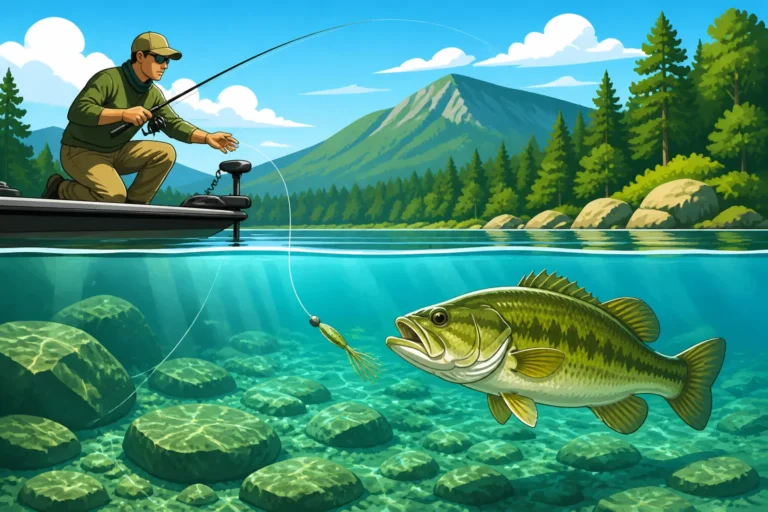
Many of Vermont’s larger rivers hold excellent smallmouth bass populations, and smallmouth love warm summer water. Rivers like the lower Winooski, Lamoille, Otter Creek and the Connecticut can provide outstanding summer bass fishing. You can use many of the same skills you use for trout, including fly fishing with streamers, poppers and crayfish patterns. For tips, see How to Fish a River for Smallmouth Bass.
Lakes, Ponds and Panfish
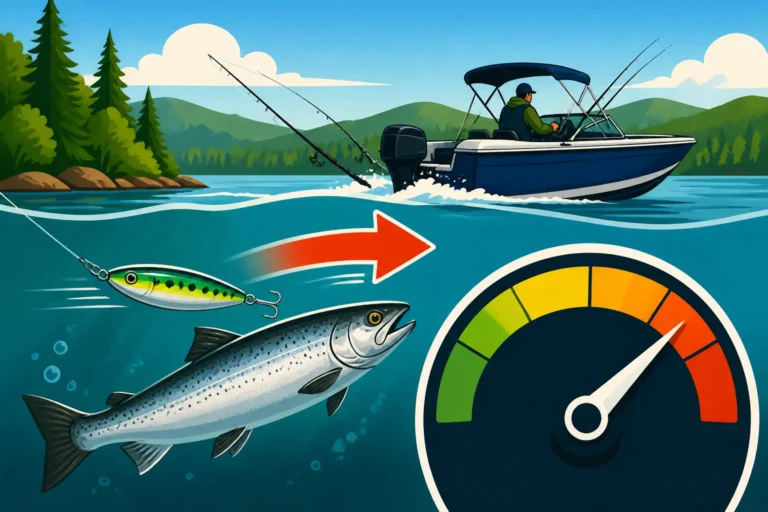
Vermont’s lakes and ponds offer endless summer opportunities. Largemouth bass, perch, sunfish and pickerel are active through the summer, and many lakes are perfect for a family outing. Deep, cold lakes can also hold lake trout and landlocked salmon, which can be targeted in deeper water with downriggers or lead core line.
Planning Ahead for Fall
Late summer is also a great time to plan your fall trout fishing. As nights cool in September, streams return to safe temperatures, and brook and brown trout become more active ahead of spawning. Fall can be one of the most beautiful and productive times of year on Vermont rivers. Our Vermont Fishing Seasons by Month and Best fall fishing spots in Vermont can help you plan.
Here is a quick comparison of summer alternatives.
| Option | Why it works in summer | Gear needed | Good for |
|---|---|---|---|
| River smallmouth | Thrive in warm water | Spinning gear or fly rod | Adventurous anglers |
| Lake largemouth bass | Active in warm shallows | Spinning or casting rod | Most anglers |
| Panfish in ponds | Abundant and easy to catch | Light spinning gear | Families, beginners |
| Deep-lake trout and salmon | Cold water at depth | Trolling gear, downriggers | Boat anglers |
| Mountain brook trout at dawn | Cold headwater streams | Light fly rod | Hikers and fly anglers |
A Personal Rule of Thumb
After many summers on Vermont streams, I keep a simple rule: if the thermometer reads 68 degrees or higher, I stop fishing for trout and either go higher in elevation or switch species. Some days that means hiking up a cool mountain brook, and some days it means spending the afternoon chasing smallmouth on a warm river. It is a small sacrifice that helps keep Vermont’s trout populations healthy for the next season and the generations of anglers to come.
If more of us adopt the same habit, Vermont’s rivers will keep producing the kind of fishing we all love. Pack the thermometer, watch the water and fish smart.
Disclaimer
This article is for general informational purposes only and does not constitute professional advice. Laws, prices and regulations vary by location and change over time. Consult a qualified professional for guidance on your specific situation.