Best crankbait retrieve for Champlain smallmouth
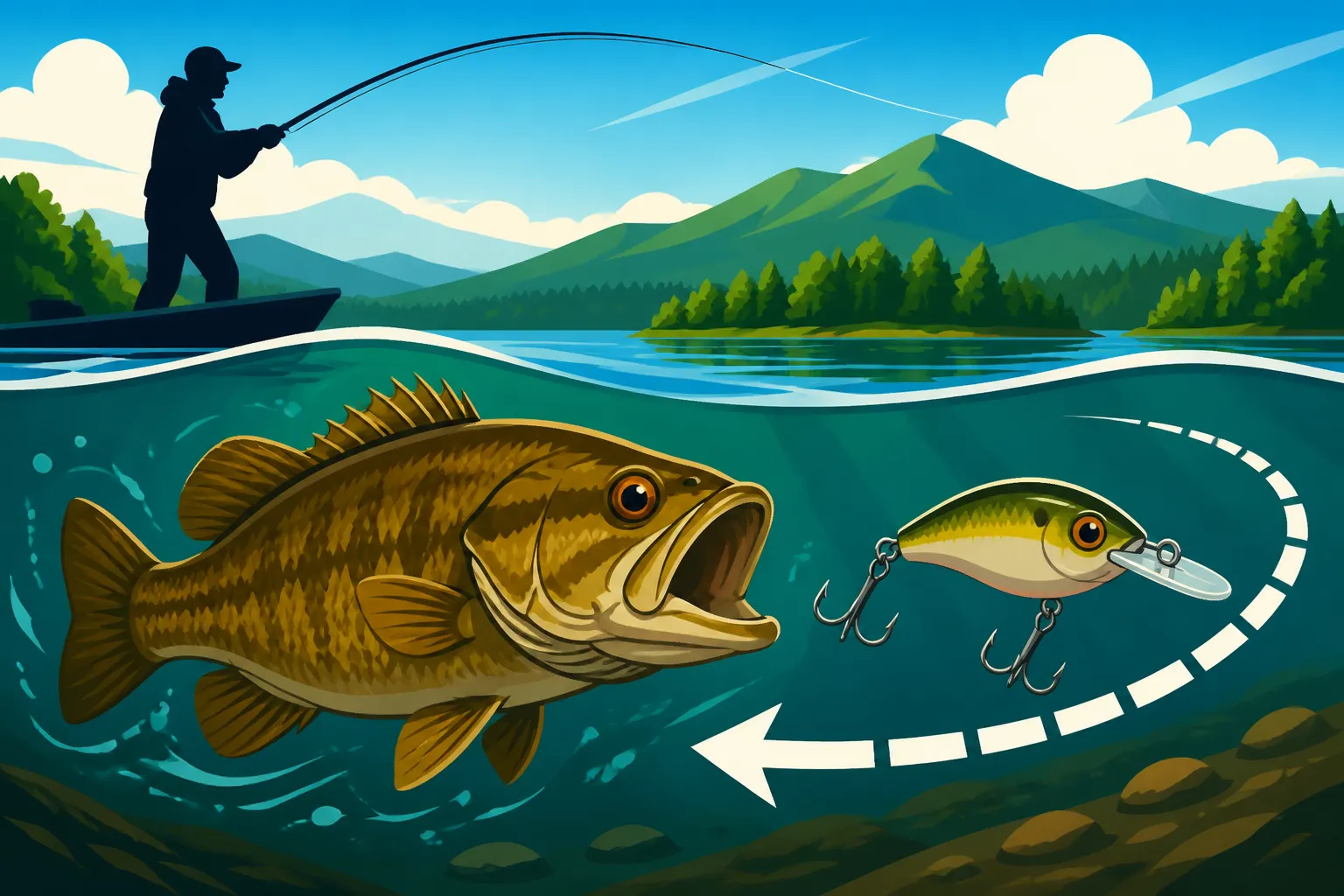
The frustration is real when you're out on Lake Champlain, staring at your sonar screen, seeing those tell-tale arches of smallmouth bass, but they just won't commit. You're throwing crankbaits, doing what you think is right, but the bites aren't coming. It's enough to make you wonder if you're speaking a different language than the fish. This comprehensive guide is here to decode the best crankbait retrieve techniques specifically tailored for Lake Champlain smallmouth, helping you consistently trigger those aggressive strikes and put more bronze backs in your net.
Understanding Lake Champlain Smallmouth Behavior
Smallmouth bass on Lake Champlain are some of the most sought-after game fish, and for good reason—they fight hard and are incredibly abundant. However, their intelligence and sensitivity to presentation can make them challenging. Unlike their largemouth cousins who often ambush prey from heavy cover, smallmouth are more nomadic, often chasing baitfish in open water or along rocky structures. This means your retrieve isn't just about getting the lure in front of them; it's about making it irresistible.
Several factors influence how a smallmouth will react to your retrieve. Water temperature significantly impacts their metabolism and aggression. Depth, clarity, and the presence of abundant baitfish like alewives, smelt, or perch all play a role. Even fishing pressure can make these fish warier, demanding a more nuanced approach. Your goal with a crankbait retrieve is to mimic either a fleeing, panicked baitfish, a wounded and easy meal, or sometimes, simply to annoy them into a reaction strike.
Seasonal Considerations for Retrieves
The time of year dramatically dictates smallmouth behavior and, consequently, the most effective crankbait retrieves on Lake Champlain. Vermont's diverse seasons mean adapting your tactics is paramount.
Early Spring (Ice-out to Pre-spawn)
During early spring, right after the ice melts and before the spawn, Lake Champlain's waters are still quite cold. Smallmouth metabolism is slower, and they're not expending a ton of energy chasing down fast-moving prey. This is a time for subtlety and patience.
You'll want to focus on slow, deliberate retrieves with extended pauses. Think of a wounded baitfish struggling to swim. Cast your crankbait, let it dive to its maximum depth, and then retrieve it with a slow, steady reel, adding frequent 1-3 second pauses. The pause allows the bait to suspend or slowly float up, often triggering a strike from a hesitant smallmouth. Look for these fish in transition areas—spots where deeper water meets shallow spawning flats, or rocky points that absorb heat quicker. A deep-diving crankbait with a tight wobble, slowly crawled along the bottom, can be deadly when the water hovers in the low 40s to mid-50s Fahrenheit. Many anglers find great success targeting specific structures, and a good fish finder from a brand you can easily find on Amazon can make all the difference in locating those early spring fish.
Summer (Post-spawn to Late Summer)
Once the spawn is over and the water warms up, Lake Champlain smallmouth become highly active and aggressive. They're recovering from the spawn and feeding heavily. This is when you can really burn a crankbait!
In summer, faster retrieves and aggressive rips often produce the best results. Smallmouth will chase down a bait that looks like it's trying to escape. Cast your crankbait and reel it in with a rapid, continuous motion, occasionally incorporating a hard rip of the rod tip followed by a quick reel to take up slack. This erratic action mimics a panicked baitfish and can draw strikes from long distances. Smallmouth will often be found deeper during the heat of summer, relating to offshore structure like humps, ledges, and rock piles. Don't be afraid to use deep-diving crankbaits that can reach the thermocline, especially on sunny days. This is an excellent time to explore techniques discussed in guides like "How to Catch Smallmouth Bass in Vermont Lakes".
Fall (Water Cooling and Feeding Frenzy)
As Lake Champlain's waters begin to cool in the fall, smallmouth enter a pre-winter feeding frenzy. They're packing on weight, and they become incredibly opportunistic.
Fall offers a fantastic window where a mix of retrieve speeds, often tending towards faster and more erratic, can be incredibly effective. Smallmouth are looking for large meals and are willing to chase. Crankbaits that run shallow to mid-depth, especially squarebills bounced off cover, can produce violent strikes. However, don't forget the power of a deep diver slowly rolled over deep rock piles. The key here is experimentation; some days they want it fast, other days a distinct pause-and-go is better. Many anglers find the "burn and kill" retrieve particularly effective, where you reel fast, then completely stop, letting the crankbait suspend for several seconds. Think about those areas where baitfish will congregate, like shallow ambush points adjacent to deep water access—these are prime locations.
Reading the Water and Conditions
Beyond the seasons, daily conditions on Lake Champlain play a huge role in how smallmouth respond to your crankbait retrieve.
Water Clarity
Lake Champlain can vary greatly in clarity depending on the area and recent weather. This dictates both your lure choice and how you retrieve it.
In clear water, smallmouth have excellent visibility, meaning they can scrutinize your lure. Here, longer pauses in your retrieve and more natural, subtle crankbait colors (like chrome, silver, or natural baitfish patterns) tend to work best. A slower, more deliberate stop-and-go allows the fish to track the lure without being spooked. Conversely, in stained or dirty water, smallmouth rely more on vibration and flash. Faster, more erratic retrieves with brighter, bolder crankbait colors (chartreuse, orange, firetiger) can help the fish locate your lure. The added disturbance from a fast retrieve can also draw attention where visibility is poor.
Wind
Don't underestimate the power of wind when fishing crankbaits for smallmouth. A good chop on the water surface is often a friend to the angler.
Windy conditions create surface disturbance that breaks up light penetration and camouflages your boat and line. This allows for more aggressive or less precise crankbait presentations. The chop can also make your crankbait's retrieve appear more natural and erratic, mimicking a struggling baitfish. In these conditions, faster retrieves and sharp deflections off cover are often highly effective. However, on calm, slick water, smallmouth can become much warier. Here, a finesse approach is often required: slower retrieves, longer pauses, and more natural lure presentations. The fish have more time to examine your bait, so make it count. Consider exploring "Best Fishing Rods for Vermont Lakes" to ensure your equipment is perfectly matched to these varying conditions.
Bottom Composition
The bottom of Lake Champlain is a mixed bag of rocks, sand, mud, and sparse weeds. Knowing what lies beneath affects your crankbait choice and how you fish it.
When you're fishing over rocky bottoms, especially rubble fields or boulder piles, crankbaits designed to deflect off structure are paramount. Squarebill crankbaits, for instance, are famous for their ability to crash into rocks, kick out erratically, and then continue swimming—a perfect trigger for a reaction strike. Your retrieve should involve intentionally bouncing the lure off these rocks. If you're fishing areas with sparse grass or weeds, a squarebill or a lipless crankbait can be effective, allowing you to rip it free when it snags, which often provokes a strike. For deeper, featureless bottom, a slow roll with a deep-diving crankbait can simply cover water and appeal to bottom-oriented fish.
Mastering the Core Crankbait Retrieve Techniques
Now that we've covered the nuances of smallmouth behavior and conditions, let's dive into the practical retrieves that will put more fish in your boat. Each technique has its time and place, and learning to switch between them is a hallmark of a successful angler.
The Standard "Cast and Reel" with Variations
This might sound basic, but the humble cast and reel is the foundation, and it has many subtle variations.
Steady Retrieve
The steady retrieve is exactly what it sounds like: a continuous, consistent reeling motion after casting. It's often the first technique anglers try, and it's surprisingly effective when smallmouth are actively feeding and not particularly spooky.
When to use it: This retrieve shines when fish are aggressive and you need to cover a lot of water quickly to find active schools. Think summer, post-spawn, or during fall feeding frenzies when smallmouth are chasing bait. You cast your lure out, let it dive to its intended depth, and then simply reel it back in at a constant speed. The lure's natural wobble and action do all the work.
How to vary it: While "steady" implies no change, subtle variations can make a big difference. Try slightly speeding up for a few cranks, then slowing down. Add an occasional, almost imperceptible twitch of your rod tip to give the crankbait a momentary dart. Sometimes, a very subtle hesitation in your reel turn can make the lure "hunt" or "kick out" just enough to trigger a follower. This is also a good retrieve to start with when you're exploring new areas of Lake Champlain, as it helps you cover vast stretches of water efficiently.
Stop-and-Go
The stop-and-go retrieve is a classic for a reason—it brilliantly mimics a wounded or struggling baitfish, making it an easy target for opportunistic predators. This is a go-to when fish are a bit less aggressive or the water is cooler.
When to use it: This technique is highly effective in cooler water conditions, such as early spring or late fall, or when smallmouth seem finicky and are following your bait without striking. It's also great when you suspect fish are lurking around specific pieces of structure.
How to do it: Cast your crankbait, let it reach its desired depth, then reel it steadily for a few seconds (say, 3-5 cranks of the reel handle). Then, stop reeling completely for 1-3 seconds, allowing the crankbait to suspend or slowly float upwards, depending on its buoyancy. This pause is often when the strike occurs. After the pause, resume reeling, and repeat the pattern. The key is to experiment with the length of your retrieve and the duration of your pause until you find what triggers bites. Think about how a dying minnow would struggle and then drift—that's the action you're trying to replicate. Many anglers find the best deals on versatile crankbaits for this technique from online retailers like Amazon.
Rip-and-Pause
The rip-and-pause retrieve is a more aggressive, violent version of the stop-and-go, designed to elicit powerful reaction strikes from smallmouth.
When to use it: This retrieve is fantastic when fish are active but may need a little extra coaxing, or when they're suspended in open water. It can also be surprisingly effective in colder water, as the sudden erratic movement can trigger an instinctual strike without giving the fish much time to think.
How to do it: Cast your crankbait and let it dive. Once it's at depth, give your rod tip a sharp, upward or sideways rip, moving the lure several feet through the water quickly. Immediately drop your rod tip and reel in the slack line as the crankbait momentarily darts erratically or stalls. Then, pause for 1-3 seconds, letting the bait suspend or float. The sudden, unpredictable movement followed by a dead stop is often irresistible to smallmouth. You'll literally rip the bait through the water, then let it "die" for a second. This aggressive action is a great way to cover water and trigger strikes when smallmouth are feeling feisty.
Contact Retrieves and Bottom Bouncing
Smallmouth bass love structure. They use it for ambush points, protection, and as feeding grounds. Intentionally making contact with this structure can be a game-changer.
Deflection
Deflection is the art of intentionally bouncing your crankbait off underwater objects like rocks, logs, or even boat docks. This sudden, erratic movement mimics a fleeing baitfish that has just crashed into something, sending it into a moment of panic.
Why it works: This is a prime trigger for a reaction strike. A smallmouth might ignore a steadily swimming crankbait, but when that bait suddenly deflects off a rock and changes direction, it often triggers an instinctual strike before the fish has time to analyze it. It looks like an injured, vulnerable prey item.
Technique: The key is selecting the right crankbait that dives to the depth of the structure you're targeting. For instance, if you're fishing a shallow rock pile in 5-8 feet of water, a squarebill crankbait is perfect. Cast it so that it will hit the rocks during its retrieve. As soon as you feel the lure make contact, give your rod a slight slack-line shake or a quick twitch, which causes the lure to kick wildly. Then, continue your retrieve. It's a delicate dance of feeling the bottom and cover, and then reacting to it to create that triggering action. Don't be afraid to feel your lure hitting things – that's the point! For more on specific lures, check out "Best Crankbaits for Vermont Smallmouth Bass".
Slow Roll
The slow roll retrieve is a subtle yet highly effective technique, especially when smallmouth are hugging the bottom or when conditions are tough. It presents the crankbait just off the bottom, utilizing its natural wobble.
When to use it: This retrieve is excellent in colder water (early spring, late fall, or even deep summer), when smallmouth are lethargic and less willing to chase. It's also fantastic for deeper presentations, methodically working ledges, humps, or main lake points.
How to do it: Cast out your deep-diving crankbait and let it reach its maximum depth. Then, begin a slow, steady retrieve, just fast enough to feel the crankbait's wobble. The goal is to keep the lure just above or occasionally ticking the bottom, mimicking a slow-moving, vulnerable baitfish or a crayfish. You should be able to feel the lure occasionally "grinding" or "thumping" the bottom. Pay close attention to your line; often, a strike will feel like a subtle "tick" or simply added weight, rather than a violent hit. This retrieve requires patience and a good feel for your lure, but it can be incredibly rewarding when other techniques fail.
The "Trolling" Factor on Lake Champlain
While many anglers think of casting when it comes to crankbaits, trolling is an incredibly effective and often overlooked method for smallmouth bass on a large lake like Champlain, especially for covering vast areas and specific depths.
Consistent Retrieve
Trolling provides a perfectly consistent retrieve at a constant depth and speed, which can be irresistible to smallmouth that are suspended or spread out over large flats.
The boat's forward motion provides the retrieve, allowing the crankbait to work uninterrupted. The key is to match your boat speed to the crankbait's design and the fish's mood. Many crankbaits have optimal trolling speeds where their action is best. This consistency can often trigger strikes from fish that might ignore a cast-and-retrieve bait that speeds up and slows down. It's especially useful when targeting offshore humps or deep ledges where smallmouth might be scattered.
Speed Variations
Just like with casting, speed variations are crucial in trolling. While the retrieve itself is consistent, you can vary your boat's speed to change how the crankbait acts.
A faster troll can create more erratic action and cover water quicker, great for active fish. A slower troll allows the crankbait to dive deeper and presents a more subdued, vulnerable target, better for less aggressive fish or colder water. Don't be afraid to make slight turns with your boat, as this will cause the crankbaits on the inside of the turn to slow down and drop, while those on the outside speed up and rise – often triggering strikes. For more generalized tips on this approach, look up "Trolling Techniques for Vermont Lake Trout" and apply the principles to smallmouth.
Long Lining vs. Planer Boards
To really maximize your trolling game on Lake Champlain, consider how you deploy your baits.
Long lining involves letting out a significant amount of line directly behind the boat. This is simpler and effective, especially for reaching deeper depths with long-lipped crankbaits. The long line creates a wider path, moving the lure away from the boat's direct disturbance.
Planer boards allow you to spread multiple crankbaits out to the sides of your boat, covering a much wider swath of water. This is particularly effective in clear water where fish might shy away from the boat's shadow or prop wash. You can run multiple baits at different depths and distances, experimenting to find the smallmouth's preferred presentation. This method allows you to present baits in pristine, undisturbed water, often leading to more consistent bites.
Choosing the Right Crankbait for Your Retrieve
Your retrieve technique is only as good as the crankbait you're throwing. Understanding how different crankbaits are designed to perform certain actions is crucial. A great resource for general tackle needs can be found by searching for "Best Tackle for Vermont Smallmouth Bass".
Dive Depth and Lip Design
The lip of a crankbait dictates its dive depth and action, which in turn informs your retrieve.
Shallow Divers (Squarebills, Lipless Crankbaits)
Shallow divers, like squarebills and lipless crankbaits, are designed for the upper water column.
- Squarebills (e.g., Strike King KVD Square Bill, Rapala Scatter Rap Square) have a distinct square-shaped lip that helps them deflect off cover without snagging.
- Retrieve implications: These are fantastic for fast, erratic retrieves, intentionally deflecting them off rocks, wood, and docks in shallow water (0-6 feet). The deflection is a key trigger. A quick cast and retrieve, constantly bumping into cover, is their sweet spot.
- Lipless crankbaits (e.g., Bill Lewis Rat-L-Trap, Red Eye Shad) have no external lip but feature a flattened head and internal weighting that creates a tight, vibrating wobble.
- Retrieve implications: They sink, allowing you to count them down to different depths. They excel with a fast, steady retrieve to cover water, or a rip-and-pause technique where you let them fall on the pause, mimicking a dying baitfish. They also shine when ripped through sparse grass.
Mid-Divers
Mid-diving crankbaits are the workhorses of any tackle box, versatile enough for a wide range of situations. They typically dive 6-12 feet.
- Retrieve implications: These baits are perfect for stop-and-go retrieves and steady retrieves when fish are at moderate depths. They can be worked along breaklines, over humps, and through the middle of the water column. They're also effective for making contact with structure that sits slightly deeper than what a squarebill can reach. Brands like Rapala, with their Shad Rap or DT series, offer excellent mid-divers readily available on Amazon.
Deep Divers
Deep-diving crankbaits are characterized by their long, often narrow lips designed to get them down to significant depths, typically 12 feet or more, quickly.
- Retrieve implications: These are your go-to for slow roll retrieves over deep structure like humps, ledges, and channels. They're also essential for trolling to reach fish suspended in the thermocline or hugging deep bottom features of Lake Champlain. When casting deep divers, you'll often use a steady retrieve to get them down, occasionally incorporating a slight pause, but their primary job is to get deep and stay there. Targeting the lower parts of the water column on "Lake Champlain Smallmouth Bass Fishing" trips often means a deep diver.
Color and Sound Selection
Beyond dive depth, color and sound play a significant role in triggering strikes.
Color Choice
Matching your crankbait's color to the local forage is often critical, but sometimes a "reaction" color is what they want.
- Matching Forage: On Lake Champlain, smallmouth frequently feed on baitfish like alewives, rainbow smelt, yellow perch, and shiners. Colors that imitate these (silver, chrome, perch patterns, natural shad colors) are often very effective, especially in clear water where fish have a good look at the bait.
- Reaction Colors: Sometimes, especially in stained water or during aggressive feeding periods, a bright, unnatural color like chartreuse, firetiger, or bright orange can provoke a strike not because it looks natural, but because it's irritating or highly visible.
- Retrieve implication: In clear water, a slower retrieve with natural colors allows fish to track and commit. In stained water, a faster, more erratic retrieve with brighter colors helps the fish find and react to the lure.
Rattle vs. Silent
The presence or absence of internal rattles in a crankbait can be a subtle but important factor.
- Rattling Crankbaits: These lures contain small BBs or other materials that create noise and vibration as the bait moves through the water.
- Retrieve implication: Louder rattles are excellent in stained or dirty water, or when fishing on windy days, as the sound helps fish locate the lure. They can also trigger aggressive strikes from active fish. A fast retrieve or rip-and-pause enhances the rattle.
- Silent Crankbaits: These lures have no internal rattles.
- Retrieve implication: Silent crankbaits are often preferred in clear water or when fishing heavily pressured smallmouth that might be spooked by excessive noise. A finesse approach with longer pauses often works best, as the fish are relying more on visual cues. They're also good for mimicking subtle, natural movements.
Tips and Tricks for Maximizing Your Success
Even with the best lures and retrieves, there are always little things that can make a big difference on the water.
Experimentation is Key
The most important advice for crankbait fishing on Lake Champlain (or anywhere, really!) is to never stop experimenting. Smallmouth bass can be incredibly fickle, and what worked yesterday might not work today.
Don't be afraid to change: If you're not getting bites, switch up everything. Change your retrieve speed, the length of your pauses, the subtle twitches of your rod. Try different crankbait colors, sizes, and dive depths. If fish are following but not striking, try a longer pause, a sudden speed burst, or a deflection. Let the fish tell you what they want. Observe their reactions: Are they bumping the bait but not committing? Are they following it all the way to the boat? Each observation is a clue. Sometimes just a slight change in presentation can unlock the bite.
Rod, Reel, and Line Setup
Your gear plays a vital role in how effectively you can execute these retrieves. Having the right setup enhances your feel and control.
Rod Action
For crankbait fishing, the right rod action is paramount for both casting distance and preventing pulled hooks.
- Medium-Heavy, Moderate Action Rods: A medium-heavy power rod with a moderate (or "parabolic") action is often considered ideal. The medium-heavy power provides the backbone needed to cast heavier crankbaits and fight strong smallmouth. The moderate action, however, means the rod bends more through its length, acting like a shock absorber. This is crucial for two reasons:
- It allows for longer, more effortless casts, important on a large lake like Champlain.
- It provides forgiveness during a strike, preventing the fish from tearing the treble hooks out of its mouth, especially when smallmouth violently inhale a crankbait.
Reel Gear Ratio
The gear ratio of your reel determines how much line is retrieved with each turn of the handle.
- Faster Retrieve Reels (7.1:1 or higher): These are excellent for covering water quickly, particularly with shallow-diving crankbaits or lipless cranks when you need to maintain a fast, aggressive retrieve. They also help in taking up slack quickly after a long cast or a deflection.
- Slower Retrieve Reels (5.1:1 to 6.4:1): A slower gear ratio provides more power and is often preferred for deep-diving crankbaits. It allows you to feel the bottom better, helps in winching in those deep divers, and facilitates a slower, more deliberate retrieve that puts less strain on your arm. Consider an array of options available through retailers like Amazon to find the perfect match for your style.
Line Type
The type of fishing line you choose influences sensitivity, castability, and overall lure action.
- Monofilament (Mono): Mono has stretch, which can be a good thing for crankbaits. It provides forgiveness, acting as an additional shock absorber to prevent hooks from tearing out. It also has buoyancy, which can slightly alter a crankbait's dive depth and action. Many anglers prefer 10-14 lb test mono for casting crankbaits.
- Fluorocarbon (Fluoro): Fluoro offers superior sensitivity and less stretch than mono, allowing you to feel subtle bites and bottom contact more clearly. It also sinks, which helps deep-diving crankbaits get to their maximum depth more efficiently. It's nearly invisible underwater, making it a great choice in clear Lake Champlain waters. 10-15 lb test fluorocarbon is a common choice.
By understanding the seasonal shifts, reading the water, mastering diverse retrieve techniques, and optimizing your gear, you’ll be well on your way to consistent success with crankbaits for Lake Champlain smallmouth. Embrace the experimentation, learn from every cast, and most importantly, enjoy the incredible fishing Vermont has to offer. Don't forget that mastering "Best Baits for Smallmouth Bass on Lake Champlain" will give you a full picture for targeting these fantastic fish.
| Retrieve Type | When to Use | Key Characteristics | Crankbait Types | Best Conditions |
|---|---|---|---|---|
| Steady Retrieve | Active fish, covering water | Continuous, consistent reeling | All types | Summer, fall, active fish |
| Stop-and-Go | Cooler water, finicky fish | Reel for 3-5 sec, pause for 1-3 sec | Mid-divers, deep divers | Early spring, fall, clear water |
| Rip-and-Pause | Active/suspended fish, reaction strikes | Sharp rip of rod, reel slack, pause | Lipless, mid-divers | Summer, fall, wind, active fish |
| Deflection | Near structure (rocks, wood) | Intentionally bounce lure off cover | Squarebills, shallow/mid-divers | Rocky areas, shallow cover |
| Slow Roll | Cold water, deep presentations | Slow, steady, just off bottom | Deep divers | Early spring, late fall, deep structure |
| Trolling | Covering large areas, suspended fish | Consistent boat speed, long lines | All divers | Large lakes, offshore fishing |
Disclaimer
Fishing regulations and conditions in Vermont can change. Always consult the latest Vermont Fish & Wildlife Department regulations before heading out on the water. This guide provides general information and best practices; individual results may vary.