Best months to catch walleye on Lake Champlain
It's incredibly frustrating, isn't it? You stare at the vastness of Lake Champlain, rods at the ready, but have no real clue when the walleye are most active or where to even begin looking. Many anglers, even seasoned ones, find themselves battling this magnificent lake's unpredictable nature when it comes to consistently hooking into those elusive walleye. This comprehensive guide will peel back the layers of seasonal walleye behavior on Lake Champlain, helping you pinpoint the best months and strategies to ensure your next outing is packed with more bites and less guesswork.
Understanding the Walleye's Calendar on Lake Champlain
Walleye on Lake Champlain are creatures of habit, yet those habits shift dramatically with the seasons, largely influenced by water temperature, spawning cycles, and the availability of their primary food sources. What works in May will likely leave you empty-handed in August, and vice versa. Cracking the code to consistent walleye success truly comes down to understanding this annual rhythm.
Spring: The Post-Spawn Power Feed (Late April through June)
Ah, spring on Lake Champlain! This is hands down one of the absolute prime times for walleye fishing, especially as they recover from their arduous spawning rituals. Typically, walleye on Lake Champlain spawn in late April to early May, often in rivers and tributaries that feed into the lake, or over shallow, rocky shoals within the lake itself. Once they've done their reproductive duty, they get hungry – really hungry.
The period immediately following the spawn, usually from mid-May through June, sees walleye aggressively feeding to regain strength. They'll often be found in shallower waters than later in the summer, making them more accessible to a wider range of anglers. Water temperatures are still on the cooler side, generally ranging from the high 40s to low 60s Fahrenheit, which is right in their comfort zone for active feeding. This is when you can experience some incredible action, particularly during the twilight hours or on overcast days. Don't be surprised to find them concentrated in areas where baitfish like alewives or rainbow smelt are abundant. Understanding Lake Champlain walleye regulations is crucial during this time to ensure you're fishing legally and sustainably.
Summer: The Deep Water Migration (July through August)
As the Vermont sun climbs higher and the waters of Lake Champlain warm considerably, typically reaching the upper 60s and even into the 70s Fahrenheit, walleye undergo a significant change in behavior and location. This is when many anglers get frustrated, as the shallow water bites of spring disappear. Walleye, being cold-blooded creatures that prefer cooler water, will generally retreat to deeper, cooler sections of the lake.
They'll often follow the thermocline – the layer in the lake where water temperature changes rapidly – or seek out deep structure like submerged humps, rock piles, and drop-offs. Their metabolism might slow down a bit in the warmer water, making them less inclined to chase fast-moving baits. This doesn't mean they're impossible to catch; it just means you need to adjust your tactics. Early mornings, late evenings, and even night fishing become incredibly effective during these months, as walleye will often move shallower under the cover of darkness to feed. For insights into general seasonal patterns, check out our guide on Vermont Fishing Seasons by Month.
Fall: The Pre-Winter Feast (September through November)
If spring is "prime," then fall is arguably "double-prime" for Lake Champlain walleye, offering some of the most consistent and often, the largest fish of the year. As the days shorten and water temperatures begin to drop from the mid-60s into the 40s Fahrenheit, walleye once again go on a major feeding binge. They're trying to pack on as much weight as possible in preparation for the long, lean winter months.
During early fall (September), you might still find them in deeper summer haunts, but as the water continues to cool (October-November), they'll often move to shallower flats, points, and channel edges, particularly those with access to deep water. Baitfish are also grouping up in anticipation of winter, and the walleye are right there with them, eager to ambush. This is a fantastic time for both trolling and casting, as the fish are actively chasing. The cooler temperatures also mean the walleye are more active throughout the day, not just during low light conditions. Keep an eye on the water temperature; once it consistently drops below 50 degrees Fahrenheit, the walleye become even more concentrated and aggressive.
Spring Walleye Success: Targeting Post-Spawn Feeding
Spring is a golden opportunity to fill your cooler with delicious walleye, but you need to know where they're going and what they're looking for after the spawn. They're not just scattered everywhere; they're concentrating in predictable areas.
Hunting River Mouths and Tributaries
After spawning in the rivers and larger tributaries that feed into Lake Champlain, walleye don't just vanish. They'll linger in these areas for a while, particularly in the slack water pockets, current breaks, and adjacent shallow flats. Think of places like the Missisquoi River delta, the Winooski River mouth, or Otter Creek where they meet the lake. These areas are magnets for baitfish that also move into warmer, shallower water in the spring.
A successful strategy here involves slow trolling or drifting with jigs tipped with live bait like shiners or nightcrawlers. Long, slender crankbaits that imitate smelt or alewives can also be incredibly effective, especially in stained water. Look for current seams, submerged points, or subtle changes in depth where walleye can ambush prey. It’s a game of patience and precision, often requiring multiple passes to locate the schools. Don't overlook the potential for a really hot bite right where the river current meets the main lake current, as baitfish often get disoriented there, making for an easy meal.
Exploring Shallow Bays and Rocky Shoals
Once they've dispersed a bit from the river mouths, walleye will move into shallower bays and over rocky shoals, especially those with good weed growth beginning to emerge. These areas warm up faster than the main lake, attracting baitfish and providing cover for the recovering walleye. Mallets Bay, Missisquoi Bay, and other shallower sections of the lake can be absolute hotspots.
Casting stickbaits, jigging with a minnow imitation, or slowly retrieving blade baits are all excellent tactics here. Focus on periods of low light – dawn, dusk, or heavily overcast days – when walleye feel most comfortable venturing into these shallower zones. A good pair of polarized sunglasses, available on Amazon, can help you spot subtle changes in structure or emerging weed lines. Remember, even a foot or two of water can hold a trophy walleye during this time if the forage is present. Our guide on Best Fishing Lakes in Vermont offers more details on general lake patterns.
Essential Spring Baits and Lures
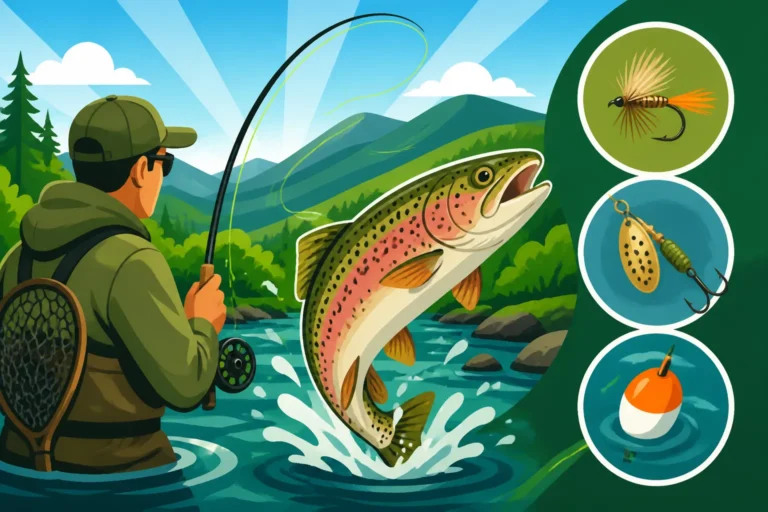
Simplicity often wins in spring. While walleye are aggressive, they can also be somewhat finicky. Live bait, particularly minnows (shiners, fatheads) and nightcrawlers, are hard to beat. Present them on a simple jig head, under a bobber, or on a Lindy rig. For artificials, jigs with soft plastic bodies (like Berkley Gulp! minnows or similar) in natural baitfish colors (silver, perch, white) are excellent.
Small to medium-sized crankbaits, especially those with a tight wobble, are also productive. Think Rapala Shad Raps or Berkley Flicker Shads in sizes 5-7. Colors that mimic local baitfish, like chrome/blue, perch, or firetiger, are often top producers. Trolling these at slow speeds (1.0-1.8 mph) along contour lines or over shallow flats can be deadly. Don't forget the power of a jig and minnow fished vertically over subtle humps or drop-offs. It's often the simplest presentation that triggers a strike when the walleye are transitioning.
Adapting to Summer: Deep Water and Nighttime Walleye
Summer on Lake Champlain means a shift in strategy. The walleye haven't disappeared; they've simply gone deeper to find their preferred temperatures. Success during these months hinges on understanding this thermal migration.
Mastering Deep Water Trolling Techniques
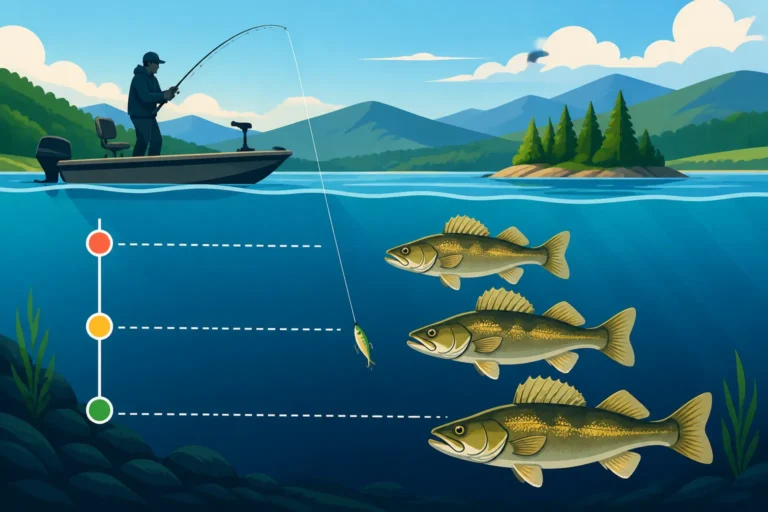
When surface temperatures soar, Lake Champlain walleye will often stack up in depths ranging from 20 to 50 feet, sometimes even deeper. This is where trolling becomes king. Using planer boards to spread out your lines and cover a wider area is incredibly effective. Downriggers or lead core line can help you get your baits down to the desired depths where fish are holding, often near the thermocline.
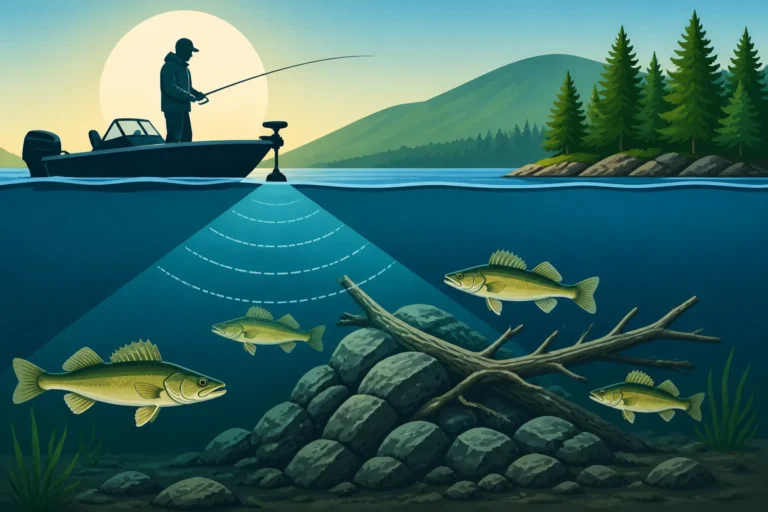
Large crankbaits that dive deep, like Bagley BangO Lures or deep-diving Rapalas, are excellent choices. Match the size and color to the local forage – if Lake Champlain has a strong alewife population, imitate those. Speed is crucial; start slow (around 1.5-2.5 mph) and experiment until you find what triggers bites. Pay close attention to your electronics; a quality fish finder, like those found on Amazon, can literally show you where the fish are holding, often in schools, near deep structure like points, humps, or even submerged weed beds that extend into deeper water. For more specific insights, our guide on Best Lures for Walleye Trolling on Lake Champlain is a great resource.
The Magic of Night Fishing
As the sun sets and the lake surface cools, walleye in the summer will often venture out of their deep-water sanctuaries and move shallower to feed. This makes night fishing an incredibly productive, and often underutilized, tactic. The low light conditions give walleye a predatory advantage, and they'll often be found in 10-25 feet of water, cruising flats or the edges of drop-offs.
Casting or slow trolling shallow-running crankbaits (think Bandit Walleye Deep Divers or Reef Runner Ripsticks) that have a good rattle can be very effective. Glow-in-the-dark or brightly colored lures can also entice strikes in the darkness. Another popular method is suspending live bait (like a large shiner) under a lighted slip bobber over known walleye haunts. The key is stealth; keep noise to a minimum, and use only enough light to tie knots or navigate. You'd be surprised how close you can get to actively feeding walleye in the dark.
Locating Key Structure and Forage
Regardless of the time of day, finding summer walleye is about finding structure and forage. On a lake as large and complex as Champlain, this means relying heavily on your boat's electronics and detailed lake maps. Look for sharp drop-offs, underwater points, humps that rise out of deeper water, and submerged rock piles. These features provide ambush points and thermal refuge.
Walleye will also be closely associated with schools of baitfish. If you mark large schools of bait on your fish finder, there's a good chance the walleye won't be far behind. Often, walleye will be found just below or to the side of these baitfish schools. Concentrate your efforts on areas where these structural elements converge with baitfish activity. Our guide on Where to Find Walleye on Lake Champlain delves deeper into specific locations and topographical features.
Fall Walleye Blitz: Capitalizing on the Pre-Winter Push
Fall is arguably the most exciting time for walleye anglers on Lake Champlain, offering the potential for both numbers and impressive size. The fish are fueled by instinct to feed, making them more predictable and aggressive.
Fishing the Transition Zones
As the lake cools, walleye will move from their deep summer haunts into what are known as "transition zones." These are areas where deep water quickly gives way to shallower flats, points, or humps. Think of rocky points that jut out into a deep basin, or the edges of major shipping channels. Walleye will use these transition zones to stage, moving shallower to feed and then retreating to deeper water for safety.
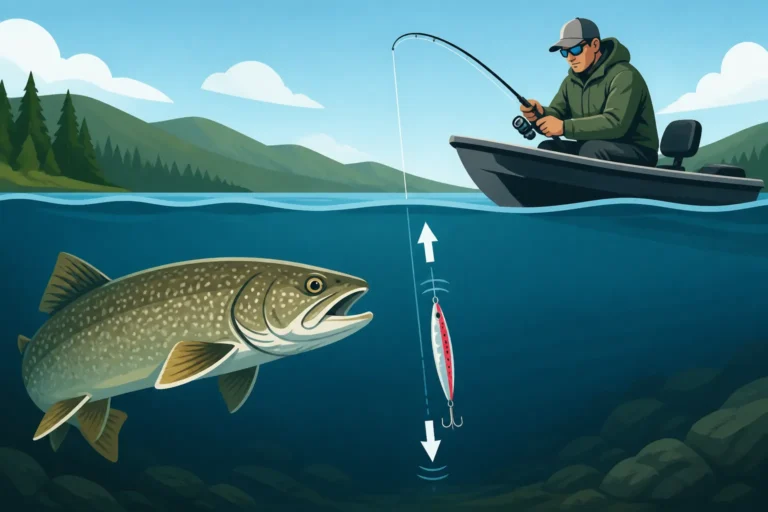
Jigging spoons, blade baits, or heavy soft plastic jigs can be highly effective when fished vertically over these structures. Aggressively ripping a jigging spoon and letting it fall on slack line often triggers a reaction strike from a curious walleye. Trolling crankbaits along these depth contours, allowing them to occasionally tick the bottom, can also be a killer strategy. The key is to cover water along these edges until you locate schools of actively feeding fish. The walleye will move, so be prepared to follow them.
Vertical Jigging and Live Bait Rigs
In the colder fall waters, walleye often prefer slower, more deliberate presentations. Vertical jigging directly over schools of fish marked on your electronics is incredibly effective. Use heavier jigs (1/2 to 3/4 ounce) tipped with a minnow or a soft plastic, and experiment with different jigging cadences – sometimes a sharp rip, other times a subtle quiver is all it takes.
Live bait rigs, such as a traditional Lindy Rig or a simple slip bobber rig with a large minnow (like a fall shiner), are also phenomenal. Walleye become more sluggish in cold water and are less likely to chase. A live minnow struggling enticingly right in front of them is often irresistible. Focus on humps, rock piles, and deep weed edges. Even a slight current can position walleye in predictable ambush spots where a slowly drifted live bait rig can shine. This strategy also works well in the Lake Champlain Ice Fishing Village Guide during early ice conditions.
The Dynamics of Lake Champlain Walleye Behavior
Lake Champlain's walleye population is robust, but like all wild fisheries, it's subject to environmental factors. In the fall, the cooler, oxygen-rich water means walleye are comfortable and active throughout the water column. They're less sensitive to boat noise or bright sunlight than they might be in summer. This is also the time when they often group up in larger schools, so when you find one, you're likely to find many.
Their diet shifts to focus on larger baitfish as well, meaning you can often tempt bigger walleye with larger baits. Pay attention to local baitfish movements; if you see schools of baitfish flickering on the surface or congregating on your sonar, you're in the right place. The prevailing winds can also play a role, pushing baitfish to certain shorelines or structures, and the walleye will follow. Adaptability and observation are your best friends in the fall.
Best Months to Catch Walleye on Lake Champlain: A Summary
To summarize, while you can catch walleye on Lake Champlain year-round, certain months offer significantly better odds and more consistent action. Here's a quick overview:
| Month | Water Temperature (Approx.) | Walleye Location | Primary Tactics | Success Rate |
|---|---|---|---|---|
| May | 48-58°F | River mouths, shallow bays, rocky shoals | Jigging (live bait/plastics), shallow crankbaits | Excellent |
| June | 55-65°F | Bays, points, moving deeper into main lake | Trolling crankbaits, jigging (live bait) | Very Good |
| July | 65-72°F | Deep water, thermocline, humps, drop-offs | Deep trolling, night fishing (shallower) | Moderate-Good |
| August | 68-75°F | Deep water, thermocline, humps, rock piles | Deep trolling, night fishing (shallower) | Moderate-Good |
| September | 60-68°F | Transition zones, deep points, main lake | Trolling, vertical jigging, live bait rigs | Excellent |
| October | 50-60°F | Shallower flats, channel edges, deep weeds | Vertical jigging, live bait, slower trolling | Excellent |
| November | 40-50°F | Deep pockets adjacent to shallow structure | Vertical jigging, live bait (shiners) | Very Good |
The clear standouts for the most consistent and often most productive walleye fishing on Lake Champlain are May, June, September, and October. These months offer the perfect combination of water temperature, walleye feeding patterns, and accessibility that makes for a truly rewarding angling experience. Summer months (July-August) require more specialized deep-water or night fishing techniques, but still yield fish for persistent anglers.
Final Tips for Lake Champlain Walleye Success
Catching walleye on Lake Champlain isn't just about showing up in the right month; it's about being prepared and adaptable. Here are a few extra pointers to help you maximize your time on the water.
Monitoring Weather and Water Conditions
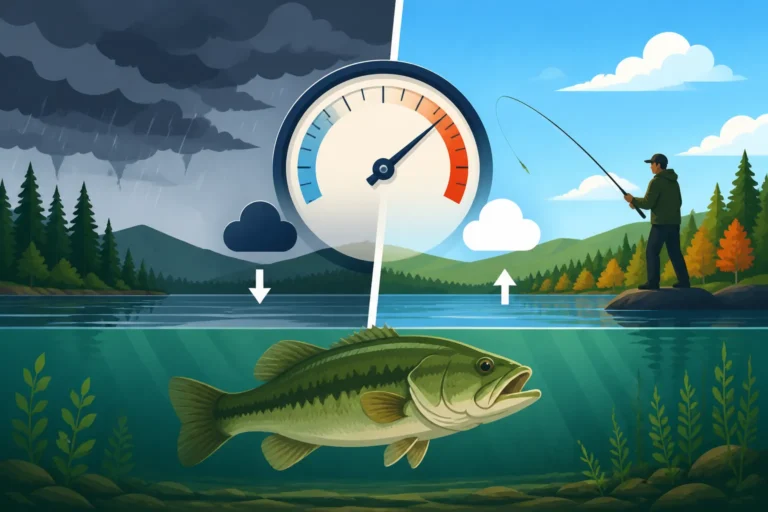
Walleye are highly sensitive to changes in weather. Cold fronts, for instance, can shut down a bite almost instantly, causing fish to become lethargic and less willing to chase. Conversely, stable weather patterns with consistent pressure often lead to more active feeding. Pay close attention to current reports on wind, temperature, and water clarity. High winds can make certain areas unfishable, but also concentrate baitfish and therefore walleye. Turbid water might call for brighter, more vibrating lures, while clear water often demands subtler presentations and natural colors. You can learn more about specific environmental factors in our guide on Best Time of Year to Fish in Vermont.
Essential Gear for the Dedicated Walleye Angler
Having the right tools can make all the difference. For Lake Champlain, a good quality medium-heavy casting or spinning rod paired with a reliable reel spooled with 10-15 lb test fluorocarbon or braid with a fluorocarbon leader is a versatile setup. If you're serious about trolling, investing in dedicated trolling rods, line counter reels, and a selection of crankbaits in various diving depths is a must. Don't forget a sturdy landing net; walleye have sharp teeth and can be surprisingly feisty boat-side. For those interested in electronics, you can find excellent fish finders and GPS units on Amazon that are invaluable for navigating and locating structure on such a large body of water.
Patience, Persistence, and Patterning
Ultimately, fishing for walleye on Lake Champlain is a game of patience and persistence. You won't catch them every time, but by understanding their seasonal movements and adapting your techniques, you'll dramatically improve your odds. Don't be afraid to experiment with different baits, depths, and speeds until you find what the fish are responding to on any given day. Keep a fishing log to record successful patterns, locations, and conditions. Over time, you'll develop a deep understanding of this magnificent fishery and consistently put walleye in the boat, making those challenging days a distant memory. The rewards of cracking the Lake Champlain walleye code are well worth the effort!
Disclaimer
Fishing regulations, seasons, and licensing requirements in Vermont can change. Always consult the official Vermont Fish & Wildlife Department regulations guide before heading out on the water. This guide provides general information and recommendations, but it is the angler's responsibility to adhere to all current state and local laws.