Best technique for vertical jigging lake trout
It can be incredibly frustrating to chase after those deep-dwelling giants of Vermont's lakes, the elusive lake trout, especially when they seem to be ignoring everything you throw at them. Many anglers find themselves staring at a fish finder, seeing marks, but feeling completely disconnected from what's happening below. This guide is dedicated to demystifying vertical jigging for lake trout, providing you with practical, step-by-step techniques to turn those sonar pings into powerful strikes and exhilarating fights on the surface.
Understanding Lake Trout Behavior and Habitat for Jigging Success
Before you even think about dropping a jig, understanding where lake trout live and how they behave is absolutely crucial. These aren't your typical stream trout; lakers are creatures of the cold, deep, and often vast expanses of Vermont's larger bodies of water. Knowing their preferences will save you countless hours of blind casting and greatly increase your chances of success when vertical jigging.
Where Lake Trout Hold in Vermont's Deep Waters
Lake trout, or "lakers" as many of us affectionately call them, have a strong affinity for cold, oxygen-rich water. This means you'll almost always find them in the deeper sections of Vermont's larger lakes, such as Lake Champlain, Lake Willoughby, or Seymour Lake. They tend to congregate around specific types of underwater structure that offer both cooler temperatures and ambush points for feeding. Think about steep drop-offs, underwater humps, rock piles, ledges, and deep points. These features provide cover, attract baitfish, and create current breaks where a laker can comfortably wait for its next meal.
In the summer months, the thermocline becomes your best friend. This is the distinct layer in the water column where the temperature changes rapidly. Lake trout will typically suspend either right above, within, or just below the thermocline, depending on oxygen levels and baitfish presence. Using your sonar to identify this layer is paramount. In other seasons, like early spring or late fall, they might move shallower, but even then, they'll often relate to significant depth changes or deeper channels. Understanding these patterns is the first step to successful vertical jigging. You can learn more about specific laker behavior in Lake Trout Fishing in Vermont.
Seasonal Movements and How They Impact Jigging Depths
Lake trout aren't static; their depth preferences shift significantly with the seasons, primarily driven by water temperature and spawning cycles. This means your vertical jigging approach needs to be adaptable throughout the year.
In early spring, right after ice-out, lake trout can be found in shallower waters, often in the 15-40 foot range, as they're actively feeding on baitfish that are also moving up from the depths. This is a great time to target them, as they're often aggressive and more accessible. As the water warms, they'll begin their descent.
By summer, lakers will have retreated to the cooler, deeper sections of the lake, often holding in 60-120 feet or even deeper, tightly adhering to the thermocline. This is when vertical jigging truly shines, as you're dropping your lure directly into their strike zone. Understanding How deep lake trout go in summer is vital during this period.
Fall sees them move back up into shallower waters, particularly as they prepare for their spawning period. You might find them on rocky shoals and reefs in 20-60 feet of water. Their aggressiveness often increases during this time as they feed heavily.
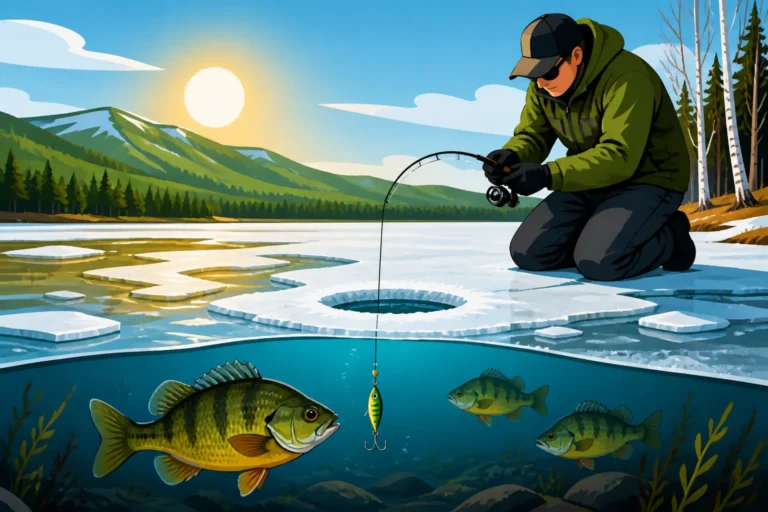
During winter, through the ice, vertical jigging is arguably the most popular and effective method. Lake trout can be found anywhere from 30 to over 100 feet deep, often relating to the same structures they frequent in open water. The beauty of ice fishing is that you are inherently vertical, making jigging a natural fit. Each season presents unique opportunities and challenges, requiring a flexible mindset and an understanding of their deep-water habits.
Essential Gear for Vertical Jigging Vermont Lake Trout
Having the right equipment is not just about comfort; it's about efficiency, sensitivity, and the power needed to subdue a strong, deep-water fish like a lake trout. Trying to vertical jig with inappropriate gear will lead to frustration, missed bites, and potentially lost fish. Let's talk about what you need to be effective.
Rods, Reels, and Line for Deep Water Jigging
When it comes to vertical jigging for lake trout, your rod, reel, and line are your primary connection to the fish, and they need to be up to the task. You'll want a rod that is stout enough to handle heavy jigs and powerful fish, but sensitive enough to detect subtle bites in deep water. A medium-heavy to heavy power rod, typically 6'6" to 7'6" in length, with a fast action tip is ideal. The fast action allows for quick, responsive hooksets, while the strong backbone provides the leverage needed to fight a laker from the depths. Look for models designed for deep water jigging or even light saltwater jigging.
For reels, you have options between spinning and baitcasting. Spinning reels are generally easier for beginners and offer good line management, especially with lighter jigs. A 4000-5000 series reel with a smooth drag system and ample line capacity (200+ yards of braided line) is a good starting point. Baitcasting reels, particularly low-profile models, offer more control when dropping heavy jigs precisely and can provide more cranking power. Whichever you choose, ensure it has a sturdy gear system and a reliable drag.
Line choice is paramount. Braided line is almost a necessity for deep water jigging due to its zero stretch, which translates to incredible sensitivity and powerful hooksets. A 20-30 pound test braid is usually sufficient, offering a thin diameter for less water resistance and quicker drops. Since braid is visible and has no abrasion resistance, you'll need a fluorocarbon leader. Attach a 10-20 foot section of 12-20 pound test fluorocarbon using a strong knot like an FG or Alberto knot. This leader provides stealth, shock absorption, and abrasion resistance against rocks or the laker's toothy mouth. Many of these specialized items can be found readily on platforms like Amazon.
Lures and Baits: What Makes Lake Trout Strike
The array of lures available for lake trout can be overwhelming, but a few types consistently prove effective for vertical jigging. Your goal is to imitate baitfish that lake trout naturally prey upon, like smelt or ciscoes.
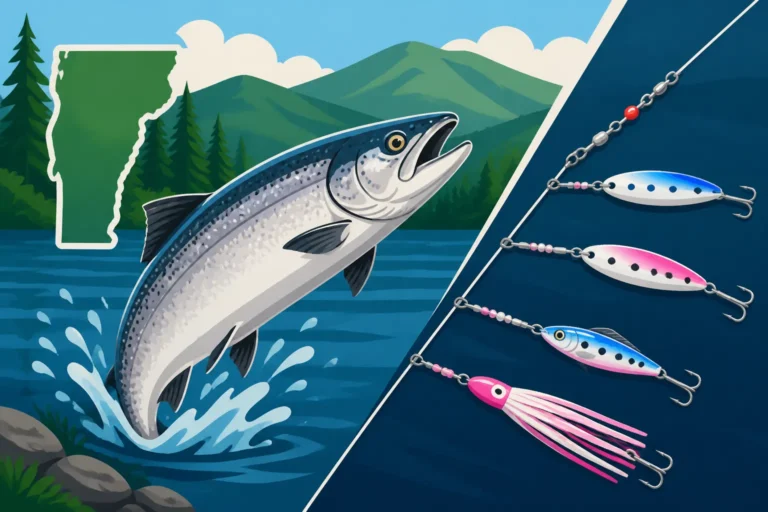
Jigging spoons are perhaps the most popular choice. These thin, metallic lures flutter and flash enticingly on the drop, mimicking a dying baitfish. Popular examples include Swedish Pimples, Crippled Herring, Kastmasters, and Hopkins spoons. Vary the sizes from 1/2 oz to 2 oz or more, depending on depth and current. Silver, chrome, white, blue, and perch patterns are excellent starting points.
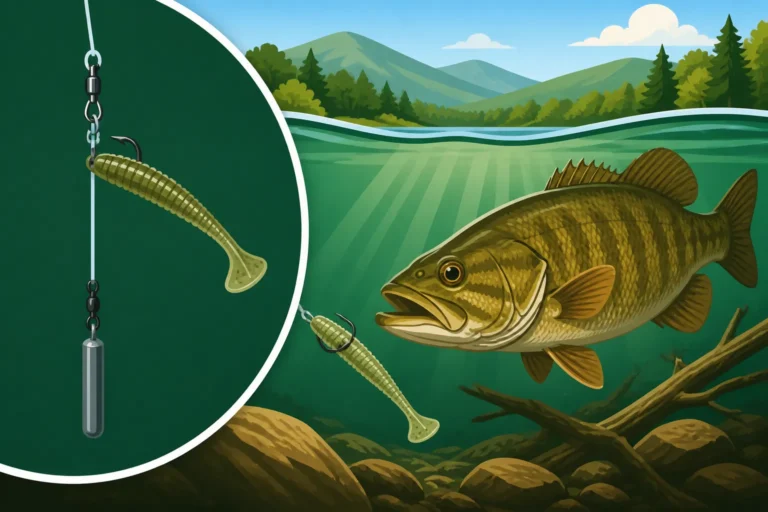
Tube jigs are another highly effective option, especially when tipped with bait. These soft plastic tubes, usually 3-6 inches long, are rigged on a weighted jig head that fits inside the tube. They have a subtle, spiraling fall that can be irresistible to lakers. White, smoke, black, and green pumpkin are common colors. Tipping these with a small piece of cut bait, like a smelt head or a small strip of sucker meat, adds scent and can trigger strikes from hesitant fish.
Blade baits (e.g., Cicadas, Vibrations) offer a tight, high-frequency vibration when lifted, which can call in fish from a distance. They are often effective when fish are aggressive. Soft plastics rigged on heavy jig heads, such as large grubs, paddle tails, or even creature baits, can also produce, especially when worked with a slow, bottom-bouncing retrieve. Experimentation is key, as lake trout can be finicky. Sometimes they want a fast, aggressive presentation; other times, a slow, subtle jigging action is what it takes. Consider researching Best Baits for Smallmouth Bass on Lake Champlain for some crossover lure ideas that might attract lakers, though specific sizes and depths would differ.
Electronics: Your Eyes Below the Surface
In the world of deep water lake trout fishing, your electronics are not a luxury; they are an absolute necessity. Without them, you're truly fishing blind.
A good fish finder or sonar unit is your window into the underwater world. Modern units with high-definition 2D sonar, Down Imaging (DI), and Side Imaging (SI) will show you everything from the bottom composition and structure to individual fish and baitfish schools. You need to be proficient at reading your screen to identify humps, drop-offs, and most importantly, the fish themselves. Look for arches or distinct marks that indicate lake trout, and pay attention to bait balls, as lakers are rarely far from their food source. Understanding these displays takes practice, but it’s a game-changer.
GPS functionality is equally important. Once you find a productive spot, whether it's a deep hump, a ledge, or a concentration of fish, you need to mark it as a waypoint. This allows you to return to that exact spot, even in challenging conditions. A quality GPS unit, often integrated into your fish finder, will help you stay on course and position your boat precisely over the fish. Features like mapping and contour lines can also help you identify potential lake trout holding areas before you even start scanning with sonar. Brands like Humminbird, Lowrance, and Garmin offer excellent options for serious anglers. You can dive deeper into choosing the right unit with our guide on Best Fish Finders for Vermont Lakes.
Mastering the Vertical Jigging Technique for Lake Trout
Once you have the right gear and a solid understanding of lake trout behavior, it's time to put it all into practice. Vertical jigging is more than just dropping a lure; it’s a nuanced dance between angler, boat, and fish.
Locating Fish and Positioning Your Boat
The first step in effective vertical jigging is finding the fish. Start by cruising over known lake trout areas, paying close attention to your sonar. Look for those deep structures we discussed – humps, ledges, and drop-offs. When you see baitfish schools, slow down and watch for larger, distinct marks near them. These are often lake trout. Mark any productive spots with your GPS right away.
Once you’ve located fish or promising structure, positioning your boat accurately is critical. The goal is to drop your jig straight down into the strike zone. If you’re drifting, calculate your drift speed and direction using your GPS and wind conditions. You might need to use a drift sock or sea anchor to slow your boat down, or even make repeated passes over the same area. For ultimate precision, a spot-lock capable trolling motor is invaluable. This technology uses GPS to hold your boat in an exact location, even in wind and current, allowing you to focus entirely on your jigging presentation. Without one, you'll need to continually adjust your boat's position to stay directly over the fish, especially on a large body of water like Lake Champlain. This precise boat control ensures your jig stays vertical and visible to the fish you're targeting. For insights into suitable vessels, check out Best Boats for Vermont Lakes and Rivers.
The Art of the Drop and the Jigging Cadence
With your boat positioned, it's time to get your lure down. Drop your jig directly below the boat, letting it freefall quickly. The faster it gets to the depth of the fish, the better, minimizing time spent falling through unproductive water. As it falls, keep a slight tension on the line with your thumb to prevent tangles and feel for any subtle bites on the drop, which can happen! Once your lure reaches the desired depth, whether it's on the bottom or suspended in the water column where you've marked fish, the jigging action begins.
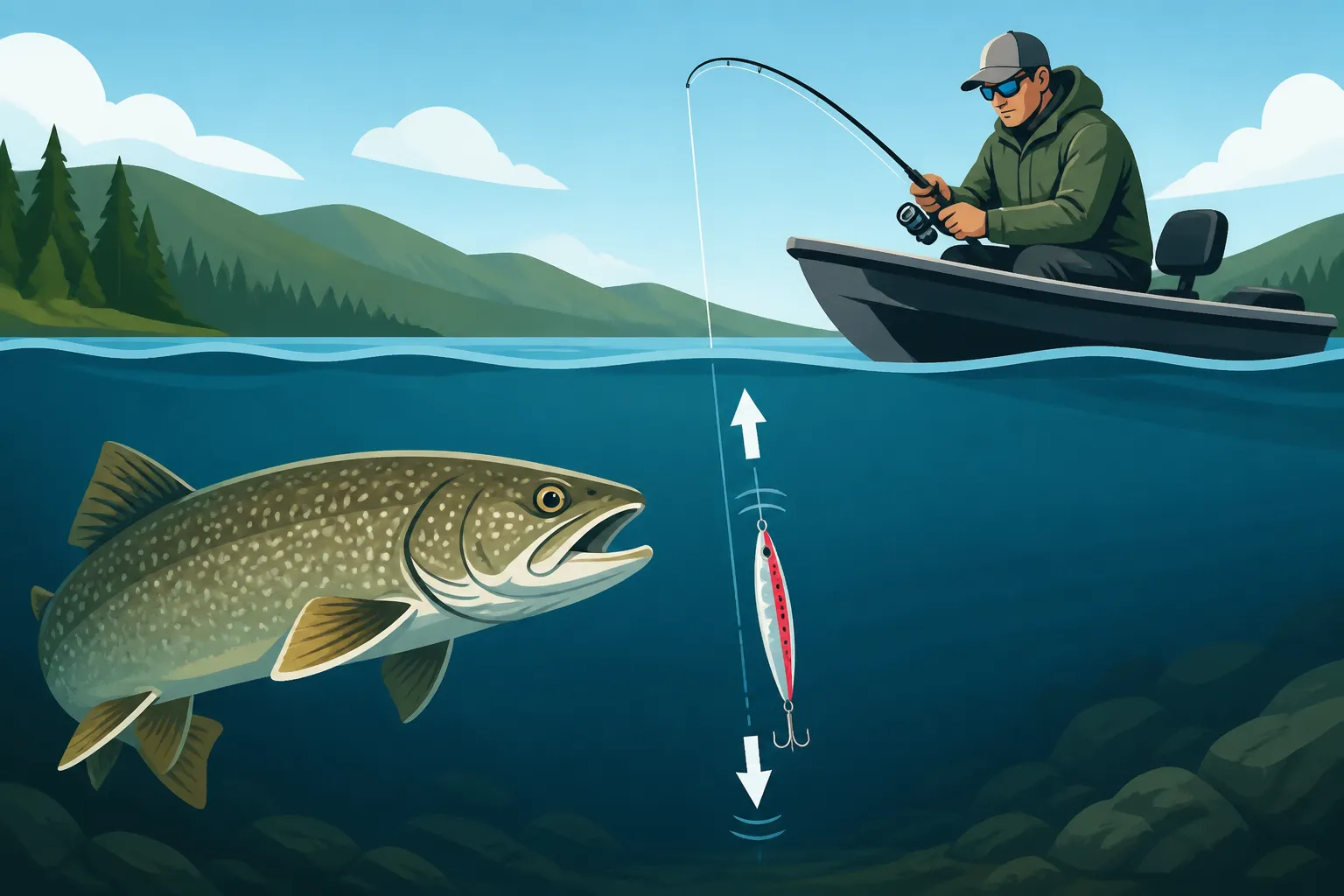
The "jigging cadence" is the rhythm and motion you impart to your lure, and it's where artistry meets science. There's no single "best" cadence, as it often depends on the fish's mood. Start with a lift-drop motion: lift your rod tip sharply 1-3 feet, then let the lure fall back down on a semi-slack line. The fall is often when the strike occurs, as the lure flutters and looks vulnerable. Vary the speed of your lifts and the length of your pauses. Sometimes a quick "snap-fall" triggers a reaction strike, while other times a slow, gentle lift followed by a long pause is more effective. Subtle shakes or quivers of the rod tip can also add enticing action. Pay close attention to your fish finder; often, you'll see fish move up to inspect your lure before striking. If they rise but don't commit, change your cadence or lure color. The key is to experiment until you find what the lake trout want on that particular day.
Hookset, Fight, and Landing Big Lake Trout
When a lake trout strikes, especially in deep water, it can feel like anything from a solid thud to a subtle tick. The no-stretch braid will transmit even the lightest bite. When you feel that distinct "thump" or sudden increase in line tension, set the hook hard with a swift, upward sweep of your rod. Don't be shy; you need to drive that hook through cartilage.
The fight of a deep-water lake trout is legendary. They are powerful, stubborn fighters that often make long, sustained runs back to the depths. Your job is to pump and reel. That means lifting the rod tip to gain line, then quickly reeling down as you drop the rod tip. Never reel against a screaming drag; let the fish take line when it wants to, but maintain constant pressure. Use your boat to your advantage: if the fish tries to run under the boat, move the boat to keep the line clear. Avoid fighting the fish directly under the boat, as the line can chafe against the hull.
As you get the fish closer to the surface, be prepared for a strong last-ditch effort. Lake trout often have one more burst of energy left in them. When the fish is alongside the boat, use a large, rubberized landing net to safely bring it aboard. The rubberized net protects the fish's slime coat, which is important for their health if you plan to release them. Handle the fish gently, especially if you're practicing catch and release. Have your camera ready for a quick photo, then carefully release the fish, supporting it until it swims away strongly. Proper landing and handling increase the survival rate of released fish. For more on regulations that might impact your catch, refer to Vermont Fishing Regulations Explained.
Troubleshooting Common Vertical Jigging Challenges
Even with the best gear and technique, lake trout can be notoriously finicky. It's easy to get discouraged when the bites aren't coming, but often, a minor adjustment can make all the difference. Learning to troubleshoot on the fly is a hallmark of an experienced angler.
When Lake Trout are Finicky: Adjusting Your Approach
You've found the fish, you're dropping your jig right on their heads, but they're just not biting. This is a common scenario when vertical jigging for lake trout. The first thing to do is vary your retrieve speed and pause length. If you've been jigging aggressively, try slowing down dramatically, incorporating longer pauses where the lure just hangs motionless. Conversely, if you've been slow, try a series of quick, sharp snaps followed by a sudden fall. Sometimes a brief, frantic action followed by a dead stop is exactly what triggers a hesitant laker.
Next, change your lure. If they're ignoring your spoon, switch to a tube jig, or vice versa. Experiment with different colors and sizes. Brighter colors might work in low light or stained water, while more natural patterns might be better in clear conditions. Also, consider tipping your lure with bait. A small piece of cut smelt or sucker meat can add irresistible scent and flavor, often turning a looker into a biter. Finally, if fish are suspended off the bottom, try jigging above them, at their level, and even slightly below them. Sometimes, approaching from a different angle or presenting the lure just a touch higher can make the fish commit.
Dealing with Wind and Current
Wind and current are the bane of vertical jigging, making it incredibly difficult to stay directly over fish and maintain a true vertical presentation. If you're on a large lake like Champlain, you're almost guaranteed to encounter these conditions.
If you don't have a spot-lock trolling motor, drift socks (also known as sea anchors) are your best friend. Deploying one or two drift socks will significantly slow your boat's drift, giving you more time over productive spots and helping maintain that crucial vertical line. You can also use your main motor or kicker motor to make small adjustments, bumping it into gear periodically to slow your drift or gently push you back over the target.
When the boat is moving, your jig won't fall perfectly vertical. You might need to use heavier jigs to combat the drag of the current and maintain bottom contact or stay in the strike zone. Pay close attention to your line angle; if it's drifting too far behind the boat, you're losing that vertical presentation and likely pulling your lure out of the strike zone. Adjust your boat speed, jig weight, or even your fishing angle until you can keep your lure directly below your sonar cone. This is also where knowing your knots and line strength, as discussed in Best Line Weight for Muskellunge Fishing, can be helpful, as you need confidence in your tackle when battling current and big fish.
Seasonal Lake Trout Jigging Overview
Understanding the general seasonal patterns can help you anticipate lake trout behavior and adjust your jigging strategy throughout the year.
| Season | Typical Depth Range (feet) | Preferred Structures | Jigging Approach | Key Considerations |
|---|---|---|---|---|
| Early Spring | 15-40 | Shallow ledges, points, reefs | Moderate lift-drop, focus on baitfish presence | Post-ice out feeding frenzy, lakers more accessible |
| Summer | 60-120+ | Deep humps, thermocline | Slower, deliberate lifts with long pauses, scent | Deep water, precise sonar crucial, combat thermocline |
| Fall | 20-60 | Rocky shoals, spawning areas | Aggressive snap-jigs, active search | Pre-spawn feeding, often very active |
| Winter (Ice) | 30-100+ | Humps, drop-offs, deep basins | Varies widely, subtle shakes to aggressive rips | Use an Ice Fishing in Vermont specific setup |
Knowing these general trends can help you narrow down your search and dial in your presentation more quickly. For more information on year-round fishing, check out Best Fishing Seasons by Month.
Advanced Tips for the Dedicated Lake Trout Jigger
Once you’ve got the basics down, there are always ways to refine your technique and increase your chances of landing those truly memorable lake trout. It’s often the small details that differentiate a good day from a great one.
The Importance of Scent and Sound
Lake trout are primarily sight predators, but they also use their lateral line to detect vibrations and their sense of smell to locate prey. Don't underestimate the power of adding scent to your jigs. Tipping your lure with a small piece of cut bait, such as a smelt head, a minnow tail, or a strip of sucker meat, can significantly improve your success rate, especially on days when fish are less aggressive. Commercial scents can also be applied to soft plastics or spoons. This added element can entice finicky lakers to commit when they might otherwise just inspect your lure.
Beyond scent, consider the sound and vibration your lure produces. Blade baits are designed for this, emitting a high-frequency thrum that fish can detect from a distance. Even jigging spoons have a unique "clack" as they flutter or hit the bottom. Sometimes, a more aggressive jigging motion that creates more disturbance can attract attention, while other times a quiet, subtle presentation is preferred. Pay attention to how the fish react on your sonar; if they come in close but don't bite, try reducing the sound and vibration. If they seem unaware, try increasing it.
Reading Your Sonar Like a Pro
Your fish finder is your single most important tool for vertical jigging. Being able to interpret what you see on the screen can literally put you on fish. Don't just look for arches; learn to differentiate between baitfish schools, individual large fish, and even the type of bottom composition.
Bottom composition: A hard, distinct bottom line indicates rock or gravel, often preferred by lake trout. A softer, blurred line might mean mud or silt.
Baitfish: Look for dense clouds or schools of smaller marks. Where there's bait, there are often predators.
Lake Trout marks: These will typically appear as large, distinct arches or thick horizontal lines. Pay attention to their behavior. Are they suspended? Are they hugging the bottom? Are they moving up to investigate your lure? Seeing a fish rise quickly to meet your falling jig is an exciting indicator that you're about to get a strike. Practice watching your jig on the screen as it descends, seeing how fish react to its movement. This visual feedback loop is critical for adjusting your cadence and presentation in real-time. For a general guide on various species, you might find Trout Species Identification Guide for Vermont useful for background context, even though you're focusing on lakers.
Table of Common Vertical Jigging Lures for Lake Trout
Here's a quick reference for some popular vertical jigging lures and their characteristics:
| Lure Type | Action on Fall | Common Sizes | Preferred Situations | Tips for Use |
|---|---|---|---|---|
| Jigging Spoons | Erratic flutter, flash, wobbling | 1/2 oz – 2 oz+ | Aggressive fish, deep water, imitating dying baitfish | Vary lift speed, long pauses, tip with bait |
| Tube Jigs | Slow spiral, subtle darting | 3-6 inches | Finicky fish, clear water, subtle presentation | Tip with cut bait (smelt, sucker), slow lifts, gentle shakes |
| Blade Baits | Tight vibration on lift, quick dart on fall | 1/4 oz – 1 oz | Calling fish from a distance, active fish, reaction strikes | Fast snaps, short pauses, feel the vibration |
| Soft Plastics | Varied, depending on design (grubs, paddle tails) | 4-7 inches | Versatile, can be fished slowly or aggressively | Rig on heavy jig heads, bounce bottom, add scent |
Remember, these are starting points. The most successful anglers are those who are willing to experiment and adapt to the conditions and the fish's mood. Keep a variety of these lures on hand, and don't be afraid to switch things up until you find what works. Also, consider the types of lures discussed in Best Tackle for Vermont Smallmouth Bass and how they might be adapted for lakers.
Disclaimer
This article is for general informational purposes only and does not constitute professional advice. Laws, prices and regulations vary by location and change over time. Consult a qualified professional for guidance on your specific situation.