Best trolling speed for landlocked salmon
There’s nothing quite like the thrill of a landlocked salmon hitting your line, especially here in Vermont. But if you’ve spent hours trolling, trying every speed imaginable, only to come up empty-handed, you know the frustration. It feels like you're missing some secret handshake with the fish. This guide is here to demystify one of the most crucial elements of successful landlocked salmon fishing: finding that sweet spot for trolling speed to get those powerful strikes.
Understanding Landlocked Salmon Behavior and Forage
To truly understand why trolling speed matters, we first need to get inside the head (or perhaps, the lateral line) of a landlocked salmon. These fish are predators, constantly on the hunt, but their activity levels are deeply tied to their environment and their food source.
How Water Temperature Affects Salmon Activity
Just like us, salmon have a comfort zone when it comes to temperature. For landlocked salmon, this typically means cooler waters. They thrive in oxygen-rich environments, usually found deeper in our larger lakes like Lake Willoughby or Lake Champlain, especially as surface temperatures rise in summer. When the water is colder, say in early spring or late fall, their metabolism slows down a bit. They might be less inclined to chase a rapidly moving bait, preferring something a little slower and easier to ambush.
Conversely, when the water temperature is in their optimal range, they become much more active and aggressive. This is when they're more likely to chase down a bait moving at a higher speed. Understanding these seasonal and depth-related temperature preferences is paramount. You can have the perfect lure, but if it's not presented at a speed that matches the salmon's energy level, it might as well be invisible. Think about it: would you want to sprint for your dinner on a hot, humid day, or would you prefer a leisurely stroll? Salmon are no different.
Mimicking Smelt: The Key Forage Base
In Vermont, the primary food source for landlocked salmon is often rainbow smelt. These small, silvery baitfish form the cornerstone of the salmon's diet. If you want to catch salmon, you need to think like a smelt. How do smelt move? They dart, they school, they occasionally flash, and they can swim surprisingly fast when escaping a predator. However, they also hold still, or move slowly, when relaxed.
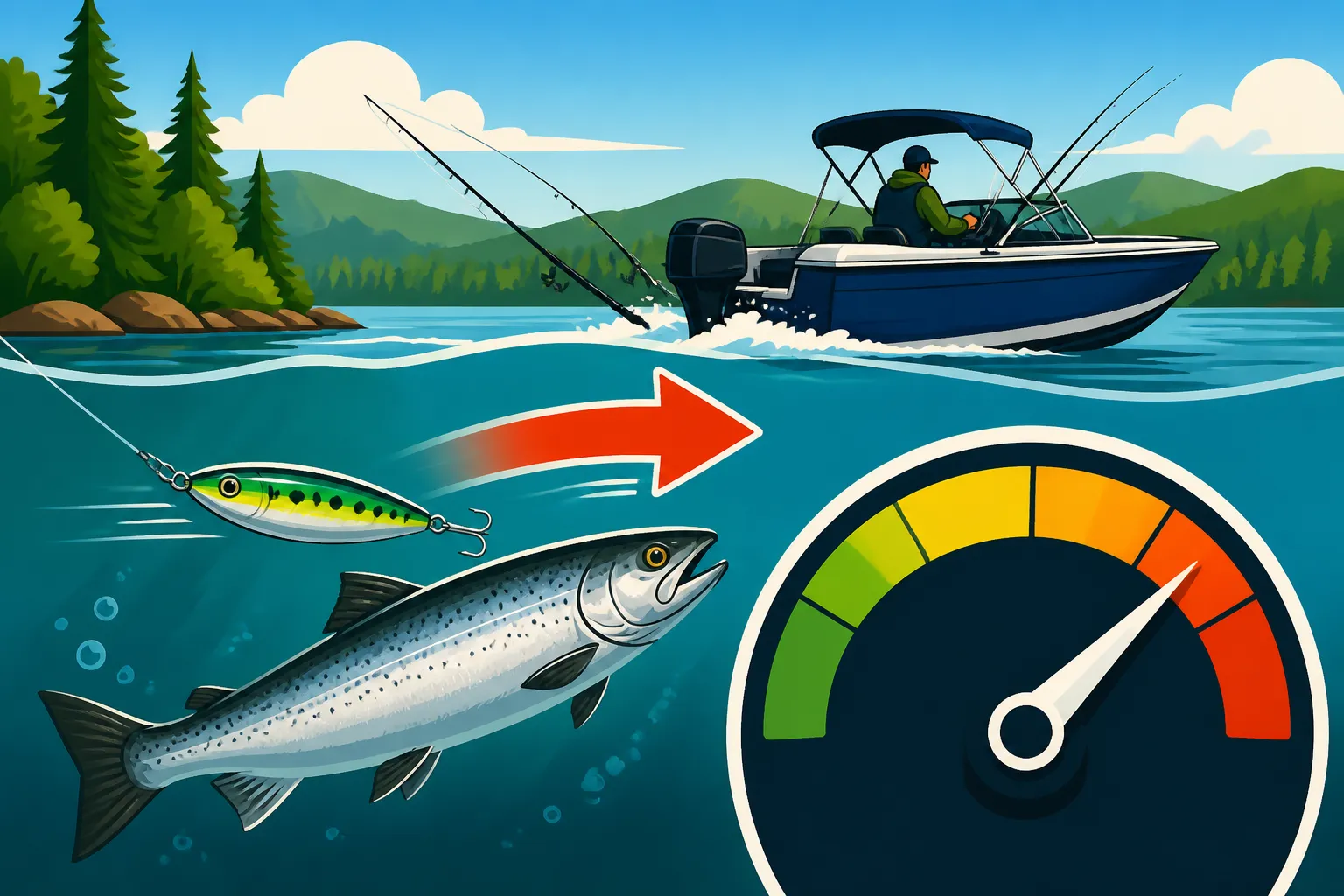
Your trolling speed directly dictates how your lure imitates this crucial forage. A spoon might have a beautiful, erratic wobble at a certain speed, but at another, it might just drag lifelessly. A stickbait might have that perfect side-to-side swimming action at one speed, but blow out and spin at another. The goal is to present your offering in a way that perfectly mimics an injured, fleeing, or simply unaware smelt, making it an irresistible target for a hungry salmon. This means paying close attention to your lure's action in the water at different speeds, not just what it looks like out of the water.
Factors Influencing Your Ideal Trolling Speed
While understanding salmon and smelt behavior gives us a good foundation, several other practical factors come into play when determining your ideal trolling speed on any given day. It’s not a one-size-fits-all answer, and adjusting is part of the fun – and the challenge!
Lure Type and Action
Different lures are designed to perform optimally at specific speeds. This is perhaps one of the most significant variables in your trolling equation.
- Spoons: Think of classic trolling spoons, like a Mooselook Wobbler or a Daredevil. These are often designed to have an enticing wobbling or darting action. Too slow, and they might just drag like a dead leaf. Too fast, and they can spin uncontrollably, twisting your line and looking completely unnatural. Most spoons have a sweet spot where they wobble and flash just right, often in the 2.0 to 3.0 mph range, but it varies by size and design. You can find a huge variety of spoons on Amazon if you're looking to expand your tackle box.
- Stickbaits/Plugs: Lures like Rapalas or Rebels are designed to imitate baitfish by swimming with a distinct side-to-side wobble. These often perform better at slightly faster speeds than spoons, as the speed helps activate their inherent swimming action. However, push them too fast, and they can "blow out," meaning they lose their natural action and just plane to the side.
- Flashers/Dodgers with Flies or Live Bait: When using attractors like flashers or dodgers, their job is to create commotion and flash to draw fish in. The actual bait or fly trailing behind them is often what the fish ultimately strikes. The speed for these setups is usually determined by the optimal action of the flasher or dodger, which then imparts movement to the trailing bait. For landlocked salmon, a slow, methodical roll of a dodger might be perfect for a trailing sewn smelt or streamer fly. Understanding how to rig smelt for landlocked salmon trolling is key here.
It’s crucial to observe your lure’s action. If you're running multiple lines, bring one up to the surface periodically to ensure it's swimming correctly at your current speed. This visual check is invaluable and can save you from trolling a dead bait for hours.
Water Conditions (Clarity, Current, Wind)
The lake itself has a big say in your trolling strategy.
- Water Clarity: In exceptionally clear waters, which many of Vermont's pristine lakes like Lake Willoughby are known for, salmon can be very wary. A slower, more subtle presentation might be more effective, giving them time to inspect the lure without being spooked by a blur of speed. Conversely, in slightly stained water, a faster presentation might be needed to get the lure noticed.
- Current: Even in lakes, especially near inlets, outlets, or narrows, there can be subtle currents. If you're trolling with the current, your actual lure speed will be faster than your boat's GPS speed. If you're trolling against it, your lure will be moving slower. Always pay attention to how current affects your lure.
- Wind and Waves: A choppy lake surface can make maintaining a consistent boat speed challenging. The rocking motion of your boat can also impart an erratic action to your lures, which can be good! However, strong winds can also push your boat faster or slower than intended, making it essential to monitor your GPS speed closely and adjust your motor. Strong waves can also make it difficult to determine the actual action of your lures, so you might need to err on the side of slightly slower speeds to ensure good presentation.
Time of Day and Season
The time of year and even the time of day can significantly influence how salmon feed and how fast you should be trolling.
- Early Spring (Post Ice-Out): Right after ice-out, salmon are often shallower and very active, looking to put on weight. They might hit a variety of speeds, but often respond well to a slightly slower presentation as they are still adjusting to open water and prey might be a bit lethargic.
- Summer: As surface waters warm, landlocked salmon retreat to deeper, cooler sections of the lake. They might be less active during the bright midday sun but become aggressive during low-light periods. Trolling at depths requires careful attention to specific trolling techniques for Vermont lake trout, as these methods often overlap with deep-water salmon fishing. During these periods of higher activity, a slightly faster speed can mimic fleeing baitfish effectively. For specific guidance, you might check out resources on the Best time of day to catch landlocked salmon on Willoughby.
- Fall: As waters cool again, salmon often move shallower and become incredibly active in preparation for spawning (though landlocked salmon don't successfully reproduce in most Vermont lakes, the urge to feed before winter is strong). This can be a fantastic time for aggressive trolling speeds, as fish are actively feeding.
- Low Light (Dawn/Dusk): During dawn and dusk, salmon are often at their most active, moving shallower to feed. This is when faster, more erratic retrieves can be particularly effective, mimicking baitfish that are less cautious in the dim light.
Dialing In Your Trolling Speed for Landlocked Salmon
So, how do you actually find that perfect speed? It’s a combination of starting with a known range, careful monitoring, and a willingness to experiment.
The General Speed Range
For landlocked salmon in Vermont, a good starting point for trolling speed is generally between 1.8 to 3.5 miles per hour (mph). This range encompasses most scenarios, but remember, it's just a starting point.
- Slower Speeds (1.8 – 2.5 mph): These speeds are often effective in colder water, early season, or when fish are lethargic. They allow lures like dodgers with a trailing fly or a slow-wobbling spoon to work their magic without being overdriven. A slower pace can also be deadly when targeting deeper, less aggressive fish, giving them more time to decide to strike. If the fish are being finicky, slowing down can often entice a bite that a faster lure might miss.
- Medium Speeds (2.5 – 3.0 mph): This is your bread-and-butter range for many spoons and stickbaits. It's often the most productive zone, hitting that sweet spot where lures have an appealing action and still cover water effectively. If you're starting on a new body of water or don't have a clear pattern, begin here and adjust.
- Faster Speeds (3.0 – 3.5+ mph): When salmon are aggressive, especially during low light, in warmer optimal temperature bands, or when you're trying to cover a lot of water to find active fish, increasing your speed can trigger reaction strikes. Many crankbaits and certain spoons excel at these higher speeds, creating a strong vibration and flash that can call fish in from a distance. Just be mindful of your lures "blowing out" at these higher speeds.
Always use a GPS to monitor your actual speed over ground. Your boat's speedometer might be inaccurate, especially with current or wind.
Monitoring and Adjusting for Success
Once you have a starting speed, the real work begins. You need to be an active participant, not just a passenger.
- Watch Your Rod Tips: The way your rod tip vibrates and loads will tell you a lot about your lure's action. A consistent, rhythmic pulse usually means the lure is swimming correctly. Erratic movements might indicate a fouled lure or an issue with your speed.
- Feel the Rod: Holding the rod can give you tactile feedback. You can often feel the vibration of the lure working, or a subtle change when it hits weeds or gets bumped.
- The Bite is Your Guide: This is the most important feedback! If you're consistently getting hits at a particular speed, stick with it. If the bites slow down or stop, it's time to make small, incremental adjustments. Increase your speed by 0.1 or 0.2 mph, troll for 10-15 minutes, and if no luck, decrease it by a similar amount. Keep a log of what speeds are producing fish and under what conditions. This pattern recognition is what separates consistent anglers from those who get lucky once in a while. Don't be afraid to change things up if what you're doing isn't working.
The Role of Downriggers and Lead Core Line
When fishing for landlocked salmon, especially in the deeper sections of Vermont's larger lakes, controlling your depth is just as critical as controlling your speed. This is where specialized gear comes into play.
- Downriggers: These devices allow you to send your lure down to a precise depth, regardless of how fast you're trolling. You attach your fishing line to a release clip on a heavy cannonball weight, which is then lowered by the downrigger. When a fish strikes, the line pops free from the clip, and you fight the fish directly. Downriggers allow for incredible precision, letting you target specific thermoclines or schools of baitfish. You can use lighter line and smaller lures effectively at depth. They also allow you to experiment with various speeds while keeping your lure in the strike zone, which is crucial for determining the best trolling speed for landlocked salmon.
- Lead Core Line: This type of line has a lead core wrapped in a braided sheath, which makes it sink. Different colors on the line indicate specific lengths (e.g., 10 yards per color). By letting out a certain number of colors, you can achieve an approximate depth. The faster you troll, the shallower the line will run, and vice-versa. While less precise than downriggers, lead core is an effective and simpler way to present lures deeper, and it's particularly popular for a Best trolling spread for landlocked salmon. However, you'll need to remember that your trolling speed directly influences the depth with lead core, so finding that optimal speed will also mean finding the optimal depth.
Many anglers use a combination of these techniques, perhaps running downriggers off the stern and lead core lines out the sides to cover various depths and speeds simultaneously. Products for both downriggers and various types of fishing line are widely available on platforms like Amazon, offering anglers plenty of choices.
Advanced Tips for Trolling Landlocked Salmon
Once you've mastered the basics of speed and depth, there are still some tricks you can employ to further entice those elusive landlocked salmon.
S-Turns and Speed Changes
Don't just troll in a straight line at a constant speed. Landlocked salmon are opportunists, and a sudden change in a lure's behavior can often trigger a strike from a following fish.
- S-Turns: By making gentle S-turns with your boat, you can achieve two things:
- Varying Lure Depth: The lures on the inside of the turn will slow down and sink slightly, while those on the outside will speed up and rise. This creates a natural "jigging" action.
- Changing Lure Action: The change in speed during the turn can make your lure wobble, dart, or flash differently, often imitating an injured or disoriented baitfish—an easy meal. Many strikes occur just as the boat is coming out of a turn.
- Momentary Speed Ups or Downs: Experiment with briefly speeding up or slowing down your boat. A quick burst of speed can make a spoon dart aggressively, while a sudden slowdown might cause a stickbait to momentarily suspend or flutter, appearing vulnerable. These subtle changes can be incredibly effective when fish are otherwise hesitant.
Experimentation and Local Knowledge
Every day on the water is different. What worked yesterday might not work today, and what works on one lake might not be as effective on another.
- Be Willing to Experiment: Don't get stuck in a rut. If you're not getting bites, change something! Change your speed, change your lures, change your depth, change your direction. Keep notes on what works and what doesn't under different conditions. This constant learning is what makes fishing so engaging. Remember that there are many factors to consider when trying to find the Best time of year to fish in Vermont.
- Talk to Locals: The best source of information is often right in your community. Chat with anglers at the boat launch, visit local bait and tackle shops, or even consider hiring a guide for a day. Locals who fish places like Lake Memphremagog or Lake Champlain constantly have their finger on the pulse of the fishery. They often have insights into current patterns, preferred speeds, and hot lures that can save you hours of trial and error. Just remember to be respectful and not expect them to give away all their secret spots! Exploring resources on Lake Willoughby Landlocked Salmon Fishing can also offer some fantastic localized insights.
- Consult Online Resources: Beyond asking local experts, there are many online forums and community groups where Vermont anglers share tips and current conditions. While you won't find real-time data from me, checking community discussions on what worked last week can still be very helpful. Remember, knowledge is power when it comes to landing those beautiful landlocked salmon.
| Lure Type | Recommended Speed Range (MPH) | Optimal Conditions | Notes |
|---|---|---|---|
| Spoons | 2.0 – 3.0 | General, active fish, varied depths | Observe wobble; too fast, they spin; too slow, they drag |
| Stickbaits/Plugs | 2.5 – 3.5 | Aggressive fish, low light, covering water | Check for natural swimming action; too fast, they "blow out" |
| Flashers/Dodgers | 1.8 – 2.5 | Finicky fish, deep water, with trailing flies/bait | Speed dictates flasher action; imparts movement to trailing bait |
| Flies (streamers) | 1.8 – 2.8 | Early season, cold water, subtle presentation | Often used behind a dodger or with lead core to get depth and action |
| Live Bait (smelt) | 1.5 – 2.2 | Very finicky fish, difficult conditions | Mimics natural swimming; slower speeds ensure natural presentation |
This table provides a general guideline. Always let the fish tell you what they prefer on any given day!
Disclaimer
This article is for general informational purposes only and does not constitute professional advice. Laws, prices and regulations vary by location and change over time. Consult a qualified professional for guidance on your specific situation.