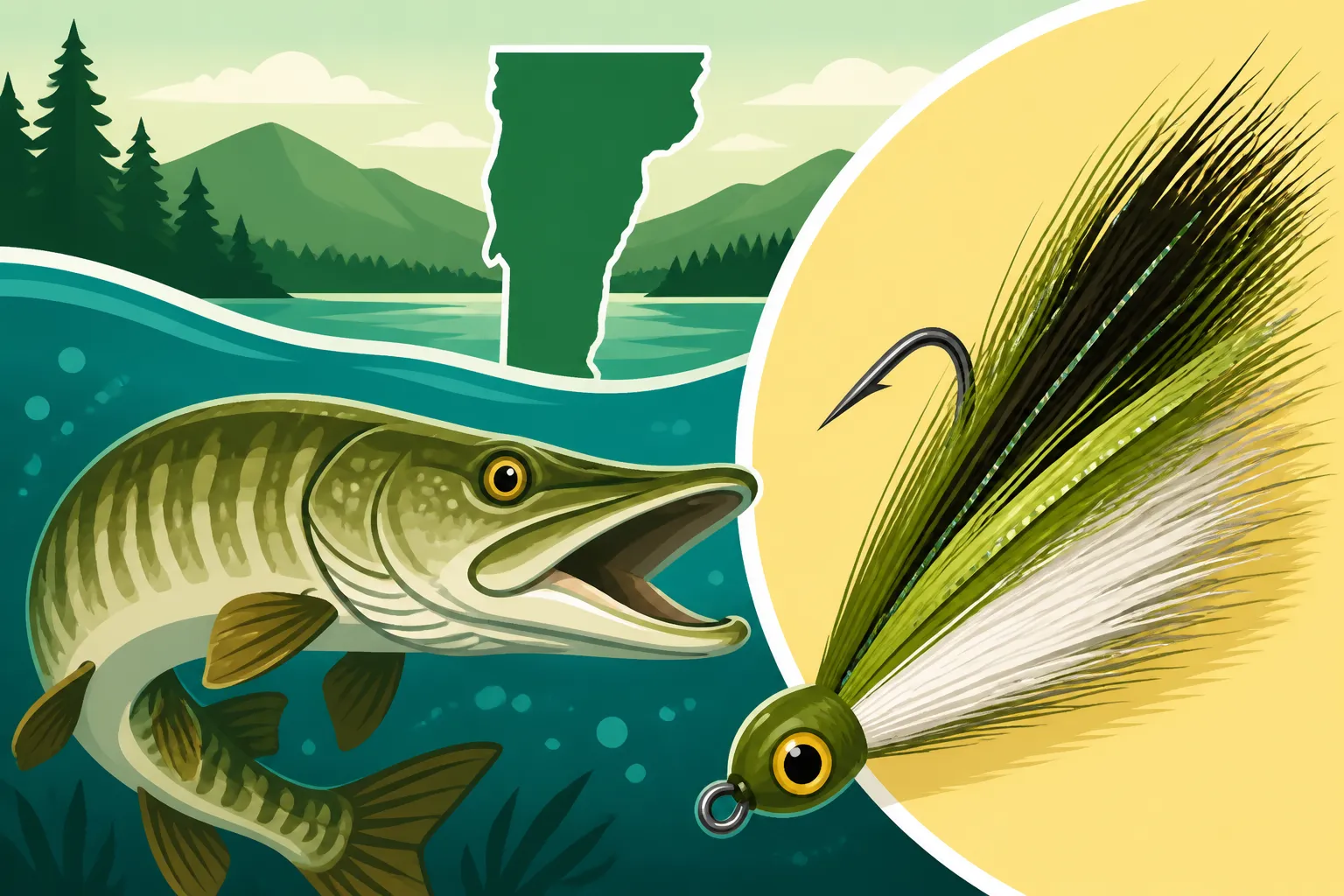
Best bucktail for muskellunge fishing
If you've ever chased muskellunge in Vermont, you know the exhilarating challenge that comes with trying to hook one of these magnificent predators. They're often called the "fish of a thousand casts" for a reason! One of the most effective tools in a musky angler's arsenal is the bucktail, and choosing the right one can feel overwhelming with all the options out there. This guide is here to demystify the world of musky bucktails, helping you pick the perfect lure to entice that trophy fish in Vermont's waters.
Understanding Muskellunge and Their Bucktail Preferences
Muskellunge, or musky as they're affectionately known, are apex predators, built for ambush and powerful strikes. Their entire being is geared towards consuming large prey, and the bucktail, in its various forms, mimics that prey better than almost any other artificial lure. But it's not just about throwing any bucktail; it's about understanding why they work and how to match them to the musky's mood and environment.
Why Bucktails Reign Supreme for Musky
Bucktails have earned their legendary status in the musky fishing world for a multitude of reasons. First and foremost, they provide an irresistible combination of flash, vibration, and erratic movement that perfectly imitates fleeing baitfish. The spinning blades create a distinct thumping vibration that muskellunge can feel through their lateral line from a good distance, especially in stained or deeper water. Think of it as a dinner bell ringing across the lake. The flash, particularly from polished or painted blades, can catch a musky's eye from afar, acting as a visual beacon. When you retrieve a bucktail, the bucktail skirt pulsates and breathes in the water, mimicking the tail-kicking action of a desperate baitfish. This lifelike movement, combined with the often-included flashabou strands, creates an illusion of size and vulnerability that a musky simply can't ignore. It’s a full sensory assault that triggers their predatory instincts, making them an essential tool for anyone serious about Muskellunge Fishing on Lake Memphremagog.
Beyond their direct appeal, bucktails are incredibly versatile. You can burn them across the surface, rip them through weed beds, or slow-roll them along drop-offs. Their relatively simple design makes them durable, able to withstand the brutal power and sharp teeth of a musky strike. Unlike some more delicate lures, a well-built bucktail can take a beating and keep on catching fish. The combination of robustness and allure makes them a go-to choice for anglers, offering confidence with every cast.
Reading the Water: Musky Behavior and Bucktail Choice
Successfully selecting a bucktail goes beyond just picking a pretty lure; it involves understanding the specific conditions of the water you're fishing and how that influences musky behavior. Water clarity, for instance, plays a huge role. In clear waters, like some of Vermont's pristine lakes, a musky relies heavily on its eyesight. Here, natural patterns and subtler flashes might be more effective, mimicking the forage more precisely. Conversely, in stained or murky conditions, perhaps after a heavy rain on a river system, visibility is low. This is when loud, vibrant bucktails with strong thumping blades become your best friend, as the musky will rely more on its lateral line to detect vibrations. Bright colors like chartreuse, orange, or firetiger can also stand out better in these low-visibility situations.
Water temperature and time of year also dictate musky activity and preferred forage. In colder water, during early spring or late fall, muskellunge are often more lethargic, preferring slower presentations. Smaller bucktails or those with a wider, slower-spinning blade (like a Colorado) that generate a heavy thumping action at slow speeds can be highly effective. They create a big profile and vibration without requiring a fast retrieve, allowing a sluggish musky to track and commit. As the water warms in summer, muskies become more aggressive and active. This is when larger, faster-spinning bucktails with willowleaf blades that you can "burn" at high speeds often shine. They trigger reaction strikes from highly active fish covering vast amounts of water. Observing the prevalent baitfish in the system you’re fishing is also key. Are there schools of smelt, alewives, or shiners? Choosing bucktail colors and sizes that imitate these local forage species can significantly increase your success rate. For instance, if you know the lake is full of perch, a bucktail with green, yellow, and orange hues could be deadly.
Anatomy of a Top-Tier Musky Bucktail
Not all bucktails are created equal. When you're dropping your hard-earned cash on these specialized lures, especially when you can find a huge selection at places like Bass Pro Shops or on Amazon, you want to know you're getting something that will stand up to the challenge of a Vermont musky. The components of a bucktail work in harmony to create its fish-catching appeal and its durability.
Blade Styles and Their Impact
The blades are the heart of any bucktail, dictating its vibration, flash, and how it swims through the water. There are three primary blade styles, each with its own characteristics and ideal fishing scenarios:
- Colorado Blades: These are wide, round blades that create maximum vibration and lift in the water, even at slower retrieve speeds. They "thump" very hard, sending strong sonic waves that muskies can detect from a distance, particularly useful in stained water, low light, or when muskies are less active and need a slower presentation. Their wider profile also makes them good for fishing through heavier cover without snagging as much. However, they can create a lot of drag, making for a harder retrieve, especially with larger sizes.
- Willowleaf Blades: Long and slender, willowleaf blades offer less vibration but maximum flash and a faster, more erratic action. They cut through the water with less resistance, allowing for high-speed retrieves, often referred to as "burning." This style is fantastic for active muskies in clear water or when you want to cover a lot of water quickly to find fish. They don't create as much lift, so they tend to run a bit deeper at the same retrieve speed compared to a Colorado.
- Indiana Blades: A hybrid between Colorado and willowleaf, Indiana blades offer a good balance of flash and vibration. They are tear-drop shaped and spin with a moderate thumping action. If you're looking for a versatile bucktail that performs well in a variety of conditions – not too slow, not too fast, a decent amount of flash and vibration – the Indiana blade is an excellent middle-ground choice. It's often a great starting point when you're unsure what the musky might prefer on a given day, providing a consistent, appealing action.
Understanding these blade differences is crucial. For instance, if you're fishing a colder northern Vermont lake in early spring, a Colorado blade might coax a reluctant musky, while a hot summer day on Lake Champlain could call for the speed and flash of a willowleaf to trigger aggressive strikes. Best Trolling Gear for Lake Champlain Walleye often involves similar considerations for blade type, though for different species.
Skirt Material, Color, and Flashabou
The skirt is the visual appeal of the bucktail, providing bulk, profile, and irresistible undulation in the water. Historically, bucktails used deer hair (hence the name "bucktail"), which still remains a premium material due to its natural buoyancy and lifelike pulsation. Modern bucktails often incorporate synthetic materials, sometimes blended with natural hair, to offer enhanced durability, color retention, and varying degrees of shimmer.
The choice of color is paramount. Natural patterns like black, brown, white, or various shades of green are excellent for clear water conditions, mimicking actual baitfish. Think about the local forage in Vermont: shiners, perch, smelt. Matching these natural colors can be incredibly effective. On the other hand, bright, vibrant colors like chartreuse, hot pink, firetiger, or fluorescent orange are phenomenal for stained water, low light conditions (dawn, dusk, cloudy days), or simply to trigger an aggressive reaction strike from an annoyed musky. Sometimes, a loud, unnatural color is exactly what's needed to pique a musky's curiosity.
Flashabou, those shimmering strands often woven into the bucktail skirt, adds another layer of attraction. It reflects light, mimicking the scales of a baitfish, and creates additional sparkle and movement that can draw a musky from a distance. The amount and color of flashabou can be customized; sometimes a lot of silver or gold flash is key, while other times a subtle hint of color-matched flashabou is preferred. The goal is to create a dynamic, lifelike profile that appears substantial and enticing in the water. Remember, a musky is looking for a meal, and a big, pulsating, shimmering bucktail often looks like an easy one.
Hook Selection and Construction Quality
When it comes to musky fishing, hook quality isn't just important; it's absolutely critical. A musky's mouth is notoriously hard and bony, and their powerful runs can straighten out inferior hooks in a flash. Look for bucktails equipped with heavy-duty, super-sharp treble hooks. Many bucktails feature two treble hooks, strategically placed to maximize hook-ups. Some anglers prefer single, in-line hooks for easier release and less damage to the fish, but trebles generally offer a better chance of penetrating a musky's tough jaw. Regardless of the configuration, ensure the hooks are chemically sharpened and strong enough to withstand immense pressure. Brands that prioritize robust hook sets, often with premium high-carbon steel, are worth the investment.
Beyond the hooks, the overall construction of the bucktail needs to be top-notch. The wire shaft, which runs through the core of the lure, must be made of heavy-gauge stainless steel to prevent bending or breaking during a fight. The connection points for the blades and hooks should be stout and secure, typically using heavy-duty split rings or welded rings. Everything on a musky bucktail is under extreme stress, from the initial cast and retrieve to the brutal thrashing of a hooked musky. Flimsy components will lead to lost fish and lost lures, which is a frustration no angler wants to endure after that "fish of a thousand casts" finally bites. Taking a moment to inspect the hardware, from the clevises holding the blades to the split rings on the hooks, can save you a lot of heartache down the line. Many reputable manufacturers understand this and build their musky bucktails like tanks.
Top Bucktail Types and When to Use Them on Vermont Waters
The variety of bucktails on the market can be daunting, but understanding the common classifications can help you narrow down your choices for Vermont's diverse musky waters, from the broad expanse of Lake Champlain to the more intimate corners of Lake Memphremagog.
| Bucktail Type | Blade Configuration | Ideal Conditions | Retrieve Speed | Vibration Level | Flash Level | Typical Use Case |
|---|---|---|---|---|---|---|
| Single-Blade | 1 Colorado, Indiana, or Willow | Pressured fish, clear water, subtle presentation | Slow to Medium | Low to Medium | Medium | Finesse musky, cold front, shallow weed lines |
| Double-Blade | 2 Colorado, Indiana, or Willow | Active fish, searching, stained to clear water | Medium to Fast | Medium to High | High | Covering water, reaction strikes, most common situations |
| Tandem Spinnerbait | 1 or 2 blades on an arm, jighead | Weed beds, submerged timber, vertical cover | Slow to Medium | Medium | Medium | Snag-resistant, targeting specific structure, mimicking bottom-hugging baitfish |
| Oversized Bucktail | 2 large Colorado or Willow blades | Trophy hunting, aggressive fish, deep water | Medium (requires effort) | High | Very High | Big fish, open water, triggering monster bites |
Single-Blade Bucktails: Subtle Seduction
Sometimes, less is more, especially when targeting wary muskellunge. Single-blade bucktails offer a more subtle presentation than their double-bladed counterparts, making them an excellent choice for specific scenarios. They typically create less vibration and flash, which can be advantageous in clear water, where a musky might get spooked by an overly aggressive lure. Think of fishing on a bright, sunny day on a calm, clear lake—a single-blade bucktail can often provide just enough enticement without appearing unnatural or intimidating.
They also excel when muskies are pressured or in a neutral to negative mood, perhaps after a cold front has moved through or during the notorious "lull" periods. A musky that might ignore a larger, more boisterous lure could be tempted by the more modest profile and action of a single-blade. These bucktails are also easier to cast and retrieve for longer periods, causing less fatigue for the angler, which can be a real plus during a long day of casting. While they might not cover water as quickly as a double-bladed lure, their ability to generate strikes in tougher conditions makes them an invaluable part of a musky angler's tackle box. Don't underestimate the power of a quiet approach when fishing some of Vermont's more heavily fished waters.
Double-Blade Bucktails: The Power Players
When you think of musky bucktails, the double-blade versions are often what come to mind, and for good reason. These are the workhorses of musky fishing, designed to create maximum flash, vibration, and a substantial profile in the water. With two blades spinning, they displace a significant amount of water, sending out powerful thumps and creating an impressive visual spectacle that is hard for an active musky to ignore. This makes them ideal for covering large expanses of water quickly, trying to locate active fish, or triggering aggressive reaction strikes.
Double-blade bucktails are particularly effective in stained or turbid waters where visibility is limited, as the intense vibration is easily picked up by a musky's lateral line. They also shine in situations where muskies are known to be aggressive, such as during prime feeding windows or in warmer summer months. Whether you're burning them over shallow weed flats on Lake Champlain or retrieving them along deep breaks on a cooler Lake Memphremagog day, double-blade bucktails are designed to demand attention. The combination of size, sound, and flash makes them an irresistible offering to a hungry musky, often provoking the kind of violent strikes that musky anglers live for. You'll find a wide array of these at any serious tackle shop, and browsing online at places like Amazon will show you just how many options there are. Many seasoned musky anglers would agree that if you could only choose one style, a robust double-blade bucktail would be it.
Specialty Bucktails: For Specific Situations
While single and double-blade bucktails cover most scenarios, there are times when a more specialized approach is needed. These specialty bucktails are designed to address unique fishing situations or target muskies exhibiting particular behaviors.
One popular variation is the tandem spinnerbait, often featuring blades on a wire arm connected to a jighead with a bucktail or synthetic skirt. These are incredibly effective when fishing around heavy cover like submerged timber, dense weed beds, or rock piles. Their design makes them far more snag-resistant than traditional bucktails, allowing you to probe areas where muskies love to ambush prey but where other lures would quickly get hung up. The jighead also allows for a slower, more vertical presentation, appealing to muskies holding tight to structure.
Another category includes oversized bucktails or those with unique blade configurations, such as giant "cowgirl" style lures. These behemoths are designed for extreme situations, often targeting the largest, most aggressive muskies in vast bodies of water. Their sheer size and incredible vibration are meant to trigger a predatory response from truly monster fish. While retrieving these can be a workout, the potential reward of a true trophy musky makes the effort worthwhile for dedicated anglers.
Finally, some specialty bucktails incorporate unique features like rattling chambers, weighted heads for deeper running, or specific flash patterns designed to imitate particular baitfish. These are often used when muskies have seen standard presentations countless times or when you're trying to dial in on a very specific bite. Keeping a few of these specialized options in your arsenal ensures you're prepared for whatever challenge Vermont's musky waters throw at you, from Vermont Lake Champlain Fishing Rules to the specific structure on smaller musky lakes.
Techniques for Fishing Bucktails Effectively
Getting the right bucktail is only half the battle; knowing how to fish it effectively is where the real magic happens. Muskellunge are notoriously finicky, and presentation can often be the deciding factor between a follow and a strike.
The Figure-Eight and Other Retrieves
The "figure-eight" is perhaps the most iconic and crucial retrieve technique in musky fishing, especially when using bucktails. Many musky will follow a bucktail right up to the boat, inspecting it closely, but never commit. This is where the figure-eight comes in. Instead of simply lifting your lure out of the water, plunge your rod tip into the water at the boat side and make a wide, continuous figure-eight pattern with your lure. This keeps the bucktail in the water and moving erratically, often triggering a follow-up strike from a musky that was previously hesitant. It mimics a wounded baitfish making a desperate last dash, and it's responsible for an incredible number of musky hook-ups. Practice this maneuver until it becomes second nature – it can be a game-changer.
Beyond the figure-eight, varying your retrieve speed is paramount. Sometimes a fast, steady burn is what an active musky wants, creating a blur of flash and vibration. Other times, a stop-and-go retrieve, or a series of short rips followed by pauses, can be more effective, especially in colder water or when fish are neutral. This erratic action can make the bucktail appear more injured and vulnerable, triggering a musky's predatory response. Pay attention to how the musky reacts – if they follow but don't commit, try changing your speed or adding pauses. If they hit short, try speeding up or adding a sudden surge. There’s no single right answer; experimentation is key to cracking the code on a given day. How to Catch Muskellunge on a Figure-Eight Boatside goes into even more detail on this essential technique.
Rod, Reel, and Line for Bucktail Fishing
Fishing bucktails, particularly the larger double-bladed models, is physically demanding, so having the right gear is non-negotiable. Your rod, reel, and line need to be robust enough to handle the stress of casting heavy lures all day and battling powerful, large fish.
For a rod, you'll want a heavy to extra-heavy power baitcasting rod, typically between 8 to 9 feet in length. The longer length helps with casting distance, managing big fish, and executing that vital figure-eight maneuver. Look for a rod with a fast action, meaning it bends mostly in the tip, providing the sensitivity to feel the bucktail working and the backbone to drive hooks into a musky's bony jaw. Top manufacturers like St. Croix or Shimano make excellent musky-specific rods that can be found at places like Bass Pro Shops.
Matching that powerful rod, you need a heavy-duty baitcasting reel. Look for a low-profile or round-profile reel with a strong drag system and a high line capacity. Gear ratios in the 6.0:1 range are common, offering a good balance of power for retrieving big bucktails and speed for burning them. A smooth retrieve and a robust frame are essential for handling the constant cranking of large lures and the violent headshakes of a musky.
Finally, your line choice is critical. Braided line is the standard for musky fishing due to its incredible strength, minimal stretch, and excellent abrasion resistance. You'll typically want to use 80-100 pound test braided line. While this might seem like overkill, it's necessary for handling large lures, cutting through weeds, and enduring the brutal fight of a musky. Always tie a heavy fluorocarbon or wire leader (at least 80-130 pound test) to the end of your braided main line. This leader is essential for preventing bite-offs from a musky's razor-sharp teeth and protecting your valuable bucktails. Never skimp on leader material; it's the last line of defense between you and that trophy fish. This heavy-duty setup is a significant investment, but it ensures you're prepared for the fight of a lifetime on any Vermont lake. Best Line Weight for Muskellunge Fishing provides further insights into selecting the optimal line.
Disclaimer
This article is for general informational purposes only and does not constitute professional advice. Laws, prices and regulations vary by location and change over time. Consult a qualified professional for guidance on your specific situation.