Best Spoons for Walleye Trolling
It's a common frustration for any angler targeting walleye, especially on the expansive waters of Lake Champlain or other big Vermont lakes: you're out there trolling, putting in the time, but the fish just aren't biting. You start second-guessing your lure choice, wondering if that spoon is truly doing what it's supposed to do down there. This guide is here to help you navigate the often-confusing world of walleye trolling spoons, ensuring you pick the right ones and present them in a way that consistently puts more fish in your boat.
The Enduring Appeal of Trolling Spoons for Walleye
When you think about walleye, especially on a vast body of water, spoons might not be the very first lure that springs to mind for everyone. Many anglers lean towards stickbaits or worm harnesses. But let me tell you, dismissing spoons for walleye trolling would be a huge mistake, especially here in Vermont. There's a reason seasoned pros and even casual weekend warriors keep a dedicated box just for their trolling spoons; they simply work, often in situations where other lures fall flat.
Why Spoons Outshine Other Lures in Certain Situations
Think about a big lake like Champlain. It’s teeming with baitfish – smelt, alewives, shiners. Walleye are predators, and they're constantly on the hunt for these vulnerable forage species. Many of the most effective walleye spoons are designed to mimic a wounded or fleeing baitfish with an erratic, lifelike flutter. Unlike a rigid crankbait that has a consistent wobble, a spoon offers a more dynamic, unpredictable action that can often trigger a strike from a hesitant walleye. This becomes especially critical when fish are neutral or pressured, or when you're covering vast amounts of water to find scattered schools. The unique flash and wiggle of a spoon can be seen and felt from a greater distance, drawing fish in that might otherwise ignore a more subdued offering.
Understanding the Flash and Flutter Action
The magic of a trolling spoon lies in its action, which is primarily driven by its shape and material. As it's pulled through the water, a well-designed spoon doesn't just swim; it flutters, wobbles, dances, and flashes. This isn't a simple side-to-side movement; it's a combination of movements that creates an illusion of life. The way light reflects off the spoon's curved or hammered surface as it tumbles and rolls is what we call "flash." This flash is incredibly important in attracting walleye, particularly in stained or deeper water where visibility is limited. It's like a beacon, signaling a potential meal. The "flutter" refers to the more subtle, side-to-side quiver or vibration that can imitate a struggling baitfish, sending out irresistible vibrations through the water that a walleye's lateral line can detect from afar. Understanding this dynamic interplay of flash and flutter is key to selecting the right spoon for the conditions you're facing.
The Versatility of Spoons in Varying Conditions
One of the greatest strengths of trolling spoons is their sheer versatility. Whether you're targeting walleye shallow in the spring, down deep in the summer, or suspended over structure in the fall, there's a spoon that can get the job done. They can be trolled at a wide range of speeds, from a slow, deliberate crawl that maximizes wobble and flash, to a faster pace that triggers a more erratic, fleeing action. You can present them behind planer boards, on leadcore line, with snap weights, or precisely at depth with downriggers. This adaptability makes them an invaluable tool for covering different depths and targeting walleye in various moods and locations. If the walleye are keyed into a particular baitfish profile or action, you can almost always find a spoon that mimics it perfectly, often making them a secret weapon in an angler's arsenal for How to Catch Walleye on Lake Champlain.
Decoding Spoon Characteristics for Walleye Success
Choosing the right spoon isn't just about grabbing the prettiest one from the tackle shop. Walleye are finicky, and paying attention to the details of your spoon can make all the difference. We're talking about more than just color; the size, profile, and even the material can significantly impact how your lure performs and how many strikes you get. It’s about being a detective, matching your offering to what the walleye are seeing and eating.
Size and Profile: Matching the Forage
The "size" of a spoon refers to its overall length, while "profile" describes its shape and width. These two characteristics are paramount because they directly mimic the baitfish that walleye are feeding on. On Lake Champlain, for instance, walleye often feast on rainbow smelt, which are slender. In other lakes, they might be targeting broader shiners or alewives. If the walleye are feeding on small, slender smelt, a long, narrow spoon (often called a "flutter spoon") in the 2- to 3-inch range is often deadly. If they're keying in on larger, wider baitfish, a shorter, wider spoon might be more effective.
The general rule of thumb is to "match the hatch," meaning you select a spoon that closely resembles the size and shape of the dominant forage fish in the water you're fishing. Too big, and you might intimidate them; too small, and it might not be worth their energy to chase. Think about the stage of the baitfish development, too. Early in the season, young-of-the-year baitfish are small, so downsizing your spoon can be a smart move. As the season progresses and baitfish grow, you might need to size up your presentation accordingly.
Color Selection: Beyond Basic Brightness
Color is probably the most debated aspect of spoon selection, and for good reason—it really does matter. However, it's not as simple as "bright colors for bright days" or "dark colors for dark days." While those general guidelines can be a starting point, walleye color preferences can be incredibly nuanced, influenced by water clarity, light penetration, depth, and even the fish's mood.
Consider these color strategies:
- Natural/Realistic Patterns: Silver, gold, chrome, and various baitfish patterns (like perch, smelt, or shad) are excellent starting points. They mimic natural forage and are often effective in clear water or when fish are pressured. Brands like Bass Pro Shops offer a wide array of these realistic patterns.
- Bright/Flashy Colors: Chartreuse, orange, firetiger, and various fluorescent combinations excel in stained or murky water, low-light conditions (dawn/dusk), or deeper water where other colors lose their vibrancy. The UV properties in some of these colors can make a huge difference in attracting attention.
- Darker/Silhouette Colors: Black, purple, or dark blue can create a strong silhouette against a brighter sky, making them effective on bright, sunny days or when walleye are looking up from below. They can also be surprisingly potent in clear water.
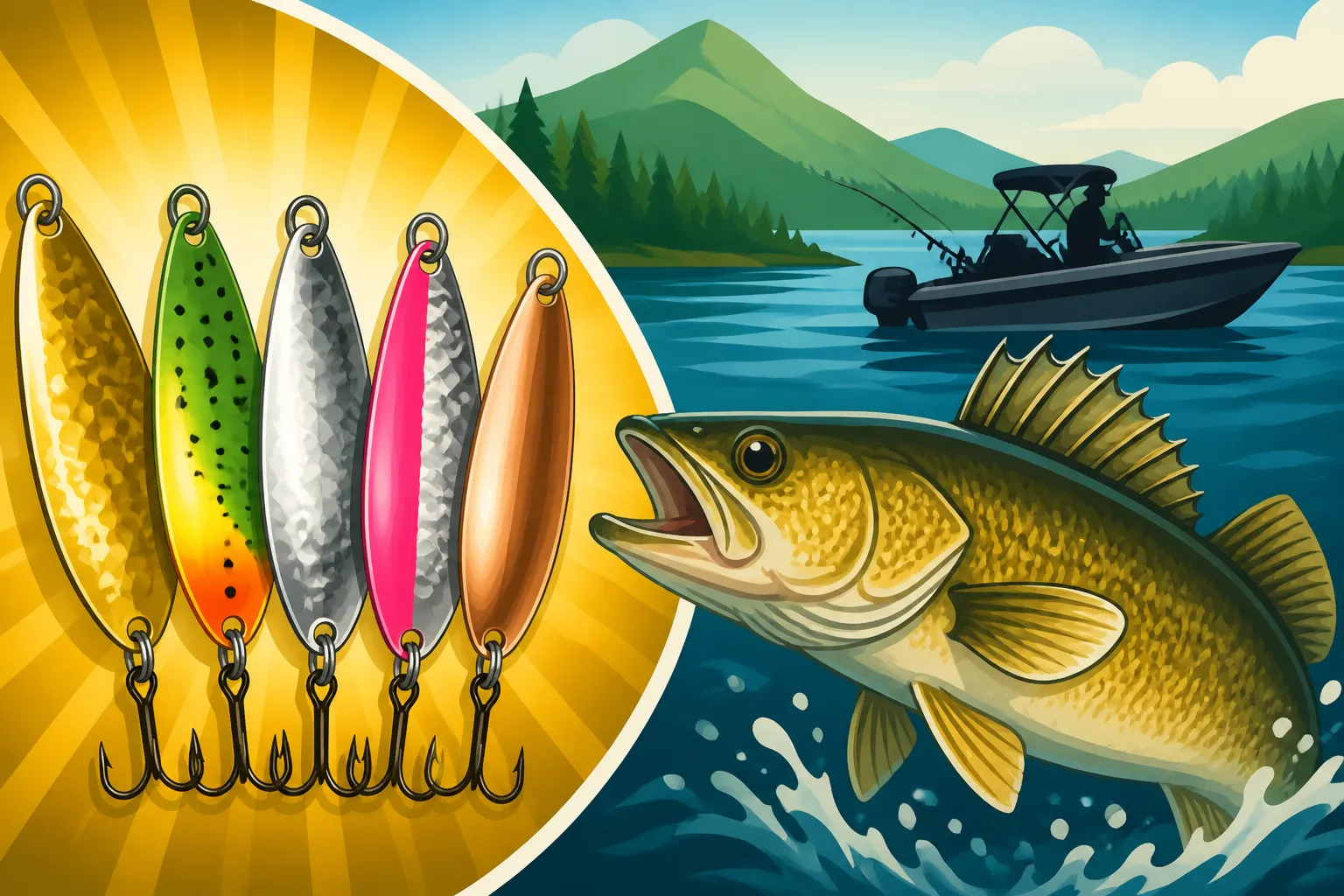
- Metallic Finishes: Silver, gold, and copper provide different types of flash. Silver is generally good in clear water, mimicking many baitfish. Gold can be excellent in tannic or stained water, adding a warm glow. Copper is often a secret weapon on overcast days or in certain water bodies.
It's always a good idea to start with a couple of tried-and-true colors and then experiment. If you're fishing with multiple lines, deploy different colors and sizes until you find what the walleye are responding to on that particular day. Keeping an assortment of spoons with various color combinations is essential for successful walleye trolling, and browsing the selection on Amazon can help you visualize the breadth of options available.
Material and Construction: Durability and Action
The material and construction of a spoon significantly dictate its action, durability, and even its sound signature underwater. Most spoons are made from brass, copper, or steel, which are then plated with chrome, gold, or silver, and often painted.
- Thicker vs. Thinner Metal: Thicker, heavier spoons tend to sink faster and have a tighter wobble, making them suitable for deeper presentations or faster trolling speeds. Thinner, lighter spoons, often called "flutter spoons," have a wider, more erratic, and tantalizing action, especially at slower speeds. They are excellent for suspended fish or when you want maximum flash and roll.
- Hammered vs. Smooth Finish: A hammered finish on a spoon creates more facets for light to reflect off, potentially increasing flash and attraction. A smooth finish offers a consistent, broader flash. There's no hard and fast rule for which is better; sometimes one outperforms the other based on water clarity and light conditions.
- Hook Quality: Don't overlook the hook! Many stock hooks on spoons, especially budget options, can be dull or weak. Walleye have bony mouths, and a sharp, strong hook is critical for solid hooksets and keeping fish pinned. Consider upgrading to quality treble hooks like those from Gamakatsu or VMC if your spoons come with subpar ones. A strong split ring is also important to ensure the hook hangs freely and doesn't impede the spoon's action.
Essential Spoon Styles and Their Applications
While the market is flooded with countless spoon designs, most fall into a few key categories based on their intended action. Understanding these core styles will help you choose the right tool for the job, rather than just picking a pretty color. Each style has its unique dance in the water, and knowing when to deploy which one is a hallmark of a skilled walleye troller.
Classic Casting Spoons Adapted for Trolling
Some of the most iconic fishing lures started as casting spoons but have proven incredibly effective when adapted for trolling, especially for species like walleye. These spoons often have a slightly heavier gauge metal and a more pronounced curve, giving them a distinct, often tighter, wobbling action when pulled through the water.
- Dardevle Spoons: The classic "red and white stripe" is instantly recognizable and has caught countless fish. Dardevle spoons, with their distinctive oblong shape and pronounced bend, produce a strong, rhythmic wobble that can be irresistible to walleye. They come in various sizes and are fantastic for targeting walleye in medium depths or when fish are aggressively feeding. Their solid construction makes them durable, able to withstand repeated attacks from toothy predators. They can be trolled effectively at moderate speeds, and the larger sizes can even attract bigger walleye on Lake Champlain.
- Doctor Spoons: Similar to Dardevles but often with a slightly different curvature, Doctor Spoons offer a powerful thumping action. These are great for generating a lot of vibration, which can be beneficial in stained water or when trying to call fish in from a distance. They are often a top choice when walleye are scattered and you need a lure that really broadcasts its presence.
These classic spoons often mimic larger baitfish with a more pronounced, wounded action, making them excellent choices when walleye are feeding on substantial forage or when you want to create a strong presence in the water. They can be particularly effective during the fall when walleye are bulking up for winter and are looking for a hearty meal.
Dedicated Trolling Spoons: Flutter and Wobble
When it comes to specialized walleye trolling, there's a category of spoons designed specifically for that purpose. These lures are typically thinner and lighter, engineered to create maximum flutter and flash with minimal effort, even at slower trolling speeds.
- Flutter Spoons (e.g., Michigan Stinger, Dreamweaver, Northern King): These are often the go-to for serious walleye trollers, especially on big water like Lake Champlain. They are characterized by their thin metal and graceful, exaggerated S-curve. When trolled, they don't just wobble; they dance and roll, creating an incredible amount of flash as they rotate on their axis. This action perfectly imitates a dying or distressed baitfish, making them incredibly attractive to walleye. They are highly effective when fish are suspended in the water column or when you need a subtle, natural presentation. You'll find them in a dizzying array of sizes and colors, allowing for precise matching to local forage and conditions. When trolling with downriggers or planer boards, these spoons provide maximum action even with minimal resistance, making them highly efficient.
- Wobble Spoons (e.g., Little Cleo): While the Little Cleo can be cast, its elegant, exaggerated S-bend makes it an incredible trolling spoon as well. It provides a unique, wide-wobbling action that's somewhere between the tight throb of a Dardevle and the erratic dance of a flutter spoon. The Little Cleo is particularly effective for imitating a larger, healthier baitfish, yet still offers enough unpredictable movement to trigger strikes. Its heavier gauge can also help it run slightly deeper without additional weight.
These dedicated trolling spoons are often preferred because their action is optimized for the controlled, continuous movement of trolling. They minimize drag while maximizing the visual and vibrational appeal to walleye. Anglers often experiment with different flutter and wobble spoons to find the specific "tune" that the walleye prefer on a given day. You can often find great multi-packs of these popular styles at stores like Bass Pro Shops, giving you a variety to try.
Specialty Spoons for Unique Walleye Scenarios
Beyond the mainstream choices, there are some specialty spoons that can be game-changers in specific walleye fishing situations. These might not be your everyday go-to, but having a few in your tackle box can give you an edge when conditions call for something different.
- Weighted Spoons: While most trolling spoons rely on additional weights (like snap weights or leadcore) to get to depth, some spoons come pre-weighted. These are useful when you want to fish a specific depth without a lot of extra rigging, offering a more direct presentation. They can be particularly useful when jigging or casting spoons in conjunction with trolling passes, providing versatility from a single lure.
- Rattling Spoons: A newer innovation, rattling spoons incorporate internal beads or chambers that create an audible noise in the water. This added sound can be a huge advantage in extremely murky water, low light, or when walleye are lethargic and need an extra stimulus to locate and strike your lure. The combination of flash, flutter, and sound can be a potent attractant. However, in very clear water or when fish are spooky, the added noise might be a deterrent, so use them judiciously.
Here's a quick comparison of popular spoon types for walleye trolling:
| Spoon Type | Action Profile | Ideal Speed Range | Primary Use | Best Conditions |
|---|---|---|---|---|
| Dardevle | Strong, Rhythmic Wobble | Moderate to Fast | Aggressive fish, deeper water | Stained to clear water, active bite |
| Doctor Spoon | Powerful Thump, Vibration | Moderate to Fast | Calling fish from a distance, strong presence | Murky water, low light, scattered fish |
| Flutter Spoon | Erratic Dance, High Flash | Slow to Moderate | Suspended fish, subtle presentation, mimicking hurt bait | Clear water, neutral fish, light bite |
| Little Cleo | Wide Wobble, Natural Roll | Slow to Moderate | Imitating larger baitfish, versatile depth | Clear to stained water, varying aggression levels |
| Weighted Spoon | Tight Wobble, Direct Sink | Any | Jigging, deeper trolling without external weight | Specific depth targeting, vertical presentation |
| Rattling Spoon | Wobble + Sound | Slow to Moderate | Low visibility, lethargic fish, attracting attention | Murky water, deep water, low light |
Remember, the goal is to have a diverse selection in your tackle box so you can adapt to whatever the walleye are telling you. Best Lures for Walleye Trolling on Lake Champlain delves deeper into these and other lure options.
Mastering Presentation: Rigging and Speed for Trolling Spoons
Having the best spoon is only half the battle; knowing how to present it effectively is where real angling skill comes into play. Trolling spoons for walleye isn't just about dropping a line in the water and driving around. It's a nuanced art that requires attention to detail regarding leader length, depth control, and boat speed. Get these elements dialed in, and you'll dramatically increase your strike rate.
The Art of Leader Length and Line Selection
The connection between your main line and your spoon is crucial, and it's often an overlooked detail. Walleye have excellent eyesight, especially in clearer waters, and a thick, visible main line can spook them.
- Leader Material: Fluorocarbon is your best friend here. It's nearly invisible underwater, extremely abrasion-resistant (helpful if you're ticking bottom or dealing with zebra mussels), and provides excellent knot strength. A good fluorocarbon leader, typically 10-15 lb test, will give your spoon the natural action it needs without making the fish wary.
- Leader Length: This is where it gets a bit artistic. Generally, a 4- to 8-foot leader is a good starting point. A longer leader provides more natural action to the spoon, allowing it to flutter and dance freely, uninhibited by the main line. However, excessively long leaders can make landing fish difficult, especially if you're netting them solo. Experiment with different lengths. Sometimes a shorter leader (3-4 feet) might be better if you're using a diving device that the fish are less likely to spook from.
- Main Line: For trolling with planer boards or snap weights, a good quality monofilament or braided line will work for your main line. Braided lines offer superior sensitivity and no stretch, which can be great for detecting subtle bites and getting solid hooksets over long distances. If using braid, a mono or fluorocarbon leader is even more critical due to braid's visibility underwater.
Achieving Depth: Downriggers, Dipsy Divers, and Leadcore
Walleye can be found at various depths throughout the season, and getting your spoon precisely into the strike zone is non-negotiable. Luckily, there are several effective methods to achieve this. Best Trolling Gear for Lake Champlain Walleye goes into more detail on these essential tools.
- Downriggers: These are the most precise tools for depth control. A heavy ball (cannonball) is deployed to a specific depth, and your fishing line, with the spoon attached, is clipped to a release mechanism on the downrigger cable. When a fish strikes, the line pops free, allowing you to fight the fish directly. Downriggers keep your spoon at a consistent depth, regardless of line out or boat speed, which is invaluable for targeting walleye holding to specific thermoclines or structure. They are especially effective for targeting deep-water walleye during the summer on larger lakes like Champlain. Best Downriggers for Walleye Trolling provides an in-depth look at these.
- Dipsy Divers (or similar diving planers): These devices clip onto your main line and use water pressure to dive to a predetermined depth, simultaneously pulling your lure away from the boat. They come in various sizes and can be set to run to the side, covering a wider swath of water. Dipsy Divers are excellent for spreading out your lines and presenting spoons at consistent depths without the bulk of downriggers. They're a fantastic choice for both shallow and mid-depth walleye.
- Leadcore Line: This specialized line has a lead core wrapped in a braided sheath. The lead's weight causes the line to sink, with each "color" (usually 10 yards) of leadcore sinking to a predictable depth at a given speed. Leadcore is fantastic for covering a wide range of depths and is particularly effective when walleye are scattered or when you're searching for their preferred depth. It's often used with long leaders to let the spoon work naturally.
- Snap Weights and Inline Weights: These are simple, versatile tools. A snap weight is a removable lead weight that clips onto your main line at a set distance in front of your spoon. Inline weights are tied directly into your line. They are excellent for achieving shallower to mid-range depths or for making quick adjustments without re-rigging. They're very popular for putting spoons in the top 15-25 feet of the water column.
The key is to use a depth finder to identify where the walleye are holding or where the baitfish are concentrated, and then use these tools to get your spoons into that exact zone. Remember that variables like line diameter, trolling speed, and current will all influence the actual running depth of your spoon, so some experimentation is always required. How deep to troll for walleye on Lake Champlain is a useful resource for understanding depth dynamics.
Trolling Speed and Direction: Unlocking the Action
Boat speed is arguably the most critical factor in making your spoon come alive and attracting walleye. Every spoon has a "sweet spot" speed where its action is maximized, but walleye often respond to variations.
- Speed Range: Most walleye spoons are effective at speeds between 1.0 and 2.5 miles per hour. Faster speeds will make spoons run higher and have a more frantic, erratic action, while slower speeds will give them a wider, deeper wobble.
- Experimentation: Don't be afraid to vary your speed. Sometimes a slight acceleration or deceleration (even by 0.1-0.2 mph) can trigger a strike from following fish. A common tactic is to perform "S-turns" with your boat. As you turn, the spoons on the inside of the turn will slow down and drop, while the spoons on the outside will speed up and rise. This change in speed and depth can often be the trigger walleye need to commit.
- Direction and Current: Trolling with or against the current can also impact your spoon's action. Trolling with the current generally requires a slightly faster boat speed to achieve the same lure speed relative to the water. Pay attention to how the current affects your lure and adjust your boat speed to maintain the desired action.
- Monitor Your Rod Tips: Watch your rod tips closely. A healthy, rhythmic bend and pulsation indicate your spoon is running correctly and has good action. If a rod tip goes limp, you might have picked up weeds or a small fish, or your spoon might be fouled.
- GPS and Speed Control: Using a GPS-enabled fish finder or dedicated GPS unit to monitor your precise speed over ground and through water is essential for consistent trolling. Modern trolling motors with GPS "spot-lock" or speed control features make this much easier, allowing you to maintain precise speeds even in windy conditions.
Seasonal Strategies for Spoon Trolling in Vermont
Walleye behavior changes dramatically throughout the year, primarily driven by water temperature, spawning cycles, and baitfish movements. A spoon that's deadly in spring might be ignored in summer if you don't adjust your tactics. Understanding these seasonal shifts is crucial for consistent success when spoon trolling in Vermont.
Spring Walleye: Cold Water and Pre-Spawn Patterns
Spring is a time of awakening for walleye, and it kicks off with the pre-spawn period. As ice leaves the lakes, walleye begin to stage in shallower areas, often near spawning grounds like rocky reefs, river mouths, or sandy flats. The water is cold, and fish can be lethargic, but they are also preparing to feed.
- Spoon Selection: In cold water, a slow, deliberate presentation is often key. Thin, flutter-style spoons that have a wide, enticing wobble even at slow speeds are ideal. Colors that mimic cold-water baitfish like smelt or shiners (silver, blue, purple, or natural patterns) are often effective. Look for those 2-3 inch sizes.
- Depth and Speed: Walleye will often be in 10-25 feet of water, but they can move shallower, especially during overcast days or low light. Troll slowly, often at speeds between 0.8 and 1.5 mph, focusing on contour lines, points, and areas adjacent to river inflows. Use snap weights or light leadcore to get your spoons just above the bottom or suspended baitfish schools. The goal is to present a vulnerable meal that's easy for a cold-water walleye to intercept.
- Post-Spawn Adjustment: After spawning, walleye are often recuperating and can be harder to find. They'll gradually move to slightly deeper transition areas or move into main lake basins. Keep experimenting with both speed and depth, and don't be afraid to try slightly larger spoons as their metabolism picks up. This period can be tricky, but patience and covering water are vital.
Summer Walleye: Deep Water and Thermocline Tactics
As Vermont's waters warm up, walleye will generally retreat to deeper, cooler water. This is when the thermocline (the layer where warm surface water meets cooler deep water) becomes incredibly important. Walleye will often suspend in or just above the thermocline, especially if baitfish are concentrated there.
- Spoon Selection: Flutter spoons continue to shine in summer, especially longer, slender profiles that imitate smelt or alewives, common forage in deep lakes. While natural colors are always good, don't shy away from brighter, more aggressive patterns like firetiger or chartreuse, especially if you're trolling in deeper, darker water.
- Depth and Speed: This is prime time for using downriggers and heavy leadcore to put your spoons precisely in the thermocline, which might be anywhere from 20 to 60+ feet deep. Monitor your fish finder constantly for baitfish schools and walleye arches. Trolling speeds can range from 1.5 to 2.5 mph, sometimes even faster, as warmer water often means more aggressive fish. Experiment with S-turns to vary your spoon's action and depth. On Lake Champlain, particularly, understanding Walleye Spawning Season in Vermont and their subsequent summer movements is key.
- Low Light Aggression: Walleye are notoriously light-sensitive, so summer nights, dawn, and dusk can be incredibly productive times for trolling. They'll often move shallower during these periods, sometimes even into the top 10 feet of water. Use planer boards to spread out your lines and target these shallower areas effectively with flutter spoons or even classic casting spoons. Night Fishing for Walleye on Lake Champlain is a fantastic strategy to learn for this time of year.
Fall Walleye: Aggressive Feeding and Schooling Behavior
Fall is often considered a trophy walleye season. As water temperatures cool, walleye go on a major feeding binge, bulking up for the lean winter months. They'll often school up, making them challenging to locate but incredibly rewarding once you do.
- Spoon Selection: This is a great time to experiment with both flutter spoons and slightly heavier, more aggressive casting spoons like Dardevles. Walleye are often willing to chase a larger meal. Colors mimicking larger baitfish or even gaudy patterns can be effective. Consider spoons with a lot of flash, as the low autumn sun can make them pop.
- Depth and Speed: Walleye will start moving shallower again as the fall progresses, often congregating around prominent points, humps, and deep weed edges. They might be anywhere from 15 to 40 feet. Leadcore and dipsy divers are excellent for covering these depths. Trolling speeds can vary, but often 1.5 to 2.0 mph is a good starting point. Look for concentrations of baitfish on your sonar; the walleye won't be far behind. They'll often be feeding actively throughout the day, not just at dawn and dusk. This period can also be a great time to target Best Walleye Spots on Lake Champlain.
Each season presents its unique challenges and opportunities for walleye trolling. By understanding these patterns and adjusting your spoon selection, depth control, and trolling speed, you'll greatly improve your chances of success.
Maintaining Your Spoon Arsenal for Peak Performance
Even the most expensive, high-performing spoon won't do you any good if it's dull, rusty, or tangled. Proper maintenance and storage are critical to ensuring your spoon arsenal is always ready for action. Neglecting these simple steps can lead to lost fish, damaged lures, and unnecessary frustration. Think of your spoons as precision instruments; they deserve a little TLC after each outing.
Hook Sharpening and Replacement
This is probably the most overlooked aspect of spoon maintenance, and it's a huge mistake. A dull hook is responsible for more lost fish than almost any other factor. Walleye have tough, bony mouths, and a razor-sharp hook is essential for penetrating and holding firm.
- Sharpen Regularly: After every few fish, or even after a long day of trolling, check your hook points. Run your fingernail across the tip; if it slides, it's dull. If it digs in, it's sharp. Use a small, high-quality hook file or a diamond hook sharpener to hone the points. A few strokes can make a world of difference. Always sharpen away from the point, working on all three sides of a treble hook.
- Replace When Necessary: Sometimes, hooks get bent, corroded beyond repair, or simply sharpened down too much. Don't hesitate to replace them. Upgrading to premium, super-sharp treble hooks (like those from VMC or Gamakatsu) can significantly improve your hook-up ratio and ensure fish stay pinned. When replacing, make sure the new hook size matches the original to maintain the spoon's balance and action. You can find replacement hooks easily online or at local tackle shops like Bass Pro Shops.
Preventing Rust and Corrosion
Rust is the enemy of any metal lure, and spoons are particularly susceptible due to their material and exposed metal components. A rusty hook is a dull hook, and rust on the spoon itself can diminish its flash and overall appeal.
- Rinse After Use: After every fishing trip, especially if you've been in saltwater (though not common for Vermont walleye, it's a good habit) or murky water, rinse your spoons thoroughly with fresh water. This removes any corrosive elements like dirt, grime, or fish slime.
- Dry Completely: This is crucial. Never put wet spoons back into a tackle box or tray. Hang them up, lay them out on a towel, or use a fan to ensure they are completely dry before storage. Moisture is the leading cause of rust.
- Desiccants and Rust Inhibitors: Consider placing desiccant packets (like silica gel, often found in new product packaging) in your tackle box to absorb moisture. There are also specific rust-inhibiting products, like those from Zerust, that you can place in your tackle trays or incorporate into your storage solutions. These emit a vapor that protects metal from corrosion and can greatly extend the life of your spoons.
Organized Storage for Longevity
A jumbled mess of spoons in a tackle box is not only frustrating to sort through but can also lead to damaged lures and hooks. Proper organization protects your investment and makes you more efficient on the water.
- Dedicated Trays: Use tackle trays with adjustable compartments to keep spoons separated. This prevents hooks from tangling with other lures and protects the spoon's finish from scratches. Many anglers prefer shallow, individual trays for their trolling spoons so each one has its own slot.
- Soft-Sided Binders: For flutter spoons, which are often thin and prone to bending, specialized soft-sided lure binders with clear plastic sleeves are excellent. Each spoon gets its own sleeve, preventing tangles and damage. This also makes it incredibly easy to flip through and select the exact spoon you need.
- Labeling: Consider labeling your trays or sleeves by spoon type, size, or color pattern. This saves valuable time when you're trying to quickly match a lure to changing conditions on the water.
- Avoid Mixed Materials: Try to avoid storing different metal types (like brass and aluminum) in direct contact, as this can sometimes accelerate galvanic corrosion. While minor, it's another reason individual compartments are beneficial.
By taking these simple steps, your trolling spoons will remain sharp, shiny, and ready to entice those elusive Vermont walleye for seasons to come. You'll thank yourself when you're on the water and can quickly grab the perfect, pristine spoon without a moment's hesitation. Finding good storage solutions is easy on platforms like Amazon.
Disclaimer
This article is for general informational purposes only and does not constitute professional advice. Laws, prices and regulations vary by location and change over time. Consult a qualified professional for guidance on your specific situation.