Best ice fishing access on Lake Memphremagog
Finding the perfect spot to set up your ice fishing shanty on a massive, international body of water like Lake Memphremagog can feel incredibly daunting. It's not just about finding frozen water; it's about locating safe, accessible points that put you on fish, all while navigating regulations and knowing what to expect. This guide is here to cut through the confusion, offering a detailed look at the best ice fishing access points on Lake Memphremagog, along with crucial tips to make your next winter angling adventure a success.
Navigating Lake Memphremagog's Ice Fishing Landscape
Lake Memphremagog is a truly unique fishery, straddling the US-Canadian border with roughly two-thirds of its expansive 27-mile length residing in Quebec, Canada, and the southern third in Vermont. This grand scale, combined with its depth and diverse fish populations, makes it an incredible ice fishing destination, but also one that demands respect and careful planning. You're not just dealing with a small pond here; you're dealing with a dynamic, often windswept environment that requires specific knowledge to navigate safely and successfully.
The Unique Challenges of a Border Lake
Ice fishing on Lake Memphremagog means you're operating on a body of water shared by two nations. While most anglers stick to the Vermont side, it’s always wise to be acutely aware of where the border lies, especially if you're venturing further north. The primary challenge isn't just the sheer size of the lake, which can make locating fish tricky, but also the unpredictable nature of ice formation. Strong winds can sweep across the open stretches, causing pressure ridges, cracks, and areas of inconsistent ice thickness. Currents, particularly near the mouths of major tributaries like the Clyde River or areas where the lake narrows, can also create dangerous thin spots, even when other parts of the lake seem perfectly safe. Always consult local ice reports and never assume uniform conditions.
Beyond the physical challenges, there's the psychological hurdle of feeling overwhelmed by such a vast expanse. Many anglers, especially those new to Memphremagog, find themselves driving around, looking for signs of other fishermen, hoping to stumble upon a good spot. This can lead to wasted time and frustration. Understanding the lake's structure, potential hazards, and reliable access points upfront is key to turning a guessing game into a well-planned outing.
What Species to Target Through the Ice
Lake Memphremagog is a true multi-species haven, even in winter. Anglers flock to its frozen surface targeting an exciting array of cold-water species. Each has its own appeal and preferred habitat, influencing where you might set up your gear.
- Landlocked Salmon: These powerful game fish are a top draw. They cruise the upper water column, often suspended, hunting for baitfish like rainbow smelt. Catching one through the ice is an exhilarating experience, often requiring quick reflexes and robust tackle. For deeper insights into these fish, you might want to read our full guide on Landlocked Salmon Fishing in Vermont.
- Lake Trout: Memphremagog holds some impressive lake trout. These deep-water dwellers hug the bottom in colder months, often found near underwater humps, drop-offs, and rocky structures. They are formidable fighters and a prized catch.
- Northern Pike: The lake is renowned for its trophy northern pike population. These aggressive predators often lurk in shallower bays with weed cover, though they'll also relate to points and deeper structures. Pike are notorious for their explosive strikes and brutal fights.
- Walleye: While perhaps not as abundant as on Lake Champlain, Memphremagog does offer walleye opportunities, especially in certain areas. They prefer low light conditions and tend to be found near rocky bottoms and humps, often moving between shallower feeding grounds and deeper resting areas.
- Yellow Perch and Other Panfish: For more consistent action and excellent table fare, yellow perch are abundant. They often school in large numbers, making for fast-paced jigging action. Black crappie can also be found in certain areas. These smaller fish are perfect for keeping the day lively, especially for younger anglers. If you're looking to learn more about Jigging for Perch Through the Ice there's a great resource available.
Knowing which species you want to pursue will significantly narrow down your search for the "best" access point, as different fish prefer different depths and structures close to shore.
General Ice Safety for Memphremagog
Safety, above all else, must be your number one priority when ice fishing Lake Memphremagog. This isn't a small, shallow pond; it's a deep, cold lake that demands respect. Conditions can change rapidly, and currents can create thin spots in unexpected places.
Always follow the standard ice safety guidelines: a minimum of four inches of clear, solid ice is generally considered safe for walking, and eight to twelve inches for snowmobiles or ATVs. However, these are general rules, and specific areas of Memphremagog, especially near inlets, outlets, or narrows, might never achieve safe thickness due to currents. Before you even step foot on the ice, check with local bait shops, the Vermont Fish & Wildlife Department, or experienced local anglers for current conditions. They often have the most up-to-date information on ice thickness and problem areas.
Never go out alone, always tell someone your plans, and carry essential safety gear like ice picks, a spud bar to test ice thickness as you go, and a throw rope. Dress in layers, wear a flotation suit if possible, and avoid alcohol. The consequences of falling through the ice on a large, deep lake are far more severe than on smaller, shallower bodies of water. For a comprehensive overview, make sure to check out our guide on How thick ice needs to be for Vermont anglers to walk on it.
Prime Access Points for Ice Fishing on Memphremagog
When it comes to ice fishing on the Vermont side of Lake Memphremagog, access primarily revolves around the city of Newport. This is where you'll find the most reliable entry points, parking, and amenities to support your trip. However, even within Newport, different areas offer varying advantages and target species opportunities.
Newport City Boat Launch and Pomerleau Park
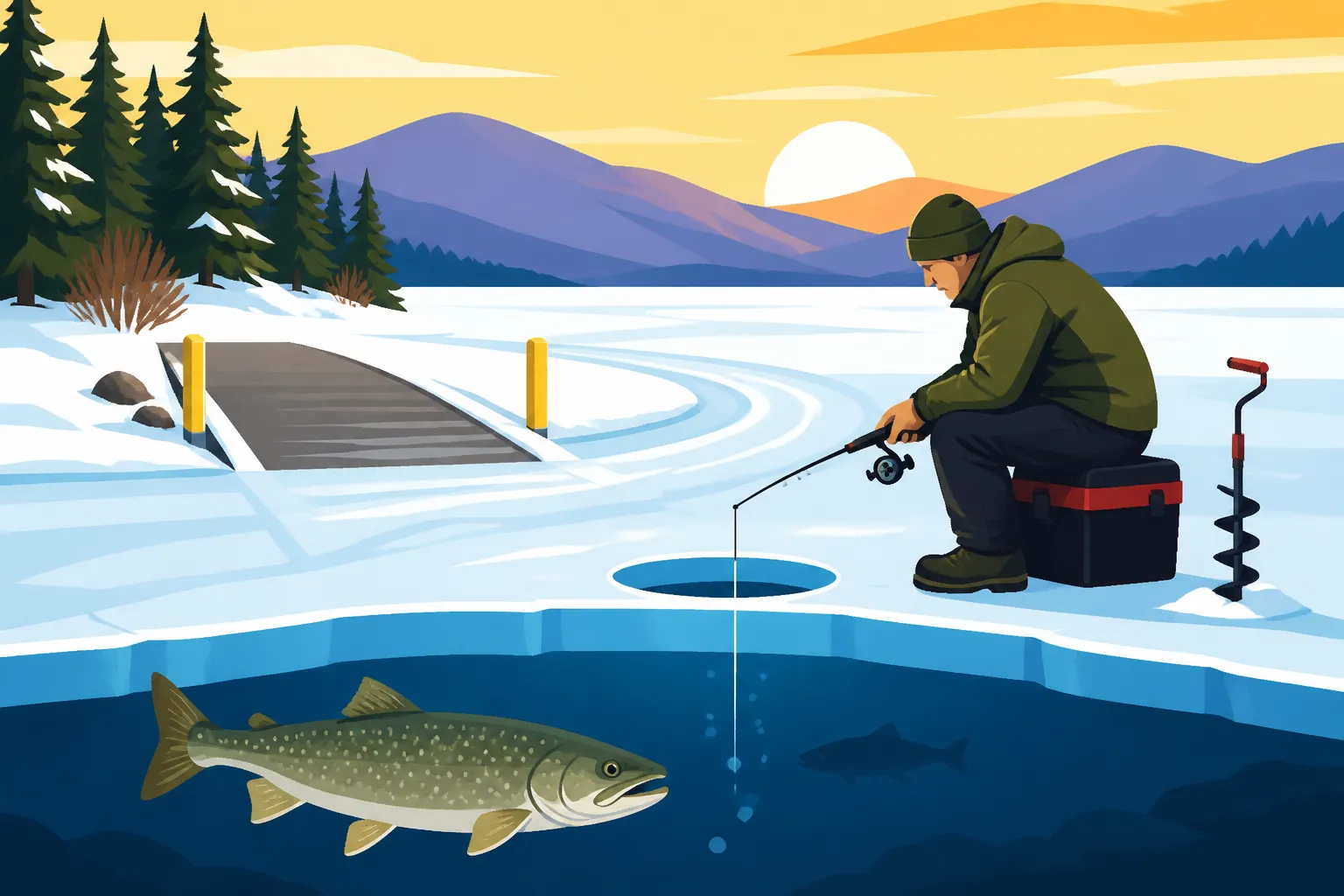
Without a doubt, the Newport City Boat Launch, located at Pomerleau Park, is the most popular and well-known access point for ice anglers on Lake Memphremagog. Here's why:
- Ease of Access: It's right in the city of Newport, easy to find, and offers ample parking. This is a huge benefit, especially on busy weekends when you don't want to be scrambling for a spot.
- Facilities: Being in Newport, you're close to bait shops like Newport Marine, convenience stores, restaurants, and gas stations. This means you can easily grab last-minute supplies or warm up with a hot meal.
- Relatively Safe Ice: The bay area around the boat launch often freezes relatively consistently compared to the more open stretches of the lake. While you should always check ice conditions, this area tends to be a safer bet for initial access.
- Diverse Fishing Opportunities: From Pomerleau Park, you can access areas known for yellow perch, northern pike, and even some deeper water lake trout and landlocked salmon if you venture out further into the main lake basin. The immediate bay can hold good numbers of panfish, making it a great spot for families or those looking for consistent action. For tips on landing various species, you might be interested in Lake Memphremagog Muskellunge Fishing even if you're targeting other species, the general fishing advice can be transferable.
When accessing from Pomerleau Park, many anglers spread out across the bay, looking for subtle depth changes or areas where schools of perch might be holding. Remember that this popular access also means it can get crowded, especially during prime weekends, so arriving early is often a good strategy.
Clyde River Delta Access
The Clyde River empties into Lake Memphremagog right in Newport, creating a delta area that can be a productive, yet sometimes tricky, ice fishing spot.
- Pike and Perch Hotspot: The shallower, weedier areas near the delta are prime habitat for northern pike and offer excellent yellow perch fishing. The influx of river nutrients can attract baitfish, which in turn attracts predators.
- Access Challenges: While accessible from various points in Newport, including areas near the boat launch, you must exercise extreme caution near the river channel itself. Moving water from the Clyde River can create dangerously thin or inconsistent ice, even in bitterly cold temperatures. Stay well clear of any visible current and use a spud bar religiously.
- Strategic Positioning: Anglers often target the edges of the river channel where it meets the main lake, or the shallower flats adjacent to the delta. These areas provide structure and forage for fish. Keep an eye out for other anglers, but also for warning signs or areas marked by locals as unsafe.
- Winter Navigation: During periods of heavy snow, access beyond the main paths can become difficult. An ATV or snowmobile, where permitted and safe, can be incredibly helpful for reaching less pressured spots, but always verify local regulations and ice safety before operating vehicles on the ice.
This area is excellent for those specifically targeting pike or panfish, but the heightened safety considerations due to the river current cannot be overstated.
Other Potential Entry Spots and Considerations
While Newport offers the most robust and generally safest access, other points around the Vermont side of Memphremagog might be utilized, particularly by locals with specialized knowledge or specific goals.
- Roadside Pull-offs: There are occasional roadside pull-offs along Route 105 and other smaller roads that offer limited foot access to the lake. These usually lack dedicated parking and amenities and require careful scouting for safe entry and ice conditions. They can sometimes lead to less pressured fishing grounds, but the trade-off is often convenience and safety.
- Private Property: Some landowners along the shore might grant permission to access their property for ice fishing. This is strictly on a case-by-case basis and requires you to be respectful, ask permission, and adhere to any specific rules they may have. Never trespass.
- Lake Memphremagog Ice Fishing Village: In some years, a "village" of ice shanties forms further out from Newport, sometimes facilitated by local businesses that plow roads on the ice. This can offer easier access to deeper waters where lake trout and salmon are targeted. However, these are often temporary, condition-dependent operations, and you should inquire locally if one is active during your visit. These operations also usually come with a fee.
- Border Considerations: As mentioned, the international border runs through Memphremagog. While it's unlikely an angler would accidentally cross it while staying within reasonable distances from Vermont access points, it's a critical consideration for anyone planning a longer trip or utilizing a guide. Familiarize yourself with Vermont fishing license reciprocity on Lake Memphremagog with Quebec if you have any thoughts of venturing near the boundary.
When exploring lesser-known access points, always prioritize safety. The lack of other anglers might mean less competition, but it also means less immediate help if something goes wrong.
Essential Gear and Regulations for Memphremagog Ice Anglers
Successfully tackling Lake Memphremagog for ice fishing requires more than just knowing where to go; it demands the right gear and a solid understanding of Vermont's fishing regulations. The cold, often windy conditions and the potential for large fish mean you can't just show up with a flimsy rod and hope for the best.
Must-Have Ice Fishing Gear for Big Water
Ice fishing on Memphremagog, especially if you're targeting larger species like pike or lake trout, isn't a place for minimalist gear. You need robust equipment that can handle both the fish and the elements.
- Heavy-Duty Ice Rods and Reels: Forget the ultralight panfish setups. For pike and lake trout, you'll want medium-heavy to heavy power ice rods with sensitive tips and strong backbones, paired with reliable spinning or baitcasting reels spooled with 10-20 lb test line, or even heavier braid with a fluorocarbon leader for abrasion resistance. For salmon, a medium-light to medium rod with a faster action works well.
- Sturdy Tip-Ups: For pike, lake trout, and salmon, tip-ups are invaluable. Load them with braided line and a strong leader (wire or heavy fluorocarbon for pike to prevent bite-offs). Make sure they're robust enough to withstand strong winds and the fight of a big fish.
- Power Auger: Hand augers are fine for a few holes, but a gas, propane, or electric power auger is almost essential for Memphremagog. You'll likely want to drill multiple holes to find fish, and ice thickness can be considerable. An 8-inch auger is a good all-around choice.
- Fish Finder/Flasher: A good fish finder or flasher is your eyes underwater. It helps you locate fish, identify depth, and see how fish react to your presentation. This is particularly crucial on a large lake where fish can be scattered or suspended. Many anglers rely on portable units like those from Humminbird or Vexilar. You can learn more about finding fish with the Best Fish Finders for Vermont Lakes guide.
- Portable Shelter (Shanty): Vermont winters can be brutal, and a portable ice shanty provides much-needed protection from the wind and cold. There are various sizes and styles, from one-person flip-overs to larger hub-style shelters that can accommodate a group. Pair it with a portable heater for comfort.
- Safety Gear: As mentioned, ice picks, a spud bar, throw rope, and a first-aid kit are non-negotiable. Always have them readily accessible.
- Appropriate Clothing: Layers are key! Insulated boots, waterproof outer layers, warm hat, gloves, and a neck gaiter are essential to stay comfortable and safe. A floatation suit offers an added layer of safety.
Having the right gear makes your trip safer, more comfortable, and significantly more productive. For a comprehensive list, check out our article on Best Ice Fishing Gear for Vermont.
Understanding Vermont's Ice Fishing Regulations
Vermont has specific regulations for ice fishing that anglers must adhere to, especially regarding seasons, bag limits, and gear. It's not enough to simply have a valid Vermont Fishing License Guide for 2026; you need to understand the nuances of the rules.
- Season Dates: While ice fishing is generally permitted when ice is safe, there are specific seasons for certain species. For example, trout and salmon seasons typically open on January 1st. Always verify the current Vermont Ice Fishing Season Dates for the exact dates.
- Bag and Possession Limits: These vary significantly by species. You need to know the daily creel limit (how many you can keep in a day) and the possession limit (how many you can have on hand). For Lake Memphremagog, be especially mindful of Vermont Muskellunge Regulations on Lake Memphremagog and the general Vermont Bag and Possession Limits by Species.
- Number of Lines: Vermont allows a generous number of lines for ice fishing, but there's usually a limit per angler (typically two lines when actively fishing with a rod and reel, and up to eight lines for tip-ups/set lines). This means you can spread out your efforts, increasing your chances.
- Live Bait Rules: There are strict regulations concerning the use of live bait, especially when it comes to species that can be introduced as invasives. Always ensure your bait is legally sourced and used.
- Special Regulations: Certain waters may have special regulations, though for Memphremagog, the primary concerns are the general lake rules and species-specific limits.
It is your responsibility to know and follow these regulations. The Vermont Fish & Wildlife Department website is your best resource, or you can pick up a physical copy of the Reading the Vermont Fishing Regulations Guide. Violations can result in hefty fines.
Ice Shanty Rules and Permitting
If you plan on using an ice shanty for more than a day trip, Vermont has specific rules regarding their use, removal, and identification.
- Identification: Any shanty left on the ice overnight must have the owner's name and address clearly marked on the exterior. This allows authorities to identify the owner in case of an issue.
- Removal Dates: There are strict deadlines for removing ice shanties from the ice each spring, typically before ice-out or by a specific date (often mid-April, but check annually). Leaving a shanty on the ice past this date is illegal and creates a hazard for navigation and the environment. This is covered in detail in Vermont Ice Shanty Registration Rules.
- Environmental Responsibility: Always ensure that no trash, gear, or debris is left behind when you remove your shanty. Pack out everything you pack in, and leave the ice cleaner than you found it.
- Shanty Construction: While there aren't many restrictions on shanty construction, common sense applies. Ensure it's structurally sound and won't become a hazard if ice conditions deteriorate.
Whether you're using a simple portable pop-up or a more elaborate hard-sided shanty, understanding and adhering to these rules is crucial for responsible ice fishing.
Strategies for a Successful Memphremagog Ice Fishing Trip
Once you've secured your access, gathered your gear, and brushed up on regulations, it's time to strategize for success on the ice. Lake Memphremagog offers fantastic fishing, but like any large waterbody, it demands thoughtful approaches.
Best Times and Depths for Different Species
Knowing when and where to target specific fish can dramatically improve your catch rate. Each species has its own preferences through the ice.
- Early Ice (December-January): Often the most productive time. Fish are still actively feeding from the fall and haven't experienced heavy pressure. Look for northern pike and panfish in shallower bays (8-15 feet) and near weed lines. Lake trout and salmon might be a bit shallower than mid-winter, relating to main lake points and humps in 30-60 feet.
- Mid-Winter (February): This can be a tougher bite, as fish metabolism slows down. Focus on deeper breaks, prominent points, and structural elements. Lake trout and salmon will often be found deeper, sometimes 70+ feet, suspended over abyssal depths or hugging bottom structure. Walleye will also be deep and often bite best during low-light hours or after dark. Pike might still be in shallower bays but become more lethargic.
- Late Ice (March-April): As the ice begins to break down and meltwater introduces oxygen, fish become more active. Pike move back into shallow, sun-warmed bays. Perch schools become more concentrated and aggressive. Salmon and lake trout may begin to cruise shallower points as they anticipate spring feeding. However, late ice also brings the greatest safety risks, so extreme caution is paramount.
- Specific Depths:
- Pike: 8-20 feet, especially near weeds or transition zones.
- Perch: 15-40 feet, often found schooling over soft bottoms or near structure.
- Lake Trout: 40-100+ feet, often near humps, drop-offs, or suspended over deep water.
- Landlocked Salmon: Typically suspended anywhere from 10 feet below the ice down to 50 feet or more, usually over deep water, chasing bait.
- Walleye: 20-50 feet, near rocky bottoms, humps, and points, particularly at dawn, dusk, or night.
Remember that these are general guidelines. Fish are creatures of habit, but they're also opportunistic, and local conditions (weather, baitfish movements) can influence their behavior.
Locating Fish with Sonar and Local Knowledge
On a lake the size of Memphremagog, randomly drilling holes is a recipe for frustration. Utilizing technology and tapping into local wisdom are your best bets.
- Sonar is Your Best Friend: A good flasher or fish finder is indispensable. It allows you to see fish, baitfish, and your lure in real-time. You can identify schools of perch, see if a large mark is cruising under your hole, and understand how fish react to your presentation. This dynamic feedback loop helps you adjust your depth, jigging action, or bait choice instantly. Use it to scan new holes before committing to setting up. Portable units are great for mobility.
- Reading the Lake: Learn to identify structure, even when covered by ice. Look for points extending into the lake, gradual slopes, sudden drop-offs, or areas with historical weed growth (though weeds might be sparse in winter). Contour maps are incredibly helpful for this. Apps like Navionics or physical lake charts can guide your drilling pattern.
- Observe Other Anglers: While you don't want to crowd anyone, observing where other anglers are setting up can give you clues. Are they all clustered in a certain depth range? Are they near a specific point? This can indicate a productive area, but always be respectful of others' space.
- Local Bait Shops and Guides: This is perhaps the most valuable resource. Bait shop owners and employees are often avid local anglers and can provide up-to-the-minute information on ice conditions, recent catches, and hot spots. Don't be shy; ask politely. For a truly tailored experience, consider hiring a local guide, especially if it's your first time on Memphremagog. They have years of experience and knowledge that can fast-track your success. If you're looking for an experienced ice fishing guide on Memphremagog, online platforms like FishingBooker can help you find reputable local captains who specialize in winter excursions.
Hiring a Guide or Charter for Memphremagog
For many, especially those new to large lake ice fishing or targeting specific trophy species, hiring a local ice fishing guide is an investment that pays dividends.
- Expert Knowledge: Guides possess invaluable local knowledge. They know where the safe ice is, where the fish are holding, and what techniques are currently working. They spend countless hours on the ice and understand the subtle nuances of Memphremagog.
- Equipment and Setup: A good guide will provide all the necessary specialized equipment – shelters, heaters, augers, rods, and even bait. This saves you the hassle and expense of buying or transporting bulky gear, especially if you're traveling from out of state. They'll have top-tier electronics and know how to use them effectively to put you on fish.
- Safety First: Reputable guides prioritize safety above all else. They are intimately familiar with ice conditions, pressure ridges, and potential hazards, and will ensure your trip is as safe as it is enjoyable.
- Increased Success: With a guide, your chances of catching your target species dramatically increase. They know the depths, the baits, and the techniques that are most effective for lake trout, salmon, northern pike, or perch. This makes your valuable time on the ice much more productive.
- Learning Opportunity: Beyond just catching fish, a guided trip is a fantastic learning opportunity. You can pick up tips on reading your electronics, presentation techniques, and understanding fish behavior that will benefit your future ice fishing endeavors.
- Finding a Guide: Platforms like FishingBooker make it incredibly easy to find and book experienced ice fishing guides for Lake Memphremagog. You can view their profiles, read reviews from other anglers, and see what specific species and packages they offer. Many guides even provide heated shanties and hot beverages, ensuring a comfortable day on the frozen lake. Booking through a service like FishingBooker ensures you're connecting with legitimate, experienced professionals. It's a fantastic way to maximize your time and learn the ropes from someone who knows Memphremagog like the back of their hand.
Regardless of your experience level, considering a guided trip, especially for your first foray into Memphremagog ice fishing, can transform a potentially frustrating day into a memorable and successful adventure.
Important Lake Memphremagog Data for Ice Anglers
To aid in your planning, here’s a quick reference table of essential data for Lake Memphremagog. Always remember that conditions and regulations can change, so this table should be used as a general guide, and you should always consult the most current Vermont Fish & Wildlife regulations before heading out.
| Feature | Detail | Importance for Ice Anglers |
|---|---|---|
| Total Area | ~41 square miles (27 miles long) | Vast, requires mobility and good planning for fish location. |
| Vermont Portion | Southern ~1/3, primarily in Newport, VT | Focus access and regulations on this area. |
| Maximum Depth | Over 300 feet (in Canadian waters), over 100 feet in Vermont section | Deep-water species (Laker, Salmon) require specific tactics/gear. |
| Primary Access | Newport City Boat Launch (Pomerleau Park) | Most reliable, ample parking, near amenities. |
| Target Species | Northern Pike, Lake Trout, Landlocked Salmon, Yellow Perch, Walleye, Black Crappie | Dictates gear, bait, and location choices. |
| Ice Out Dates | Typically late March to mid-April (highly variable) | Critical for shanty removal and late-season safety. |
| Border Location | Runs roughly north of the Newport area | Be aware; crossing into Quebec requires Canadian license. |
| Notable Feature | Clyde River Inlet | Good fishing, but creates thin ice due to currents. |
This table provides a snapshot of what you can expect and key points to remember when planning your ice fishing expedition to Lake Memphremagog.
Disclaimer
The information provided in this guide is for general informational purposes only and is subject to change. Ice conditions are highly variable and can change rapidly. Always exercise extreme caution on the ice, check local conditions before venturing out, and prioritize safety above all else. Consult the Vermont Fish & Wildlife Department for the most current regulations, season dates, and license requirements. FishingBooker is a third-party service for finding fishing guides; ensure you conduct your own due diligence when booking. The author and publisher are not responsible for any incidents or accidents that may occur.