Vermont fishing license reciprocity on Lake Memphremagog with Quebec
Navigating the beautiful, sprawling waters of Lake Memphremagog, which straddles the U.S.-Canada border, can be an exciting prospect for anglers, but it often comes with a heap of confusion. Many folks wonder if their Vermont fishing license will cover them in the Quebec waters, or vice-versa, hoping to explore the entire lake without a double purchase. This guide is here to untangle that knot, explaining exactly how fishing license reciprocity works (or doesn't) on this unique international fishery and what you need to know before you cast a line.
Understanding Lake Memphremagog's Unique International Waters
Lake Memphremagog is a truly special place, a glacial lake renowned for its deep, cold waters and diverse fishery, including prized muskellunge and landlocked salmon. What makes it particularly interesting, and a little complex, is that approximately 73% of the lake lies within Quebec, Canada, while the remaining 27% is in Vermont, United States. This geographical reality means that anglers looking to fish the entire lake, or even just cross an invisible line, need to be acutely aware of international boundaries and the differing regulations that come with them.
Imagine launching your boat from a Vermont access point, like Newport City's public launch, and heading north. You'll quickly find yourself approaching the international border, often marked by buoys or discernible landmarks, even if it feels like one continuous body of water. The sheer size of the Quebec portion, stretching north towards Magog and Austin, means there's a vast amount of water that falls under a completely different set of rules. This isn't just a simple state-to-state border where some reciprocal agreements might be in place; it's a national border, which inherently complicates things.
The Border Line and What It Means for Anglers
The international border on Lake Memphremagog isn't just a line on a map; it represents a hard boundary between two distinct legal jurisdictions. On the Vermont side, you're governed by the Vermont Fish & Wildlife Department's regulations. Once you cross into Quebec, you fall under the purview of Quebec's Ministère des Forêts, de la Faune et des Parcs (Ministry of Forests, Wildlife and Parks). These are two entirely separate entities, with different licensing systems, varying species regulations, and distinct enforcement agencies.
This duality means that what's legal in Vermont might not be legal in Quebec, and vice-versa. For instance, possession limits for certain species could differ, or there might be varying rules around bait usage, lead tackle, or even specific gear requirements. It's not uncommon for anglers, especially those new to international boundary waters, to inadvertently stray across the line. A drift in the current or following a schooling baitfish can quickly take you from one country to another without even realizing it until it's too late. This potential for accidental infringement underscores the critical need for a clear understanding of where you are and what documentation you require.
Common Misconceptions About Boundary Water Licenses
Many anglers assume that because bodies of water like the Connecticut River or Lake Champlain have some form of reciprocity (e.g., a Vermont license might be valid on the New Hampshire side of the Connecticut River, or a New York license on Lake Champlain can be valid on the Vermont side under certain conditions), the same must apply to Lake Memphremagog with Quebec. This is a very common, and unfortunately, incorrect assumption.
The key difference lies in the international nature of the Lake Memphremagog border. Agreements between U.S. states are far more common than full recreational fishing license reciprocity across national borders. While the U.S. and Canada share a long, peaceful border, they maintain independent regulatory frameworks for natural resources. So, while you might hear stories about folks fishing the Connecticut River with just a Vermont license, thinking that implies similar arrangements everywhere, that simply isn't the case on Memphremagog. It's a hard lesson for some, but one that's far better learned before encountering a game warden on the wrong side of the line.
Vermont and Quebec Fishing License Requirements on Lake Memphremagog
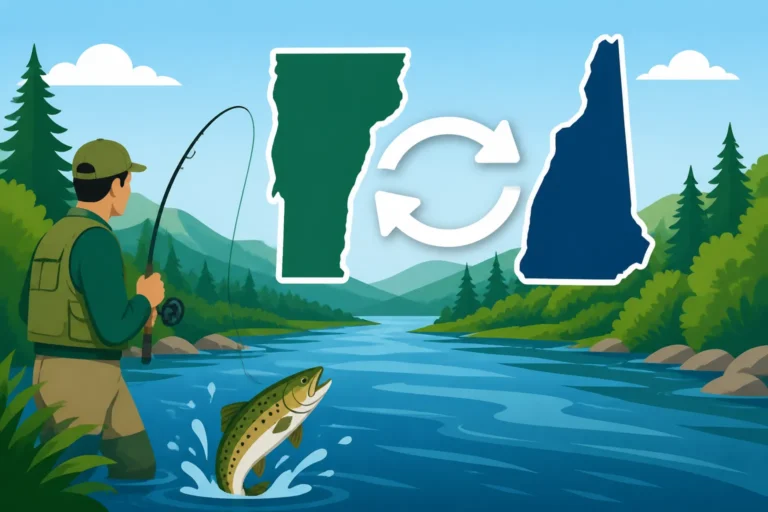
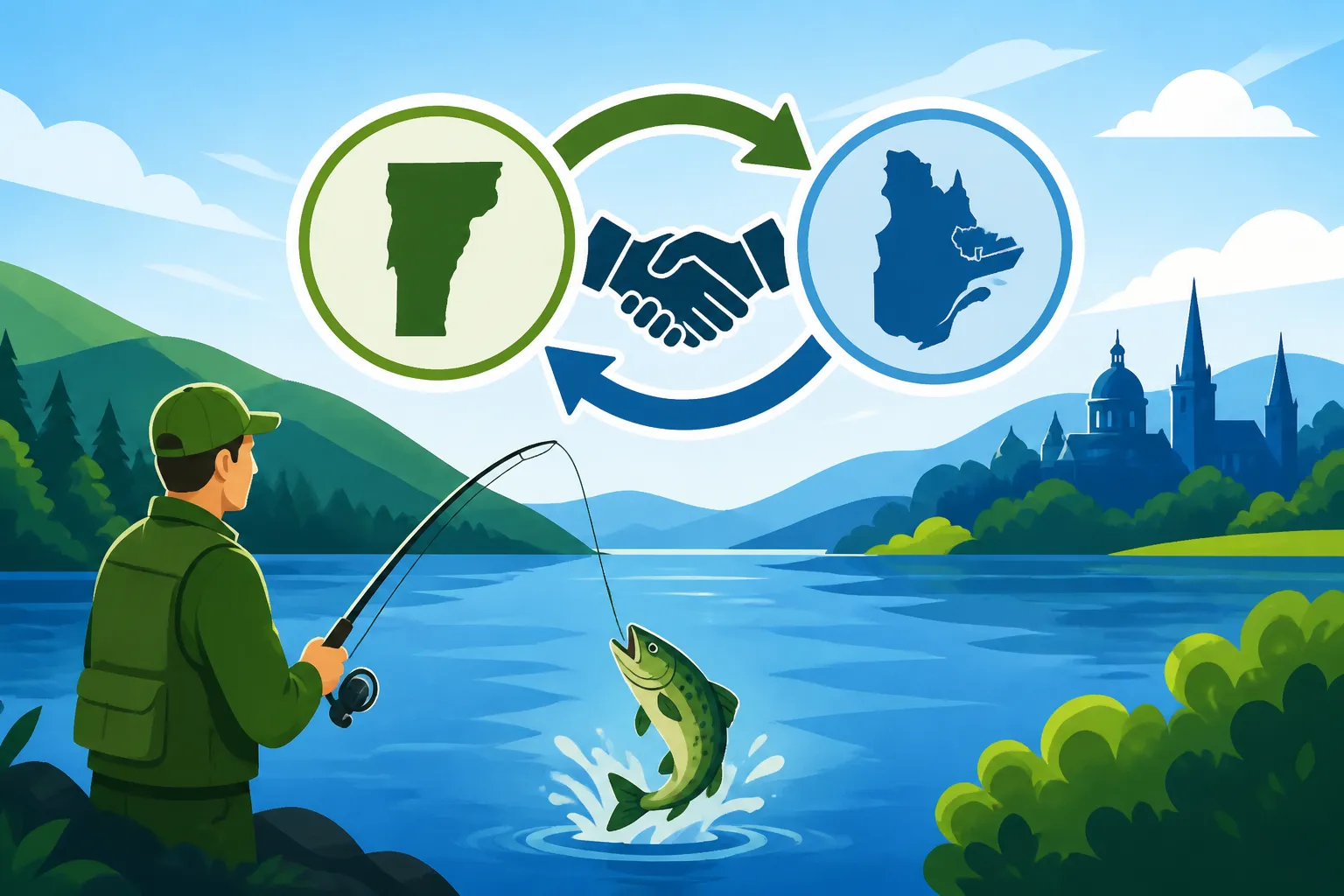
Here's the straightforward answer you've been looking for: there is no fishing license reciprocity between Vermont and Quebec for Lake Memphremagog. If you plan to fish any part of Lake Memphremagog that lies within Vermont, you must possess a valid Vermont fishing license. If your angling adventures take you into the Quebec portion of the lake, you must also possess a valid Quebec fishing license. There's no single license that covers both sides of the international border.
This means if you intend to explore the entirety of Lake Memphremagog, from Newport, Vermont, all the way up to Magog, Quebec, you will need to purchase two separate fishing licenses: one for Vermont and one for Quebec. This can be a bit of a bummer, doubling the cost, but it's the reality of fishing an international boundary water. The consequences of not having the correct license can range from hefty fines to confiscation of gear, so it's not a rule to take lightly.
Getting Your Vermont Fishing License
For fishing in the Vermont portion of Lake Memphremagog, you'll need a Vermont Fishing License Guide for 2026. The Vermont Fish & Wildlife Department makes it quite easy to obtain a license. You can purchase one online through their website, which is often the most convenient method. Many local sporting goods stores, town clerks, and bait shops in Vermont are also authorized vendors where you can buy a physical license. Depending on your residency, you might consider different options. For example, if you're visiting from out of state, a Vermont nonresident fishing license cost 2026 will apply.
When purchasing, you'll need to provide some personal information, and if you're a resident, proof of residency. Be sure to check the specific requirements for your age group, as there are particular Vermont Fishing License Age Requirements to be aware of. Once purchased, you'll usually get an immediate digital copy that you can print or keep on your phone, though many prefer a physical copy for peace of mind.
Obtaining a Quebec Fishing License
To fish in the Quebec waters of Lake Memphremagog, you'll need a license issued by the Quebec government. These licenses are generally available at authorized vendors throughout Quebec, often bait shops, convenience stores, and some larger outdoor retailers. Unfortunately, purchasing a Quebec fishing license online might be a bit more challenging for non-residents or those without a Quebec address, but it is often possible through government portals. It’s always best to research the most up-to-date purchase methods on the Quebec Ministry of Forests, Wildlife and Parks website before your trip.
Quebec offers different types of licenses, including annual and temporary options, often tied to specific fishing periods. You'll need to decide what best suits your trip duration. Keep in mind that Quebec's fishing regulations, even beyond the license, can be quite different from Vermont's. For instance, specific zones within Quebec might have different rules for certain species, or there could be a requirement for a salmon fishing license in addition to a general fishing license if you're targeting that species.
Navigating the Regulations of Both Jurisdictions
Even with both licenses in hand, your responsibility doesn't end there. You must adhere to the specific fishing regulations for the waters you are currently in. This means:
- When in Vermont waters: Follow all Vermont Fishing Regulations Explained, including daily limits, minimum length limits, and season dates for all species, such as Vermont Bass Catch-and-Release Season, Explained or Vermont Trout Limit and Possession Rules.
- When in Quebec waters: Abide by Quebec's specific fishing regulations. These can cover everything from permitted baits (some areas restrict live bait), specific hook types, daily catch and possession limits, and even slot limits for certain fish. For example, Quebec might have different rules regarding muskellunge than the Vermont Muskellunge Regulations on Lake Memphremagog.
It's absolutely crucial to have a copy of both sets of regulations accessible, whether printed or digitally, and to consult them frequently, especially when moving between different parts of the lake. Consider using a GPS device with detailed mapping that shows the international border, like those often found on fishing-specific units or even apps on your smartphone, to avoid accidental crossings while fishing. You can find many detailed fishing maps, some even waterproof, on platforms like Amazon that can help you visualize the border on the lake.
Key Considerations for Cross-Border Anglers on Lake Memphremagog
Fishing a body of water split by an international border presents more challenges than just license requirements. There are practical, logistical, and safety considerations that every angler should be aware of to ensure a smooth and enjoyable experience. Ignoring these can lead to frustration, legal trouble, or even dangerous situations.
Boating Regulations and Customs Checks
It's not just about fishing licenses; your boat itself is crossing an international border. This is a critical point that often gets overlooked. If you launch your boat in Vermont and motor into Quebec waters, or vice-versa, you are technically importing your vessel. This means you must report to Canada Border Services Agency (CBSA) or U.S. Customs and Border Protection (CBP) whenever you cross the border.
For recreational boaters, this typically involves calling a designated reporting line or using a specific app upon entry and exit. Failure to report can result in serious penalties, including fines, confiscation of your boat, and even future entry restrictions. Even if you're just fishing and not landing on shore, the act of crossing the watery border triggers these requirements. Familiarize yourself with both Vermont Boating Laws for Anglers and Quebec's boating regulations, which might have different requirements for safety equipment, age of operator, or vessel registration. It's always a good idea to have your boat registration and proof of ownership readily available.
Species-Specific Regulations and Invasive Species Control
Lake Memphremagog is home to many prized species, but the regulations surrounding them can differ significantly on either side of the border. For example, the season for smallmouth bass might open earlier or later, or have different size and creel limits. When fishing for species like landlocked salmon or trout, understanding Vermont Landlocked Salmon Regulations versus Quebec's rules is paramount.
Another major concern is invasive species. Both Vermont and Quebec are vigilant about preventing the spread of aquatic invasive species like zebra mussels or Eurasian watermilfoil. This means strict "Clean, Drain, Dry" protocols for your boat and gear. You'll likely encounter boat inspection stations, especially on the Vermont side, and potentially in Quebec. It is illegal to transport invasive species, and fines can be substantial. Ensure your boat, trailer, and all fishing gear are thoroughly cleaned and drained before moving between different bodies of water, and especially when crossing the border.
Currency, Language, and Emergency Services
When venturing into Quebec, you'll be entering a predominantly French-speaking province, and the currency is Canadian Dollars. While many tourist-facing businesses will accept U.S. dollars or credit cards, having some Canadian currency for bait, gas, or small purchases is always a good idea. Many vendors, especially in smaller towns, might prefer or only accept Canadian currency.
Emergency services also operate differently. While both sides have well-trained professionals, calling 911 in Quebec will connect you with Canadian emergency services, not U.S. ones. If you have a medical emergency or encounter trouble on the Quebec side, they are who you will be dealing with. Ensure your cell phone plan includes international roaming or consider purchasing a local SIM card if you plan extensive time on the Quebec side. Knowing a few basic French phrases can also go a long way in making your experience smoother, especially when dealing with local shopkeepers or asking for directions.
Practical Tips for Fishing Lake Memphremagog
Despite the complexities, Lake Memphremagog offers fantastic fishing opportunities that are well worth the extra planning. The sheer size and depth of the lake provide diverse habitats for a wide array of species, making it a truly rewarding destination for any angler willing to do their homework.
Essential Gear and Maps
Given the international boundary and varied regulations, precise navigation is non-negotiable. A quality GPS unit with detailed bathymetric charts of both the Vermont and Quebec portions of the lake is highly recommended. Some modern fish finders, like those from Humminbird or Lowrance, come pre-loaded with comprehensive mapping, or you can purchase specific map chips. Always carry a physical, waterproof map as a backup. You can often find excellent topographical maps or specialized fishing maps on Amazon, which are invaluable for identifying structure, depths, and the precise location of the border.
As for tackle, you'll want a versatile setup. For the deep, clear waters, light fluorocarbon leaders can be key, especially when targeting finicky lake trout or landlocked salmon. Consider a variety of lures for species like muskellunge, walleye, and bass. For example, large spoons, stickbaits, and soft plastics work well for different game fish. If you're a fly angler, researching the best Fly Patterns for Vermont Trout Streams might give you an idea of what local fish key on, but remember Memphremagog is a big lake, and specific patterns for lake species will differ.
Targeted Species and Techniques
Lake Memphremagog is famous for its muskellunge. These elusive giants are often found lurking in deeper waters or along weed lines. Trolling large bucktails or crankbaits is a popular method. You might want to brush up on How to Catch Muskellunge on Lake Memphremagog before your trip. The lake also holds strong populations of lake trout and landlocked salmon, which often require deep trolling techniques, especially during the warmer months. Pay attention to water temperatures and depths where these cold-water species are likely to congregate.
Smallmouth bass fishing can be excellent, particularly around rocky points, humps, and submerged structure. Tubes, drop shots, and crankbaits are perennial favorites. If you're a fan of bass, you'll find plenty of action. Panfish like yellow perch and black crappie are also abundant, providing great opportunities for lighter tackle and family-friendly fishing, especially in shallower bays. Remember that size and creel limits for these species will vary between Vermont and Quebec waters, so keep those regulations handy!
Planning Your Trip and Staying Safe
Given the need for two licenses and border crossing procedures, planning ahead is critical. Allow extra time for travel and any necessary customs reporting. If you plan to hire a guide, ensure they are licensed to operate on both sides of the lake or specify which side you want to fish. Many excellent guides focus on the Lake Memphremagog Fishing Guide experience.
Safety on such a large, deep lake is paramount. Weather can change rapidly, and strong winds can create dangerous conditions. Always check the marine forecast before heading out. Carry all required safety gear, including enough life jackets for everyone on board (understanding Life Jacket Requirements for Vermont Boaters and Quebec's rules), a marine radio, first-aid kit, and emergency signaling devices. Inform someone of your float plan and expected return time. Fishing an international lake is an adventure, but a safe and well-prepared one is always the most enjoyable.
| Feature / Requirement | Vermont Side of Lake Memphremagog | Quebec Side of Lake Memphremagog |
|---|---|---|
| Fishing License | Required (Vermont Fishing License) | Required (Quebec Fishing License) |
| Reciprocity | NONE (Need both licenses) | NONE (Need both licenses) |
| Boating Regulations | Vermont Boating Laws Apply | Quebec Boating Laws Apply |
| Customs Reporting | Required when entering/exiting U.S. waters | Required when entering/exiting Canadian waters |
| Currency | US Dollars (USD) | Canadian Dollars (CAD) |
| Primary Language | English | French |
| Emergency Services | US 911 | Canada 911 |
| Invasive Species | Strict "Clean, Drain, Dry" rules | Strict "Clean, Drain, Dry" rules |
| Regulations Guide | Vermont Fish & Wildlife Dept. | Quebec Ministère des Forêts, de la Faune et des Parcs |
Respecting the Environment and Local Communities
No matter which side of the border you're on, always practice responsible angling. This includes respecting catch and release practices, especially for larger breeding fish, and properly disposing of all trash. The communities around Lake Memphremagog, both in Vermont and Quebec, cherish their natural resources and the beauty of the lake. Supporting local businesses, whether it's a bait shop in Newport or a restaurant in Magog, helps sustain the vibrant fishing culture. By understanding and respecting the unique international dynamic of Lake Memphremagog, you can contribute to its preservation while enjoying some truly world-class fishing.
Disclaimer
Please note that fishing regulations and license requirements are subject to change. While we strive to provide the most accurate and up-to-date information, it is always your responsibility to consult the official websites of the Vermont Fish & Wildlife Department and Quebec's Ministère des Forêts, de la Faune et des Parcs before your trip to ensure compliance with all current laws and regulations.