Landlocked Salmon Fishing in Vermont
Picture this: a vast, crystal-clear lake, shimmering under the Vermont sun, holding a secret. Beneath its surface cruise some of the most elusive and thrilling fish you can pursue – the landlocked salmon. While undeniably beautiful and a true challenge to anglers, many folks get frustrated trying to unlock the secrets to consistently catching these powerful fish, often feeling like they're just guessing. This comprehensive guide is here to demystify landlocked salmon fishing in Vermont, covering everything from their habits to the most effective techniques, so you can confidently head out and bring home a memorable catch.
Understanding Vermont's Landlocked Salmon: A Majestic Fishery
Landlocked salmon are a crown jewel of Vermont's coldwater fisheries, offering an exciting pursuit for dedicated anglers. Unlike their anadromous Atlantic salmon cousins that migrate to the ocean, these magnificent fish spend their entire lives confined to freshwater lakes, often making incredible journeys up natal rivers to spawn. Understanding their unique biology and behavior is the first step toward finding success on the water.
The Life Cycle of Vermont's Landlocked Salmon
The story of a Vermont landlocked salmon begins in the gravel beds of cold, clear tributaries flowing into our larger lakes. After eggs hatch, tiny "parr" spend a year or two in these rivers, feeding on insects and growing. These young salmon are remarkably adapted to river life, displaying distinctive parr marks for camouflage against the rocky bottoms. It's a tough existence for them, constantly battling currents and predators, but it builds strength and resilience that will serve them well in the lake.
As they mature, usually around one to two years old, they undergo a fascinating physiological change called "smoltification." Their bodies transform to adapt to saltwater-like conditions, and they lose their parr marks, becoming silver-colored "smolts." This is their signal to migrate downstream into the vastness of the lake, a journey fraught with new dangers. Once in the lake, they rapidly shift their diet from insects to baitfish, packing on weight and growing into the powerful, acrobatic fighters we love to pursue. Their entire Landlocked Salmon Life Cycle in Vermont Lakes is a testament to natural adaptation.
When the urge to reproduce strikes, typically in the fall as water temperatures drop, mature salmon embark on another arduous journey. They migrate from the deep parts of the lake back upstream into the rivers where they were born to spawn. This is a dramatic event, often seen in specific rivers, and it marks the culmination of their freshwater life cycle. These migrations are vital to the health of the salmon population, ensuring future generations thrive.
Key Characteristics and Identification
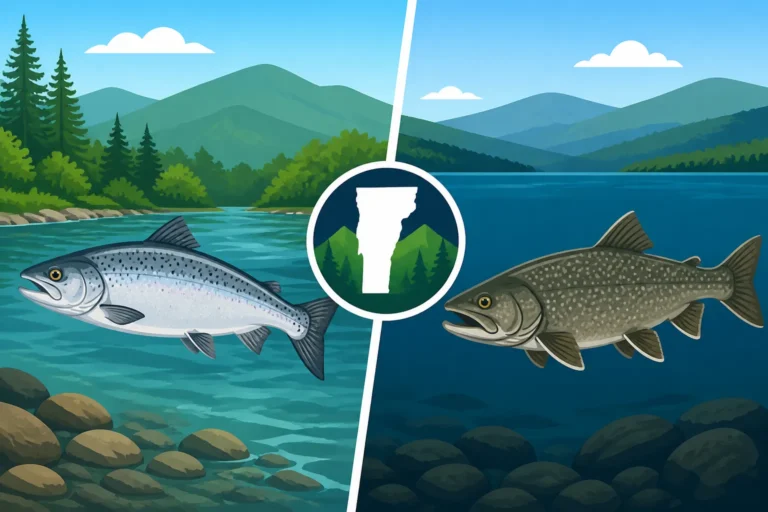
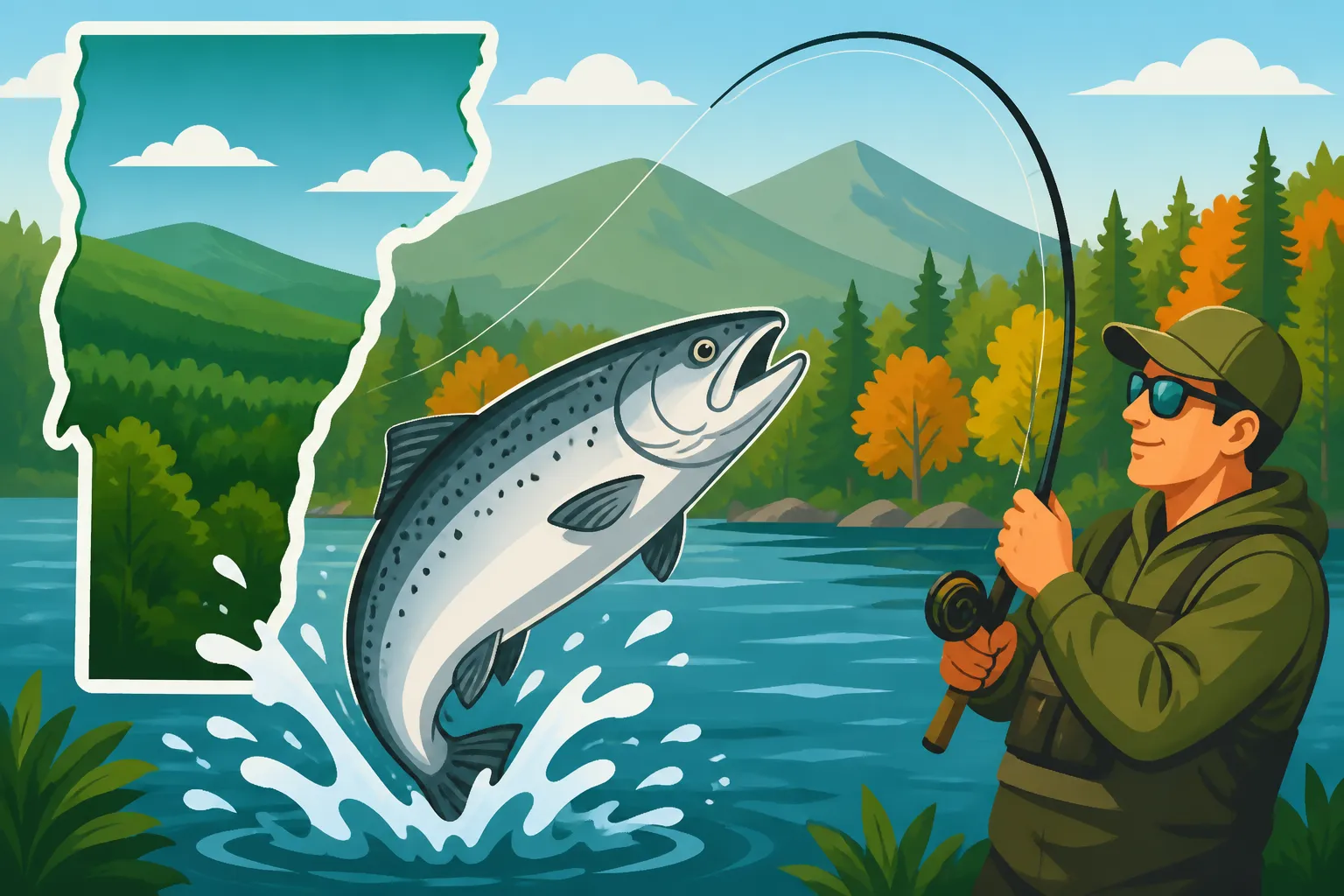
Identifying a landlocked salmon on the line can be an exciting moment, especially if you're used to catching other species like lake trout or rainbow trout. While they share some similarities, there are distinct features to look for. Landlocked salmon typically have a more streamlined, torpedo-shaped body compared to the bulkier lake trout. Their tails are usually deeply forked, and their coloration is a striking silvery-blue or green on the back, fading to silver sides and a white belly. They often have small, dark spots, sometimes X-shaped, scattered across their back and upper flanks, but generally fewer and less pronounced than those on a brown trout. Lake trout, by contrast, tend to be darker, often with pale, worm-like markings on their back and a less deeply forked tail.
In Vermont, landlocked salmon can reach impressive sizes, though their average size varies by water body and age. A typical adult salmon caught in our larger lakes might be in the 18 to 24-inch range, weighing a few pounds. However, these fish have serious growth potential. It's not uncommon to hear tales or see photos of trophy salmon pushing into the double-digit pound range, particularly from lakes with abundant forage. These bigger fish are truly powerful adversaries, capable of blistering runs and aerial acrobatics that will test your tackle and your resolve. They thrive in Vermont's deep, cold, oligotrophic (nutrient-poor) lakes, which provide the cold, oxygen-rich water they need to survive, especially during the warmer summer months.
The Importance of Forage Fish: Rainbow Smelt
If you want to understand where and how to catch landlocked salmon, you absolutely must understand rainbow smelt. These small, silvery baitfish are the cornerstone of the landlocked salmon's diet in many Vermont lakes, essentially fueling their growth and dictating their movements. Without a healthy smelt population, landlocked salmon would struggle to reach their impressive sizes and vibrant fighting spirit. Think of smelt as the primary fuel source for these lean, mean fighting machines.
Smelt are often found in large schools, particularly during certain times of the year, like their spring spawning runs into shallow bays and tributaries. When these smelt runs occur, it's a feeding frenzy opportunity for salmon, who will gorge themselves on the abundant bait. Knowing when and where smelt are congregating is often the key to locating active salmon. Anglers often keep a keen eye on their sonar units, looking for dense clouds of baitfish, because where the smelt are, the salmon are almost certainly not far behind.
Beyond the spawning runs, smelt spend much of their lives suspended in the open water or near the bottom in deep, cold parts of the lake. Salmon will actively hunt these schools, often moving up and down in the water column to intercept them. This means that successful salmon fishing often involves mimicking smelt in terms of lure size, color, and presentation, and frequently fishing at the same depths where sonar indicates baitfish activity. If you can "match the hatch" of the local smelt population, your chances of success will skyrocket.
Where to Find Landlocked Salmon in Vermont: Prime Waters
Vermont is home to several spectacular lakes that offer excellent landlocked salmon fishing. While each lake presents its own unique challenges and rewards, they all share the common characteristic of providing the deep, cold, oxygenated water that these magnificent fish require. Knowing the specific hotspots and characteristics of these waters is paramount for successful outings.
Lake Willoughby: A Landlocked Salmon Mecca
For many, Lake Willoughby in Vermont's Northeast Kingdom is synonymous with landlocked salmon fishing. This stunning, fjord-like lake is renowned for its incredible depth, crystal-clear water, and a robust population of both salmon and lake trout. The lake plunges to over 300 feet in places, providing an ideal coldwater sanctuary for salmon even in the heat of summer. Its steep, rocky walls and distinct structure make it a truly unique fishing destination. If you're looking for a classic salmon fishing experience, Lake Willoughby Fishing Guide is an essential read.
Anglers often focus their efforts on specific areas of Willoughby. The deep waters off "the narrows," where the lake constricts slightly, can be productive, as can the north end of the lake, especially near the outflow of the Willoughby River during spawning season. Other popular spots include the deep basin areas, where salmon will suspend over significant depths, often patrolling the edges of underwater shelves and ledges. Because the water is so clear, salmon can be incredibly wary. Stealth and precision are often rewarded here.
While boat fishing is the most common and effective way to target salmon on Willoughby, especially when trolling the depths, there are limited opportunities for shore fishing. During the spring, after ice-out, salmon might be found cruising closer to the surface and shorelines, especially near where tributaries flow in. This brief window offers a chance for shore anglers to cast spoons or stickbaits. However, for consistent success, a boat equipped for trolling is usually the way to go on this spectacular body of water.
Lake Champlain: A Vast and Challenging Opportunity
Lake Champlain, Vermont's largest lake, might be more famous for its smallmouth bass and walleye, but it also holds a respectable population of landlocked salmon, particularly in its deeper, colder sections. The sheer size and diverse structure of Champlain make it a challenging but highly rewarding fishery. Unlike Willoughby, which is almost entirely deep and cold, Champlain has varied depths, from shallow bays to deep main lake basins, requiring a different approach. For a broader overview of this magnificent body of water, check out our Lake Champlain Fishing Guide.
To find salmon on Lake Champlain, you'll want to focus on the broad lake sections, particularly those with significant depth. Areas near the middle of the lake, especially where deep channels or abrupt drop-offs occur, are prime territory. Salmon will often relate to these deeper structures, using them as ambush points or cruising lanes while hunting for baitfish. Understanding the thermocline – the layer of water where temperature changes rapidly – is crucial here. Salmon will typically be found just above, within, or just below this layer, where the water is coldest and most oxygenated.
The forage base in Lake Champlain is also key. While rainbow smelt are important, alewives also play a significant role. Salmon will actively key in on these baitfish, so spotting schools of them on your electronics is a major clue. Anglers often troll the open water between deeper points and ledges, searching for baitfish schools and the salmon that follow them. It's a vast lake, so covering water and paying close attention to your electronics and changing conditions is essential to consistently connect with Champlain's landlocked salmon.
Other Notable Vermont Lakes
While Willoughby and Champlain are prime salmon destinations, Vermont has a few other lakes that, depending on stocking programs and habitat, can offer landlocked salmon opportunities. These waters might be smaller or have more specialized fisheries, but they can still provide excellent angling, often with less pressure than the more famous spots.
One such lake is Seymour Lake, another deep, cold lake in the Northeast Kingdom. Known for its clear water and beautiful surroundings, Seymour Lake often receives stockings of landlocked salmon, complementing its natural populations of lake trout. Fishing here often involves similar deep-water trolling tactics as Willoughby, focusing on areas with good forage and cool temperatures. It's a fantastic option if you're looking for a quieter, more intimate salmon fishing experience. Our Seymour Lake Fishing Guide provides more specific details for this hidden gem.
Another possibility might be Lake Dunmore, which, while not primarily known for salmon, sometimes offers opportunities. These "other" lakes often have more variable populations, relying heavily on state stocking efforts. It's always a good idea to check the latest stocking reports and regulations for these waters before planning a dedicated salmon trip. The challenge and reward on these smaller lakes can be immense, offering a chance to explore new waters and potentially find unpressured fish that are eager to bite.
| Lake Name | Primary Salmon Forage | Average Depth (feet) | Key Fishing Strategy | Special Notes |
|---|---|---|---|---|
| Lake Willoughby | Rainbow Smelt | 100-300+ | Deep Trolling, Smelt Imit. | Ultra-clear, steep sides, trophy potential |
| Lake Champlain | Smelt, Alewives | 60-150+ | Open Water Trolling | Vast, diverse habitat, focus on deep basins |
| Seymour Lake | Rainbow Smelt | 50-100+ | Deep Trolling, Smelt Imit. | Clear water, beautiful setting, good option |
| Lake Dunmore | Smelt, other baitfish | 30-50+ | Trolling, Live Bait | Smaller, might have seasonal opportunities |
Essential Gear and Tackle for Vermont Landlocked Salmon
Tackling Vermont's landlocked salmon requires a thoughtful approach to your gear. These fish are powerful, fast, and often found in deeper waters, which means your rods, reels, lines, and lures need to be up to the task. Investing in quality equipment will not only improve your chances of success but also enhance your overall fishing experience, making those epic battles more manageable and enjoyable.
Rods, Reels, and Line: Building Your Salmon Setup
When it comes to selecting a rod for landlocked salmon, versatility is key, especially if you plan to troll. A medium-heavy action rod, typically between 7 and 9 feet in length, is an excellent choice. This length provides enough leverage for fighting powerful fish and handling heavy trolling setups, while the medium-heavy action offers the backbone needed to set hooks effectively and absorb head shakes. Look for rods with a good blend of sensitivity in the tip, allowing you to detect subtle bites, and power in the butt section to control strong runs. Many salmon anglers find that specific trolling rods, designed to handle the stresses of downriggers and planer boards, offer the best performance and durability. You can often find a good selection of specialized trolling rods and Best Fishing Rods for Vermont Lakes that are perfect for this pursuit on platforms like Amazon.
Pairing your rod with a high-quality reel is equally important. For trolling, a baitcasting reel with a reliable drag system and high line capacity is preferred. Landlocked salmon make blistering runs, and you'll need a reel that can hold enough line (200-300 yards of suitable test) to let them run without fear of being spooled. A smooth, consistent drag is non-negotiable, allowing the fish to take line when necessary without snapping your leader. If you prefer spinning gear for casting or jigging, a robust spinning reel in the 3000-4000 size range, also with excellent drag, would be appropriate.
As for line, a monofilament main line in the 10-15 lb test range is a popular choice for its stretch and shock absorption, which can be forgiving during sudden runs. However, many anglers are now opting for braided line (20-30 lb test) for its incredible strength, sensitivity, and minimal stretch, which provides superior hook sets, especially when trolling at deep depths. If using braid, always use a fluorocarbon leader (8-12 lb test) of 10-20 feet. Fluorocarbon is nearly invisible underwater, extremely abrasion resistant, and offers a bit more stretch than braid, acting as a buffer against the salmon's violent head shakes. This invisible leader can make a significant difference, particularly in the clear waters favored by salmon.
Lures and Baits: Mimicking Forage
Successfully catching landlocked salmon often boils down to one critical factor: mimicking their primary forage, the rainbow smelt. These fish are predators, and their predatory instincts are honed to target the size, shape, and movement of the baitfish they feed upon. Therefore, your choice of lures and baits should directly reflect this reality.
Spoons are arguably the most iconic and effective lures for landlocked salmon. Brands like Mooselook Thinfish, Sutton, and DB Smelt spoons are perennial favorites, designed to imitate the wobbling, injured action of a swimming smelt. Colors like silver, blue/silver, green/silver, and even gold can be incredibly productive, depending on water clarity and light conditions. For instance, in bright sunlight and clear water, natural silver or blue might be best, while on cloudy days or in stained water, a gold or brighter pattern could attract more attention. The size of the spoon is also important; generally, spoons in the 2.5 to 4-inch range are most effective, closely matching the size of local smelt.
Stickbaits, often referred to as "minnow imitations," are another potent weapon in the salmon angler's arsenal. These long, slender lures, whether jointed or one-piece, create a darting, wounded action that triggers aggressive strikes. Again, colors that mimic smelt are top choices, but don't shy away from experimenting with brighter colors on occasion. Soft plastics, especially those designed to resemble baitfish, can also be rigged to troll or jig, providing a more subtle presentation when fish are finicky. When you're browsing for lures, you might even find some excellent options through online retailers like Amazon, offering a wide variety to choose from. While Best Lures for Walleye Trolling on Lake Champlain might focus on walleye, many of the same principles of baitfish imitation apply.
Live bait, particularly live smelt or large shiners, can be incredibly effective when allowed by regulations. Trolling a live baitfish behind a dodger or flasher can be irresistible to salmon. However, always double-check Vermont's current fishing regulations, as rules regarding live bait can vary by water body and time of year. Dead smelt, fished on a bait rig that imparts a spinning action, is also a highly effective method, especially during colder water periods.
Trolling Gear: Downriggers, Planer Boards, and Lead Core
Since landlocked salmon often suspend in the water column or relate to deep structure, effectively presenting your lure at the correct depth is crucial. This is where specialized trolling gear comes into play, allowing you to precisely control your lure's depth and spread.
Downriggers are perhaps the most common and effective tool for deep-water salmon trolling. These devices use a heavy cannonball weight to carry your fishing line (which is attached to the cannonball release clip) down to a precise depth. When a fish strikes, the line pops free from the clip, allowing you to fight the fish directly without the weight of the cannonball. Downriggers allow you to target fish holding at specific thermocline depths or over deep structure with incredible accuracy. Mastering their use is a game-changer for summer salmon fishing.
Planer boards, on the other hand, are used to spread your lines out horizontally away from the boat. This is particularly useful in clear water when you want to present lures to spooky salmon that might be deterred by the boat's presence. They also allow you to cover a wider swath of water, increasing your chances of finding scattered fish. Used in conjunction with lead core line or small diving devices, planer boards can effectively present lures in the upper water column or at moderate depths.
Lead core line is another popular method for achieving depth without downriggers. This specialized line has a lead core wrapped in a braided sheath, causing it to sink. Each color segment of lead core (typically 10 yards) sinks to a predictable depth at a given trolling speed. By letting out a certain number of colors, you can achieve a desired depth. It's an effective and simpler way to get lures down, especially for those without downriggers, and is often used for targeting salmon that are suspended shallower than a downrigger might effectively fish. Understanding Trolling Techniques for Vermont Lake Trout can also provide valuable cross-over insights for salmon.
Effective Techniques for Landing Vermont Landlocked Salmon
While landlocked salmon are notorious for being challenging, mastering a few key techniques can dramatically increase your success rate. These fish are powerful and cunning, but with the right approach, you can turn those elusive chases into thrilling catches.
Trolling Strategies: The Most Popular Method
Trolling is, without a doubt, the most popular and often the most productive method for targeting landlocked salmon in Vermont's large lakes. It allows you to cover vast amounts of water, present multiple lures, and consistently fish at the depths where salmon are feeding. But it's not just about dragging lures behind a boat; effective trolling is a nuanced art.
Speed is a critical factor. Landlocked salmon often prefer a relatively fast troll, typically between 2.0 and 3.5 miles per hour, as this speed mimics fleeing baitfish. However, don't be afraid to experiment. On some days, a slower presentation might entice wary fish, while on others, a burst of speed might trigger a reaction strike. Adjust your speed based on conditions, baitfish activity, and what seems to be working.
Depth control, as discussed with downriggers and lead core, is paramount. Salmon will follow specific temperature zones, especially the thermocline in summer. Your electronics are your best friend here. Look for baitfish schools and arcs indicating salmon at certain depths, then adjust your presentation to match. It's often helpful to run lures at various depths to find where the fish are most active.
Finally, your trolling pattern can make a huge difference. Don't just troll in a straight line. Incorporate subtle S-turns, zig-zags, and wider turns. These changes in direction cause your lures to speed up, slow down, and change depth slightly, often triggering strikes from following fish. Trolling along contour lines, especially underwater points, humps, and drop-offs, is also highly effective. Salmon will often patrol these structural elements, waiting for bait to pass by. Consider our article on Trolling Techniques for Vermont Lake Trout for more in-depth strategies that are highly applicable to salmon.
Casting and Jigging: Active Salmon Pursuits
While trolling dominates the salmon fishing scene, there are definitely times and places where active casting and jigging can be incredibly effective, and often more exciting! These methods require a more hands-on approach and can be particularly rewarding when you locate active schools of fish.
Casting spoons or stickbaits to rising fish or shallow structure is a thrilling way to target salmon, especially during spring and fall when they may be closer to the surface. After ice-out, salmon often cruise the shallow margins of lakes or hang around tributary mouths, actively feeding on smelt or other baitfish that are pushed in by currents. Look for surface disturbances – splashes, boils, or even jumping fish – which indicate active salmon. Long casts with a fast retrieve, punctuated by pauses and twitches, can elicit explosive strikes. Shore anglers can find limited success with this method, but a boat allows you to get into prime casting positions much more effectively.
Vertical jigging is another fantastic technique, particularly when salmon are suspended over deep water or are relating tightly to baitfish schools that you've located on your sonar. Using a heavy spoon, soft plastic, or even a specialized ice jig, you drop your lure directly down to the depth where you see fish. Work the lure with sharp lifts and drops, mimicking an injured or frantic baitfish. The strike often comes on the fall, so a sensitive rod and good feel are crucial. This method is incredibly precise and can be deadly when salmon are concentrated in a specific area.
Fly Fishing for Landlocked Salmon: A Niche Pursuit
Fly fishing for landlocked salmon is a specialized and often challenging pursuit, but one that offers immense satisfaction and a unique connection to these powerful fish. While not as common as trolling the open lake, there are specific windows and locations where fly anglers can find success.
The most consistent opportunities for fly fishing landlocked salmon often occur during their spawning runs in the fall. As salmon migrate into tributaries like the Willoughby River or other suitable streams, fly anglers can intercept them. This is primarily a catch-and-release fishery during these sensitive times. Large streamer patterns that imitate smelt, sculpins, or even parr, are highly effective. A fast-action 8- or 9-weight fly rod with a sinking line or sink-tip is typically required to cast these heavy flies and battle the powerful fish in flowing water.
On the lakes themselves, fly fishing for landlocked salmon is much more challenging but not impossible. In the early spring after ice-out, salmon might cruise the shallow margins, and dedicated fly anglers can sometimes find success by casting large streamers from shore or a boat. Early morning or late evening often provide the best light conditions and lowest boat traffic for such endeavors. It's a game of patience and precision, but connecting with a strong salmon on a fly rod in its natural lake habitat is an experience few forget. For general trout fly fishing advice, our Best Fly Rods for Vermont Trout Streams might offer foundational knowledge that can be adapted.
Navigating Seasons and Conditions for Success
Understanding the seasonal movements and behavioral changes of landlocked salmon throughout the year is absolutely crucial for consistent success. These fish are highly responsive to water temperature and the location of their primary food source, making seasonal adjustments to your approach non-negotiable. Our general Vermont Fishing Season Dates and Closures can give you an idea of overall fishing periods.
Spring Fishing: Ice-Out to Early Summer
Spring is arguably one of the most exciting and productive times to fish for landlocked salmon in Vermont. As the ice melts and water temperatures begin to rise, salmon, which have spent the winter in the deeper, stable waters, become incredibly active. The entire lake starts to awaken, and baitfish like smelt become more accessible.
Right after ice-out, the water temperature is cold and relatively uniform throughout the lake. This means salmon can be found cruising closer to the surface and along shorelines, often in the top 10-20 feet of water. They are actively feeding on smelt that are also moving into shallower areas. This is a prime time for fast trolling with spoons and stickbaits that imitate smelt. Casting to visible fish or along rocky points and tributary mouths can also be highly effective. The key is to cover water, as salmon will be on the hunt and aggressively feeding to make up for winter's slower metabolism. This period is short but offers some of the best opportunities for high-volume action.
As spring progresses into early summer and water temperatures continue to climb, salmon will gradually begin to move deeper, seeking their preferred cold-water refuge. This transition period requires anglers to start paying closer attention to their electronics to locate bait schools and the developing thermocline. While still often found within the top 30-50 feet, they won't be as consistently shallow as they were just after ice-out. Understanding Best Time of Day to Catch Landlocked Salmon can be particularly helpful during these active spring periods.
Summer Challenges: Deep Water and Thermoclines
Summer presents the most significant challenge for landlocked salmon anglers in Vermont. As surface water temperatures soar, salmon are forced to retreat to the deeper, colder parts of the lake. This means they will be concentrated in specific thermal layers, primarily around the thermocline where the water is cool and oxygen levels are sufficient.
During the summer months, salmon will often suspend in depths ranging from 40 to 100+ feet, sometimes even deeper in lakes like Willoughby. Finding this precise depth is paramount. Your fish finder becomes your most valuable tool, allowing you to pinpoint the thermocline and locate baitfish schools that are also holding in these cooler zones. Downriggers are almost essential for consistently presenting lures at these exact depths. Without them, you're often just guessing, and summer salmon are rarely forgiving of guesswork.
While daytime trolling can still be productive, especially in the early morning and late evening, the midday bite often slows considerably. Salmon can become lethargic in the warmer parts of the day, conserving energy. Focusing your efforts during these prime low-light periods can increase your chances of success. It's also worth noting that hot, sunny days might push salmon even deeper, while cloudy days could encourage them to move up slightly in the water column. Always be prepared to adjust your tactics based on the conditions you encounter.
Fall Fishing: Pre-Spawn Aggression
As the days shorten and water temperatures begin to cool in late summer and early fall, landlocked salmon fishing experiences a resurgence. This period, often called the "fall bite," is driven by the salmon's instinct to feed heavily in preparation for their upcoming spawning migration.
In the early fall, as the lake begins to "turn over" (when surface waters cool and sink, mixing with deeper layers), salmon will become more widely dispersed throughout the water column. They will still be actively feeding, often moving back into shallower areas that were too warm in summer. Trolling with spoons and stickbaits remains highly effective, but you might find success closer to the surface than in mid-summer. Anglers should experiment with a variety of depths and presentations, as salmon can be anywhere from 20 to 60 feet down.
Later in the fall, as water temperatures continue to drop and the urge to spawn intensifies, salmon will begin their migration towards their natal rivers and streams. This pre-spawn period can offer incredible fishing opportunities, both in the lake near tributary mouths and, for fly anglers, directly in the rivers themselves. Salmon will often be at their most aggressive, striking at lures with incredible force. Remember to respect spawning fish and be extra mindful of regulations during this sensitive time. While focused on walleye, our Best Techniques for Fall Walleye can still offer some valuable insights on general fall fishing strategies in larger Vermont lakes.
Regulations, Conservation, and Best Practices
As responsible anglers, it's not just about catching fish; it's about preserving the incredible resource we have in Vermont's landlocked salmon fishery. Understanding and adhering to regulations, practicing conservation, and employing best practices ensures these majestic fish thrive for generations to come.
Understanding Vermont's Salmon Regulations
Before you even cast a line for landlocked salmon, ensure you are fully aware of and compliant with Vermont's current fishing regulations. These rules are put in place by the Vermont Fish & Wildlife Department to manage fish populations, protect spawning areas, and ensure sustainable fishing. Ignorance of the law is no excuse, and penalties for violations can be significant.
First and foremost, you'll need a valid Vermont fishing license. This is non-negotiable for most anglers. Our Vermont Fishing License Guide for 2026 is a great resource to understand who needs a license, where to buy one, and the various options available. There are different licenses for residents and non-residents, and specific age requirements and exemptions may apply. Always have your license easily accessible when fishing, whether it's a physical copy or a digital version on your phone.
Beyond the license, specific rules apply to landlocked salmon. These typically include:
- Size Limits: There will be a minimum legal length for salmon. Fish caught below this length must be immediately released.
- Daily Bag Limits: This dictates the maximum number of salmon you can keep in a single day.
- Possession Limits: This is the maximum number of salmon you can have in your possession, regardless of when they were caught.
- Season Dates: Landlocked salmon fishing may have specific open and closed seasons, particularly in or near spawning tributaries. These dates are crucial to respect.
- Special Regulations: Certain water bodies, like Lake Willoughby or specific rivers, may have unique regulations regarding gear, bait, or catch limits that differ from statewide rules. Always check the specific section for the water you plan to fish.
Our dedicated article, Vermont Landlocked Salmon Regulations, delves into these rules in much greater detail, and it is imperative that you consult the official Vermont Fish & Wildlife Department fishing guide annually for the most up-to-date and accurate information. Laws can change, so staying informed is your responsibility.
Catch and Release Best Practices
Many landlocked salmon anglers, particularly those targeting trophy fish or fishing sensitive spawning areas, practice catch and release. This helps maintain healthy fish populations and allows future generations to experience the thrill of catching these magnificent creatures. However, catch and release isn't simply tossing a fish back; it requires specific techniques to minimize stress and ensure the fish's survival.
Here are some best practices for catch and release:
- Land Fish Quickly: Fight the fish as efficiently as possible to avoid over-exhaustion. A prolonged fight can deplete the fish's energy reserves, making it more vulnerable after release.
- Use Appropriate Gear: Ensure your tackle is suited for the size of fish you expect to catch. Overly light tackle can lead to excessively long fights.
- Minimize Air Exposure: Keep the fish in the water as much as possible. Even a few seconds of air exposure can be detrimental, especially to cold-water species like salmon.
- Wet Hands: Always wet your hands before touching a fish. Dry hands can remove the protective slime layer, leaving the fish susceptible to disease.
- Use Barbless Hooks: Crimping down the barbs on your hooks or using barbless hooks makes removal much easier and quicker, reducing injury to the fish.
- Use Proper Tools: Long-nosed pliers or a de-hooking tool are invaluable for quickly and safely removing hooks, especially if the fish is deeply hooked. Avoid using gaffs or stringers if you intend to release the fish.
- Support the Fish: When handling a fish for a quick photo, support its body horizontally with two hands (one under the head, one under the tail), never vertically by the jaw or gills.
- Revive if Necessary: If a fish appears lethargic, hold it gently in the water, facing into a mild current, until it can swim away under its own power. You may need to gently move it back and forth to force water over its gills.
Responsible Angling and Lake Etiquette
Beyond regulations and catch-and-release, responsible angling encompasses a broader set of principles that ensure our lakes and rivers remain pristine and enjoyable for everyone. It's about being a good steward of the environment and a respectful member of the angling community.
- Leave No Trace: Pack out everything you pack in, and perhaps even a little extra. This means no discarded fishing line, bait containers, or food wrappers. Keep our natural spaces beautiful.
- Prevent Invasive Species: Invasive species are a serious threat to Vermont's aquatic ecosystems. Always "Clean, Drain, Dry" your boat, trailer, waders, and gear before moving from one water body to another. This simple act can prevent the spread of harmful plants and organisms. Our Best Boats for Vermont Lakes and Rivers article emphasizes the importance of proper boat maintenance.
- Respect Other Anglers: Vermont's waters can get busy, especially on popular lakes. Give other anglers plenty of space, avoid cutting them off, and keep noise levels down. If you're using a boat, be mindful of your wake near shore anglers, kayakers, or smaller craft.
- Respect Private Property: Always be aware of property lines and access points. If you're fishing from shore, ensure you have legal access and avoid trespassing.
- Know Your Limits: Be realistic about your skills and equipment. Don't take unnecessary risks, especially when dealing with cold water or changing weather conditions. Safety should always be your top priority.
By embracing these principles, we not only protect the landlocked salmon fishery but also ensure that the joy of fishing in Vermont remains a cherished experience for all.
Disclaimer
This article is for general informational purposes only and does not constitute professional advice. Laws, prices and regulations vary by location and change over time. Consult a qualified professional for guidance on your specific situation.