Landlocked Salmon Life Cycle in Vermont Lakes
For many anglers, there's nothing quite like the thrill of pursuing landlocked salmon in Vermont's deep, cold lakes. These magnificent fish, despite their name, live their entire lives in freshwater, navigating a complex journey from tiny eggs to powerful, silvery adults. It's easy to admire their fight without truly understanding the incredible life cycle they undergo, which is vital for their survival and for our continued enjoyment of this premier fishery. This guide will take a deep dive into the fascinating stages of the landlocked salmon's life, helping you appreciate the resilience and unique biology of these incredible creatures.
The Allure and History of Landlocked Salmon in Vermont
There's something truly special about a landlocked salmon. They possess the beauty and power of their anadromous Atlantic salmon cousins, but they've adapted to thrive solely within our inland waters. Vermont is home to some truly remarkable landlocked salmon populations, particularly in our larger, colder lakes, offering a unique angling experience that draws enthusiasts from all over.
What Makes Them So Special
Imagine a fish that lives in the open water, chasing down schools of baitfish with incredible speed and agility, much like a miniature torpedo. That's the landlocked salmon. They're built for speed and power, with sleek, torpedo-shaped bodies and broad tails. Their scales shimmer with silver and hints of blue or green, making them one of the most aesthetically pleasing fish in our waters. Beyond their looks, their fighting spirit is legendary. Hooking into a strong landlocked salmon often means a series of acrobatic jumps, blistering runs, and a test of your angling skill, which is why so many of us fall in love with them. For many, catching one represents the pinnacle of freshwater sportfishing in Vermont.
Their preference for cold, oxygen-rich water means they're often found in pristine environments, making the entire experience of pursuing them — from the clear, deep waters to the crisp mountain air — an adventure in itself. You'll find them thriving in our deeper, oligotrophic lakes, like the vast expanses of Lake Champlain Fishing Guide or the deep, clear waters of Lake Willoughby Fishing Guide, which are ideal habitats for them.
A Brief History of Vermont's Landlocked Salmon Fishery
The story of landlocked salmon in Vermont is one of both natural heritage and dedicated conservation. Historically, populations were primarily sustained through natural reproduction in specific lakes connected to suitable spawning tributaries. However, like many coldwater species, landlocked salmon have faced challenges from habitat degradation, warming waters, and changes in forage fish populations.
To maintain and enhance this vital fishery, the Vermont Fish & Wildlife Department has played a crucial role through extensive stocking programs. These efforts have ensured that anglers continue to have opportunities to target these prized fish, even in waters where natural reproduction might be limited or absent. This management involves careful monitoring of populations, habitat work, and strategically introducing young salmon into key lakes. It's a continuous effort to balance natural processes with human intervention to keep the fishery vibrant and healthy for generations to come.
Early Life: From Spawning to Smolt Transformation
The journey of a landlocked salmon begins in the gravelly beds of cold, clean rivers and streams, often miles from the lake they will call home as adults. This early life stage is critical and fraught with challenges, as these tiny fish navigate a world full of predators and environmental changes.
The Spawning Ritual and Egg Incubation
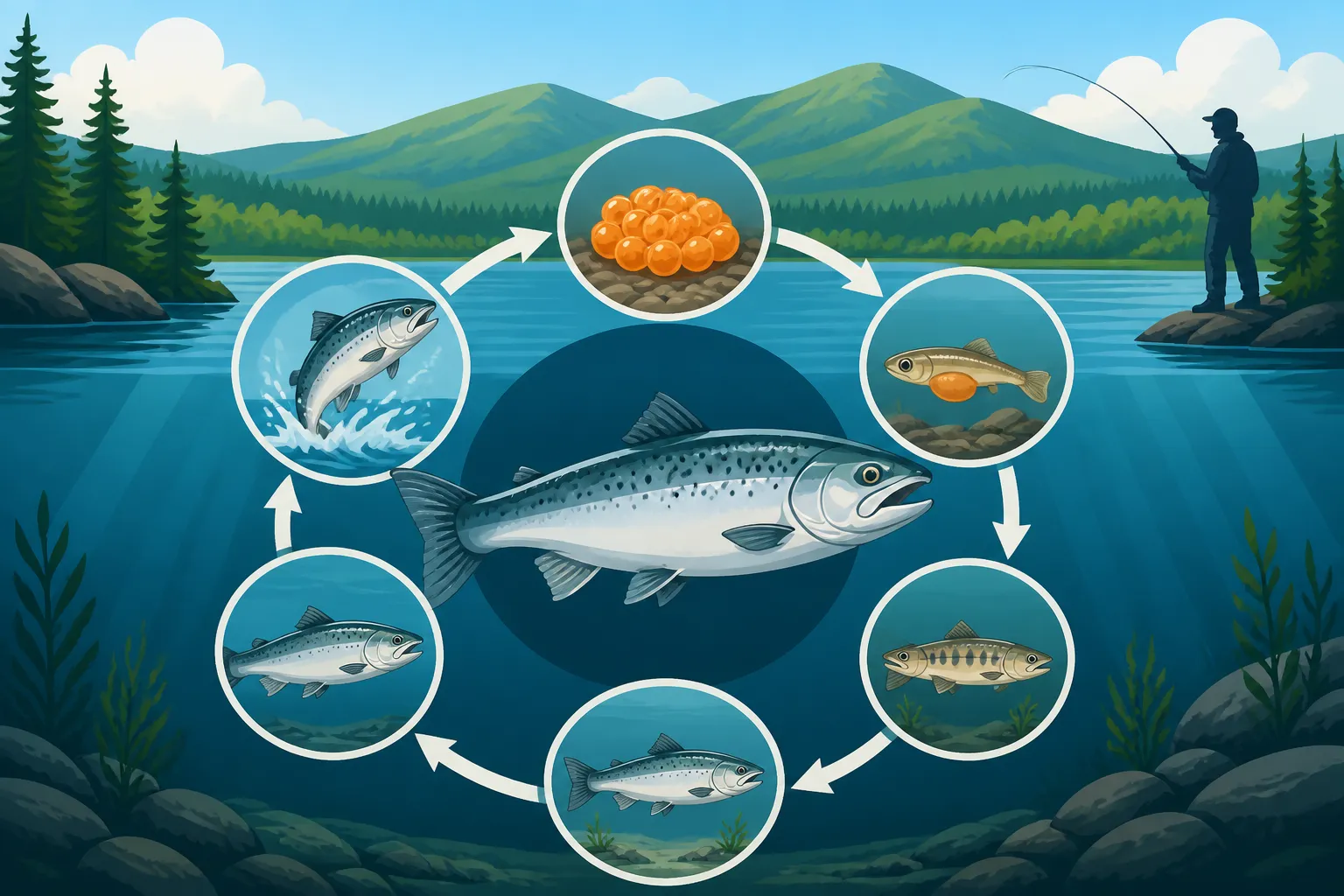
In late fall, typically from October through November, adult landlocked salmon embark on their arduous upstream migration from the lakes into their natal rivers and streams to spawn. This is a truly remarkable journey, sometimes covering considerable distances, and often involves navigating rapids and obstacles to reach suitable spawning grounds. These locations, known as redds, are typically shallow, gravel-bottomed areas with good water flow, ensuring the eggs receive ample oxygen.
The female salmon creates a redd by fanning her tail to excavate a depression in the gravel. Once the nest is ready, she deposits her eggs, which are then fertilized by one or more males. She then covers the eggs with gravel, protecting them from predators and the harsh winter conditions. These eggs will incubate throughout the winter, slowly developing as the cold water temperatures dictate their metabolic rate. This is a period of extreme vulnerability, as factors like silty runoff, extreme temperature fluctuations, or predation can significantly impact survival.
From Alevin to Parr: Life in the River
When spring arrives and water temperatures begin to rise, the salmon eggs hatch into what are called alevin. These tiny fish are still quite undeveloped and carry a large yolk sac attached to their bellies, which provides essential nourishment for their first few weeks of life. They remain hidden within the gravel, absorbing their yolk sac and slowly growing stronger.
Once the yolk sac is fully absorbed, the alevin emerge from the gravel as fry. These miniature salmon are now free-swimming and must actively seek food. They feed on small aquatic insects and plankton, growing rapidly in the nutrient-rich river environment. As they continue to grow, they develop distinctive vertical bands or "parr marks" along their sides, which provide camouflage in the dappled light of the riverbed. At this stage, they are known as parr. They typically spend one to three years in the river, honing their survival skills, growing stronger, and establishing territories before they are ready for the next major transformation.
The Smoltification Process and Lake Migration
The transition from parr to smolt is one of the most incredible transformations in the landlocked salmon's life cycle. After spending sufficient time in the river, typically when they are around five to seven inches long, the parr undergo a physiological change known as smoltification. This process prepares their bodies to adapt from a freshwater river environment to the saltwater-like conditions of a large lake.
Their parr marks fade, and their bodies take on a sleek, silvery coloration, making them less conspicuous to predators in the open water. Internally, their kidneys and gills adjust to handle the different osmotic pressures of a lake environment. Driven by instinct, these smolts begin their downstream migration, leaving the rivers and entering the vastness of the lake. This migration usually occurs in the spring, often coinciding with rising water levels from snowmelt. This period is another critical juncture, as the smolts are highly vulnerable to predation from larger fish and birds as they make their way into the lake's open waters. It's truly a marvel of nature to witness this migration, a testament to their inherent drive for survival.
| Life Cycle Stage | Typical Habitat | Key Characteristics | Diet | Vulnerabilities |
|---|---|---|---|---|
| Egg | Gravel redds in rivers/streams | Dormant, developing within gravel | Yolk sac (dormant) | Predation, siltation, temperature |
| Alevin | Within gravel of redds | Yolk sac attached, little movement | Yolk sac | Predation, poor water quality |
| Fry | River/stream riffles & runs | Free-swimming, 1-2 inches | Small aquatic insects, plankton | Predation, habitat loss |
| Parr | River/stream pools & runs | Vertical parr marks, territorial | Larger insects, small baitfish | Predation, habitat loss |
| Smolt | River estuaries, lake entry points | Silvery, sleek, migrating | Small baitfish, insects | Predation during migration |
| Adult | Deep, cold lake waters | Silvery, powerful, actively feeding | Forage fish (smelt, alewives) | Angling, predation, disease |
Life in the Lake: Growth, Foraging, and Migration
Once landlocked salmon smolts successfully reach the lake, a new chapter of their life begins. This is where they spend the majority of their adult existence, growing large and powerful in preparation for their own spawning run.
Adapting to the Pelagic Environment
Entering a large lake, especially one as expansive as Lake Champlain, is a dramatic change from the relatively confined world of a river. The smolts must now adapt to a pelagic lifestyle, meaning they live in the open water column, often far from shore or bottom structure. This environment is ideal for their growth, as it provides vast spaces to roam and abundant forage.
They quickly learn to hunt in this new world, transitioning their diet to primarily target the small, silvery baitfish that abound in our Vermont lakes. Their sleek bodies and powerful tails are perfectly designed for chasing down these swift prey. The deep, cold waters of these lakes also provide the optimal temperatures and oxygen levels that landlocked salmon, a true coldwater species, require to thrive. This adaptation to the open water is what allows them to reach impressive sizes, making them coveted Landlocked Salmon Growth Rate to Trophy Size for anglers.
The Role of Forage Fish
The abundance and health of forage fish populations are absolutely critical to the success of landlocked salmon in Vermont lakes. These "baitfish" form the base of the salmon's diet and fuel their rapid growth. The primary forage species in many Vermont lakes are rainbow smelt, which are also coldwater fish that school in large numbers. Rainbow Smelt as Forage Fish in Vermont Lakes are essential for a healthy salmon population.
Salmon will actively pursue schools of smelt, often using their keen eyesight and speed to ambush their prey. A healthy smelt population means healthy, fast-growing salmon. If smelt populations decline due to environmental factors, overfishing, or competition from other species, it can have a significant negative impact on the salmon. Conversely, a thriving smelt population means more opportunities for anglers to encounter robust, well-fed salmon, often hitting those impressive trophy sizes. Anglers often choose lures and flies, perhaps stocking up from retailers on Amazon, that mimic these smelt to entice hungry salmon.
Seasonal Movements and Deep Water Habits
Adult landlocked salmon in Vermont lakes exhibit clear seasonal movements, largely dictated by water temperature and the location of their food source. During the warmer months of summer, as surface waters heat up, salmon retreat to the cooler, deeper sections of the lake where temperatures remain in their preferred range, typically in the 50-60 degree Fahrenheit zone. Here, they continue to feed on smelt, which also seek refuge in these deeper, cooler pockets. This is why techniques like downrigging and deep-trolling are so effective during the summer months; you need to get your offerings down to where the fish are holding.
As fall approaches and surface waters cool, salmon become more active throughout the water column. They'll often move closer to the surface and into shallower areas as they begin to stage for their annual spawning run up the rivers and streams. In winter, during ice fishing season, they may still be found in deep open water, but can also be caught closer to structure or near tributary mouths as they forage. Understanding these seasonal migrations and thermal preferences is key to consistently locating and catching these magnificent fish throughout the year.
The Spawning Run: A Journey Upstream
The culmination of the landlocked salmon's life cycle is their return to the rivers and streams where they were born to reproduce. This journey is both an instinctual drive and a monumental physical undertaking.
The Instinctual Call of the River
As the days shorten and the water temperatures in the lakes begin to drop in the fall, a powerful, ancient instinct kicks in for mature landlocked salmon. They cease their open-water foraging behavior and begin to congregate near the mouths of their natal rivers and streams. This is the call of the river, the inherent drive to return to the precise locations where their own life began, often years earlier.
This migration is not just about physical movement; it's a complete shift in their behavior and priorities. Their bodies, once primarily focused on feeding and growth, now dedicate all energy reserves to reproduction. They may stop feeding entirely during their upstream journey, relying solely on the fat reserves built up during their time in the lake. This instinct is incredibly strong, compelling them to overcome any obstacles in their path, from powerful currents to human-made barriers, all to reach those critical spawning grounds.
Navigating Tributaries and Creating Redds
Once they enter the rivers, the salmon navigate upstream, often against strong currents and over various river bottom structures. They seek out specific stretches of the river that have the ideal conditions for spawning – typically shallower, fast-flowing riffle areas with clean, loose gravel. These areas are vital because they provide the necessary oxygenation for the developing eggs and protection from silt.
Males often arrive on the spawning grounds before the females, establishing territories and displaying dominance. When a female arrives and begins to construct her redd, she uses her tail to fan out a depression in the gravel, dislodging finer sediments and creating a clean pocket. After depositing her eggs, the male (or males) releases milt to fertilize them, and then the female covers the eggs with fresh gravel, creating a protective mound. This entire process is physically exhausting, and after spawning, the salmon, known as "kelts" at this point, are severely depleted. While some may survive to spawn again, many will perish, their life cycle completed. This natural cycle underscores the importance of protecting these crucial Best Trout Streams in Vermont and river habitats.
Post-Spawn Survival and Repeat Spawners
After the rigors of spawning, the salmon, now exhausted and often battered, begin their downstream migration back to the lake, if they survive. Their bodies are spent, their energy reserves are severely depleted, and they are much more susceptible to disease and predation. Many will not make it back to the main lake.
However, some do survive this taxing journey. These are known as repeat spawners, and they represent a valuable portion of the salmon population, contributing their genes to future generations. These individuals are often the largest and most resilient fish, having successfully navigated multiple life cycles. Their survival depends heavily on the availability of sufficient energy reserves, mild post-spawning conditions, and the absence of undue stress. The presence of repeat spawners is a good indicator of a healthy and robust salmon population, showcasing the true strength of these incredible fish in Vermont's waters.
Conservation Efforts and Challenges for Landlocked Salmon
Maintaining a healthy population of landlocked salmon in Vermont is a complex and ongoing effort. These fish face numerous challenges, but dedicated conservation strategies, combined with responsible angling practices, are working to ensure their future.
Habitat Degradation and Water Quality Concerns
One of the most significant threats to landlocked salmon, and indeed many coldwater species, is habitat degradation. This includes the loss of critical spawning and nursery habitat in rivers due to sedimentation from runoff, bank erosion, and obstructions like culverts or dams that prevent access to spawning grounds. Development along shorelines can also reduce the quality of the nearshore environment that smolts and adult salmon use for foraging at certain times of the year.
Water quality is another paramount concern. Pollution from agricultural runoff, wastewater discharge, and other sources can introduce harmful chemicals and nutrients into the water system. Elevated nutrient levels can lead to algal blooms, which deplete oxygen when they decompose, creating conditions unsuitable for coldwater fish. Maintaining clean, clear, and cold water is absolutely non-negotiable for the long-term health of landlocked salmon populations, requiring continuous vigilance and proactive conservation measures.
Forage Fish Fluctuations and Ecological Balance
As we discussed earlier, forage fish are the lifeblood of a landlocked salmon fishery. Fluctuations in their populations can have a cascading effect on salmon numbers and health. For example, a decline in Rainbow Smelt as Forage Fish in Vermont Lakes can lead to slower growth rates for salmon, smaller average sizes, and reduced overall population health. These fluctuations can be caused by natural cycles, changes in water temperature, competition from other species, or even disease.
Maintaining a healthy ecological balance in our lakes is crucial. This involves understanding the complex food web, monitoring both predator and prey populations, and making informed management decisions. It's not just about salmon; it's about the entire ecosystem supporting them. When populations of invasive species disrupt this delicate balance, it adds another layer of complexity to conservation efforts, necessitating adaptive management strategies by the Vermont Fish & Wildlife Department.
Management Strategies by Vermont Fish & Wildlife
The Vermont Fish & Wildlife Department is at the forefront of landlocked salmon conservation. Their efforts encompass several key areas. First and foremost are robust stocking programs. In many lakes, natural reproduction alone cannot sustain a thriving fishery, so the department raises salmon in hatcheries and releases them into specific waters. This helps maintain consistent angling opportunities and supports the overall population. The Vermont Fish Stocking Search Tool, Explained provides great insight into where and when fish are stocked.
Beyond stocking, significant resources are dedicated to habitat restoration. This includes projects to improve water quality, stabilize river banks, remove fish passage barriers, and protect riparian zones that provide shade and help regulate water temperature. The department also conducts extensive research and monitoring to track salmon populations, assess growth rates, and understand their diet and movements. This scientific data informs regulations like Vermont Landlocked Salmon Regulations and overall management plans, ensuring that the fishery remains sustainable for future generations.
Distinguishing Landlocked Salmon from Other Salmonids
In Vermont's diverse waters, anglers might encounter several species that, to the untrained eye, could be mistaken for a landlocked salmon. Understanding the key differences is not only good for identification but also crucial for adhering to specific regulations for each species.
Landlocked Salmon vs. Atlantic Salmon
While genetically identical, the primary distinction between a true landlocked salmon and its anadromous Atlantic salmon counterpart lies in their life history. Landlocked salmon complete their entire life cycle in freshwater, never migrating to the ocean. Anadromous Atlantic salmon, historically found in rivers like the Connecticut, spend their adult lives feeding in the ocean before returning to freshwater rivers to spawn.
Physically, they are nearly identical. Both share that classic torpedo shape, silvery flanks, and a scattering of small, dark spots, often x-shaped, above the lateral line. The tail is typically slightly forked. The most reliable way to differentiate them, beyond knowing where the fish was caught (i.e., inland lake versus historically anadromous river system), is often a subtle examination of fin ray counts or DNA, which isn't practical for an angler. For all intents and purposes in Vermont's lakes, if it looks like an Atlantic salmon and was caught in a landlocked lake, it is a landlocked salmon. Projects like the Atlantic Salmon Restoration in the Connecticut River aim to bring back the anadromous populations to those specific river systems, which is a whole different ballgame.
Comparing with Lake Trout and Brown Trout
Lake trout and brown trout are two other significant salmonid species that share some of the same deep, cold water habitats with landlocked salmon in Vermont. However, there are distinct differences that make identification fairly straightforward once you know what to look for.
- Lake Trout: Often share similar deep-water preferences, but their appearance is quite different. Lake trout typically have a much more pronounced forked tail, and their bodies are covered in irregular, light-colored spots on a darker background (often greenish-grey to brown). They have an adipose fin like salmon, but their head is generally larger and their overall build can be stockier. They also tend to be slower-growing and longer-lived than landlocked salmon.
- Brown Trout: While brown trout can also be silvery when caught in lakes, especially large ones like Lake Champlain, they typically have a more brassy or brownish hue, particularly in rivers. Their spots are usually dark, often with a light halo around them, and extend onto the tail fin, which is typically square or only slightly forked, not deeply forked like a lake trout. Brown trout often have some red or orange spots, particularly along their flanks, which are absent in landlocked salmon. You can often see these differences clearly when comparing them side-by-side or through clear photos you might find online.
Knowing these differences is not just about bragging rights; it's essential for adherence to Vermont Fishing Regulations Explained, as bag limits and length limits can vary significantly between species.
Responsible Angling Practices for Landlocked Salmon
Catching a landlocked salmon is an incredible experience, and practicing responsible angling ensures that these magnificent fish continue to thrive for future generations. Our actions on the water directly impact the health of the fishery.
Catch and Release Best Practices
Many anglers choose to practice catch and release for landlocked salmon, especially for larger, older fish that are valuable spawners. If you plan to release a salmon, following best practices is crucial for its survival:
- Minimize Fight Time: Use appropriate tackle for the size of fish you expect. Prolonged fights exhaust the fish, reducing its chances of survival after release.
- Handle with Care: Keep the fish in the water as much as possible. If you must lift it for a quick photo, support its body horizontally with both hands, one near the tail and one under the belly. Avoid holding it by the jaw vertically, as this can damage its internal organs and spine.
- Use Barbless Hooks: Barbless hooks or crimping the barbs on your hooks makes removal much easier and less damaging to the fish's mouth.
- Quick Hook Removal: Use pliers or a dehooking tool to quickly remove the hook. If the fish is deeply hooked, it's often best to cut the line as close to the hook as possible rather than attempting to rip it out.
- Revive Properly: If the fish seems sluggish, hold it gently in the water, facing upstream into the current, allowing water to flow over its gills. Move it slowly back and forth until it regains strength and can swim away on its own power. Never throw a fish back; gently release it.
Protecting Spawning Runs and Habitat
Our responsibility to landlocked salmon extends beyond the fish we catch. It includes protecting the habitats they rely on. During the fall spawning runs, salmon are particularly vulnerable. Avoid disturbing spawning redds in rivers and streams, as trampling on them can destroy eggs. If you're fishing near spawning areas, be extra cautious and mindful of where you wade.
Supporting conservation initiatives by the Vermont Fish & Wildlife Department is also vital. This might include participating in local stream cleanups, advocating for responsible land use practices, or simply following all Vermont Fishing License Guide for 2026 and regulations, which are designed to protect these fisheries. Every effort, no matter how small, contributes to the health of our aquatic ecosystems and the future of landlocked salmon in Vermont. Enjoy the thrill of the chase, but always with respect for the resource.
Disclaimer
This article is for general informational purposes only and does not constitute professional advice. Laws, prices and regulations vary by location and change over time. Consult a qualified professional for guidance on your specific situation.