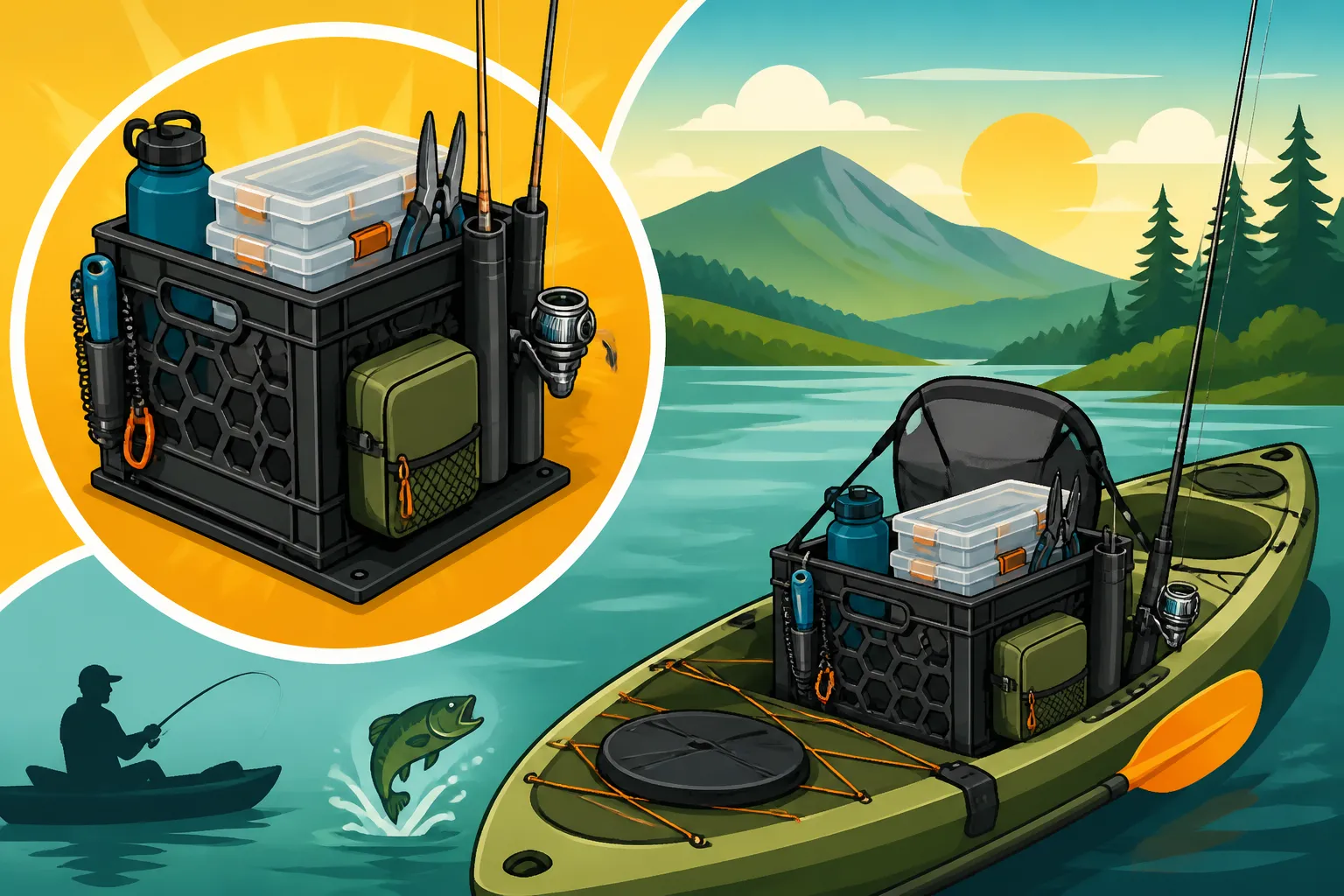
Best crate setup for kayak fishing storage
If you've ever found yourself in the middle of a stunning Vermont lake or navigating a meandering river in your kayak, only to realize your tackle box has slid under your legs, your favorite lure is nowhere to be found, or your pliers have vanished into the abyss of your boat, you know the frustration. Disorganization isn't just annoying; it can actively cut into your precious fishing time and even cost you a fish. This guide is all about transforming your kayak's stern into a highly organized, efficient fishing hub using a well-designed crate setup, ensuring everything you need is right where you need it for your next Vermont fishing adventure.
The Imperative of Kayak Fishing Storage: Why a Crate is Your Best Friend on Vermont Waters
Kayak fishing offers an unparalleled sense of intimacy with the water, allowing you to access nooks and crannies that bigger boats can't. However, this minimalist approach comes with its own set of challenges, particularly when it comes to gear storage. Unlike a bass boat with its myriad compartments, a kayak has limited space, and anything not secured is prone to sliding around, getting wet, or even going overboard. This is where a dedicated kayak fishing crate steps in, revolutionizing how you carry and access your essentials.
Beyond the Milk Crate: Understanding Purpose-Built Solutions
While many anglers start with a humble milk crate, and there's certainly no shame in that, purpose-built kayak fishing crates offer a significant upgrade in terms of functionality, durability, and integration with your kayak. A standard milk crate might hold your gear, but it rarely offers secure attachment points, integrated rod holders, or weather protection. Imagine paddling across a breezy section of Lake Champlain Fishing Guide, and your open milk crate fills with spray, soaking your soft plastics and rusting your hooks. A specialized crate is designed with the unique demands of kayak fishing in mind, providing features that keep your gear dry, secure, and easily accessible.
These aren't just glorified boxes; they are modular systems designed to be customized. Think about the variety of fishing you might do in Vermont: delicate fly fishing for brook trout in a mountain stream, aggressive casting for smallmouth bass on Lake Bomoseen Fishing Guide, or trolling for landlocked salmon on Lake Willoughby Fishing Guide. Each scenario demands a different gear setup, and a well-chosen crate system can adapt to all of them. It acts as your mobile command center, consolidating tackle, tools, and even safety equipment into one organized unit that sits snugly in your kayak's tankwell or on its deck.
The Cost of Disorganization: Lost Time and Lost Fish
The true value of a well-organized kayak crate becomes apparent not just in preventing gear loss, but in enhancing your actual fishing experience. Picture this: you're working a weed line on Lake Dunmore, and a trophy largemouth bass slams your topwater frog. As you battle the fish, you realize your net is buried under your cooler, or your pliers are rattling around at the bottom of a general storage bag. Precious seconds tick by, the fish makes a last desperate run, and snap—it's gone. That's the cost of disorganization.
Every moment spent fumbling for gear is a moment you're not actively fishing, observing your surroundings, or handling a catch. For a technique like Jigging for Perch Through the Ice, you need quick access to multiple jigs and bait. For river fishing, quick access to a wading staff or a different lure might be critical. A properly set up crate ensures that your most-used items—from pliers and line cutters to a measuring board and camera—are literally at your fingertips. It reduces stress, increases efficiency, and ultimately, helps you land more fish and enjoy your time on the water more fully. It brings a sense of calm to what can often be a chaotic environment, especially when the action heats up.
Key Considerations for Choosing Your Kayak Crate
Selecting the right kayak fishing crate isn't about picking the first one you see. It involves thoughtful consideration of several factors to ensure it meets the specific demands of your fishing style and the often unpredictable conditions you'll encounter on Vermont's waters.
Size, Material, and Durability: Built to Withstand Vermont's Elements
First and foremost, the crate needs to fit your kayak. Most kayaks have a designated "tankwell" in the stern, and crates are designed to fit these spaces. Measure your tankwell's length, width, and height carefully before purchasing. A crate that's too wide won't fit, and one that's too tall could interfere with your paddle stroke, your view, or even your re-entry if you capsize. You want a snug fit that prevents excessive shifting during paddling or when navigating choppy water, such as might be found on Lake Memphremagog Fishing Guide.
The material is also crucial. Look for marine-grade, UV-resistant plastic. This isn't just about toughness; it's about longevity. Constant exposure to the sun's UV rays, fluctuating temperatures, and the general wear and tear of being bumped, scraped, and filled with heavy gear can quickly degrade lesser plastics. A cheap, brittle crate might crack after a season or two of hard use, leaving you high and dry. Brands like Hobie and YakAttack offer purpose-built crates made from robust, rotomolded or injection-molded plastics designed specifically for the rigors of saltwater and freshwater environments. You'll find many excellent options at retailers like Bass Pro Shops, known for their durable outdoor gear.
Secure Attachment and Accessibility: Keeping Your Gear Where You Need It
One of the biggest advantages of a purpose-built crate over a simple milk crate is the inclusion of secure attachment points. Your crate must be securely fastened to your kayak. Most kayaks have bungee cords or strap points in the tankwell designed for this purpose. Look for crates with integrated slots, loops, or D-rings that allow you to thread bungees, straps, or carabiners through them. Losing your entire tackle setup and possibly your rods if your kayak unexpectedly rolls or if you hit a submerged obstacle in a river is a nightmare scenario that proper attachment prevents.
Beyond securing the crate itself, consider how accessible your gear will be within the crate. The best designs allow you to quickly grab items without having to dig. Some crates feature internal dividers, trays, or compatible accessory boxes that slot in perfectly. Think about what you reach for most often: pliers, a specific lure, your measuring tape. These items should be within easy reach, perhaps in a side pocket or a top tray that's quick to open. This is particularly important when you're targeting fast-paced species or during critical moments like landing a fish.
Lid or Open Top: Balancing Protection and Quick Access
The choice between a lidded crate and an open-top design depends on your personal preference and the conditions you typically fish in.
-
Open-Top Crates: These offer the quickest access to all your gear. They're great for calm waters and situations where speed is paramount. Many anglers prefer them because they can easily grab a lure, change a fly, or access a tool without an extra step. However, they leave your gear exposed to sun, rain, and splash. On a windy day on a larger lake, an unexpected wave could easily send water into your open crate, soaking everything inside.
-
Lidded Crates: A lid provides crucial protection from the elements, keeping your tackle dry and shielded from harsh UV rays. This is especially valuable in variable Vermont weather, where a sunny morning can quickly turn into a rainy afternoon. Lids also offer an extra layer of security, preventing items from bouncing out during rough paddling or if you happen to flip. Some lids are soft and pliable, while others are rigid and can even serve as an extra workspace. The trade-off is that opening and closing the lid adds a slight delay to accessing your gear, which might be a minor inconvenience when the bite is hot.
Many modern crate systems offer modularity, allowing you to add or remove a lid as needed, giving you the best of both worlds. You might choose an open-top design for a quick pond trip on a sunny day, and add a waterproof lid when heading out onto the choppier sections of Lake Champlain Walleye Fishing.
Customizing Your Crate for Vermont's Diverse Fisheries
A truly effective kayak fishing crate isn't just a box; it's a personalized system tailored to your specific needs, the species you target, and the unique challenges of Vermont's varied fishing environments. Customization is key to turning a simple storage unit into an indispensable tool.
Rod Holders: Your Multi-Rod Arsenal on the Water
One of the most common and crucial additions to any kayak fishing crate is a set of rod holders. Kayaks generally have limited rod storage, often just flush-mount holders behind the seat. A crate allows you to expand this capacity, letting you carry multiple rods rigged for different techniques or species. Think about the versatility this offers: one rod for casting topwater lures for bass, another for drifting worms for trout, and perhaps a third rigged for panfish.
Most crates come with pre-drilled holes or attachment points for external rod holders. You can find various styles:
- Vertical Rod Holders: These are great for safely storing rods while paddling or moving between spots. They keep the rods upright and out of the way.
- Angled Rod Holders: Often used for trolling, these position your rod tip lower to the water, which can be effective for species like lake trout or walleye. They're also useful for holding a rod while you're actively fishing with another.
When selecting rod holders, consider their height and angle in relation to your paddling stroke. You don't want them interfering with your movement. Also, ensure they have sufficient depth to securely hold your rod handles, especially if you're battling current on a river like the Winooski or Lamoille. Many accessory brands, widely available on platforms like Amazon or in stores like Bass Pro Shops, offer universal rod holders that can be easily mounted to most crate systems. Look for robust construction that can handle the stress of a big fish strike while trolling.
Tackle Organization: From Tiny Jigs to Musky Baits
The heart of any fishing crate is how it organizes your tackle. Having a jumbled mess of lures, hooks, and weights is counterproductive. Effective tackle organization means quickly locating what you need, when you need it.
- Internal Dividers and Trays: Many purpose-built crates come with adjustable internal dividers, allowing you to create compartments for various tackle boxes, soft plastics, or larger lures. Some even have integrated tackle trays that slide in and out, similar to a traditional tackle box.
- Waterproof Utility Boxes: These are your best friends. Small, clear, waterproof boxes (often sold as 3600 or 3700 series by brands like Plano) are perfect for sorting lures, hooks, weights, and swivels. Labeling these boxes by species, lure type, or depth (e.g., "Bass Topwater," "Trout Nymphs," "Walleye Jigs") can save you invaluable time. You can often find multi-packs of these on Amazon, making it easy to build a comprehensive collection.
- Soft Plastic Storage: Dedicated soft plastic binders or specialized bags that fit neatly into your crate can prevent your baits from becoming a sticky, melted mess in the sun. Many anglers use gallon-sized Ziploc bags, organized by color or style, to keep them tidy.
- Specialty Lure Tubes: For larger, more expensive lures like those used for Muskellunge Fishing on Lake Memphremagog, individual lure tubes or compartments can protect them from damage and prevent hooks from tangling with other gear.
The key is to think about your typical fishing trip. Do you primarily target one species, or do you dabble in several? Organize your main tackle at the top or in the most accessible sections, and reserve the bottom for less frequently used items or bulkier emergency gear.
Essential Tools and Safety Gear: Always Within Reach
Beyond tackle and rods, a well-stocked crate includes crucial tools and safety items that are easily accessible. These aren't just conveniences; they're often necessities for a safe and successful trip.
- Pliers and Line Cutters: Absolutely essential for unhooking fish, cutting line, and general rigging. Keep them in a dedicated sheath or holder attached to the side of your crate, or clipped to a bungee. Consider a pair of fishing pliers with a lanyard so they don't go overboard.
- Measuring Device: A stick-on measuring tape for your kayak, or a rigid measuring board, should be easily accessible for quickly measuring your catch to ensure it meets Vermont Bass Minimum Length Limits or to document a trophy.
- First-Aid Kit: A small, waterproof first-aid kit is non-negotiable. Hooks, sharp knives, and slippery surfaces mean minor injuries are always a possibility.
- Headlamp/Flashlight: Even if you plan to be back before dark, unforeseen delays can occur. A reliable light source is critical.
- Sunscreen and Bug Spray: Vermont's sun can be intense, and the bugs, especially in spring and early summer, can be relentless. Keep these in an accessible side pocket.
- Communication Device: A fully charged cell phone in a waterproof case, or a VHF radio, is vital for emergencies. Store it where it's protected but can be quickly accessed.
- Whistle: A safety whistle attached to your life jacket or the crate can be used to signal for help.
By dedicating specific spots in or on your crate for these items, you eliminate frantic searching when moments matter most.
| Crate Type | Pros | Cons | Best For |
|---|---|---|---|
| DIY Milk Crate | Very cheap, easy to find, lightweight | Flimsy, no lid, few attachment points, generic | Beginners, calm water, short trips |
| Economy Purpose-Built | Better durability, some rod holders, basic attachments | Limited customization, basic materials | Intermediate anglers, mixed conditions |
| Premium Modular System | Highly durable, customizable, integrated rod holders, secure lid options, accessory ready | Higher cost, can be heavier | Serious anglers, diverse conditions, long trips |
Maximizing Efficiency: Advanced Crate Organization Tips and Accessories
Once you've chosen and customized your kayak fishing crate, the next step is to optimize its use through smart organization and a few key accessories. This proactive approach ensures you spend less time fumbling and more time fishing effectively on Vermont's beautiful waterways.
Waterproofing and Protection for Valuables
While many crates offer a degree of splash protection, true waterproofing for sensitive items is paramount. Your phone, keys, wallet, camera, and any electronic devices need absolute protection from water.
- Dry Bags: Invest in a few different sized dry bags. Small ones are perfect for your phone and keys, while larger ones can hold extra clothing, a towel, or a larger camera. Roll-top dry bags are excellent at keeping water out, and they can be compressed to fit snugly into a crate compartment. Best Dry Bag for Kayak Fishing delves deeper into choosing the right ones.
- Waterproof Dry Boxes: For items you need to access more frequently but still want maximum protection (like a spare battery for your fish finder or a specific small electronic device), a hard-sided, waterproof dry box with a rubber gasket seal is an excellent choice. These can often be tucked into a corner of your crate.
- Floatation Devices for Electronics: For critical items like a handheld GPS or an expensive waterproof camera, consider attaching a small floatation device. If it accidentally goes overboard, it won't sink to the bottom of Lake Champlain.
Remember, even on the calmest days, an unexpected wake from a passing boat or a sudden rain shower can drench your gear. Proactive waterproofing prevents potential heartbreak and costly replacements.
Thoughtful Layout for Seamless Fishing
The way you arrange items within your crate can dramatically impact your efficiency on the water. Think about what you use most often and what you might only need in a specific scenario.
- Top-Down Accessibility: Place frequently used items at the top or in easily accessible side pockets. This includes your most-used tackle box, a pair of pliers, your line cutters, and perhaps a measuring tape. If you primarily use one or two rods, ensure their holders are positioned for easy grab-and-go.
- Weight Distribution: Distribute heavier items evenly or closer to the bottom of the crate to maintain stability, especially if your crate isn't completely full. This helps keep your kayak balanced.
- Grouping Similar Items: Keep all your soft plastics together, all your jigs in one box, and all your hard baits in another. This prevents you from rummaging through multiple compartments to find what you need.
- Dedicated Spots: Assign a "home" for every item. When you're done using something, put it back in its designated spot. This discipline prevents items from getting lost or creating clutter. It's especially useful when trying to switch lures quickly for a species like bass, where a variety of Best Crankbaits for Vermont Smallmouth Bass might be needed.
- Pre-Rigging Rods: Before you even leave the launch, consider rigging a few rods for different applications. If you're heading to a lake known for both bass and panfish, have one rod ready for each. This saves valuable time on the water.
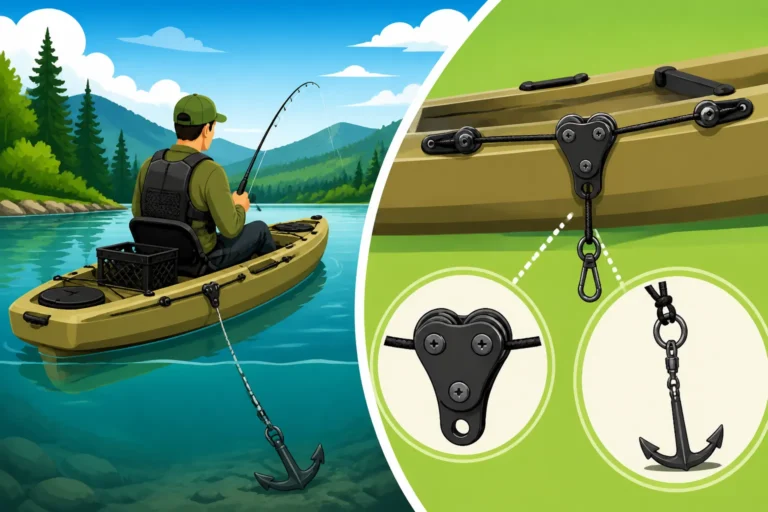
- Anchor Management: If you use an anchor (like a small grapnel or drag chain for kayak fishing), consider an anchor trolley system on your kayak that allows you to deploy and retrieve your anchor from the bow or stern. This keeps your anchor rope organized and prevents it from tangling with your crate or other gear. For general information on securing your boat, check out Best Anchor System for River Fishing.
Maintenance and Best Practices for Longevity
Even the most robust crate system will benefit from a little care and attention.
- Rinse After Each Use: Especially if you've been in brackish water or if your gear has been exposed to mud or dirt, give your crate and its contents a thorough rinse with fresh water. This prevents corrosion and build-up.
- Air Dry Thoroughly: Before storing your crate, ensure all its compartments and contents are completely dry to prevent mildew and rust. Leave tackle boxes open to air out.
- Check Straps and Bungees: Regularly inspect attachment straps, bungees, and clips for wear and tear. Sun exposure can degrade these over time, and a broken strap could lead to a lost crate.
- Organize Off-Season: Use the off-season to clean out, declutter, and re-organize your crate. Discard old line, rusty hooks, and broken lures. This is also a good time to stock up on new tackle and replace worn-out items, ensuring you're ready for Vermont Trout Opening Day Traditions.
By investing a little time in setting up and maintaining your kayak fishing crate, you're not just organizing your gear; you're enhancing your entire Vermont fishing experience. It's about maximizing your time on the water, minimizing frustration, and ultimately, making those precious fishing moments more enjoyable and successful. Having a well-appointed Best tackle organizer for a small boat is truly transformative.
Disclaimer
This article is for general informational purposes only and does not constitute professional advice. Laws, prices and regulations vary by location and change over time. Consult a qualified professional for guidance on your specific situation.